Broadcast Engineering Week 2
 Call Kai
 Learn
Learn Practice Test
 Spaced Repetition
 Match
Match Flashcards
 Knowt Play
1/49

There's no tags or description
Looks like no tags are added yet.
Name | Mastery | Learn | Test | Matching | Spaced | Call with Kai |
|---|
No analytics yet
Send a link to your students to track their progress
50 Terms
Acoustics
______ is both the science and the art of understanding sound and the interaction of sound with the rest of the physical world
Acoustics
The science encompasses the study and analysis of vibrations at any frequency (subsonic to audible to ultrasonic) through the principal states of matter (solid, liquid, and gaseous).
Art of acoustics
It includes the development and use of empirically derived formulae, data, and observations into usable experiential guides to designing spaces for acoustic and amplified speech and music; recording; monitoring; storage and transmission; and, most importantly, listening.
vibrations in the air
“Sound” is derived from French (son) and from Latin (sonus) and refers to ________ that can be heard by people
Sound
_____ is a pressure disturbance in the air that can be perceived by hearing.
Infrasound
Ultrasound
_____ and _____, which are below and above the normal range of human hearing, respectively, are examples of inaudible sounds.
“to hear”
“Audio” is derived from Latin verb (audire) meaning _______ and refers to things that are related to hearing.
Audio
______ is an electrical (or digital) representation of sound.
transducer
A _____ such as a microphone converts sound to audio; audio is converted into sound by a transducer such as a loudspeaker.
.
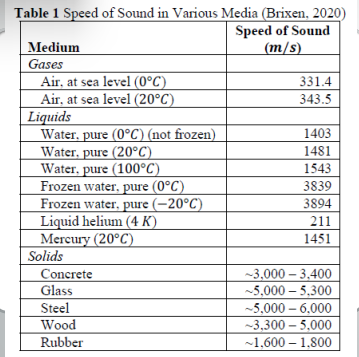
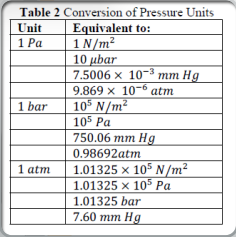
Sound pressure
is defined as the difference between the instantaneous pressure and static pressure
.
Sound Power
_____ is the sound energy transferred during a period divided by the period concerned.
acoustic to an electrical
In order to be able to measure, manipulate, or describe sound, we generally convert it from an _______ signal
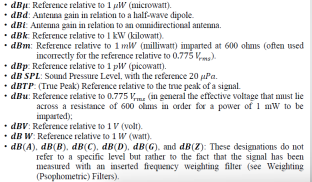
decibel (𝑑𝐵)
A ______ a unit used to measure the intensity of a sound or the power level of an electrical signal by comparing it with a given level on a logarithmic scale.
.
inversely
In a free field, sound intensity varies _____with the square of the distance from the source.
Electrical Tests
Acoustical Tests
2 Major Categories of Basic Audio Measurements and Test Gear
1. To determine if all system components are operating properly
2. To diagnose electrical problems in the system, which are usually manifested by some form of distortion
3. To establish a proper gain structure
Purpose for electrical field testing includes:
• Sine Wave Generation
• Audio Amplitude or Level Measurements
• Noise Measurements and Distortion Measurements
Kinds of Electrical Test
Resistor-Capacitor (RC) Oscillator Circuits
______ is the oldest and still lowest distortion methods use such as the state variable, Wien bridge, twin-tee, or bridged-tee configuration.
Function Generators
______ may also be used for audio signal generation
Frequency Synthesizers
______ use quartz-based oscillators, digital frequency dividers, and phase-locked loops to generate signals.
Direct Digital Synthesizers
______ generates a digitally sampled version of a signal by sending binary words (either from a table in memory or generated “on the fly” from an algorithm) to a digital-to-analog converter at a regular sample rate.
Audio Amplitude or Level Measurements
_____ are normally made with an ac voltmeter plus supporting circuitry.
detector
The function of the _____ is to convert the continuously-varying ac signal into a steady-state (dc) signal proportional to some parameter of the ac signal such as its rms (root-meansquare) value, its average value, or its peak value.
indicator
The _____ displays the DC value in a calibrated fashion.
Noise Measurements
In _______, a selection of filters is an absolute requirement
Bandwidth-limiting Filters
bandpass filters, or as separately-selectable highpass and low-pass filters.
Weighting (Psophometric) Filters
_____ are designed to provide measurements that correlate better with human perceptions than do unweighted measurements.
acoustical field testing
The _______ of sound reinforcement systems mainly involves measurements of the sound pressure fluctuations produced by one or more loudspeakers at various locations in the space.
1. The sound pressure level
2. Any weighting scale used
3. Meter response time (fast, slow or other)
4. The distance or location at which the measurement was made
5. The type of program measured (i.e., music, speech, ambient noise)
When stating a sound level, it is important to indicate:
sound level meter
_____ consists of a pressure sensitive microphone, meter movement (or digital display), and some supporting circuitry. It is used to observe the sound pressure on a moment-by-moment basis, with the pressure displayed as a level in decibels.
A and C
Most SLMs have at least an ___ and ___weighting scale, and some have octave band filters that allow band-limited measurements.
1. FFT (Fast Fourier Transform) Measurements
2. Dual-Channel FFT
3. Maximum-Length Sequence
4. Time-Delay Spectrometry (TDS)
Basic Audio Measurements and Test Gear Acoustical Tests
Digital Audio Technology
It takes the starting point in the transformation of an analog signal to numerical values at an appropriate rate
error correction
It allows for the execution of copying and transmission in a lossless manner – further, calculations in the digital domain substitute what otherwise would imply physical, electronic circuitry.
Anti-aliasing
It is used to determine a well-defined upper cutoff frequency (𝑓𝑓u), which implies a low-pass filter.
to change identity
Alias means ____
sampling
It is measurements of the instantaneous value of the signal. After the low-pass filtering, _____ is performed.
32 kHz
44.1 kHz
48 kHz
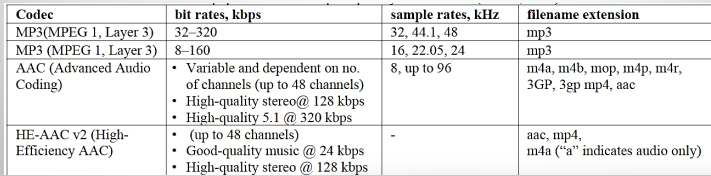
Sampling frequencies of ____, _____, and ____ have long been the standard for quality audio for things like CD or broadcast audio tracks
88.2 kHz
96 kHz
176.4 kHz
192 kHz
Higher sampling frequencies of ____, ____, ____, and ____ widely apply to production environments, and high-quality audio delivery formats.
Oversampling
_____ describes the process when performing sampling at a frequency that is several times higher than the requisite minimum.
Quantization
The process that determines the digital “number.”
size
The word quantization comes from Latin quantitas means ____
Analog-to-Digital Converter
The principal components in the _____ are one or more comparators, which compare the instantaneous values of the individual samples with a built-in voltage reference
1
If the signal’s instantaneous value is equal to or greater than the reference, then the output of the comparator is _____
Delta-Sigma and Bitstream
In _______, one single bit is determined at a time but at a very high clock frequency, typically a sampling frequency in the MHz range.
.