A & P 1 Lab (Chapter 1-2)
 Call Kai
 Learn
Learn Practice Test
 Spaced Repetition
 Match
Match Flashcards
 Knowt Play
1/31

Earn XP
Description and Tags
Anatomical Terminology and Lab Safety
Name | Mastery | Learn | Test | Matching | Spaced | Call with Kai |
|---|
No analytics yet
Send a link to your students to track their progress
32 Terms
What material goes in the Broken Glass container?
All broken glassware, slides, pipettes.

What material goes in the Sharp Container?
All sharp instruments, blades, needles, or dissecting probes.
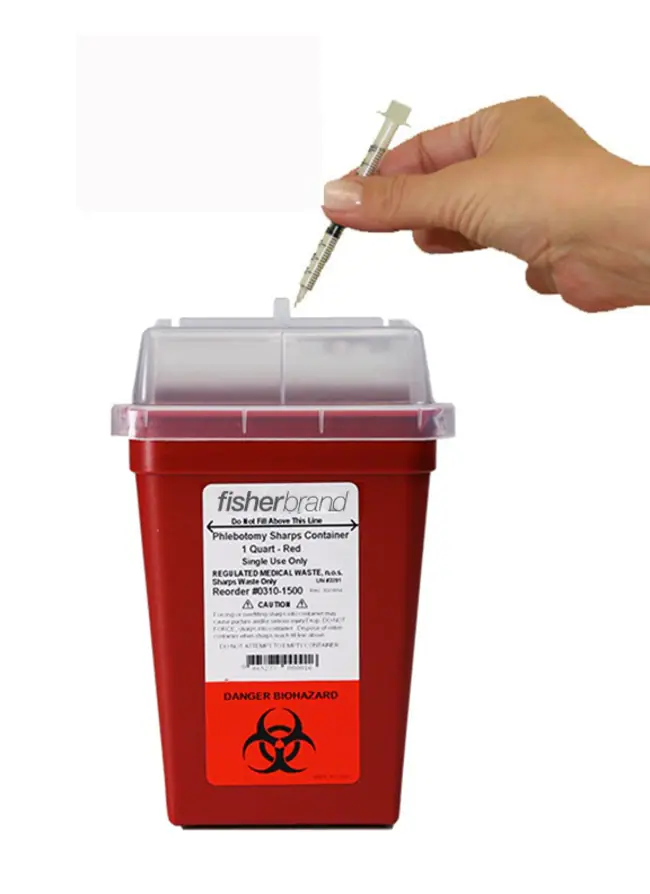
What materials goes in the Biohazardous Waste Container?
Any contaminated materials with biological specimens, such as tissues, fluids, gloves, blood, saliva, dissection waste, etc.

General Lab Safety Rules
No eating or drinking in the lab.
Keep the workspace clear.
Know the location of the safety equipment.
Report broken glassware to the instructor; then dispose of it in the ‘Broken-glass container’.
Locate the first-aid kit and report.
Wear proper eye protection.
Handle hot glassware safely (always use tongs or heat-resistant gloves)
Never use wet hands to plug in electrical devices.
Dispose of biohazardous waste properly (in the biohazardous bin)
Sanitize all reusable materials.
Always wear gloves.
Dispose of sharps in the sharps container.
After every lab, wash your hands.
Unplug and return all equipment.
Familiarize yourself with fire safety procedures.
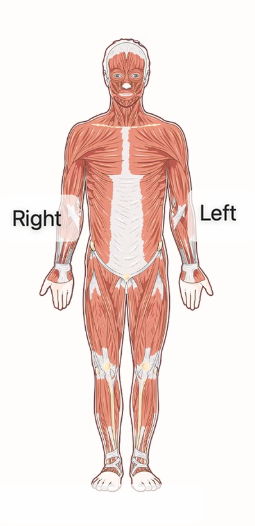
What is the proper Anatomical Position?
-Facing forward, upright, with palms exposed/up.
-ALWAYS refer to the subjects right and left, not your right and left.
What are the 2 body regions?
axial region (the central axis, including the head, neck, and trunk) and appendicular region (the limbs that attach to the axis - arms, shoulders, legs, etc.)
What are the directional terms when describing the body? (5)
superior/inferior
anterior/posterior
medial/lateral
proximal/distal
superficial/deep
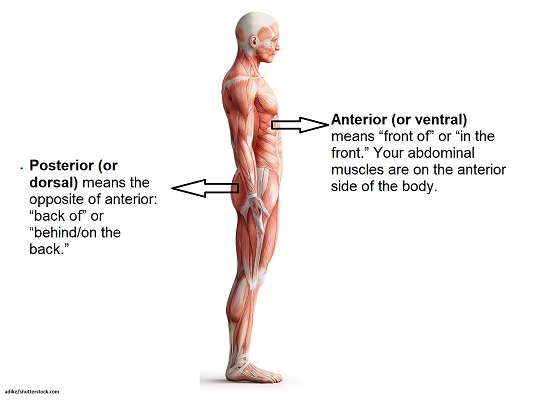
What direction is anterior and posterior?
Anterior (ventral): toward the front of the body
Ex. The stomach is anterior to the pancreas. (meaning: the stomach is directly in front of the pancreas)
Posterior (dorsal): toward the back of the body
Ex. The spine is posterior to the sternum. (meaning: the spine is directly behind the sternum)
What direction is superior and inferior?
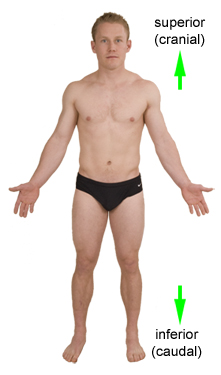
Superior (cranial): Toward the head
Ex. The head is superior to the chest (meaning: the head is above the chest)
Inferior (caudal): toward the tail
Ex. The abdomen is inferior to the chest (meaning: the abdomen is below the chest)
What direction is medial and lateral?
Medial: closer to the midline.
Ex. The nose is medial to the ears (meaning: the nose is the middle of the ears)
Further from the midline
Ex. The shoulders are lateral to the neck (meaning: the shoulders are going further from the neck)
What direction is proximal and distal?
Proximal: closer to the trunk or point of attachment (the trunk being the body)
Ex. the elbow is proximal to the hand (origin = shoulder) (meaning: the elbow is closer to the hand than it is to the shoulder - the point of origin of a limb)
Distal: further from the point of origin
Ex. The foot is distal to the knee (origin = hip) (meaning the foot is further from the knee, as the hip is connected to the trunk/point of attachment)
DO NOT CONFUSE: Superior/Inferior with Proximal/Distal - Proximal/Distal IS USED FOR STRUCTURES THAT HANG OFF THE BODY (Ex. arms and legs)
What direction is superficial and deep?
Superficial: Closer to the body’s surface.
Ex. Muscles are superficial to bones. (meaning the muscles are closer to the surface than the bones).
Deep: Further from the body’s surface.
Ex. the renal medulla is deep to the renal cortex. (meaning: the renal medulla is further from the body’s surface than the renal cortex.
What are the 2 main body cavities?
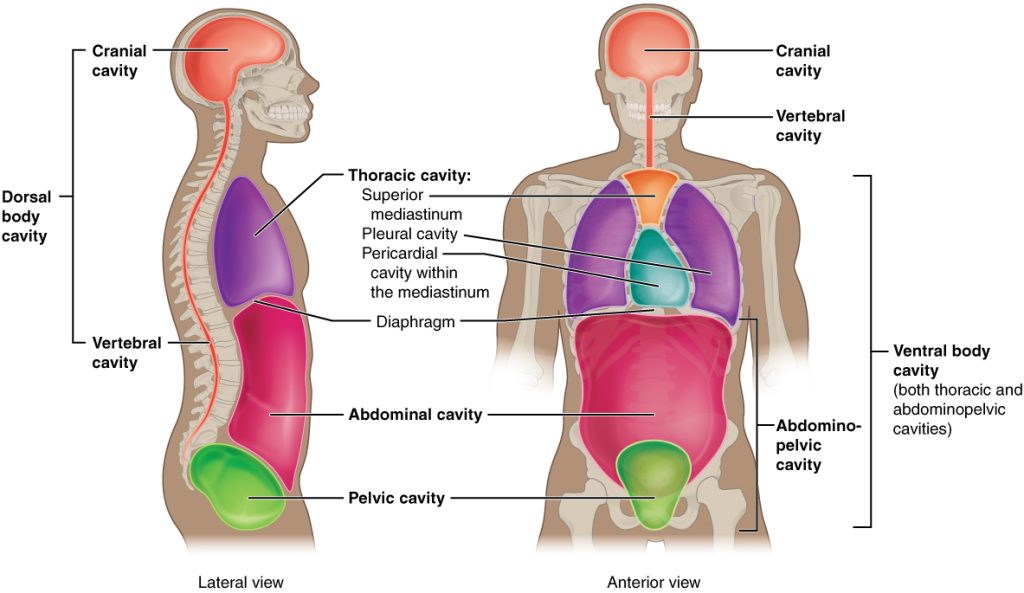
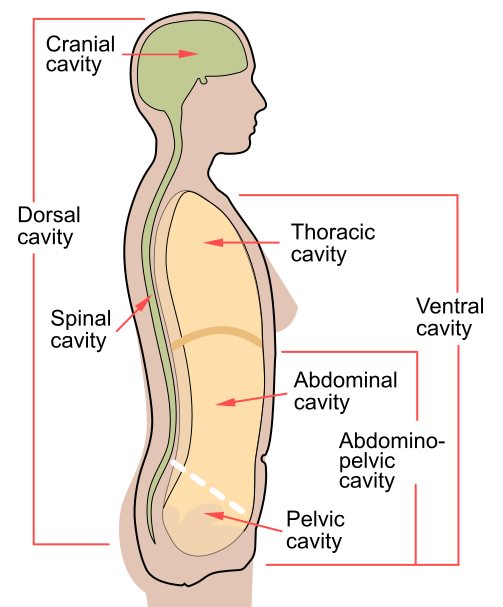
The Dorsal Cavity: (aka - the back/remember: dorsal = the fin on the back of an animal), which is subdivided into the cranial cavity (housing the brain) and the vertebral cavity (housing the spinal cord).
The Ventral Cavity: is subdivided into the thoracic cavity and the abdominopelvic cavity
What organ(s) is in the cranial cavity?
brain
What organ(s) is in the vertebral cavity?
spinal cord
What organ(s) is in the thoracic cavity?
heart and lungs
What organ(s) is in the abdominopelvic cavity? (9)
stomach, liver, gallbladder, pancreas, spleen, small intestine, large intestine, kidneys and adrenal glands
What organ(s) is in the right hypochondriac region?
Liver and gallbladder
What organ(s) is in the right lumbar region?
ascending colon large intestine
What organ(s) is in the right iliac region?
cecum and appendix
What organ(s) is in the epigastric region?
stomach
What organ(s) is in the umbilical region?
small intestine, transverse large intestine
What organ(s) is in the hypogastric region?
urinary bladder
What organ(s) is in the left hypochondriac region?
diaphragm and spleen
What organ(s) is in the left lumbar region?
descending colon of the large intestine
What organ(s) is in the left iliac region?
colon
What are the 10 body cavities?
dorsal, cranial, vertebral, ventral, thoracic, abdominal, abdominal-pelvic, pleura cavity, pericardium, and pelvic cavity
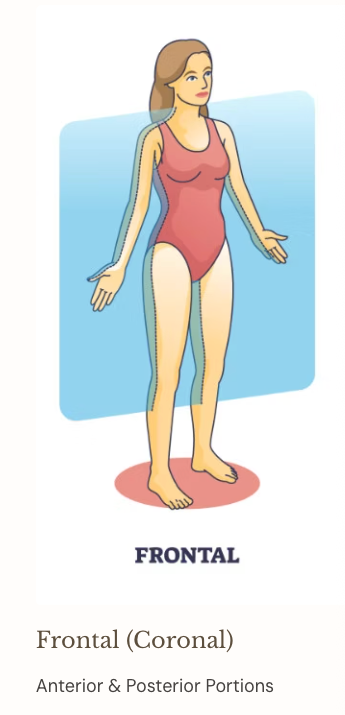
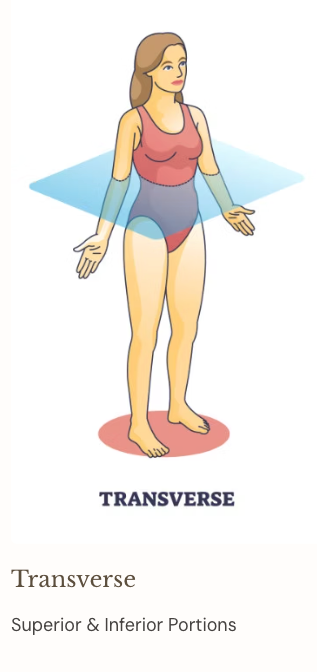
What are the 3 body planes?
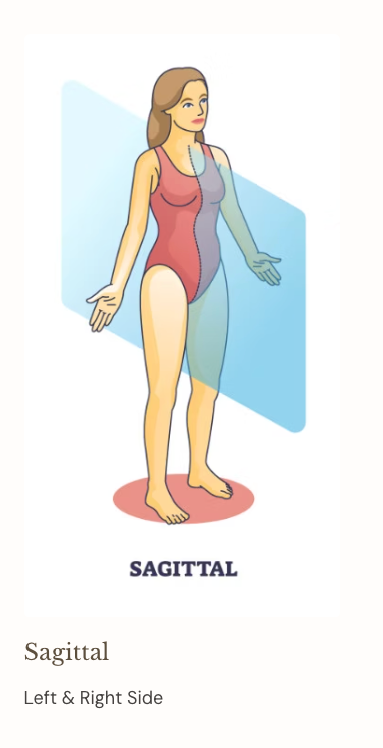
transverse, sagittal, and frontal
How is the Sagittal plane divided?
Left and right side
How is the Transverse plane divided?
Superior and inferior portions
How is the Frontal plane divided?
Anterior and posterior portions