Enzymes
 Call Kai
 Learn
Learn Practice Test
 Spaced Repetition
 Match
Match Flashcards
 Knowt Play
1/36

There's no tags or description
Looks like no tags are added yet.
Name | Mastery | Learn | Test | Matching | Spaced | Call with Kai |
|---|
No analytics yet
Send a link to your students to track their progress
37 Terms

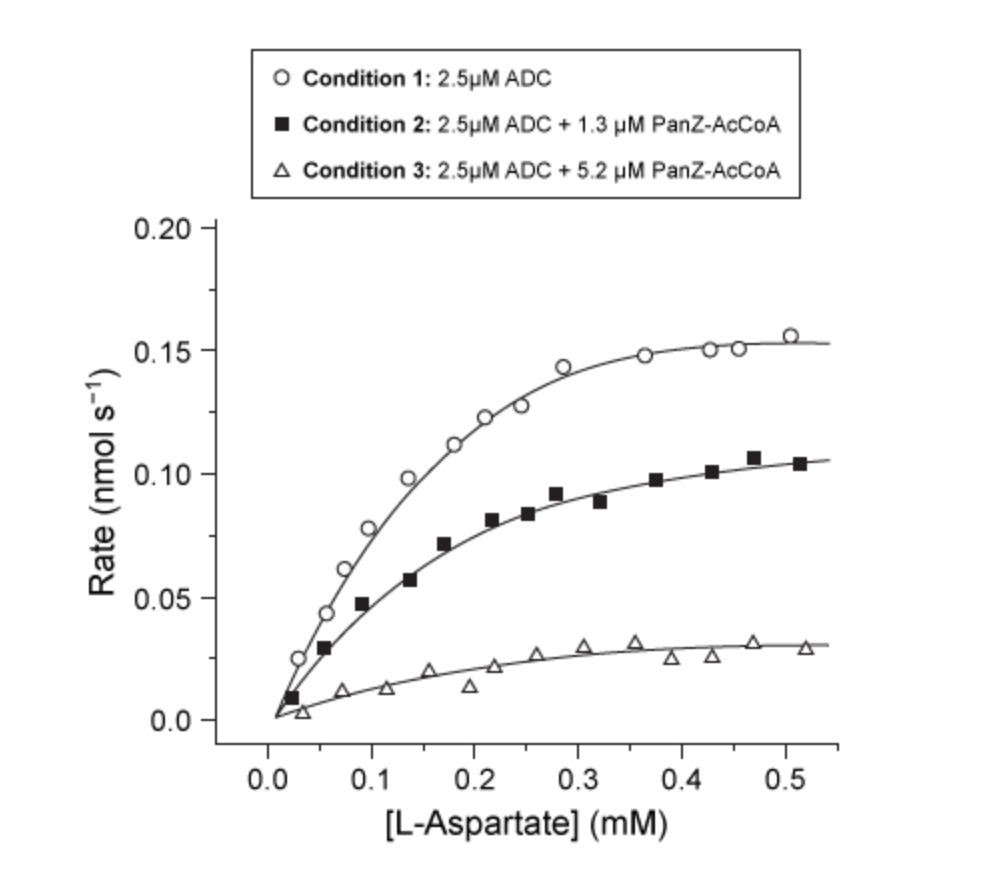
Kcat increases, Km decreases
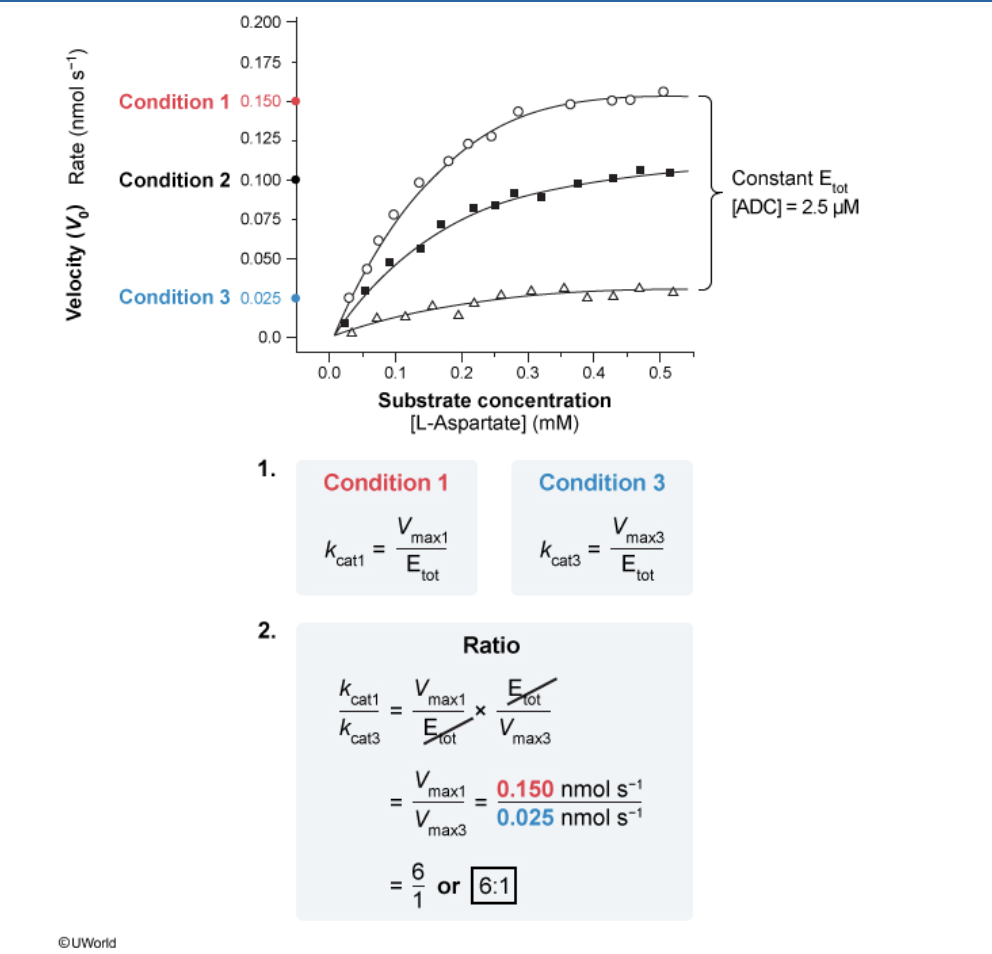
K cat (catylytic turnover)
measures number of substates converted to product per enzyme per second when enzyme is saturated
Increase Kcat does what to Vmax?
Increases Vmax
(large slope initially)
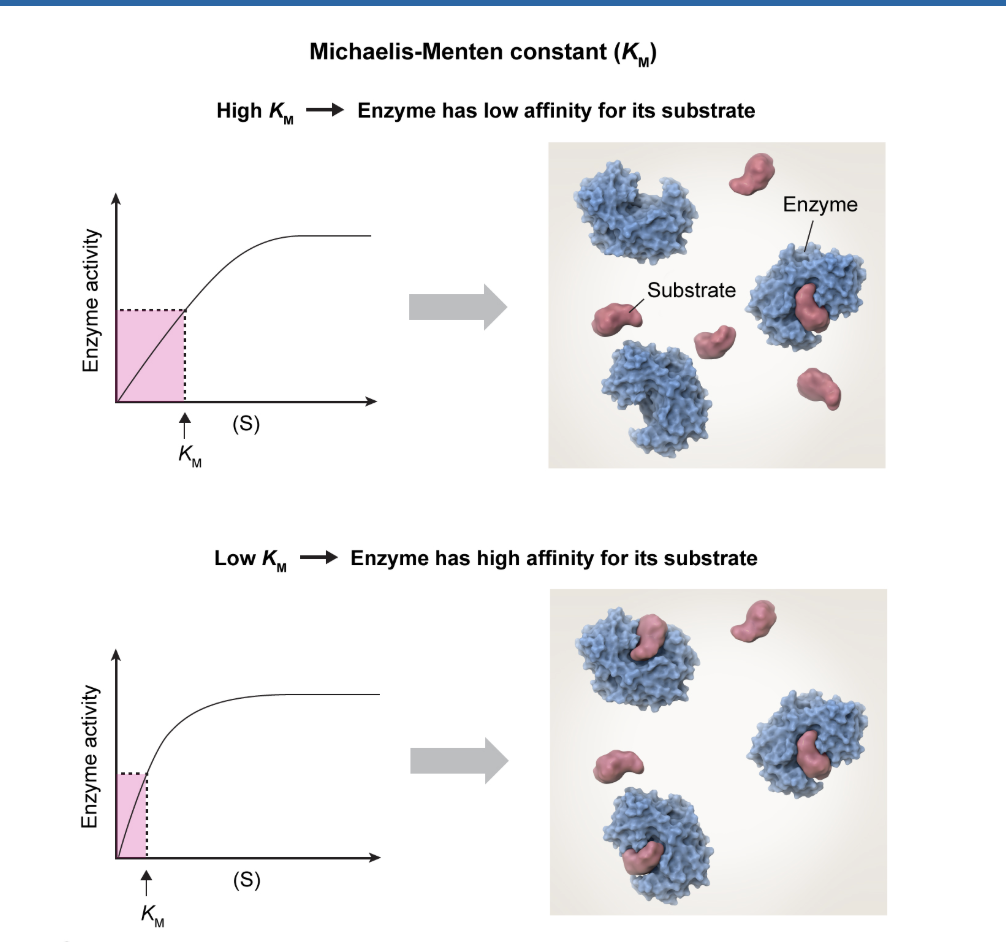
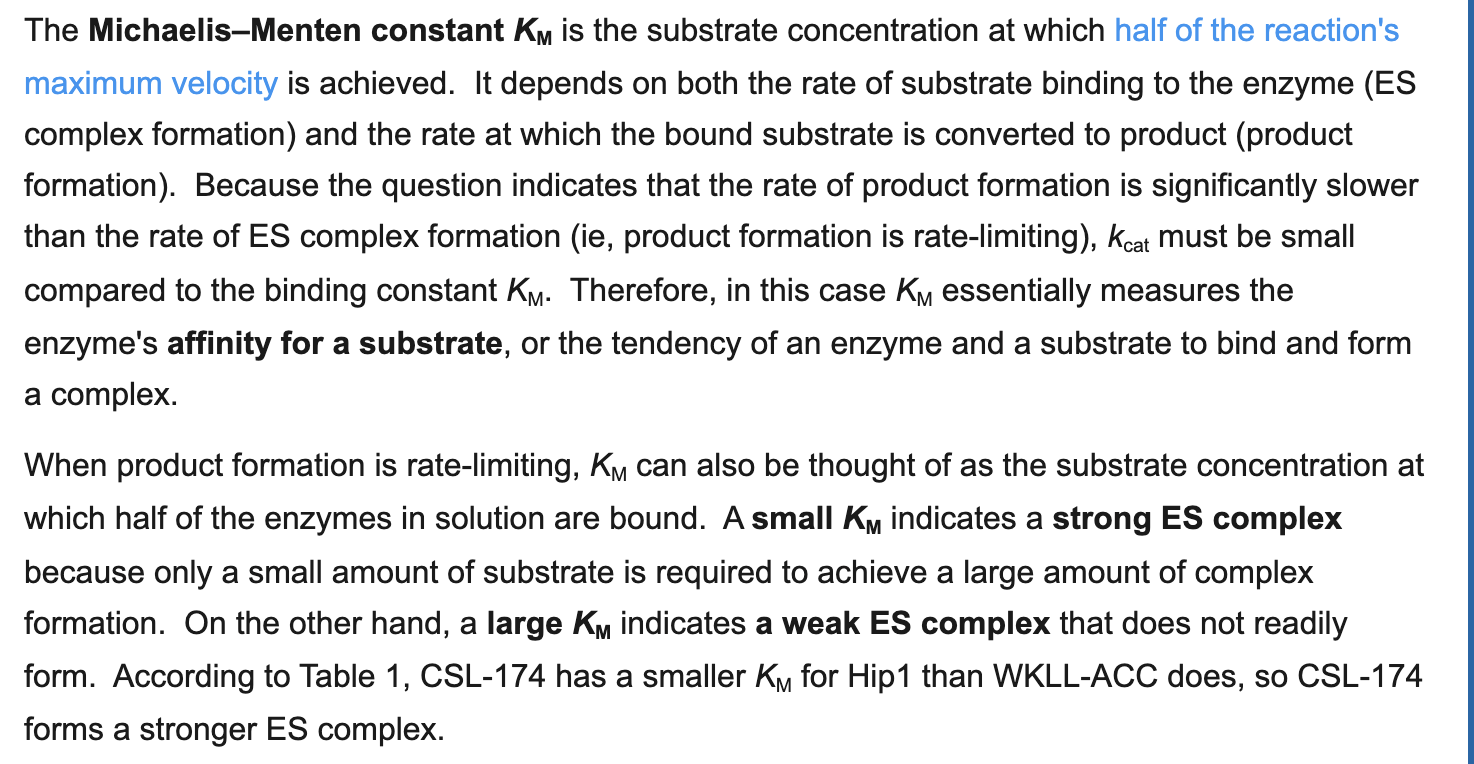
Km (Michaelis constant)
binding affinity
small Km= high affinity
small Km= higher Vmax

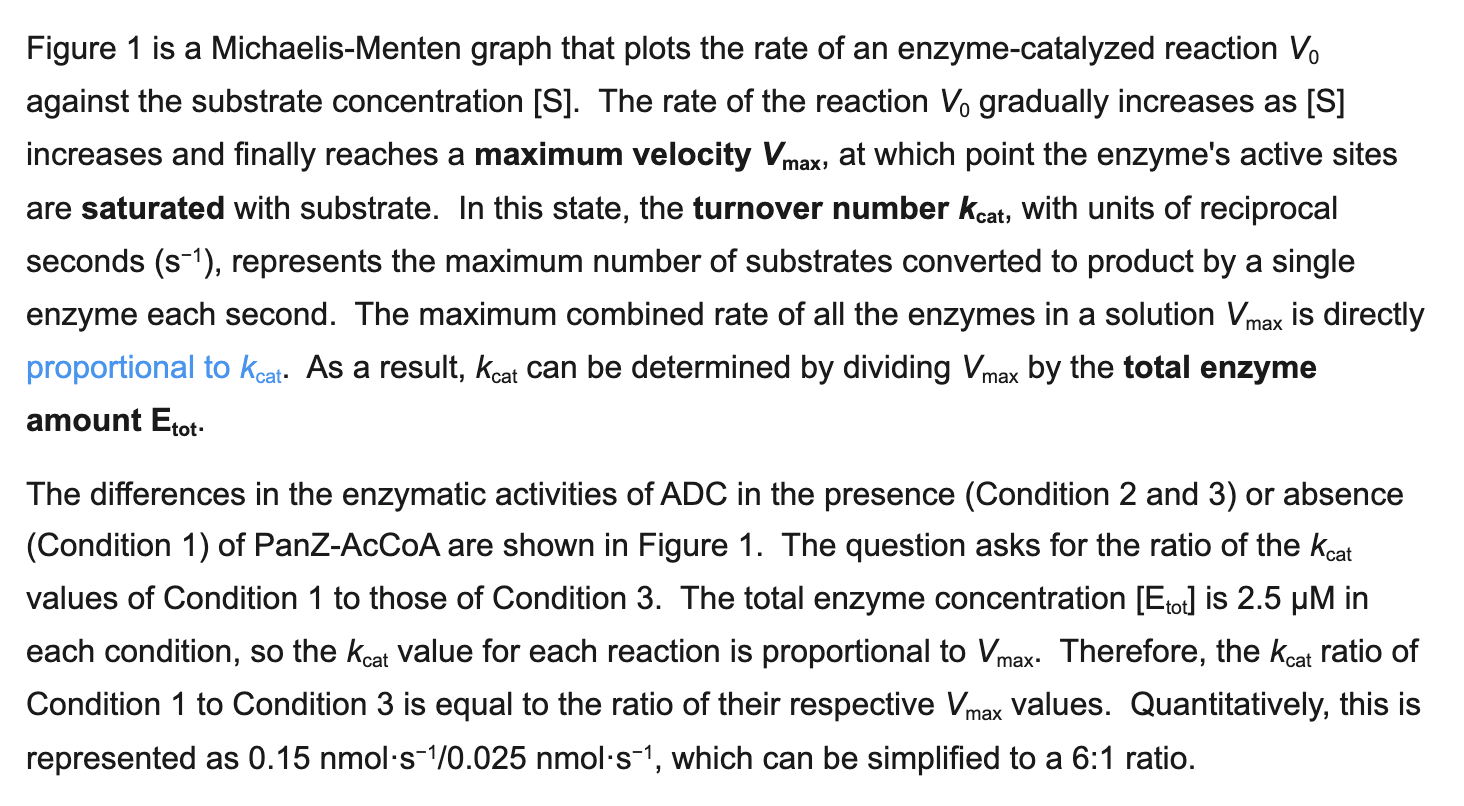
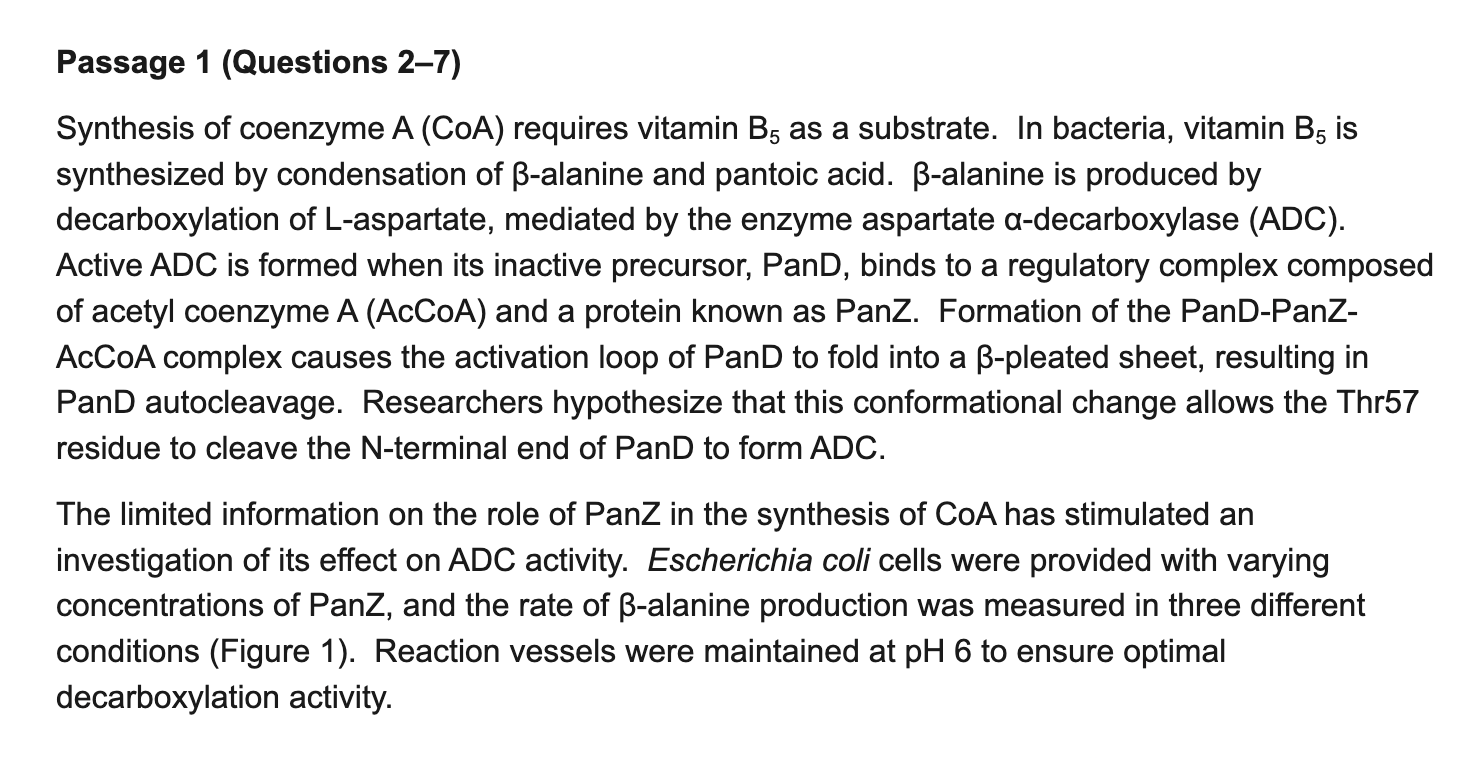

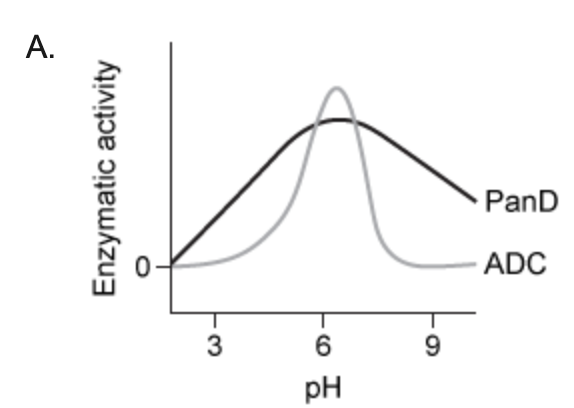
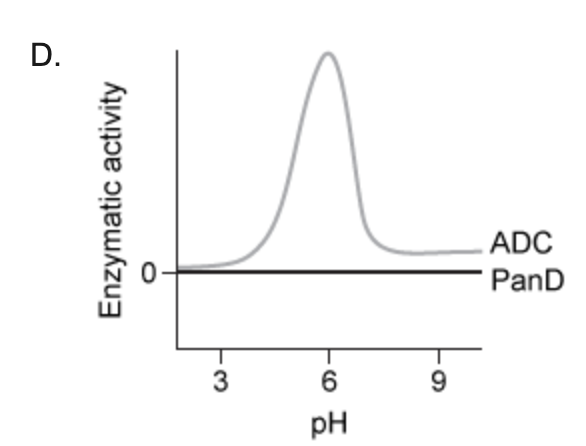
Answer: D
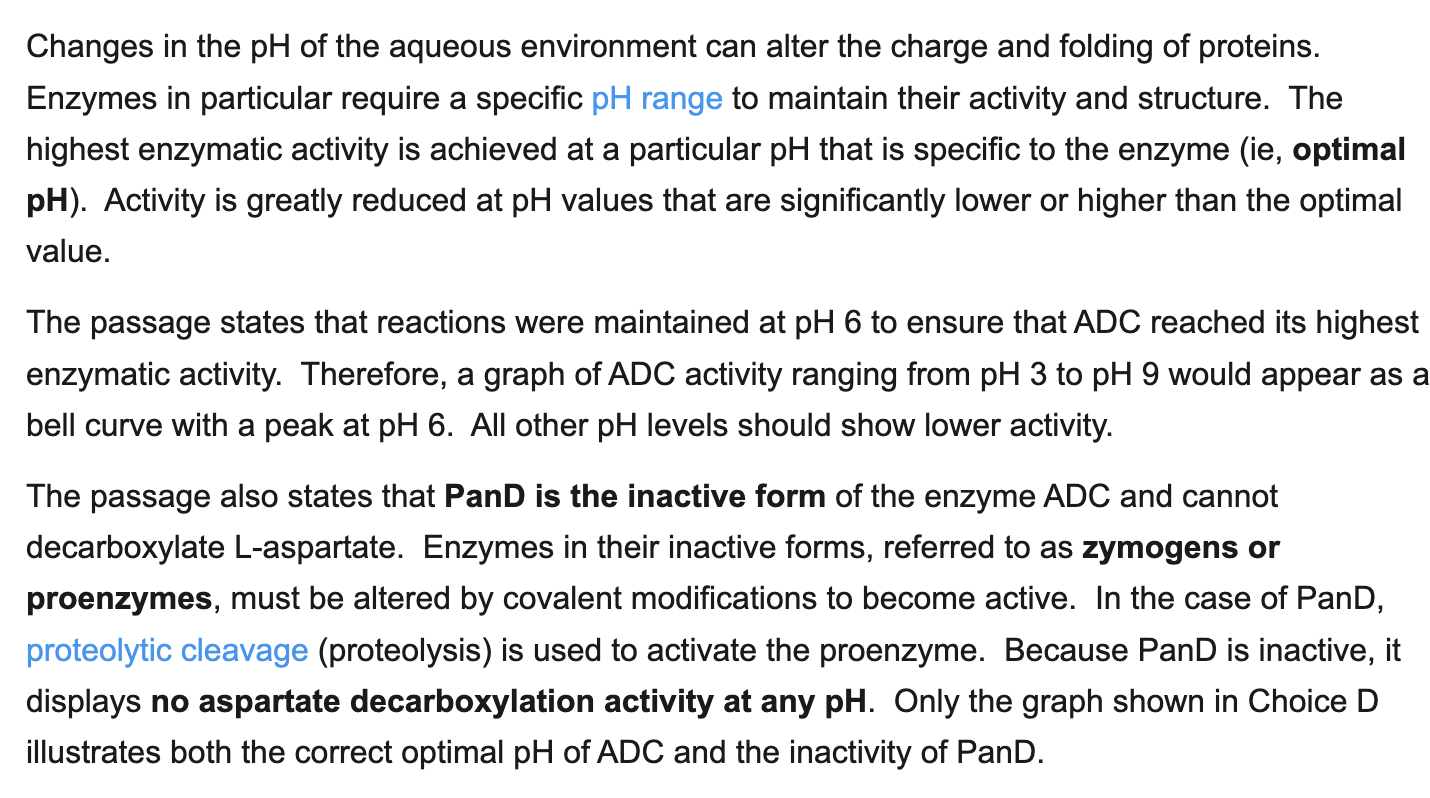

0,1,2?
Answer: 2
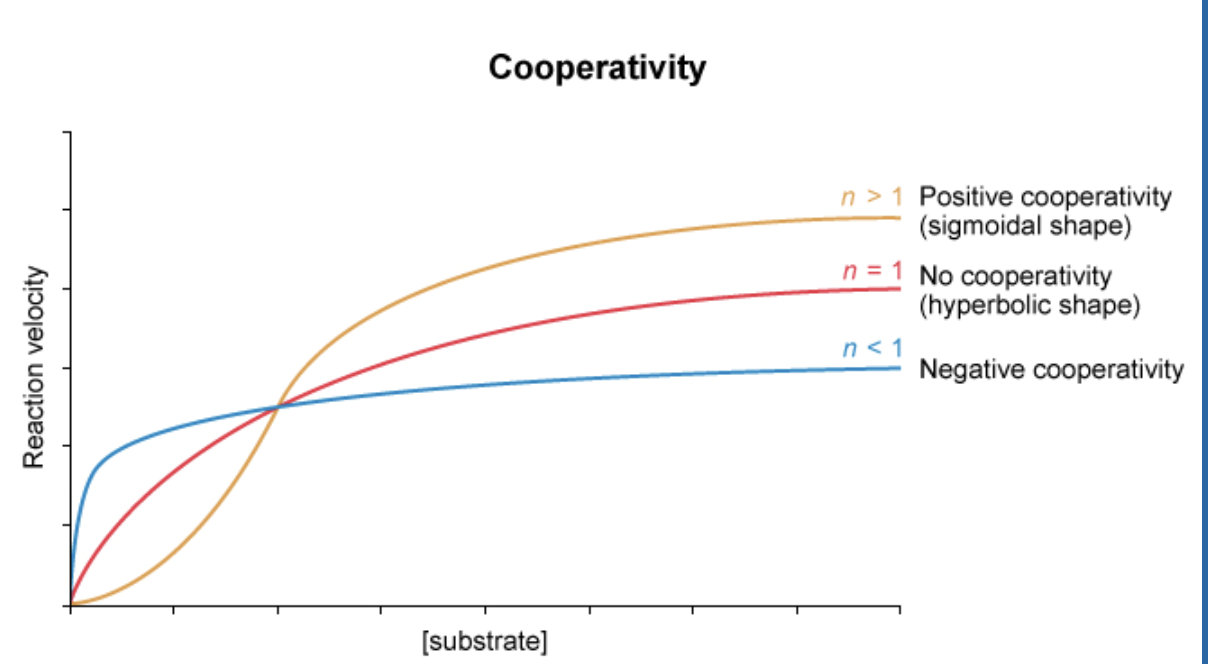
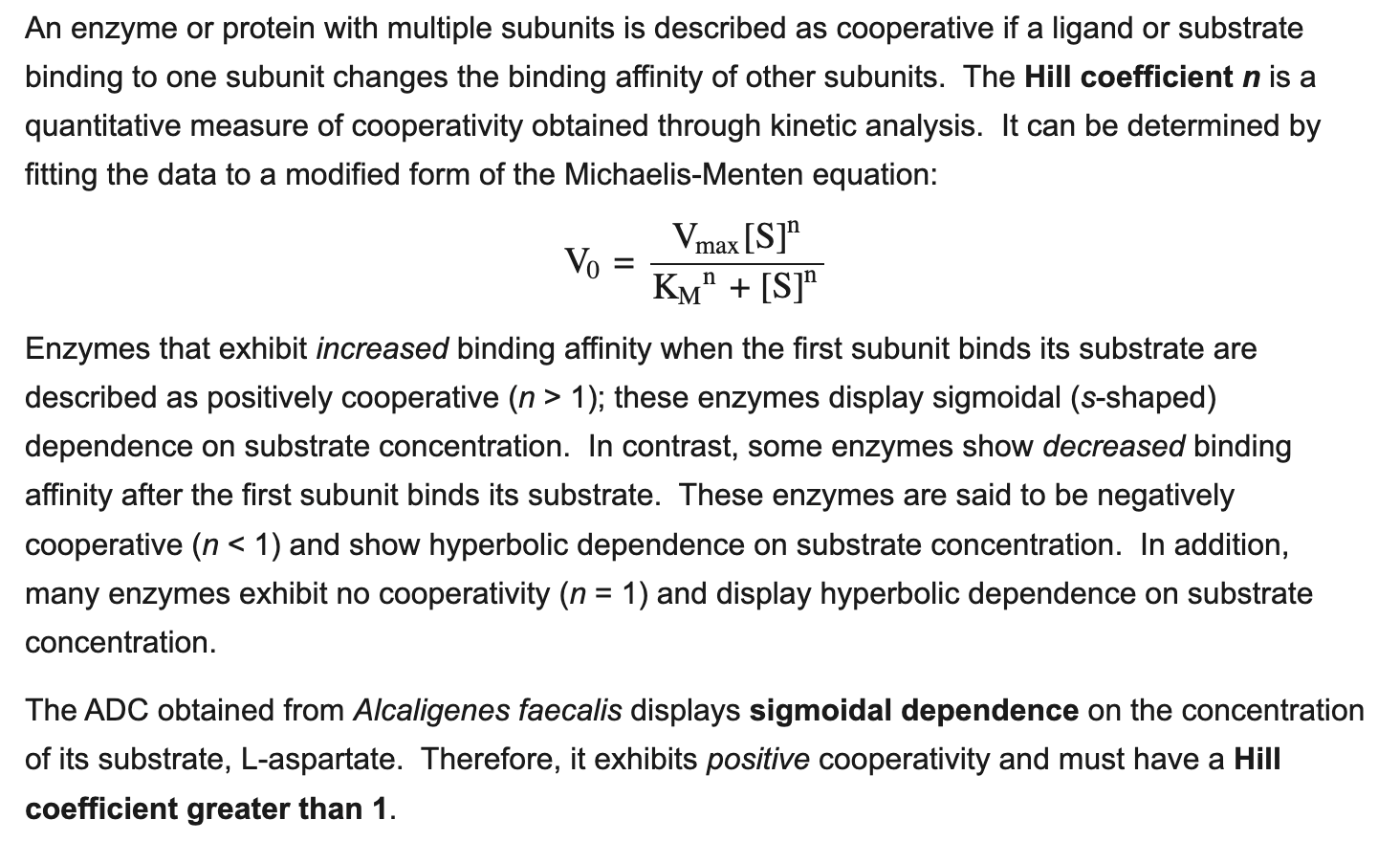
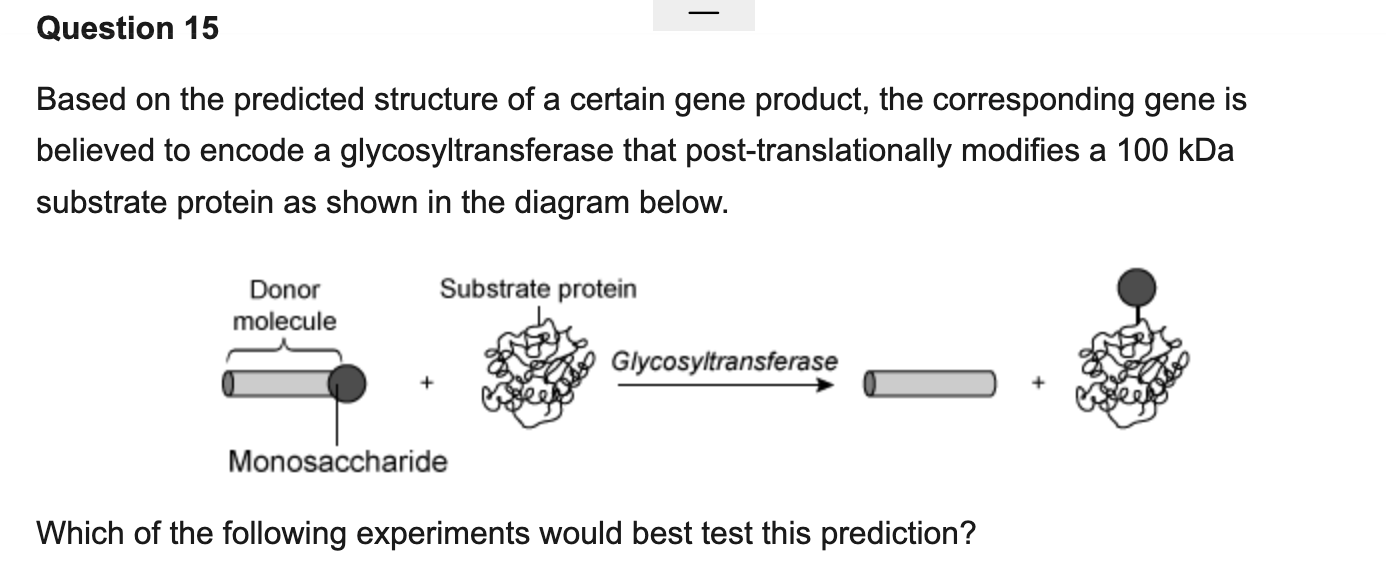
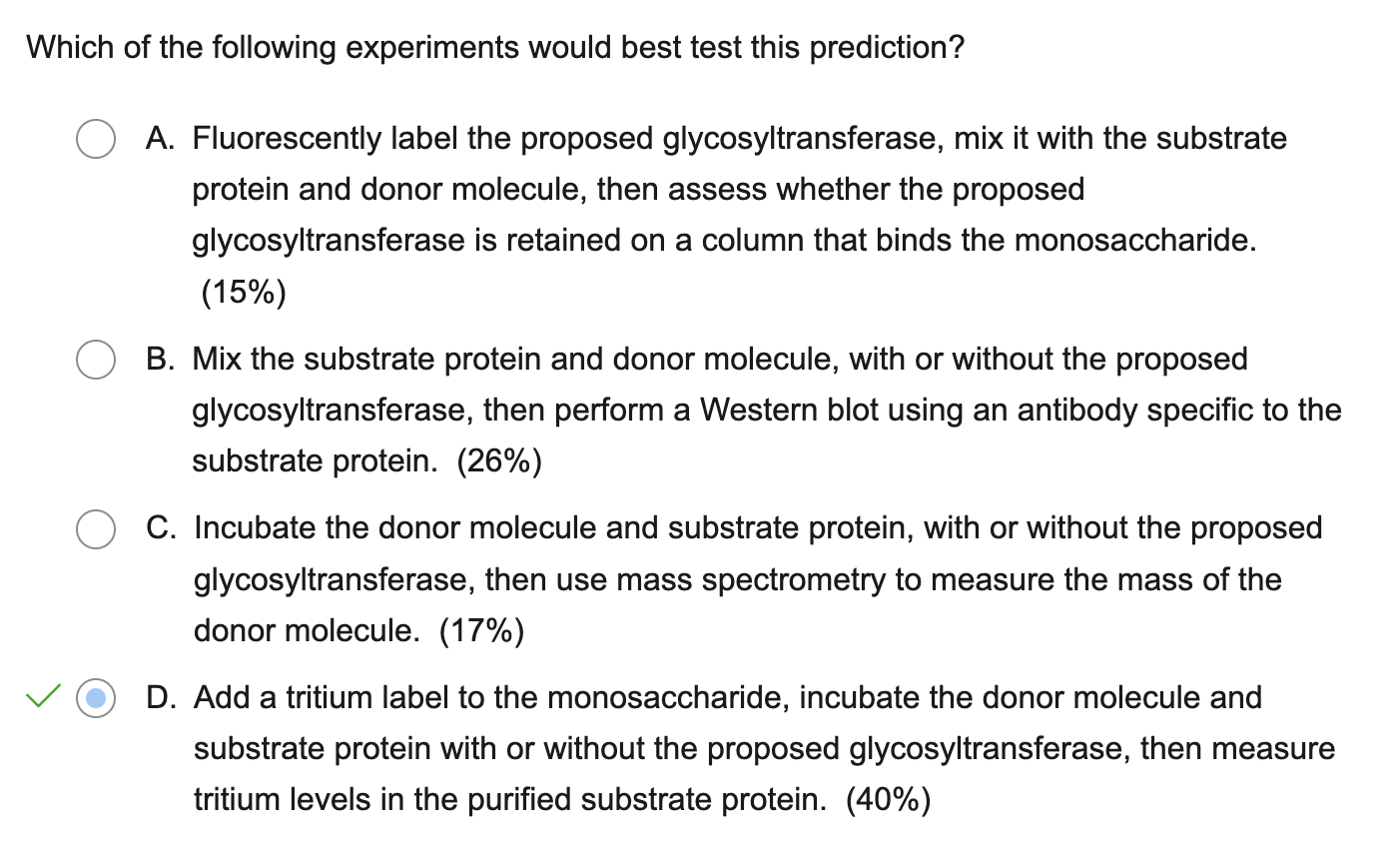
List each is true or false for enzyme catalyzed reactions
presence or absence of a post translational modification may alter the activation energy of Ea of the reaction
enzyme does not affect the net reaction rate if the ratio of products to reactans equals Keq for the reaction
substrates can covalently modify the enzyme to cause a permanent decrease in the enzyme’s turnover number kcat
Saturation of enzyme active sites by substrates limits the maximum reactions velocity Vmax
true— ex. phosphorylation or dephos is a comman way to actvate or inactivate enzymes. Therefore, post trans may alter Ea of reaction
true—- enzyme doesn’t change equilibrium of reaction if system is already at equilibrium, addition of enzyme will NOT affect net reaction rate and rate will remain at zero
3.false—
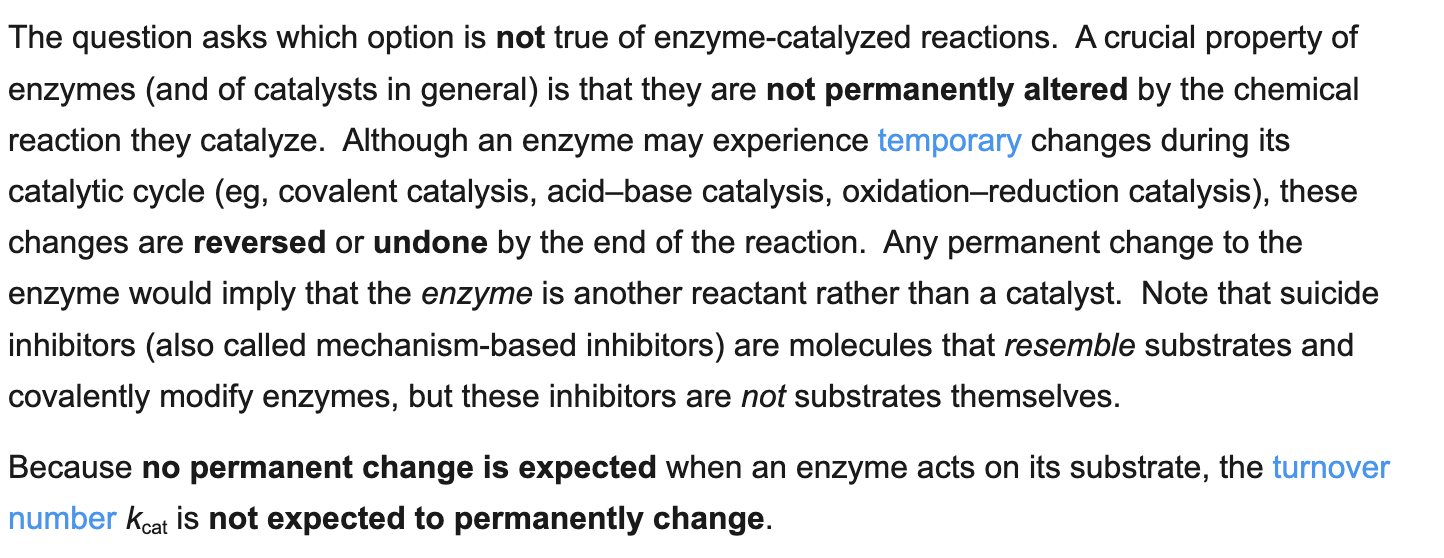
true— once all actives are bound to substrate, reaction rate cannot increase unless mroe enzyme is added



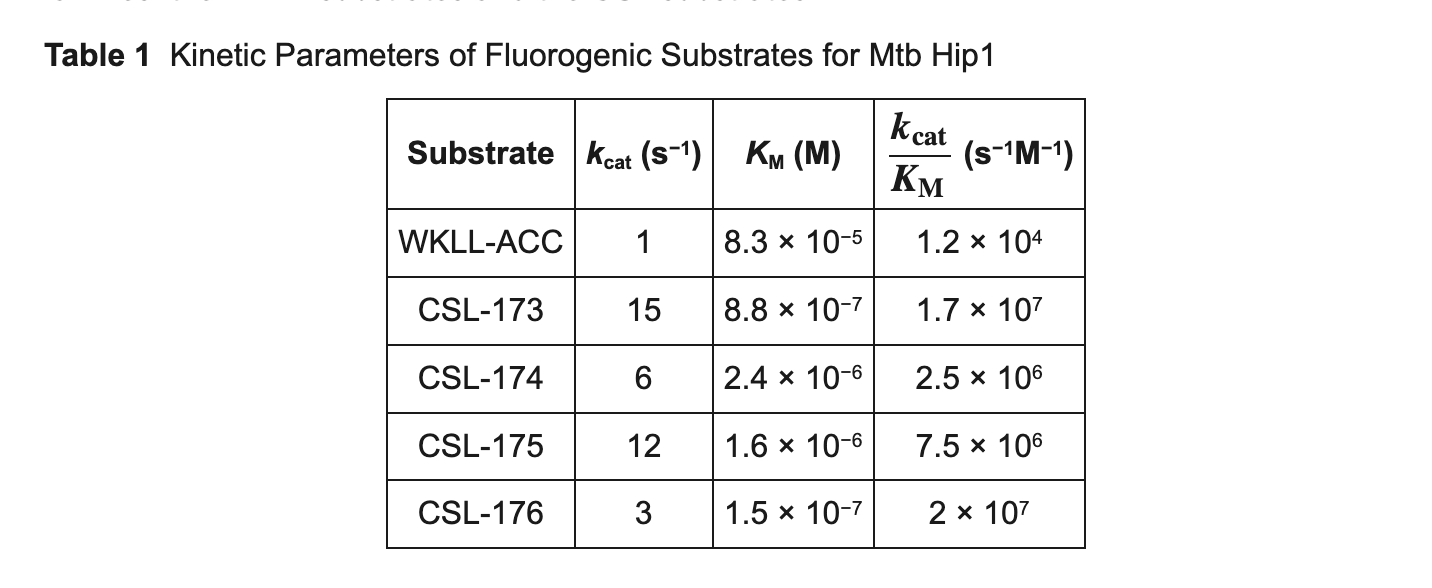
Answer: B
Look at Km (lower Km equals greater affinity)

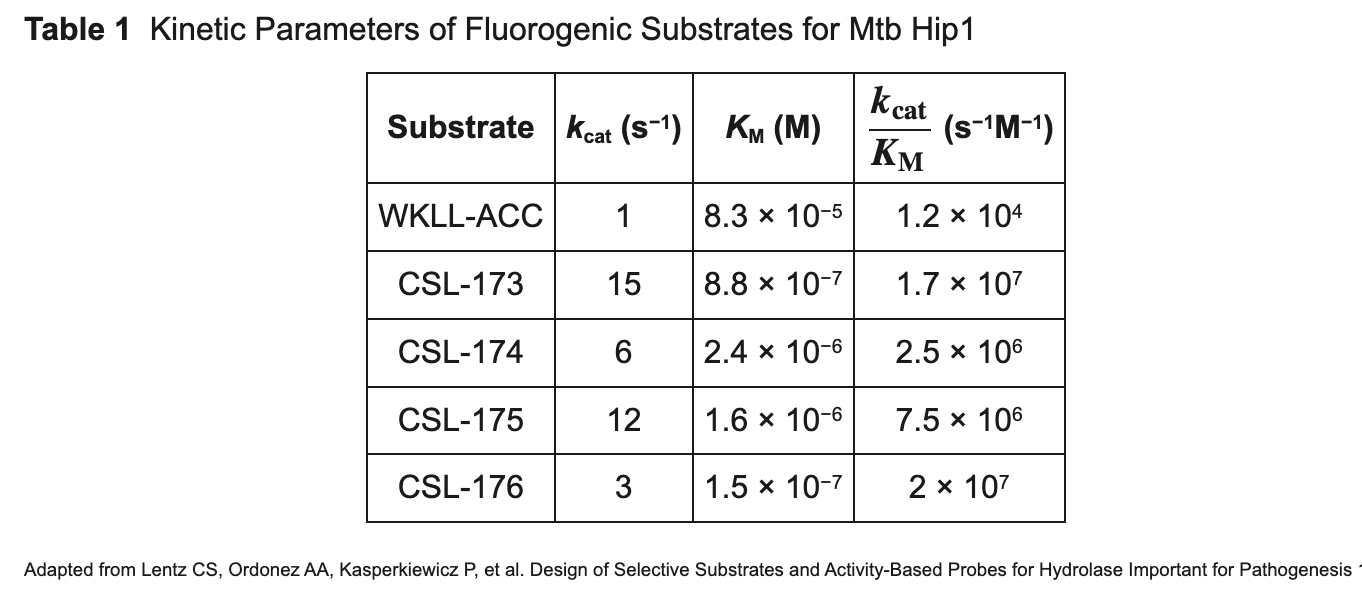
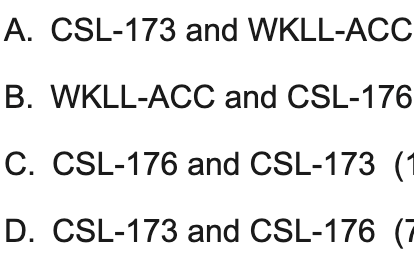
Answer: D
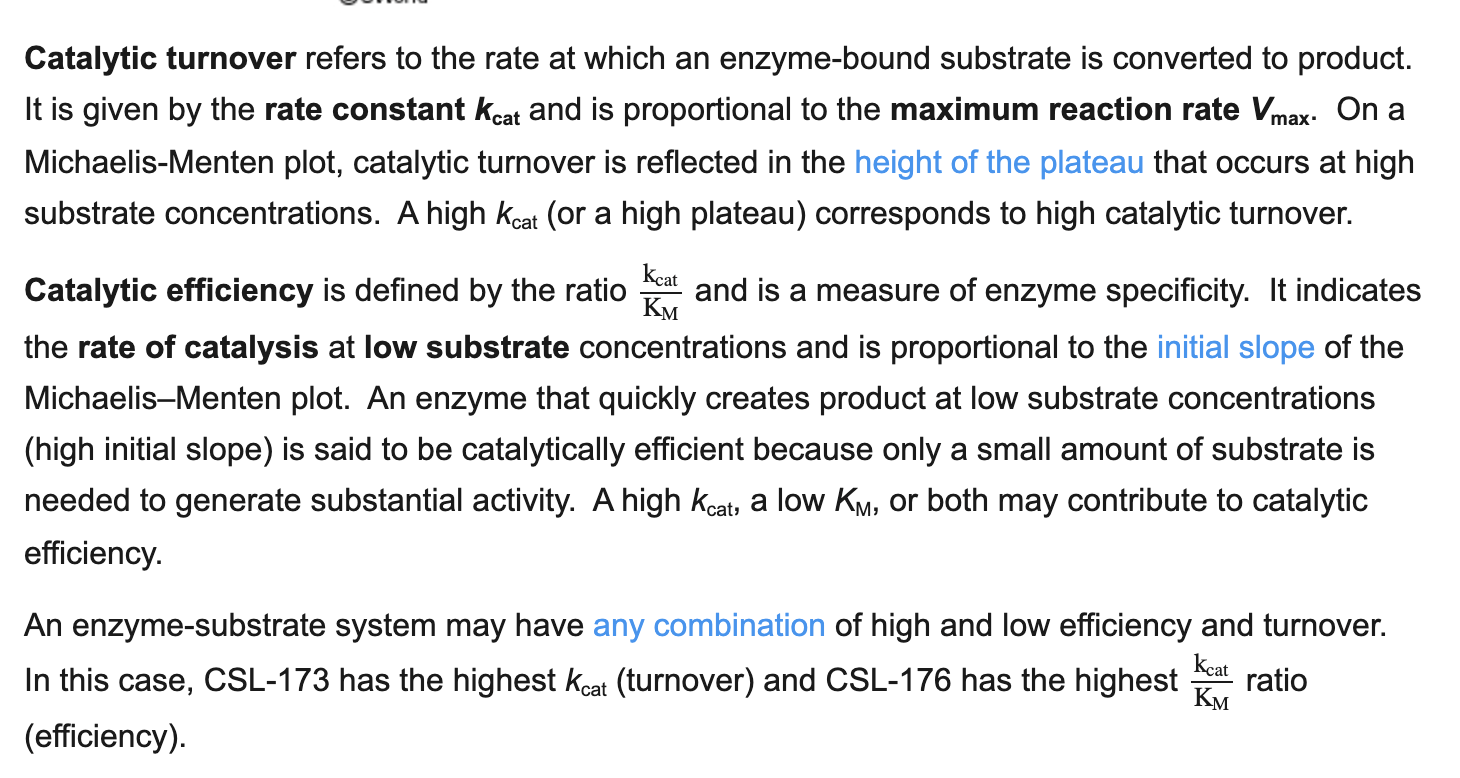
Kcat high = great turnover
Kcat/Km high= great catalytic efficiency
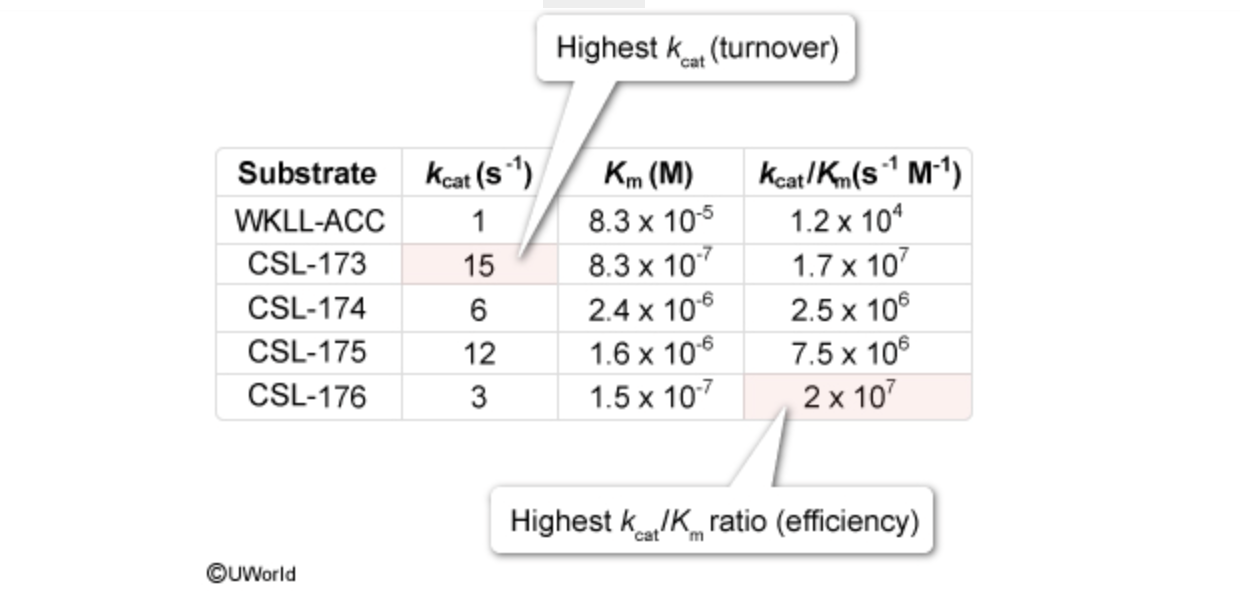
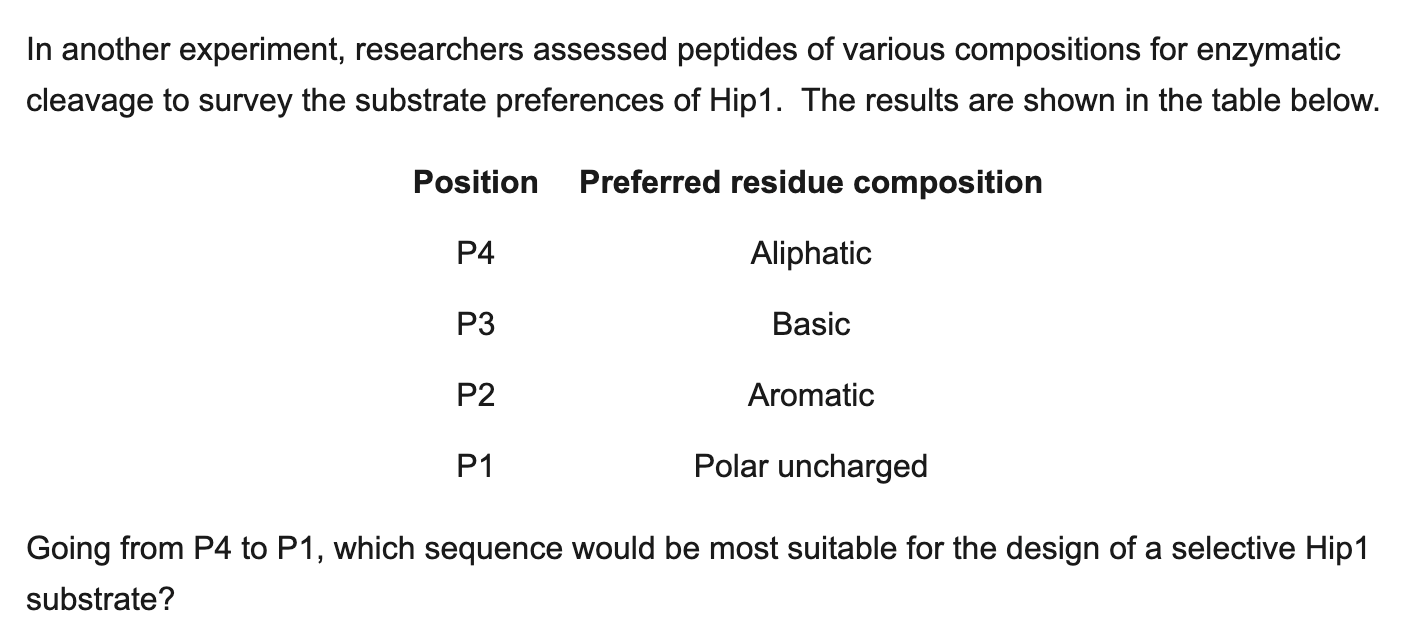
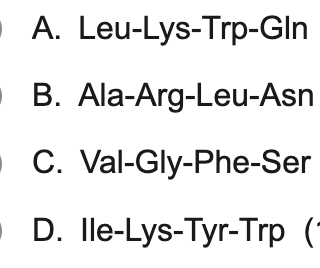
Answer:A
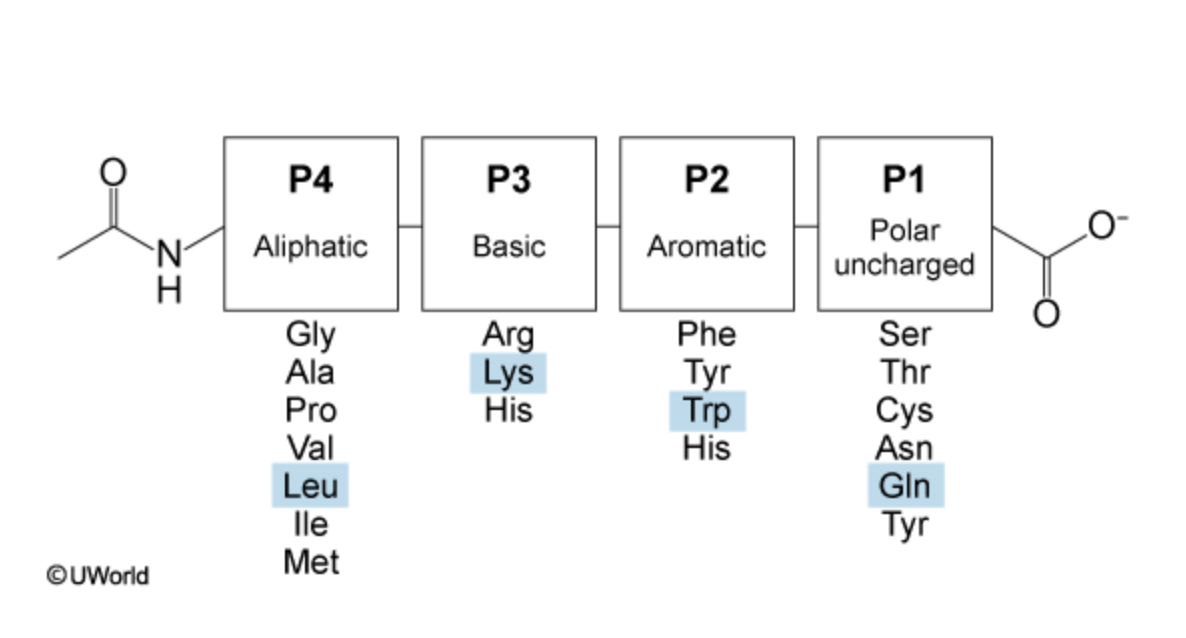

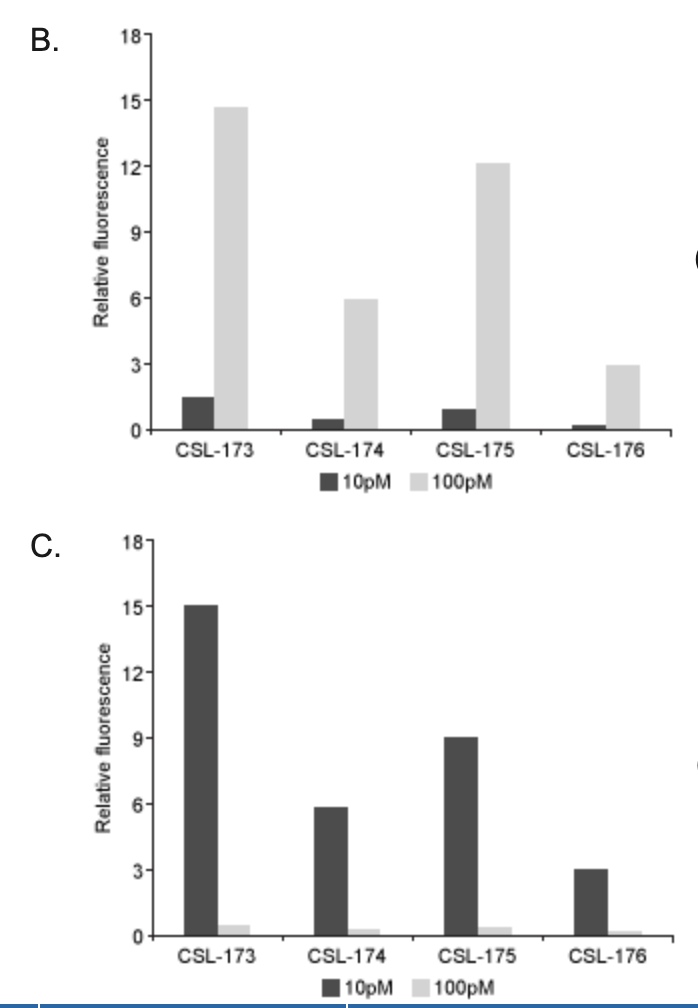
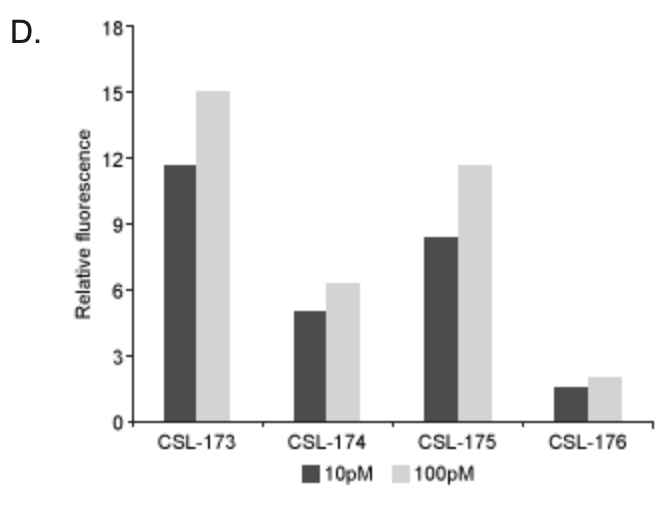
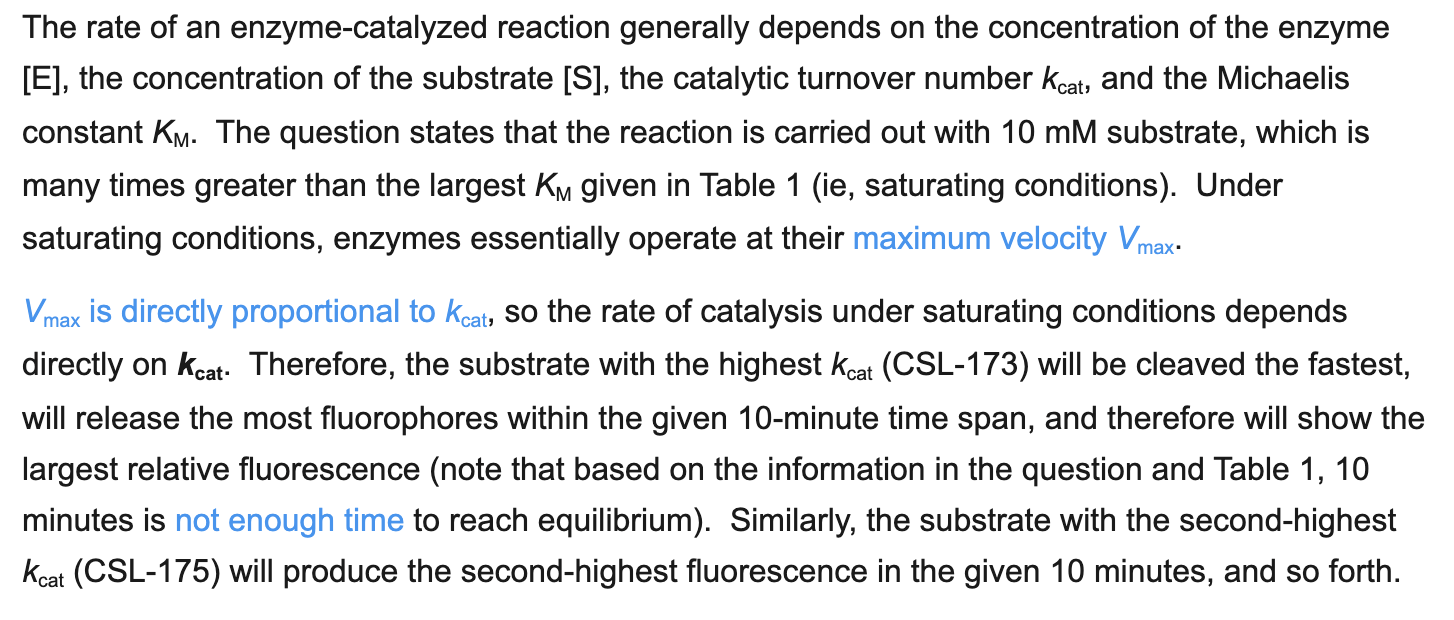
Answer:B



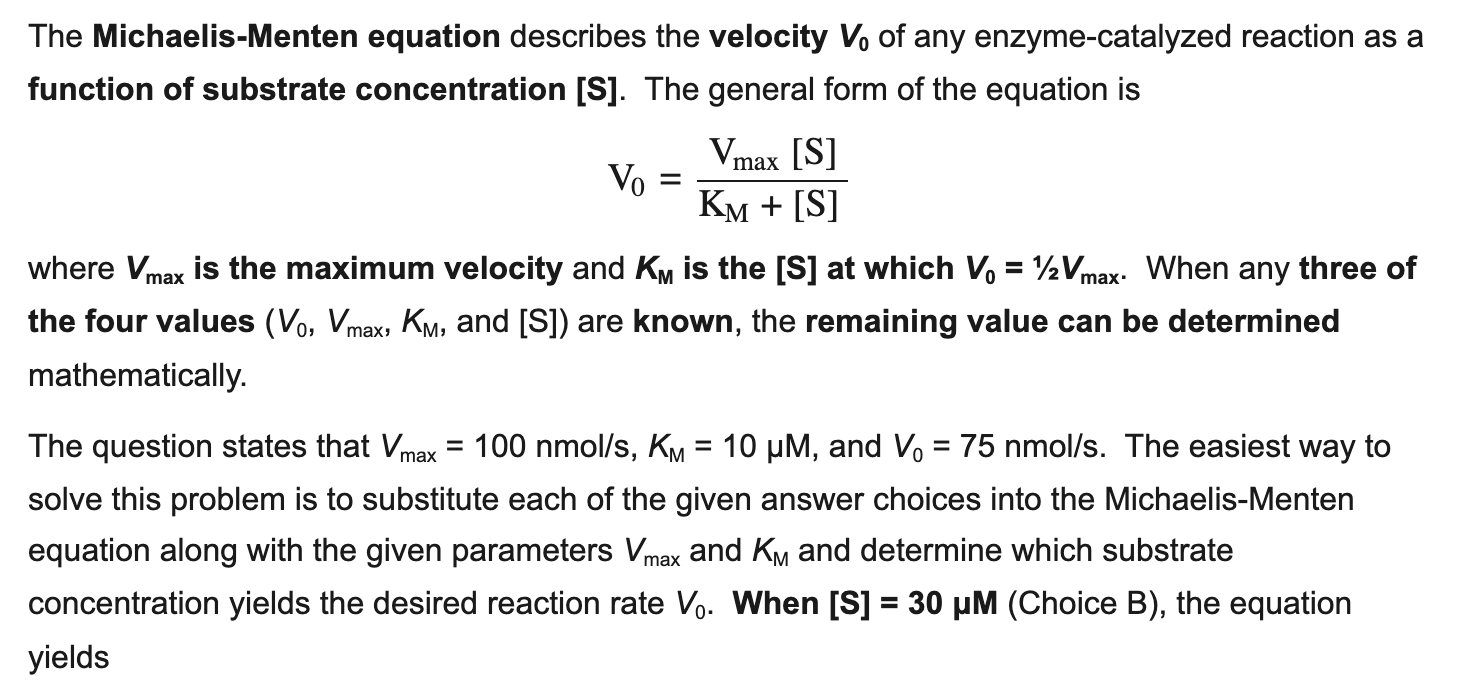
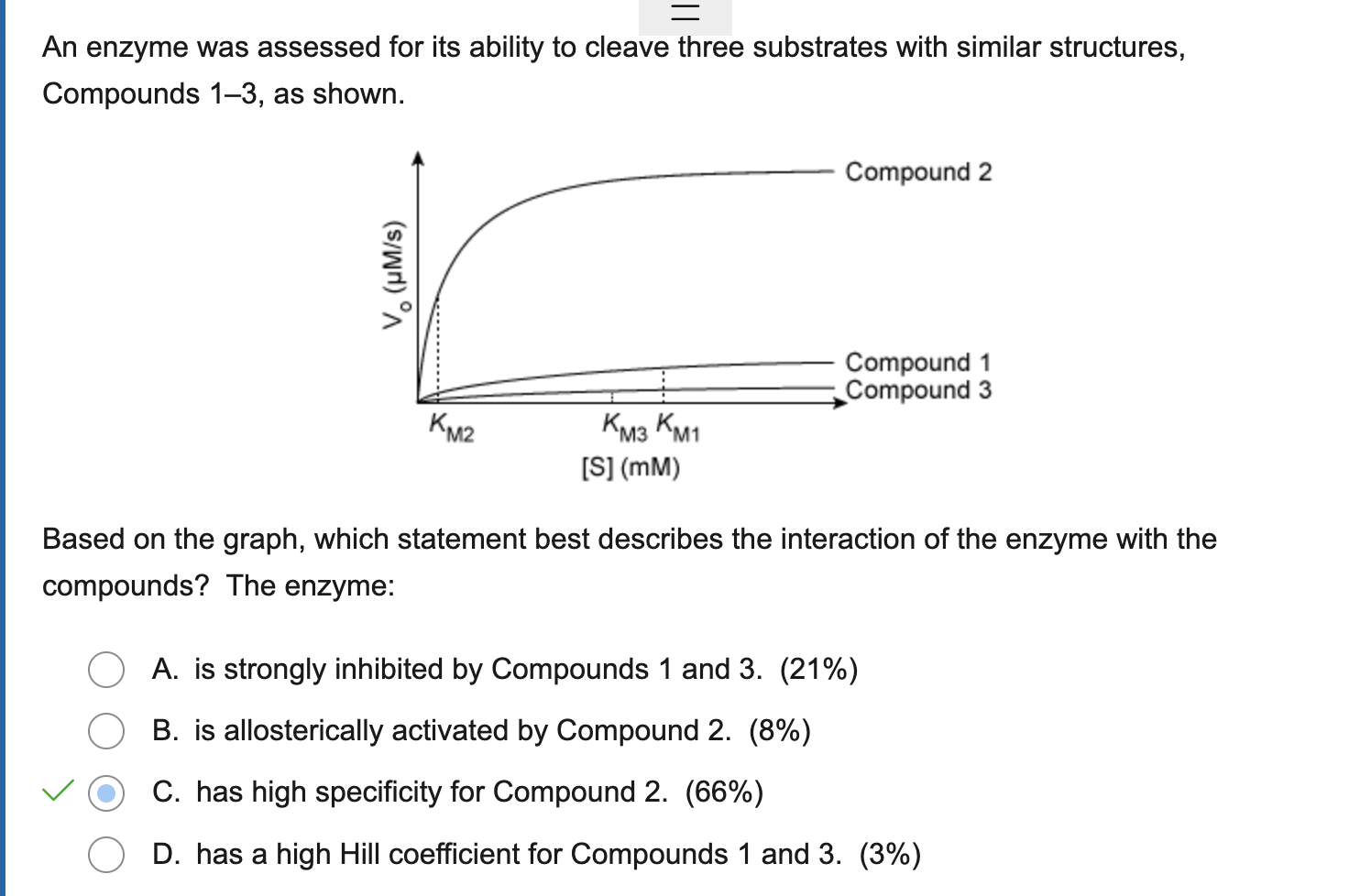
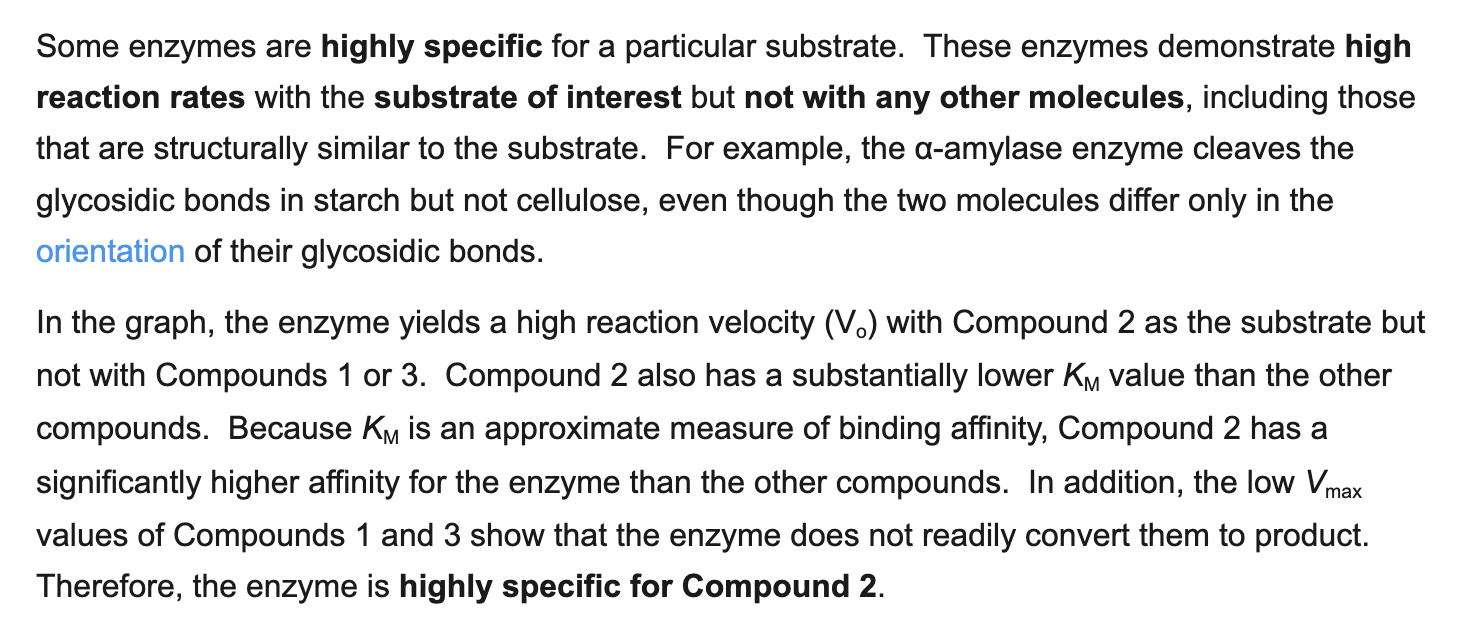
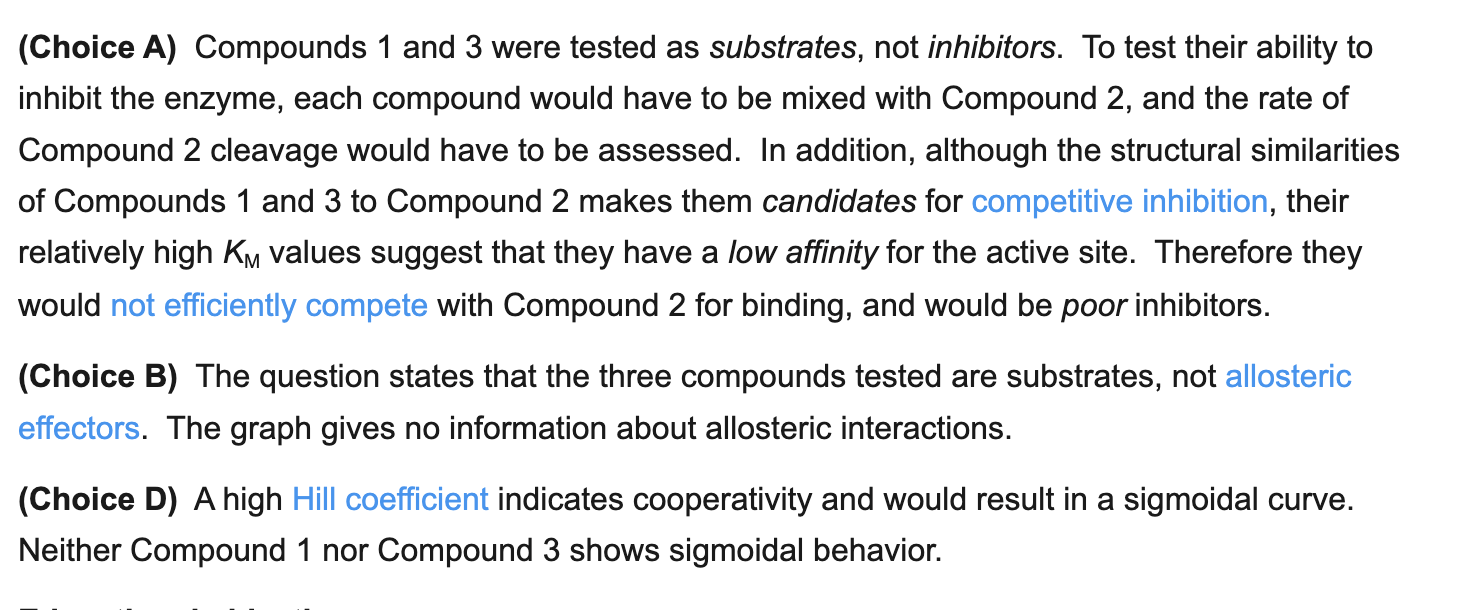
On Lineweaver-Burk plots, because the X intercept ( neg 1/Km) and Y intercept (1/Vmax) is inverse, an increase in the magnitudes of the intercepts corresponds to….
a decrease in Vmax and Km vice versa
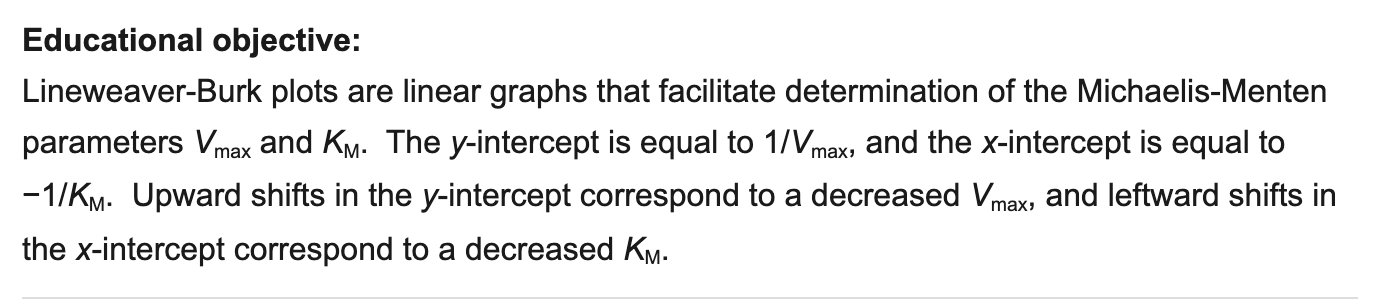
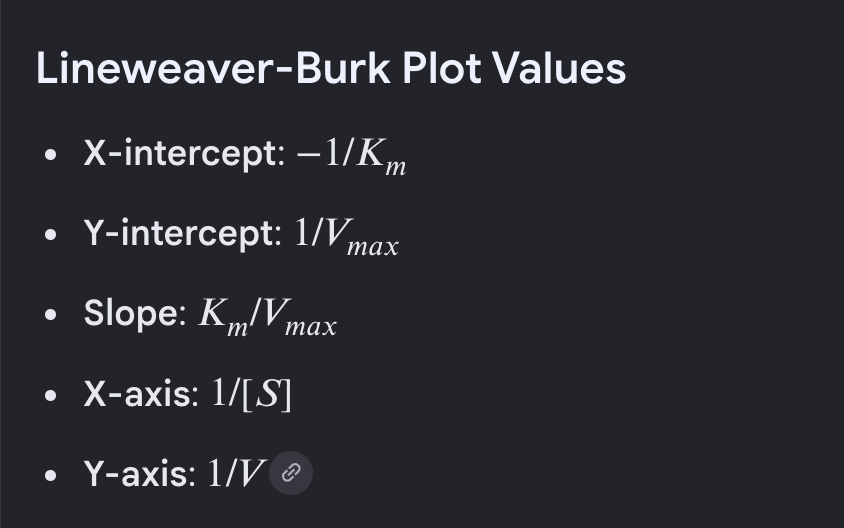
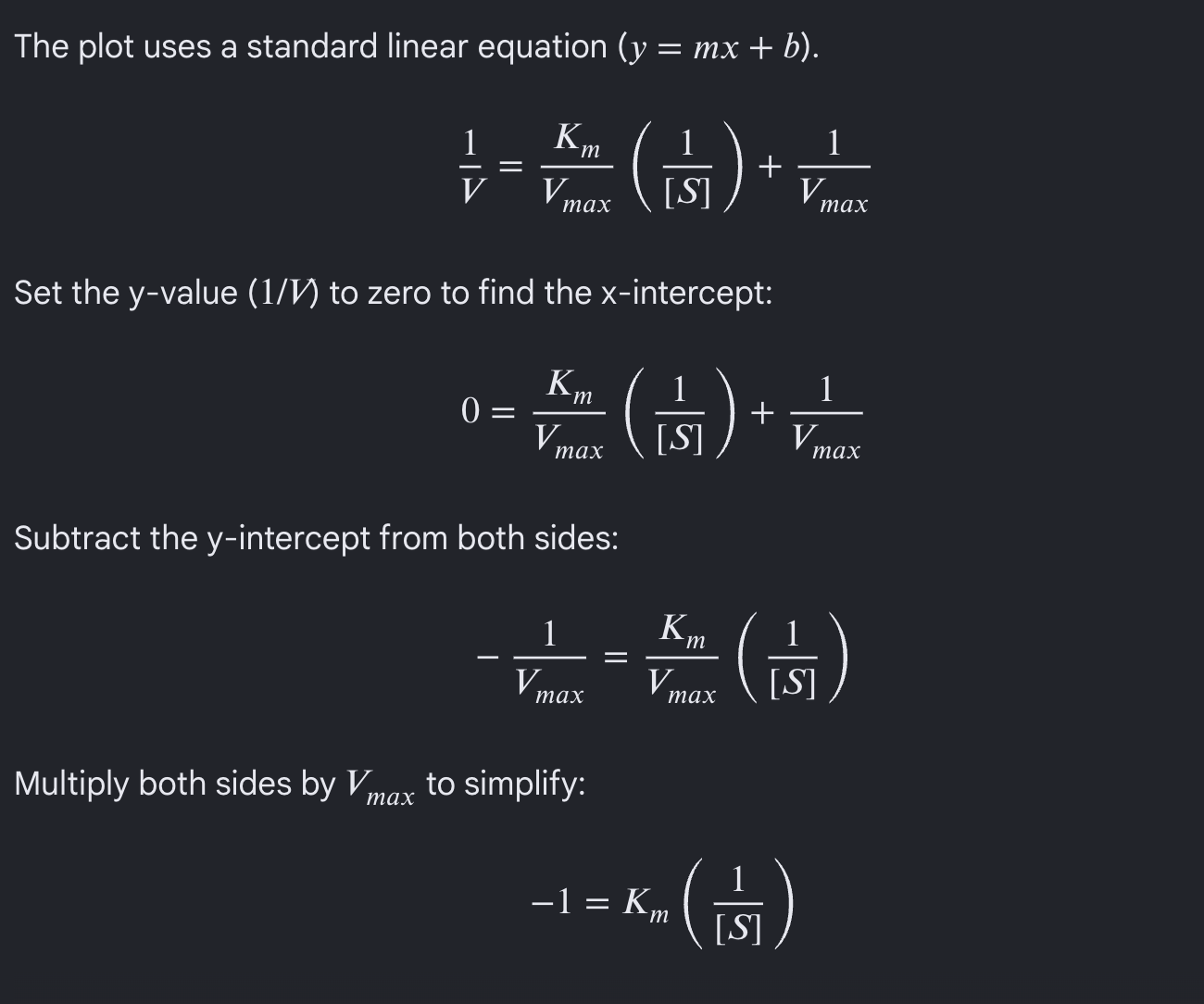
all the values of lineweaver-burk
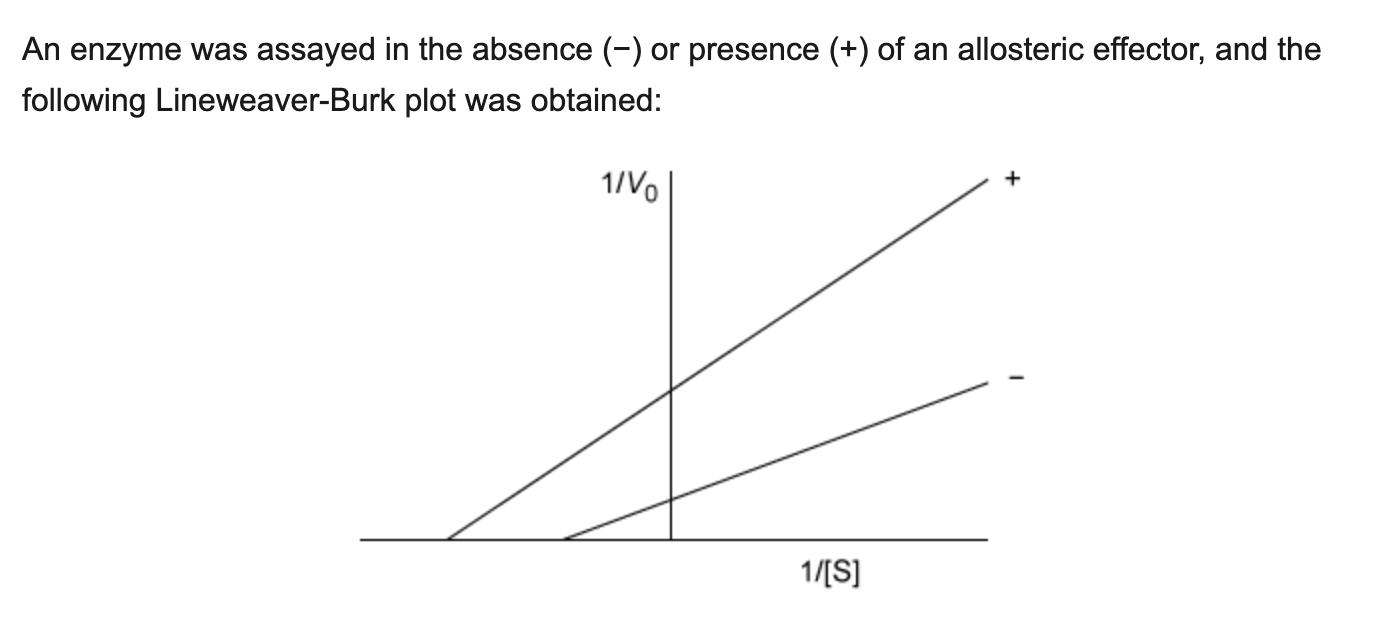
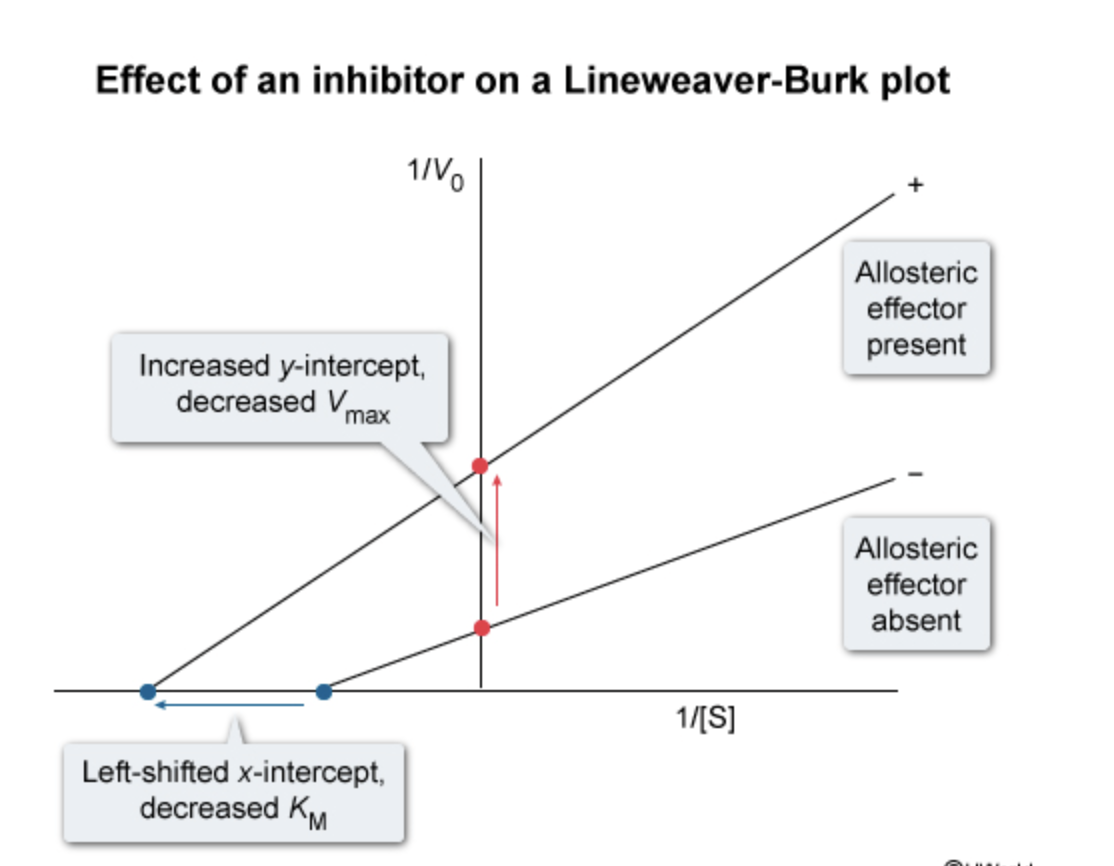
Is the effector an activator or inhibitor and does it increase or decrease the values?
Its an inhibitor
it decreases y value (by shifting upward)
It decreases x value (by shifting left)
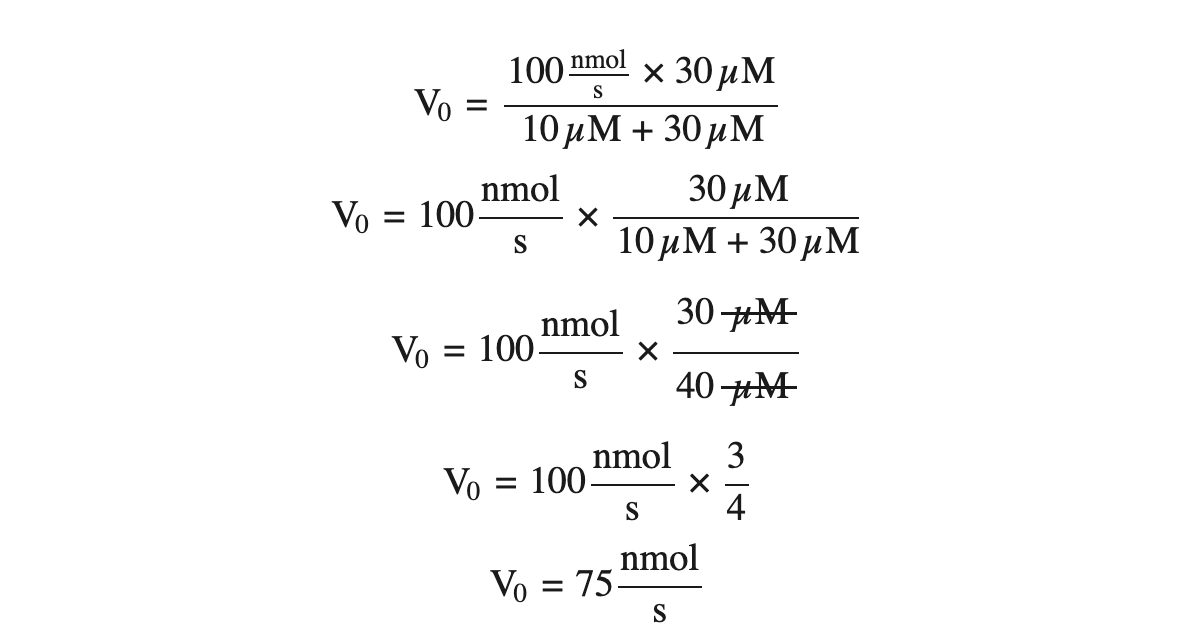
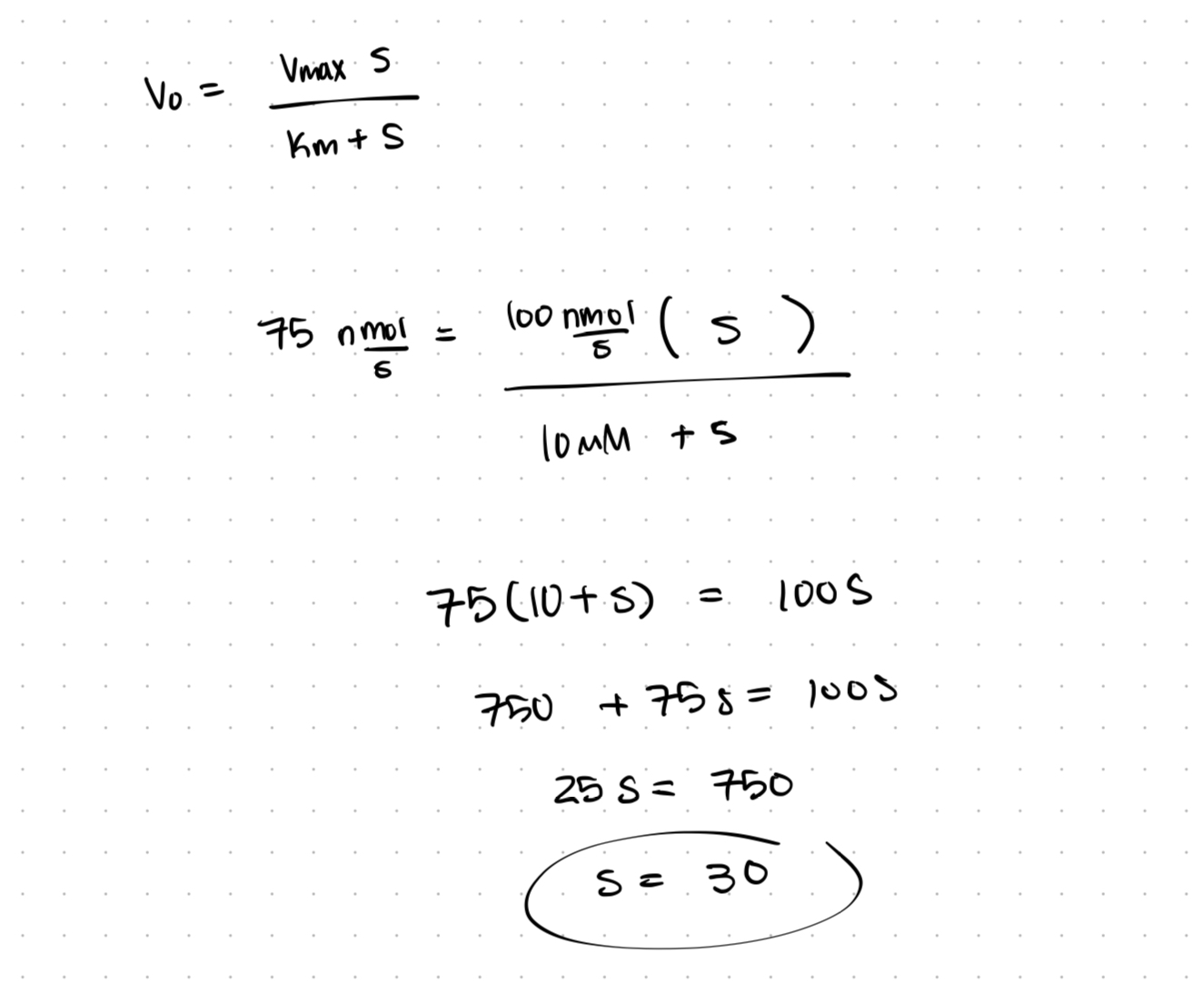
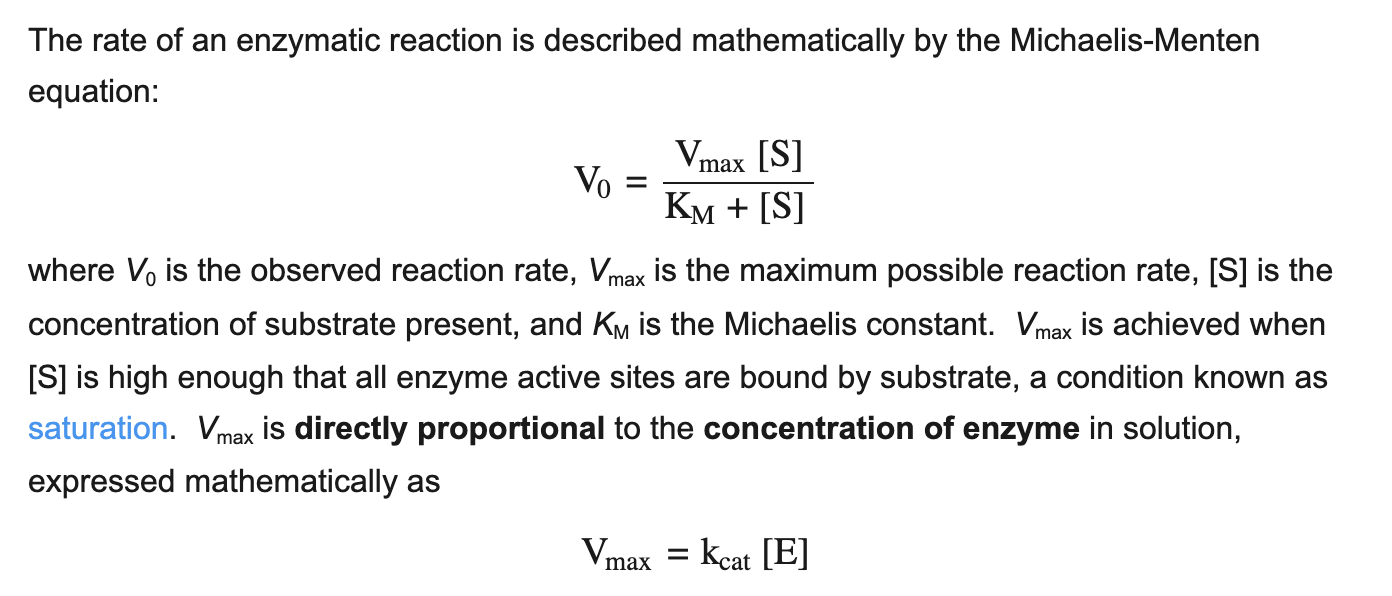
Michaelis Menten Equation
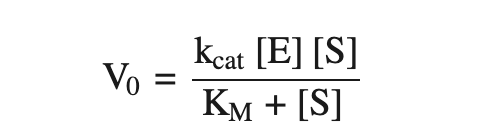
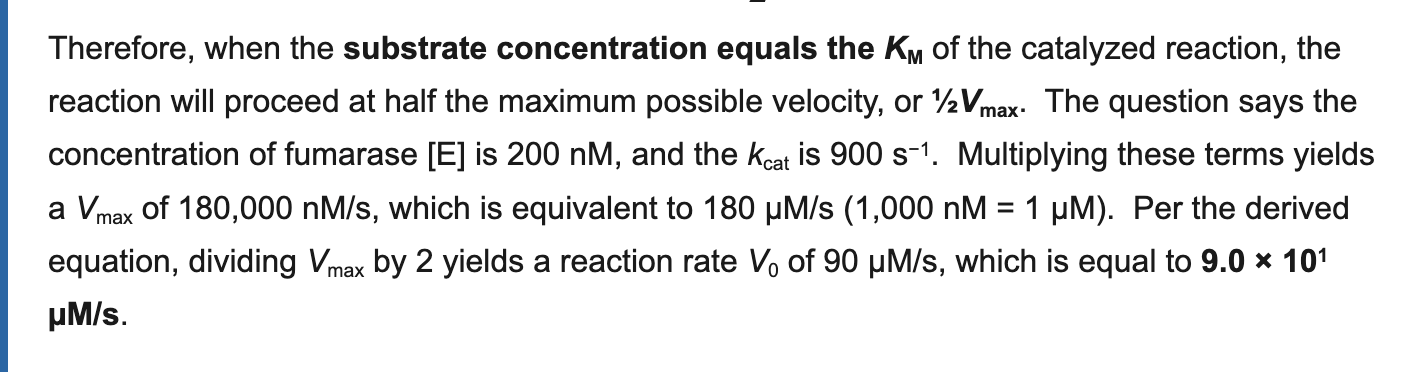
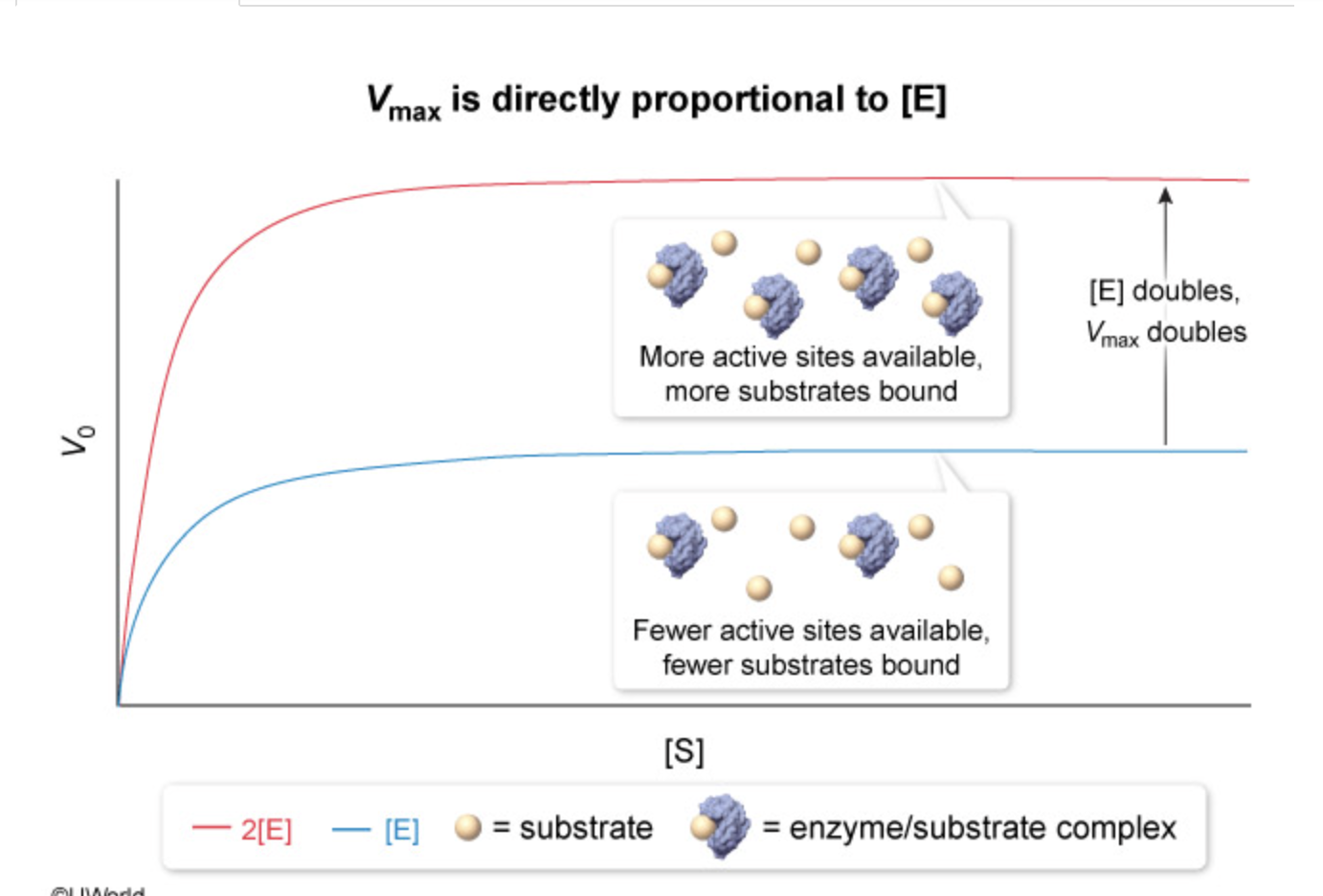
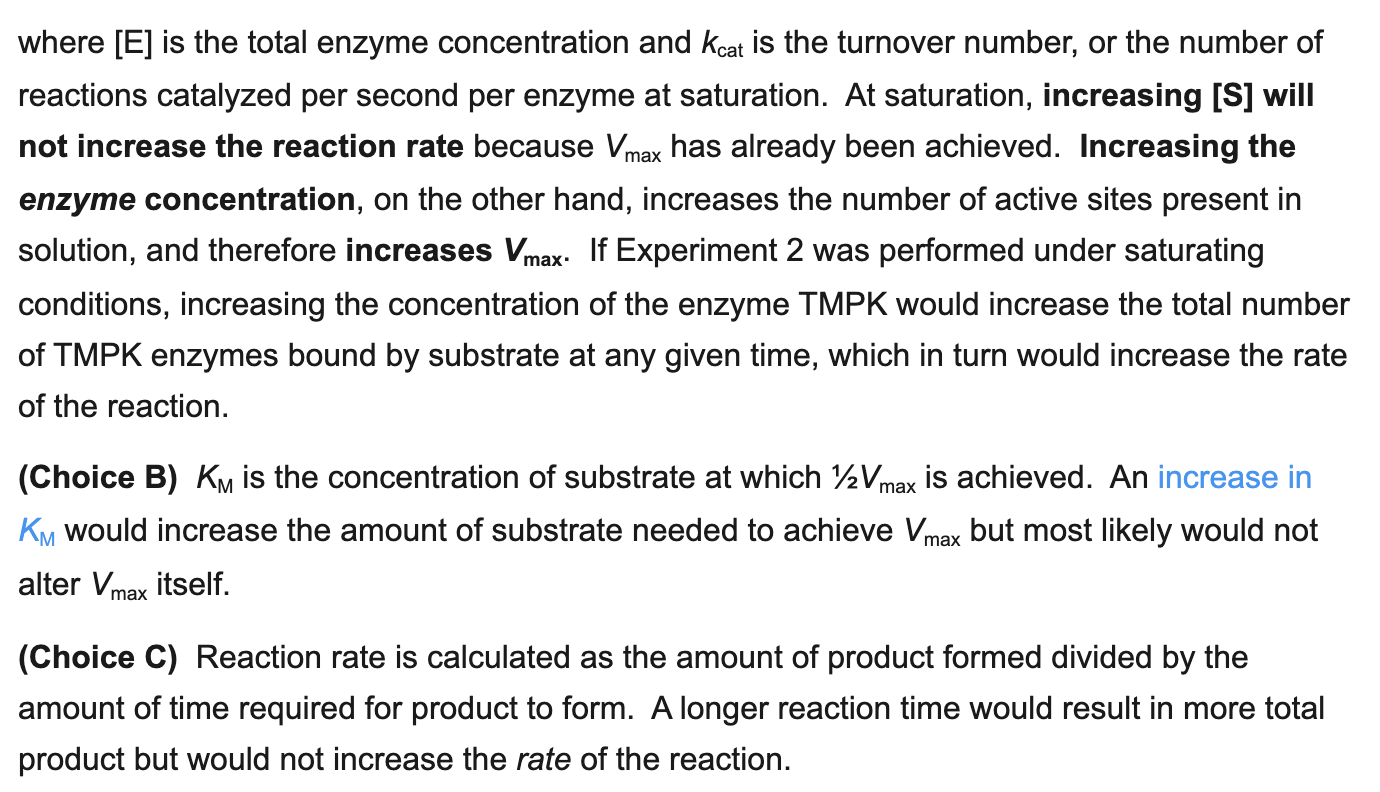
Note: Vmax= Kcat (E)
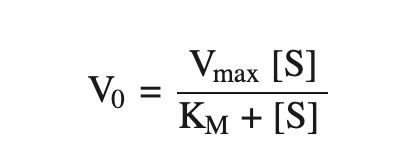
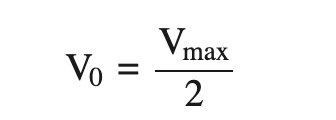
Initial Velocity vs Vmax when Km= Substrate conc.

Passage A
Passage A

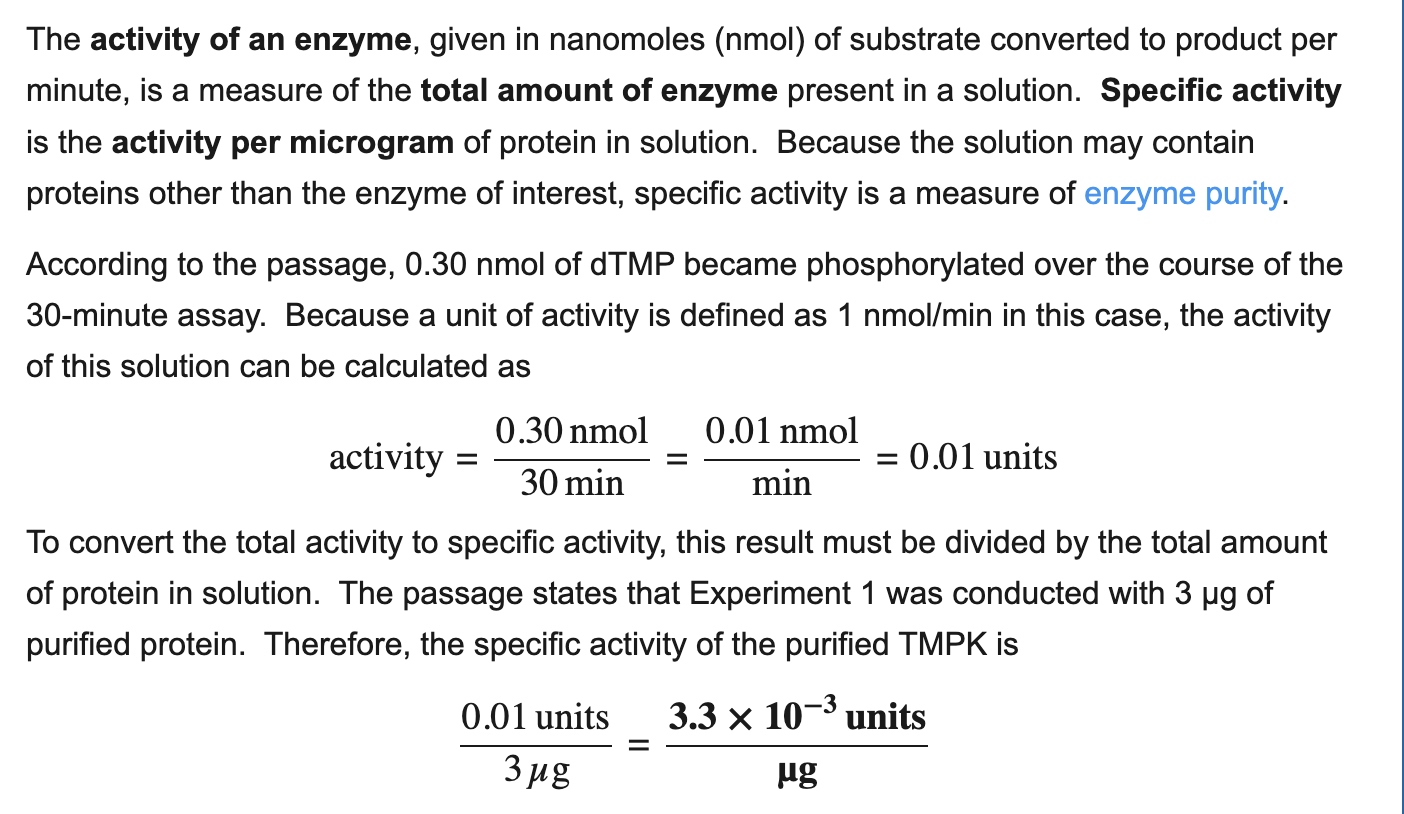
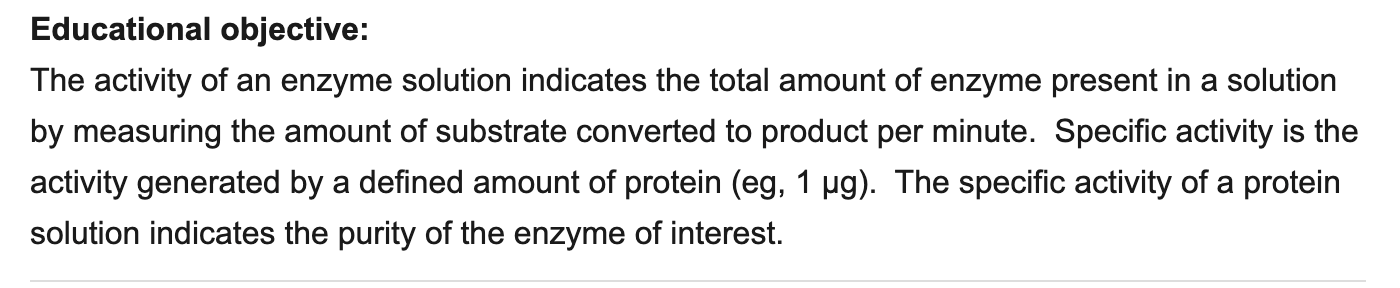
Passage A
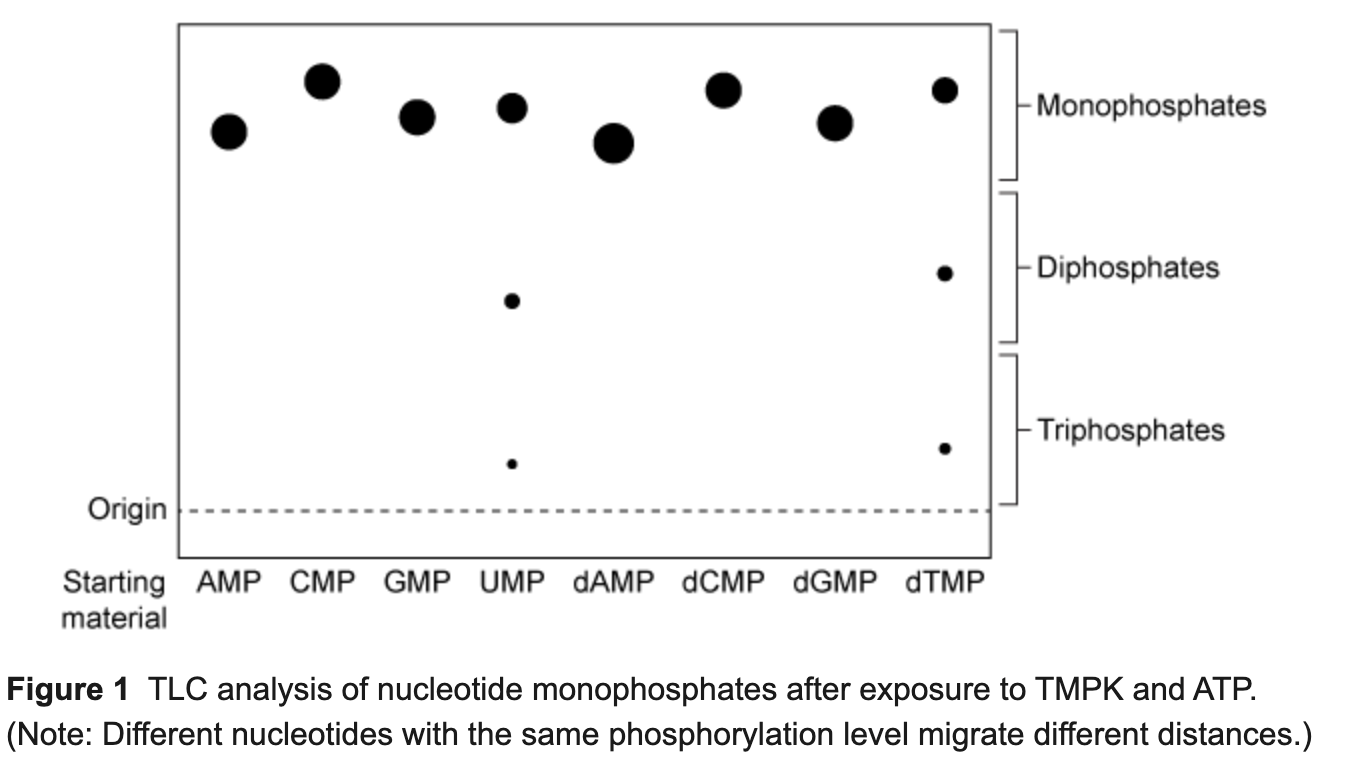

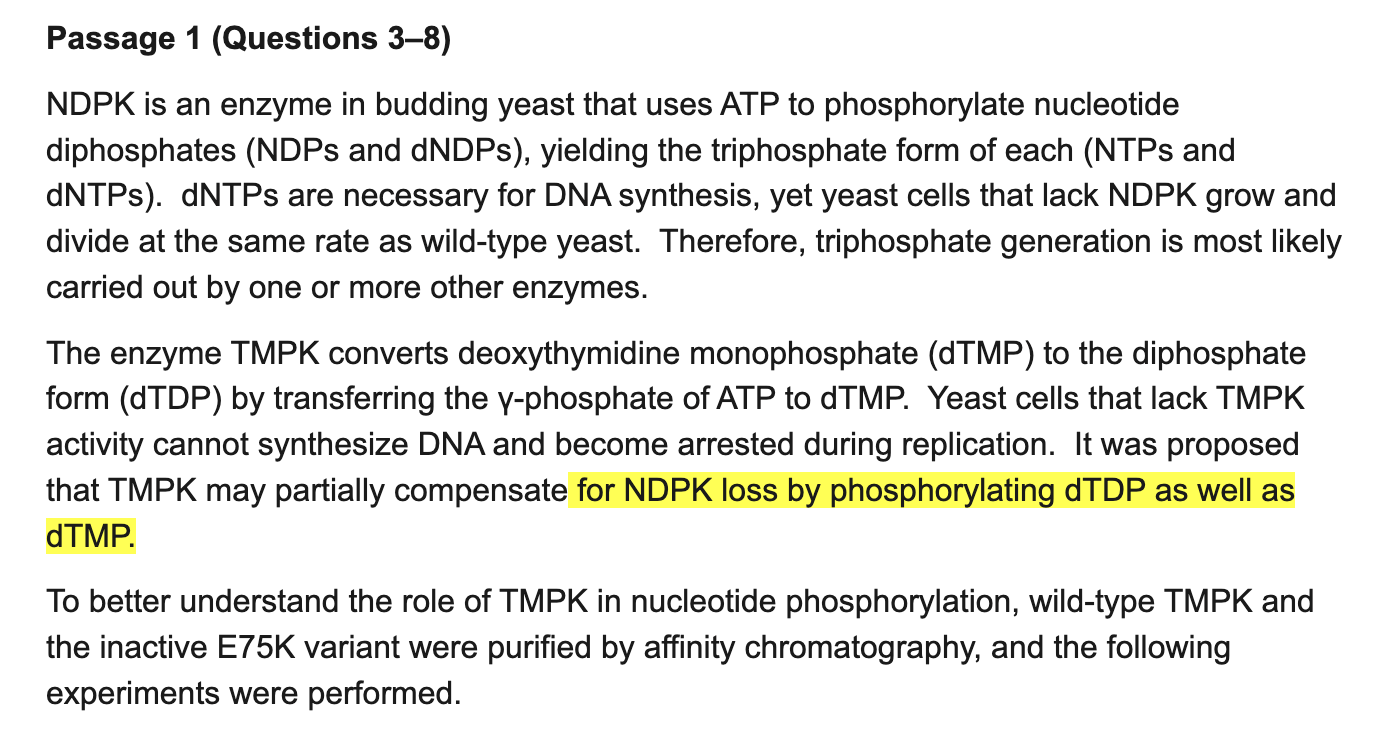
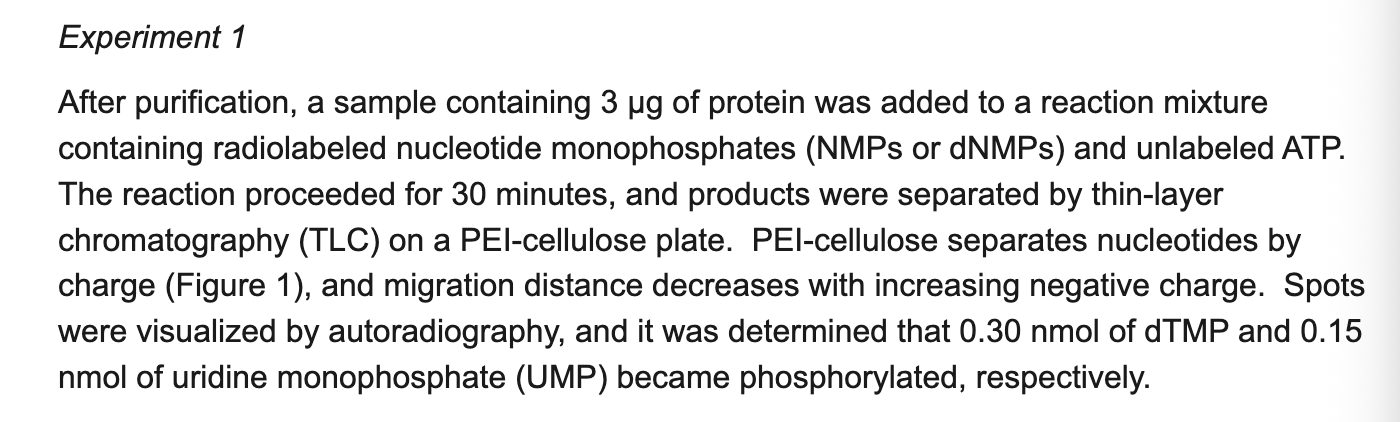
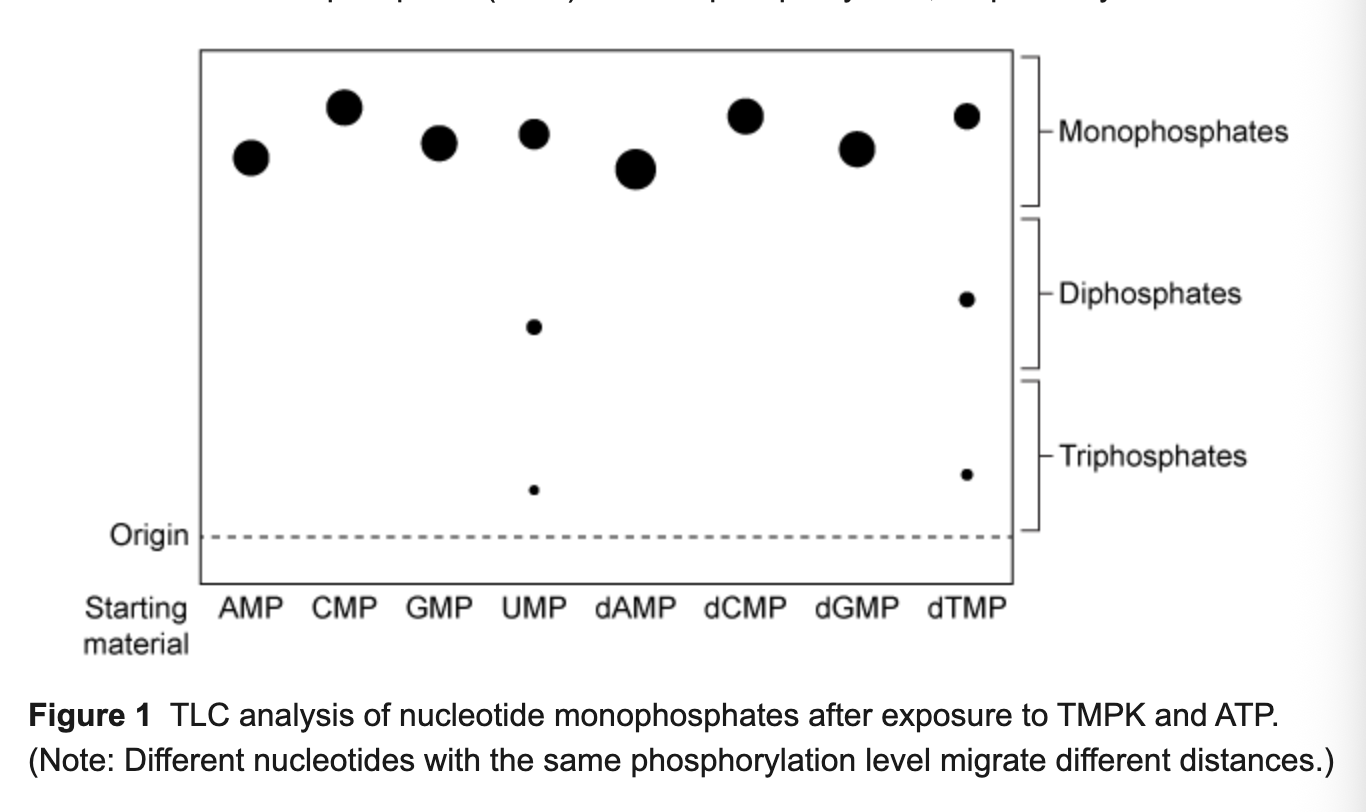
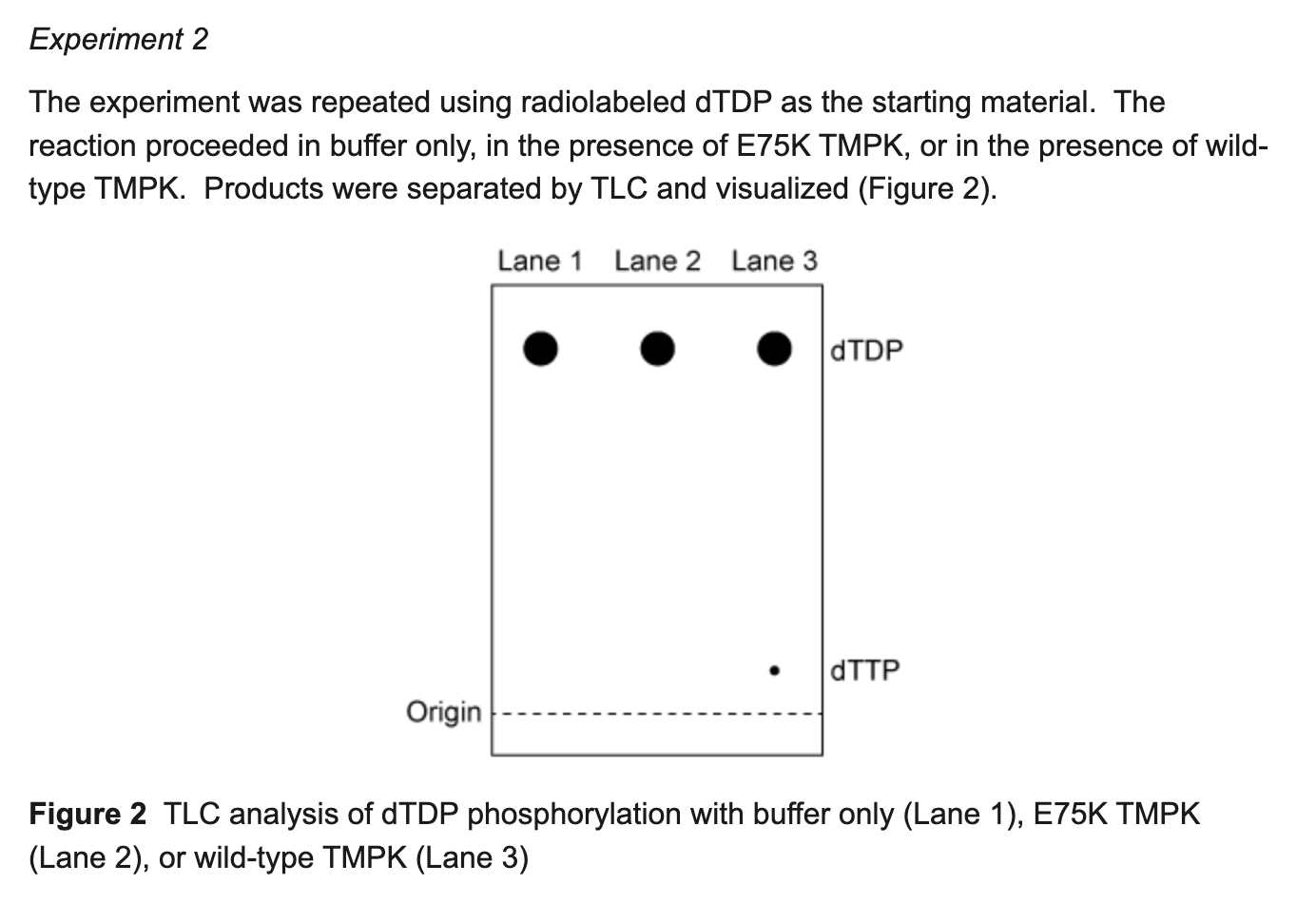
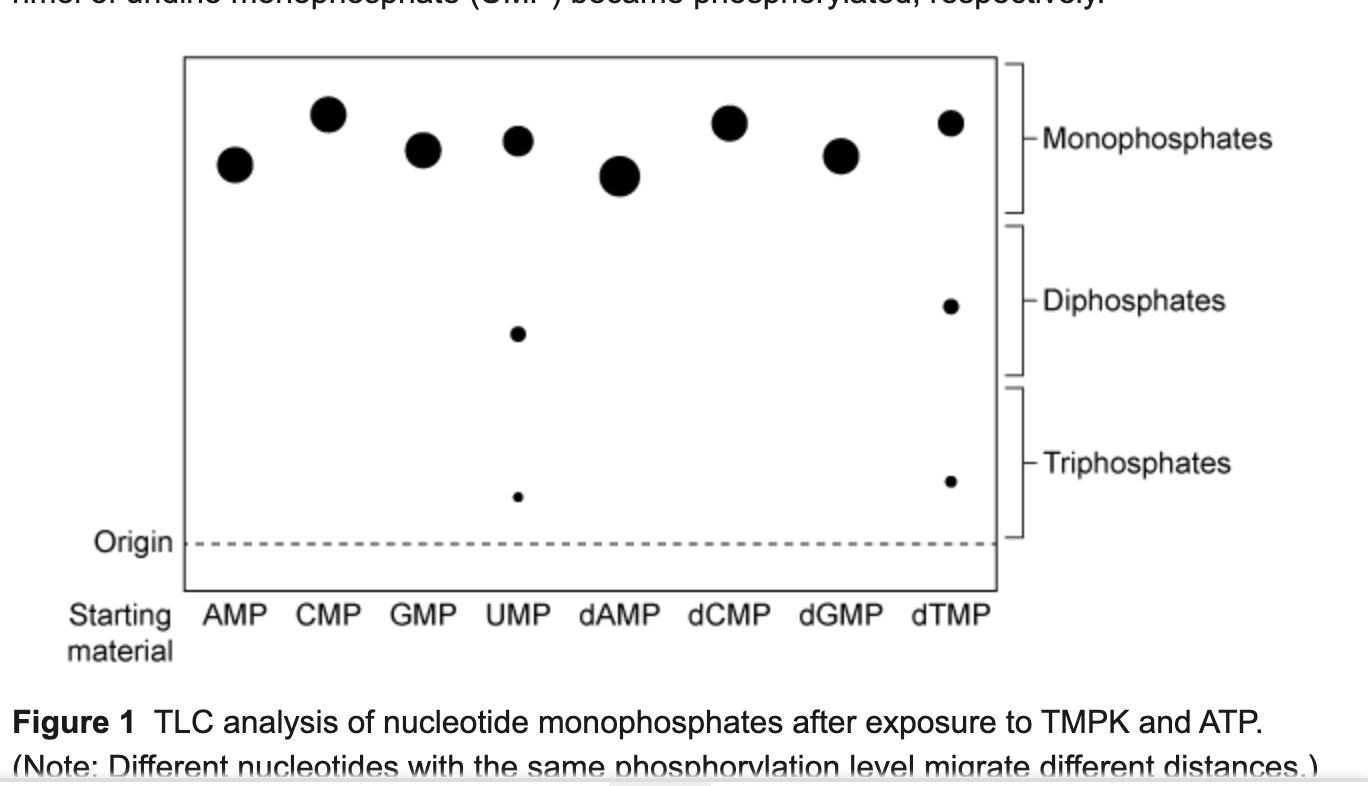
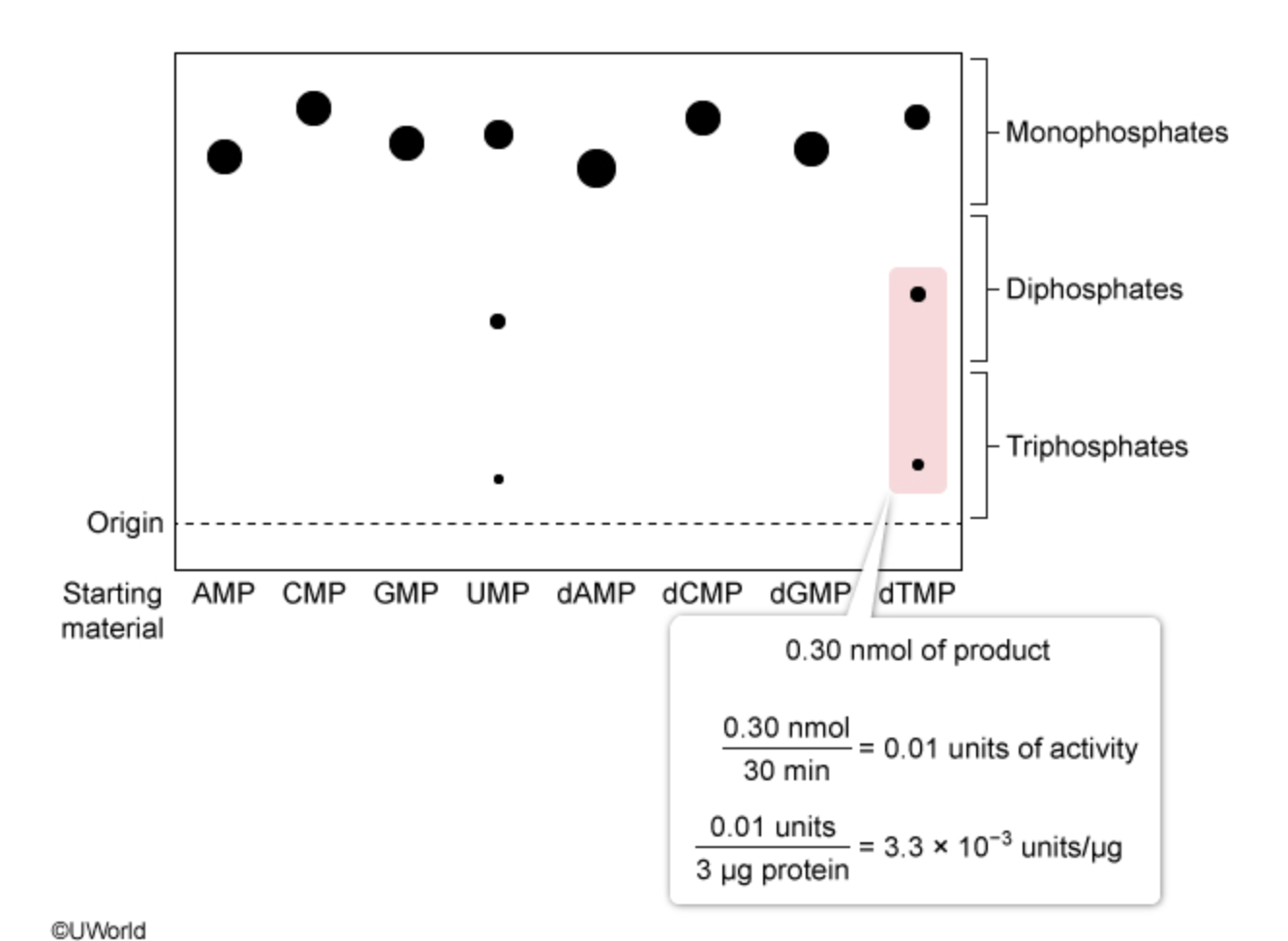
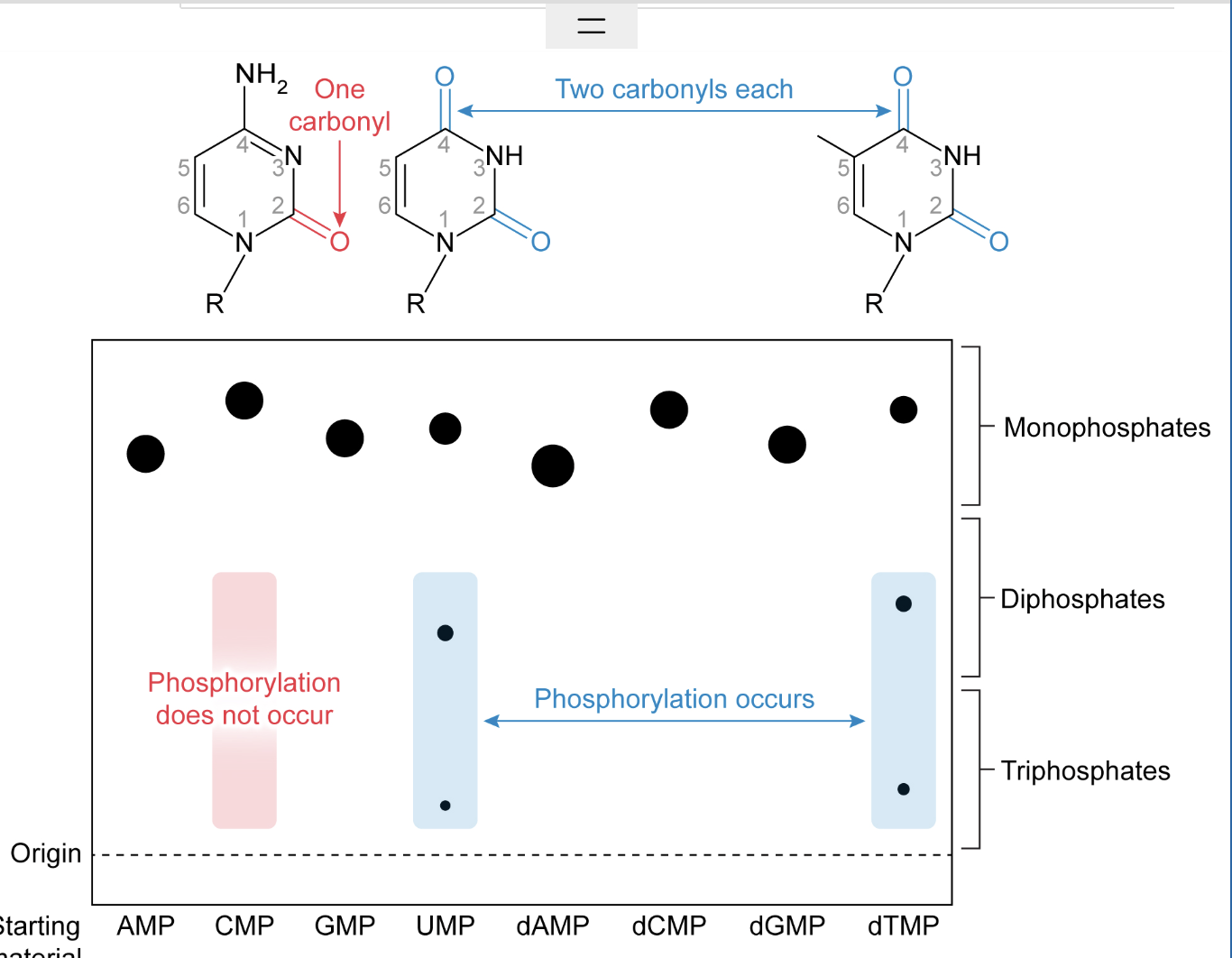
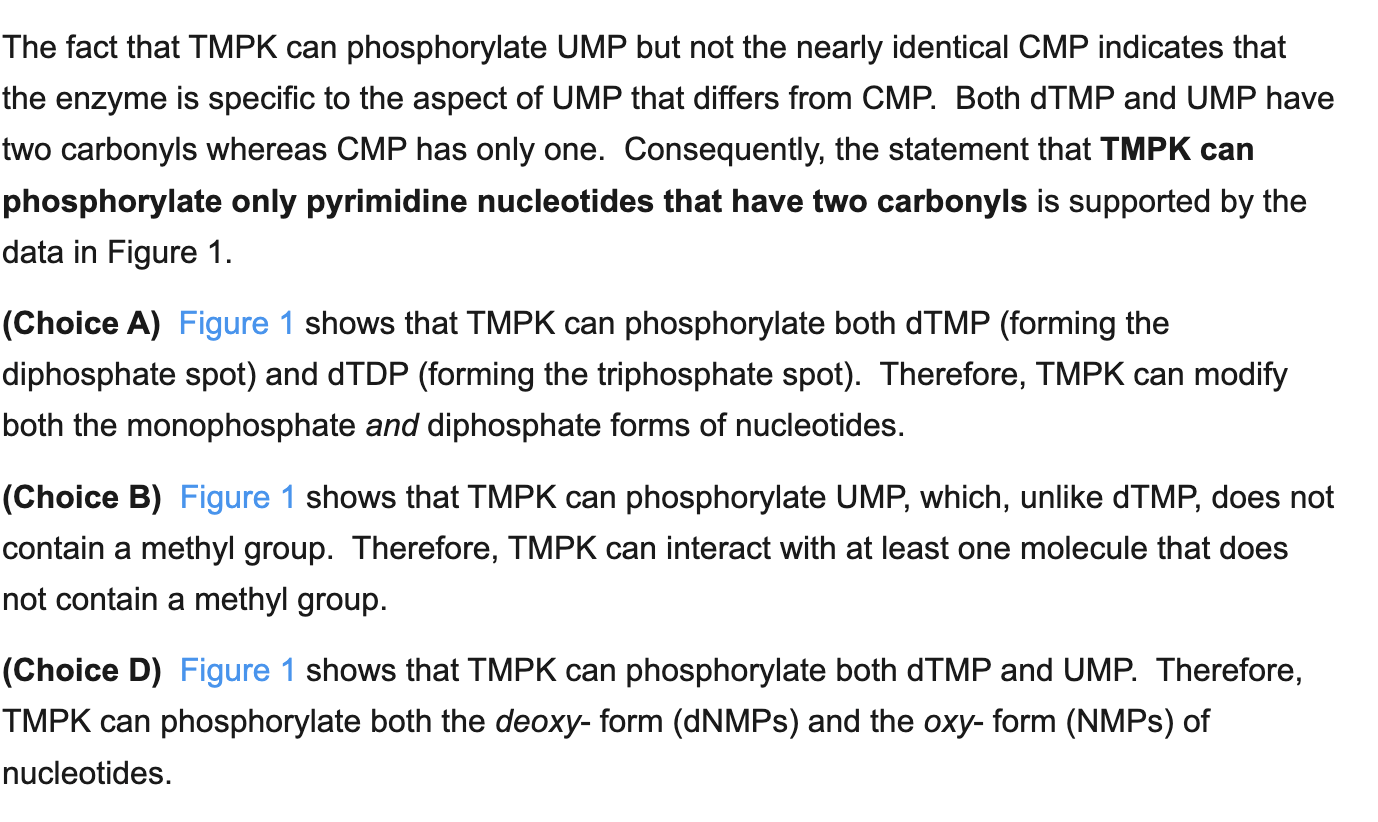
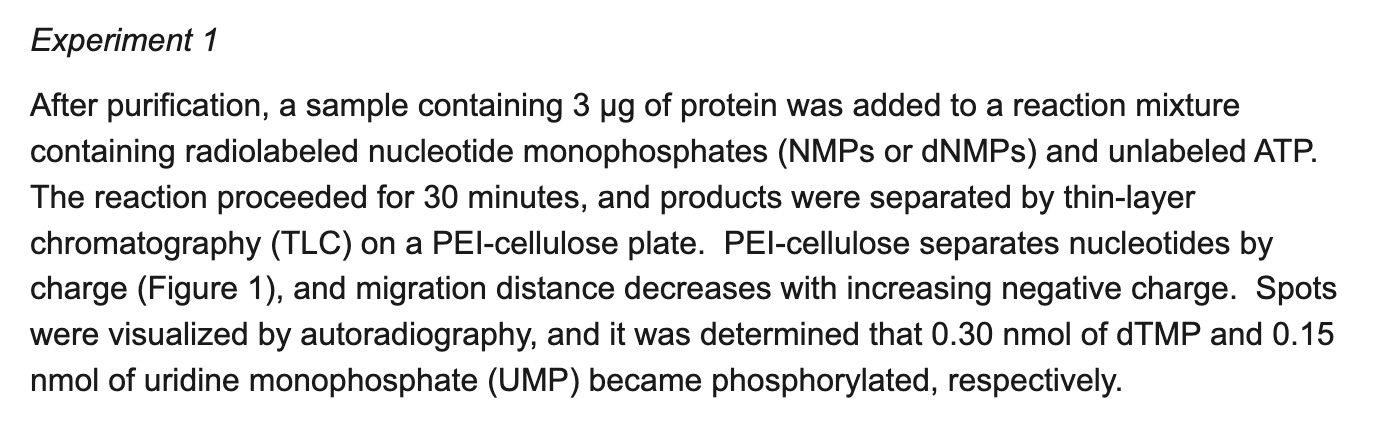
A. TMPK can modify monophosphate form of nucleotides but not the diphosphate form
B. TMPK can interact only with nucleotides that have methyl groups
C. TMPK can phosphorylate only pyrimidine nucleotides that have tow carbonyls
Answer:C
Passage A


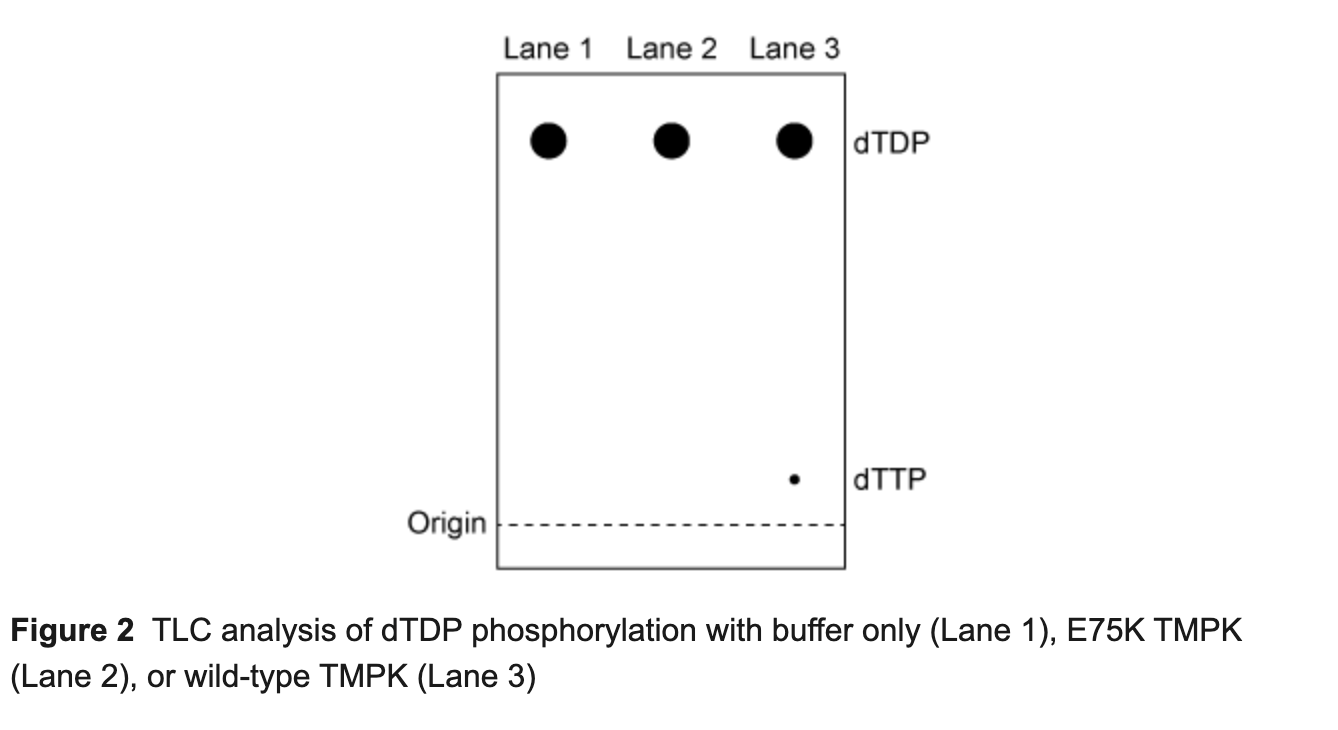




Answer:A

Passage A
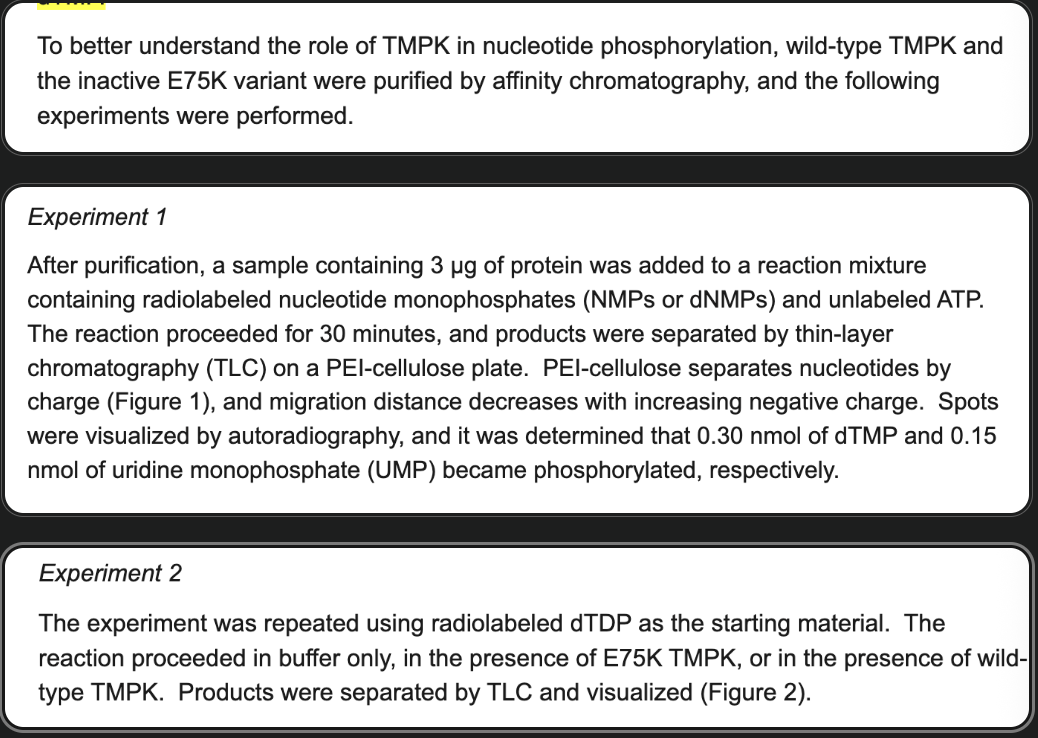
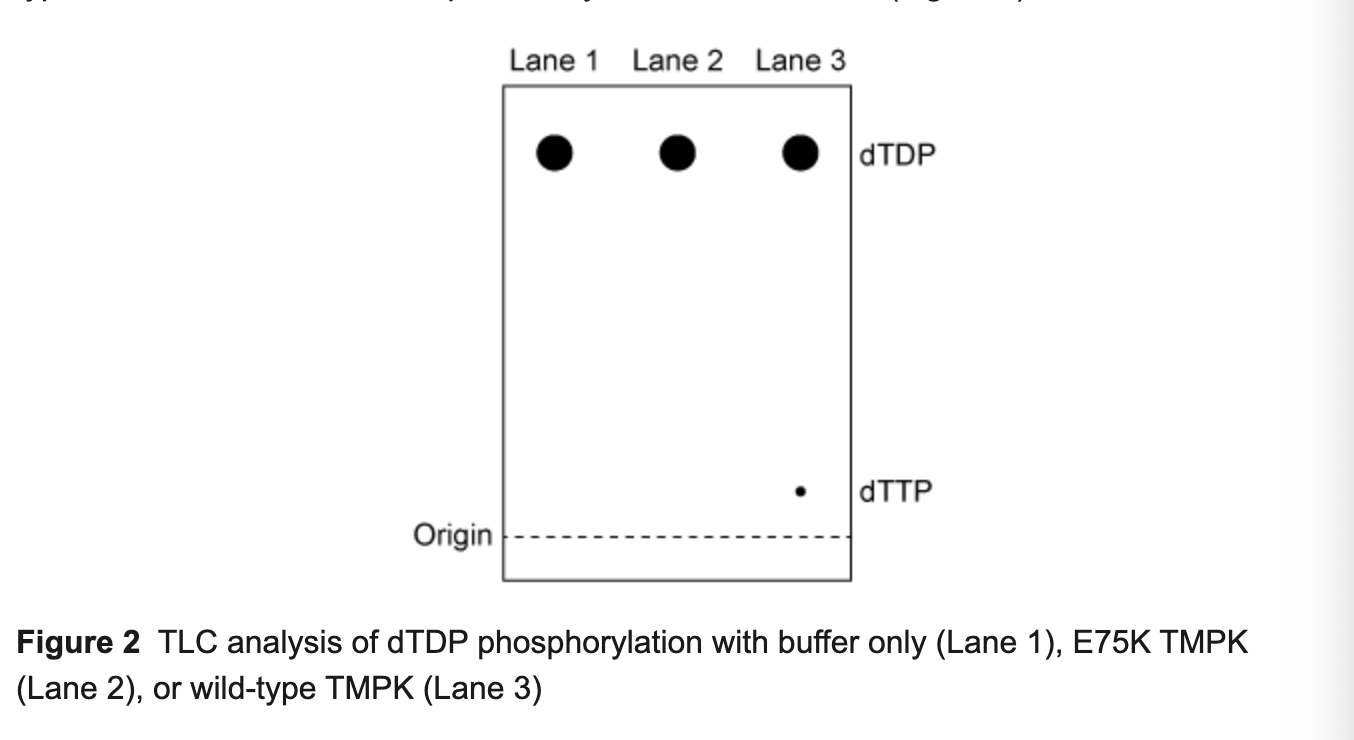

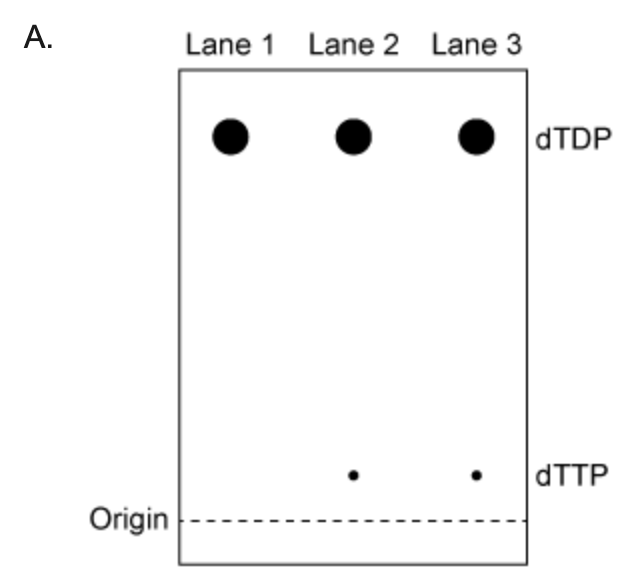
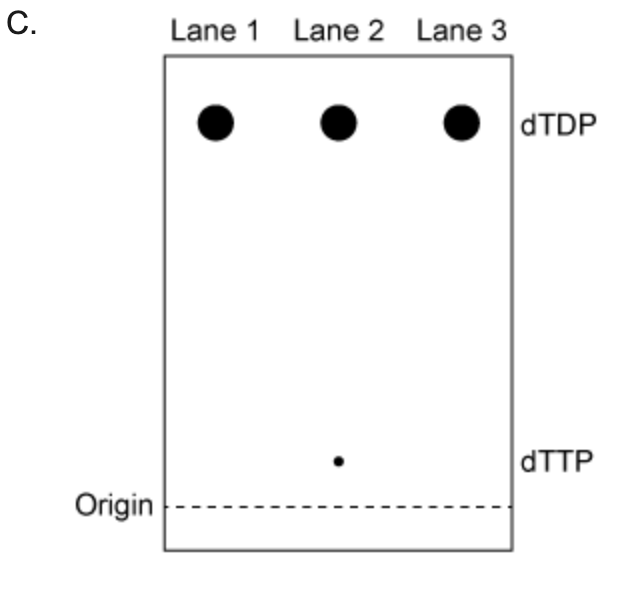
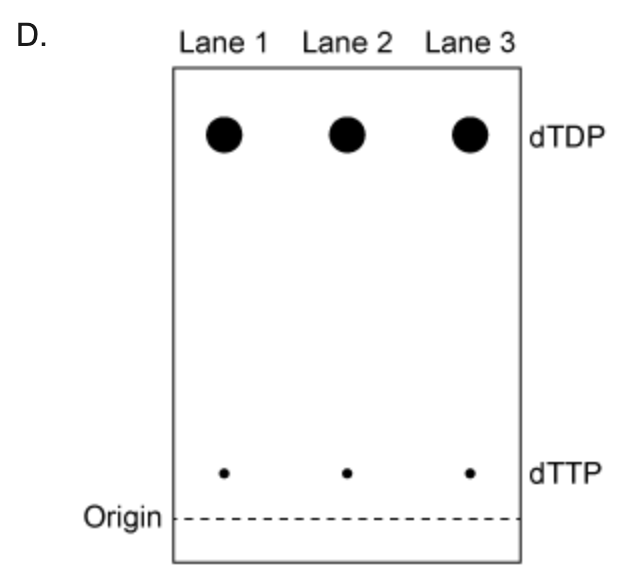
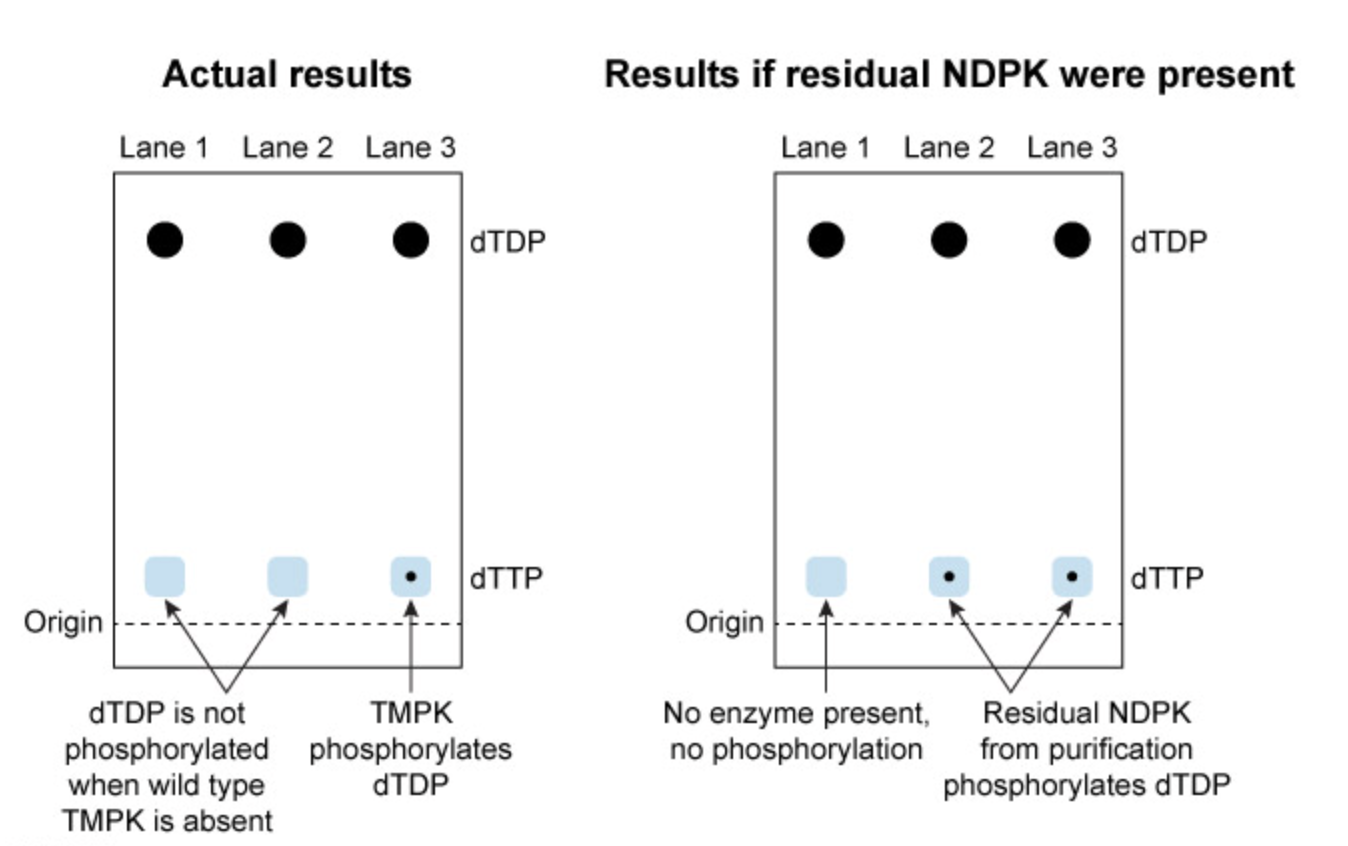
Answer A
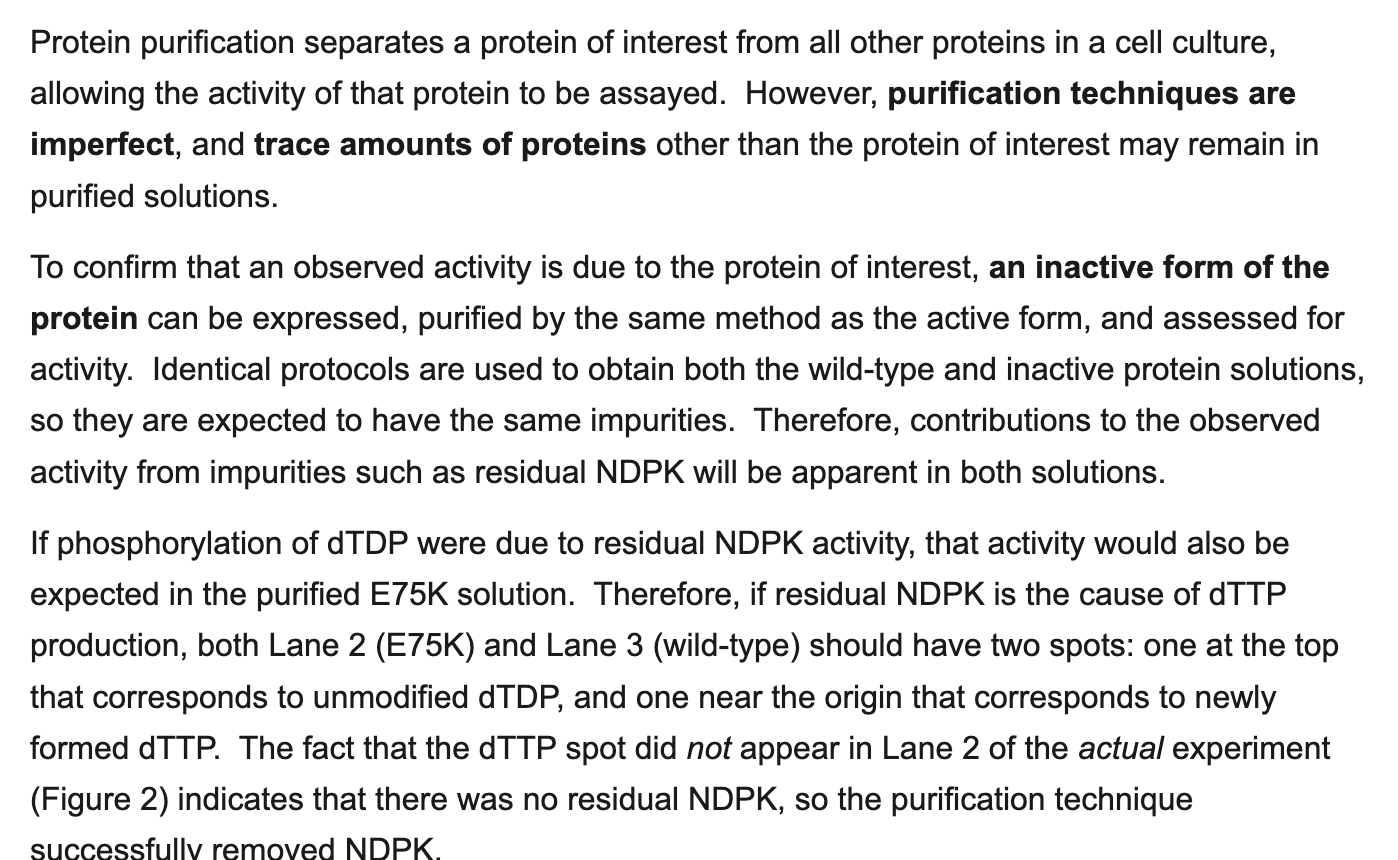
competitive enzyme inhibitors bind…
free enzyme (E) exclusively and prevent substrate binding
Uncompetitive inhibitors bind…
enzyme-substrate complex (ES) exclusively, preventing enzyme from converting substrate to product
Mixed inhibitors have characteristic of…
both competitive and uncompetitive
all mixed inhibitor bind both E and ES but may favor one over the other
When mixed inhibitors bind E and ES with equal affinity
noncompetitive inhibitor
Competitive inhibitor always causes an increase in Km because….
it prevents E from substrate binding, so it takes a higher substrate concentration (the enzyme in this case) to reach the normal binding rate
Km is the substrate concentration needed to reach ½ Vmax (enzyme’s maximum velocity)
because it takes mroe substrate to get to this half point, the apparent Km value goes up
Uncompetitive inhibitors always cause a decrease in Km because…..
decreases amount of ES in the solution, shifts the equilibrium towards ES formation, which causes a decrease in amount of substrate (enzyme) needed to acheive ½ Vmax (although Vmax itself is also decreased) as the enzyme now acts with higher affinity

Mixed, noncompetitive, competitive, uncompetitive
Uncompetitive
Passage B
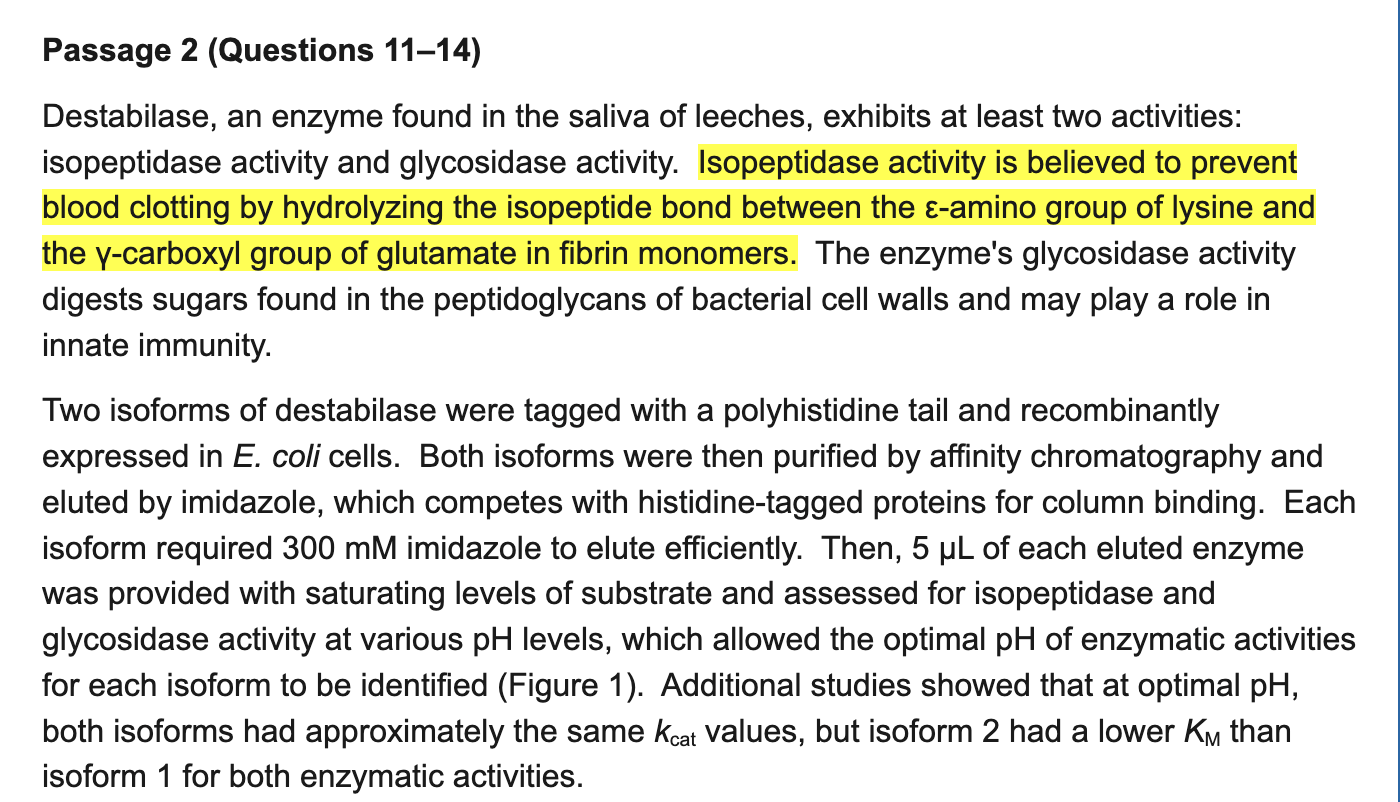
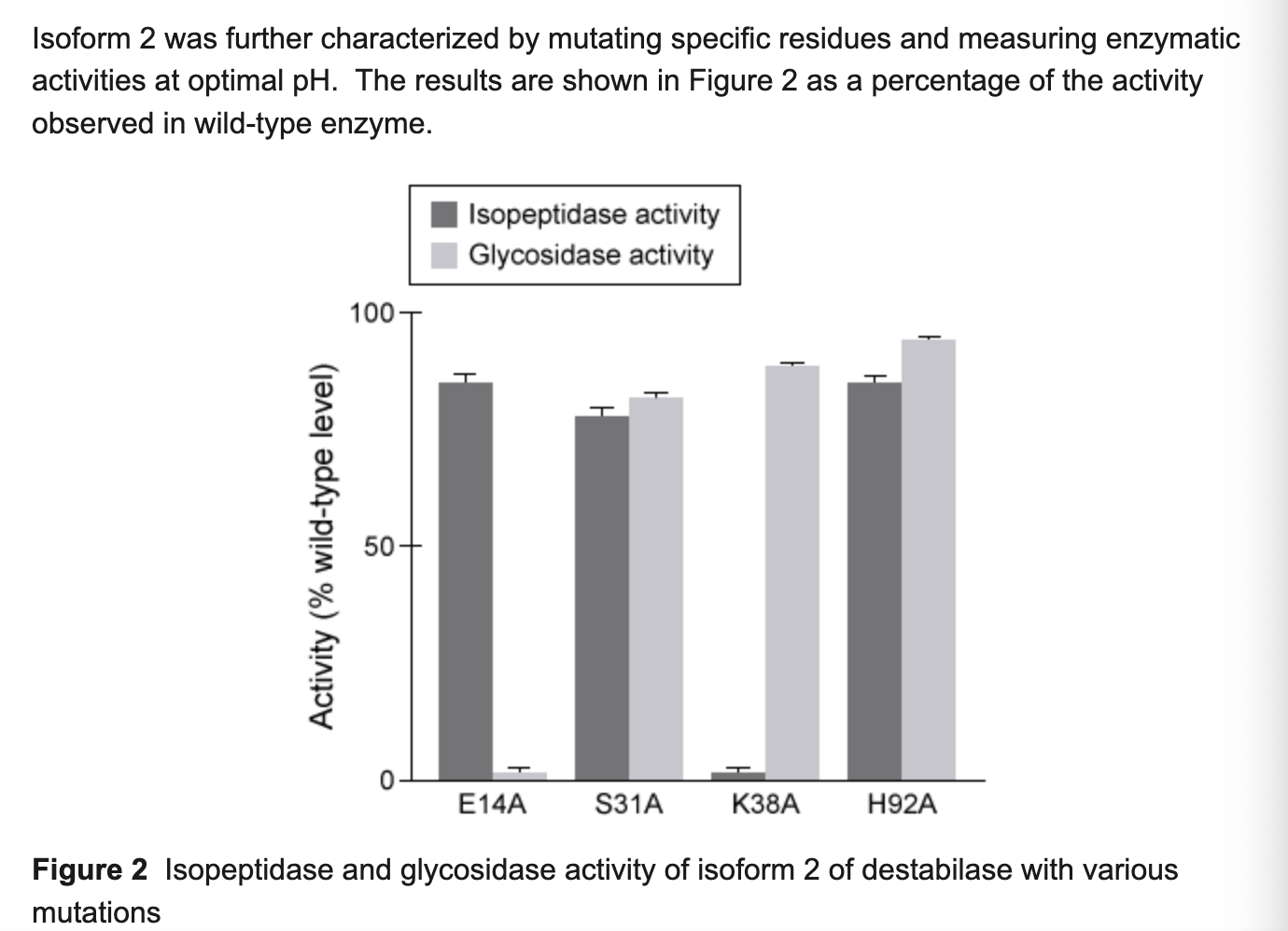
Passage B

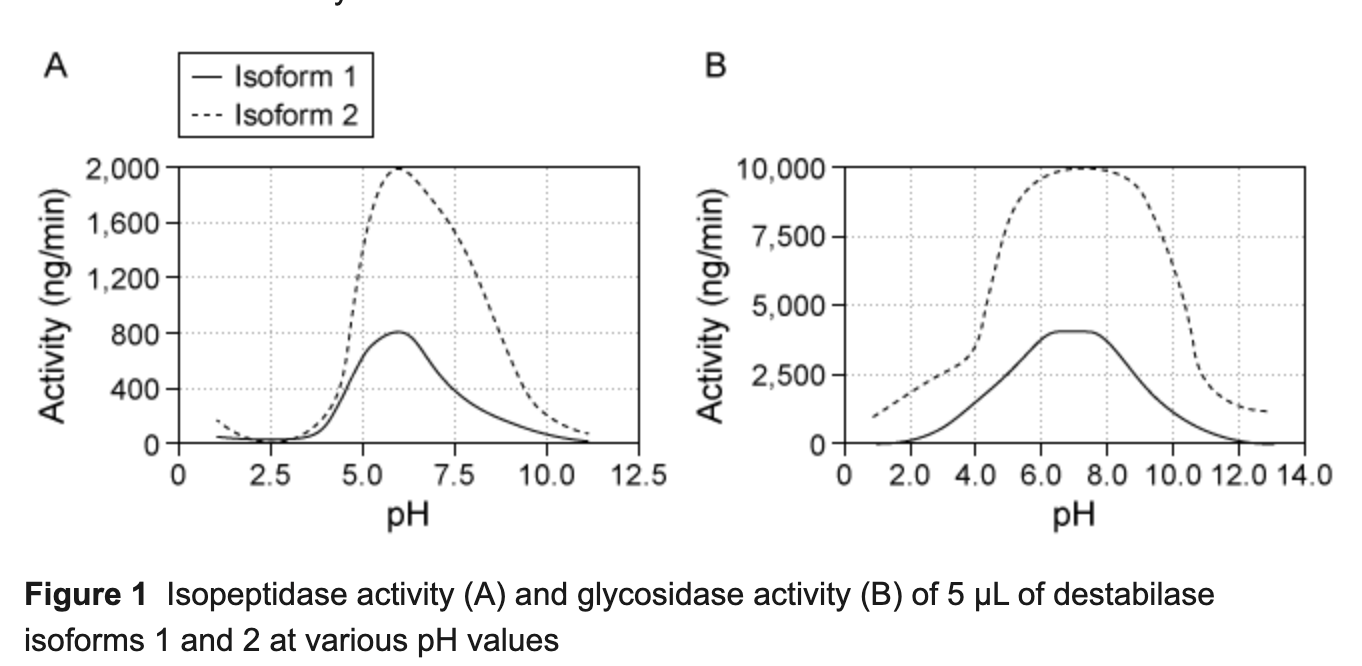
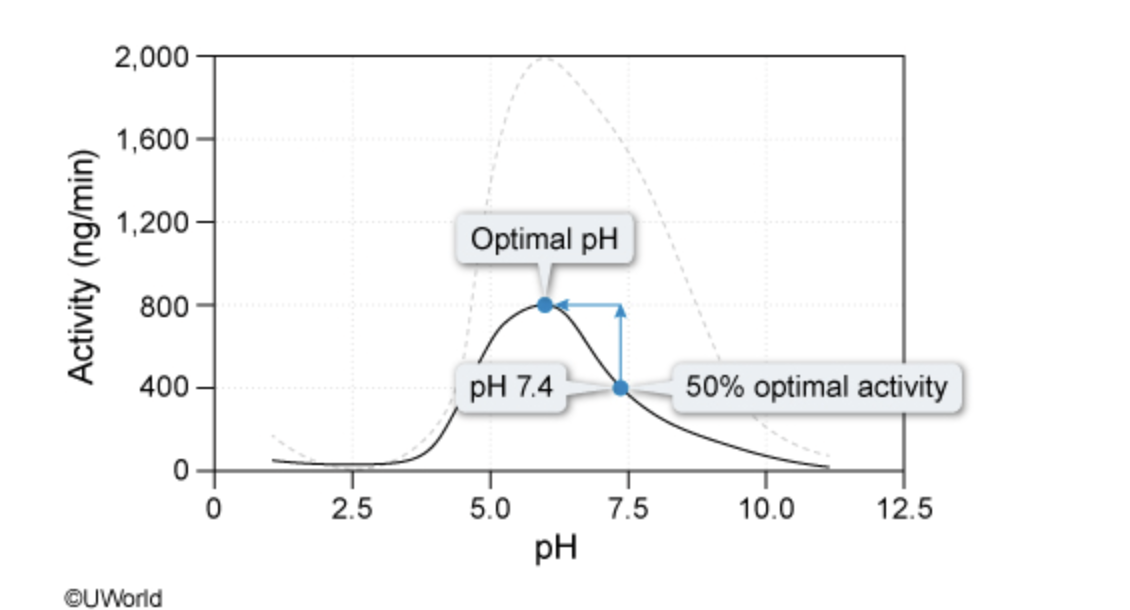
Passage B

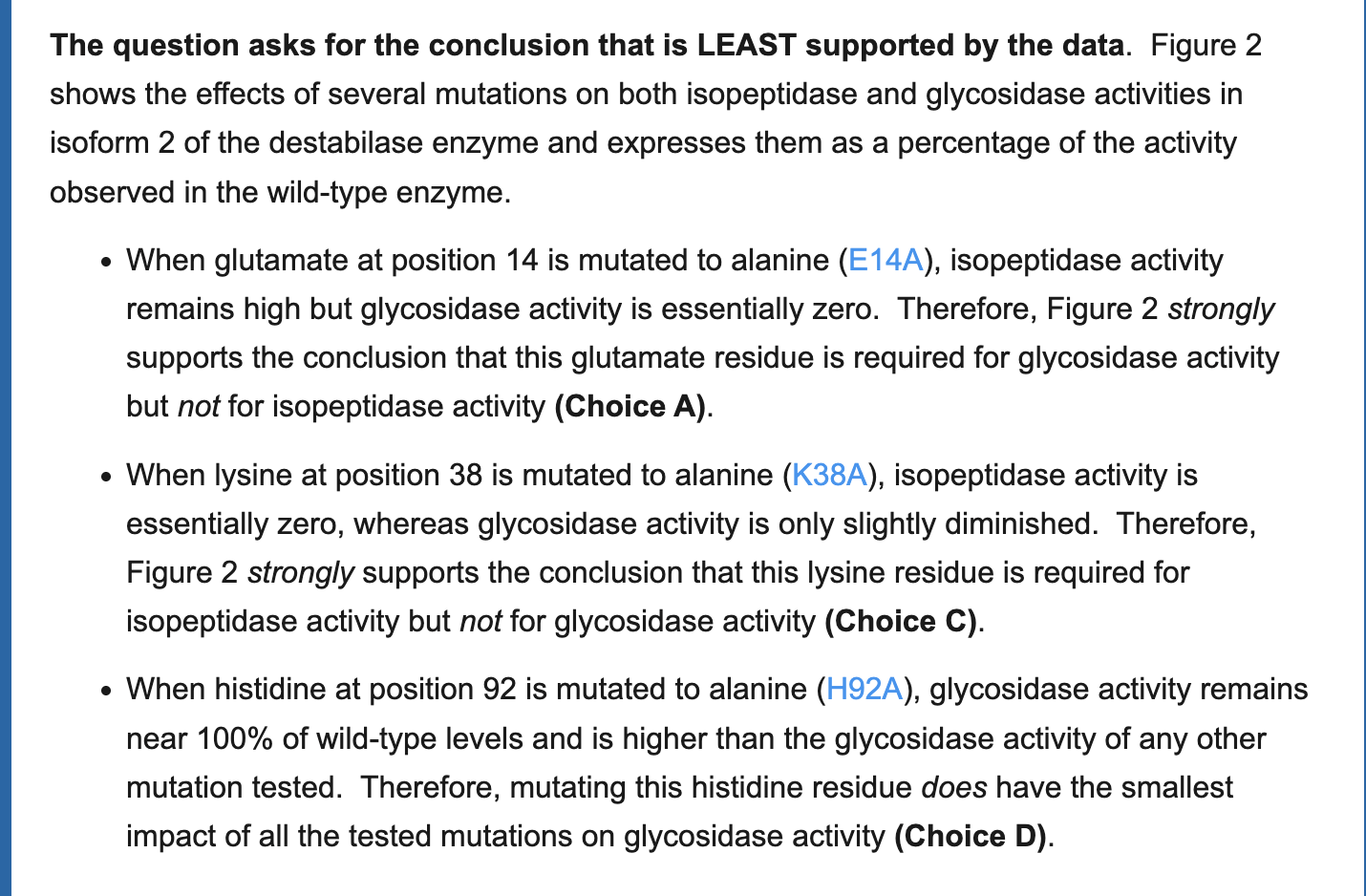
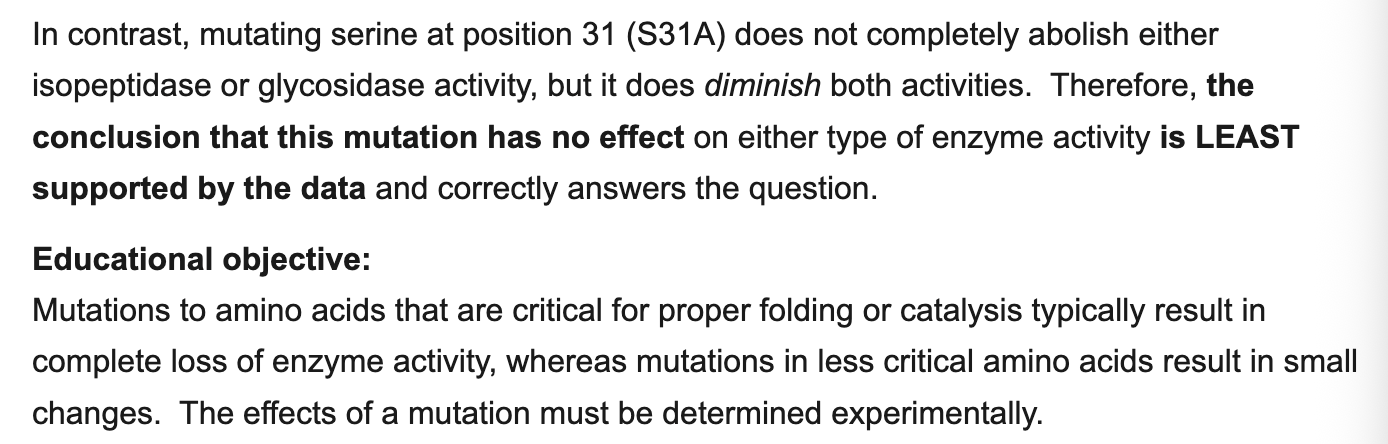
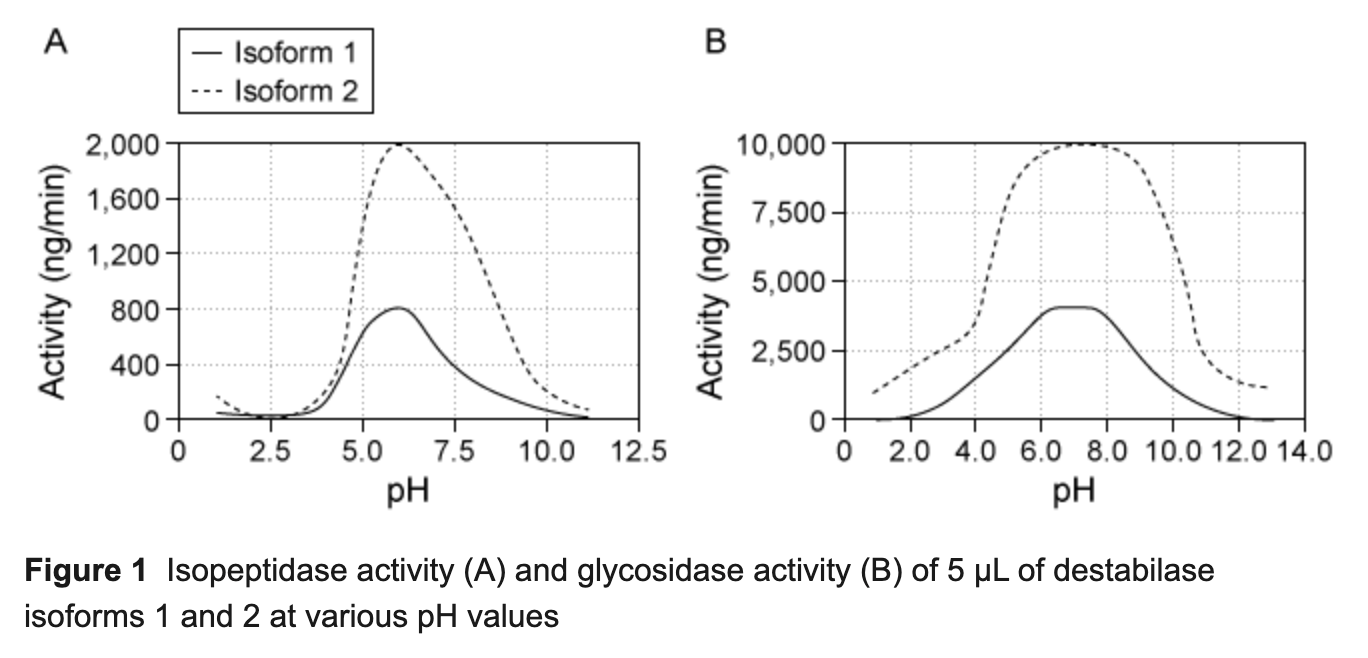
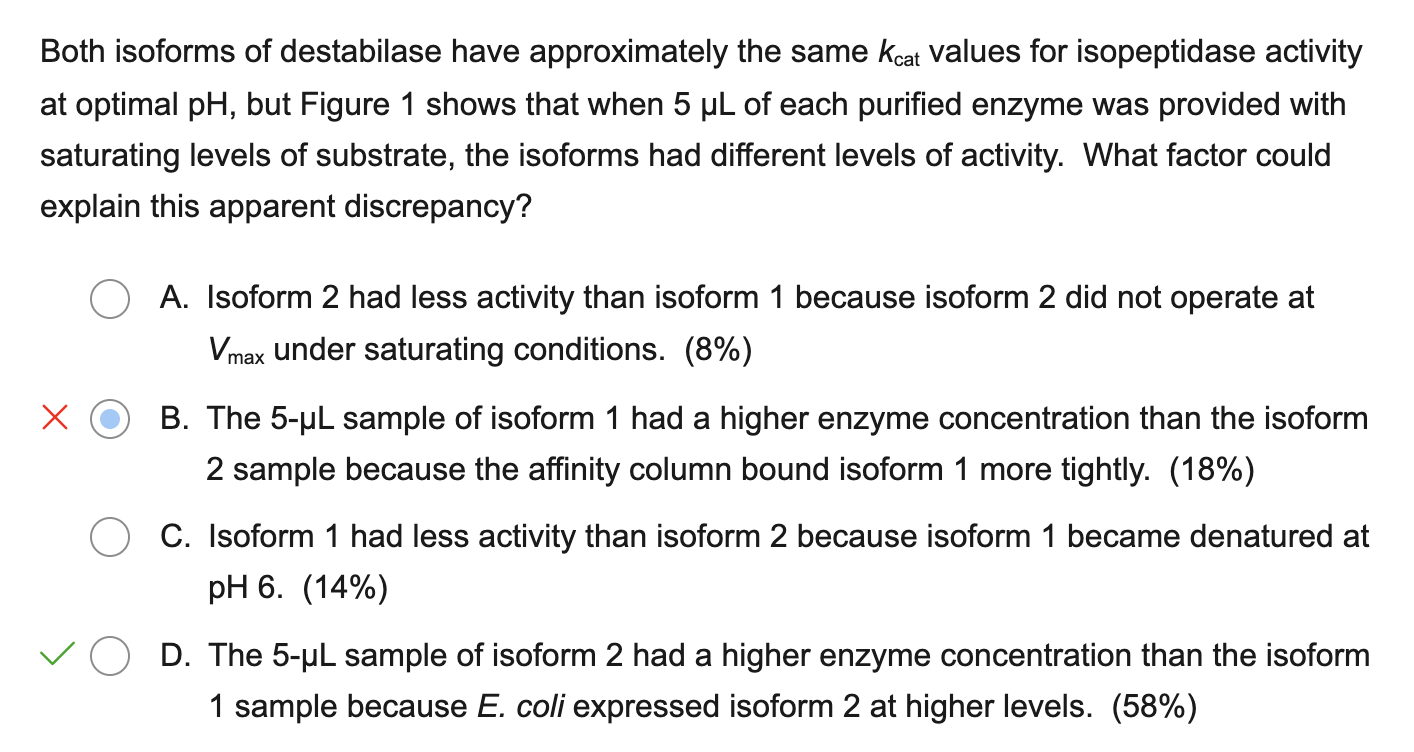
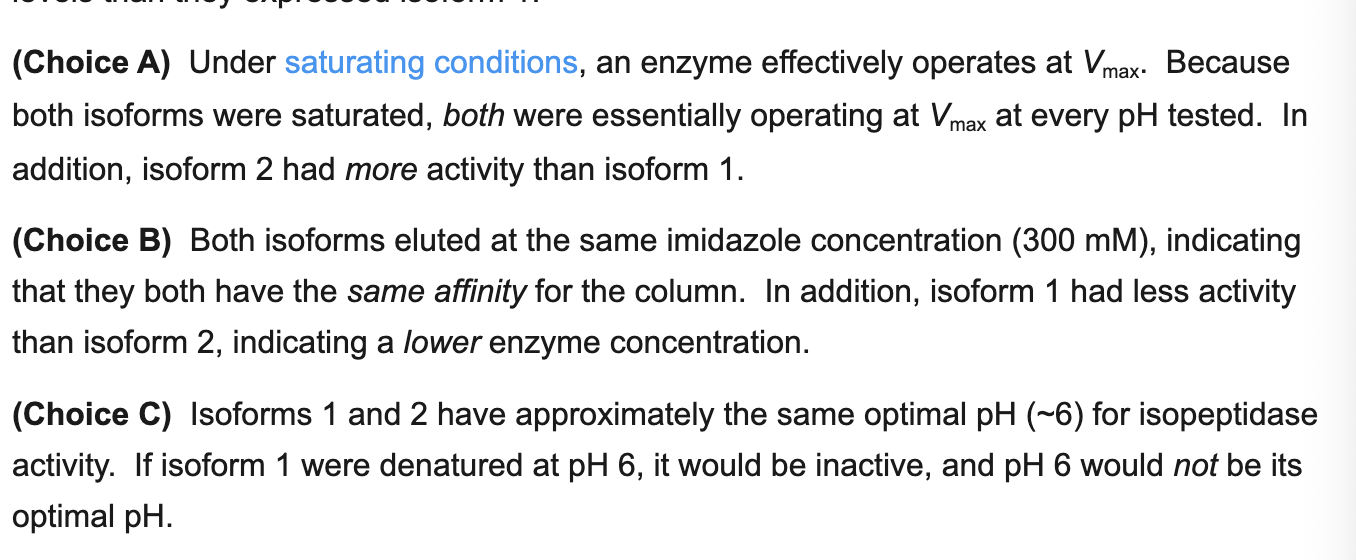
B. 5µL sample of iso 1 had a higher enzyme concentration than the isoform 2 sample because the affinity column bound isoform 1 more tightly
D. 5µL sample of iso 2 had a higher enzyme concentration than the isoform 1 sample because the E. coli expressed isoform 2 at higher levels
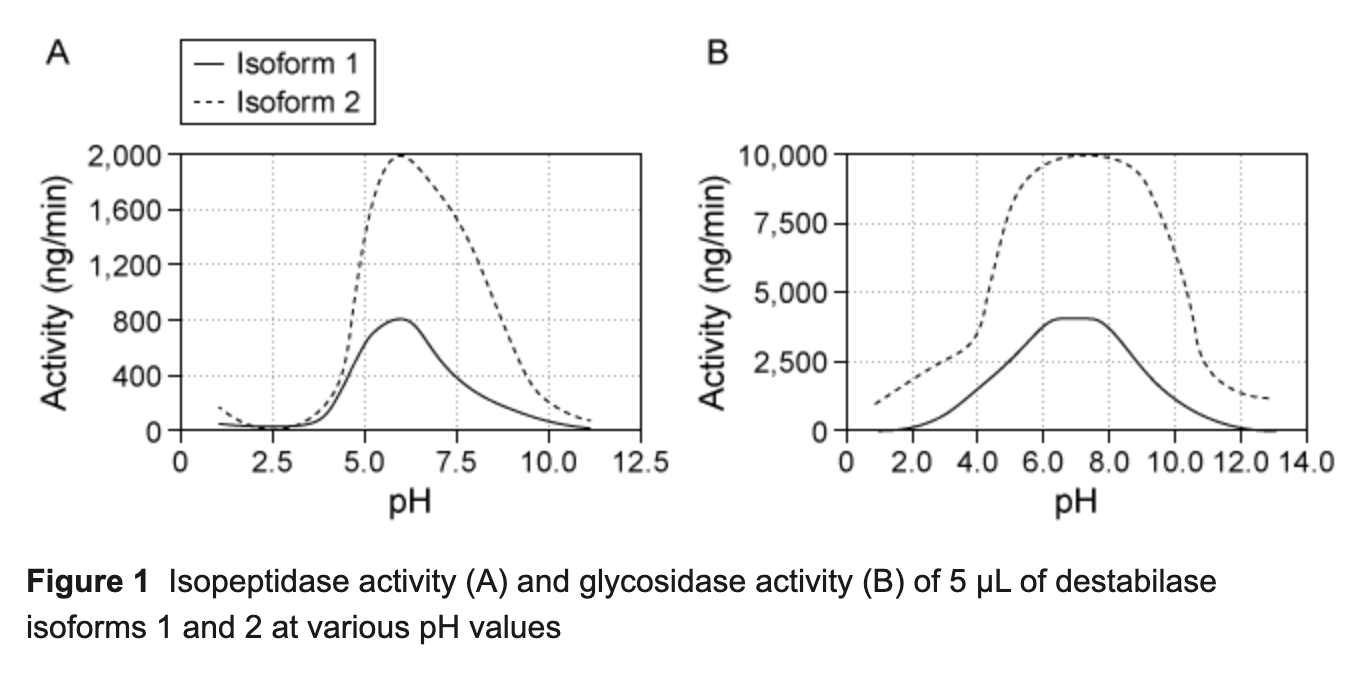
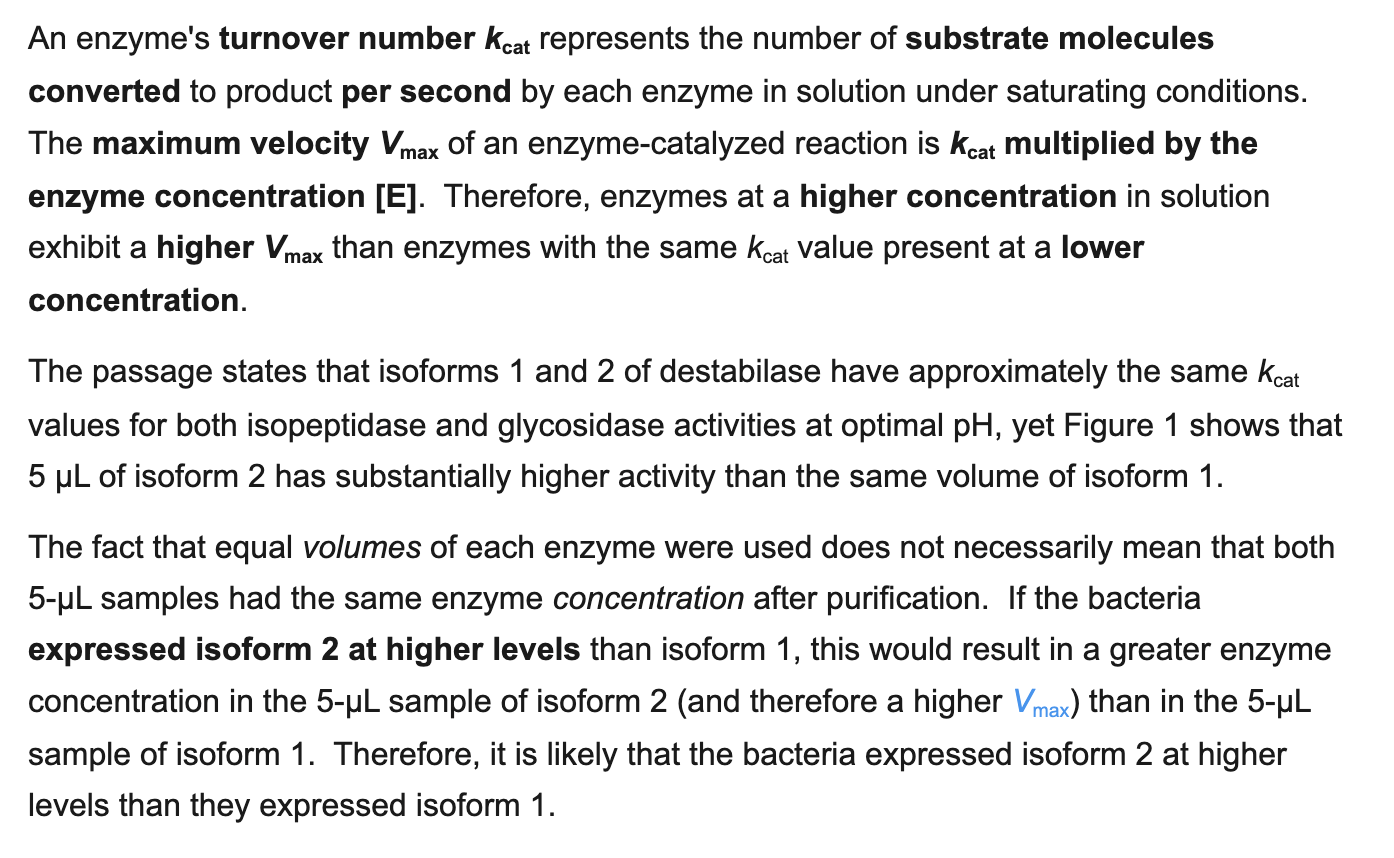
Lower activity of isoform 1 could be due to less enzyme activity, either because it has lower affinity or its concentration is less
However, it says that its under saturating substrate conditions (S»Km) so essentially all enzyme molecules are occupied regardless of moderate differences in affinity
And since Kcat turnover is the same, it comes down to the Enzyme concentration.
Answer: D
Passage B
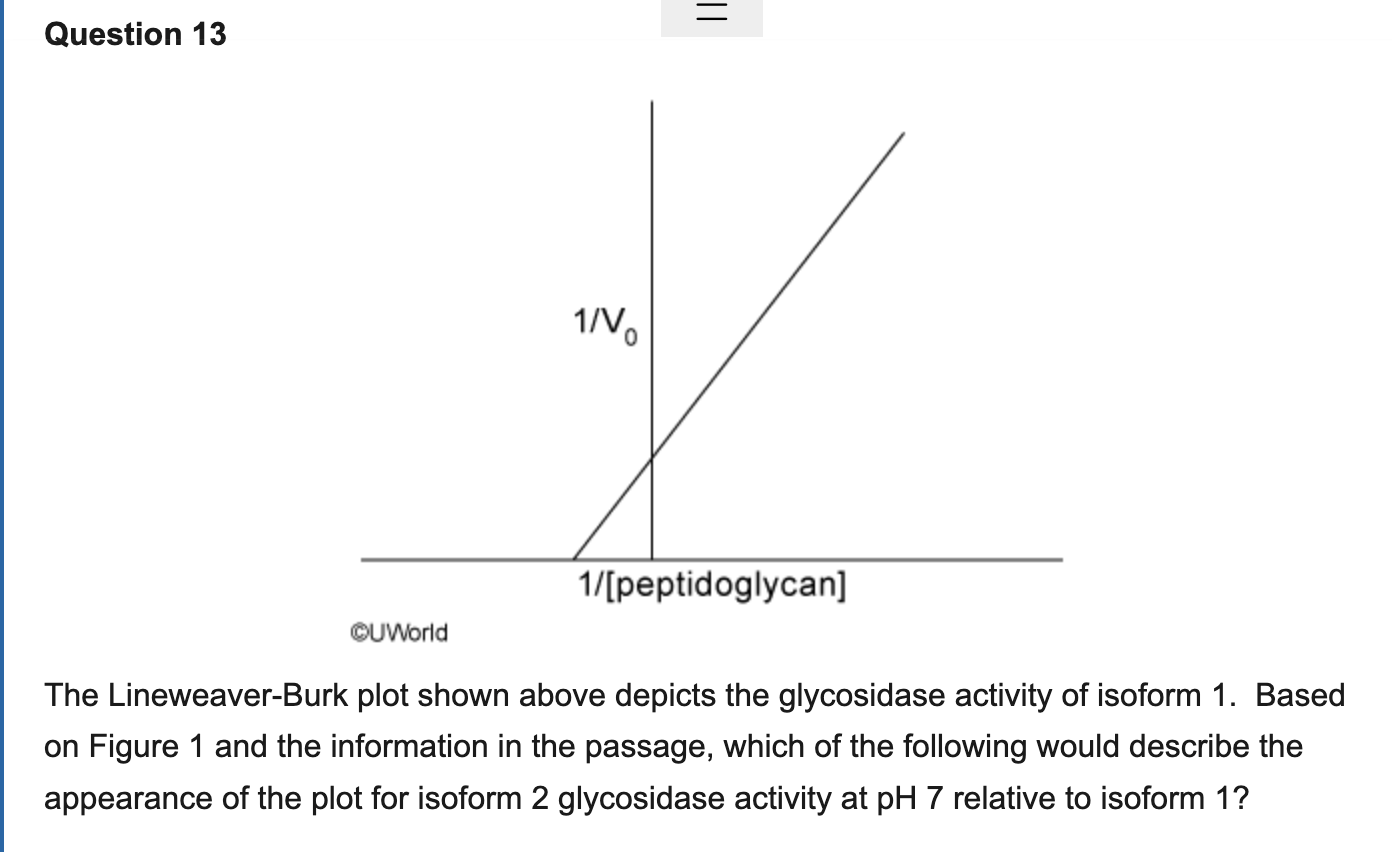
Just say what it would look like
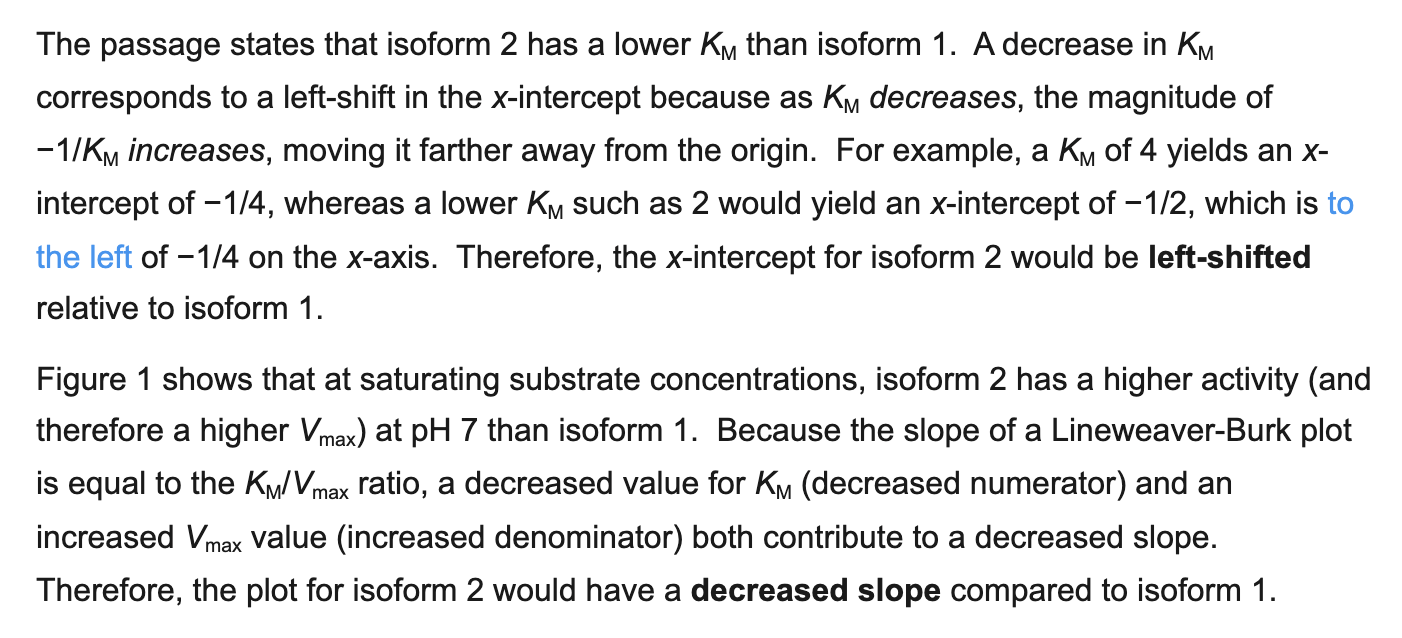
-1/(Km) or the 1/(substrate) shifts to the left (increasing 1/s decreases Km)
Decrease slope (1/Vmax/1/Km—> Km/Vmax or S/V0)
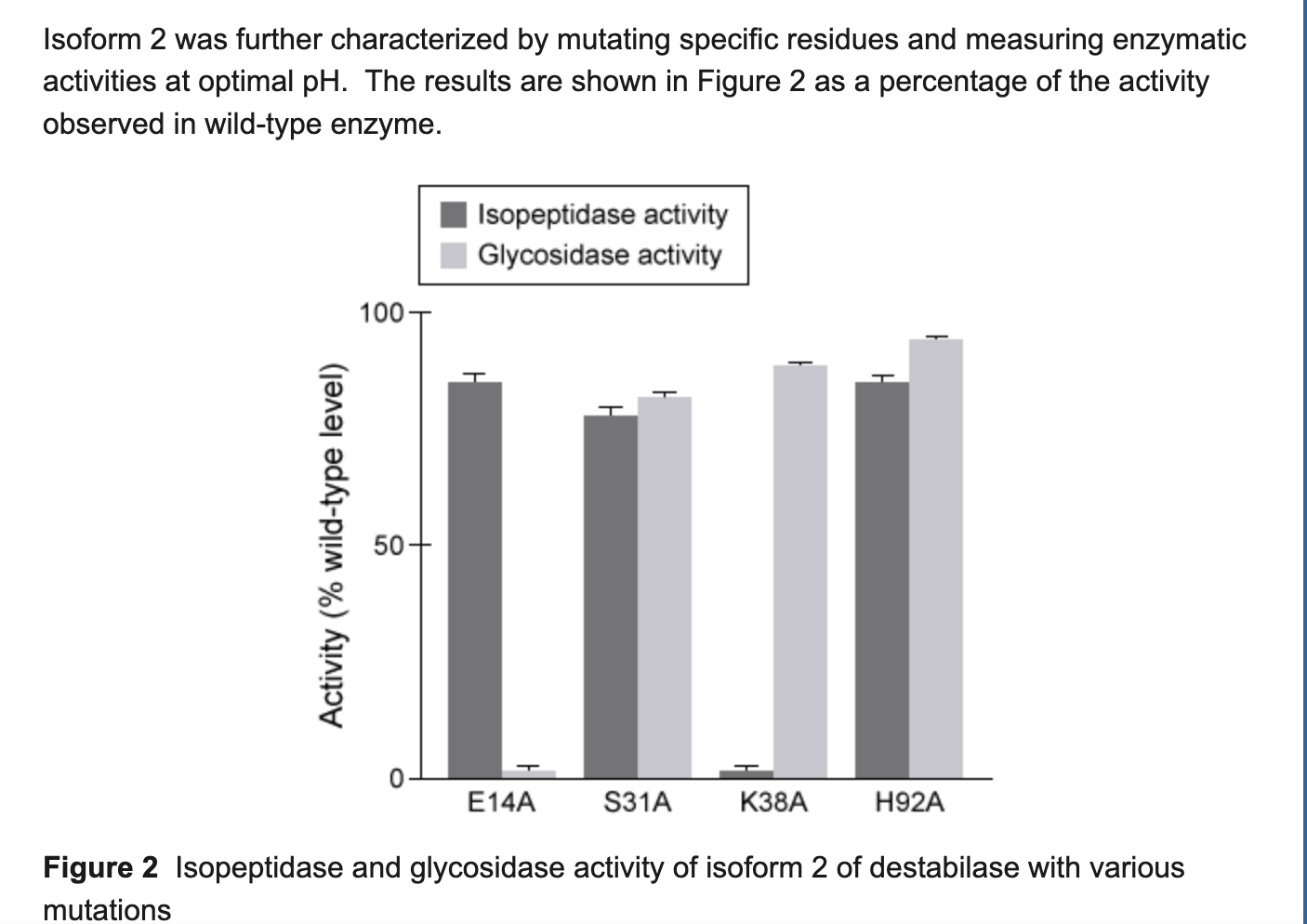




Answer: B