3.2.1.1 Eukaryotic Cell Structures
 Call Kai
 Learn
Learn Practice Test
 Spaced Repetition
 Match
Match Flashcards
 Knowt Play
1/9

Earn XP
Description and Tags
Name | Mastery | Learn | Test | Matching | Spaced | Call with Kai | Chat |
|---|
No analytics yet
Send a link to your students to track their progress
10 Terms
The Nucleus
Structure:
Contains the nucleolus (for rRNA manufacture & ribosomes assembly)
Nuclear envelope = double membrane that surrounds the nucleus + has ribosomes on the surface
Nuclear pores allow the passage of large molecules (e.g. mRNA)
Nucleoplasm = granular, jelly-like material → bulk of the nucleus
Contains genetic information in the form of chromosomes (protein-bound, linear DNA)
Function:
Controls cell activities → contains DNA with instructions to produce protein
(Nucleolus) synthesises ribosomes & ribosomal RNA
Mitochondria
Structure:
Surrounded by a double membrane in which the inner membrane is folded to form structures known as cristae
Cristae → provides large SA for attachment of enzymes & other proteins involved in respiration
Contain an enzyme-rich liquid called matrix — makes up the remainder of the cell
Contain their own DNA + ribosomes
Function:
Site of aerobic respiration — Produces ATP.

Chloroplast
Only difference between plant cell & algae cell is they have different shape chloroplasts.
Structure:
The chloroplast envelope — a double plasma membrane that surrounds the organelle (highly selective = high entry / exit requirements)
Contain fluid-filled sacs known as thylakoids which are stacked up to form grana → connected by lamella (intercellular “glue”)
Fluid-filled matrix (contains enzymes needed to make sugars) within known as stroma → 2nd stage of photosynthesis takes place here
Contain their own DNA + ribosomes.
Function:
Site of photosynthesis — These reactions take place in the grana and stroma

Rough Endoplasmic Reticulum (RER)
Structure:
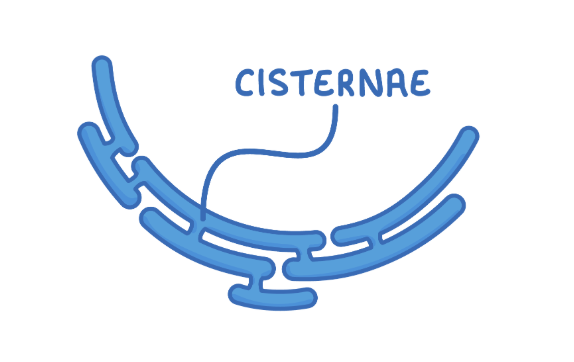
Contains a network of membranes enclosing a fluid-filled space, known as cisternae.
The surface of the cisternae is covered with ribosomes.
Function:
Provide large SA for the synthesis and transport of proteins - The proteins are made using the ribosomes.
Provide a pathway for the transport of materials especially proteins, throughout the cell
Smooth Endoplasmic Reticulum (SER)
Structure:
Same as the rough endoplasmic reticulum without the ribosomes.
More tubular in appearance
Function:
Synthesis, storage, and transport of lipids and carbohydrates - For example, cholesterol and steroid hormones.

Golgi Apparatus
Structure:
Similar to SER except it’s more compact.
Contain fluid-filled, membrane-bound sacs known as cisternae.
Vesicles — small rounded hollow structures → may move to cell surface, where they fuse with the membrane + release their contents to the outside of cell.
Functions:
Add carbohydrate to proteins to form glycoproteins
Produce secretory enzymes (e.g. those secreted by the pancreas)
Secrete carbohydrates, such as those used in making cell walls in plants
Transport, modify & store lipids = “post office” → ‘labels’ glycoproteins to sort accurately and sent to their correct destination
Form lysosomes (specialised vesicles)
Especially well developed in secretory cells → e.g. epithelial cells that line the intestines.

Lysosomes
Formed when vesicles produced by Golgi apparatus contain enzymes such as proteases & lipases.
Structure:
Contain hydrolytic enzymes + lysozymes (as many as 50).
Surrounded by a membrane to keep enzymes separate from the cytoplasm of the cell.
Functions:
Digest pathogens — This process uses enzymes.
Break down waste material — This material includes old organelles and cells → useful chemicals are made + can be reused
Release enzymes to the outside of the cell (exocytosis) in order to destroy material around the cell
Completely break down cells after they have died = autolysis
Especially abundant in secretory cells, such as epithelial cells & phagocytic cells.
Ribosomes
May be in the cytoplasm OR associated with the RER + two types:
80S — found in eukaryotic cells = around 25mm in diameter
70S — found in prokaryotic cells, mitochondria & chloroplast = slightly smaller.
Structure:
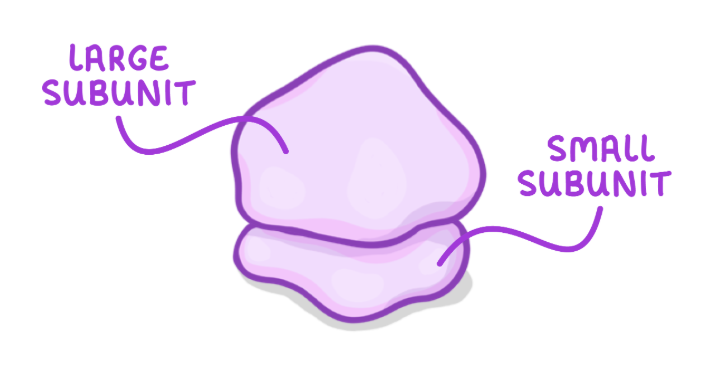
Made up of proteins and rRNA (ribosomal RNA) — made in the nucleolus.
Consist of a large and a small subunit.
Not surrounded by a membrane.
Occur in vast numbers → may account fo rup to 25% of the dry mass of a cell.
Function:
Site of protein synthesis - Involved in the process of translation.

Cell Wall
Structure:
Made up of microfibrils of the polysaccharide cellulose, embedded in a matrix (for plants)
Contains channels (gaps) known as plasmodesmata (or plasmodesma if just one).
Middle lamella — thin layer, which marks the boundary between adjacent cell walls and cement adjacent cells together.
Functions:
Supports the cell - Contents of the cell press against the cell wall to make it rigid.
Prevents the cell from bursting (mechanical strength) - The cell wall can withstand high osmotic pressure.
Allows exchange of substances between cells - Plasmodesmata connects neighbouring cells.
Cell wall of algae: cellulose / glycoproteins or a mixture of both
Cell wall of fungi: nitrogen containg polysaccharide called chitin
Vacuoles
Structure:
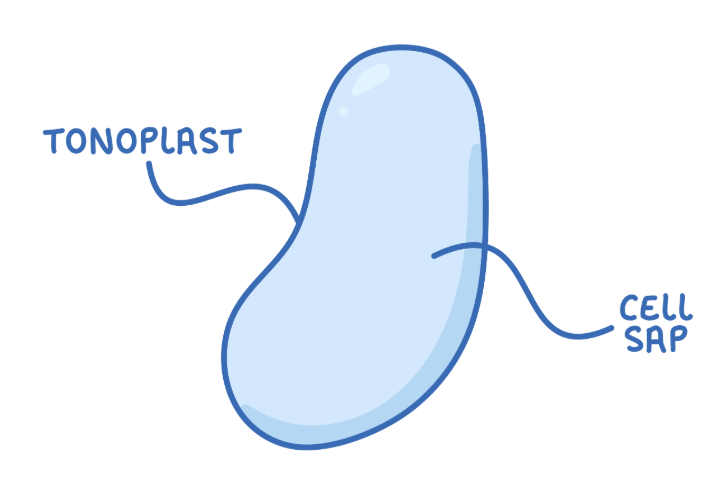
Contains cell sap (solution of mineral salts, sugars, amino acids, wastes & sometimes pigment such as anthocyanins).
Surrounded by a single selectively permeable membrane known as a tonoplast.
Function:
Helps to maintain pressure within the cell, which keeps the cell rigid and stops the plant from wilting.
Support herbaceous plants & herbaceous parts of woody plants → by making cells turgid
The sugars & amino acids may act as a temporary food store
The pigments (anthocyanins) may colour petals to attract pollinating insects