POLS206 WK11 - Pacific States and Advocacy Coalition Framework
 Call Kai
 Learn
Learn Practice Test
 Spaced Repetition
 Match
Match Flashcards
 Knowt Play
1/24

There's no tags or description
Looks like no tags are added yet.
Name | Mastery | Learn | Test | Matching | Spaced | Call with Kai |
|---|
No analytics yet
Send a link to your students to track their progress
25 Terms
social construction of policy
meaning of public policy is constructed
perception that policy = strategic plan
plans regarded as wish lists
importance of culture in decision making
end up with strong cultures within policy making institutions
certain idea of what policy is/how it should function
upside down decolonization
extended colonial relationships rather than full independence/sovereignty
can be military support
can be voluntary
common when indigenous peopels are in the minority
e.g. tokelau - nz was pushing for its independence but it didnt happen
what are trust territories
in legal terms, fully independent
but IS has control over their foreign/military policy
whats the context of NZ and the pacific?
nz proud of decolonization record
sees itself as the center of the south pacific region
NZ has one of the largest economic zones/search and safety on the sea
pacific regionalism
complex interactions among pacific nations and entities beyond the region
pacific regional governance
agency the pacific states have as international actors in the international arena/policy making capabilities
island logic
sea of islands - countering the conventional representation of islands in a far sea - a series of alliances
development administration mindset
recipients didn’t have that much input on how funding was used
development assistance model
allow local communities to have democratic input
inverse sovereignty effect
a state's level of legal independence is inversely related to its material standard of living and access to foreign aid or remittances
One of frameworks - paris declaration - development is most effective if local gov has control
When funding provided- hard to let go of the strings attached
Not direct coercion, but incentive to alter behavior in ways that benefit us - lose control over the direction of your own development policy
principles of action
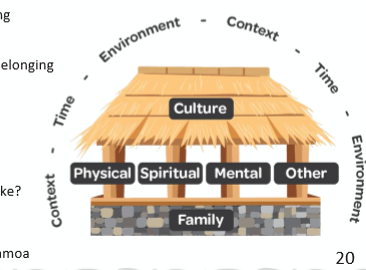
fonofale - interconnected well-living
vai nui - mutual interdependence, sense of belonging
normalization of loss
climate change loss
warnings not eliciting enough international support
lack of adaptation knowledge
convoluted global adaption system
collective disassociation
too late narratives
absolve from responsibility
social disengagement
language of crisis
focuses on places that CAN be saved
leads to disengagement with efforts to allow ppl in the lower laying islands to remain in class
advocacy coalition framework
people form coalitions with people who share their beliefs
their goal is to impact public policy and compete with other coalitions
takes place in subsystems
how are ACFs related to interest groups?
a coalition can be comprised of more than one interest group
less defined organizational and leadership function
with is the coalition impact on policy
can influence through status
ability to garner public support
ability to spin arguments
mobilize members
bankroll political candidates
exploit opportunities for policy chagne
what are the layers of ACF beliefs?
deep core beliefs
policy core beliefs
secondary aspects
deep core beliefs
an actor’s underlying personal philosophy about nature and human nature
e.g. left wing/right wing
values like freedom/security, are ppl evil etc
policy core beliefs
fundamental policy positions that relate to a specific subsystem issue
combo of empirical (what is happening) and normative (what should happen)
e.g. what causes the policy problem, should we solve it, how etc.
more susceptible to change
secondary aspects
the funding, delivery, and implementation of policy goals and the info gathered to support the process
what are the weaknesses of the ACF?
mostly applied to one policy area, often not applied fully
focuses on domestic players, not international
what are the strengths of the ACF?
can apply to many policymaking contexts
accounts for a wide variety of players
why is learning not straightforward in ACF frameworks?
evidence is unclear and contested
competing coalitions may refuse to engage on each other’s terms
dominant coalitions are unlikely to simply accept the arguments of other coalitions and adopt their preferred policies
how is stability within subsystems reinforced externally?
by relatively stable parameters that are unlikely to change over one cycle
e.g. - rules and constitutional structures of a political system
fundamental social structures and values of the wider polity
basic attributes of a problem area (e.g. natural resources related to environmental policies)
how is stability within subsystems reinforced internally?
through coalition actors
although they engage in learning - this is mainly for secondary aspects
what are the sources of policymaking instability
‘shocks’ - combination of events and the response by coalitions to events
can be external to the subsystem
internal can be failure of current policy to solve the policy problem