L3(3.3b)- The heart
 Call Kai
 Learn
Learn Practice Test
 Spaced Repetition
 Match
Match Flashcards
 Knowt Play
1/4

There's no tags or description
Looks like no tags are added yet.
Name | Mastery | Learn | Test | Matching | Spaced | Call with Kai |
|---|
No analytics yet
Send a link to your students to track their progress
5 Terms
A globular protein with a quaternary structure and 4 polypeptide chains. Each of the 4 haem groups contain 1 iron ion( prosthetic group)
• Low partial pressure of oxygen means Haemoglobin has a low affinity for oxygen because the shape of the molecule makes it hard for the first oxygen to bind.
• Steep middle section: Once the first oxygen molecule binds, it changes the quaternary structure (shape) of the haemoglobin, making it much easier for the second and third oxygen molecules to bind.
• Plateau at high pO2: As the haemoglobin becomes saturated, it becomes harder for the fourth oxygen molecule to find an empty binding site.
(1) arteries have thick,muscular and elastic walls whereas veins have thin and less elastic walls
(2)Arteries have a narrow lumen but veins have wide lumens
(3) Arteries(except at the base of the aorta and pulmonary artery) have no valves but veins have valves
1. Hydrostatic pressure inside the capillaries (generated by the heart) is higher than the osmotic pressure.
2. This forces water and small dissolved solutes (like glucose and ions) out through the tiny gaps in the capillary walls.
3. Large molecules, like plasma proteins and red blood cells, remain in the capillary because they are too big to pass through.
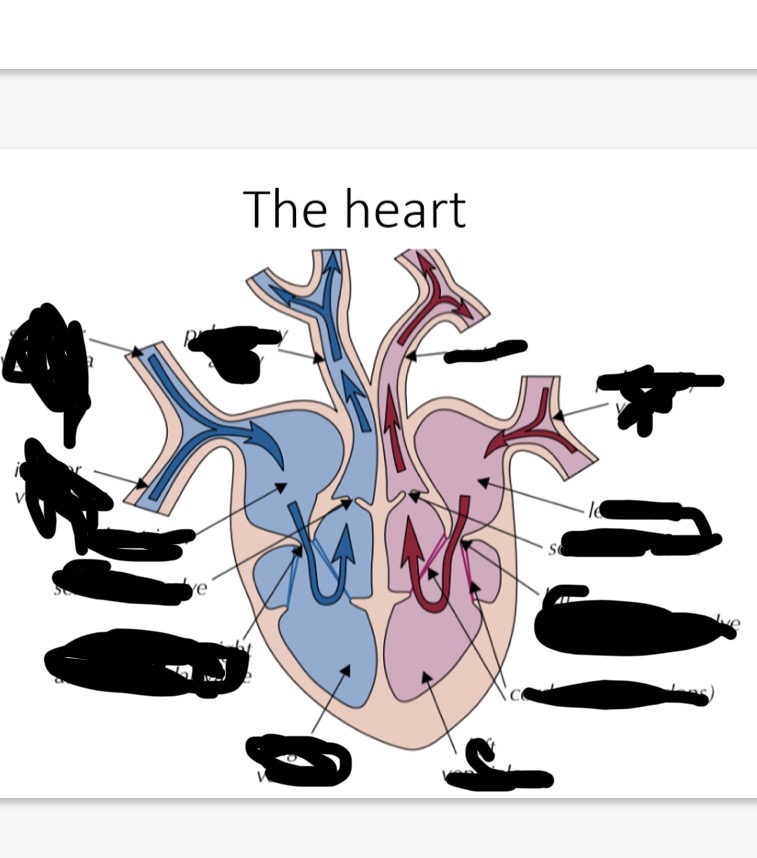
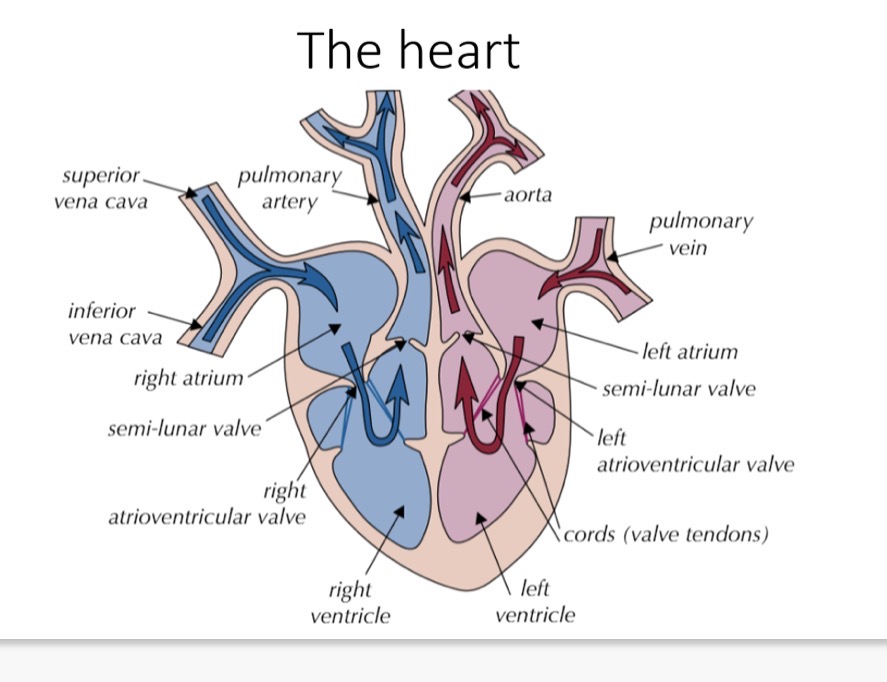
The heart is divided into:
• Right Atrium: Receives deoxygenated blood from the body.
• Right Ventricle: Pumps deoxygenated blood to the lungs.
• Left Atrium: Receives oxygenated blood from the lungs.
• Left Ventricle: Pumps oxygenated blood to the rest of the body (it has the thickest muscular wall).
Vena cava
Aorta
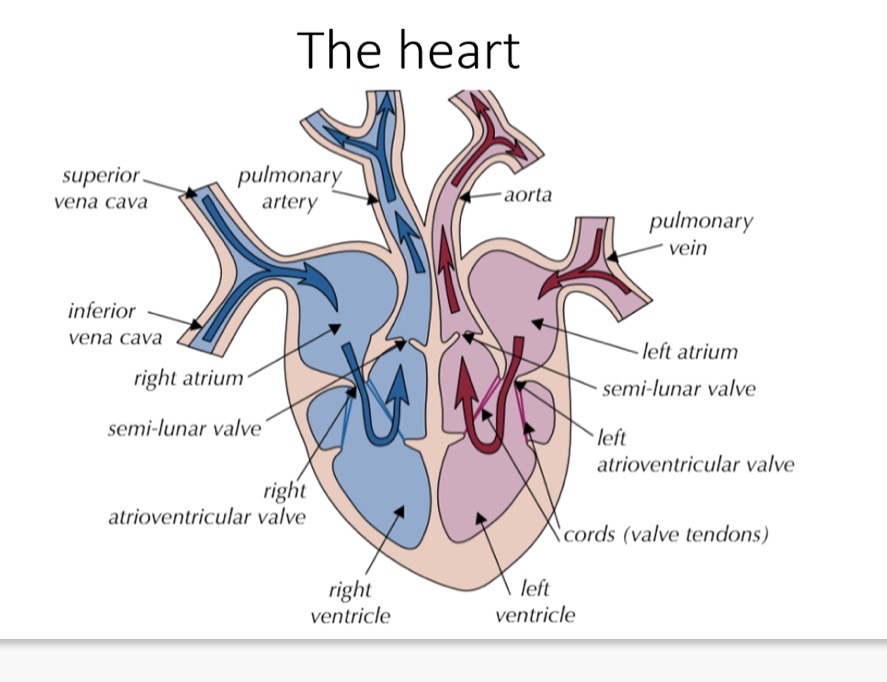
The heart
1) The left ventricle of the heart has thicker, more …1? walls than the right ventricle, because it needs to …2?powerfully to pump blood all the way around the …3?.The right side only needs to get blood to the …4?, which are nearby( to make blood oxygenated) and so have thinner,less muscular walls.
2) The ventricles have thicker walls than the atria, because they have to push blood out of the …5? whereas the atria just need to push blood a short distance into the …6?.
3) The atrioventricular (AV) valves link the atria to the …7? and stop blood flowing …8? into the atria when the ventricles contract.
4) The semi-lunar (SL) valves link the ventricles to the …9? artery and …10?, and stop blood flowing back into the …11? after the ventricles contract.
5) The cords …12? the atrioventricular valves to the ventricles to stop them being forced up into the …13? when the ventricles …14?
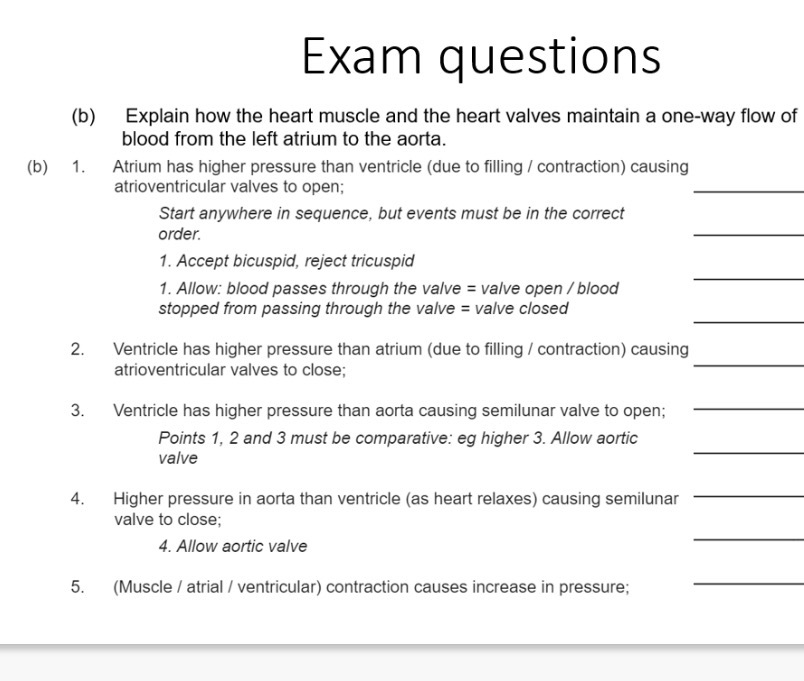
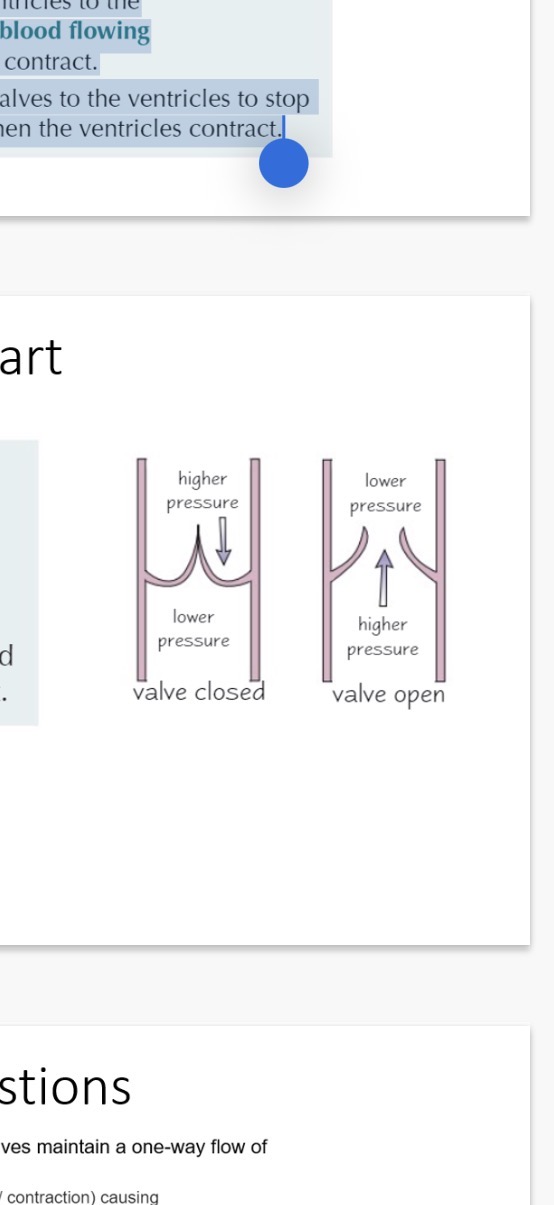
•The valves only open …15? way - whether they're open or closed depends on the relative pressure of the heart chambers. If there's higher pressure behind a valve, it's forced …16?, but if pressure is higher in front of the valve it's forced …17?. This means blood only flows in …18? direction through the heart
Muscular. 2. Contract. 3. Body. 4.lungs. 5.heart. 6. Ventricles
ventricles. 8.back. 9. Pulmonary. 10. Aorta 11. Heart. 12.attach. 13. Atria
Contract. 15. One. 16. Open
Shut. 18. One
Answer image w?