Periodic Table Organization
 Call Kai
 Learn
Learn Practice Test
 Spaced Repetition
 Match
Match Flashcards
1/40

There's no tags or description
Looks like no tags are added yet.
Name | Mastery | Learn | Test | Matching | Spaced | Call with Kai |
|---|
No analytics yet
Send a link to your students to track their progress
41 Terms
Periods
Horizontal rows on the Periodic Table; Elements have the same number of electron "shells" (electron cloud levels)
Groups
Vertical columns on the Periodic Table; Elements have the same number of valance electrons
Families
Groups of elements that share many similar physical and chemical properties; are classified into 8 different sections on the Periodic Table
Classes
Elements that share some similar properties such as luster and reactivity; are classified as either metals, nonmetals, or metalloids
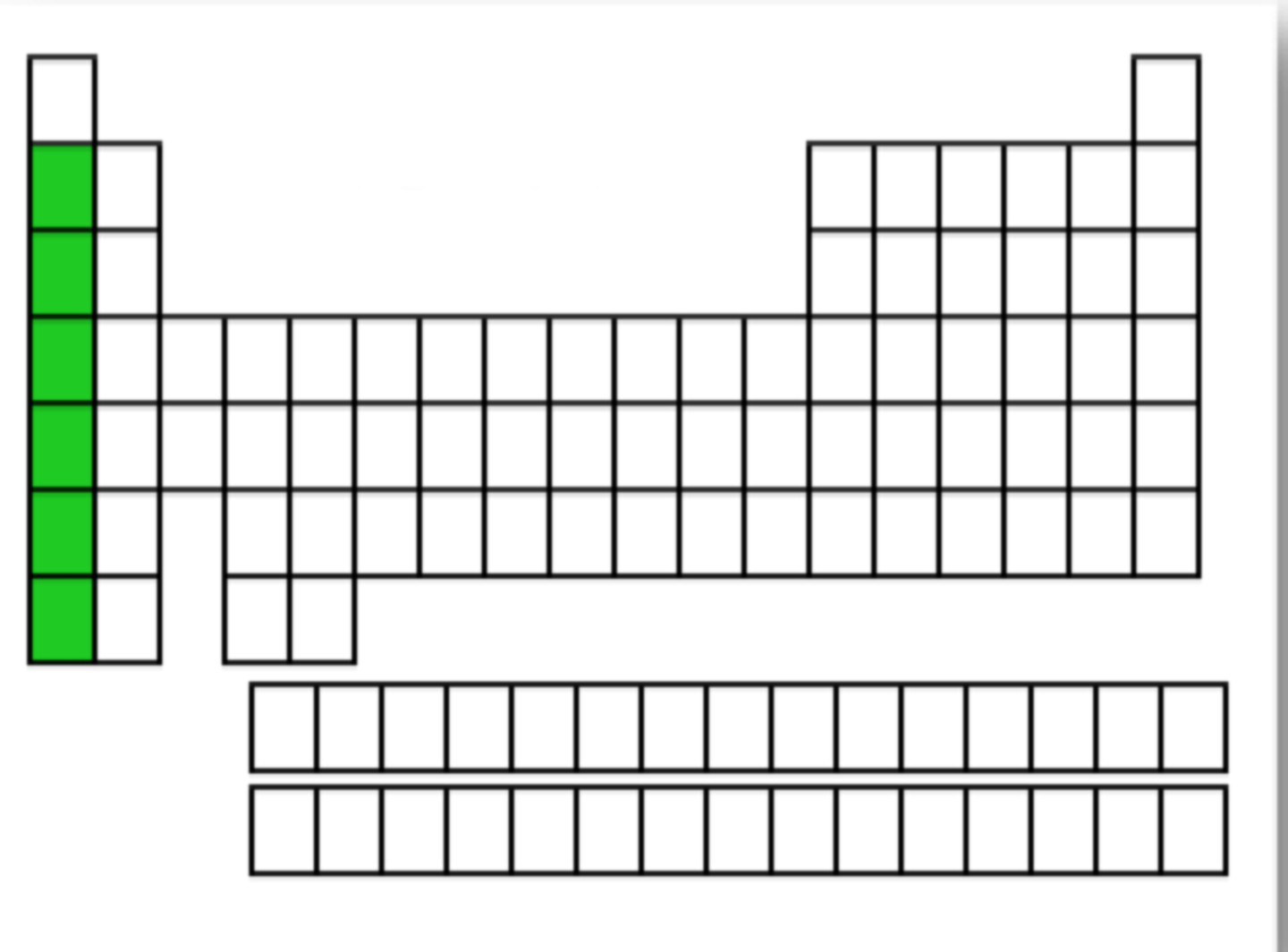
Alkali Metals
*Group 1
* 1 valence electron
* Most reactive family
* Never found pure in nature
* Shiny and light weight
* Malleable (bendable)
* Not safe for humans to touch
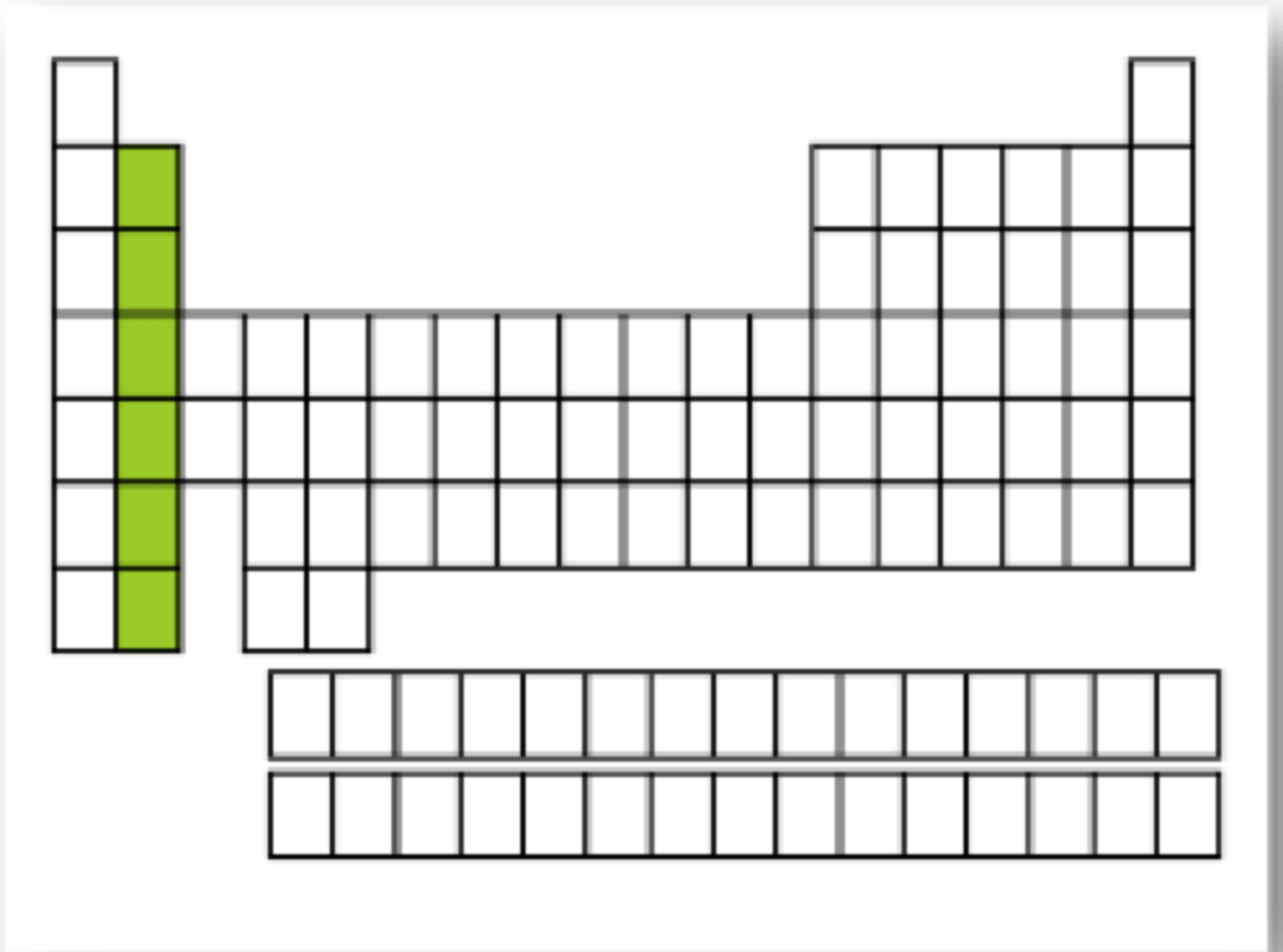
Alkali Earth Metals
* Group 2
* 2 valence electrons
* Reactive, but not as reactive as the Alkali Metals.
* Silver colored, more dense than alkali metals
* Good conductors
* When burned, each elements gives off a different color
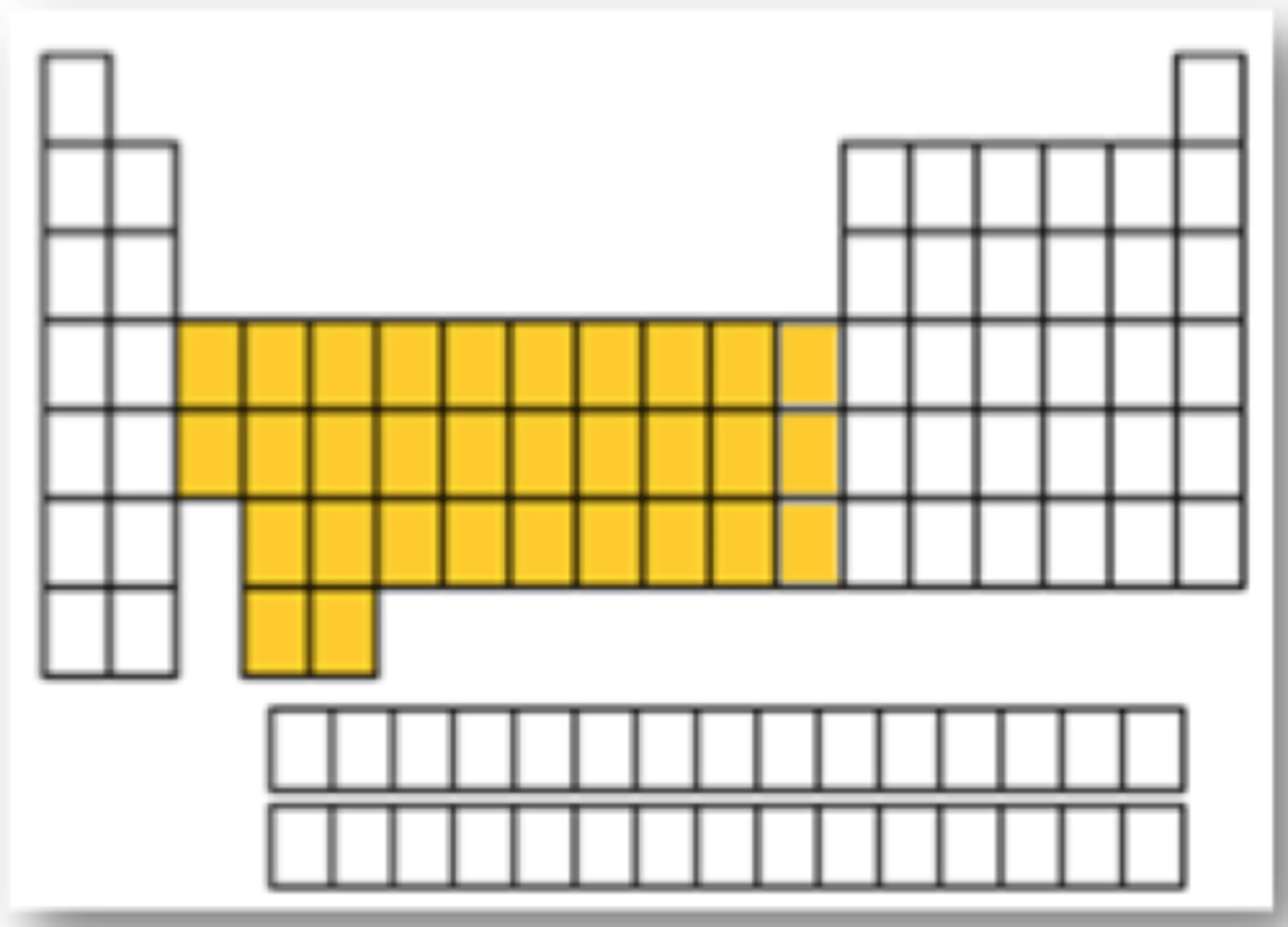
Transition Metals
* Groups 3-12
* Slightly different rules for shells and valence electrons.
* Properties vary
* Hard, strong, shiny metals
* Reactive
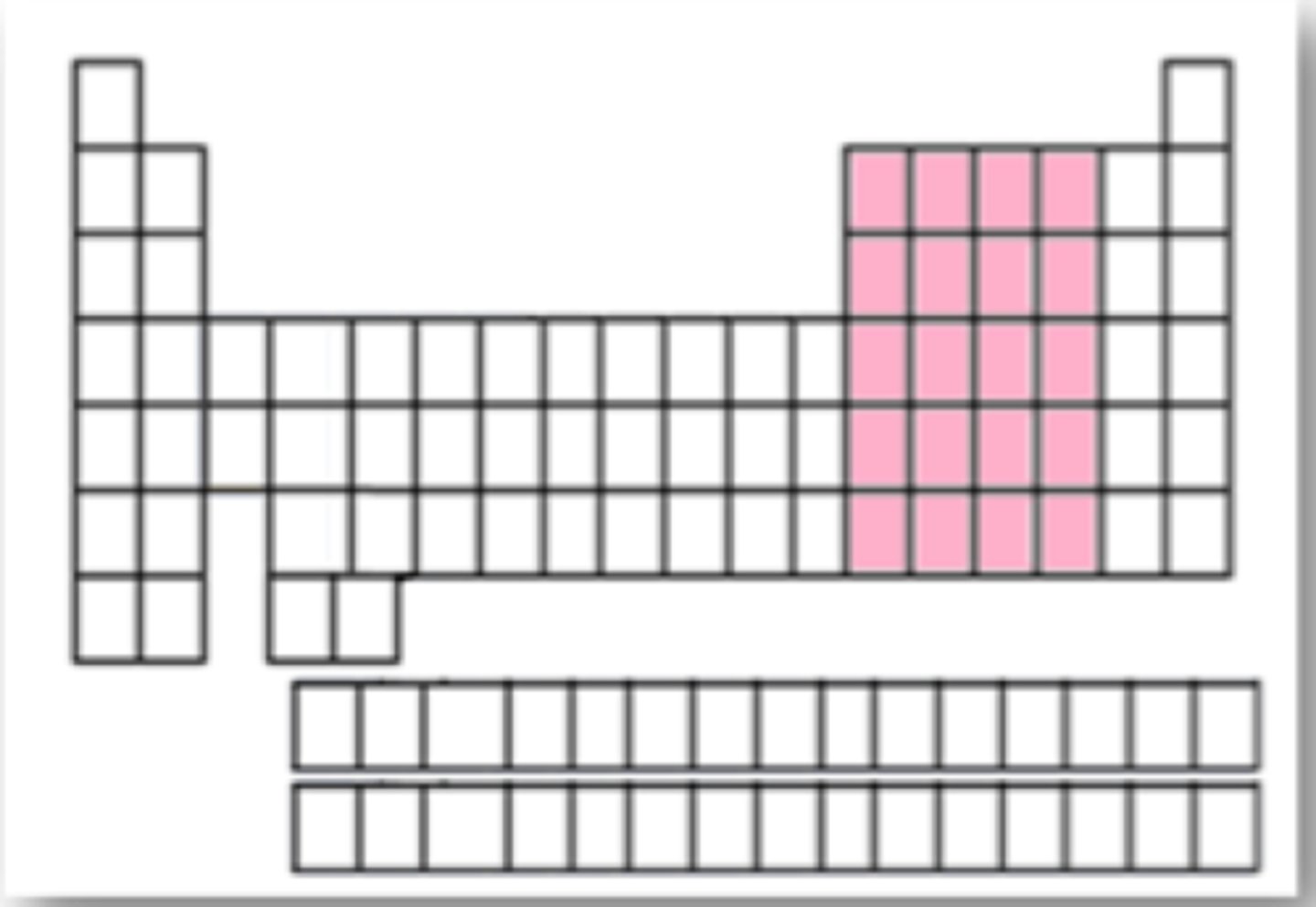
BCNO (Boron, Carbon, Nitrogen, Oxygen)
* Groups 13-16
* 3, 4, 5, or 6 valance electrons, depending on their group.
* Reactive
* Contains the metalloids along with some metals and non metals
Halogens
* Group 17
* 7 valence electrons
* Poisonous
* Poor conductors
* Reactive non-metals
Noble Gases
* Group 18
* 8 Valence electrons
* Colorless, tasteless, odorless gases
* Unreactive nonmetal
Hydrogen
* is a very special element of the periodic table and doesn't belong to any family.
* sits in Group I, but it is NOT an alkali metal, it is a nonmetal
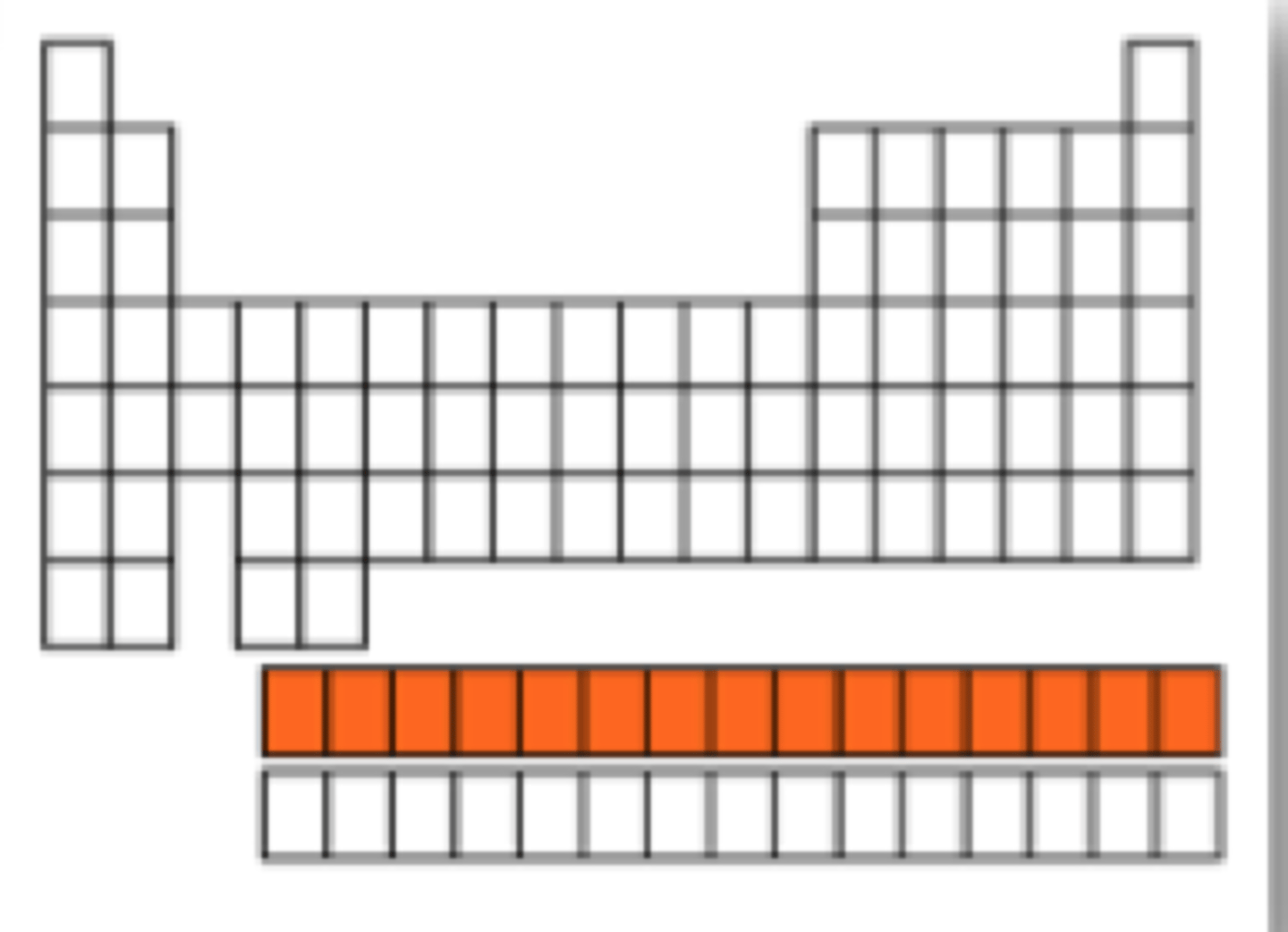
Lanthanides
* Shiny, soft, reactive metals
* Produce a spark when struck
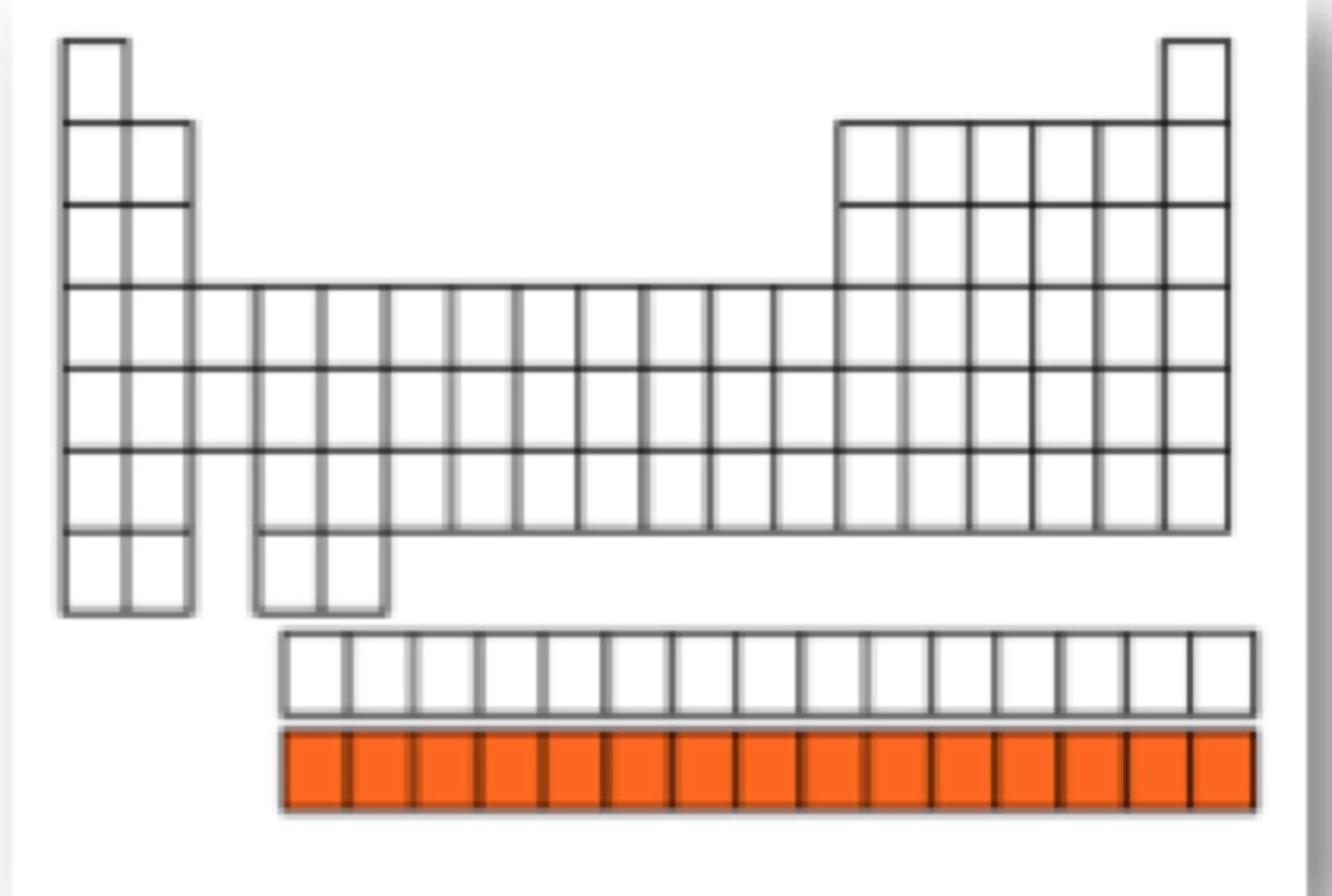
Actinides
* Unstable and radioactive metal
* Synthetic
Actinides
Lanthanides
Noble Gases
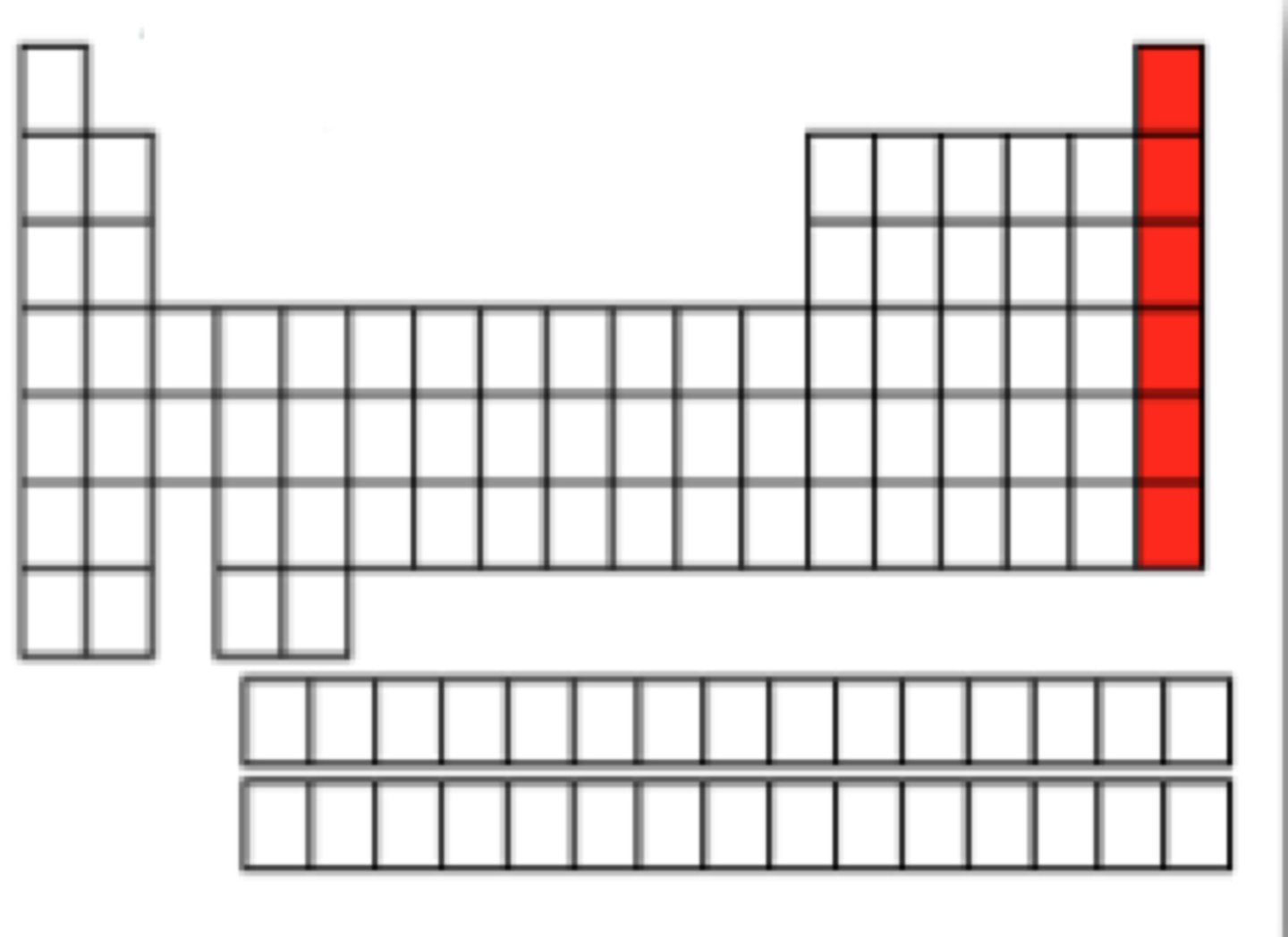
Halogens
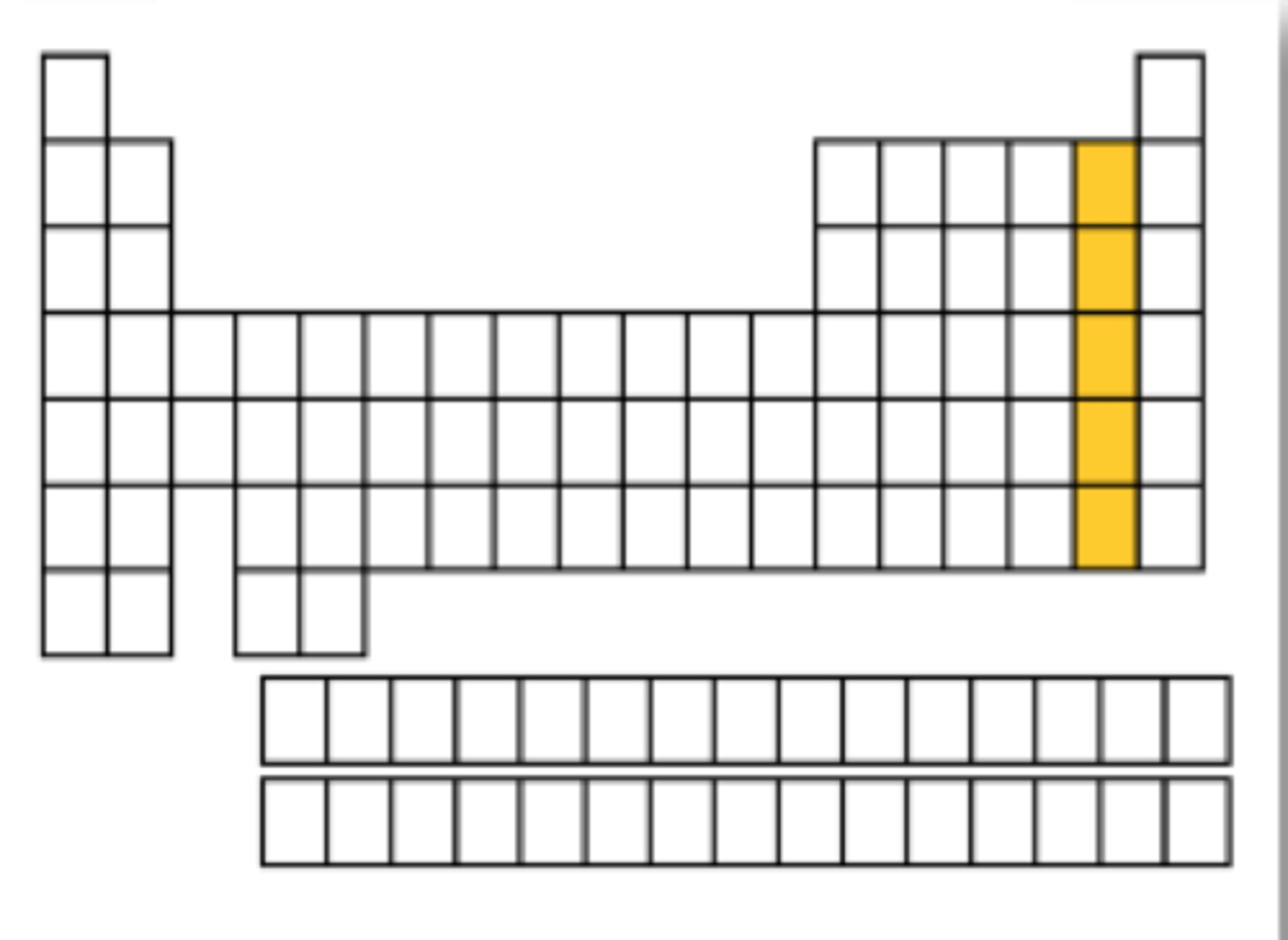
BCNO
Alkaline Earth Metals
Transition Metals
Alkali Metals
Group 3/ Period 5
Y (Yttrium)
Period 2/ Group 2
Be (Beryllium)
Group 9/ Period 6
Ir (Iridium)
Group 1/ Period 1
H (Hydrogen)
Period 1/ Group 18
He (Helium)
Period 5/ Group 12
Cd (Cadmium)
Group 17/ Period 2
F (Fluorine)
Group 18/ Period 6
Rn (Radon)
Period 4/ Group 11
Cu (Copper)
Group 13/ Period 2
B (Boron)
Which element is more reactive?
B (5) or Si (14)
B (5)
Which element is less reactive?
Og (118) or Ts (117)
Og (118)
Which element is more reactive?
Mg (12) or P (15)
Mg (12)
Which element is less reactive?
Mg (12) or Ra (88)
Mg (12)
Which element is more reactive?
O (8) or S (16)
O (8)
Which element is less reactive?
Cf (98) or Pb (82)
Pb (82)
Which element is more reactive?
Li (3) or Be (4)
Li (3)
Which element is less reactive?
Li (3) or F (9)
Li (3)
Which element is more reactive?
Ca (20) or Cu (29)
Ca (20)
Which element is less reactive?
H (1) or Kr (36)
H (1)