Biochem Summer exam 2
 Call Kai
 Learn
Learn Practice Test
 Spaced Repetition
 Match
Match Flashcards
 Knowt Play
1/75

There's no tags or description
Looks like no tags are added yet.
Name | Mastery | Learn | Test | Matching | Spaced | Call with Kai |
|---|
No analytics yet
Send a link to your students to track their progress
76 Terms
Non-essential amino acids
have shorter pathways
Essential amino acids
usually bigger and have complex biosynthesis pathways
amino acid structure
alpha carbon, alpha carboxyl, alpha amine, hydrogen, and R group
19 amino acids have
chiral center
glycine
smallest amino acid, no chiral center
amino acid configuration, life
life uses L configuration (except glycine since it’s not chiral)
Peptidoglycan is made from
D-form alanine (
aspartic acid
important component of alpha helix
OH side group containing amino acids (targets of kinesis)
serine, threonine, and tyrosine
pi (isoelectric point)
overall charge of amino acid is zero, no net charge
amino acid breakdown first step
deamination (take amide group off of alpha carbon
protein functions
catalysis
signaling
structure
energy/gradient generation
amino acids are broken down into intermediates that can be made into glucose
glucogenic
amino acids are broken down into acetyl-CoA
ketogenic
cross-linking peptide bridges of peptidoglycan
see amino acids, predomiantly D-alanine
neurotransmitter precursor amino acid
Tyrosine
amino acid (protein) kinases target
Hydroxyl group (OH) of tyrosine, threonine, and serine
peptide bond
forms from dehydration synthesis, has partial double bond character (1.5)
aspartic acid and glutamic acid
are made from citric acid cycle intermediates from trans amination reactions (easy to make)
primary sequnce
amino acid sequence/order
primary sequence
starts at amino terminus, ends at carboxyl
cis/trans config
R-groups of consecutive amino acids in a protein are usually oriented on opposite sides of the polypeptide chain (trans)
Phi
a rotatable bond (φ or Phi) between the α-amine and α-carbon following the peptide bond
Psi
a rotatable bond (ψ or Psi) between the α-carbon and α-carboxyl preceding the next peptide bond,
Hydropathy scores rate the relative hydrophobicity/hydrophilicity of each
High positive values indicate high hydrophobicity whereas high negative values correspond to high hydrophilicity
non-covalent interactions (stabilize tertiary structure
hydrogen bonds(most Important) , van der waals, ionic bonds
disulfide bond (covalent
a strong, covalent chemical link between the sulfur atoms of two cysteine amino acids within a protein
protein folding funnel
bottom is native state
diagram with many local minima a folding protein can “fall into” and become trapped, thus explaining misfolding
Leventhal’s Paradox
proteins cannot fold into their functional shapes through a purely random search. If a protein sampled every possible shape, it would take longer than the age of the universe to find its correct configuration
Cumulative Selection Theory
proposes that only problematic portions of misfolded proteins are unfolded and then re-folded, NOT the whole protein
chaperonins
class of proteins assisting folding/ provide a lidded chamber within which folding occurs
Proteasomes
cellular structures involved in degradation of damaged/ misfolded proteins
ubiquitin
Degradation is targeted on proteins flagged by being bound to
There are 4 major secondary structural elements
well-defined = a-helix, b-sheets,
not well-defined = loops, and turns
Tertiary Structure
arises from the process known as folding and is determined ultimately by the amino acid sequence of the protein
Loops and turns connect
give rise to tertiary structure. They often connect different secondary structures
a-helices and b-sheets to each other
prions
misfolded protein that acts infectiously
mad cow (bovine spongiform encephalopathy
prions (holes in brain) misfolded protein cause cell death
amyloids
-improperly folded protein aggregates, insoluble, leads to plaque that kills cell
Scrapie
a fatal, degenerative prion disease affecting the central nervous system of sheep
globular
soluble/spherical
fibrous proteins
karatin, collagen (strong structural
can have fibrous and globular parts
proteins
pure and pyrimidine biosynthesis similarities
both regulated by feedback inhibitionb
pure and pyrimidine biosynthesis differences
purines are bigger/take more atoms
purine bifurcates, pyrimidine linear
purine starts with PRP/pyrimidine PRP comes at end
nucleoside vs nucleotide
Nucleosides contain only sugar and a base whereas Nucleotides contain sugar, base and a phosphate group as well
Hypoxanthine (Xanthine Oxidase) and Guanine (Guanase) are Converted to Xanthine
Xanthine is Converted to Uric Acid by Xanthine Oxidase
Uric Acid Crystals are the Cause of Gout
Deficiency of the Guanine/Hypxanthine Enzyme, HGPRT, Causes Lesch-Nyhan Syndrome
severe intellectual disability, and movement problems
a rare inherited disorder caused by a deficiency of the enzyme HGPRT, leading to the overproduction of uric acid and severe neurological abnormalities. Its hallmark features include compulsive self-injurious behavior (such as lip and finger biting), severe intellectual disability, and movement problems
nucleotide reductase ultimate/local electron donor
ultimate ADPH
local thyroxine
purine biosynthesis
good regulatory enzyme attributes
large neg delta g step early in the pathway
committed step
most important monosacharride
glucose
glucase
converts starch into glucose
fructose
aldehyde
ribose
all oh to right
galactose
same middle
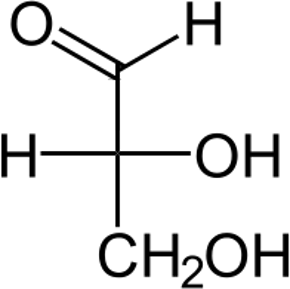
sugar configuration
D
glyceraldehyde
lactose
galactose and glucose
maltose
two glucose
sucrose
glucose and fructose
polysaccharides
one reducing end
cellulose subunit
glucose
beta 1,4
glycogen main chain
alpha 1,4
glycogen branched point
alpha 1,6
Chitin
N-acetylglucosamine units joined by β-1,4
lectin
proteins that bind carbohydrates specifically
Part of innate immune system
Glycoproteins - proteins linked to oligosaccharides
N-linked - joined to asparagine in protein - E.R. and Golgi apparatus
O-Linked - joined to serine/threonine in protein - Golgi apparatus
oligosaccharide
contains several different sugars
sphingosines
sphingolipid backbone,found in brain(good). bond allows tight packing
glycogen
non reducing ends are where glucose is added
Heparin helps prevent clotting of blood by
inhibiting conversion of fibrinogen to fibrin
The repeating disaccharide of 2-Osulfated iduronic acid and 6-O-sulfated, N-sulfated glucosamine, occupies about 85% of the molecule and make heparin the molecule with the highest negative charge density known
Hyaluronic acid
glycosaminoglycan in connective, epithelial, and nerve tissues that lacks sulfate
tissue repair, joint lube
double bonds
cis