Anatomy Lab 1
 Call Kai
 Learn
Learn Practice Test
 Spaced Repetition
 Match
Match Flashcards
 Knowt Play
1/27

There's no tags or description
Looks like no tags are added yet.
Name | Mastery | Learn | Test | Matching | Spaced | Call with Kai |
|---|
No analytics yet
Send a link to your students to track their progress
28 Terms
standing erect with feet together, upper limbs at the sides and palms facing forward (anteriorly)
describe anatomical position (position of feet, limbs, palms)
coronal/frontal plane
cross section along z plane (front & back)
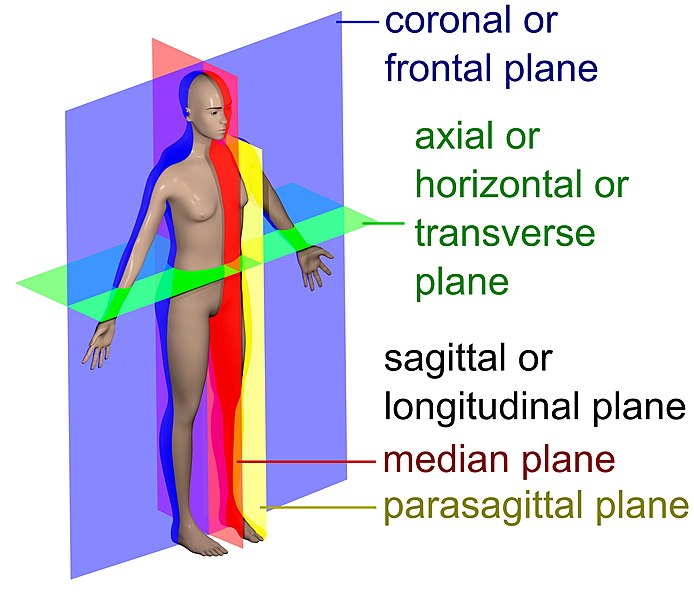
median (midsagittal) plane
cross section along y plane exactly at the midline (left & right)
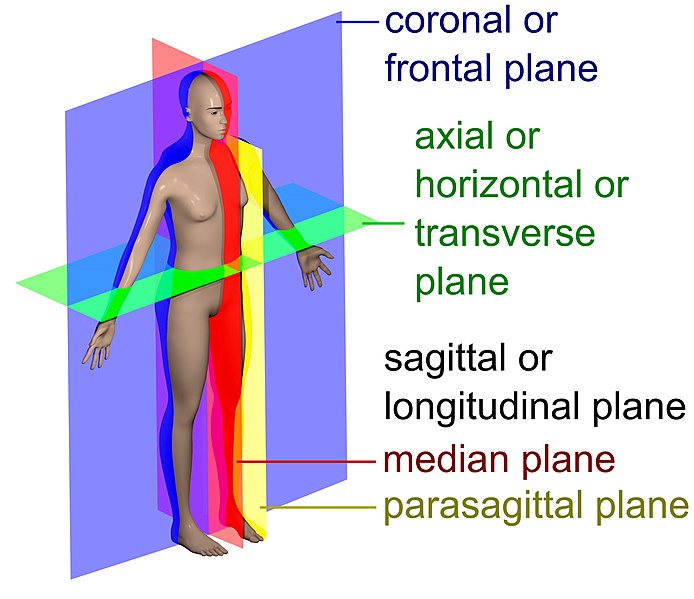
sagittal plane
cross section along y plane (left & right)
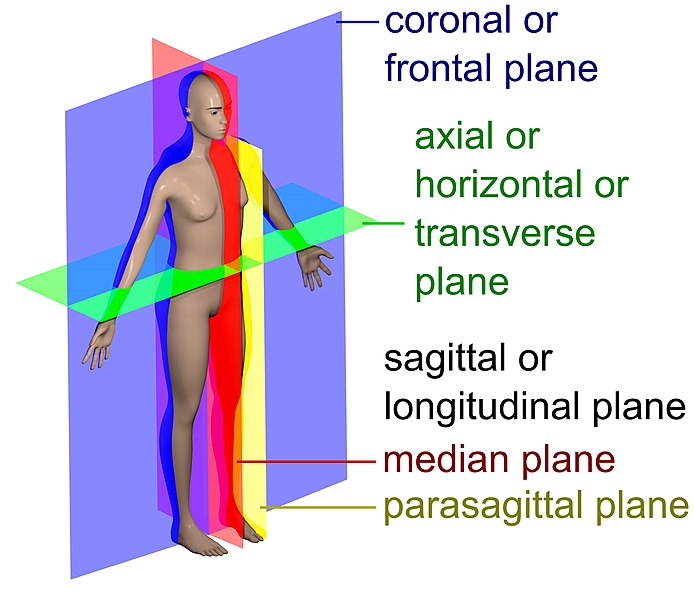
what type of cross section: transverse (horizontal/axial) plane
cross section along x plane (top & bottom)
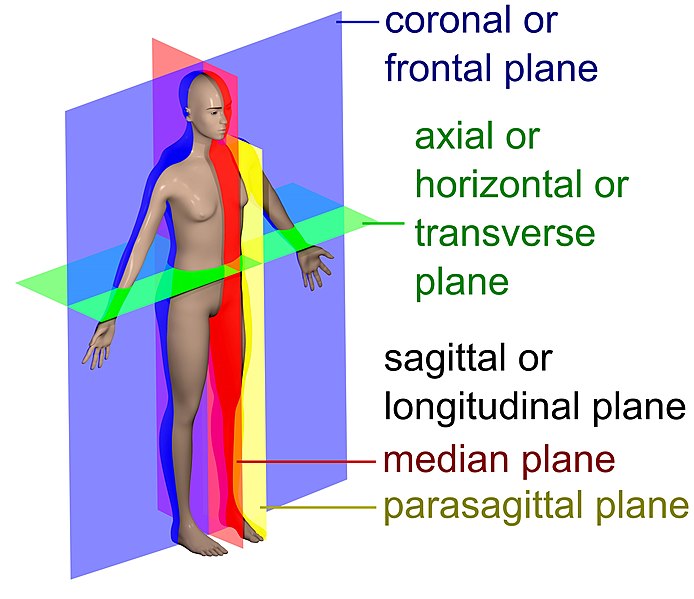
superior (cranial or cephalic); inferior (caudal)
towards the head; towards the feet
anterior (ventral); posterior (dorsal)
towards the stomach; towards the back
towards the middle; towards the side
medial; lateral
closer to the center of the body or point of attachment; farther from the center of the body or point of attachment (fingertips—wrist— elbow)
proximal; distal (elbow is proximal to wrist, fingertips are distal to elbow)
closer to the surface; closer to the body’s core
superficial; deep
internal, external
inside; outside
same side of the midline; opposite side of the midline
ipsilateral; contralateral
term that refers to the decrease in the angle between bones, bending the joint and bringing body parts closer together
flexion
term that refers to the increase in the angle between bones, straightening the joint to move them apart
extension
flexion/extension vs abduction/adduction
flexion/extension occurs along the sagittal plane; abduction/adduction occurs at the midline
term that refers to moving a limb away from the body’s midline (e.g. raising arms sideways)
abduction
term that refers to moving a limb toward the body’s midline (e.g. brining arms to the sides)
adduction
circumduction
occurs at a single joint at which flexion, abduction, extension, adduction, medial rotation, and lateral rotation are all possible (hip, shoulder)
supination & pronation
unique to forearm; refers to rotating palm up and down
inversion & eversion
unique to feet; inward and outward turning of the sole of the foot
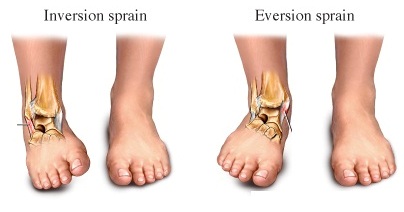
dorsiflexion & plantar flexion: location + movement
unique to feet; upward and downward movement/pointing of the foot
elevation & depression
upward (superior) and downward (inferior) movements of body parts (lifting/dropping shoulders)
protraction & retraction
unique to scapula; forward (spread apart) and backward (squeeze together) movements
opposition & reposition: location + movements
unique to thumb; movement of thumb to fingers and back to anatomical position
synarthrose joints/articulations
immovable joints
amphiarthrose joints/articulations
semi-movable joints
diarthrose joints/articulations
freely movable joints
ball/knee condyle have convex surfaces; socket/depression have concave surfaces
differences in shape: ball/knee condyle & socket/depression