Biometry Midterm II
 Call Kai
 Learn
Learn Practice Test
 Spaced Repetition
 Match
Match Flashcards
 Knowt Play
1/38

There's no tags or description
Looks like no tags are added yet.
Name | Mastery | Learn | Test | Matching | Spaced | Call with Kai |
|---|
No analytics yet
Send a link to your students to track their progress
39 Terms
Simple Linear Regression (Number of predictors)
Modelling the relationship between one independent variable and one dependent variable
One predictor variable
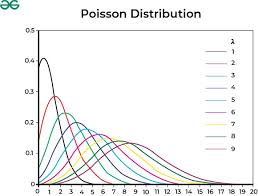
Poisson Distribution
A skewed, count data type that is a GLM.
log(y)
Multiple Linear Regression (Number of predictors)
Modelling the relationship between one dependent variable and 2+ predictor/independent variables.
Predicts outcomes through a line of best fit
The response variable in linear regression should be…
Continuous, and approximately normal
A random variable (x) is…
Some numerical outcome of a random process
Why is probability fundamental to statistics?
Probability can quantify uncertainty
How to interpret the p-value
The probability of getting our observed data assuming the null hypothesis is correct
Likelihood
Likelihood is the likelihood that observed probabilities happened under variable parameters
(Given chance, parameters that caused it are variable. Used for estimating parameters)
Probability
The chance that, under given parameters, random outcomes will happen
(Given parameters, find chance)
Probability distribution
Some representation of all probabilities of a given random variable
Numerical Discrete
Data that is counted, numerical data without decimals or fractions
Numerical Continuous
Data that is numerical and uses decimal points, fractions
Categorical nominal
Data that is NOT numerical, and has no order (favorite color, car model, etc.)
Categorical Ordinal
Data that is NOT numerical but IS ordered (gold, silver, bronze medals)
Categorical Binary
Data with only 2 possible options (yes/no, treatment/no treatment, etc.)
T-Test test statistic
(T)
ANOVE test statistic
(F)
Chi-Squared test statistic
(X²)
When to apply One-Sample t-test
When we have one group/sample, and we are measuring for some target value
One continuous variable
When to use a Two-Sample T-Test
When we have two different groups/samples, and we want to compare the means of the two.
Continuous outcome variable, and a categorical variable with 2 different groups
When to use Paired T-Test
When we have two means from the same group or matched pairs (pre- and post-treatment), usually a before and after
2 continuous measurements for each person
When to use ANOVA
When we are comparing the means for 3+ groups.
1 continuous variable and 1 categorical variable with 3+ groups
When to use MLR (Multiple Linear Regression)
When you want to predict some continuous outcome based on 2+ predictor variables.
1 Continuous outcome and 2+ predictor variables which can be categorical or continuous (Tomato plants grown with fertilizer, without, in shade, without, etc.)
When to use Generalized linear model
When our outcome is NOT normally distributed (binary data, count data, etc.)
Often with log() or with a Poisson distribution
When to use X² Test
When we want to see if the FREQUENCY of a categorical variable, proportion, matches what we expected.
When to use Non-Parametric Tests?
No assumption of normality/distribution, opting for a weaker, less powerful test if it’s your only option.
Parametric tests and their corresponding non-parametric tests
T-Test = Wilcoxon Test for One Sample
Paired T-Test = Wilcoxon Test
Unpaired/Two Sample T-Test = Mann-Whitney U Test
One Factorial ANOVA/Independent Samples = Kruskal-Wallis Test
Repeated Measures/Dependent Samples ANOVA = Friedman Test
Simple vs Multiple Linear Regression
Simple linear regression predicts a continuous variable by using one independent predictor variable
Multiple linear regression uses 2+ predictor variables to predict a single continuous variable
R² Value
R² represents what proportion of variance in our data can be explained through our model
If a predictor is non-significant, does that mean the model is also non-significant?
No, even if the predictor is non-significant, the overall model may still be significant
How to calculate predicted values from a regression equation
Plug in x to the given equation, typically just some variation of y = mx + b
When to use GLM’s (generalized linear models)
GLM’s are useful for when our data is not normally distributed, is non-linear, and/or has non-constant variance (skewed, count, binary data)
Random component of a GLM
The random component of a GLM is the outcome, the y in the y = mx + b equation. The distribution
Systematic Component of a GLM
The actual equation giving the outcome, the system. The mx + b in y = mx + b
Link Function of a GLM
Some function applied to the random variable that transforms the data into valid domains.
Coefficients put through a link scale must be transformed for interpretation
Binomial = log(y/y-1)
Poisson = log(y)
Gamma = 1/y
Log Link
A log link or log(y) is used to transform Poisson data, or skewed positive data (gamma)
Implies multiplicative effects
Reversed by exponentiating y
Logit Link
Used to transform binary data (yes/no, 0/1, etc.)
log(y/1-y)
Changes log-odds from 0 to 1 to negative infinity to positive infinity.
Remember! The slope of a logit function does not equate to an increased chance per unit of predictor variable, it equates to an increase in the Log-Odds
Interpreting GLM Coefficients
A change in a GLM graph with data that has been linked needs to be reversed before it can be interpreted. A change on the graph means a change on the link scale, not on the actual data.
Individual vs Model significance
Individual Significance (T-Test) - Evaluates if a specific predictor coefficient is significant, not 0
Model Significance (F-Test) - Evaluates the overall model, if the entire dataset is significant