bsc1005L- lab 8
 Call Kai
 Learn
Learn Practice Test
 Spaced Repetition
 Match
Match Flashcards
 Knowt Play
1/15

There's no tags or description
Looks like no tags are added yet.
Name | Mastery | Learn | Test | Matching | Spaced | Call with Kai |
|---|
No analytics yet
Send a link to your students to track their progress
16 Terms
Connected through cycles such as the carbon, phosphorus, and nitrogen cycle, as well as food webs and trophic levels.
8.1 How do organisms interact with the biotic and abiotic environment to obtain matter and energy?*
Phosphorous: DNA backbone, cell membranes, ATP. The Phosphorus cycle has interactions of abiotic and biotic through phosphorus (go over process)
How are abiotic components connected to biotic components in the phosphorous cycle?
Phosphorus is added to the ecosystem through rocks and minerals (including minerals from dead organic matter in soil) that break down over time due to weather, releasing phosphorus into soil and surface water.
Plants take up phosphorus from the soil, which is then passed up the food chain to herbivores that obtain phosphorus by eating plants, and carnivores obtain it by eating herbivores.
When plants and animals die, the phosphorus in their bodies goes back into soil. Phosphorus in water flows to the ocean, where it settles, forming new sedimentary rocks that may be uplifted then weathered.
Phosphorus Cycle (relevance to the ecosystem and plants and animals)
Nitrogen: DNA bases (ACTG), amino acids (proteins); Nitrogen cycle shows connection (put on cheat sheet)
How are abiotic components connected to biotic components in the nitrogen cycle?
Atmospheric nitrogen enters cells and DNA through a process called nitrogen fixation. Plants pass these compounds to humans via food consumption.
How does nitrogen get into our cells and DNA from the atmosphere?
Unbalance of nutrients (phosphorus and nitrogen) and sediment increases phytoplankton and toxic algal blooms, blocking light penetration and exceeding grazer control. Results in toxic algal boom that kills off marine organisms from lack of oxygen, and murky water.
Invasive Species outcompete native species for space and resources. Negatively impacts tropic webs by elimination/less population of native species, possibly to the point of a loss of keystone species that is detrimental.
8.2 What happens to ecosystems when the environment changes? (e.g. polluted water runoff, invasive species, loss of keystone species, biodiversity, and trophic webs)*
Keystone Species
an organism that has a disproportionately large effect on its ecosystem relative to its low abundance, acting as a crucial anchor for biodiversity.
Unbalance of nutrients (phosphorus and nitrogen) and sediment increases phytoplankton and toxic algal blooms, blocking light penetration and exceeding grazer control. Results in toxic algal boom that kills off marine organisms from lack of oxygen, and murky water.
What happens to an ecosystem with too many nutrients and sediment?
Invasive Species outcompete native species for space and resources. Negatively impacts tropic webs by elimination/less population of native species, possibly to the point of a loss of keystone species that is detrimental.
What happens to an ecosystem when invasive species are introduced?
Biomass is highest at the producer level and decreases by approximately 90% at each higher trophic level due to energy loss (10% rule). Primary producers possess the greatest biomass, while top predators have the least, creating a pyramid-shaped distribution.
8.3 Use the energy pyramid concepts to predict the relative biomass at different levels of a trophic web.
Advantages of being multicellular: Competing for space and light in stable habitats, specialized cells, larger size (can store more nutrients), and increased complexity (helps efficiency)
Advantages of being unicellular: Better for aquatic environment and richer conditions; faster growth rate, nutrient uptake efficiency (from high surface-area-to-volume ratio), and adaptability to rapid environmental shifts (esp open water columns), mobility
8.4 What are the advantages of being a multicellular organism? A unicellular organism?
Advantages of being multicellular: Competing for space and light in stable habitats, specialized cells, larger size (can store more nutrients), and increased complexity (helps efficiency)
8.4 What are the advantages of being a multicellular organism?
Advantages of being unicellular: Better for aquatic environment and richer conditions; faster growth rate, nutrient uptake efficiency (from high surface-area-to-volume ratio), and adaptability to rapid environmental shifts (esp open water columns), mobility
8.4 What are the advantages of being a unicellular organism?
Focal population increases/decreases because of increase/decrease in food resources
• Focal population increases/decreases because of a decrease/increase in predators
• Focal population increases/decreases because of a decrease/increase in competitors for the same resources
Community Interactions and how they impact focal population (how organisms interact)
Yes
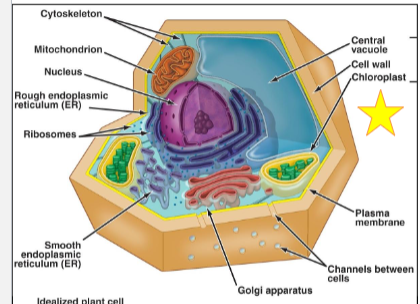
Be able to label this diagram.