Film 10 Final Exam Study Guide
 Call Kai
 Learn
Learn Practice Test
 Spaced Repetition
 Match
Match Flashcards
 Knowt Play
1/73

Earn XP
Description and Tags
Directions: This guide is intended to help you prepare for your final exam. Please note that the guide identifies broad topics you should be certain to study—it is up to you to study the specifics discussed in lecture. The best way to do this is to study the slides for each lecture (available on bCourses under “files”). This is the best way to succeed on the objective portion of the final exam: many questions will be based directly on the slides' content. Study your lecture notes for our Thursday film analysis lectures: this is the best way to succeed on the essay questions. Format: short answer; definitions; true/false (correct false); fill in the blank; multiple choice; matching, short answer, film identification, blue book essays. Please bring a clean BLUE BOOK (no writing inside; we will check) to the exam. Keep in mind that this is NOT an open-book/open-note exam. Blue Book Essay Questions: You will have to answer two essay questions One will focus on the use of acousmatic sound in M The Production Code the principle of deniability It Happened One Night Your essay answer should provide close readings of relevant scenes, shots, or sequences, paying careful attention to sound as well as elements of the mise-en-scène, including lighting, costume, etc. Pay attention as well to framing, shot size, and/or composition, and dialogue when these are relevant to your argument. You will be assessed on how well you engage with the material discussed in our Thursday film analysis classes.
Name | Mastery | Learn | Test | Matching | Spaced | Call with Kai | Chat |
|---|
No analytics yet
Send a link to your students to track their progress
74 Terms
Oskar Messter
German inventor and film producer who helped develop early German cinema and founded Messter Film before it merged into UFA.
Tonbilder
Early German sound films that synchronized projected images with recorded sound or music.
Autorenfilm (famous author’s film)—effects on German film industry
A movement that adapted respected literary works into films to give cinema greater artistic and cultural legitimacy.
Expressionism
An artistic movement that emphasized emotional experience through distortion, exaggeration, and symbolism.
German Expressionism (film): stylistic features (including mise-en-scène, acting, etc.) and thematic tendencies
These films used distorted sets, dramatic shadows, exaggerated acting, and themes of madness, fear, and psychological instability.
UFA
Germany’s major film studio founded in 1917 to promote and control German filmmaking.
Films d’art
French prestige films that adapted famous plays and literature to make cinema appear more respectable as an art form.
The Cabinet of Dr. Caligari and WWI
The film reflected post-World War I anxieties about authority, trauma, and social instability.
Reich Film Act of 1920
A German law that introduced state censorship and regulation of films after World War I.
MPPDA
The Motion Picture Producers and Distributors of America was a Hollywood organization created in 1922 to improve the film industry’s public image and enforce self-censorship standards.
Frame narrative
A storytelling structure in which one story surrounds or contains another story.
Key features of Russian cinema between 1908 and 1917
This era emphasized slow acting, theatrical compositions, literary adaptations, and tragic endings.
Fyodor Ostep’s Three Schools of Cinema: The Psychological School, The Form School, the Movement School
These categories divided Russian cinema into approaches focused on emotional acting, visual composition, and physical movement.
Anti-movement/slow style of acting & the “full” scene in Russian film
Films often used restrained acting and long uninterrupted scenes to emphasize realism and emotion.
Russian film resolutions/endings: two types—domestic & export
Domestic versions often ended tragically while export versions sometimes included happier endings for foreign audiences.
Moscow Film School/VGIK
The world’s first state film school that trained many Soviet filmmakers.
Agitki
Short Soviet propaganda films designed to educate and influence the public after the Revolution.
Agit-trains/agit-steamers
Mobile Soviet propaganda trains and boats that distributed films, speeches, and educational materials across the country.
Lev Kuleshov
A Soviet filmmaker and theorist known for experiments with film editing and montage.
Kuleshov Workshop: Films Without Celluloid
Students practiced filmmaking techniques without actual film stock by staging and analyzing scenes theoretically.
Kuleshov’s experiments & the Kuleshov effect
These experiments showed that viewers create emotional meaning from the relationship between edited shots.
Defamiliarization/making things strange
An artistic technique that presents ordinary things in unusual ways to make audiences notice them more deeply.
Laying bare the device/laying bare the mechanism
A technique where films openly reveal their artistic construction instead of hiding it.
The “unplayed” film
An idea that film acting should appear natural and avoid exaggerated theatrical performance.
Kino-glasz (camera eye) manifestos
Manifestos arguing that the camera could reveal truth better than the human eye.
montage
An editing technique that creates meaning through the collision and arrangement of shots.
Kinoki/Cinema Eyes
A group of Soviet filmmakers who promoted documentary realism and experimental montage.
Studio resistance to conversion to synchronous sound: reasons why
Studios resisted sound because of high costs, technical difficulties, and fear that international markets would shrink.
Industries/corporations that influenced transition to recorded synchronous sound
Electrical and communications companies helped develop sound film technology.
Vitaphone & Warner Bros.
A partnership that pioneered commercial sound films using a sound-disc system.
Vitaphone projector (identify)
A projector system that synchronized film projection with separate phonograph discs for sound playback.
Prologues
Live stage performances that accompanied early sound film screenings to attract audiences.
Don Juan (Alan Crosland, 1926): significance of
It was the first major feature film released with synchronized music and sound effects using Vitaphone.
Live sound vs. recorded sound
One is produced during a performance while the other is pre-recorded and played back with the film.
Forms of sound in silent cinema
Screenings often included live music, narration, sound effects, and lecturers.
Synchronization
The matching of sound with moving images in film.
Early phonofilm systems: problems with
These systems had poor sound quality, synchronization issues, and low amplification.
Optical sound/Sound-on-film systems
These systems recorded audio directly onto the film strip as visual sound waves.
Lee DeForest’s Phonofilm system and audion tube
A sound-on-film process that used the audion tube to amplify sound.
Tri-Ergon System
A German sound-on-film technology that improved synchronization and audio recording in cinema.
Tobis-Klangfilm
A company that controlled major European sound film patents during the early sound era.
Early sound: the transitional era and production challenges
This period faced problems with camera noise, limited mobility, and difficult sound recording conditions.
Microphones—limitations during early sound era
Early microphones were large, insensitive, and forced actors to stay close and speak carefully.
Icebox
A soundproof booth placed around cameras to block recording of camera noise during filming.
Blimp
A soundproof covering placed over a movie camera to reduce mechanical noise.
Boom
A movable microphone attached to a long pole that allowed flexible sound recording during filming.
Arc lighting vs. incandescent lighting on sound stage
Arc lights were noisy and unsuitable for sound films while incandescent lights were quieter and better for recording audio.
Post-synchronization
The process of adding or replacing sound after filming is completed.
Acousmatic sound/invisible sound
Sound whose source is not visible on screen.
Voice over
Narration spoken over the film image by a character or unseen narrator.
Voice off/acoumêtre
An offscreen voice that has power or mystery because its source is hidden.
The flapper: social freedoms she represents compared to Victorian femininity
A symbol of women’s independence, modern fashion, nightlife, and rejection of strict Victorian gender roles.
The department store
A symbol of modern consumer culture and women’s increasing public independence.
The Charleston
A popular energetic jazz dance associated with 1920s youth culture and modernity.
Clara Bow
A silent film star known as the “It Girl” who represented flapper culture.
Josephine Baker
An entertainer famous for jazz-age performances that challenged racial and gender norms.
Factors leading to the implementation of The Production Code
Public scandals, pressure from religious groups, and fear of government censorship pushed Hollywood toward stricter self-regulation.
The Production Code: Four phases of self-regulation
Hollywood self-regulation evolved through local censorship, the MPPDA, early code guidelines, and strict enforcement after 1934.
The Production Code: Goals of self-regulation
The goals were to protect morality, improve Hollywood’s reputation, and avoid government censorship.
The “Principle of Deniability, sophisticated readings, and innocent readings
A system allowing hidden meanings for some viewers while appearing harmless to others.
The use of ambiguity, innuendo, double entendre and coded images to represent potentially offensive/censorable material
Indirect language and suggestive imagery were used to avoid censorship while implying controversial content.
Screwball comedy: definition and generic features
Fast-paced romantic comedies featuring witty dialogue, gender conflict, and chaotic situations.
Film noir: key features
Dark lighting, crime, morally ambiguous characters, pessimism, and urban settings.
Hard boiled detective fiction
A crime fiction style focused on cynical detectives, corruption, violence, and realistic urban settings.
World War II and film noir
The war influenced themes of anxiety, trauma, disillusionment, and social instability.
The femme fatale
A seductive and manipulative woman who leads men into danger or destruction.
The gothic film: key features
Dark settings, mystery, supernatural elements, psychological fear, and themes of madness or death.
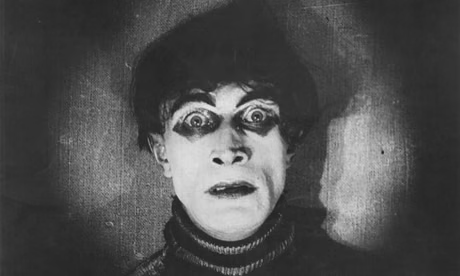
The Cabinet of Dr. Caligari (Robert Wiene, 1920)
A German Expressionist film known for distorted sets, psychological themes, and its reflection of post-World War I anxiety.
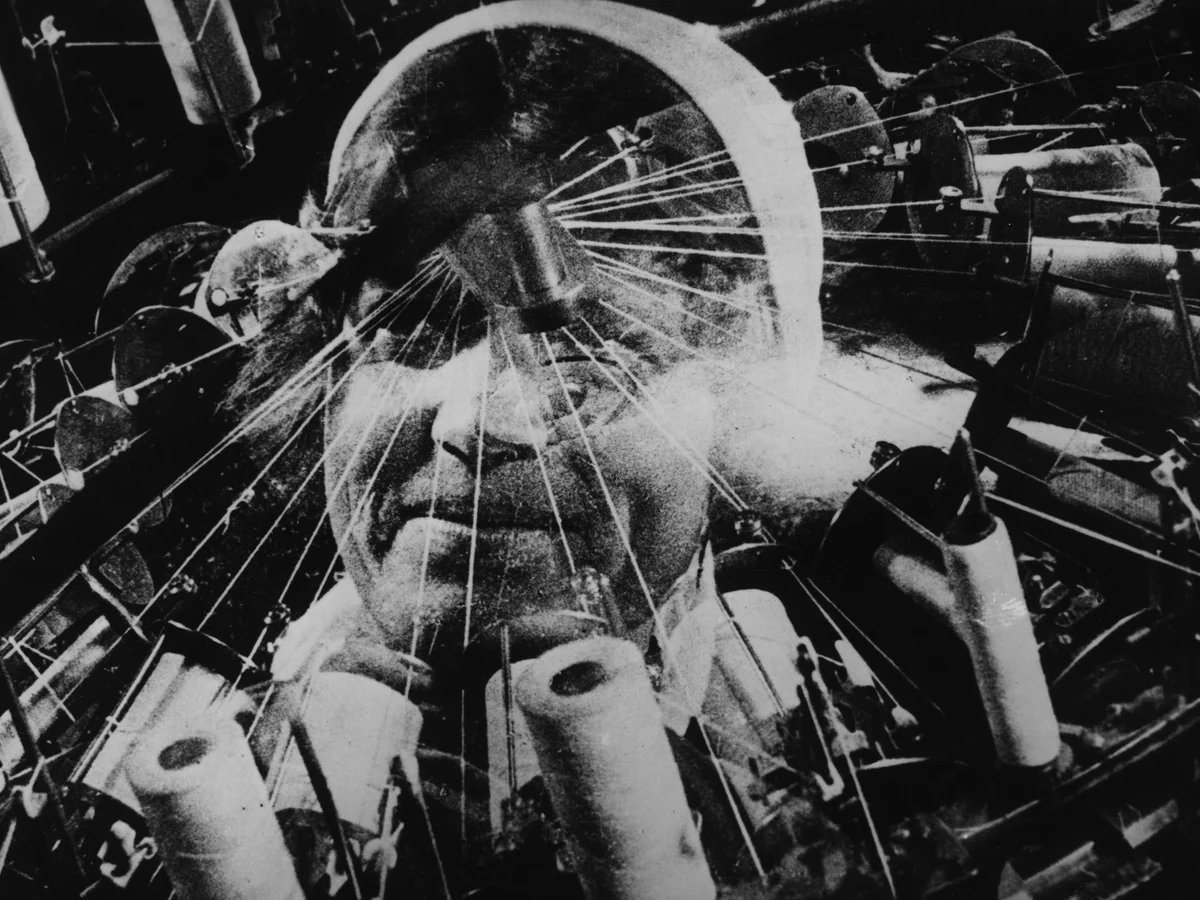
Man With A Movie Camera (Dziga Vertov, 1929)
An experimental Soviet documentary film that uses montage and camera techniques to celebrate modern urban life and filmmaking itself.
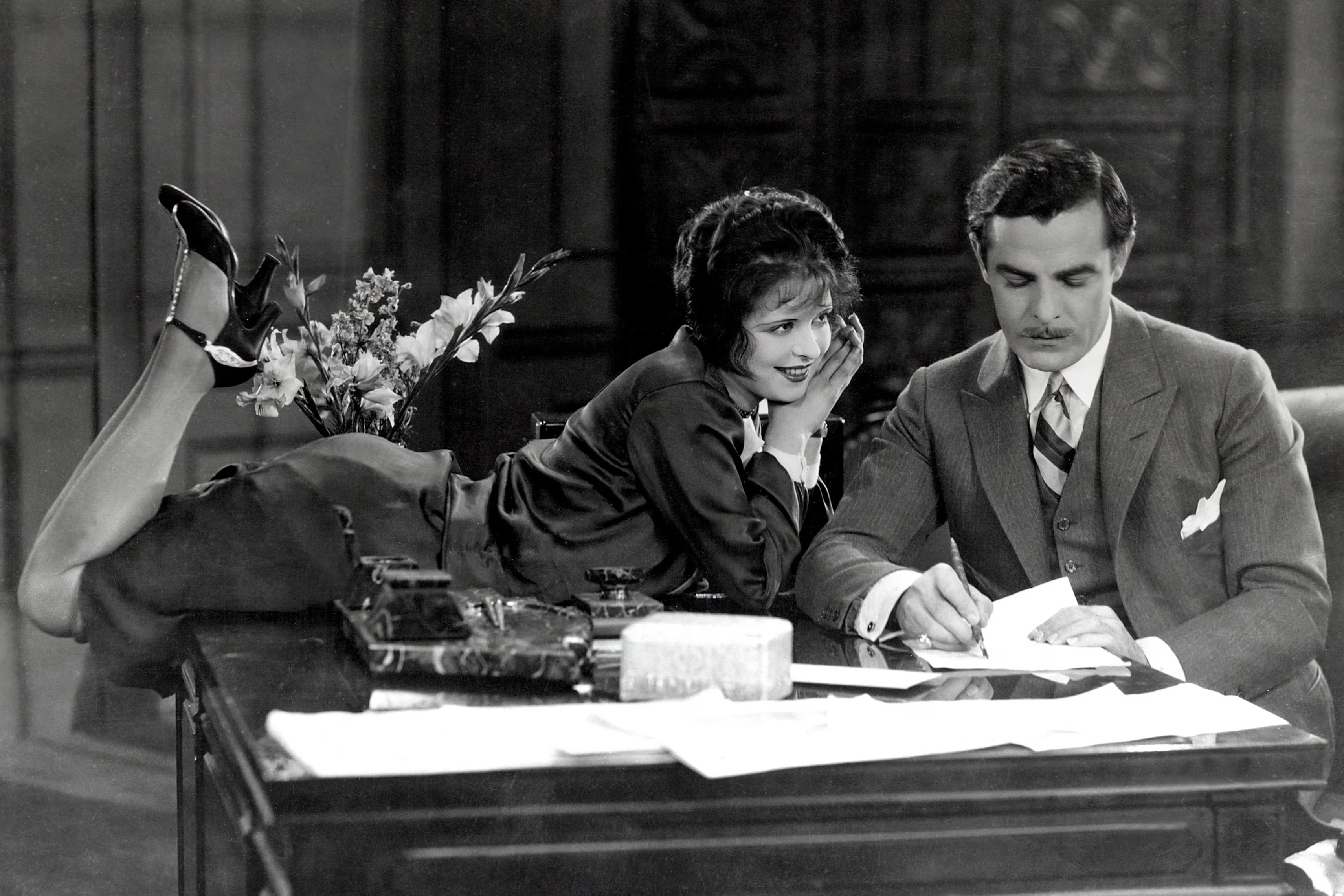
It (Clarence Badger and Josef von Sternberg, 1927)
A silent romantic comedy starring Clara Bow that popularized flapper culture and the idea of “It” as personal charm and sex appeal.
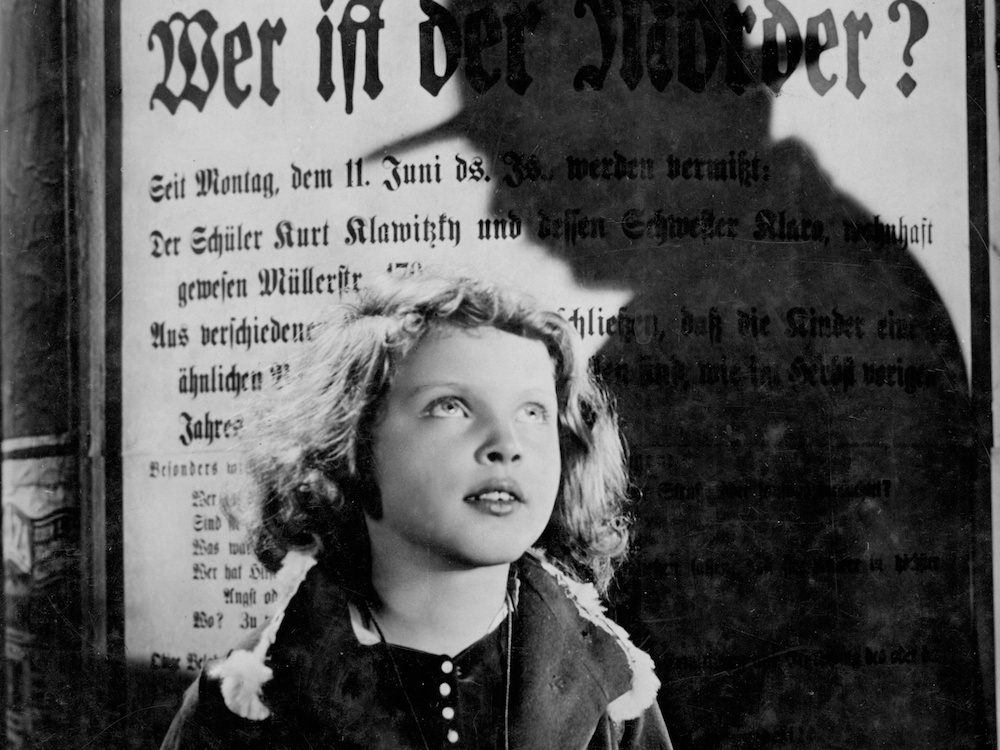
M (Fritz Lang, 1931)
An early German sound film about a child murderer that explores crime, fear, and social paranoia while using innovative sound techniques.
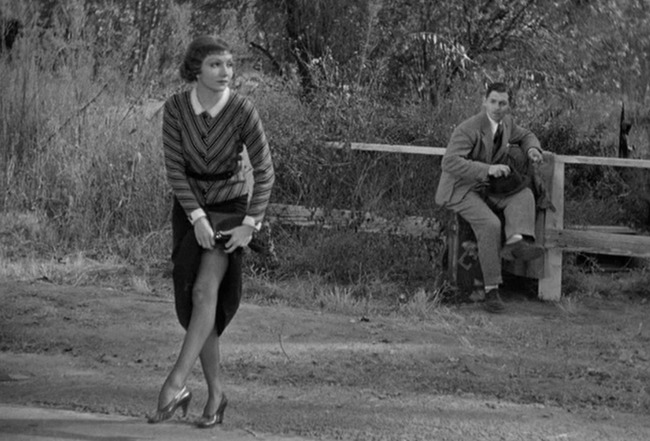
It Happened One Night (Frank Capra, 1934)
A classic screwball comedy that features fast-paced dialogue, class conflict, romantic tension, and unconventional gender dynamics between its main characters.
M (Fritz Lang, 1931). Compare the use of off-screen sound at the beginning of M with its use later in the film, when the criminal gang has cornered the murderer. How does acousmatic sound build suspense and represent power at these different junctures? Be sure to reference specific shots and/or scenes.
The film uses acousmatic sound differently at key moments to build suspense and demonstrate power.
At the beginning, the murderer is introduced through off-screen whistling while Elsie waits outside and later disappears, creating fear because the audience hears him before fully seeing him.
Lang uses empty shots of the stairwell, the bouncing ball, and Elsie’s abandoned balloon to emphasize absence and uncertainty, making the unseen killer feel powerful and threatening.
Later, when the criminal gang corners the murderer in the office building, off-screen sounds such as footsteps, whistles, alarms, and shouted commands create suspense by showing the gang’s growing control over the space.
Unlike the beginning where the murderer’s invisible presence creates fear, the later scenes reverse the power dynamic, as the gang’s unseen voices and coordinated noises trap and overpower him.
Lang uses sound throughout the film not only to create tension but also to shift control between characters and intensify paranoia.
It Happened One Night (Frank Capra, 1934) “Ambiguity and suggestion, nominally kept within moral bounds by a transparent principle of 'deniability,” offered Hollywood a way out of its untenable liaison with its source material (Vassey, 107). Select one or two scenes from It Happened One Night and consider how the Production Code allowed for a “principle of deniability.” What can be denied in these scenes, and what formal and narrative elements help make this denial possible?
The film demonstrates the Production Code’s “principle of deniability” through scenes that suggest sexuality and intimacy without directly showing or stating them.
One important example is the motel room scene with the “Walls of Jericho,” where Peter hangs a blanket between himself and Ellie while they share a cabin.
The scene implies sexual tension and romantic intimacy, but the physical barrier allows the film to deny that anything improper occurs.
Dialogue, framing, and comedic tone further support this ambiguity by making the situation appear innocent and respectable.
Another example is the hitchhiking scene, where Ellie reveals her leg to stop a car after Peter’s attempts fail.
The moment is playful and flirtatious, suggesting sexual attraction while remaining technically acceptable because it is framed as comedy rather than overt sexuality.
Through indirect suggestion, witty dialogue, and visual implication, the film satisfies audience expectations for romance while remaining within Production Code restrictions.