1.5: electrical signaling by neurons
 Call Kai
 Learn
Learn Practice Test
 Spaced Repetition
 Match
Match Flashcards
 Knowt Play
1/44

There's no tags or description
Looks like no tags are added yet.
Name | Mastery | Learn | Test | Matching | Spaced | Call with Kai |
|---|
No analytics yet
Send a link to your students to track their progress
45 Terms
humans are a
biological/physiological system, not an electrical system
we rely on our brain to process and convey information quickly and effectively
how do brains process and convey info quickly and effectively
by way of neurons and their axons and synapses
neurons send information via electrical signaling
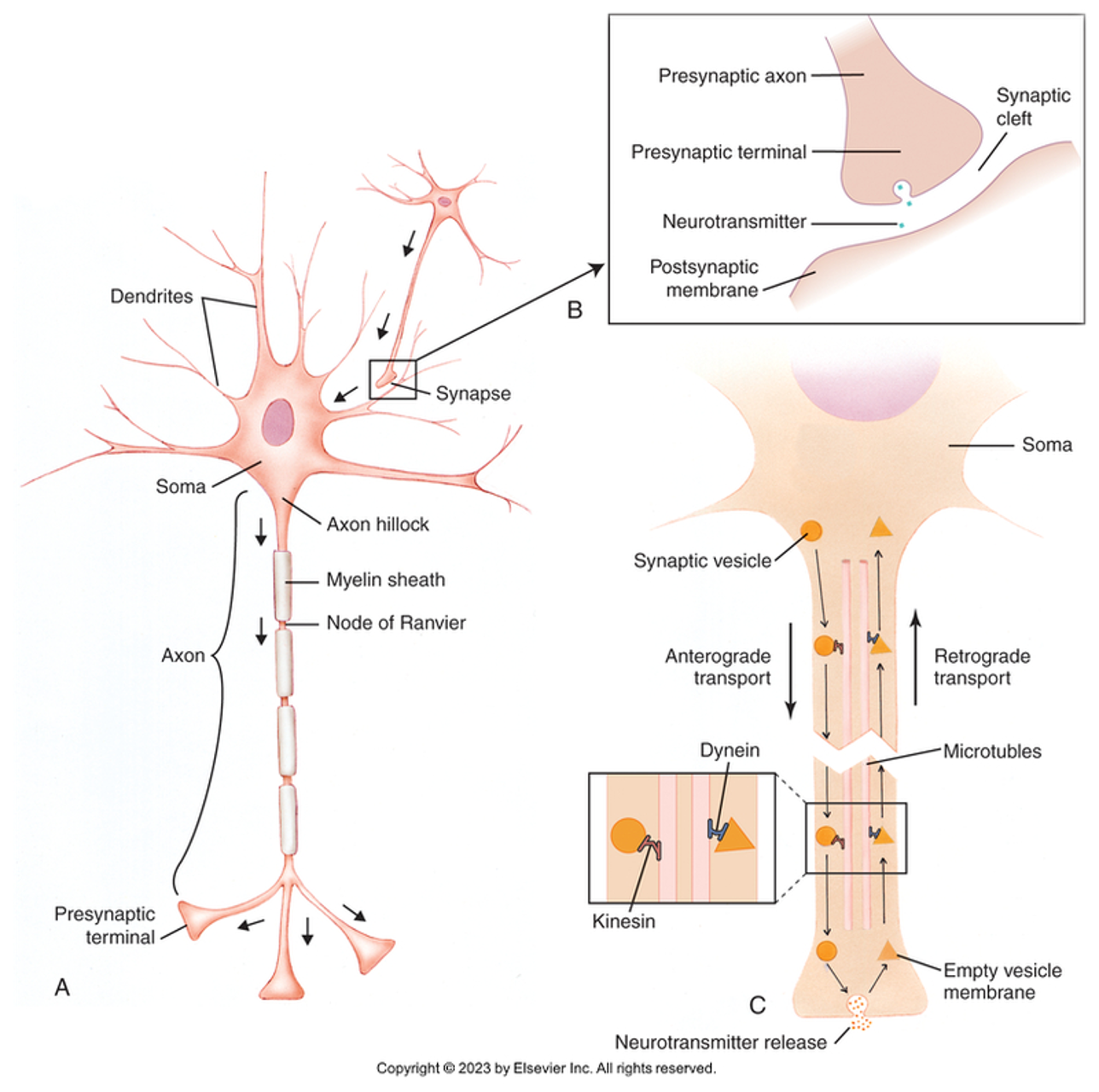
dendrites
receive information
soma (cell body)
proceses information
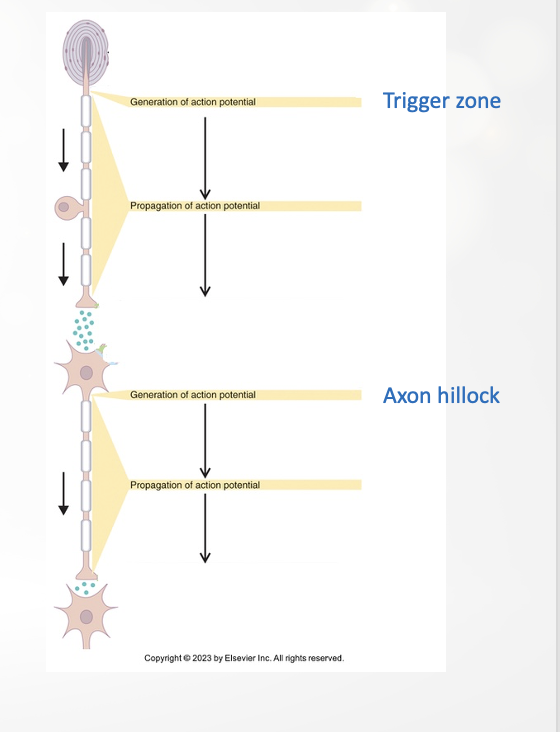
axon hillock
most proximal part of axon (where an AP can start)
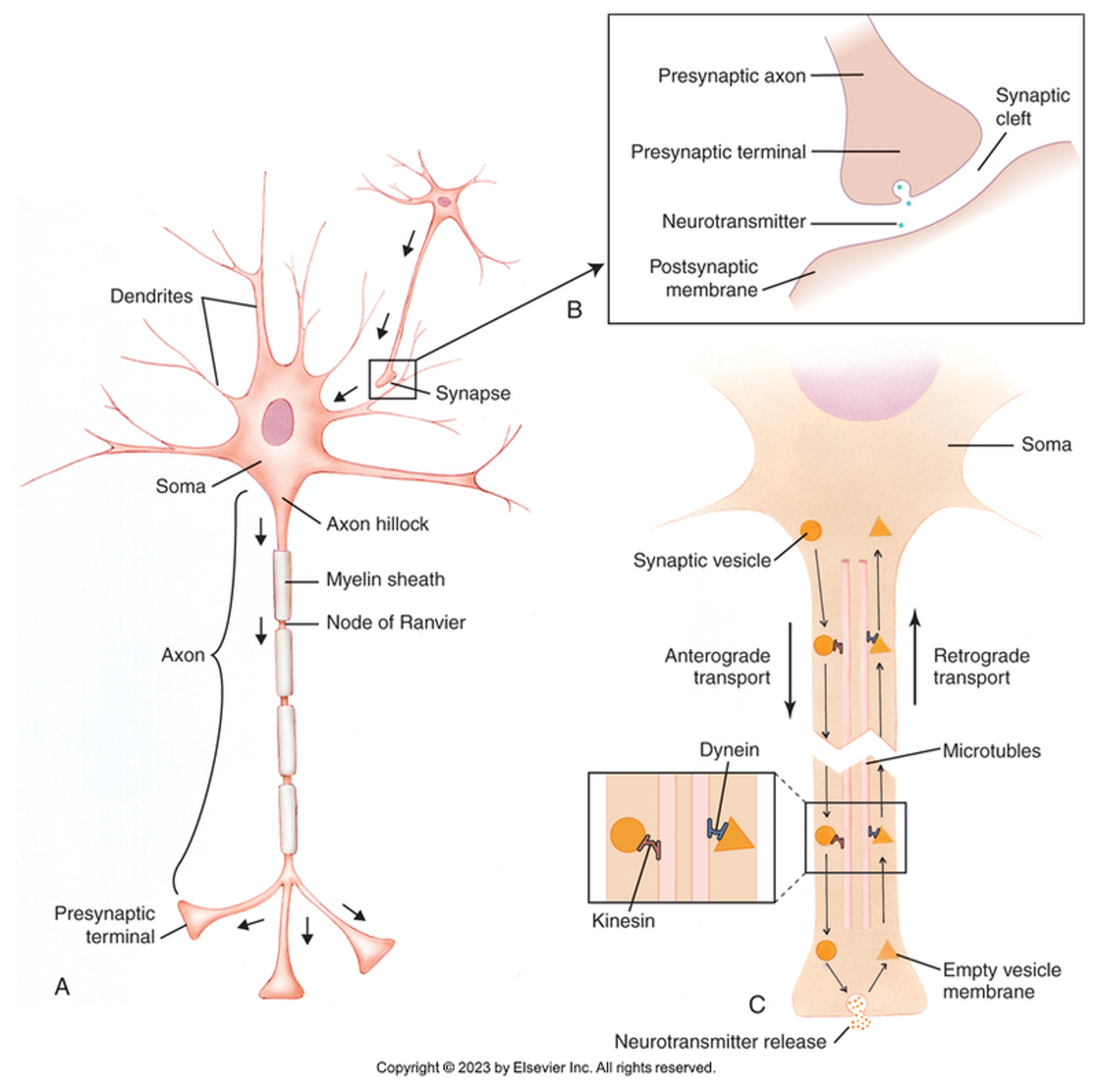
myelin sheath
insulation for the axon
node of ranvier
space between each myelin
holds voltage gated channels
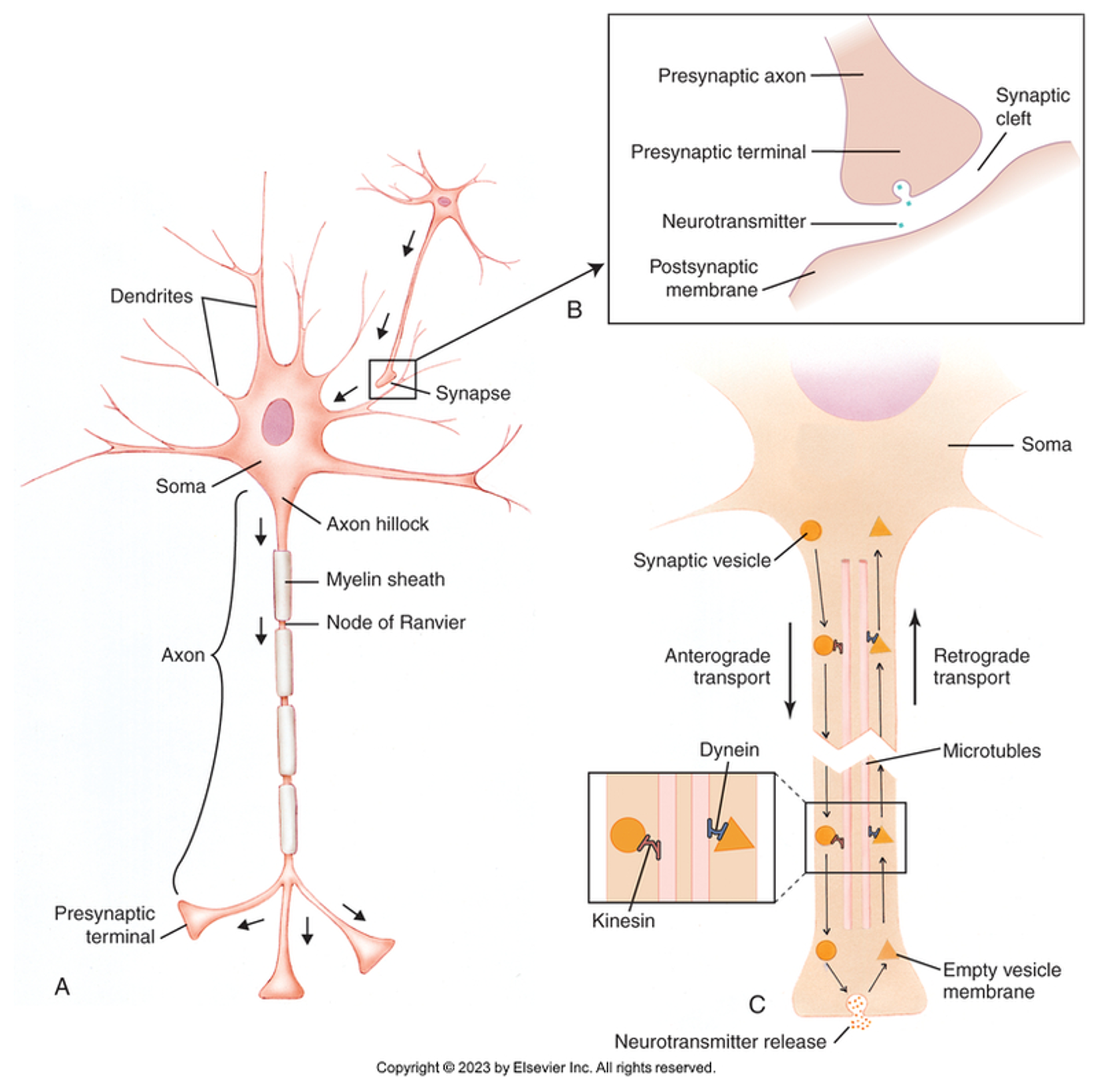
presynaptic terminal
the end of a neuron’s axon that can release neurotransmitters to communicate with other cells
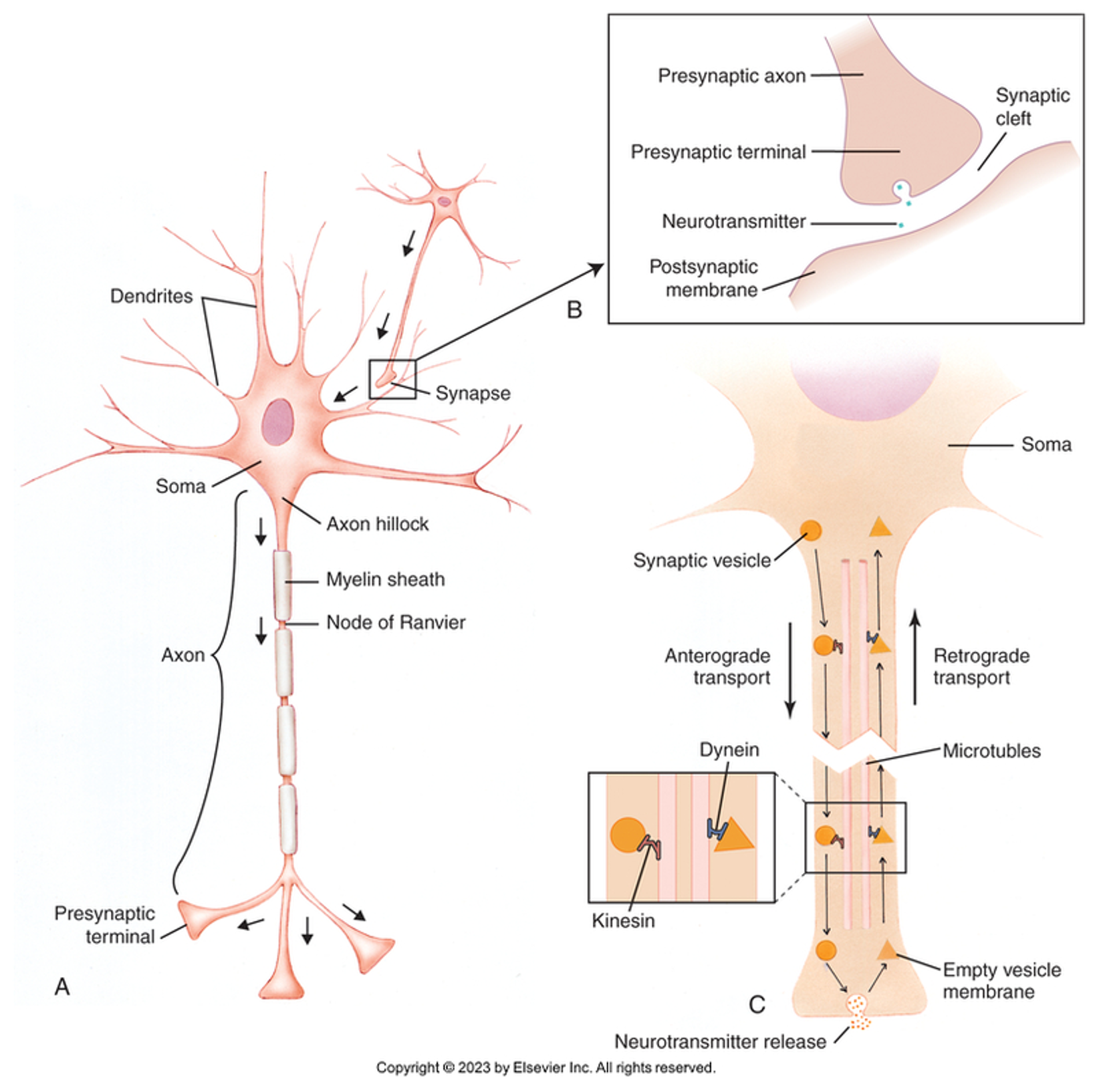
synapse
the junction that separates 2 neurons
neurons are bounded by a
semi-permeable membrane that is electrically polarized
important for how the neurons send signals
semi-permeable
things selectively allowed in and out of cell
extracellular fluid
0mV
intracellular fluid
~-65 mV (-70mV)
resting membrane potential
the electrical charge difference across a cell's plasma membrane when it is inactive.
-70mV
means the inside of the cell is more negative than the outside
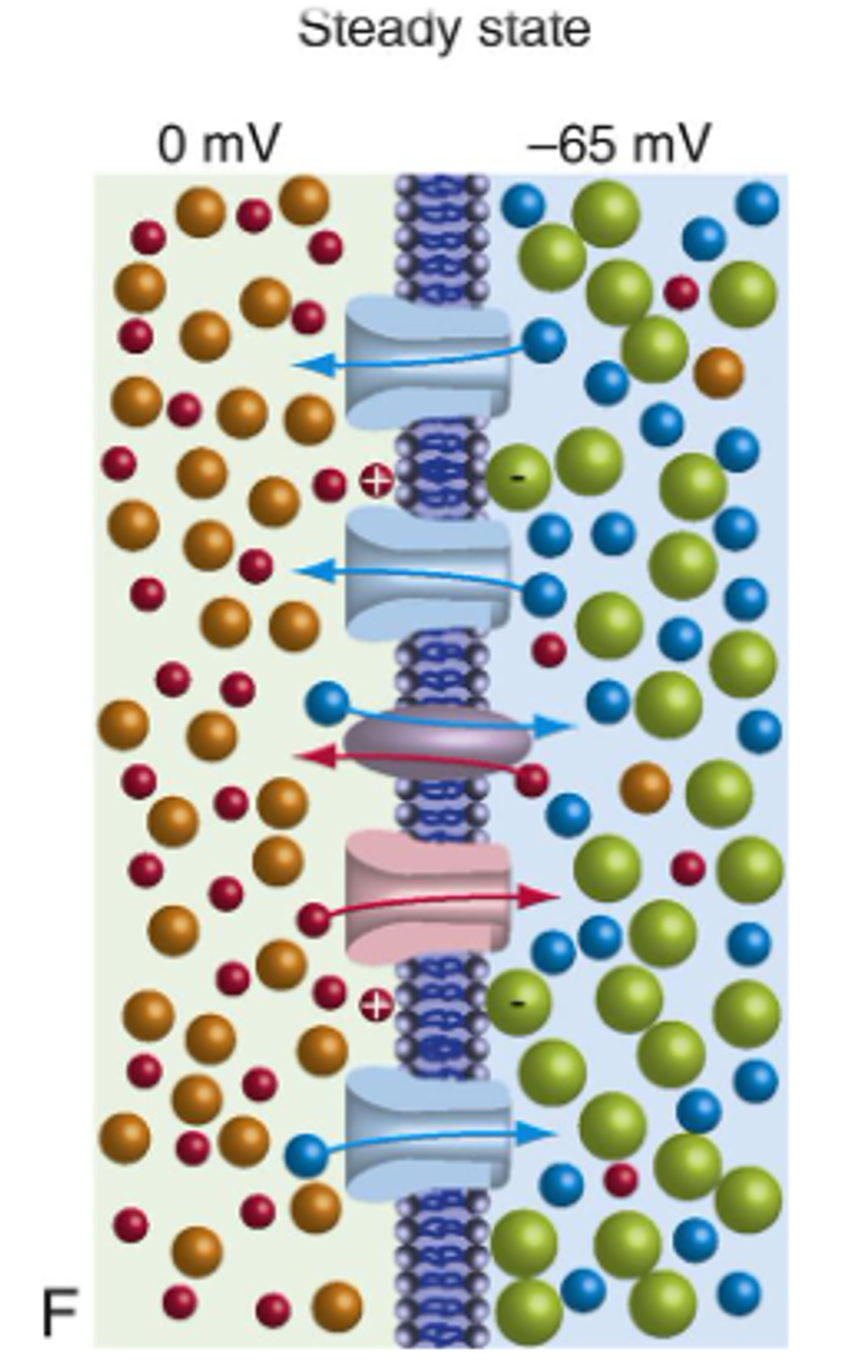
inside of cell is more __ than the outside
negative
the membrane is made up of
lipid (fat), but has different proteins and channels embedded into it
these serve as passages into and outside of the cell
without protein channels, no ions could flow in/out of the cell
different types of ion channels exist!
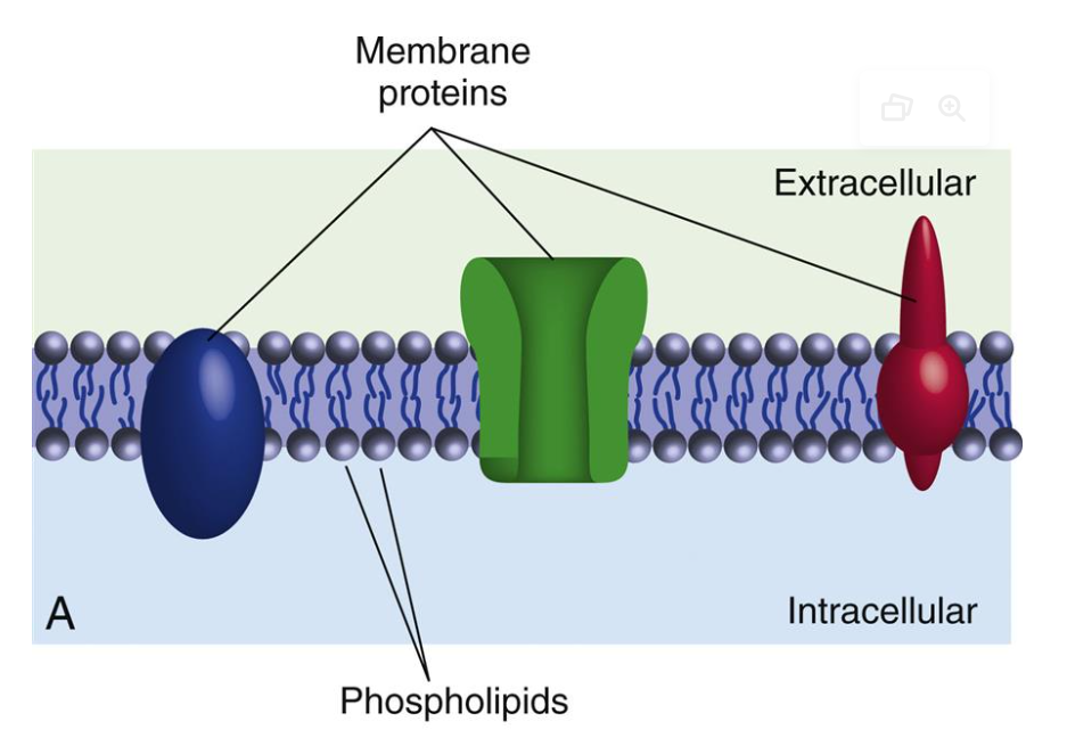
ion channels
allows ions whose size and charge “fit” to diffuse through
made up of subunits that surround a central aqueous pore
channels are placed where they make sense
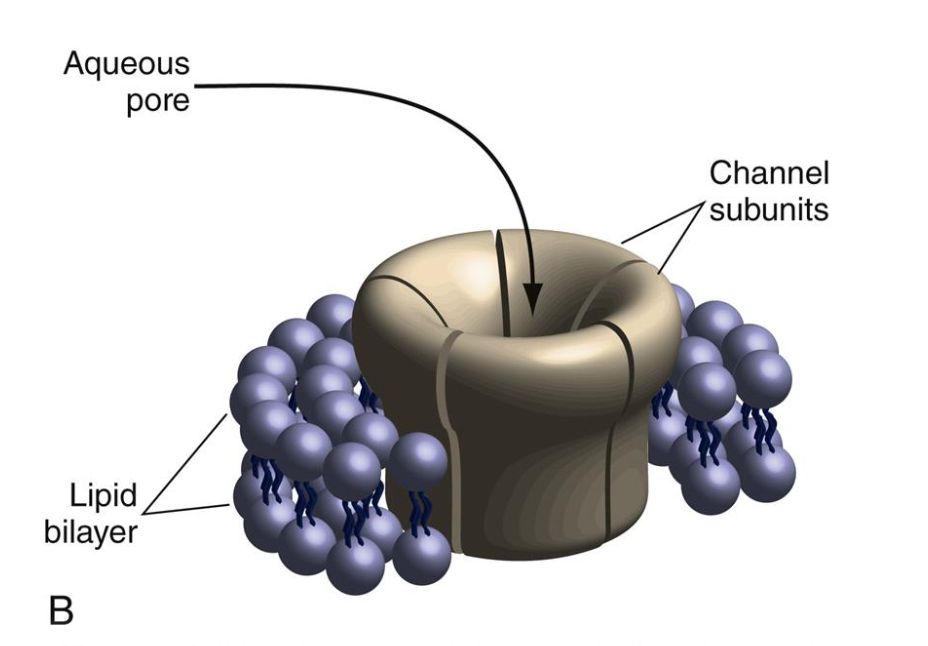
ion channel characteristics
multiple states
gating
selectivity
multiple states of ion channels
open vs closed
open: ions can flow
closed: ions cannot flow
gating of ion channels
voltage-gated and ligand-gated (and others)
selectivity of ion channels
they are picky
pores of channels aren’t wide enough to let any ion through
size of the pore and nature of amino acids that line it allow some ions in to diffuse more easily than others
some channels aren’t selective at all, while others are very picky
membrane changes
changes in relative permeability of the membrane ions (K+ and Na+) are the basis for electrical signaling by the neurons
depolarization
inside of the cell becomes more positive)
more likely to create an action potential (long distance signal)
excitatory
hyperpolarization
inside of the cell becomes more negative
less likely to create an action potential
inhibitory
local potenial (vs AP)
graded: can be hyper or depolarizing
occur at the dendrites or soma of the neuron
occur in response to a stimulus
vary in strength and decrease with distance
involved in synaptic transmission
action potential (vs local potential)
all or nothing electrical impulses
originate at the axon hillock
generated when the local potential reaches a certain threshold
self-propagating and maintain strength over a distance
responsible for long distance signaling in neurons
local potential
like opening a small gate
summation of local potentials can elicit a response
temporal summation
spatial summation
temporal summation
type of local potential
repeated stimuli at the same spot
spatial summation
type of local potential
multiple stimuli arriving at different spots on the membrane
action potential
opening up the BIG gate
LARGE change in polarity (all or none)
ONLY depolarizing
takes place at voltage-gated channels
trigger zone
axon hillock
trigger zone
distal sensory neuron (where AP generates)
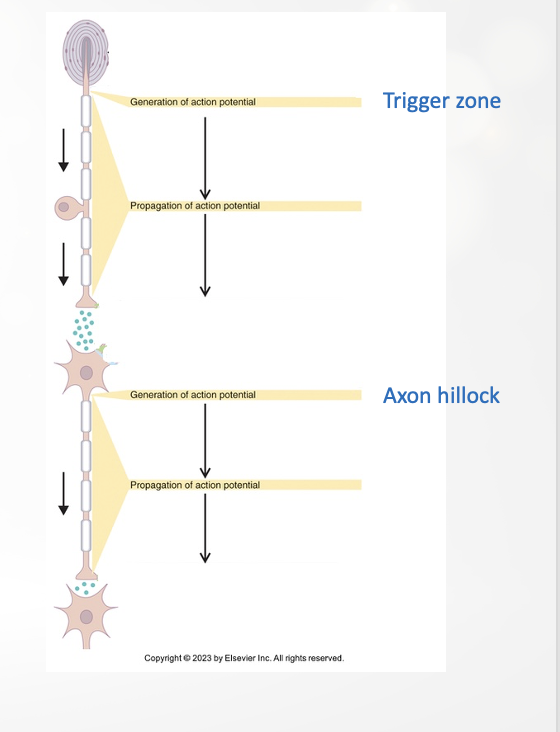
axon hillock
most proximal part of axon where AP can be started in a neuron that is not sensory
(where AP generates)
unmyelinated
doesn’t mean NO myelin, but does not have a good coating