BIOL 107 Part F - Cellular Respiration and Metabolism (Questions)
 Call Kai
 Learn
Learn Practice Test
 Spaced Repetition
 Match
Match Flashcards
 Knowt Play
1/39

There's no tags or description
Looks like no tags are added yet.
Name | Mastery | Learn | Test | Matching | Spaced | Call with Kai |
|---|
No analytics yet
Send a link to your students to track their progress
40 Terms
Why do plants and animals create ATP from sugars instead of using the energy from the sugar itself?
Metabolism of sugar releases a very high amount of energy at once that is too much to be viably usable, while ATP releases immediate and conveniently useable energy packets which are reasonable to be used (think: carrying gold bars vs using cash)
What are the 2 methods for creating ATP, and where does this happen in each?
ATP synthase enzyme (chloroplast thylakoid membrane/mitochondrial inner membrane), kinase (cytosol/mitochondrial matrix
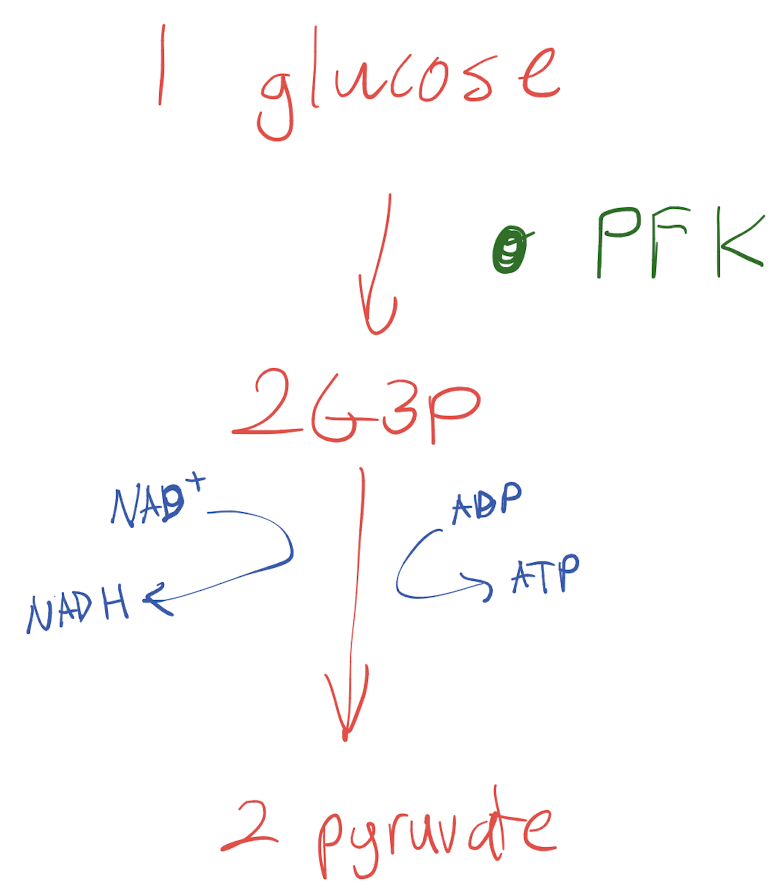
Describe glycolysis (reactants/products, enzymes/cofactors, ATP).
1 glucose molecule is broken down into 2 G3P molecules with the PFK (kinase) enzyme. These 2 G3P molecules form 2 pyruvate molecules, losing an electron to allow the reduction of NAD+ to NADH and the transformation of ADP to ATP.
What happens to pyruvate after glycolysis? What determines this?
Metabolism and ATP production: fermentation without the presence of O2 or aerobic cellular respiration with the presence of O2
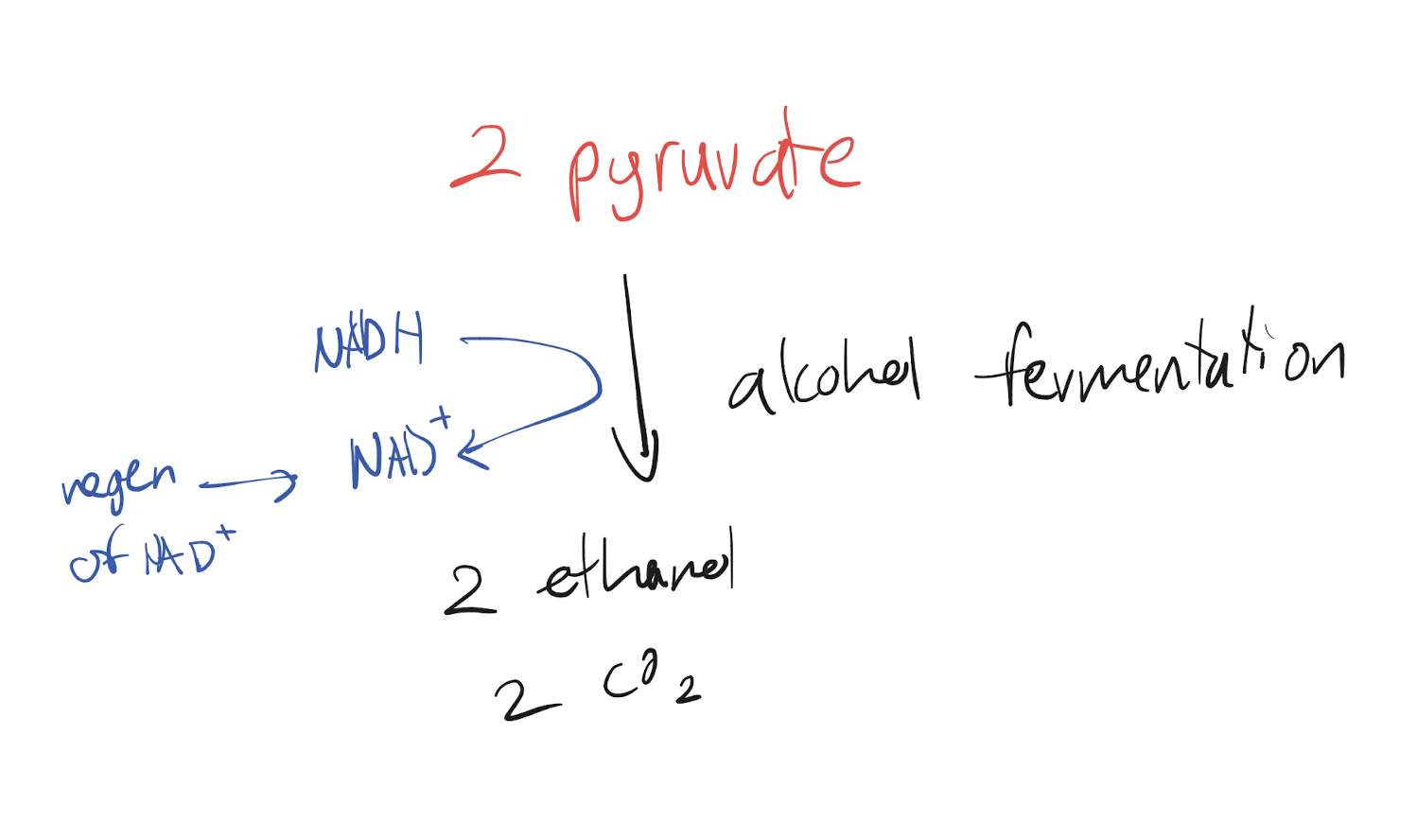
Describe alcohol fermentation (reactants/products, enzymes/cofactors, ATP).
Glycolysis turns glucose into 2 pyruvate. The pyruvate is transformed into 2 CO2 and 2 ethanol molecules, gaining an electron so that NADH becomes oxidized to NAD+.
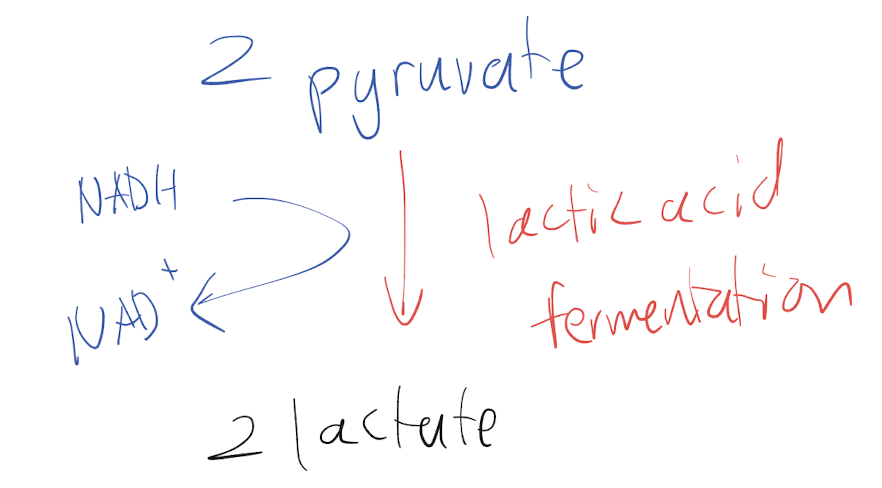
Describe lactic acid fermentation (reactants/products, enzymes/cofactors, ATP).
Glycolysis turns glucose into 2 pyruvate. The pyruvate is transformed into 2 lactate molecules, gaining an electron so that NADH becomes oxidized to NAD+.
Oxidation of NADH into NAD+ from fermentation serves what purpose?
Regeneration of NAD+ for use in glycolysis
Fermentation has a (higher/lower) energy yield than cellular respiration. How much ATP is made per cycle of fermentation compared to cellular respiration?
Lower, 2 ATP vs 32 ATP
Which human cells use fermentation? When and why do human cells use fermentation?
Only in lackluster conditions (no O2 or no mitochondria) if needed to due to lower energy yield.
Muscle cells will resort to fermentation if lacking oxygen due to overuse. Mature red blood cells that don’t have mitochondria will use fermentation as well
Why do mature RBCs lack mitochondria?
Don’t utilize much ATP, deliver oxygen to tissues so don’t consume it themselves
Where do new proteins in the mitochondria come from?
Most are imported, but some are made in the mitochondrial matrix from DNA and ribosomes
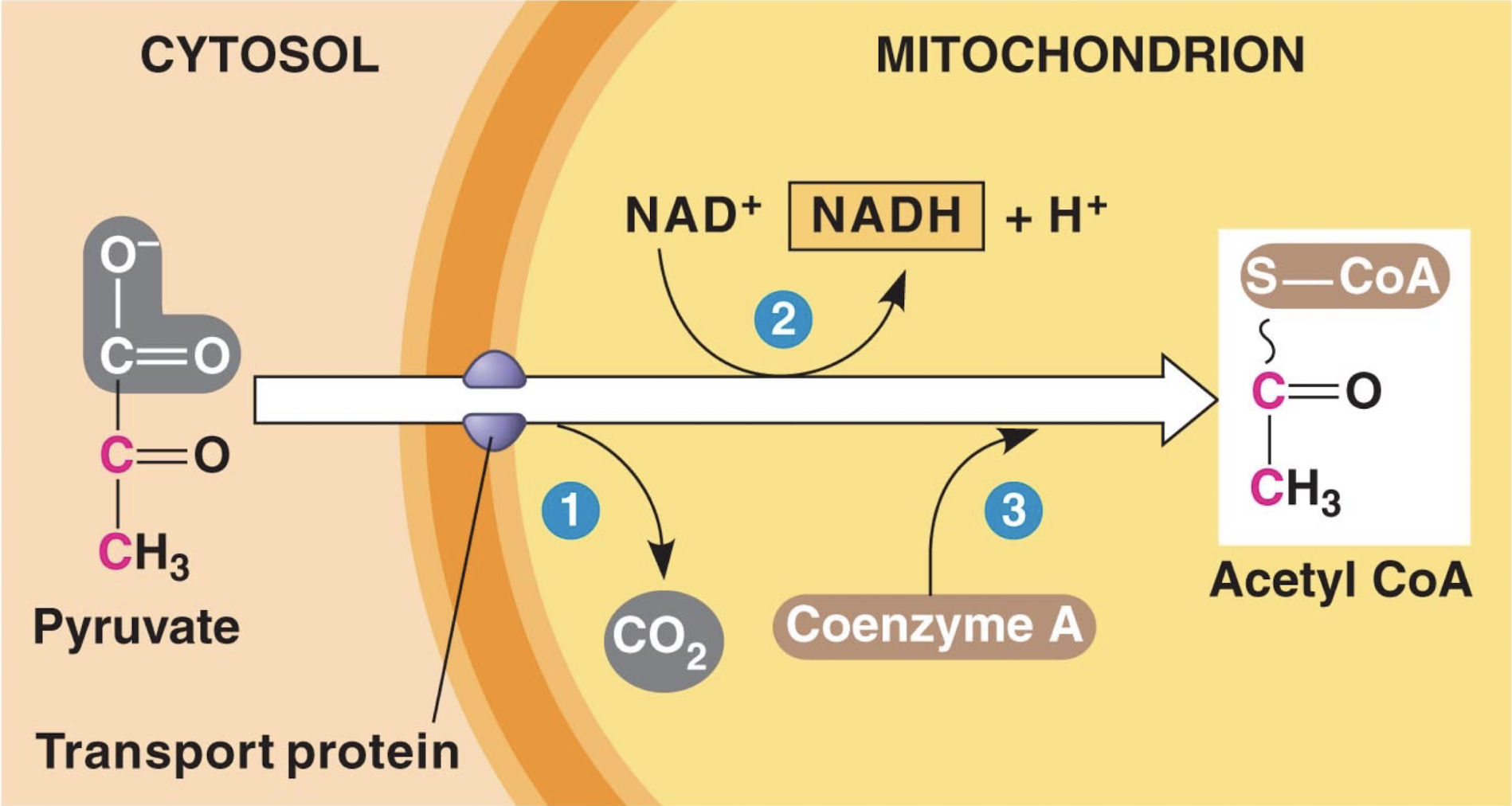
Explain the process of the transition reaction.
A pyruvate molecule in the cytosol goes through a transport protein, causing a COO- ion with low energy bonds to be discarded as CO2
Electrons are removed from the molecule to reduce NAD+ into NADH
The remaining two carbon molecule from the pyruvate is attached to CoA to create acetyl CoA as the molecule enters the mitochondrial matrix
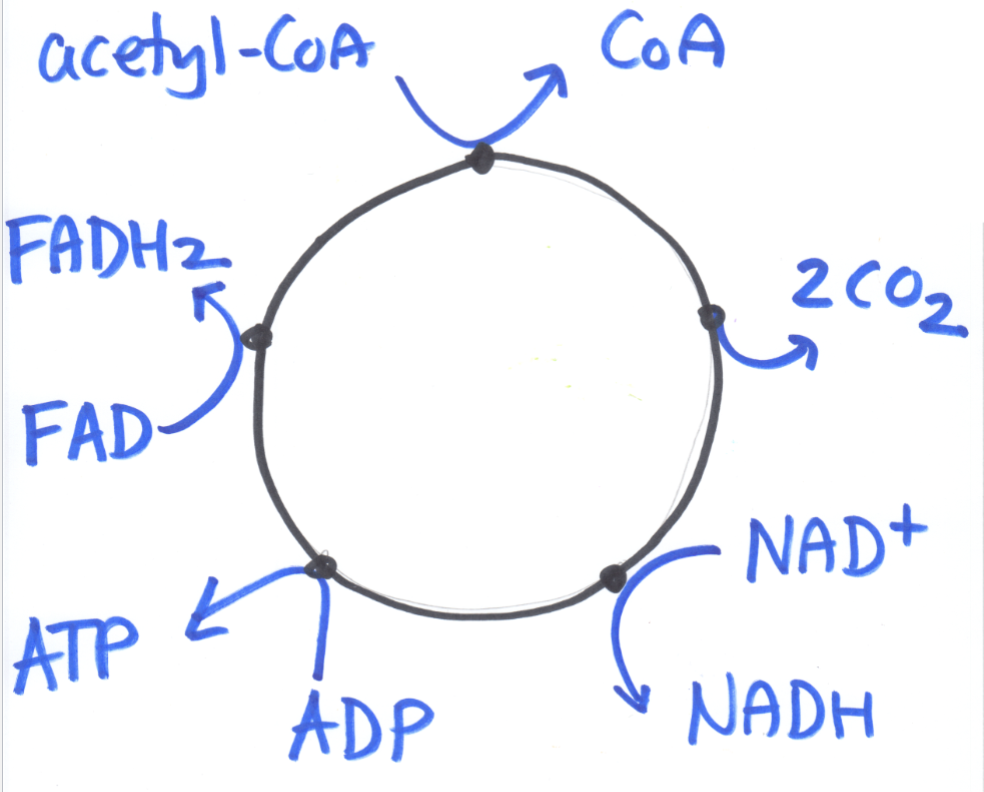
Explain the process of the Krebs cycle.
Acetyl CoA containing high energy bonds enters the cycle and the acetyl group is removed, leaving CoA
The remaining two carbon section of CoA with low energy bonds is discarded as 2 CO2 molecules
Electrons are removed from the molecule and used to reduce NAD+ into NADH
A kinase is used to transform ADP into ATP
Electrons are removed from the molecule and used to reduce FAD into FADH2
Explain the oxidative phosphorylation (ETC and ATP synthase) step of cellular respiration.
NADH and FADH2 carry electrons to the ETC in the inner mitochondrial membrane, becoming oxidized into NAD+ and FAD
The energized electrons from electron carriers powers the movement of protons out of the mitochondrial matrix, creating a proton gradient
Oxygen acts as the terminal electron acceptor for the ETC to allow the electrons to continue flowing, using these to react with protons and form water molecules
The proton gradient powers ATP synthase on the inner mitochondrial membrane, creating ATP from ADP
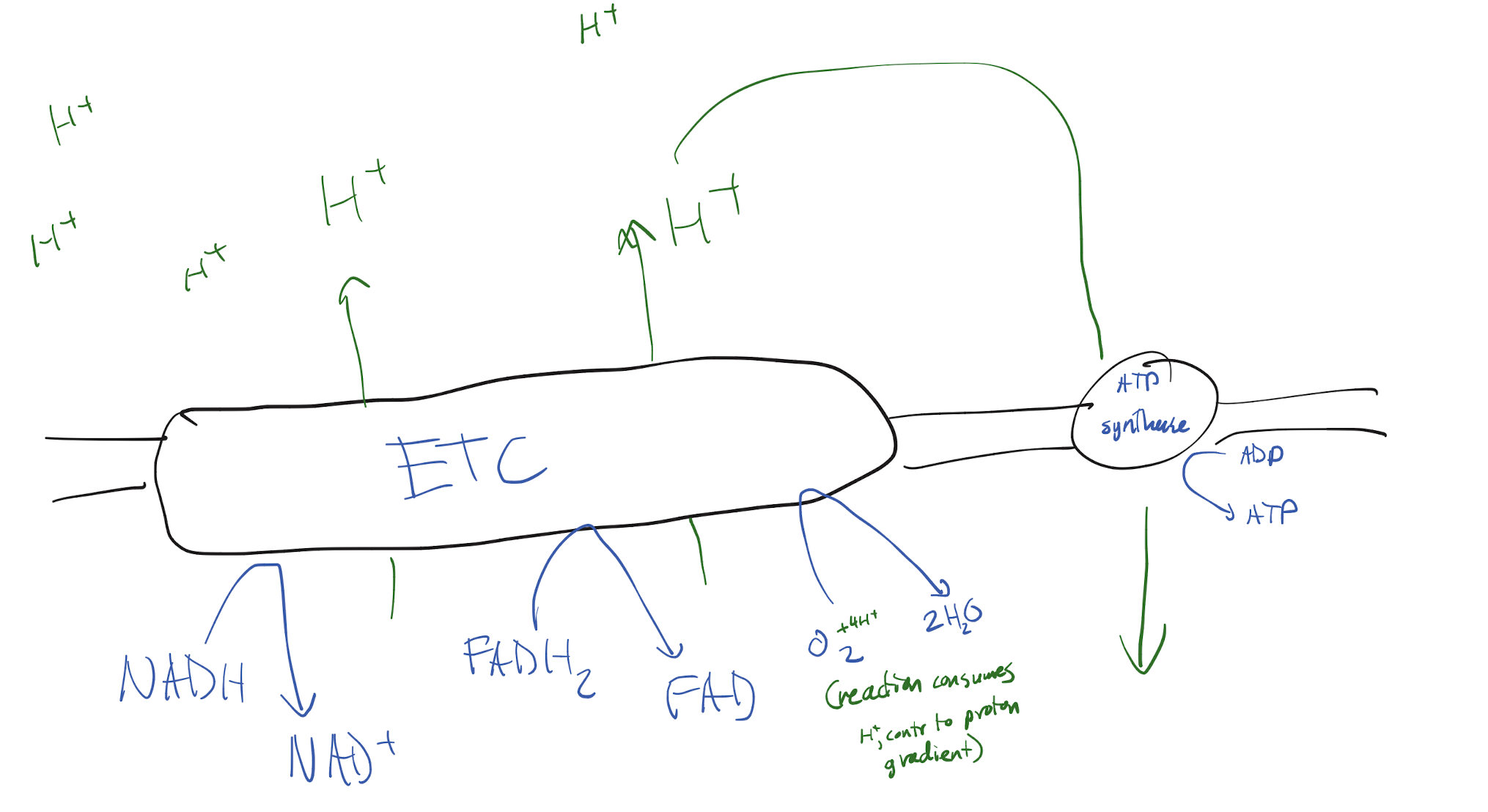
Which elements contribute to the proton gradient of cellular respiration?
ETC powers proton pumps, formation of water consumes protons on the inside of the mitochondrial matrix
What is the pH in the mitochondrial matrix and intermembrane space? Why?
Mitochondrial matrix: 8, intermembrane space: 7. Intermembrane space must remain neutral for processes, and mitochondrial matrix is basic from lack of protons (pumped out)
How much ATP does each NADH and FADH2 create based on the energy it provides?
NADH → ~2.5 ATP, FADH2 → ~1.5 ATP
What is the maximum yield of ATP per glucose from cellular respiration? What is the actual yield? If there is a difference, why?
Max 32 ATP per glucose. Actual yield only ~29 because mitochondria consumes ATP to use energy for growth, maintenance, and reproduction
Red blood cells create ___ ATP per glucose. Muscle cells create ___ ATP per glucose. Neuron cells create ___ ATP per glucose. Explain your reasoning.
2 (only lactic acid fermentation), 2 or 29 (lactic acid fermentation if needed, cell resp if good conditions), 29 (complex cell with priority for cellular respiration)
From these processes: photosynthesis, cellular respiration, glycolysis, fermentation; animal cells perform which and thus have which corresponding organelles? Plants?
Animal: cellular respiration, glycolysis, fermentation. Have mitochondria and functioning cytosol.
Plant: all. Have mitochondria, cytosol, and chloroplasts
Which step in cellular respiration regulates the whole process? Why?
PFK catalyzed step, catalyzes one of the first reactions in glycolysis that is irreversible (rate determining step)
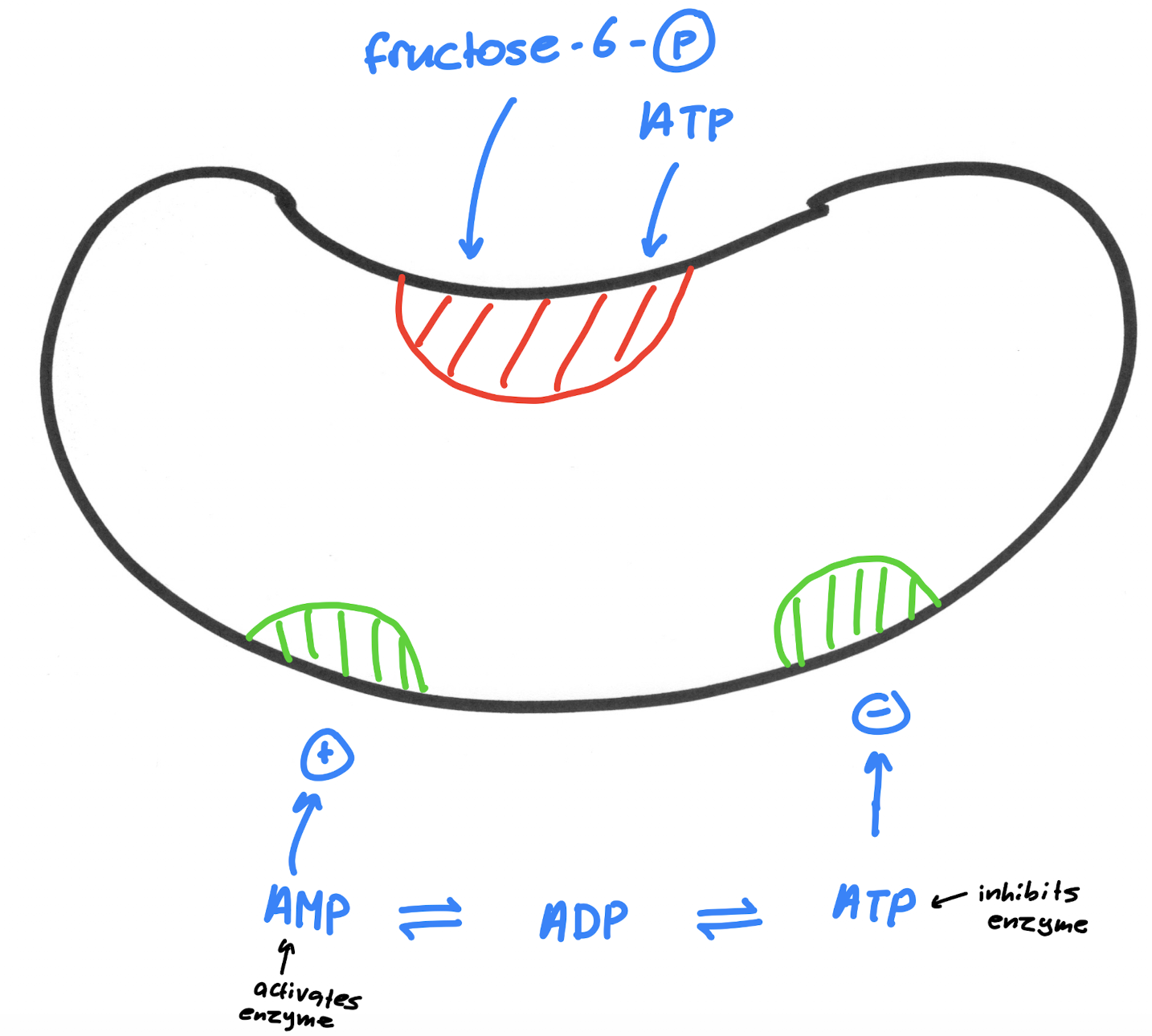
Explain how PFK catalyzes the rate determining step in glycolysis. Describe how its shape is regulated.
Fructose-6-phosphate and ATP enter the active site of the enzyme, consuming the ATP by moving a phosphate from it to the fructose-6-phosphate. The shape of the molecule can be changed from active or inactive: the presence of AMP at the active regulatory site of the molecule causes the enzyme to be activated in its active shape, while the presence of ATP at the inhibitory regulatory site of the molecule causes the enzyme to be inhibited.
Explain how cyanide is able to stop the creation of ATP. Is carbon monoxide toxic for the same reason, why or why not?
Cyanide mimics O2 as the terminal electron acceptor on the ETC during cellular respiration, binding to the ETC where O2 is supposed to bind. Thus the ETC becomes blocked and stops functioning, halting the proton gradient and ATP synthase from creating ATP, stopping the mitochondrion and the cells as a whole. Carbon monoxide also mimics O2, but binds to hemoglobin and not mitochondrion
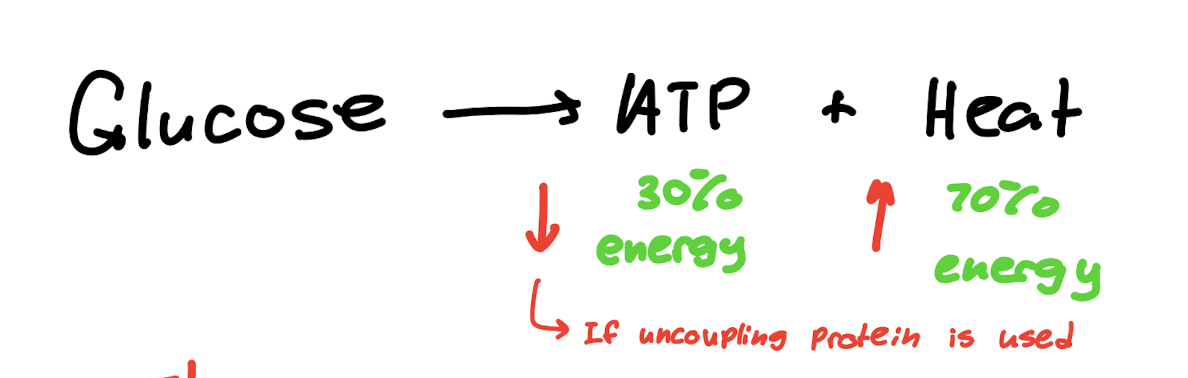
Explain how uncoupling proteins hinder ATP production. How does this relate to thermogenesis?
Protons from the gradient leak through the uncoupling proteins instead of flowing through the ATP synthase, and thus less energy is provided to the ATP synthase to synthesize ATP so much less is produced. As a result, much less ATP is provided from the energy of glucose, and the amount of this energy that is dissipated as heat is increased (increased thermogenesis)
How is uncoupling protein thermogenesis used in organisms?
Warmth when needed (ex. hibernating animals to warm organs, cells in babies due to inability to shiver, plants that need to melt snow), used to burn fat in overweight people
How can sugars/carbohydrates be used to create ATP? Relatively how many ATP does each sugar create, and what is this significance?
Broken down into monosaccharides, then fed into the cellular respiration pathway (glycolysis). ~30 ATP per glucose (monosaccharide) which is a smaller amount but takes quicker to metabolize, providing good short-term energy bursts
How can proteins be used to create ATP?
Broken down into amino acids, then fed into cellular respiration pathway (glycolysis, transition reaction, or Krebs cycle)
How can fats/oils be used to create ATP? Relatively how many ATP does each fat create?
Broken down into glycerol/fatty acids, then fed into the cellular respiration pathway (glycerol goes to glycolysis, fatty acids go to transition reaction). ~300 ATP per glycerol/fatty acid which is a large amount but takes slower to metabolize, providing good long term energy storage
How can ethanol be used to create ATP? What percentage of ATP produced in a human body can be attributed to ethanol for a regular drinker?
Fed into the cellular respiration pathway (transition reaction). 10-50% of ATP production
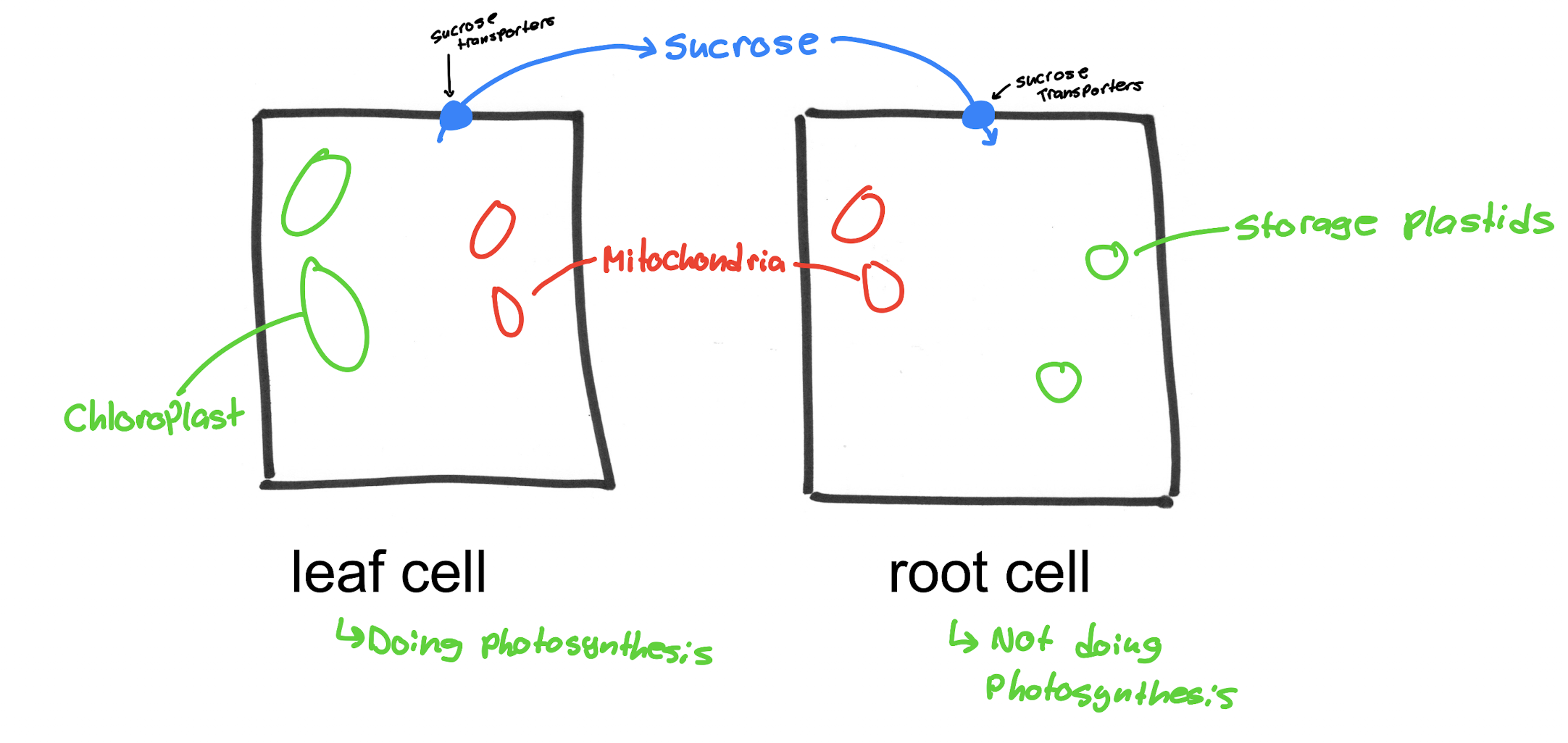
Chloroplasts are (photosynthetic/non-photosynthetic) cells, thus what is their role in sugar metabolism? Storage plastids are (photosynthetic/non-photosynthetic) cells, thus what is their role in sugar metabolism?
Photosynthetic, synthesize and export sucrose. Non-photosynthetic, import sucrose to make ATP and organic molecules
(Leaf/root) cells contain chloroplasts, while (leaf/root) cells contain storage plastids. (Leaf/root) cells contain mitochondria.
Leaf, root, both
How is sugar metabolized in plants (molecules, import/export, relevant organelles).
Sucrose is synthesized from G3P created in cellular respiration (chloroplast) in the leaf cell, which is exported by the leaf cell to the root cell. The root cell imports sucrose to store it and use it to create ATP and other organic molecules
Which parts are responsible for the breakdown and absorption of sugar in humans, and how do these parts allow it?
Mouth, stomach, small intestine break down carbohydrate via hydrolysis into monosaccharides. Intestinal epithelial cells absorb monosaccharides via transport proteins (ex. GLUT and SGLT)
Which monosaccharide is the most useful in terms of absorbability to humans?
Glucose
What is the role of liver cells in metabolism of sugar (import, export)?
Import galactose, fructose, and lactate. Export glucose. Make glycogen for short term energy storage, have a receptor for glucagon that when present, will break down stored glycogen into glucose to be released into the bloodstream
The mobile carbohydrate in plants is ___, while the mobile carbohydrate in humans is ___.
Sucrose, glucose
Explain how insulin regulates healthy blood glucose levels.
Pancreas cells export insulin when blood glucose levels are high, which attaches to insulin receptors on fat and muscle cells. The insulin signals GLUTs in the cells to move into the plasma membrane to receive glucose from the blood, thus lowering blood glucose
Which cells have priority to import glucose? How is this determined?
Brain cells require the most glucose and thus have priority. Fat and muscle cells require insulin to be present in receptors in order to intake glucose, but brain cells do not need this and can uptake glucose without insulin present
Which human cells can use lactic acid fermentation to create ATP? Explain how they contribute to the Cori cycle and maintain it.
Red blood cells, muscle cells. Create 2 ATP from 2 ADP using lactic acid fermentation to convert glucose into lactate. Lactate is absorbed by the liver cell, which uses 6 ATP to convert the lactate back to glucose through gluconeogenesis
Gluconeogenesis needs (more than/less than/equal to) 2 ATP. Why?
6 (more than). Process is not 100% efficient due to 2nd law of thermodynamics, some energy will be lost, takes more energy than created