L2 (ch 9) - Selecting a Quantitative Research Design
 Call Kai
 Learn
Learn Practice Test
 Spaced Repetition
 Match
Match Flashcards
 Knowt Play
1/21

There's no tags or description
Looks like no tags are added yet.
Name | Mastery | Learn | Test | Matching | Spaced | Call with Kai |
|---|
No analytics yet
Send a link to your students to track their progress
22 Terms
______________ uses numbers to represent reality and is directed at the discovery of relationships such as cause and effect.
measurement and analysis of relationships between and among variables at a point in time
objective
product-oriented research
Quantitative research
_________ directed at the discovery of meaning and involves the use of language, concepts and words to represent evidence from research
subjective
person-oriented research
qualitative research
_________ — an oganizing framework that contains a set of assumptions, or values that underlies how scientists view reality, truth, and research
paradigm
What are the three characteristics associated with conducting experimental designs?
control
random assignment
manipulation
_______ — any variable that is not directly related to the purpose of the study but that may affect the dependent variable
extraneous variable
The following is what type of experimental design:
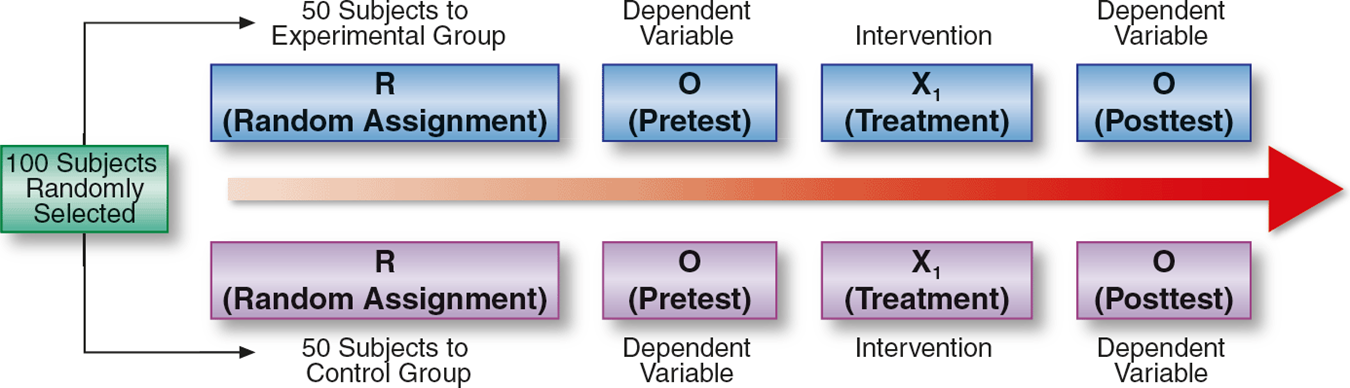
“before-and-after” method
evaluate the dependent variable before the independent variable
Randomized pretest-posttest control group design
The following is which type of experimental design:
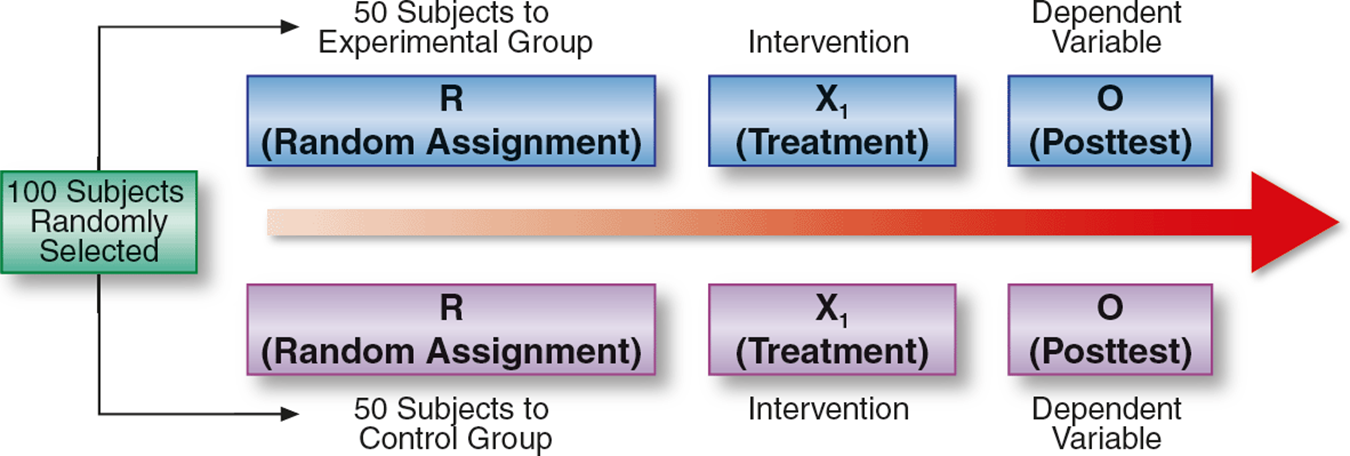
exludes use of pretest
randomized posttest-only control group
The following is which type of experimental design:
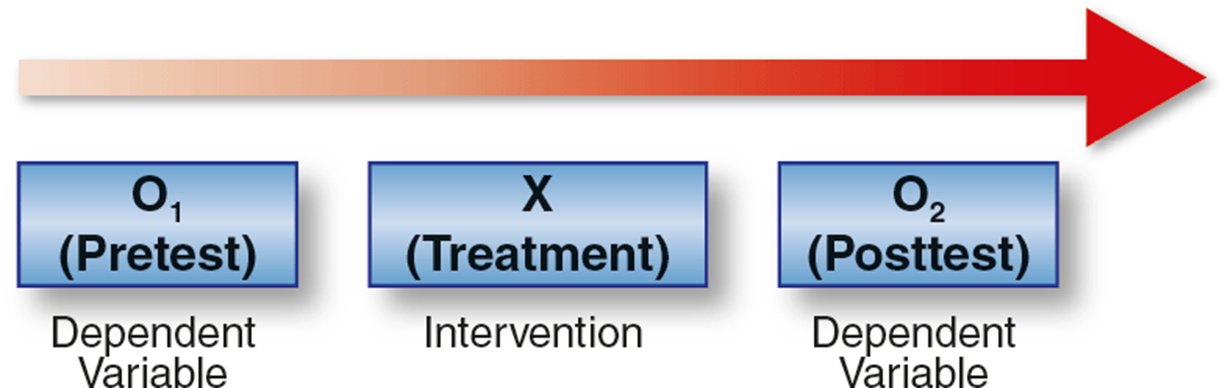
no comparison grouo
threats to internal validity
external validity limited
one-group pretest-posttest design
__________ — the extent to which the results of a study can be generalized from the study sample to the target population
external validity
_________ — whether or not the independent variable made a difference
internal validity
__________ — the most widely accepted approach to evaluating the effectiveness of an intervention or a treatment in a sample of patients
randomized controlled trials (RCTs)
___________ — the teatment assignment is unknown to the patients
single-blinded study
________ — the treatment assignment is unknown to the patients and to the health-care providers
double-blinded study
_________ — a research method whereby the researcher uses previously gathered and analyzed data from one study and reanalyzes the data (or a subset of the data) to test new hypotheses, examine new relationships among variables, or describe/explore new insights
secondary analysis
_______ — a statistical technique that combines the results of many research studies in a specific area and synthesizes their findings to draw conclusions regarding the state of the science in an area of focus.
meta-analysis
__________ epidemiological studies are concerned with the distribution and patterns of disease or disability in a population.
descriptive
___________ epidemiological studies involve testing hypotheses to determine whether specific exposures are related to the presence or absence of specific diseases or disabilities.
analytic
What is the difference between experimental designs and quasi-experimental designs?
random assignment and/or control groups are absent from quasi-experimental designs
What makes nonexperimental designs different from experimental and quasi-experimental research?
nonexperimental research does not manipulate the independent variable
the researcher observes the actions of variables as they occur in the natural state.
__________ — a type of nonexperimental design that gathers information about conditions, attitudes, or characteristics of individuals or groups of individuals
the prupose is to descrive the meaning of existing phenomena
descriptive design
________ — a type of nonexperimental design that investigates the relationship between or among two or mare variables
correlational designs
_____________ — to describe and explain the nature and magnitude of existing relationships, without necessarily clarifying the underlying causal factors in the relationship.
descriptive correlational study