BIS 2C: midterm 2 study guide (PLANT)
 Call Kai
 Learn
Learn Practice Test
 Spaced Repetition
 Match
Match Flashcards
 Knowt Play
1/99

Earn XP
Description and Tags
lectures 16-23 (intro to plant ~ flowering plant)
Name | Mastery | Learn | Test | Matching | Spaced | Call with Kai |
|---|
No analytics yet
Send a link to your students to track their progress
100 Terms
are plants monophyletic or paraphyletic?
plants are monophyletic
what are the 2 diagnostic features of plants?
possession of a chloroplast that arose via primary endosymbiosis of a cyanobacterium
chlorophyll a
what are the 5 challenges plants had to overcome to adapt to life on land?
desiccation
water transport
structural support
UV radiation
dispersal of gametes and progeny
what are 3 advantages of living on land?
increased access to sunlight
increased access to gasses
decreased competition with other plants and herbivores (initially)
4 special innovations of algal grade plants
storing the products of photosynthesis as starch
chlorophyll b
egg remains attached to parent plant
egg enclosed by parent plant tissue
what group? contains chlorophyll a and b, uses starch as storage, egg retention, egg encasement, protected embryo
land plants
what group? contains chlorophyll a and b, uses starch as storage, egg retention, egg encasement. NO protected embryo
charales
what group? contains chlorophyll a and b, uses starch as storage, egg retention. NO egg encasement nor protected embryo
choloeochates
what group? contains chlorophyll a and b, uses starch as storage. NO egg retention, egg encasement, nor protected embryo
chlorophytes
what group? contains chlorophyll a. NO chlorophyll b, starch as storage, egg retention, egg encasement, nor protected embryo
red algae
what group is sister to land plants?
charales
is multicellular homoplasy in algal grade group?
yes, multicellularity evolved independently several times
algal group: reproduction and life cycle type
algal group reproduces asexually by means of a haplontic life cycle
meiosis results in how many daughter cells?
4
mitosis results in how many daughter cells?
2
what is fertilization and what does it result in?
haploid gamete nuclei fuse to form a single diploid cell: zygote
what are the 3 main kinds of eukaryotic sexual life cycles?
diplontic (animals), haplontic (fungi, algal), sporic (land plants)
what are 3 vegetative innovations of land plants?
cuticle (prevent desiccaiton)
pigments (UV protection)
microrrhizae (fungal asociations)
what are 7 reproductive innovations of land plants?
sporic life cycle
sporophyte
sporangia
air-born spores
sporopollenin
gametophyte
protected embryo
relationship btwn sporophyte, sporangia, air-borne spores, and sporopollenin
sporophyte is a multicellular diploid plant that contains sporangia, which produces air-borne spores protected by sporopollenin
gametophyte significance
gametophyte is a multicellular haploid plant that contains 2 types of gametangia: antheridia which produces male gametes and archegonia which produces female gametes
this plant group is analogous to the amphibians of the plant world (hybrid)
bryophytes
why are bryophytes restricted to cool, damp terrestrial habitats? (4 reasons)
they lack a true vascular system
they lack true leaves, stems, and roots
their cuticle is poorly developed
water is required for sperm to reach egg
how do non-vascular plants transport water and nutrients?
water transport relies on capillary action, nutrient transport relies on diffusion
which bryophyte lineages independently evolved to have vascular tissue: liverworts, mosses, hornworts
mosses
which group: YES land-plant innovations; NO stomata and green sporophyte
liverworts
which group: YES land plant innovations and stomata. NO green sporophyte
mosses
which group: YES land plant innovations, stomata, and green sporophyte
hornworts
what groups is sister to living vascular plants?
Rhyniophytes
what are 2 major innovations of Rhyniophytes?
branched sporophyte with apical sporangia
vascular tissue (but no tracheid cells)
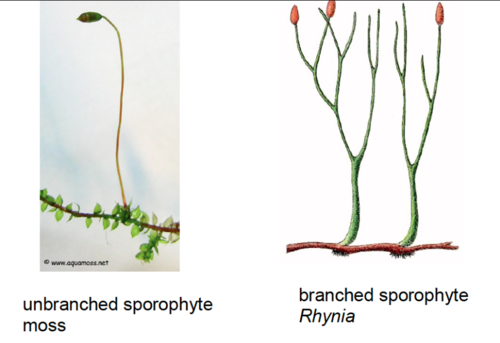
what are 2 diagnostic features of vascular plants?
sporophyte is nutritionally independent at maturity
tracheid cells
xylem: function + system + composition (tissue + cell wall)
Conducts water and minerals from the roots to the aerial parts of the plant by passive Transpiration-Cohesion Tension system.
Tissue is comprised of tracheid cells that are dead at functional maturity and have cell walls that are fortified with lignin
phloem: function + system + composition of tissue
Conducts phloem sap from source to sink regions via active Pressure Flow Model.
The tissue is comprised of sieve-tube elements (that are alive at maturity) and companion cells.
what are the benefits in growing taller?
compete for sunlight and allow more effective dispersal of spores
what are 3 major innovations of vascular plants that involves homoplasy?
leaves, roots, heterospory
leaves: # of times it evolved independently + types
leaves evolved independently twice in vascular plants.
microphylls: leaves with single vascular strand; evolved from sterile lateral sporangia in lycophytes
megaphylls: leaves with many branched vascular strands; evolved from modified side branches in euphyllophytes
roots: # of times it evolved independently + types
roots evolved independently twice in vascular plants
simple: comprised of dichotomously branching rhizome with rootlets derived from microphyllous leaves evolved in Lycophytes
complex: comprised of complex branching and root hairs derived from dermis evolved in Euphyllophytes
heterospory: # of times it evolved independently + types
heterospory evolved independently three times in vascular plants
once in lycophytes, again in monilophytes, and finally in the MRCA of seed plants
homosporous
refers to male and female gametangia on a single individual plant
heterosporous
refers to male or female gametangia on separate individual plants
microsporangium
contain microsporocytes (diploid cells) that divide by meiosis to produce haploid micropores that become haploid microgametophyte
megasporangium
contain megasporocytes (diploid cells) that divide by meiosis to produce haploid megaspores that become haploid megagametophyte
2 adaptive values of heterospory
genetic diversity (reduces the probability of self-fertilization, which mains genetic diversity)
door opener: facilitated the evolution of important novelties
what are 2 main groups of seedless-vascular plants?
lycophytes and monilophytes
what are 3 diagnostic features of lycophytes?
lateral sporangia: stroboli; increase the number of sporangia on a give sporophyte
microphyll leaves
simple roots
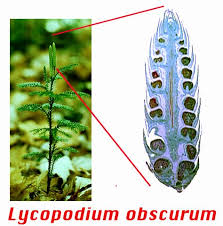
what are 3 diagnostic features of euphyllophytes?
overtopping growth: sporophyte has a dominant axis and side branches
megaphyll leaves
complex roots
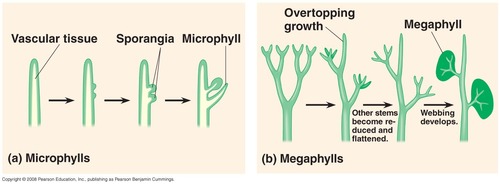
what (groups) do euphyllophytes include?
monilophytes and seed plants
how does overtopping growth come to be + adaptive value of overtopping growth
overtopping growth involves the asymmetric division of the apical meristem. It allows for taller growth and elaboration of novel organs from side branches (e.g. megaphyllous leaves & complex roots)
what plant of the lycophytes demonstrate heterospory?
spike mosses
what plant of the monilophytes demonstrate heterospory?
lepto. ferns
what groups are seed plants represented by?
gymnosperms and angiosperms
trees that exhibited secondary growth (wood) but lack seeds
progymnosperms
trees that exhibited secondary growth (wood), has fern-like leaves, and bore seeds
seed ferns
4 innovations that arose in teh MRCA of all living seed plants
secondary growth
reduced and dependent megagametophyte
seed
pollen
primary growth
refers to the ability to increase the length of the plant via apical (shoot and root) meristems
secondary growth
the ability to increase the girth of the growing plant by means of vascular cambium
bifacial vascular cambium
produces secondary xylem to the inside of the plant (gives rise to wood) and secondary phloem to the outside of the plant (bark)
3 adaptive significance of secondary growth
allows taller growth of the sporophyte (greater photosynthesis + dispersal)
constant rejuvenation of the xylem and phloem
formation of bark prevents water loss and infection and protects against disease
secondary growth in lycophytes (quillworts): unifacial or bifacial vascular cambium?
unifacial— yes secondary xylem, no secondary phloem
sporophyte and gametophyte evolution in seed plants: seeds
In seed plants, (mega)gametophyte is greatly reduced and is nutritionally dependent on sporophyte, allowing for the evolution of seed
gymnosperm seed components (3; from innermost to outermost)
diploid embryo (baby sporophyte)
haploid nutritive tissue (from megagametophyte)
diploid seed coat (from integument)
3 adaptive significance of seeds
dispersal of next sporophyte generation
protection of developing sporophyte plant (embryo)
dormancy until conditions are favorable
seed vs pollen
seed: from reduced megagametophyte; pollen: from reduced microgametophyte
pollen components (4)
4-8 cells
lacks a multicellular male gametangia (antheridia)
2 sperm cells
enclosed in sporopollenin
adaptive significance of pollen (2)
dispersal of sperm over great distances + genetic diversity
delivery of sperm without water
gymnosperms vs angiosperms
gymnosperms only have a fertilized ovule (no fruit), whereas angiosperms bear fruit
cycads, ginkgo, gnetophytes, conifers: which are dioecious, which are monoecious?
cycads and ginkgo are dioecious; gnetophytes and conifers can be both
cycads and ginkgo: sperm
sperm swim within the megagametophyte to fertilize the egg after pollination
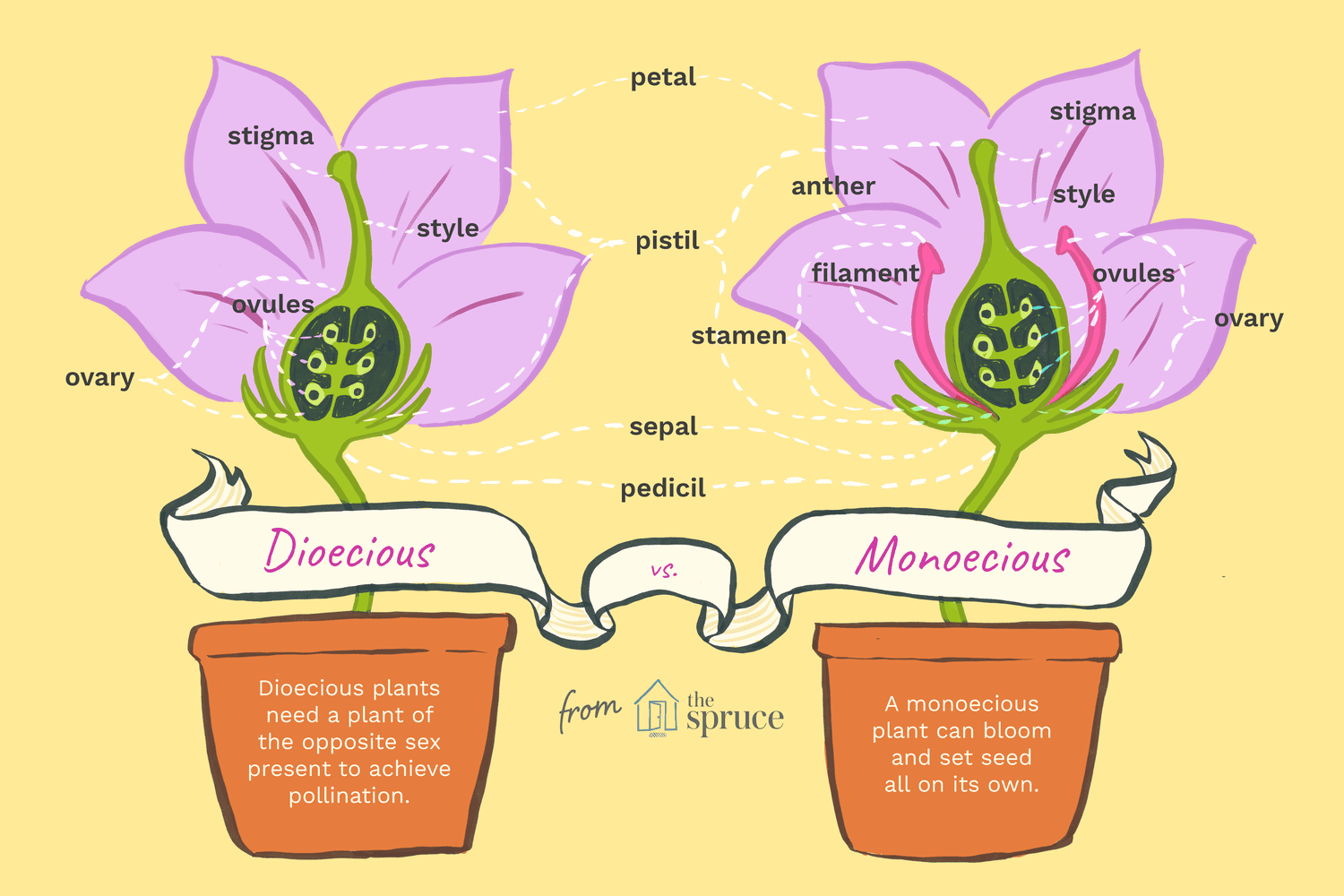
dioecious plant
an individual plant has exclusively micropsorangia OR megasporangia
this plant was believed to be the sister group of agiosperms because they have vessel elements in their xylem and exhibit a kind of double fertilization
gnetophytes
what plant of gymnosperms have non-motile sperm?
gnetophytes and conifers
angiosperms have a long phylogenetic stem. what is the significance of this? (2)
made it extremely difficult to locate the position of the root of flowering plants, but eventually identified it at the ANITS grade of plants
long stem allowed Angiosperms to accumulate many innovations
angiosperm innovations (7)
flower (house micro- and megasporangia)
carpel (enclosed megasporangia)
fruit (expanded ovary)
double fertilization (diploid zygote & triploid endosperm)
endosperm (triploid tissue of angiosperm seed that nourishes developing embryo)
embryo sac (7 cells, 8 nuclei)
vessel elements & fiber cells in xylem
gymnosperm vs angiosperm: pollination
gymnosperms rely on wind polliation, whereas angiosperms are pollinated by animals (more efficient)
eudicots: # of seed leaves, organization of root vasculature, leaf venation, # pollen grooves
two cotyledons, star shaped vasculature, reticulate venation, tricolpate
monocots: # of seed leaves, organization of root vasculature, leaf venation, # pollen grooves
one cotyledon, ring shaped vasculature, parallel venation, monocolpate
duplicate-gene rooting & phytochromes + discovery
flowering plants have an extra set of phytochrome genes that are not found in seed plants.
flowering plants include dicots and monocots → not monophyletic
drupe fruit
fruit derived from a singl eflower with one ovary that contains one ovule (e.g. plums)
berry fruit
fruit that is derived form a single flower with one ovary that contains multiple ovules (e.g. tomato)
ovary vs ovule
ovary houses the ovules and mature into fruit after fertilization. ovule contains the female egg cell and develops into a seed.
aggregate fruit
fruit derived form a single flower with multiple, separate ovaries (e.g. blackberries)
multiple fruits
fruit developed from the many separate florets of an inflorescence (e.g. pineapple)
accessory fruits
fruit developed from parts of the plant other than carpels and seeds (e.g. strawberry)
legumes
fruit that develop from one carpel with many ovules where the fruit splits lengthwise and each ovule is a bean
achenes
dry fruits that contain a single seed (e.g. sunflower seeds)
samara
an achene with wings
adaptive significance of fruit (2)
provides additional protection for embryo
facilitates dispersal of the seed
vessel elements
water and mineral transport
fiber cells
structural support
perfect flower
contains both stamens and carpels (micro and megasporangia)
imperfect flower
either has stamens OR carpels
monoecious
a single plant has both imperfect staminate and imperfect carpelllate flowers
dioecious
a single plant has either imperfect staminate OR imperfect carpellate
umbel
inflorescence comprised of flowers stemming from short stalks (pedicles) that radiate from a common point (e.g. onions)
compound umbel
inflorescence comprised of a cluster of umbels stemming from stalks (rays) that radiate from a common point (e.g. carrots)
spike
inflorescence comprised of a cluster of flowers along an unbranched axis (e.g. bunny grass)
head
inflorescence comprised of an outer ring of sterile ray florets and a central cluster of disc florets (e.g. sunflowers)
composition of embryo sac of flowering plants
3 antipodal cells
2 synergid cells
single egg cell
single large polar cell ( with 2 haploid polar nuclei)
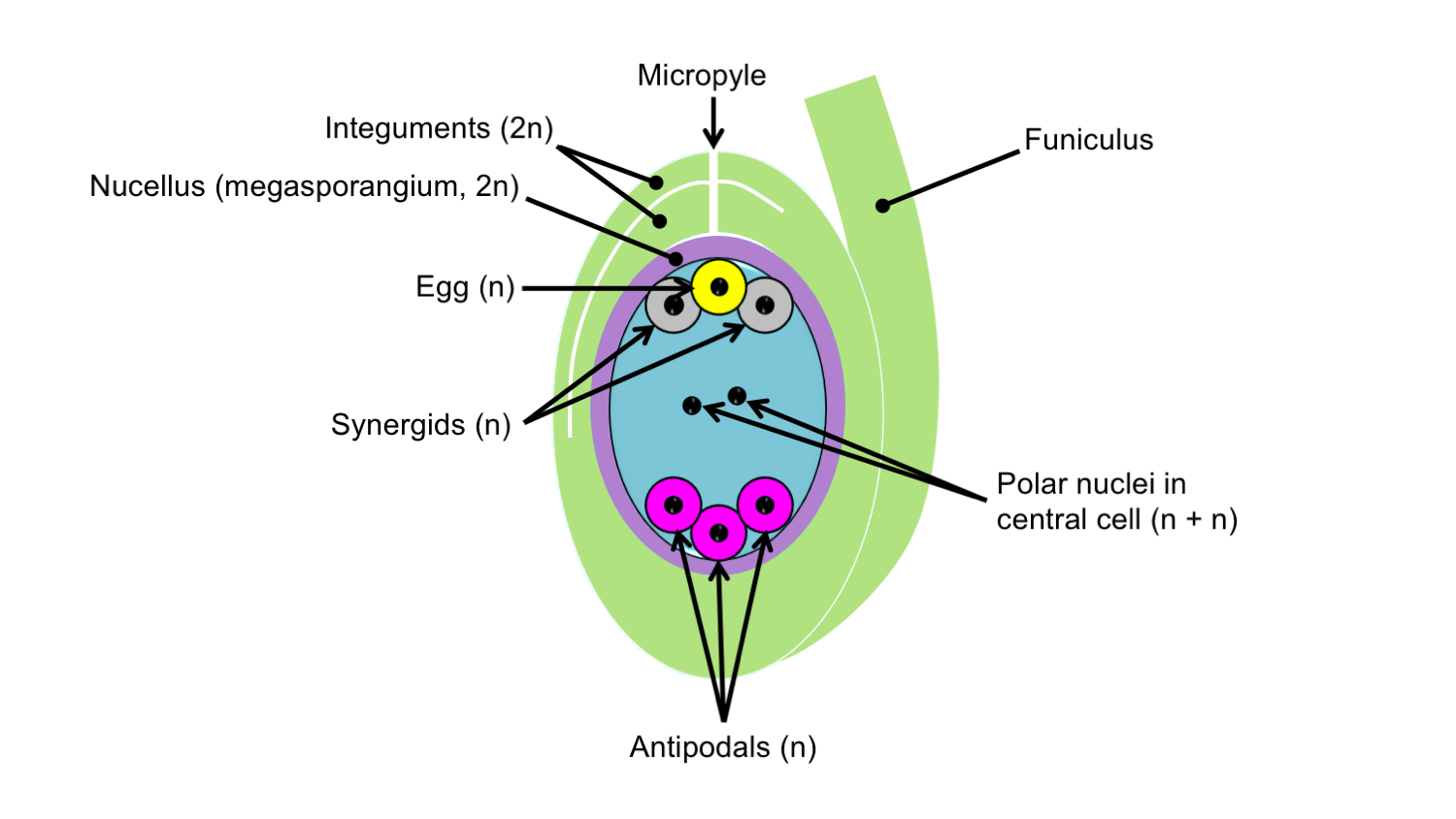
what does double fertilization give rise to?
a diploid zygote ad a triploid endosperm
agiosperm seed components
diploid embryo (from 1st fertilization event), triploid endosperm (from 2nd fertilization event), diploid seed coat (from diploid integument)