Head & Brain Trauma
 Call Kai
 Learn
Learn Practice Test
 Spaced Repetition
 Match
Match Flashcards
 Knowt Play
1/87

There's no tags or description
Looks like no tags are added yet.
Name | Mastery | Learn | Test | Matching | Spaced | Call with Kai |
|---|
No analytics yet
Send a link to your students to track their progress
88 Terms
Basic Anatomy
Brain sits within skull, surrounded by meninges & fluid
Cerebrospinal Fluid (CSF) floats around brain & SC for protection & nourishment
Head injuries
Brain & head injuries occur as a result of a direct blow, or sudden snapping of the head forward, backward, or rotation to the side
What head injuries result
May result in:
LOC, disorientation, or amnesia
Motor, coordination, or balance deficits
Cognitive deficits
May present as a life-threatening injury or a cervical injury (if unconscious)
Traumatic Brain Injury (TBI)
Mild Traumatic Injuries (mTBI) are by far the most prevalent of all the brain injuries
Concussions are a type of mTBI
Moderate or Severe TBI include penetrating wounds, cerebral hemorrhages as a result of impact, skull fx
Signs of Mod/Severe TBI
Prolonged loss of consciousness
Worsening headache
Repeated vomiting or nausea
Slurred speech
Seizures
Weakness, numbness, poor coordination
Unequal pupil size
Brusing behind ears (Battle Sign)
Bruising around eyes (Raccoon sign)
Fluid exiting facial orifices
On-Field Head Trauma Protocol
Assuming ABC’s are clear
DO NOT let athlete move
With LOC, assume C-sp injury
Ask athlete how injury happened
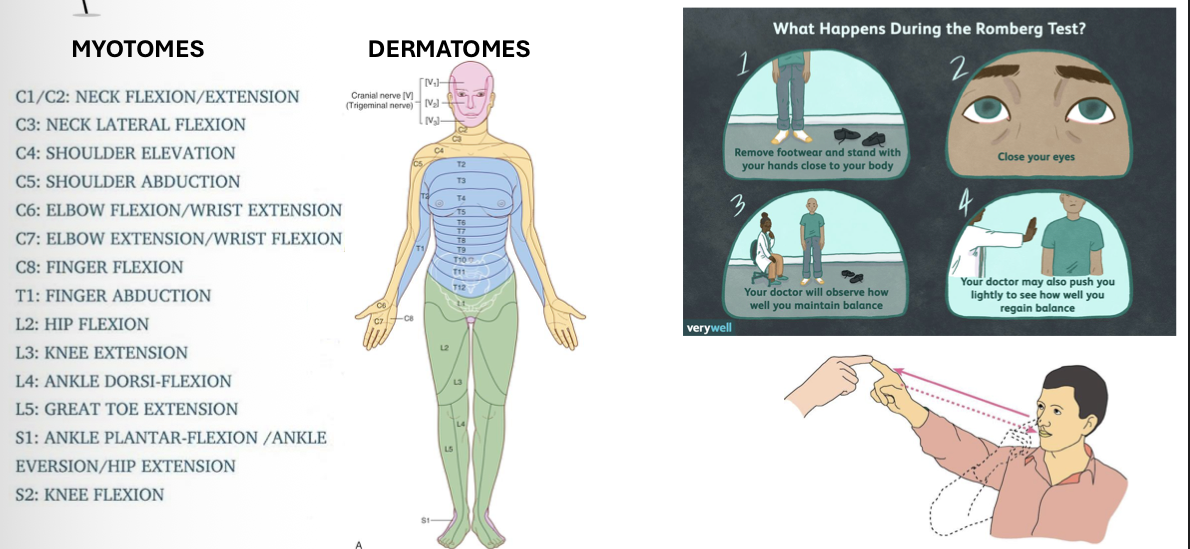
Do sensory testing
Scratch dermatomes distal → proximal
Do motor testing
Test myotomes distal → proximal, isometric, looking for some resistance
Palpate for fx deformity
Ask orientating questions
Name?
Where are we?
Date?
Check pupil response to light & tracking
Check for CSF (skull fx)
Ask athlete if they think they can move their head
Allow very limited movement
Ask them to sit up (support them)
Ask to see pain free neck ROM
Help them off field (support them)
At sideline check for:
Balance → Rhomberg Test
Coordination → Finger to nose
RETEST in 10 mins
What is a Concussion?
A temporary traumatic brain injury induced by biomechanical forces (acceleration/deceleration) that results in a transient change in brain function
Imagine the filing cabinet of your brain has been dumped upside down
Where is the definition (concussion from)
Consensus Statement on Concussion in Sport
Amsterdam, 2022
Published in British Journal of Sports Medicine 2023;57:695-711
Concussion definitions
“May be caused by either a direct blow to the head, neck, or body with an impulsive force being transmitted to the brain.”
“Initiates a neurotransmitter and metabolic cascade with possible axonal injury, blood flow change, and inflammation affecting the brain.”
“Symptoms and signs may present immediately, or evolve over minutes or hours, and commonly resolved within days, but may be prolonged.”
“Results in a range of clinical symptoms and impairment of neurological function that may or may not result in a loss of consciousness.”
“No abnormality is seen on standard structural neuroimaging studies.
Role of PT or AT
Assessment & Diagnosis
Subjective symptoms, C-sp, vision, vestibular, balance, cardiovascular/autonomic dysfunction, cognition
Education
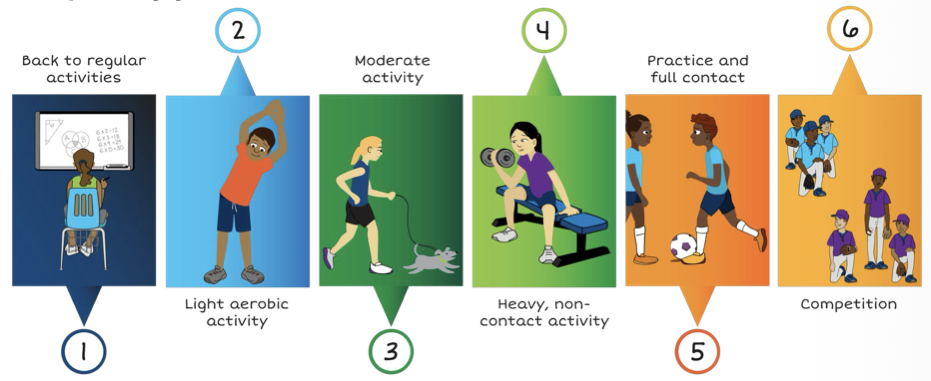
Rest & graded return to activity
Strategies for symptom management
Guiding return to activity (school/work/sport)
Treatment/Exertion
Symptom reduction/planning & pacing, exercise prescription, cognition, visual/vestibular, balance, dual task/multiple system
1.Assessment
Useful immediately post-injury in differentiating concussed from non- concussed
Utility decreases 3-5 days after injury
Symptom checklist useful for tracking recovery
Components
Other assessment domains not included in SCAT6 that may be
helpful:
Baseline testing may be useful, but not necessary for
interpreting post injury scores
Buffalo Concussion Treadmill Test
Visual System
Visual System Complexity
Vestibular Ocular Motor Screen (VOMS)
Smooth Pursuits
Saccades
Convergence
Vestibular-Ocular Reflex (VOR) Test
Visual Motion Sensitivity Test (VOR Cancellation)
Assessment Components
On-Field/Neuro Assessment
Symptom Checklist
Cognitive Screening
Orientation, Memory, Concentration
Coordination & Balance
Other assessment domains not included in SCAT6 that may be helpful:
Autonomic Dysfunction/Exercise Tolerance
Oculomotor assessment
C-sp assessment
Vestibular assessment
Buffalo Concussion Treadmill Test
A graded exercise test used after a mTBI to assesses exercise tolerance
Identifies physiological dysfunction, autonomic symptoms
Guides safe, individualized aerobic activity to speed recovery
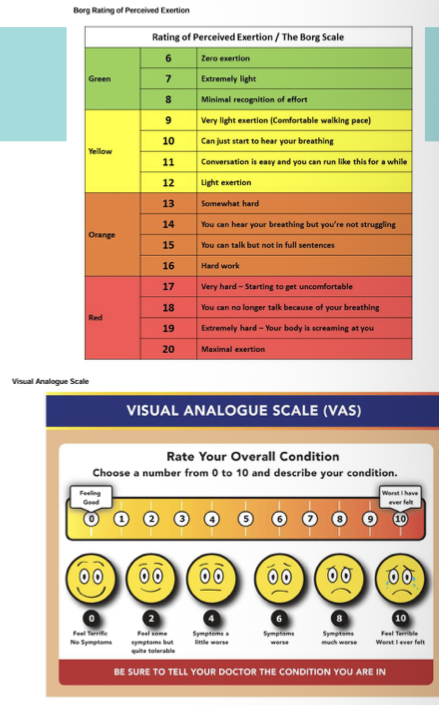
Stopping Criteria (Buffalo Concussion Treadmill Test)
3+ increase of VAS
RPE > 17
Reaching 90% age-predicted HRmax
Request to stop
Dr. Padula’s Definition of Vision:
“a dynamic, interactive process of motor and sensory function, mediated by the eyes for the purpose of simultaneous organization of posture, movement, spatial orientation, manipulation of the environment, and to its highest degree perception and thought.”
Visual System
Visual disturbances after brain injury can be covert
Studies show 50-90% of individuals w/ ABI demonstrated visual dysfunction
Vision is not in the eye → it is in the brain, facilitated by the eyes
If the brain is damaged, high probability vision has been affected
The visual word is a mental construction that takes a significant amount of energy from our cerebral cortex
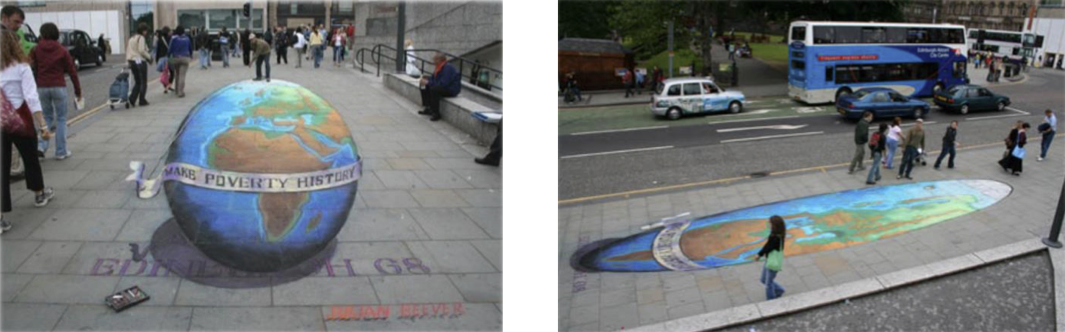
Covert visual disturbances (visual system)
“I have frequent headaches”
“I don’t like to go grocery shopping”
“I hit my head again getting into the car”
“I just feel off sometimes”
Visual System Complexity
70% of our brain is involved in vision & visual processing
80% of all sensory processing in the entire body is directly affected by information coming in from the eyes
More than 32 visual areas in cerebral cortex
More than 300 pathways between these areas
Consider the odds of injury / disruption with TBI
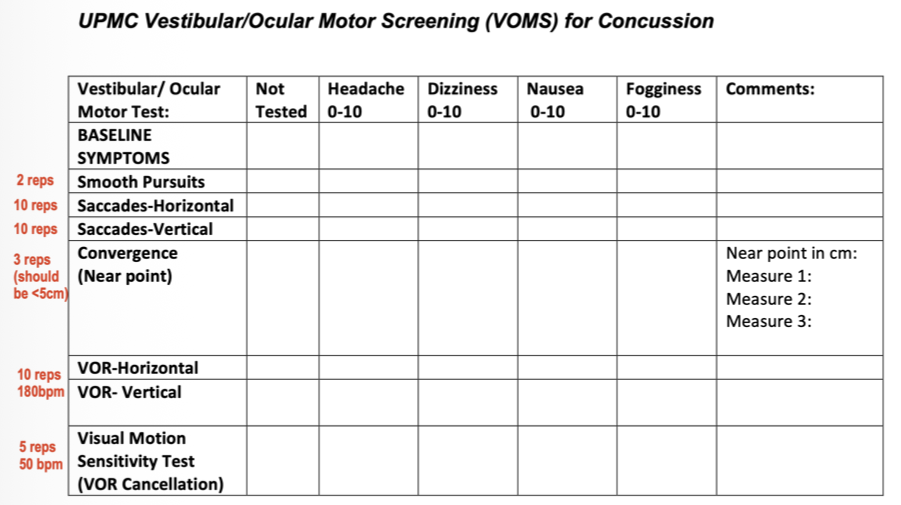
Vestibular Ocular Motor Screen (VOMS)
Developed as a screening tool by UPMC
Validated ages 9-40
Need to let symptoms return to baseline b/w each test
Components (Vestibular Ocular Motor Screen (VOMS))
Smooth pursuits
Saccades
Convergence
Vestibular-Ocular Reflex (VOR) Test
Visual Motion Sensitivity Test (VOR Cancellation)
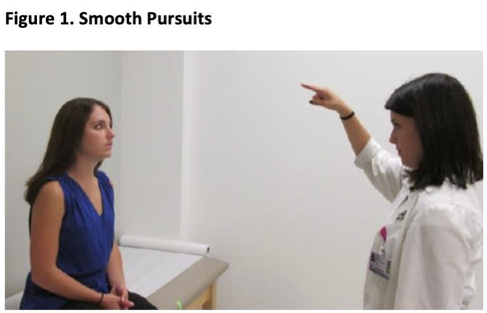
Smooth Pursuits
Tests ability of eyes to follow a slow-moving target
Head stationary, only eyes move
Side-to-side, Up-and-down, X-pattern
“Keep your eyes fixed on target”
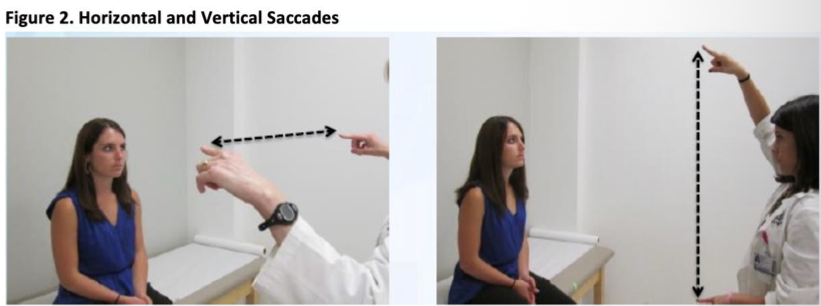
Saccades
Tests ability of eyes to move quickly between targets
Head stationary, only eyes move
“Jump your eyes between the 2 points”
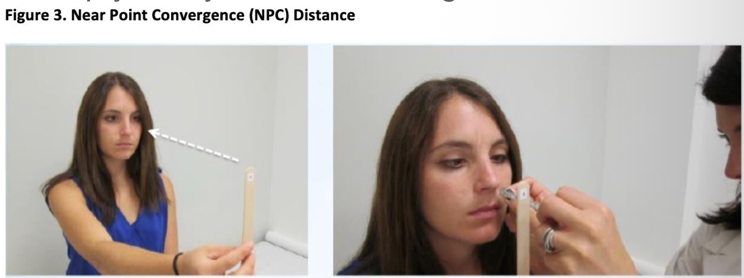
Convergence
Measures the ability to view a near target w/o double vision
Pt instructed to bring pencil w/ writing towards nose
Pt instructed to stop moving target when they see 2 distinct images
Distance from nose should be ≤ 5 cm
“Slowly move the pencil and keep your eyes on the writing”
Vestibular-Ocular Reflex (VOR) Test
Tests the ability to stabilize vision as head moves
Head rotating, eyes maintain focus on target
180 bpm, rotate 20° each side
“Shake your head back & forth while looking at target”
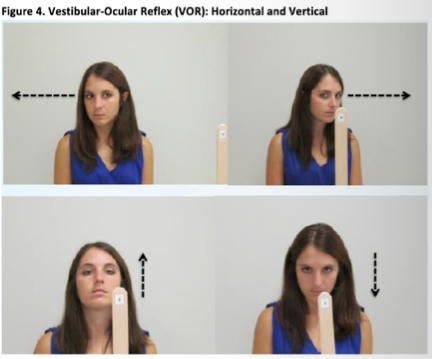
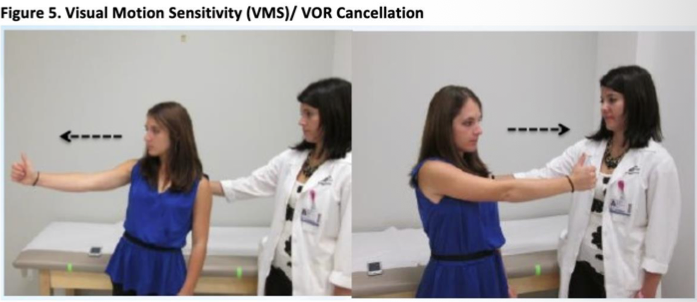
Visual Motion Sensitivity Test (VOR Cancellation)
Tests ability to inhibit vestibular-induced eye movements using vision
Trunk rotating, eyes maintain focus on target
50 bpm, rotate 80° each side
“Turn your whole body & arm while looking at thumb”
Suspected concussion with 1 or more of the following: (Diagnosis)
Symptoms – somatic (e.g. headache), cognitive (e.g. in a fog), and/or emotional (e.g. lability)
Physical Signs – (e.g. LOC, amnesia, neuro deficit)
Balance Impairment – (e.g. gait unsteadiness)
Behavioural Changes – (e.g. irritability)
Cognitive Impairment – (e.g. slowed reaction time)
Sleep Disturbance – (e.g. drowsiness)
Pediatric Considerations (Diagnosis)
Children/adolescents may:
not be fully aware of their symptoms
not be able to articulate their symptoms or describe their effects clearly
have pre-existing physical and mental conditions/factors that might contribute to symptoms
What is the main rule with concussions
if in doubt sit them out
2. Education
NOT a result of brain hitting inside of skull – updated theory:
Neurometabolic Cascade
Rest
How do you get out of Rest?
Rest Recommendations
Suggestions for Restful Activities
Planning & Pacing
mTBI = Altered Network Connectivity
General Rule of Return to Play
Natural Course of Recovery
Neurometabolic Cascade (education)
Brain & neurons get stretched/deformed with impact and ion channels get pulled open
Ions are exchanged across the cell membrane which excites the neurons all at once
Rapid neurotransmitter dump causes electrical/excitatory storm
Big use of ATP over hours/days
Cerebral blood flow drops
Glucose drops
*Less blood flow to deliver less food to the brain – can take 45 days to return neurophysiology to normal*
Rest (edu)
Evolving recommendations – no longer dark room
Indicated for 24-48 hrs, then start activity as tolerated
Cognitive, physical & environmental as needed
When was the last time for 1 hour you didn’t….
Use your phone
Watch TV
Listen to music
Read a book
Work/Learn
Study
Talk to a friend
Exercise
Sleep
Clean
How do you get out of Rest?
Graduated return to cognitive & physical activity
Need to educate about how & when to introduce activity and monitor
symptoms
What not to do with rest
Don’t leave your patients in rest
Why to educate about how & when to introduce activity and monitor symptoms
Otherwise, depression & non-compliance
REMEMBER: they are brain injured therefore their judgement & decision making is impaired
Rest Recommendations (edu)
Limit: TV, computer, reading, cell phone, intense physical activity, school, sports, socializing
Allow: increased sleep, hydration, light physical activity, eating well
Suggestions for Restful Activities (Edu)
Listening tasks (audiobooks, quiet music, radio/podcasts)
Meditation or relaxation activities
Anything leisure that relaxes (knitting, drawing)
Light household tasks
Short walks (outdoors ideally)
Helps improve blood flow to brain
If don’t start w/in first 5 days, greater chance of prolonged recovery
How does Short walks (outdoors ideally) help?
Helps improve blood flow to brain
If don’t start w/in first 5 days, greater chance of prolonged recovery
Planning & Pacing (Edu)
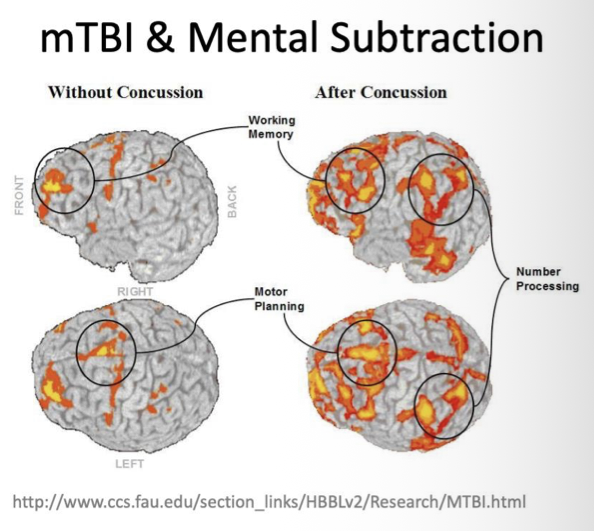
mTBI = Altered Network Connectivity
Brain is noisy & inefficient after concussion meaning:
You can’t filter sensory stimuli
You can’t easily maintain balance & move through environment
You can’t use multiple systems at the same time
You get easily fatigued
General Rule of Return to Play (edu)
The athlete needs to be symptom free for the same amount of time they have symptoms prior to returning to contact sports
Especially youth & adolescents
Natural Course of Recovery
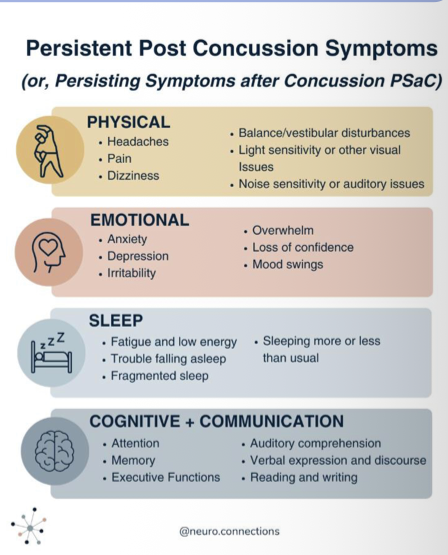
80-90% of people who experience mTBI will recovery fully
Remaining 10-20% develop Persistent Post Concussion Syndrome (PPCS)
Cannot predict based on severity of injury
Symptoms persist longer than 4/6 weeks
3. Treatment
Symptom Reduction
Strategies to Help Build Tolerance
Planning & Pacing
Biggest Brain Drains:
Planning & Pacing Strategies
Pacing Points System
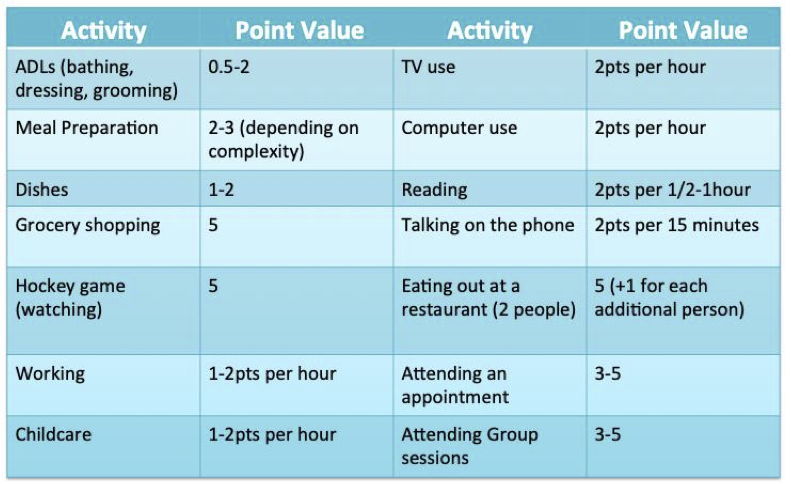
Typical Point Values
Stoplight Menu of Tasks
The Zone of Therapeutic Benefit
Exercise Prescription
Cognition
Visual System
Visual/Vestibular System
Symptoms Reduction (Treat)
Quiet The Noise
Limit stimulating environment & activities & use strategies to help build Auditory & Visual tolerance
Take breaks to recharge brain
Mindfulness & meditation
Quiet the noise (Symp-red)
Address sleep issues → focus on sleep hygiene
Sleep & wake at same time
Make bedroom dark & cool
Limit caffeine after 1pm
Access morning sunlight
Use bed for sleeping only – no work or TV
Exercise but not right before bed
Strategies to Help Build Tolerance (Treat)
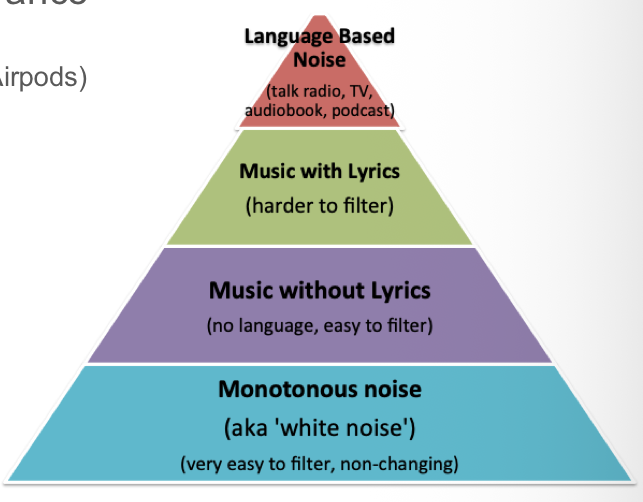
Auditory Strategies
Visuals Strategies
Auditory Strategies (Building tolerance)
Noise cancelling headphones (Airpods)
Loop Earplugs
Graduated noise exposure
Visual Strategies (building Tolerance)
Block part of page to reduce visual input
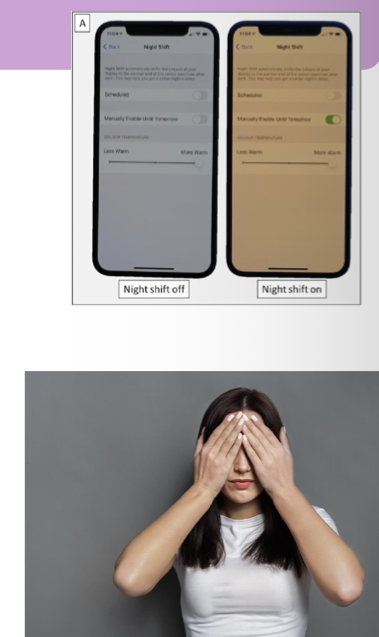
Blue light blockers
Night shift on devices
Glasses with tint
Reduce sunlight
Sunglasses
Hat with a brim
Timer for shorter more frequent chunks of reading
3x10 min better than 1x30 min
Palming
Use voice to text
Use “reader” view to reduce clutter & ads
Planning & Pacing (Treat)
Right level of activity in ACUTE phase:
Right level of activity in CHRONIC phase:
Requires a huge lifestyle change
Many of our “Type A” personality patients struggle with limiting tasks and setting limits
The most common pt I see in my office with PPCS: Type A Women w/family
Still need to care for kids
Try to do it all
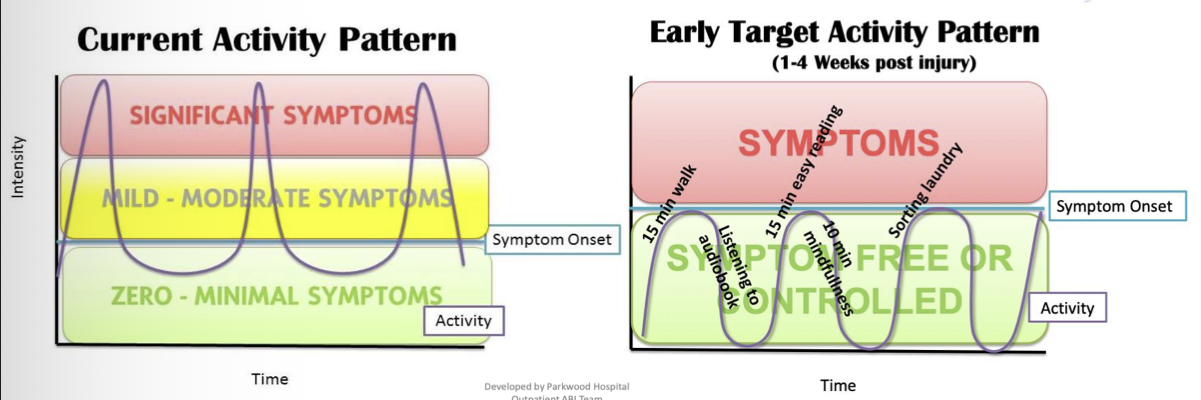
Right level of activity in ACUTE phase: (P&P)
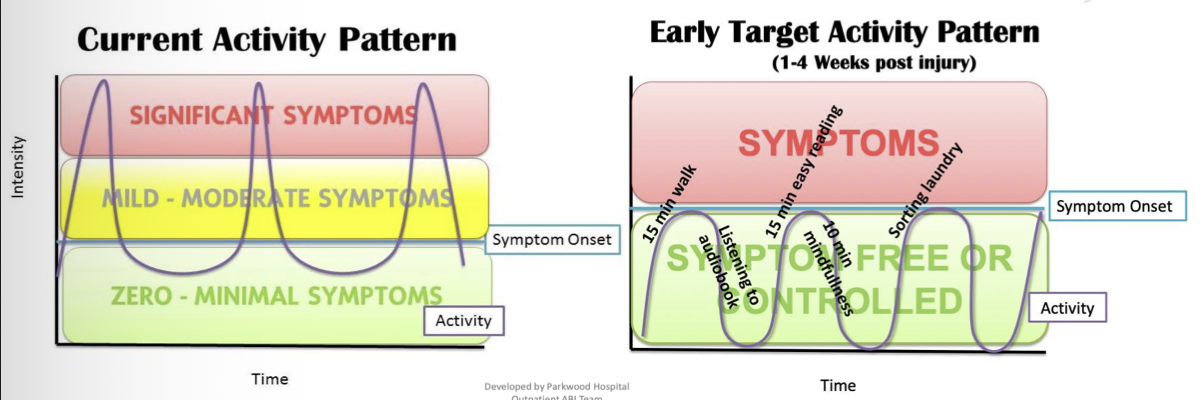
Aiming for pts to participate in ALL activities BELOW the level of symptoms
Stop activities prior to symptom onset
Re-introduce activities in a graded and gradual way
Right level of activity in CHRONIC phase: (P&P)
Same principles of graded & gradual activity, but messaging slightly different
Pt can have a bit more leeway to go into symptoms before stopping activity
General Guide:
Symptoms can increase 2-3/10 on intensity scale and return to baseline in less than 1 hour
Biggest Brain Drains:
Talking
Visually stimulating environments
Driving
Any activity requiring “filtering”
Cognitive tasks
Physical activity
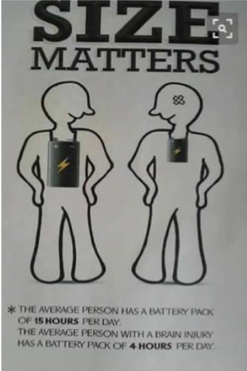
Talking (brain drains)
Particularly in crowded environments w/ multiple conversations
Visually stimulating environments (Brain drains)
Bright, colourful, moving (think Walmart)
Driving (Brain Drains)
Even as passenger
Any activity requiring “filtering” (Brain Drains)
Noise in background, takes energy to filter
Cognitive tasks (Brain Drain)
Reading, crosswords
Physical activity (Brain Drain)
Need to keep HR down to not bring on symptoms, you are not efficient, so simple task is now exhausting
Planning & Pacing Strategies (Treat)
Use a timer
Make a plan
Chunk your activity & schedule it throughout the week
Pacing Points System
Stoplight Menu of Tasks
Pacing Points System (Treat)
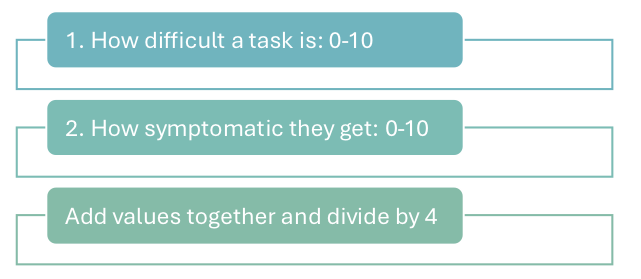
Every activity has a points value calculated by:
You get a maximum number of points per day
Start at 15-20pts
Provides a simple, structured way to limit & track tasks
Typical Point Values (Treat)
Stoplight Menu of Tasks (Treat)
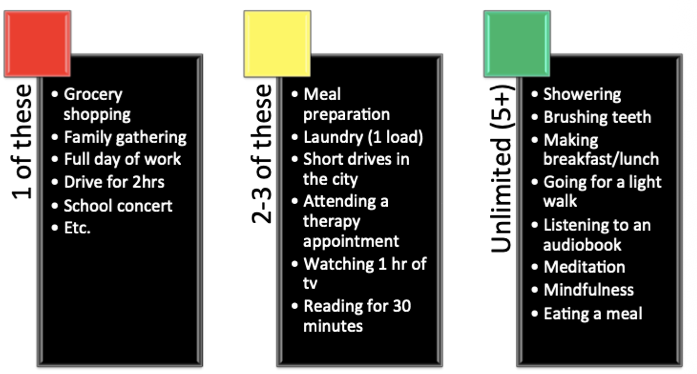
Red tasks are hardest, Yellow tasks are medium, Green tasks are easy
Get 1 red task, 2-3 yellow tasks, and unlimited green tasks per day
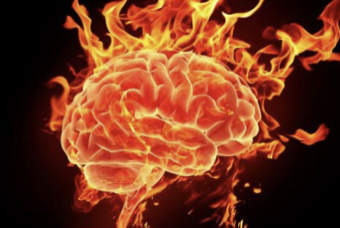
When you don’t plan & pace…(P&P)
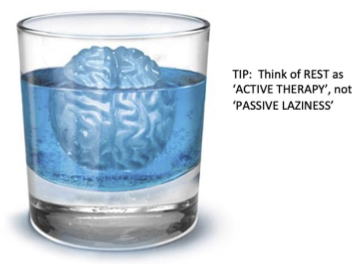
When you do plan & pace… (P&P)
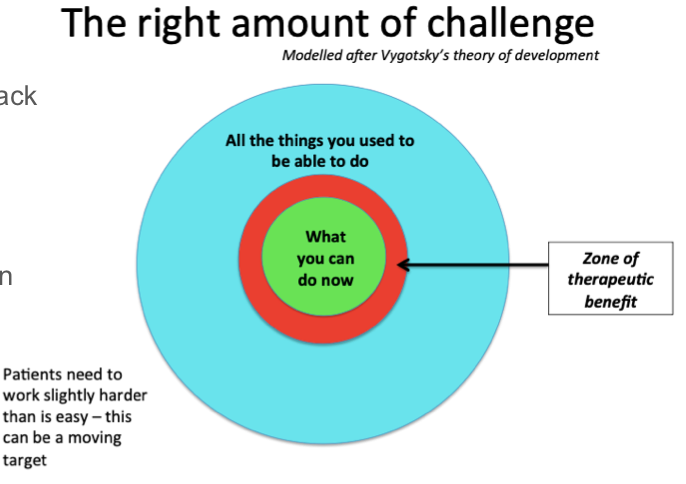
The Zone of Therapeutic Benefit (Treat)
When doing activities consider:
How quickly symptoms increase
How long it takes to settle them back down
Good Rule of Thumb:
Symptoms can go up by 2-3/10
Need to be able to settle them w/in 30-60 mins
Exercise Prescription (Treat)
Well-trained or conditioned patients:
60%-70% of HRmax x 15-20 min
Untrained or deconditioned patients:
40%-50% of HRmax x 10-15 min depending on tolerance
Can likely safely initiate exercise on day 3 post-injury
Yoga often well-tolerated by mTBI patients
Buffalo Concussion Treadmill Test w/in 1st week
Cognition (Treat)
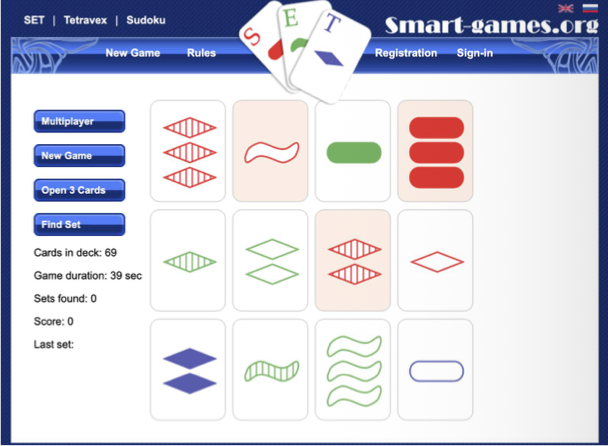
Sudoku, Crosswords, Wordle
Card sorting games
Alphabet game
Duolingo
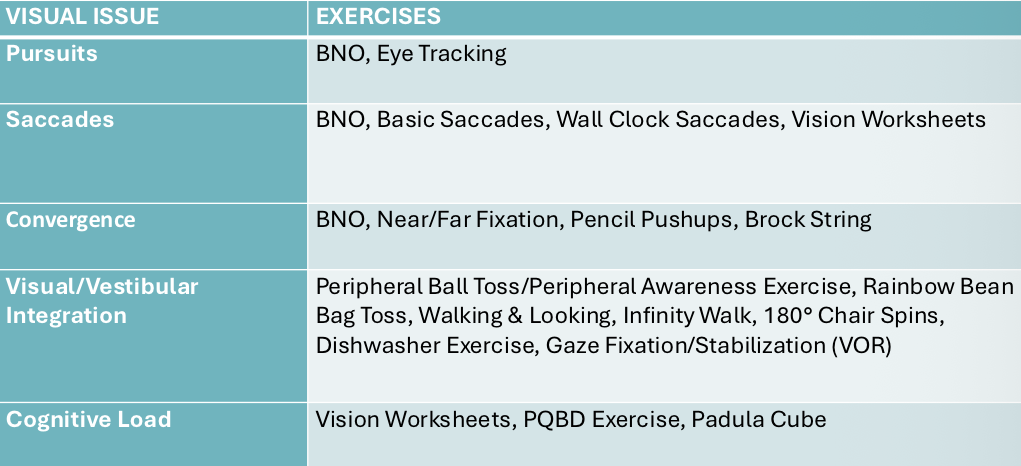
Visual System
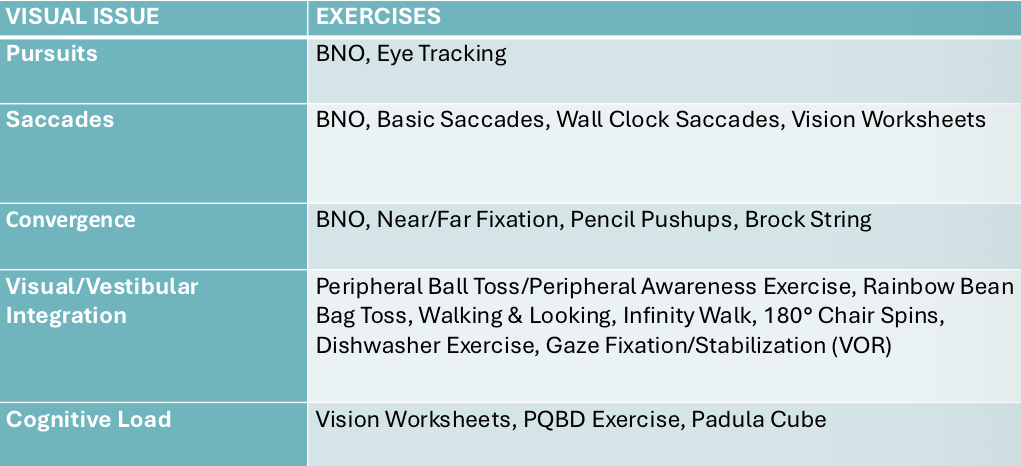
Bi-Nasal Occlusion (BNO) glasses
Wall Clock Saccades
Vision Worksheets
Brock String
Rainbow Bean Bag Toss
Walking & Looking
Infinity Walk
Infinity Walk
Dishwasher
PQBD Exercise
Padula Cube
Bi-Nasal Occlusion (BNO) glasses
Decreases visual noise
Use for reading or busy environments
Helpful for Pursuits, Saccades, Convergence
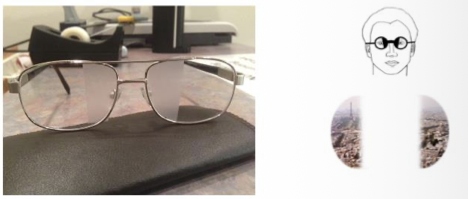
Smooth Pursuits (1.) {visual systems}
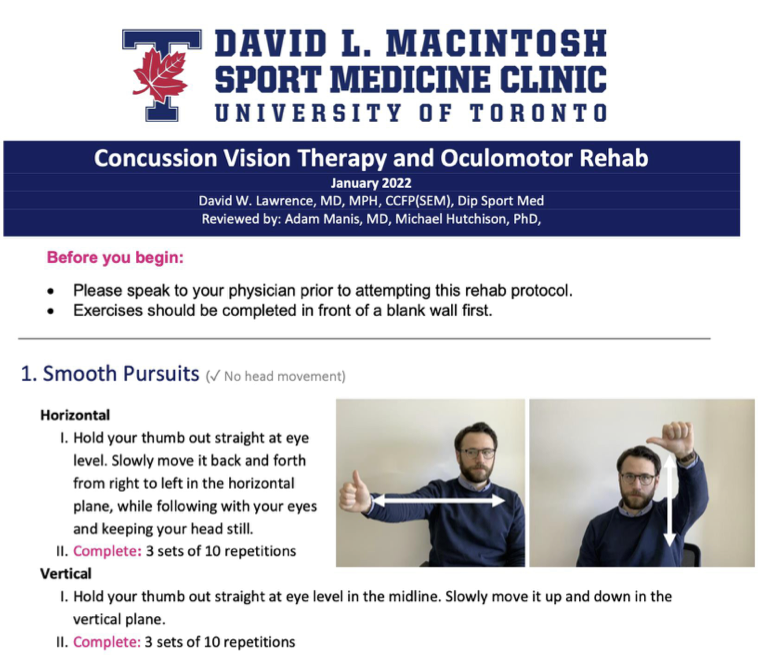
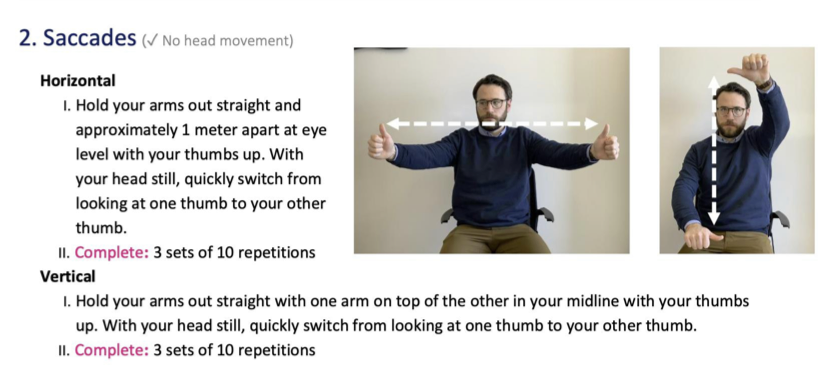
Saccades (2.) {visual systems}
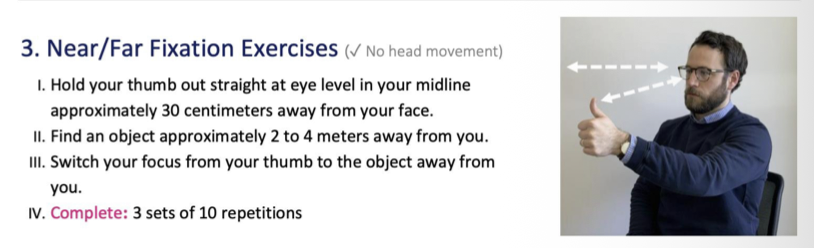
Near/Far fixation exercises (3.0) {visual systems}
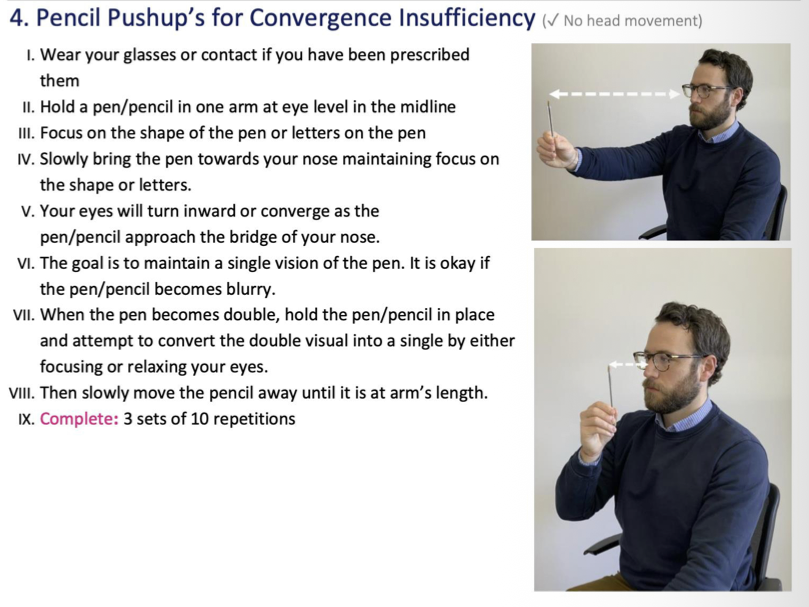
Pencil pushup’s for convergence insufficency (4.) {visual systems}
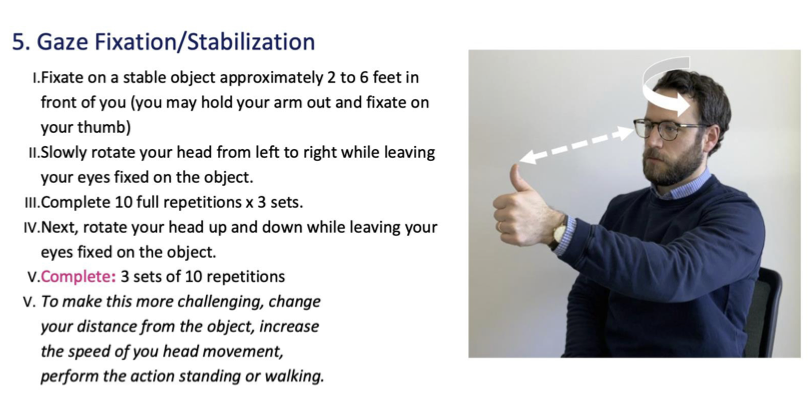
Gaze Fixation/Stabilization (5.) {visual systems}
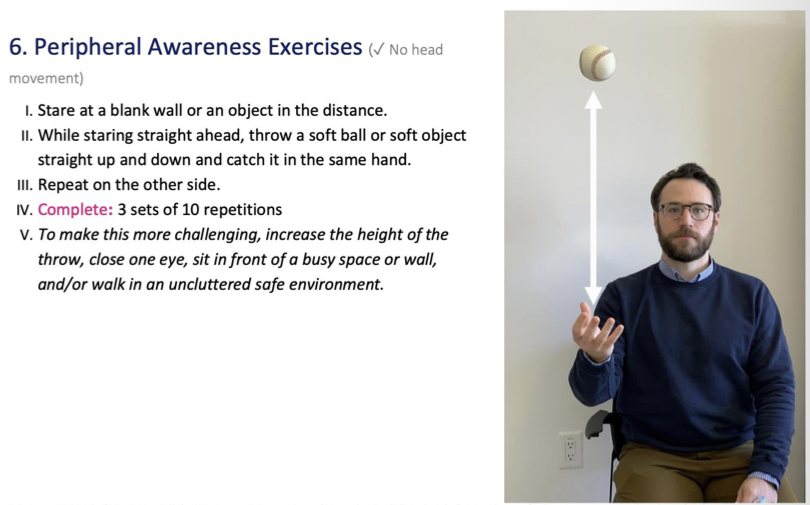
Peripheral Awareness Exercises (6.) {visual systems}
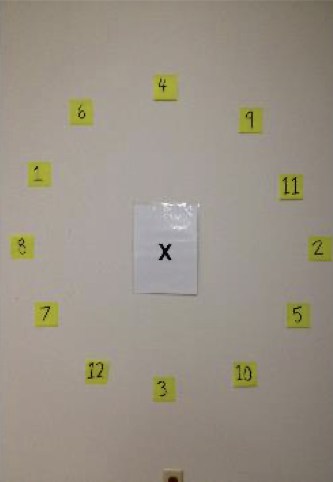
Wall Clock Saccades (visual systems)
Stand in front of a wall
Place 12 visual targets in a circle like a clock
Place an X in the middle of the clock.
Move your eyes as quickly as you can from each post it note to the centre X moving in a clockwise and then counter-clockwise direction
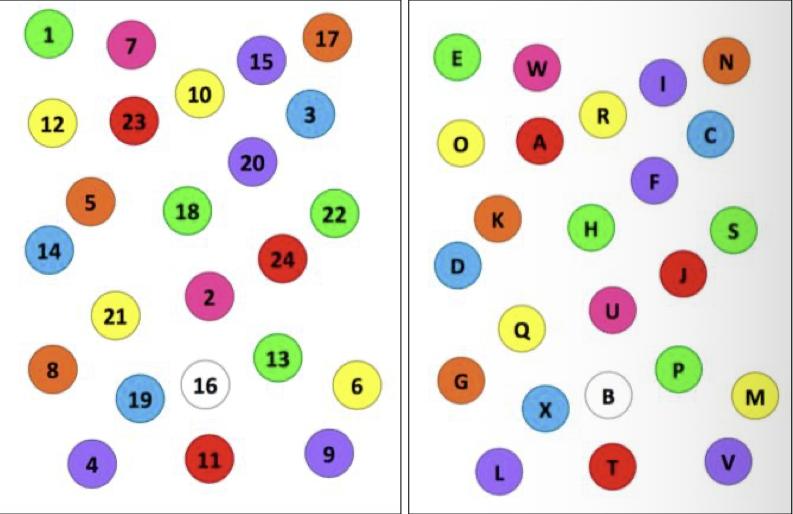
Vision Worksheets (visual systems)
Stand in front of a wall
Place a # sheet and a letter sheet on wall
Find & touch the letters & numbers in order (A-1, B-2, C-3)
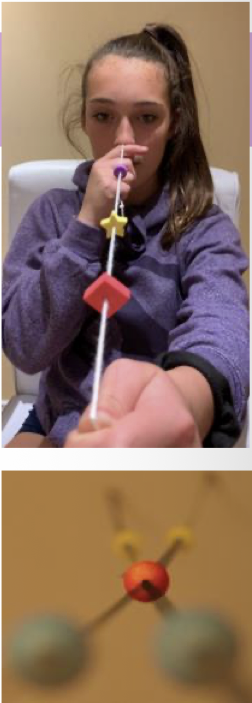
Brock String (visual systems)
Hold the string at a 20° angle down from your nose
Bring your attention to the furthest bead; it will be in focus and all other beads will either be doubled or out of focus
Switch your focus to the next bead on the string and keep moving your eyes to closer beads until you cannot focus on a bead
If double vision occurs, focus or relax eyes until you can see bead, but do not try to hold for longer than 5 seconds
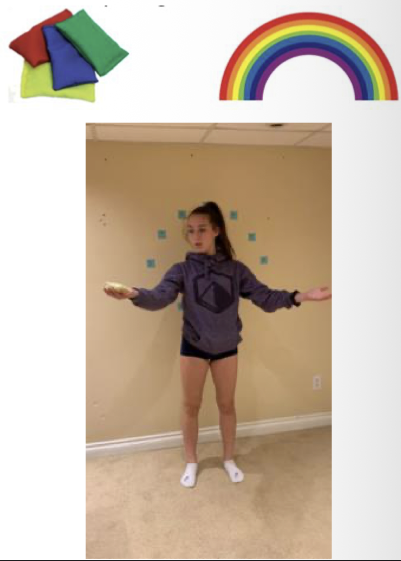
Rainbow Bean Bag Toss (Visual systems)
Keep head still and eyes on the bean bag
Lightly throw the bean bag from one hand to the other in the shape of a rainbow
Your eyes should follow the path of the bean bag
To make it harder: Move head and eyes together to follow bean bag
Walking & Looking (visual systems)
Pt is walking towards therapist with their eyes fixed on them
Pt turns head, but keeps eyes fixed on therapist
Then allow eyes to follow
Return to centre, repeat same thing in opposite direction
To make it harder: move eyes first, then head

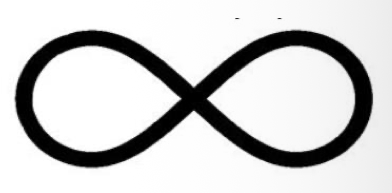
Infinity Walk (visual systems)
Walk at a comfortable but continuous pace
Look at visual target on the wall
Walk in a sideways figure of 8 or infinity symbol while maintaining visual target
When you are turning around, bring head and eyes back to the target as quickly as possible
Repeat several times as symptoms allow
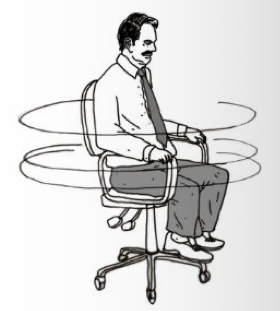
180° Chair Spins (Visual systems)
Spin your chair 180° to the right and stop and fixate on the target
Let any dizziness or disturbance settle then spin chair 180° back to the left
Once again focus on the visual target and let any dizziness or disturbance settle
Repeat this sequence as tolerated
To make it harder: rotate same direction every time, so turning 360°
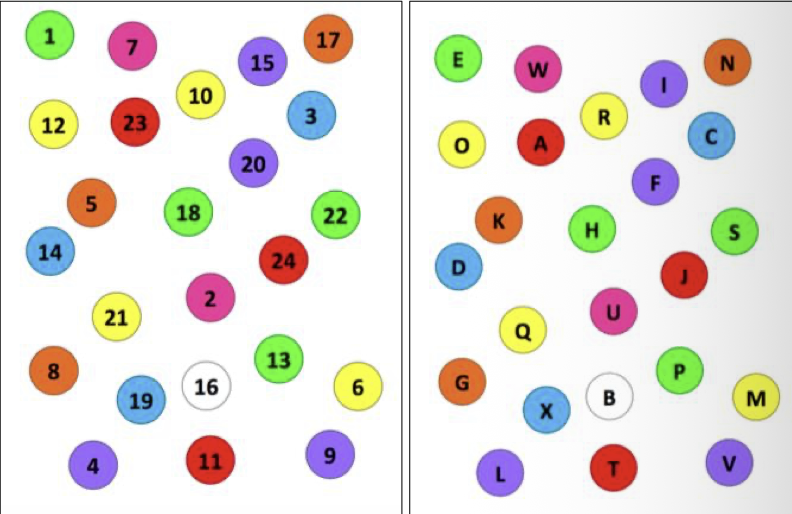
Dishwasher (Visual systems)
Find and touch the letters & numbers in order (A -1, B-2, C-3…) on the coloured worksheets
Move your head and neck together quickly as you turn and bend down to touch the letter or number on the seat
Then return your head and neck to the starting position quickly and find next letter/number on coloured sheet on wall
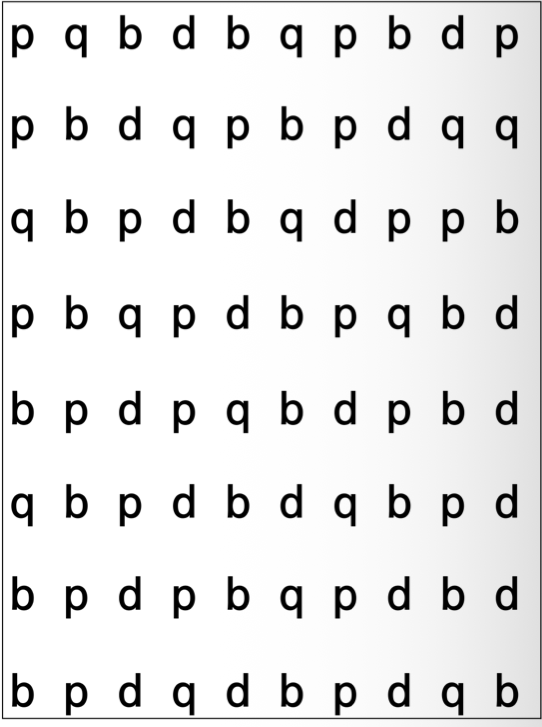
PQBD Exercise (Visual systems)
Consider the vertical line of the letter as your midline
Where the "loop" of the letter is positioned designates which body part you are going to move
Top loops are upper extremities, bottom loops are lower extremities
p = Right hand
q = Left hand
b = Right foot
d = Left foot
Padula Cube (Visual systems)
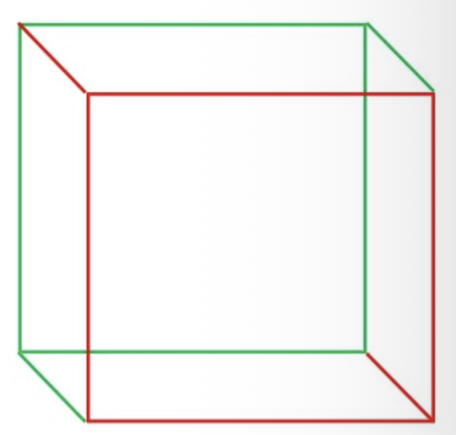
Patient keeps a soft focus on centre of cube
Ask them what square is forward (red or green)
They then try to flip the cube so that the opposite colour is forward, then flip it back
Visual System (diagram)
Visual/Vestibular System (Visual systems)
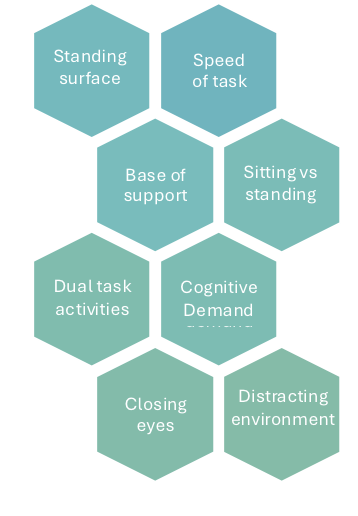
Can make any task more difficult by altering: