Week #14: Spelling Development and Learning to Write
 Call Kai
 Learn
Learn Practice Test
 Spaced Repetition
 Match
Match Flashcards
 Knowt Play
1/32

Earn XP
Description and Tags
Flashcards covering spelling development stages, linguistic blocks, assessment tools, and intervention strategies based on lecture notes.
Name | Mastery | Learn | Test | Matching | Spaced | Call with Kai |
|---|
No analytics yet
Send a link to your students to track their progress
33 Terms
Spelling is a linguistic task
Positively related to both decoding and reading comprehension skills
Good spellers are always good readers, but the reverse is not always true
Involves:
Phonological processing
Orthographic processing
Morphological processing
Semantic processing
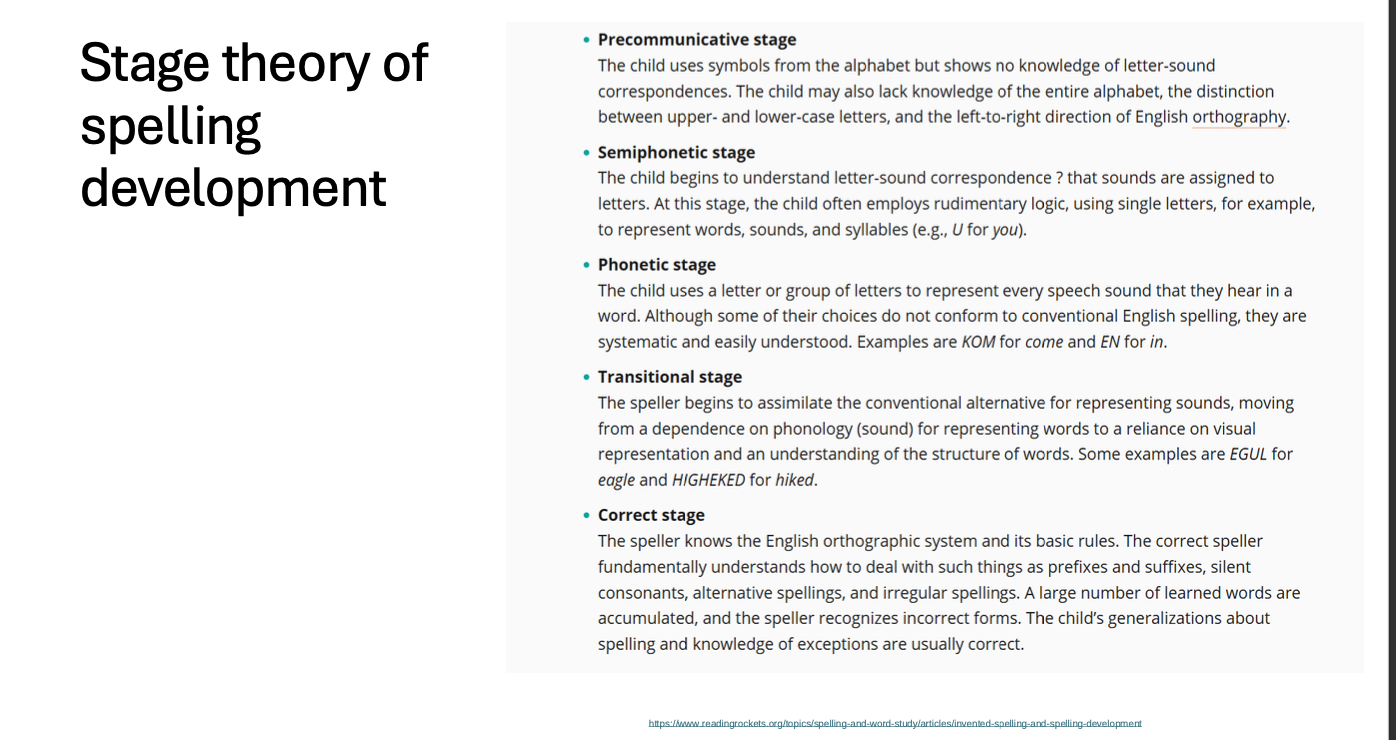
5 stages theory of spelling development
Precommunicative stage: child has some knowledge of alphabet but does not yet have sound-letter correspondence knowledge.
semi-phonemic stage: beginning to understand sound-letter correspondence (e..g, u for U). using single letters to represent words is one example.
phonetic stage: students begin to start spelling phonetically; aka are using letters to represents groups of sounds/all sounds they are hearing. invented spelling.
transitional phase: understand that not everything will be spelled phonetically and are devleoping that orthographic knowledge, may overapply some phonological rules (-ed endings, silent letters, etc) reliance on visual of letters and structure of words. (e.g., EGUL or HIGHKED)
Correct stage: solid understanding of orthographic knowledge, mastery of prefixes, suffixes, irregular spellings.
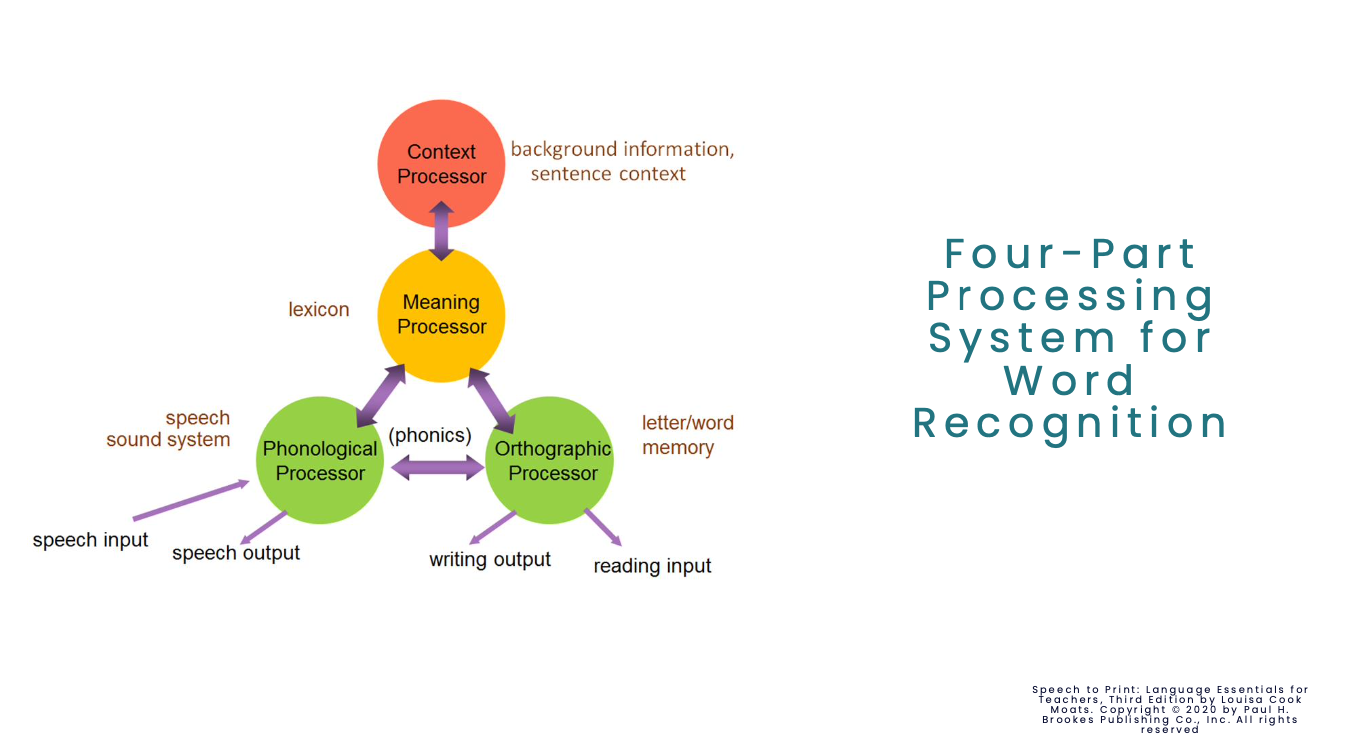
4 part processing system for word recognition: recall this
Parieto-temporal region
The brain region novice readers use to dismantle words for step-by-step phonological analysis.
Occipito-temporal region
Also known as the Word Form Area; used by more experienced readers to recognize whole words instantly.
Triple Word Form Theory
3 forms of phonology, orthography, and morphology develop together in a coordinated manner
- even beginning spellers may use multiple strategies to spell
- children use a range of linguistic knowledge when spelling
- as children become fluent (automatic) spellers, they rely
more on orthography and mental representations of words
How I explained it: The triple word form theory suggests that the three linguistic forms of phonology, orthography, and morphology are used together in a coordinated way throughout all the phases of a child's development. So instead of children learning to sound words out first and learning these linguistic patterns later, this theory argues that even at an early age, children utilize all three types of knowledge. So, for example, a young child might already know that "ck" doesnt start a word (orthography) or that -ed signifies past tense (morphology), all while they are still learning to segment sounds (phonology). Additionally, as children get older, even though all 3 processes are being tapped into early on, the degree to which a student relies on each one changes. This theory also emphasizes that as children's spelling of more words becomes familiar, they are building up their mental graphemic representations, or stored memories, of words, which allows children to spell words even before they know how to match letters to individual sounds.
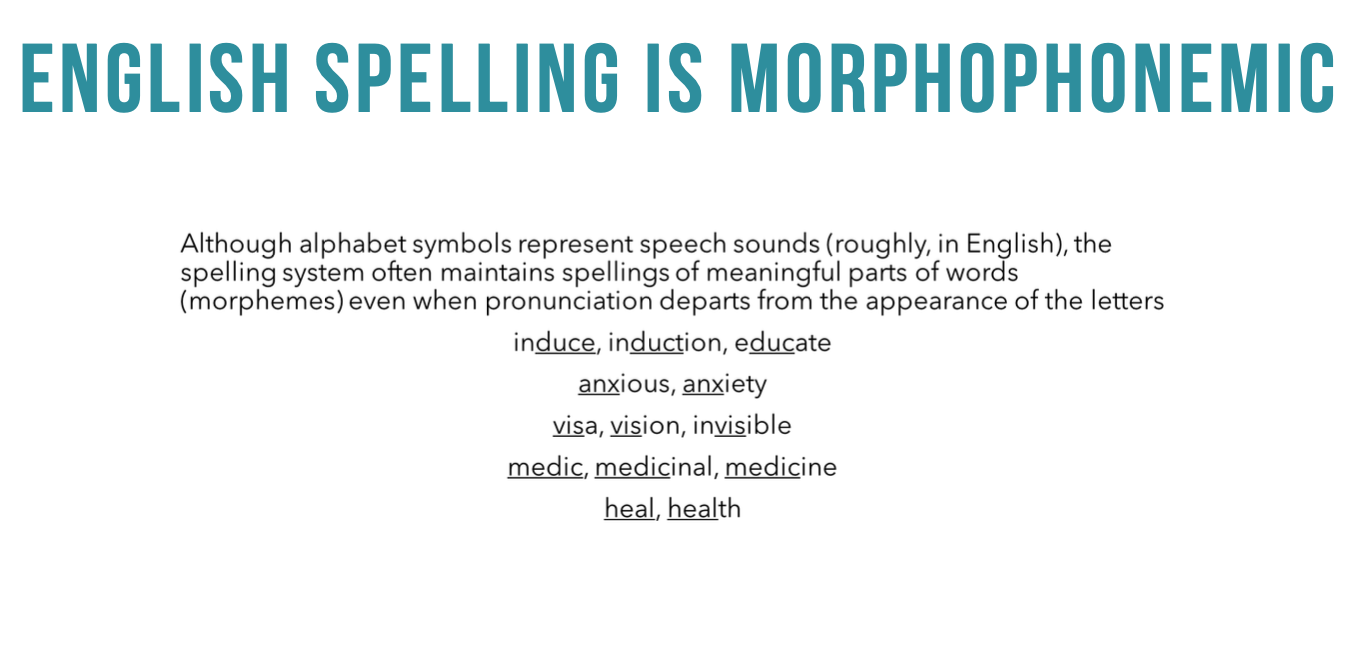
English spelling is morphonemic
even if pronounciation of words changes or add another derivational morpheme (e.g., -ed), usually affix will stay how it is usually spelled
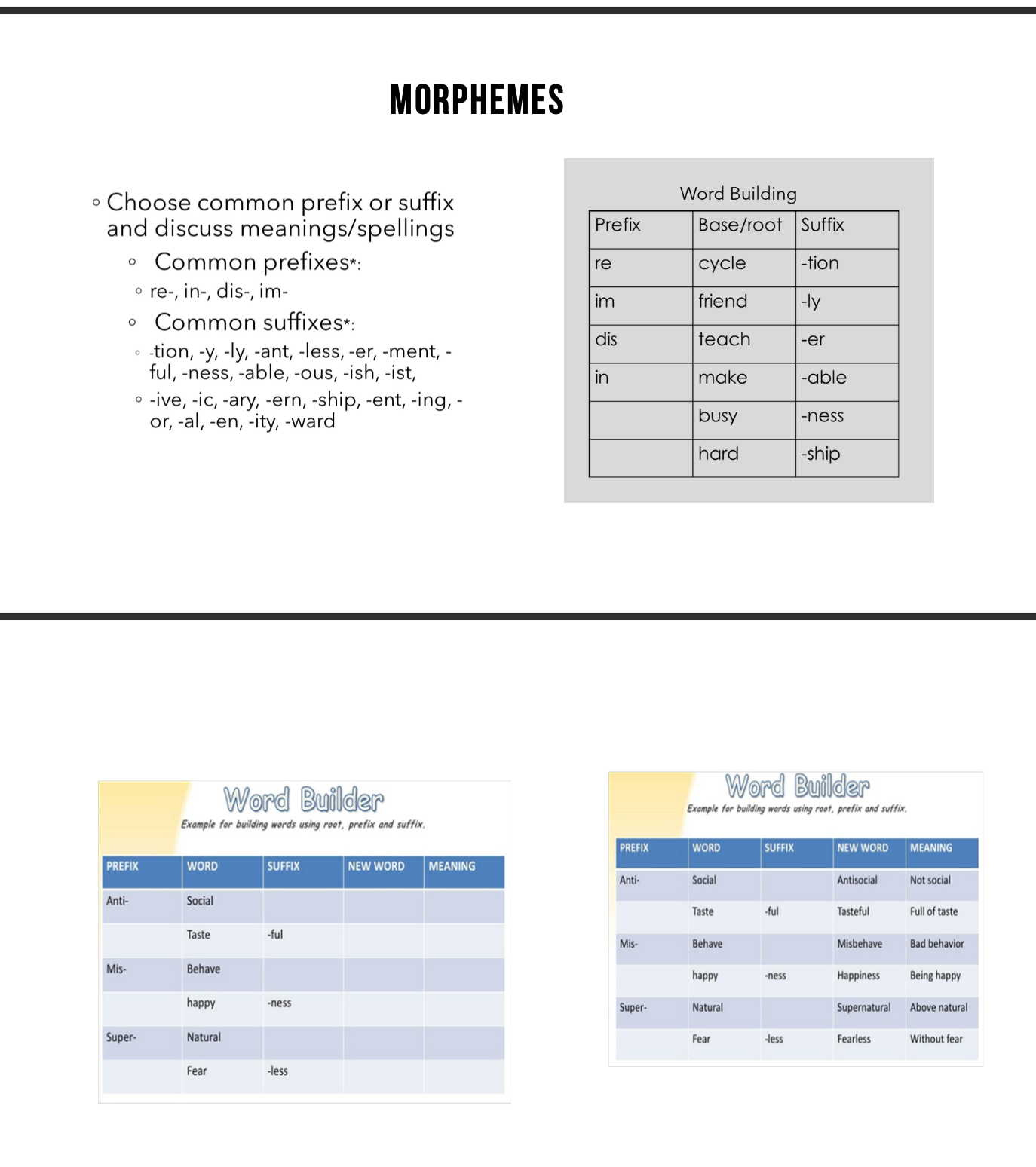
What is a word made of?
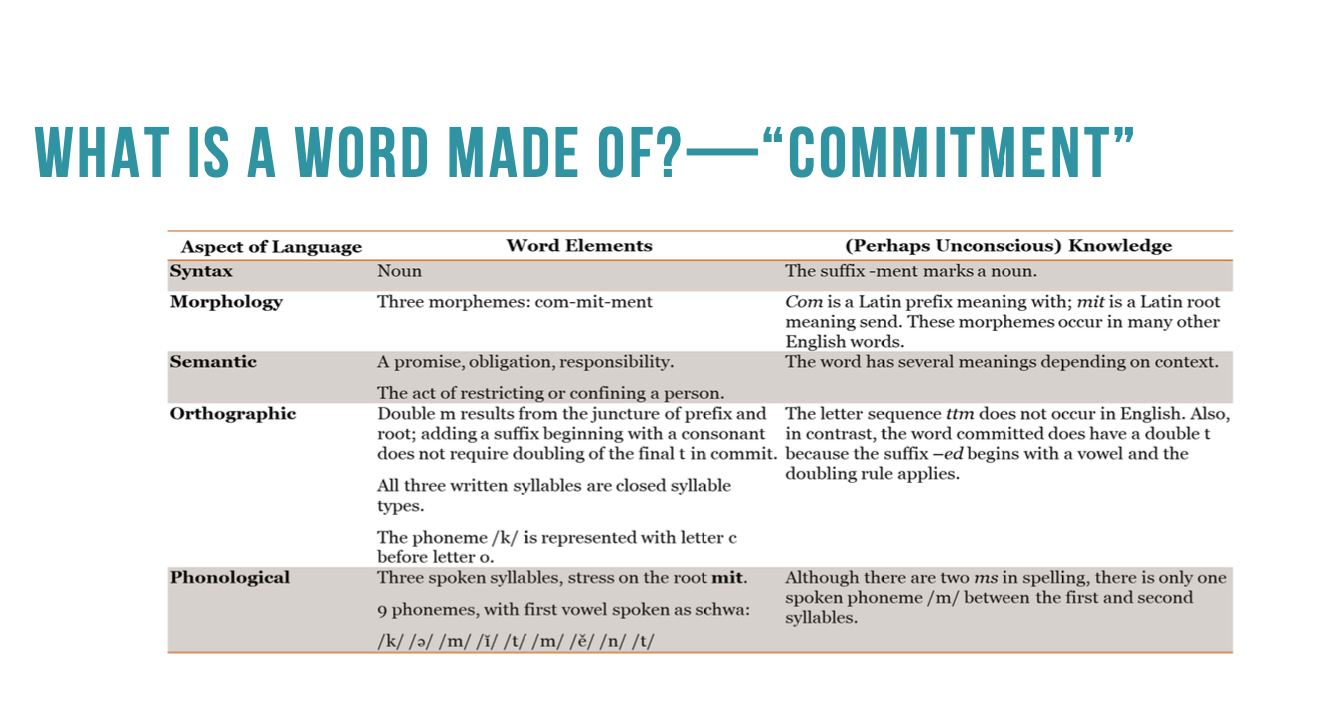
What is involved in word level spelling skills? 4
Phonological awareness
Orthographic knowledge
orthographic pattern awareness
mental grapheme awareness
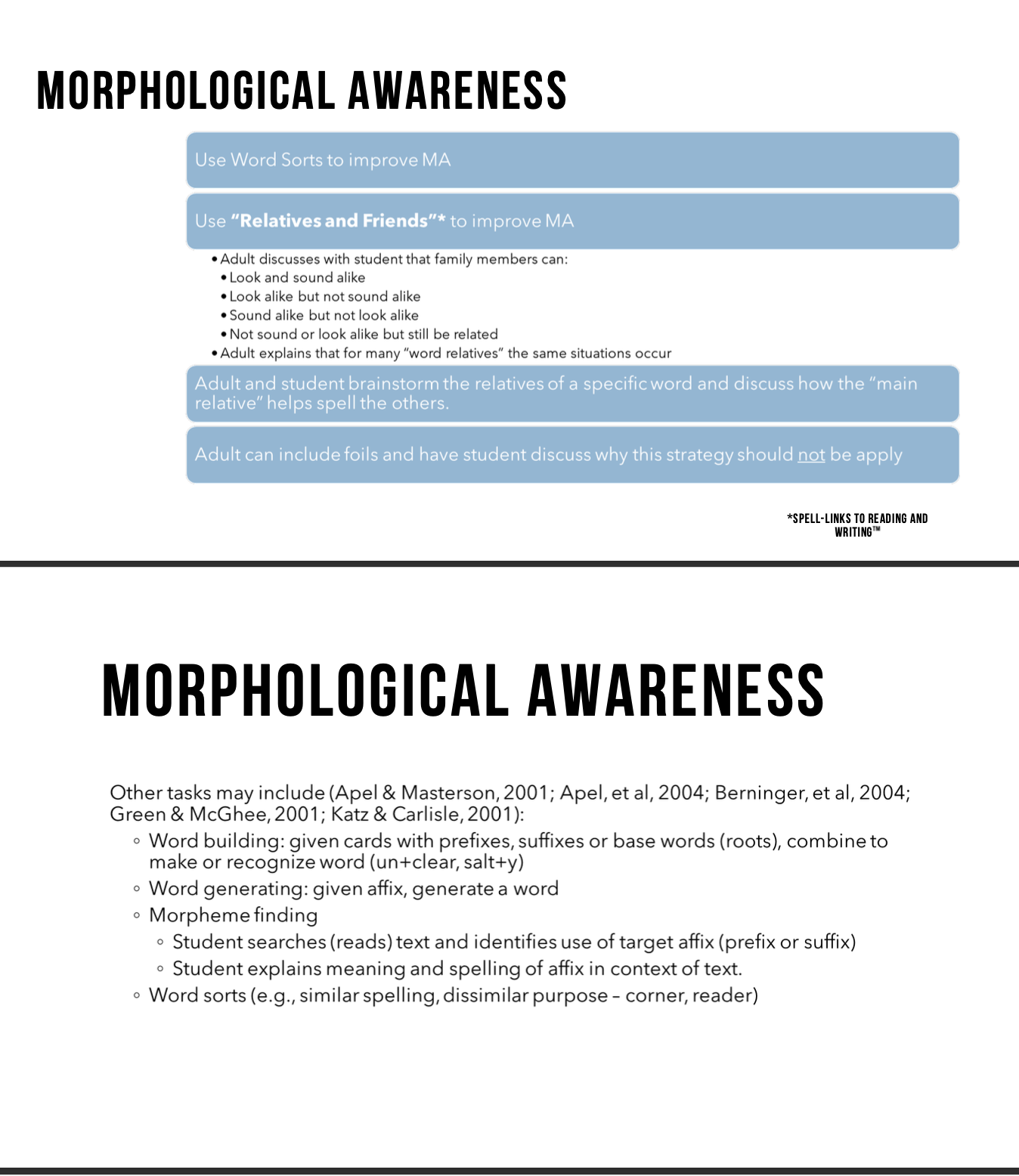
Morphological awareness
semantic awareness
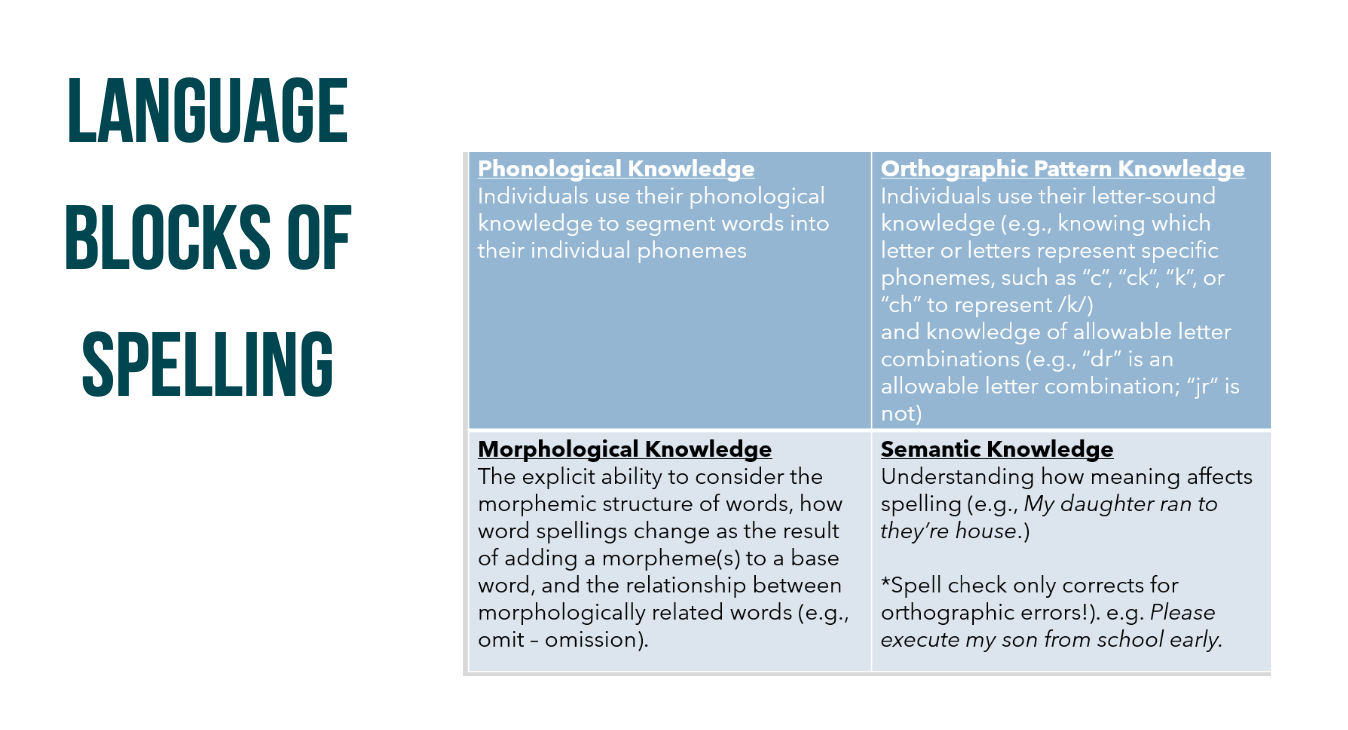
Phonological awareness difficulties
Difficulties in phonological awareness are characterized by:
Not all phonemes are represented by graphemes (e.g., HD for Hand)
Omission/additions of phonemes/sounds (e.g., GASKT for cat)
omission of letters of less noticeable sounds/unstressed syllables (e.g., sop for stop, relize for realize)
letter sequencing/order errors, esp. for liquids (l,r) and nasals (m, n, ng) in words (e.g., flod for fold)
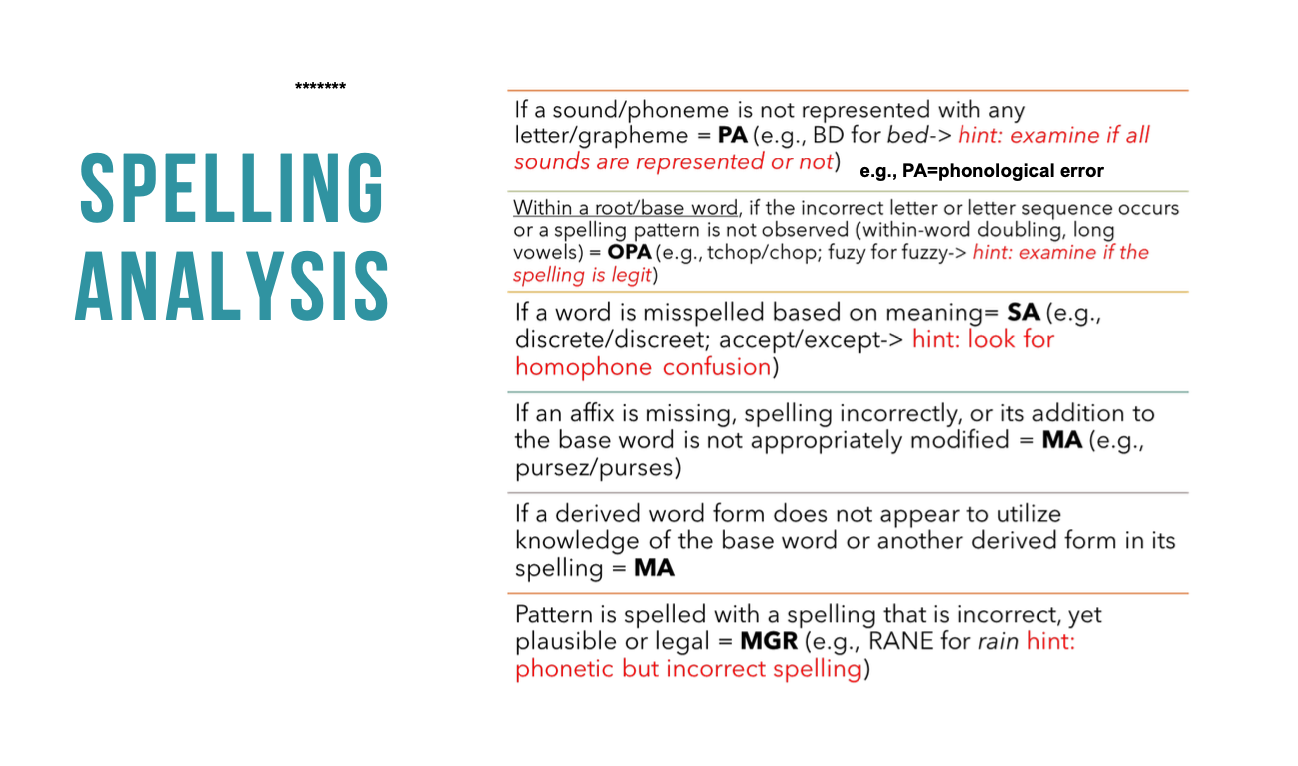
IF you are MISSING A SOUND= PA error!!!
Orthographic Knowledge
2 types of of orthographic knowledge
Orthographic pattern knowledge (OPK): i.e. spelling patterns/conventions
Knowledge of rules for combining letters
i.e., knowing that certain letter combos are allowable (e.g., DR is allowable but JR is not an allowable letter sequence; also knowing which ketter(s) represent specific phonemes, e.g: the /k/ sound can be represnted by c, k, ck, etc. , knowing that the DR cluster can only go in the beginning and middle of words but not end of words (positional constraints)
mental graphemic representations: (MGR) pictures of written words in our head; i.e. whole words we have visual representations for; we use the image of it to spell it.
DIfficulties with Orthographic pattern knowledge
violates a spelling rule or letter sound correspondence:
e.g., TRAN for train, CAS for catch
Writing a letter that does not correctly correspond to a sound
e.g., TAT for that
Mental Grapheme representation difficulties
spelling is plausible and does not violate orthographic pattern rules (e.g., Kot for Cot)
incorrect application of an orthographic pattern (e.g.., GOTE for goat)
Errors are common for the ambiguous parts of a word such as vowels where several letters or letter combinations are plausible; e.g., TARIGON or TAREGON for tarragon
is basically like phonetic spelling; not breaking rules of sound letter correspondence like OPK, patterns exist in english and are plausible, just the wrong spelling because do not have a solid representation of what that word looks like yet.
Morphological awareness difficulties
might transform the base of words to inflected or derivational forms (e.g., Helpt for helped, ONDO for undo)
incorrect application of a rule after adding a morphological form (e.g., when adding derivational -ing suffix, not making the p a double consonant for Popping if they spelled POPING)
mispelling base words when they are dervied (e.g., Majician for magician)
Semantic awareness difficulties
homophone confusion (words that sound the same but have different meaning and look different): e.g., bear, bare, their, there, and they’re
technically spelling the word correctly, but word used has wrong meaning
Pronunciation is not clearly distinguished, and the correct use
requires knowing how the word is used grammatically; e.g.,
effect vs affect
Spelling is a good tool
for identifying which domains of language child is having difficulties in
which of the 4: is it phonological, orthographic, morphological, or semantic?
how they spell clues us in on where there difficulties are
also a good way to TARGET language skills; different way to practice underlying phonological awareness for example, or any of the 4.
Assessment Procedures for Spelling
b/c of all of these linguistic features involved in spelling (4), you should use A.
MULTILINGUSTIC APPROACH
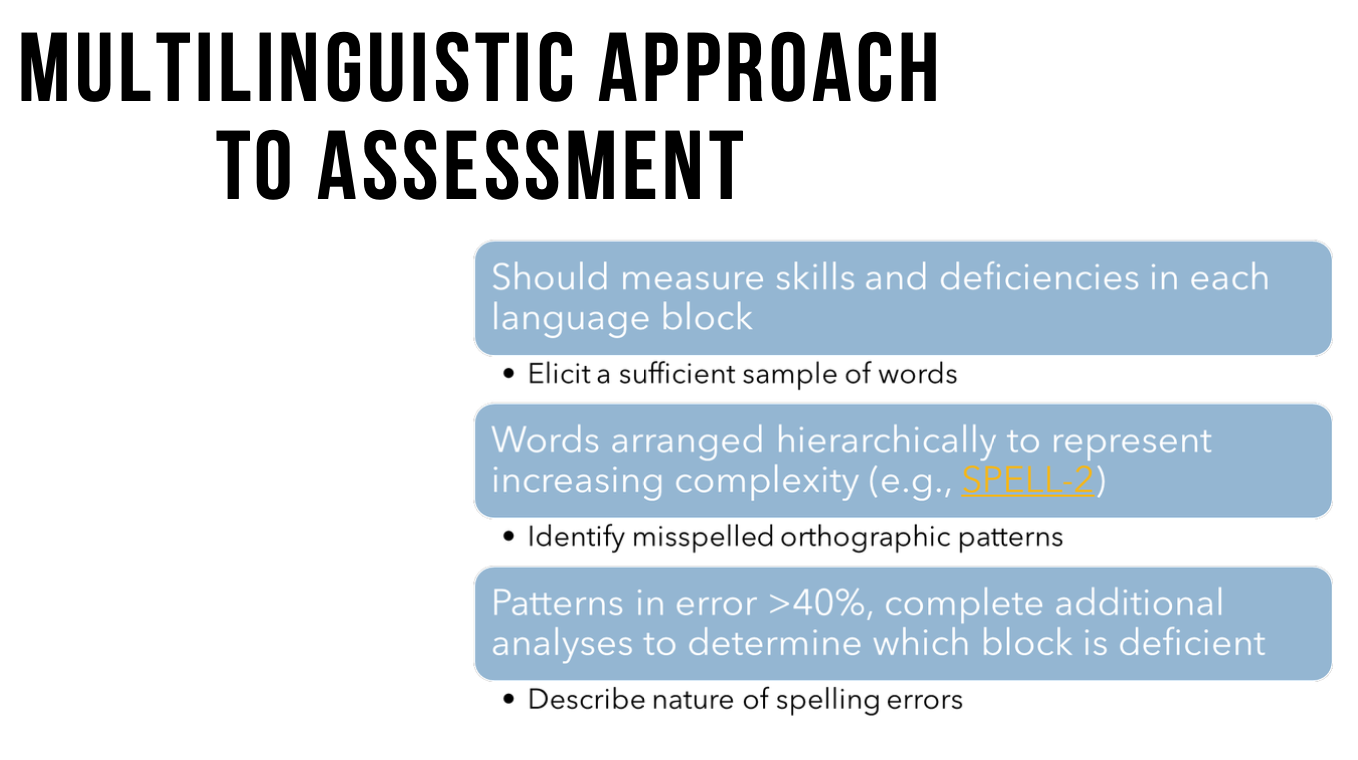
Multinlinguistic approach to assessment
Measure skills and difficutlies in each of 4 language blocks
involves getting a sufficient sample of words (with a variety of different phonological endings, syllable types, sound letter patterns)
Words arranged hierarchically to represent increasing complexity (e.g., can use standardized assessment tools like the SPELL-2)
want to sample a wide range of difficulty of words; e.g., single syllable vs multisyllabic words, phonetically spelled cvc words vs. irregular spellings, etc.)
then, identify mispelled orthographic patterns
Finally, the goal is to identify the nature of spelling errors. AKA patterns of error (e.g., what percentage of errors per language block)
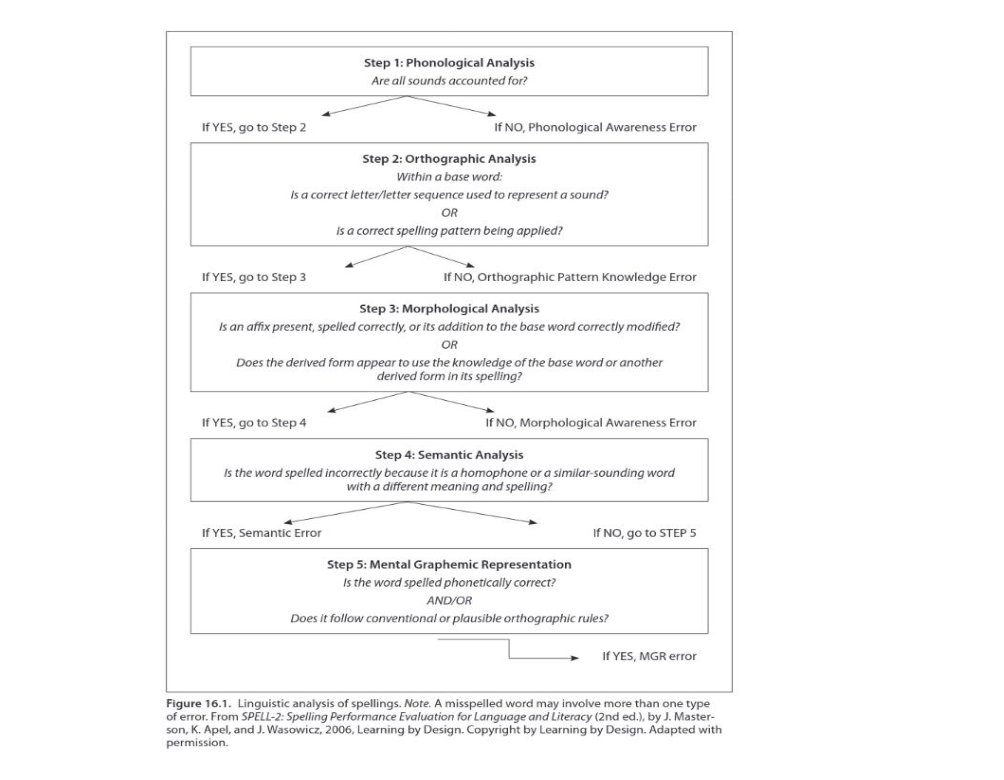
Spelling Analysis helpful info.
if spelling pattern exists in english, but just wrong, is MGR (e.g., FUZY for fuzy is a OPA error since pattern of a double z is violated)
Where should you get your spelling sample?
Can use classwork or other self-written material
But remember that kids often don’t attempt to spell words that
they can’t spell! May overestimate their skills
Word lists or passages from classroom, curriculum, or textbooks
Grade-criterion word lists (e.g., Words Their Way)
Should include many types of spelling rules, including digraphs,
ambiguous spellings, and morphologically complex words
can also use common core standards/written benchmarks to help
make grade appropriate word list
*** want many different types of words
Sample spelling list practice (will prob not be tested on this)
driv/drive: OPA error
bup/bump: PA error
wen/when: MGR
chan/train: PA error
flote/float: MGR
beachs/beaches: MA error
poping/popping: MA error
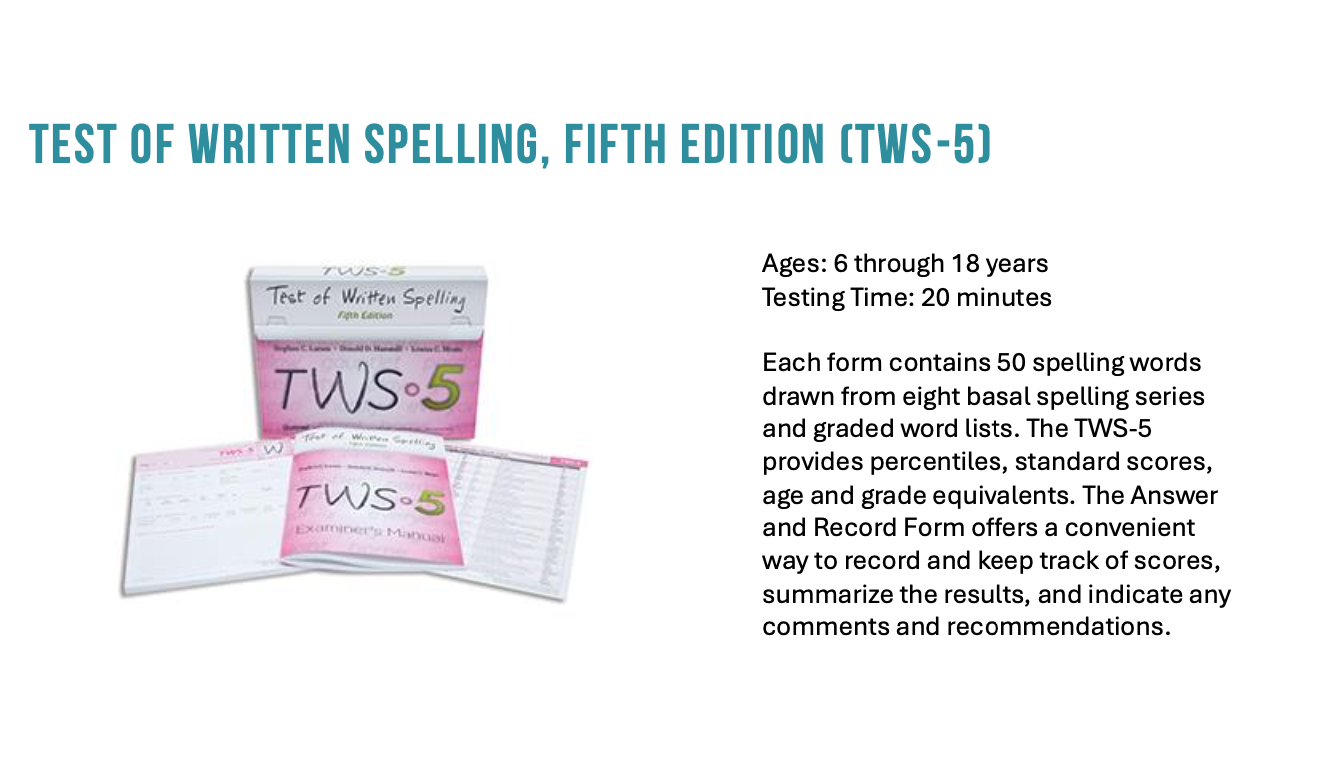
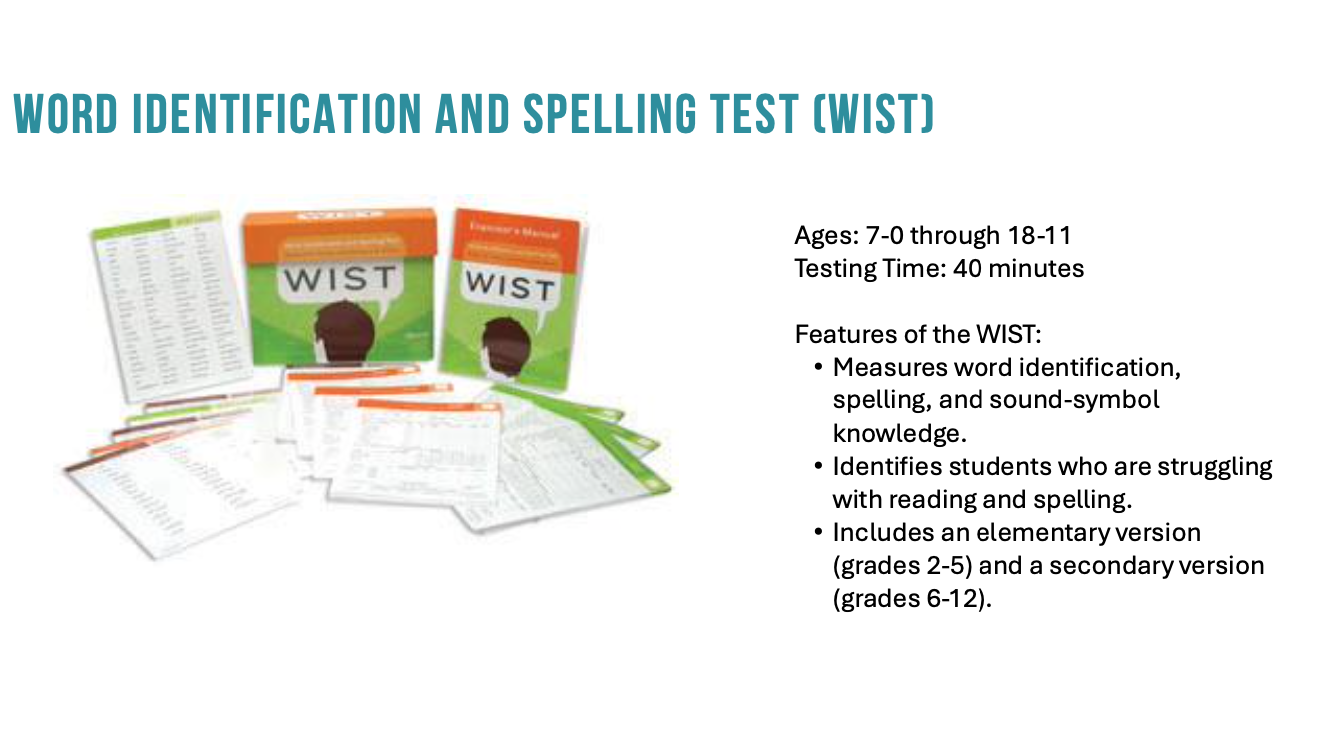
A lot of standardized options for Spelling Assessment
Activity Sample goals ***
Word-level decoding:
Student will accurately decode _____ words with ___________
support from the instructor in XX% of opportunities.
Reading comprehension:
Student will demonstrate grade-level reading comprehension
by accurately ____________________ (summarizing/answering
questions/identifying X) with _________ from the instructor in XX% of
opportunities.
Characteristics of Spellers
Good Spellers:
uses a variety of strategies and knowledge to spell
approach spelling as systematic
are self-reliant in monitoring own spelling
take interest in reading and spelling
take risks when writing=richer writing samples
Poor Spellers:
Write as little as possible
Are almost- but not always-poor readers
uses few strategies, have limited knowledge about how to spell
view spelling as chaotic, arbitrary, and beyond their control
take little interest in reading and spelling
Goal of Instruction
The goal of spelling instruction should be to enhance students’ attention to orthographic detail so they know what to look at and think about as they decipher print.
Multilinguistic Approach to Spelling Instruction and Intervention/Treatment
Assessment drives intervention!
Scaffolding Approach
I do
we do
yall do
You do
Activities should target language blocks to bring students’ language knowledge to an explicit level and apply knowledge to their spelling.
What must students learn?
• Much more than single letter-sound correspondences!
• Many letter combinations, as graphemes can be 2, 3, or 4 letters
• About 80+ specific graphemes for 43 phonemes, that are common
enough to merit explicit instruction
• Many position constraints or patterns that govern where a grapheme can
be used in a syllable or word
• Syllable and morpheme patterns as well
Some Consonant Spellings Are Almost Totally Predictable; Others Are More Variable
e.g., /p/=p /b/=b = predictable
/f/= f, ff, ph, gh, = unpredictable
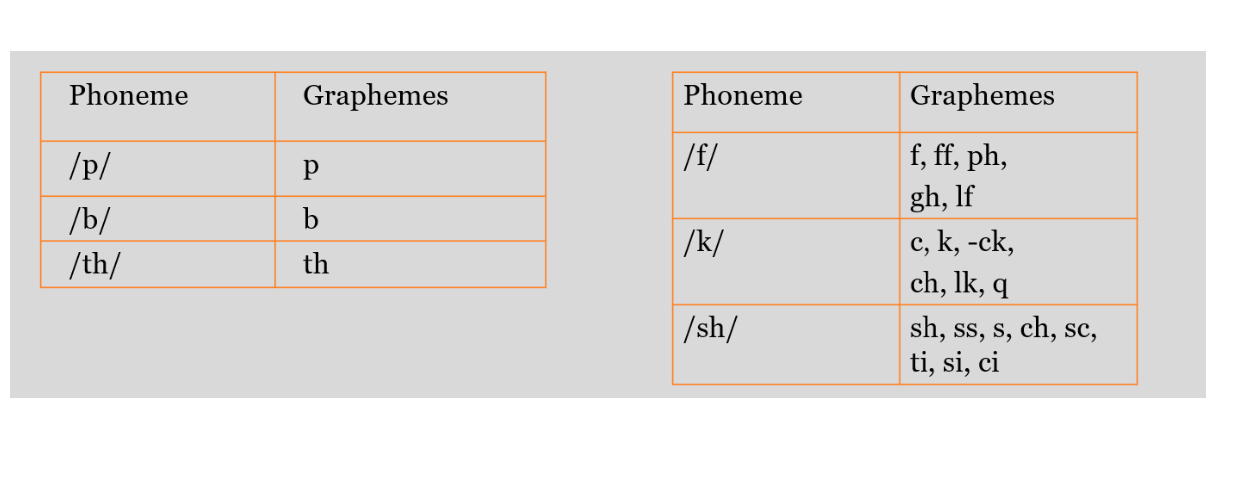
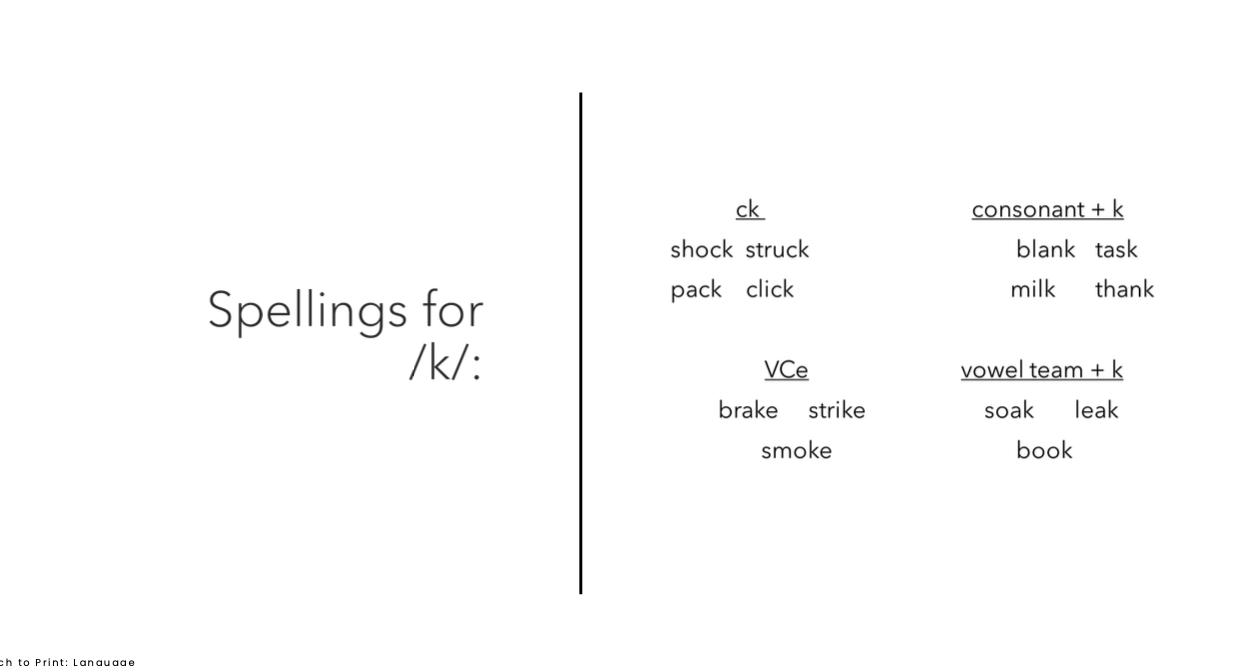
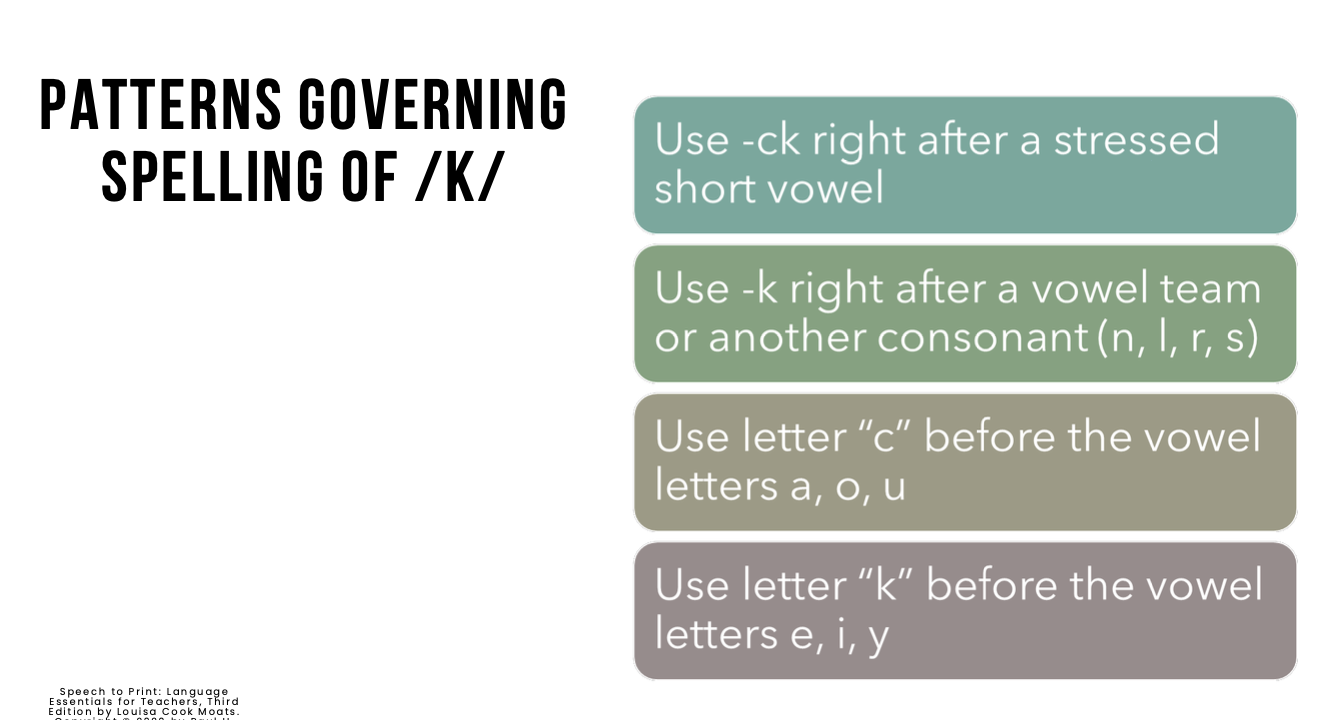
Patterns governing spelling of /k/
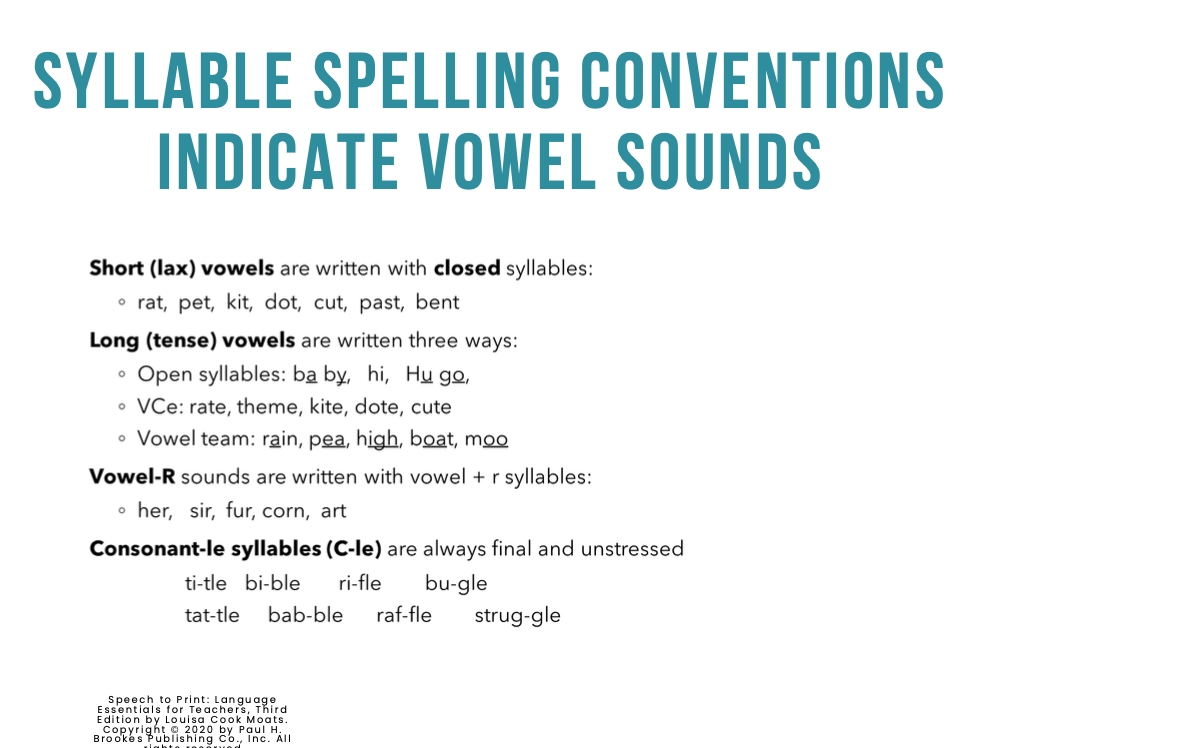
Syllable spelling conventions indicate vowel sounds
Phonemic Awareness for SPELLING. Treatment Strategy
if student has phonologically based spelling errors (e.g., PA errors)
Use SOUND STRINGS to link PA to spelling
example: google: The Prompt: The teacher says a word (e.g., "Ship").
Segmenting (Moving Beads): The student pulls one bead for every individual sound (phoneme) they hear.
For "Ship", they pull 3 beads:
/sh/.../ĭ/.../p/.
Mapping to Paper: The student places those 3 beads on a piece of paper.
Writing: The student writes the letter(s) that make each sound directly under each bead.
Under bead 1, they write sh.
Under bead 2, they write i.
Under bead 3, they write p
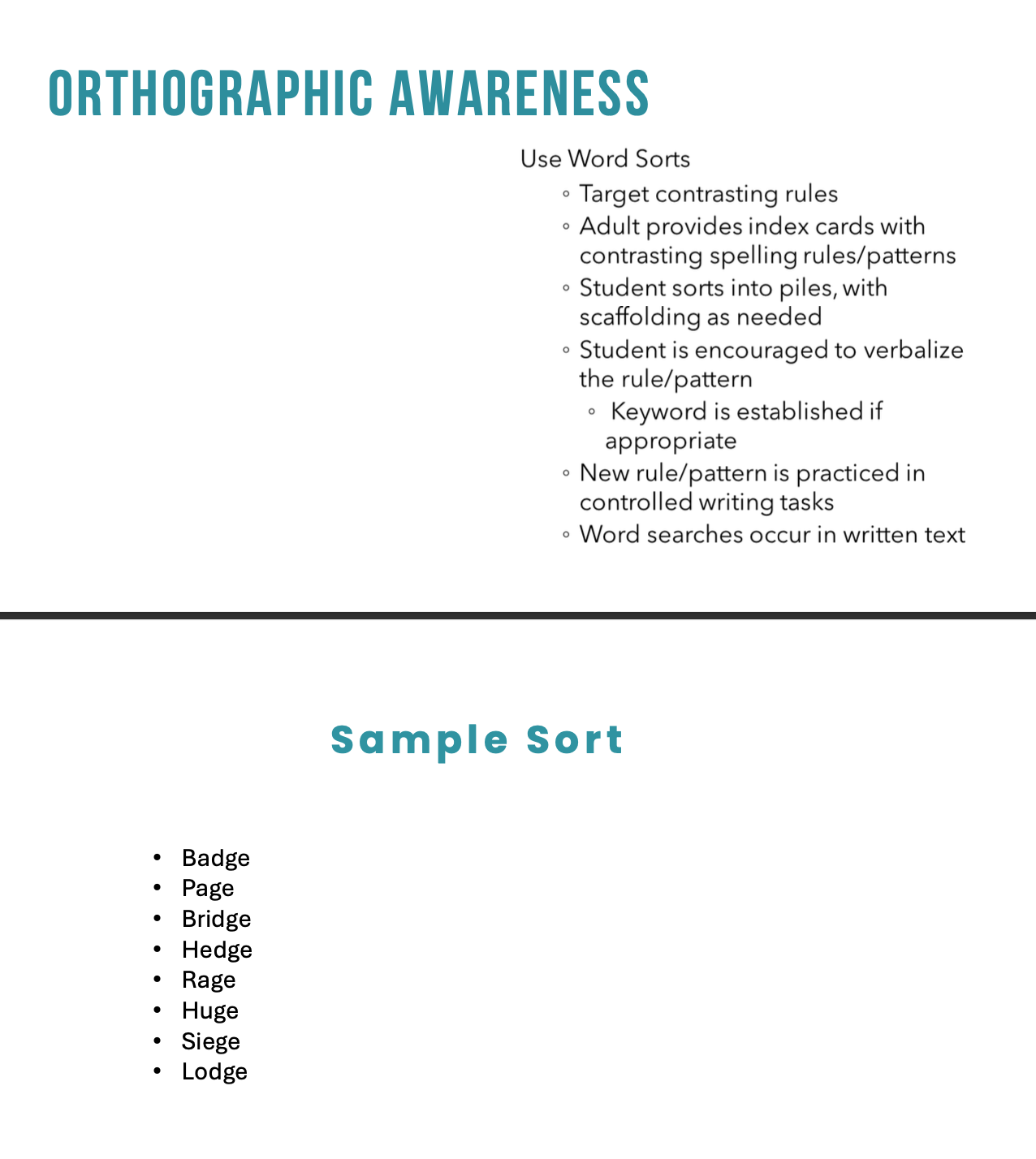
ORTHOGRAPHIC AWARENESS
MORPHOLOGICAL AWARENESS