Gains from Trade
 Call Kai
 Learn
Learn Practice Test
 Spaced Repetition
 Match
Match Flashcards
 Knowt Play
1/7

Earn XP
Name | Mastery | Learn | Test | Matching | Spaced | Call with Kai |
|---|
No analytics yet
Send a link to your students to track their progress
8 Terms
How can the rules of the game be set up to reflect how consumers and firms interact?
Firm decides how much stuff to produce, and sets a price
Consumers decide whether to buy. Judged from their WTP
Of course, other ways can exist, broadly speaking though, this is the most common way
‘Firm decides how much stuff to produce, and sets a price
Firm decides how much stuff to produce, and sets a price
Consumers decide whether to buy. Judged from their WTP
Using these rules, where can there exist gains from exchange?
-The firm can experience gains, as long as it makes a care at a cost less then the cost it takes to produce such goods
-The consumer can experience gains, as long as the price of the car is below their WTP.
What is consumer and producer surplus?
-Consumer Surplus: Consumer’s WTP - Price of the good, summed across all units sold
-Producer Surplus: Price of the good - Minimum price it would have sold it, summed across all units sold. Note, it is not the same as profit.
Where can consumer and producer surplus be seen on a graph?
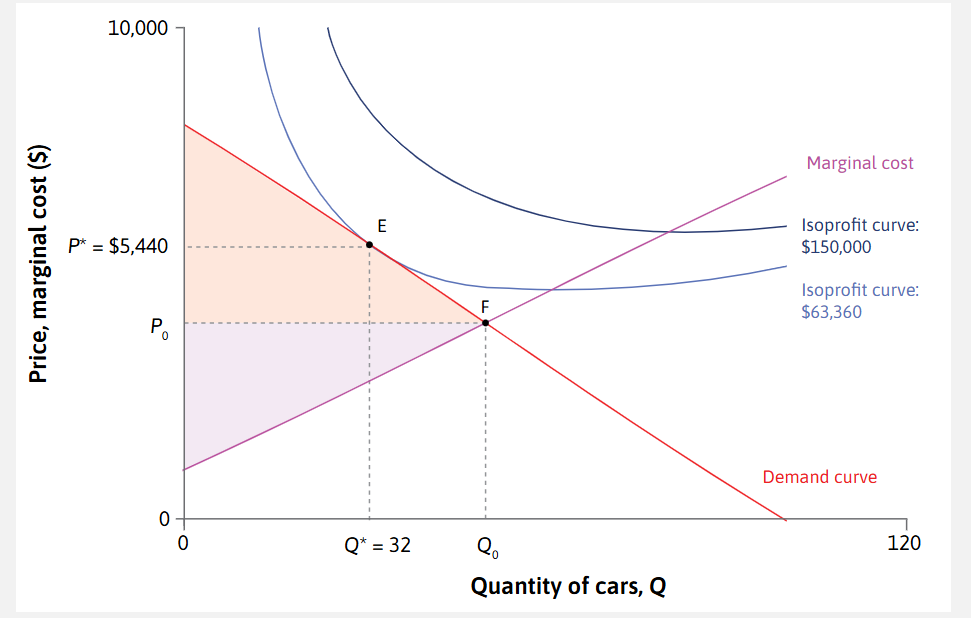
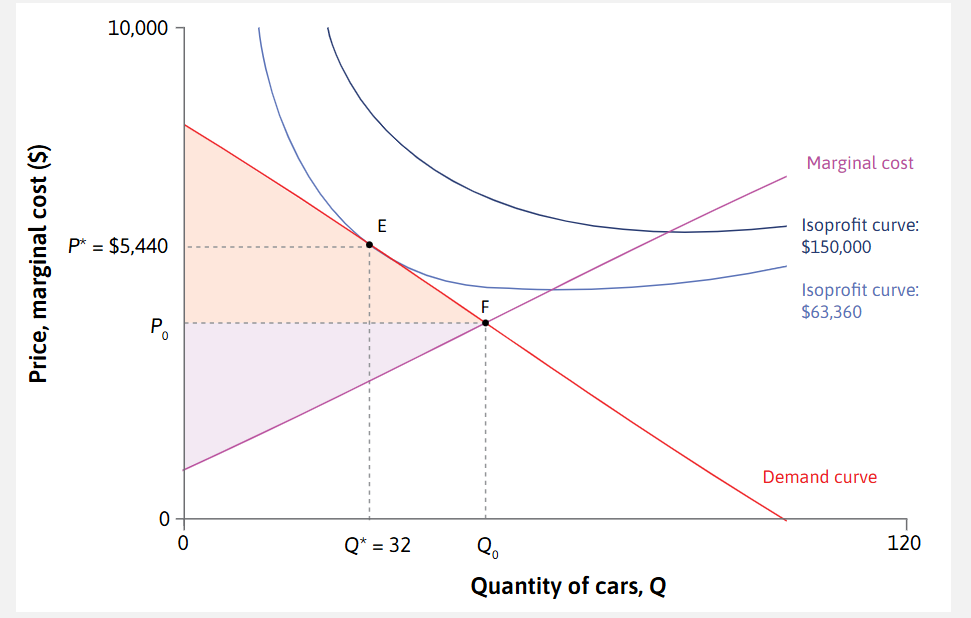
-Such that anything above the market price and below the demand curve = consumer surplus
-Such that anything below market price and above marginal cost = producer surplus
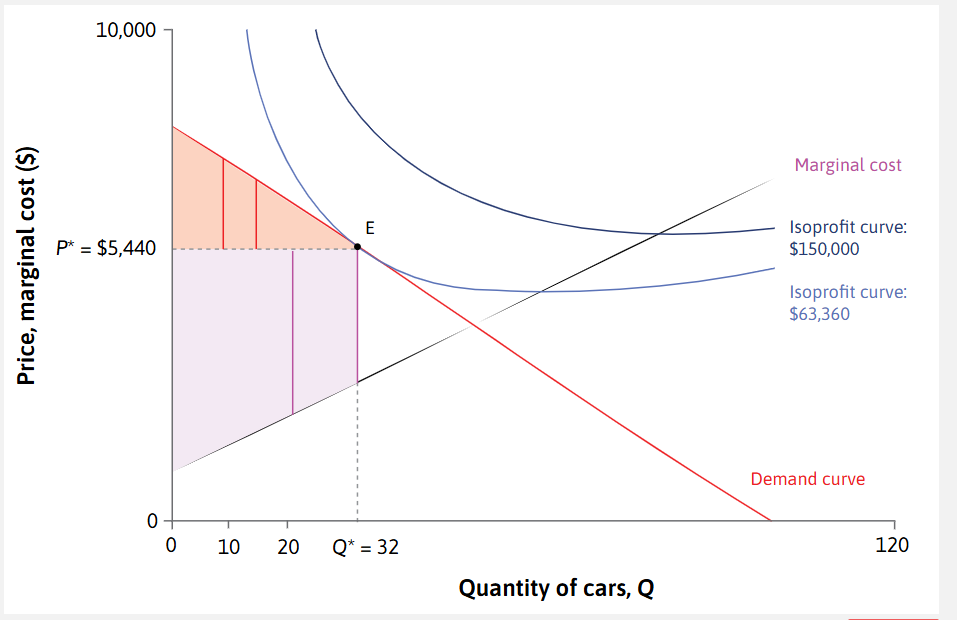
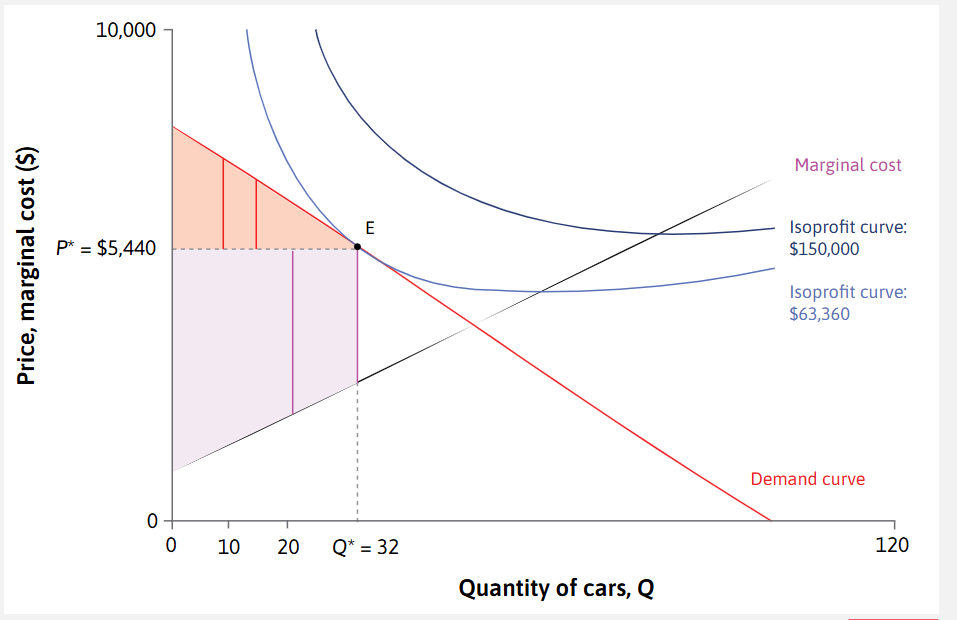
Why can this reflect an inequality in power?
-Because this firm has a downward sloping demand curve, this assumes it has the power to set the price where it pleases.
-Suggests that consumers have no other close substitutes to buy from, no way to get a better deal, as the firm may accept someone else’s order, thus weakening their power.
-Thus, the firm captures more of the total gains from trading. Consumers still have a slice though.
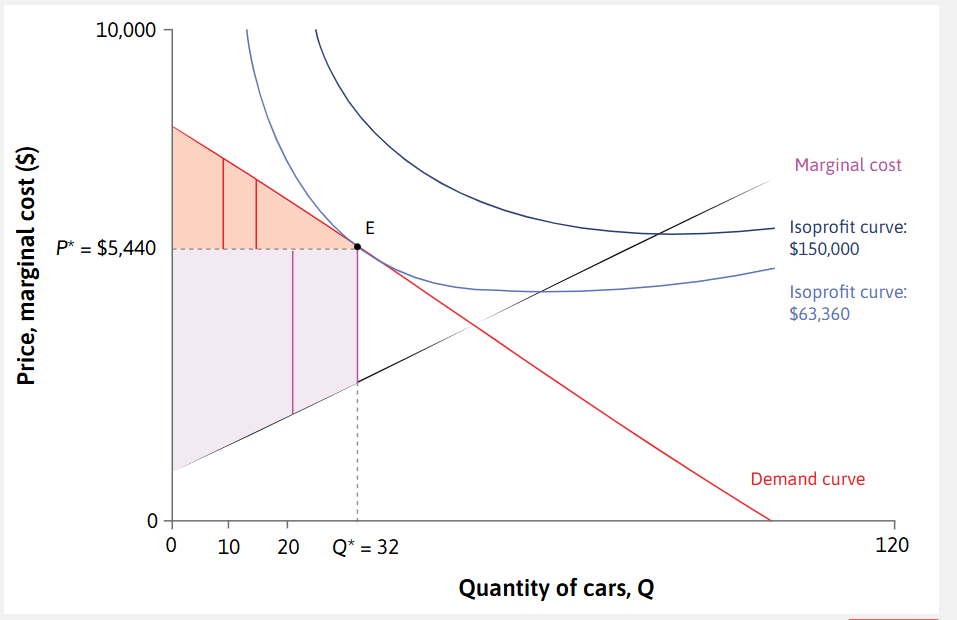
Is this allocation Pareto-Efficient?
No, because there exist some consumers who do not buy the firm’s products at the current price, but would be willing to pay more than it would cost the firm to make them.
-E.G: The next car it produces would be given to the 33rd consumer at a price lower than £5,440, but still far above the production cost to make one more car. The consumer gains, the producer gains (in revenue terms) and thus a Pareto-improvement can be realised.
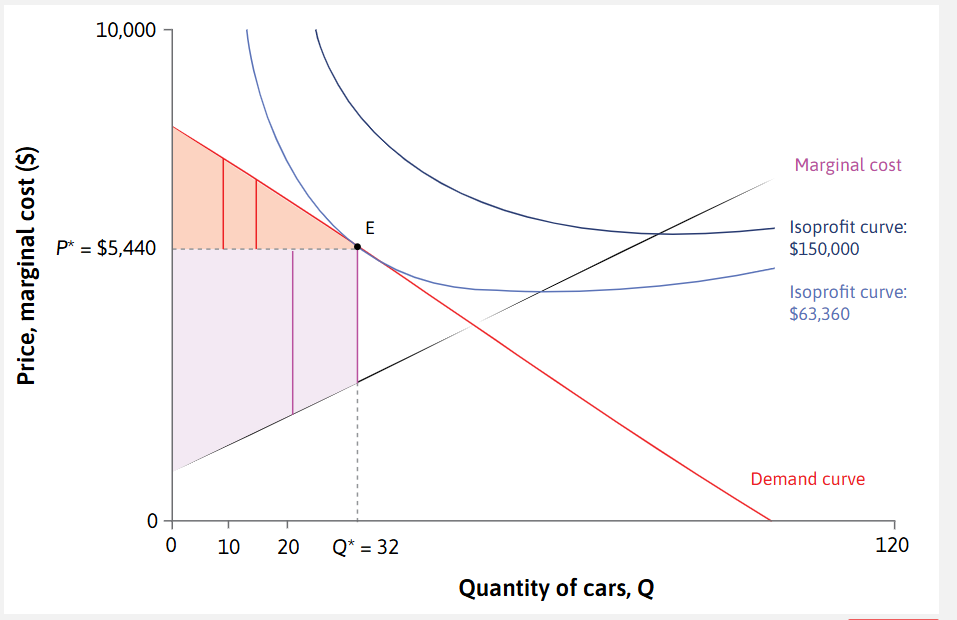
What if the firm chooses to produce at the point such that AR = MC?
-Consumer Surplus would benefit greatly - expanding significantly. However, producer surplus would actually fall
-Regardless, the total surplus is higher when the firm expands output, because the blanked out triangle is filled up.
-Because the firm cares for profit maxing though, that triangle will remain, thus resembling deadweight loss, which simply measures the amount of total surplus lost
Why wouldn’t the firm choose to produce at F?
-Because point E is the best the firm can do under the current rules of the game. It can only set one price for all consumers
-Therefore, the total surplus will always be restricted, because the price is kept high to maximise profit.
-But if it could, in theory, set a price that matched consumers’ WTP, then they may produce at F, but firms would capture all of the gains from trade.