Chapter 5: Eukaryotic cell structure
 Call Kai
 Learn
Learn Practice Test
 Spaced Repetition
 Match
Match Flashcards
 Knowt Play
1/36

There's no tags or description
Looks like no tags are added yet.
Name | Mastery | Learn | Test | Matching | Spaced | Call with Kai |
|---|
No analytics yet
Send a link to your students to track their progress
37 Terms
eukaryotes
prominent members of ecosystem
major human pathogens
two groups in microbiology:
protists
fungi
features of eukaryotic cells
membrane delimited nuclei
membrane bound organelles
allows to perform specific functions within the celland independent control of cellular processes
large intracytoplasmic membrane complex
a large surface area allowing greater respiratory and photosynthetic activity
serves as a transport system to move materials to different cell locations
eukaryotic cell envelopes
phospholipid bilayers with sphingolipids and sterols
lipids in the outer layer are different from those in the inner layer
cell wall composition:
polymers, cellulose, glucan, or chitin, while others have a rigid silica shell
cytoplasmic matrix
provides the complex structured environment required for many cellular activities
cytoskeleton
network of interconnected filaments and tubules important for motion and act as a scaffold for maintaining cell organization
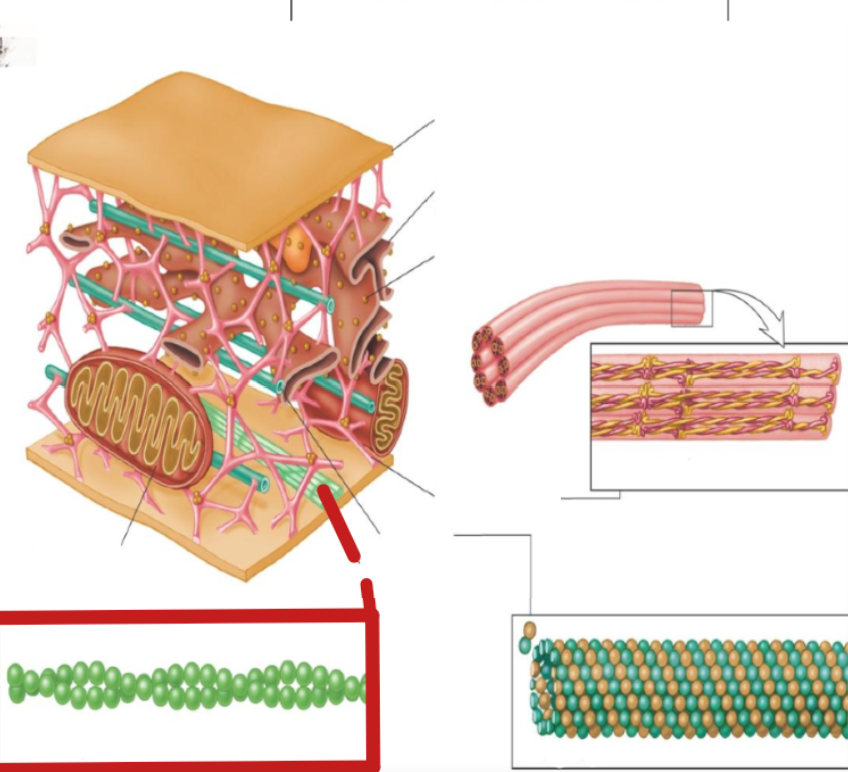
microfilaments
4 to 7 nm
composed of actin, may be scattered or organized into networks and parallel arrays
play a major role in cell motion and changes in cell shape
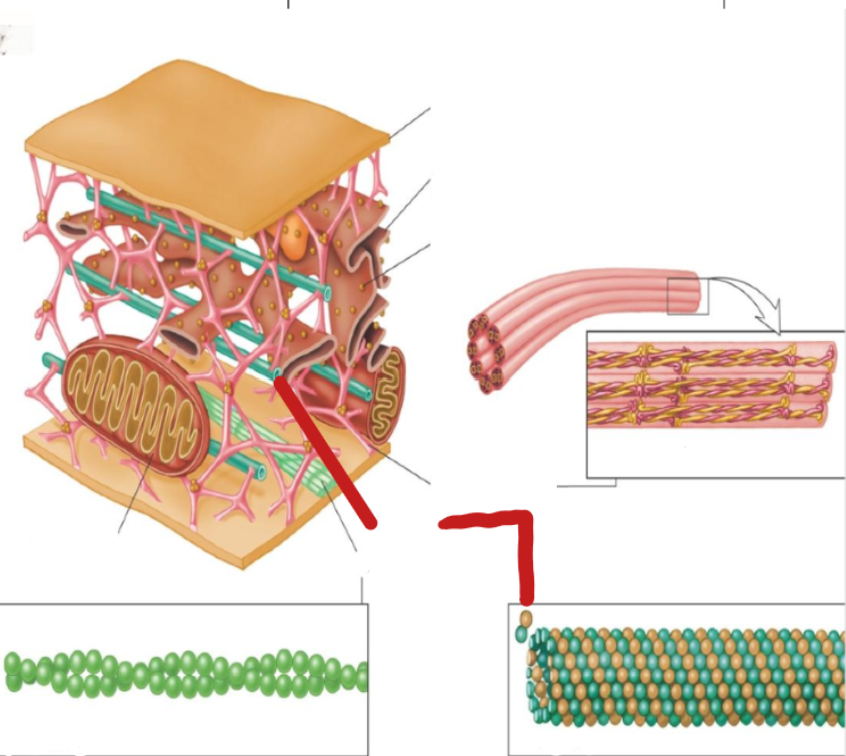
microtubules
hollow cylinders (25 nm) of tubulin help maintain cell shape, and are also involved with microfilaments in cellular movement
participate in the intracellular transport of substances, participate in organelle movements
from the mitotic spindle during cell division and present in cilia and flagella
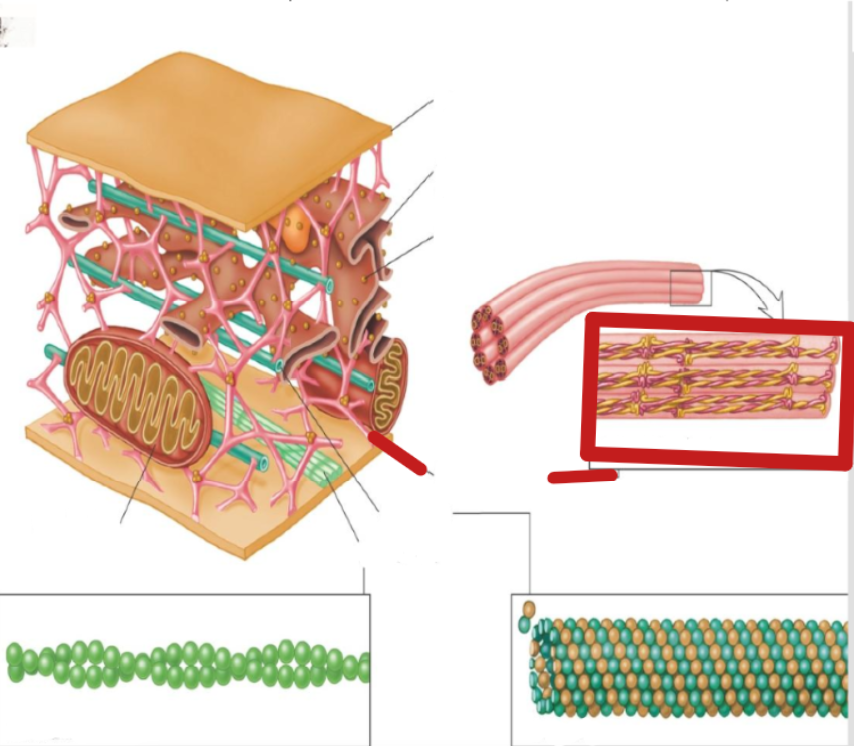
intermediate filaments
8 to 10 nm
major components of the cytoskeleton and are particularly prominent in the nuclear lamina
endoplasmic reticulum
complex interconnected array of internal membranous tubes and sacs that may have ribosomes attached
transports proteins, lipids, and other materials within the cell, and it is a major site of membrane synthesis
begins at the nuclear membrane
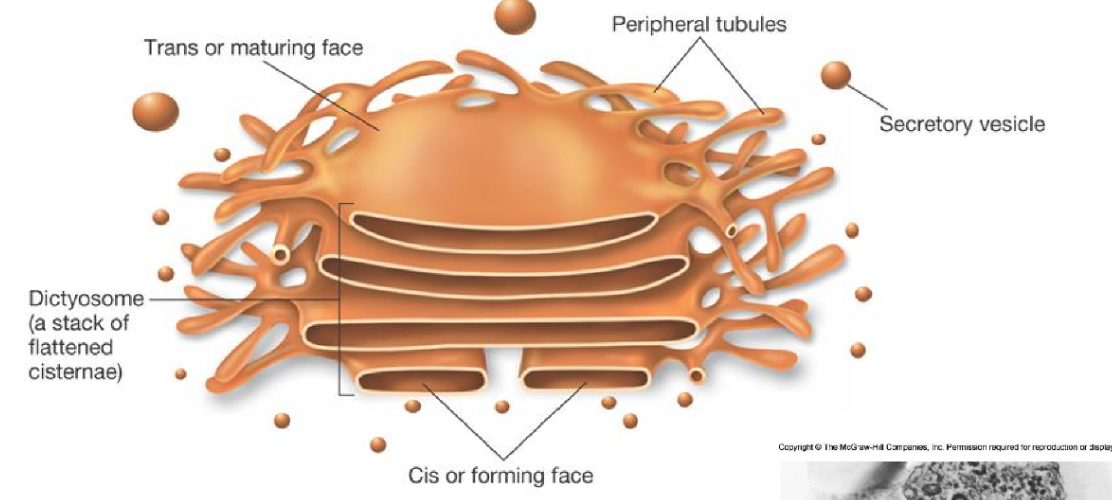
golgi apparatus
set of membranous sacs (cisternae) that is involved in the modification, packing, and secretion of materials
cisternae exist in stacks called dictyosomes
lysosomes
membrane-bound vesicles that contain hydrolase enzymes needed for intracellular digestion of all types of macromolecules
secretory pathway
the cellular machinery responsible for synthesizing, modifying, packaging, and transporting proteins and lipids
proteins are transported from the cell membrane, lysosomes, or secreted in vesicles that bud off the ER and join the face of golgi apparatus
proteins are modified and transported in vesicles off/away of the golgi apparatus
transport vesicles move the material to the cell membrane of lysosome
secretory vesicles fuse with the plasma membrane upon signal
endocytosis
process in which the cell takes up solutes or particles by enclosing them in vesicles pinched off from the plasma membrane
phagocytosis
endocytosis of large particles by engulfing them into a phagocytic vacuole
pinocytosis
endocytosis of small amounts of liquid with its solute molecules
three types:
fluid phase endocytosis
receptor mediated endocytosis using clathrin coated pits and vesicles
type of endocytosis that forms special vesicles (caveolae), contents are not degraded
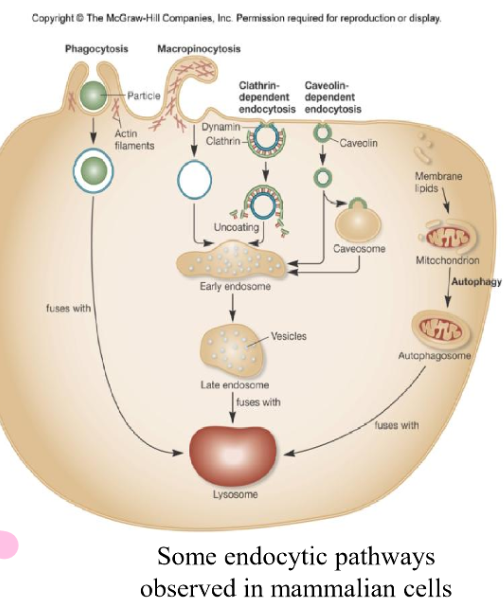
endocytic pathway
endocytosis
most endosomes fuse with early lysosomes
organelles involved in genetic control of the cell
nucleus and nuclear structure
house most of the genetic material of the cell
eukaryotic ribosomes
are 80S with 60S and 40S subunits either free or bound to ER
chromatin
dense fibrous material seen within the nucleoplasm of the nucleus; when dividing, chromatin condenses into visible chromosomes
nucleus and nuclear structure
chromatin
nucleus bounded by the nuclear envelope, a double membrane structure (two lipid bilayers) allows to be penetrated by nuclear pores = allow materials to be transported into or out of the nucleus
nucleolus is involved in the synthesis of rRNA and the production of ribosomes
eukaryotic ribosomes
are 80S with 60S and 40S subunits, either free or bound to ER
ER-associated ribosomes synthesize integral membrane proteins or proteins that are secreted out of the cell
free ribosomes synthesize nonsecretory, nonmembrane proteins
organelles involved in energy conservation
endosymbiotic hypothesis
mitochondria
hydrogenosomes
chloroplasts
endosymbiotic hypothesis
holds that the mitochondria, chloroplasts, and hydrogenosomes are derived from bacterial cells engulfed by host cells early in evolutionary history
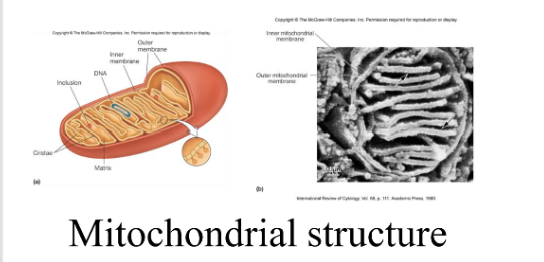
mitochondria
site of the TCA cycle and electron transport chain
an outer and inner membrane enclosing a fluid matrix
enzymes of the TCA cycle are within the matrix and ETC, and oxidative phosphorylation occurs only in the inner mitochondrial membrane
reproduce by binary fission and use their own DNA and their own ribosomes to synthesize some of their proteins
DNA and ribosome are similar to bacteria
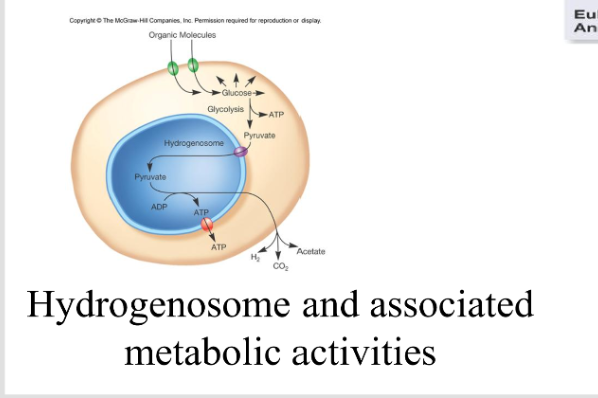
hydrogenosomes
small organelles in some anaerobic protists that conserve energy by fermentation and generate hydrogen
composed of a double membrane, they share some features with mitochondria
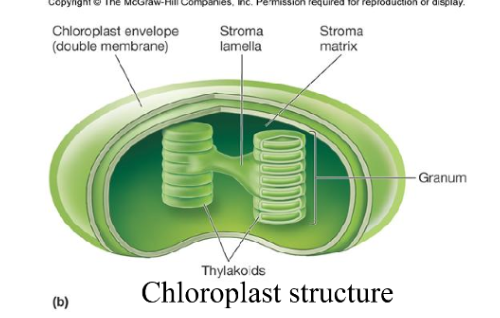
chloroplasts
site of photosynthesis in protists and higher plants
surrounded by two membranes
stroma: inner membrane encloses a fluid matrix
thylakoid: within the stroma is a system of flattened membrane sacs
grana: stacks of thylakoid
formation of carbohydrates from carbon dioxide and water occurs in stroma
trapping of light energy to generate ATP, NADPH, and oxygen occurs in the thylakoid in the grana
external structures in eukaryotic cells
cilia and flagella
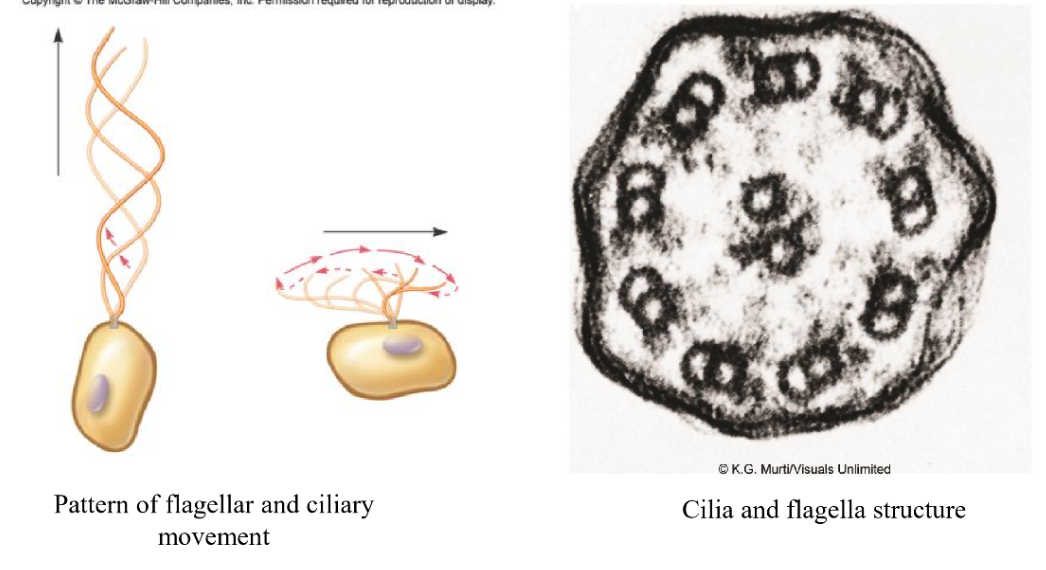
cilia and flagella
locomotor structures that differ in length and how they move the cell with cilia like oars and flagella like propellers
structurally similar, both membrane bound cylinders composed of microtubules in a 9+2 arrangement = embedded in a matrix, basal bodies have a 9+0 microtubule pattern
protist
single celled eukaryotes with specialized organelles
a cell membrane called the plasmalemma toward the center of the cell
gelatinous layer of cytoplasm, the ectoderm
fluid region of cytoplasm inside the plasmalemma, the endoplasm
aerobic chemoorganotrophic species have mitochondria
anaerobic protists lack mitochondria, cytochromes and the TCA cycle
many protists have flagella or cilia
protist encystment
protists can differentiate (simpler) into cysts, a dormant form with a cell wall and little metabolic activity
protects the organism from adverse environments
can be reproductive
used to transfer to new hosts
protist excystment
escape from cysts
triggered by a change to favorable conditions
protists reproduction
asexually by binary fission or budding
sexually by producing haploid gametes
conjugation: nuclear material exchanged between individuals
autogamy: genetically distinct nuclei in a single individual
fungal structure
thallus
yeast
mold
thallus
body or vegetative structure of a fungus
fungal cell walls are usually composed of chitin, a nitrogen-containing polysaccharide consisting of N-acetylglucosamine residues
yeast
unicellular fungus with single nucleus
reproduces asexually by budding or sexually by spore formation
daughter cells may separate after budding or may aggregate to form colonies
mold
fungus with long, branched, threadlike filaments
hyphae: filaments of a mold
coenocytic (no cross walls) or septate (cross walls)
mycelia: bundles or tangled masses of hyphae
fungal reproductive cells and structures: asexual reproduction
reproduction occurs by several mechanisms:
transverse fission
budding of somatic vegetative cells
sport production
hyphal fragmentation: resulting cells behave as arthrospores
sporangiospores: produced in a sporangium (sac)
conidiospores: enclosed spores produced at the hypha tip
blastospores: produced from a vegetative mother cell by budding
fungal reproductive cells and structures: sexual reproduction
union of compatible nuclei
homothallic: some are self fertilizing
producing male and female gametes on the same mycelium
heterothallic: require outcrossing between different but sexually compatible mycelial mating types
zygote formation proceeds by fusion of gametes of hyphae