Pharmacology exam 2
 Call Kai
 Learn
Learn Practice Test
 Spaced Repetition
 Match
Match Flashcards
 Knowt Play
1/204

There's no tags or description
Looks like no tags are added yet.
Name | Mastery | Learn | Test | Matching | Spaced | Call with Kai |
|---|
No analytics yet
Send a link to your students to track their progress
205 Terms
What is resting potential and what does it result from?
The resting potential is the baseline electrical charge across a membrane that is not firing. It results from unequal distribution of positive and negative charge across plasma membrane, difference in the permeability of a membrane to various cations and anions, and the action of active and passive pumps that help maintain ion gradients.
How does the Nernst potential help to explain resting potential? What is the main ion that contributes to resting potential?
The Nernst potential helps to explain the resting potential because the resting membrane potential is around -90mV, which is the Nernst potential for K+. K+ ions leave the cell due to the concentration gradient favoring outward movement until the inner charge is negative enough to stop further movement, due to this the main ion that is contributing to the resting potential is K+.
What pumps are most important for maintaining resting potential and how do they work?
Na+/K+ and Na+/Ca2+. The Na+/K+ pump is an antiport that uses active transport and utilizes 1 ATP to move three Na+ out of the cell, and two K+ into the cell. The Na+/Ca2+ is also an antiport that uses the Na+ gradient caused by the Na+/K+ pump to move three Na+ back into the cell and one Ca2+ out of the cell.
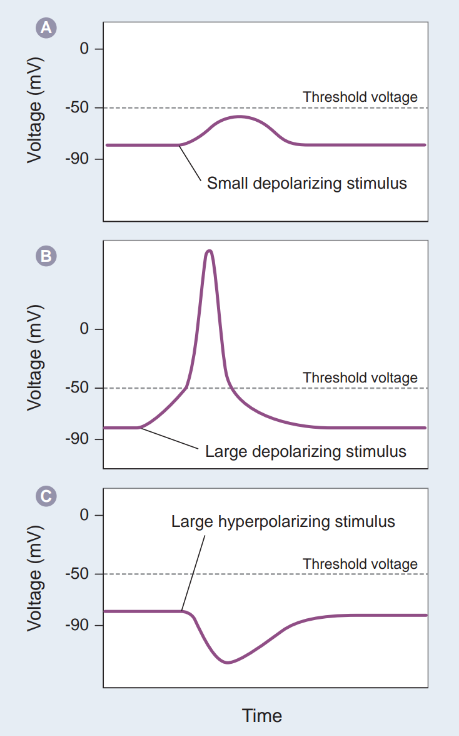
Explain an action potential using the voltage vs. time curve.
The action potential is the sharp gain in positive charge seen in the graph when the charge hits the threshold voltage. This caused by the voltage gated Na+ channels opening at that charge, before shutting off at the peak and the K+ channels opening, bringing us back down to the resting level.
What is a Stimulating stimulus vs a hyperpolarizing stimulus
A hyperpolarizing stimulus is a stimulus that pushes the voltage lower and away from the threshold, the stimulating stimulus pushes the charge up and towards the threshold.
Local anesthetics
Local anesthesia blocks sodium channels in peripheral and spinal neurons where the medication is administered. This inhibits the action potential propagation and prevents the transmission of pain.
K channel blockers
K channel blockers slow repolarization, and treat certain types of cardiac arrhythmias and in the future may be used to treat nerve conductive deficits secondary to demyelinating conditions such as MS or spinal cord injuries.
calcium channel blockers
Ca channel blockers prevent Ca2+ entry to neurons preventing vesicles from fusing. They are used to treat hypertension by relaxing the smooth muscle and lowering resistance in the vasculature. Some heart conditions can also be treated by selective blockers of cardiac Ca2+ channels, and other selective and highly potent Ca2+ channel blockers have been isolated from the venom of marine snails to treat severe cases of neuropathic pain.
tetrodotoxin
Tetodotoxin is the fugu neurotoxin. It has a high affinity for, and blocks voltage gated Na+ channels, preventing action potential, and causing paralysis if ingested in high enough amounts.
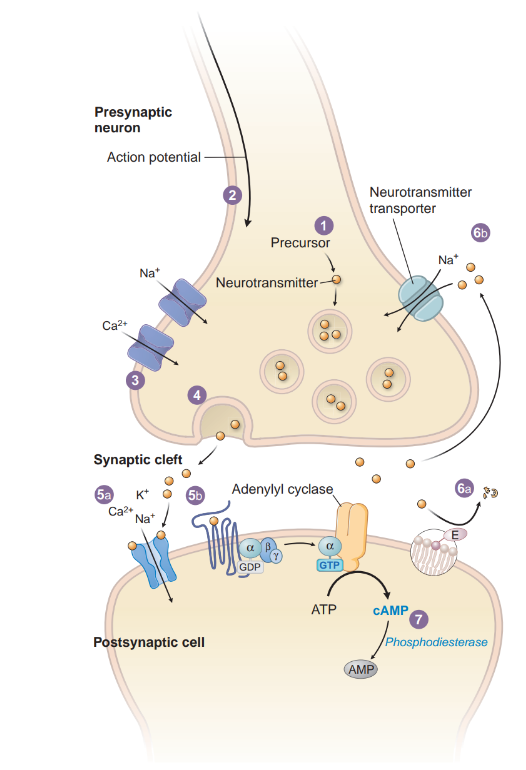
Explain and understand electrical transmission.
Electrical (or electrochemical) transmission is the process by which neurons communicate with one another by firing neurotransmitters through synapses. They do this, through the following steps: 1) the neuron synthesis a NT from a precursor and puts it into a vesicles. 2) the action potential that is traveling down the neuron depolarizes the presynaptic nerve terminal, leading to 3) the activation of voltage gated Ca2+ channels allowing entry to Ca2+. 4) the increase of Ca2+ Lets the vesicles fuse with the plasma membrane and release to NT into the synaptic cleft. 5) NT diffuses across the synaptic cleft and binds to one of two post synaptic receptors, 5a) an ionotropic receptor that causes channel opening and changes the permeability or the postsynaptic membrane to ions, or 5b) a metabotropic receptor on the postsynaptic cell activates intracellular signaling cascades. This can cause a signaling cascade that activates other ion selective channels. 6) signal termination is accomplished by the removal of transmitter from the synaptic cleft by either 6a) degradation via enzymes, or 6b) by recycling it into the presynaptic cell by reuptake transporters. 7) signal termination can also be accomplished by enzymes that degrade postsynaptic intracellular signaling molecules.
Which is the presynaptic neuron and which is postsynaptic? What is the synapse?
The presynaptic neuron is the neuron sending the NT, whereas the postsynaptic neuro receives the NT. The synapse is the junction between the two.
What occurs at the neuromuscular junction?
The motor neuron fires, releasing Ach inti the synaptic cleft. Ach then diffuses across the cleft and binds to a ligand gated ionotropic receptor. This increases the opening of ion channels for Na+ and K+ producing an inward Na+ current and depolarizing the muscle cell through EPSPs. Once the cell has been thoroughly depolarized and has reached the threshold, a muscle action potential is generated leading to muscle contraction.
What is an EPSP?
Excitatory postsynaptic potential. It depolarizes a cell, moving it closer to it’s threshold for action potential.
Difference in a clear core and dense core synaptic vesicle?
Clear core synaptic vesicles Secrete small organic neurotransmitters like Ach, GABA, glycine, and glutamate, they release after single AP, and have rapid chemical transmission. Dense core synaptic vesicles have peptide or amine neurotransmitters, are not found in an active zone, release following a train of impulses and have slow, modulatory, or distant signaling
What are synapsin and synaptobrevin?
Synapsin is an intrinsic membrane protein that binds to both the synaptic vesicle and actin. Synaptobrevin is a small protein that is anchored to vesicles membranes
Explain Ionotropic and metabotropic receptors. Give examples of each.
Ionotropic receptors such as nicotinic acetylcholine are composed of 4-5 subunits that form a ligand gated channel. The binding of the receptor causes a conformational change that opens the pore that lets ions through. The subunits composing the same functional receptor often differ between tissue types. Metabotropic receptors are similarly diverse, but most are G protein coupled receptors. Extracellular and cytoplasmic domains of these receptors differ significantly. For both types of receptors, their differences amongst themselves enable the development of agonists/antagonists that can either activate or inhibit specific subtypes of ionotropic or metabotropic receptors.
Explain how neurotransmitter is turned off? Metabolism vs reuptake.
NT are turned off by either metabolism or reuptake. Metabolism breaks things down the NT while in the synapse, where reuptake uses transport proteins to brings the NT back into the presynaptic neuron.
What is a Xenobiotic?
A foreign body that we put into a drug, such as a drug
True or False: the body can alter xenobiotics
True, the body can cause a beneficial change as with a prodrug, or change it to be harmful or ineffective
Drug metabolism is also called
Biotransformation
What does drug metabolism/biotransformation do?
It can change an active drug to an inactive drug, an active drug to either an active or toxic metabolite, an inactive prodrug into an active drug, or an uncreatable drug into an excretable metabolite
Although oral thrush is common in children, it is uncommon in adults and could be a sign that a provider should check for what?
HIV/AIDS
What is the main organ in drug metabolism?
the liver
How does the liver metabolize drugs?
It is first absorbed through the small intestines and is then sent to the portal vein to the liver where it is metabolized. This is called the first pass, and it must be taken into account when you dose a patient.
_________ can metabolize to some degree
All tissue
Although being lipophilic helps a drug to more easily pass through the cell membrane, it also does what when it is time for it to be excreted?
As a drug being lipophilic can make renal excretion difficult, since it is nonpolar and will not be able to properly dissolve in the urine, biotransformation must occur to enhance the drug’s polarity so that it can dissolve in urine, which is mostly water, a polar molecule.
a mechanism of biotransformation is redox reactions. What do they involve?
Redox reactions involve membrane associated enzymes in the endoplasmic reticulum in hepatocytes, as well as heme protein mono oxygenases of the cytochrome P450 class
75% of all drugs used today interfere in one way or another with what?
The metabolism of the cytochrome P450 class
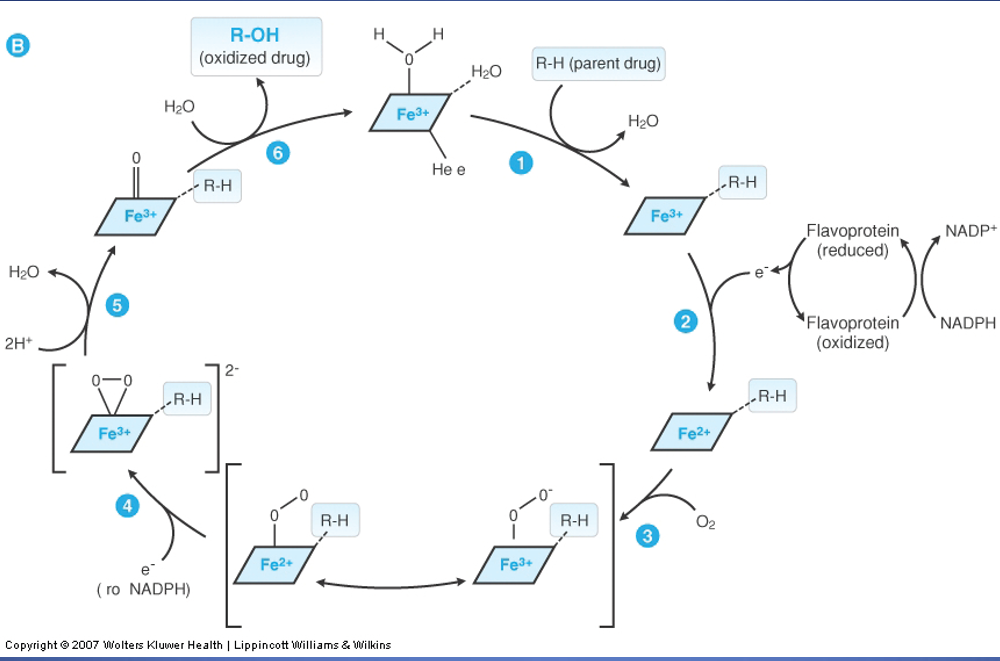
What is going on here?
In the first step the drug complexes with the oxidized P450. In the second step, NADPH donates electron to flavoprotein reductase which P450-drug complex. Third and fourth, oxygen joins the complex and NADPH donates another electron which is the oxygen/P450-drug complex. In the fifth step, iron is oxidized with the loss of water. In the sixth step, the oxidized drug product is formed
human P450s account for approximately 95% of what?
Oxidative metabolism of drugs
Why do most human P450s exhibit broad substrate specificity?
Because P450s are not binding at the active site, meaning that they do not need to be as specific
There are several non-P450 oxidative pathways, one such one is alcohol dehydrogenase. What does this do and why is it dangerous if methanol is ingested? How can we fix it?
Alcohol dehydrogenase oxidizes alcohols to aldehydes for excretion, with methanol, it is oxygenized to become formaldehyde (H2CO), which is highly toxic and causes sever tissue damage. The optic nerve is particularly sensitive to this. To treat the ingestion of methanol, we can use ethanol. This acts as a competitive antagonist, and if given enough ethanol, it will outcompete the methanol.
Tell us the highlights of conjugation/hydrolysis
This is a method of biotransformation that acts as the second set to modify for excretion. The enzymes for this are found in the liver and almost always serve to inactivate a drug. Neonates do not have the ability to fully carry out these types of reactions.
Neonates do not have the ability to fully carry out conjugation reactions, as such, they lack the enzyme UDP-glucuronyl transferase at birth which conjugates bilirubin in the liver for excretion. What can this lead to if the body is unable to convert and excrete the bilirubin?
The neonate’s inability to conjugate bilirubin can result in jaundice. The buildup of unconjugated bilirubin causing the jaundice is very lipophilic. This prevents renal secretion, but allows it to very easily get past the neonates weak blood brain barrier and bind to the brain. This can cause sever damage to the central nervous systems such as bilirubin encephalopathy or kernicterus.
How can we treat neonatal jaundice?
To treat this we can use phototherapy in the form of UV lights to convert bilirubin to an excretable form as well as barbiturate phenobarbitol which induces UDPGT. In many cases both are used together, usually favoring the UV light, however as the medication can be dangerous for the neonates.
Although lipophilic drugs can passively cross cell membranes, other drugs need to be transported into the cell by transporters. What does this and what are the benefits or drawbacks?
Multi-drug resistance protein 1 or P-glycoprotein actively transports drug back into the intestinal lumen. This limits bioavailability.
The metabolism of drugs from the portal circulation (i.e., the first-pass effect) often requires the transport of compounds into hepatocytes. This is done by what?
Organic anion transporting polypeptide (OATP) and organic cation transporters (OCT)
Organic anion transporting polypeptide (OATP) and organic cation transporters (OCT) are relevant for what reasons?
They are relevant for the metabolism of HMG-CoA reductase inhibitors (statins) through the thought that they are the rate limiting step in their clearance. They also keep drugs out of the systematic circulation which otherwise might be taken up by the muscles for toxic effect.
Organic anion transporters are also responsible for what?
They are responsible for the secretion of anionic drugs such as beta lactams, NSAIDS, and antivirals into the nephrons to then be urinated out.
Induction of P450 activates it. What are the mechanisms for this?
The primary mechanisms are the increase in translation, decrease in degradation, or most commonly the increase in transcription. Things like drugs, pollutants, chemicals, and food can also induce P450the
How does the induction of P450 happen?
First something binds to the receptor, activating it. The receptor is then translocated to the nucleus where it binds to promoters of biotransformation enzymes
A drug can increase its own metabolism. What is an example of this?
Carbamazepine, which is an antiepileptic drug. It induces P450 3A4, which is metabolized by P450 3A4, increasing its own metabolism. This means that it steadily metabolizes itself faster and faster, and the dose needed for therapeutic effects to occur has to be steadily raised until it hits the toxic dose
What is one of the major problems that we think about when giving a drug?
One of the major things that we think about is that a drug con increase the metabolism of a coadministered drug.
True or False: Induction doesn’t produce toxic levels of reactive drug metabolites
False, inductions does produce toxic levels of reactive drug metabolites, resulting in tissue damage and other side effects.
If you have two drugs, the first of which induces Cyt P450 and the second that is metabolized by that P450, what do we do dose wise with that second drug?
We would increase that second drug.
Inhibition decreases the metabolism of drugs. Describe it.
It can allow drug levels to reach toxic effects and prolong the presence of active drug in the body. This can be competitively or irreversibly inhibited and have therapeutic advantages such as with the HIV drug lopinavir that alone cannot reach therapeutic levels due to first pass, but when paired with ritonavir which inhibits P450 3A4 lopinavir can reach therapeutic levels.
Drug transporters also have the chance to be inhibited. MDR1 can be inhibited through macrolide antibiotics, causing what?
This causes increased serum levels of drugs such as digoxin, meaning you would need to give a patient a smaller dose.
MDR1 is transcriptionally regulated by PXR, upregulation of this pathway leads to what?
Increased transcription of MDR1
If you take a drug that inhibits MDR1 what should you do to the dose and why?
You should give less drug because MDR1 gets rid of drug, so the inhibition can lead to build up and reduced clearance
If you take a drug that induces MDR1 what should you do to the dose and why?
You should increase the dose because MDR1 is getting rid of more drug when induced causing it to be cleared from the body faster
Prodrugs are metabolized into what?
Their active therapeutic forms
If you have a prodrug that is active once undergoing first pass, how would this affect the way that you used this drug in cell line experiments?
You would need to increase the dosage, or get the active form for the experiments.
The strategy of selective prodrug activation is exploited in cancer therapy, such as with Mitomycin C. How does it work?
Mitomycin C is a naturally occurring compound that is activated to a powerful DNA alkylating agent after it is reduced by several enzymes including a cytochrome P450 reductase. Mitomycin C selectively kills hypoxic cancer cells in the core of solid tumors because these cells have increased levels of the cytochrome P450 reductase that activates mitomycin C and reoxidation of the drug is inhibited under hypoxic conditions.
What is a toxic metabolite?
A toxic metabolite is a biotransformation product of a drug that causes cellular or tissue damage instead of helping with elimination or therapeutic effect. Acetaminophen is an example of this as in supratherapeutic levels it causes hepatotoxicity and death.
Pharmacogenomic is a huge area of pharmacy, what does it let us do?
It lets us look into the genetics of an individual and see what drugs would work and which ones would harm them
1/2000 Caucasians have an alteration in cholinesterase, an enzyme that breaks down acetylcholine. What can this cause to happen if you are given succinylcholine during surgery?
The muscle relaxant succinylcholine is metabolized by cholinesterase, with the alteration it has a 1000 fold reduced affinity for succinylcholine. This leads to a slowed elimination and increase in circulating drug which leads to respiratory paralysis and death. Although the relatively commonality of this mutation, people are only tested for it if they have a family member who had died from it.
The drug that Ms. B is put on for TB, isoniazid, can have the pharmacogenomic effect of the decrease synthesis for metabolism of the drug, leading to a build up in the system. The chance of being a slow acetylator and this happening is 45% in whites and blacks in the US, and 10% of Asians. What can this cause?
This can cause the blood levels of isoniazid to be elevated 4-6 times higher in these slow acetylators, and cause them to be more susceptible to adverse drug interaction because of P450
True or false: in certain races and ethnicities, there can be greater chances of certain polymorphisms in certain genes
True, for example, P450 2D6 is inactive in 8% of Caucasians, but only 1% of Asians, and African Americans have a even higher frequency of this (causes the inability to break down certain drugs). This is clinically relevant as this is responsible for 20% of drug oxidation.
Isosorbide dinitrate and hydralazine (BiDil) is a vasodilator, and causes a 43% reduction in mortality in heart failure, but for only one race. What is this one race?
African Americans
Many reactions are _______ in young children and the elderly
Slowed
What is gray baby syndrome?
It is caused by infants being infected with Hemophilus influenza and then being treated with the antibiotic chloramphenicol. As excretion requires oxidation which forms a toxic product followed by conjugation —which babies cannot do. Without the conjunction leading to the excretion of the drug, toxic levels of the oxidized form build up, leading to shock and circulatory collapse leading to a lack of blood flow and a gray appearance in the babies.
The elderly have a general decrease in metabolic capacity. What are the reasons for this?
Age related decreases in liver mass, hepatic enzyme activity, and hepatic blood flow
Although gender differences are not well understood, there are some differences that are anecdotally reported in women. What are they?
Decreased oxidation of ethanol, estrogens, benzodiazepines, and salicylates
Diet and environment and induce or inhibit the P450 system. One such drink that can have many effects is grapefruit juice. Describe what it does.
Grapefruit juice inhibits P450 3A4 and MDR1, it significantly decreases first pass metabolism, increases absorption for drugs that use MDR1, and many other inhibitors, antibodies, and channel blockers.
Varying levels of nutrition, stress, and pollutants can all do what?
They can all alter endogenous substances needed for conjugate reactions, leading to a potential buildup of drug and toxic effects
What effect can antibiotics have on contraception?
The P450 enzyme can be induced, can make estrogen based contraceptives ineffective
True or False: Herbal supplements do not have negative reactions with drugs
False, many do, such as the supplement St. John’s Wort, which has an induction of P450 similar to antibiotics with birth control.
What is tolerance?
When a drug induces its own metabolism and reduces efficacy over time
Two or more drugs metabolized by the same hepatic enzyme results in higher serum levels of both drugs. Why is this?
Because there are only so many receptors, so if two are going for the same one they have to compete for it, leading to there being less bound and more free floating drug.
What can the mechanisms of drug-drug interaction include?
Competitive substrate inhibition, allosteric inhibition, and irreversible enzyme inactivation, all of which can lead to toxic effects
Why was the drug cisapride, an antiulcer drug, pulled from shelves in 2000?
Because when it was taken with the common antibiotic erythromycin it could inhibit HERG potassium channels in the heart, leading to fatal arrhythmias.
Because the liver is the main site of biotransformation, many diseases like hepatitis, cirrhosis, cancer, hemochromatosis, and fatty liver, can significantly compromise drug activity. What is impaired, and what may need to be done to a medication dose?
It impairs P450 and other enzymes, and the dose may need to be lowered
Cardiac diseases can cause issues with drug delivery, especially for drugs like lidocaine and morphine that is dependent on drug delivery to the liver. Why is this?
Because it reduces hepatic blood flow, so high‑extraction drugs like lidocaine and morphine cannot be delivered to the liver for metabolism, causing decreased clearance and increased toxicity.
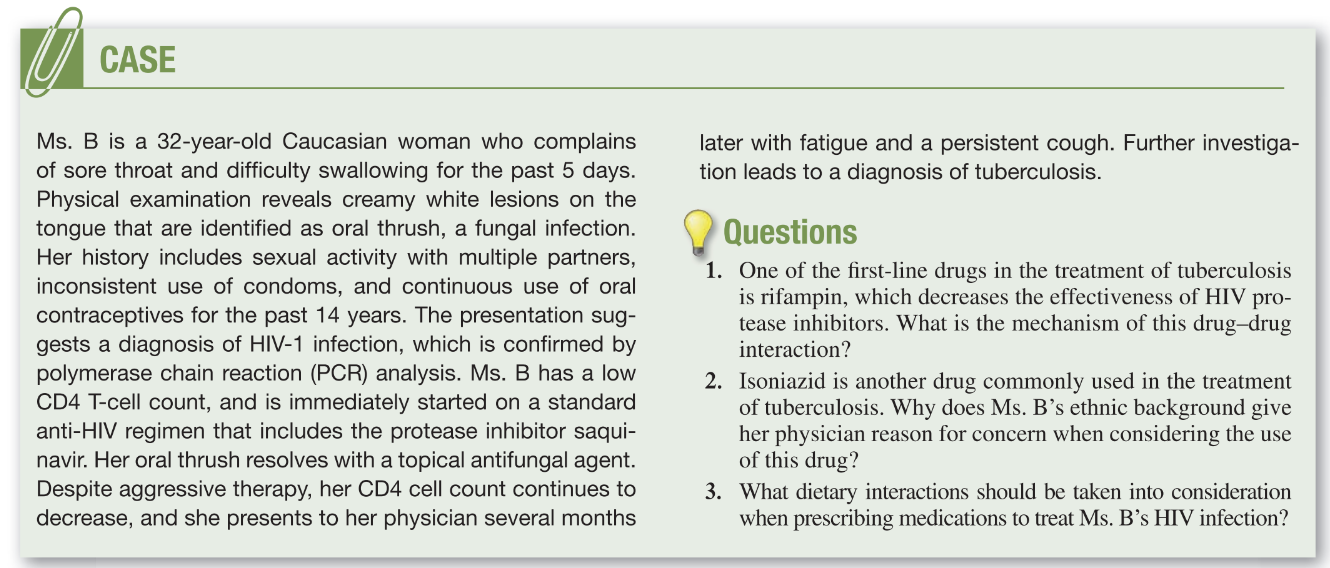
Many factors influence normal drug metabolism and transport. As her physician consider the most appropriate drug regimen to treat both Ms. Bs acute tuberculosis and her underlying HIV disease, what factors might he consider?
The metabolism of saquinavir will be enhanced by the administration of antituberculosis agents
One of the first-line drugs in the treatment of tuberculosis is rifampin, which decreases the effectiveness of HIV protease inhibitors. What is the mechanism for the drug-drug interaction?
Rifampin induces the activity of the P450 3A4 enzyme
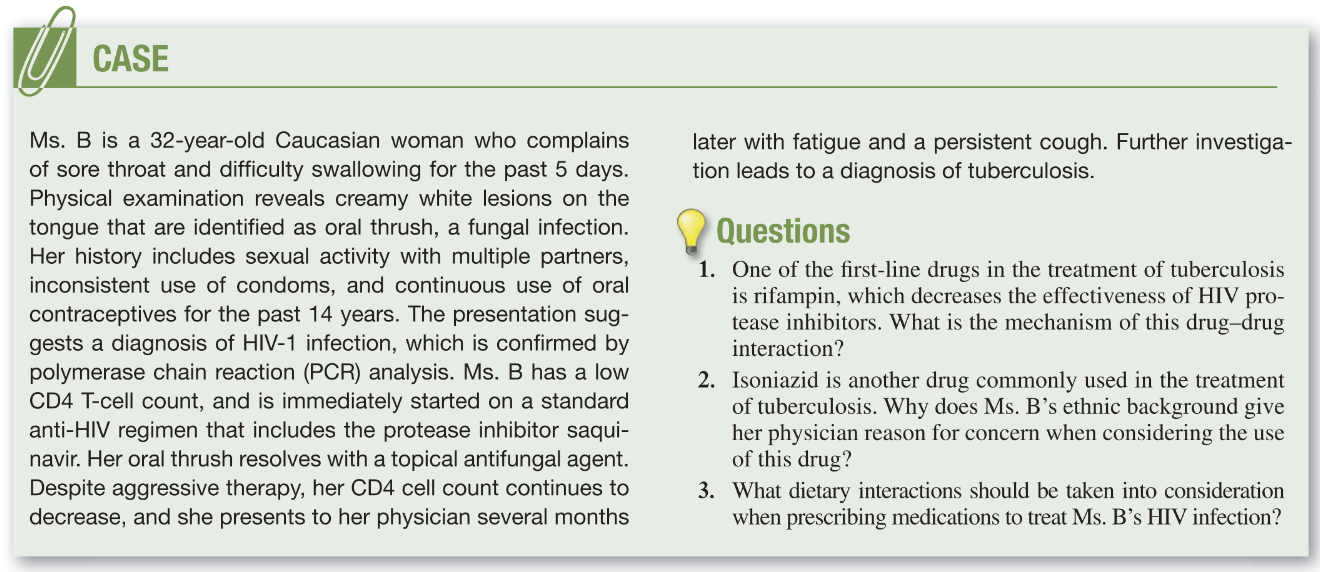
Isoniazid is another drug commonly used in the treatment of patient with tuberculosis. Why does Ms. Bs ethnic background give her physician reason for concern when considering the use of this drug?
If Ms B is a slow acetylator, she is at risk for isoniazid-associated drug toxicity
Some drugs are absorbed from the GI tract and transported by the portal system to the liver, where they are metabolized. Their subsequent bioavailability may be lowered. This is called
First-Pass effect
Oxidation/Reduction Reactions take place primarily within the
Endoplasmic reticulum of hepatocyte
What does the peripheral nervous system encompass?
All nerves traveling between the CNS and somatic and visceral sites, the autonomic nervous system (involuntary), and the sensory and somatic nervous system (voluntary)
What does the central nervous system encompass?
The brain, brain stem, and the spinal cord. It relays information from the PNS, and deals with perception including sensory, auditory, and visual processing, wakefulness, language, and consciousness.
The autonomic nervous system
controls the involuntary responses of the smooth muscles and glandular tissue, and the sympathetic and parasympathetic nervous systems. It also has two neuron pathways, preganglionic and postganglionic.
The sympathetic system handles what?
The fight, flight, or freeze response
The parasympathetic system handles what?
Rest and digest. This is when the body is at rest, the heart rate is lowered, and you are digesting your food.
What are the key features of the peripheral motor and sensory nerves
The fibers of the nerves supply their targets directly, they regulate voluntary movement, and have the neuromuscular junction which is the special synapse where a motor neuron talks to a muscle fiber.
What are the different parts of the brain are in the CNS?
Cerebral hemispheres, diencephalon, cerebellum, and the brainstem
What does the cerebral handle?
High level function and decision making. Many drugs can alter this.
What is the diencephalon encompass and what does it handle
The thalamus and hypothalamus and hunger, temperature, and emotion
What does the cerebellum handle?
It maintains balance, eye movement, hand eye coordination. Alcojol interferes with it as it can get past the blood brain barrier.
What does the brain stem handle?
breathing, heart rate, coughing, vomiting, and swallowing
What are the only neurotransmitters that the PNS use?
Norepinephrine and acetylcholine
True or False: The CNS only uses norepinephrine and acetylcholine as neurotransmitters
False, the CNS uses a wide variety of NT and neuroactive peptides
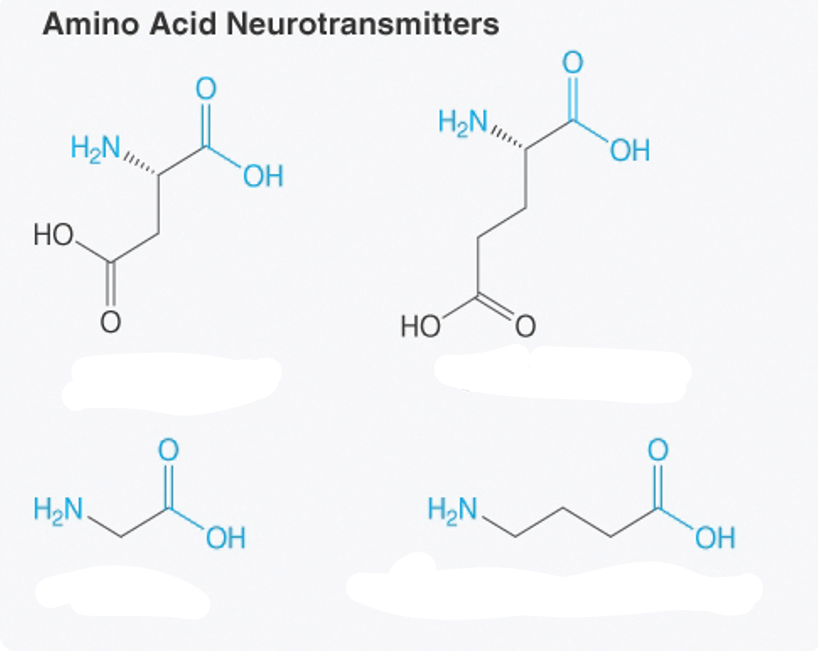
What are the amino acid neurotransmitters?
Aspartic acid, glutamic acid, glycine, and y-aminobutyric (GABA)
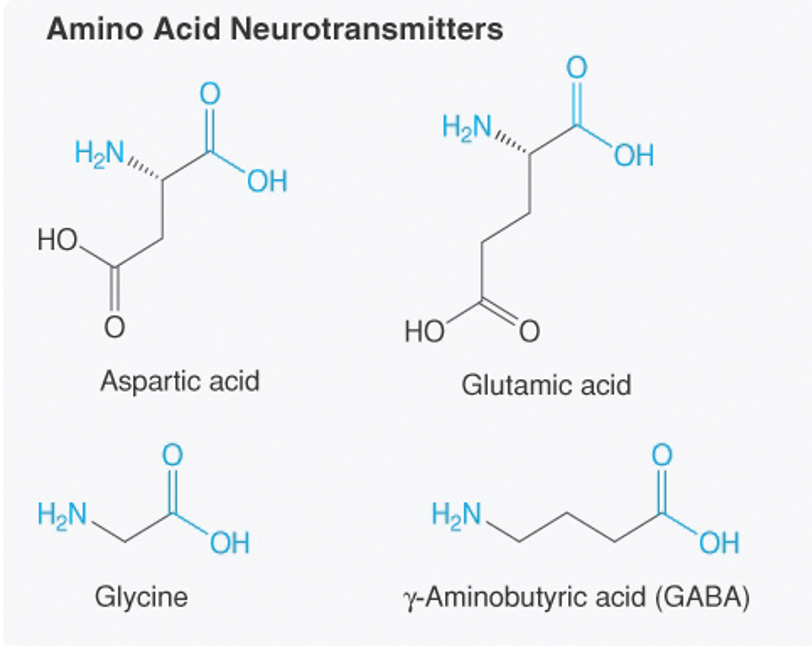
What are the acidic AA and what do do?
Glutamate and aspartate, they are primarily excitatory
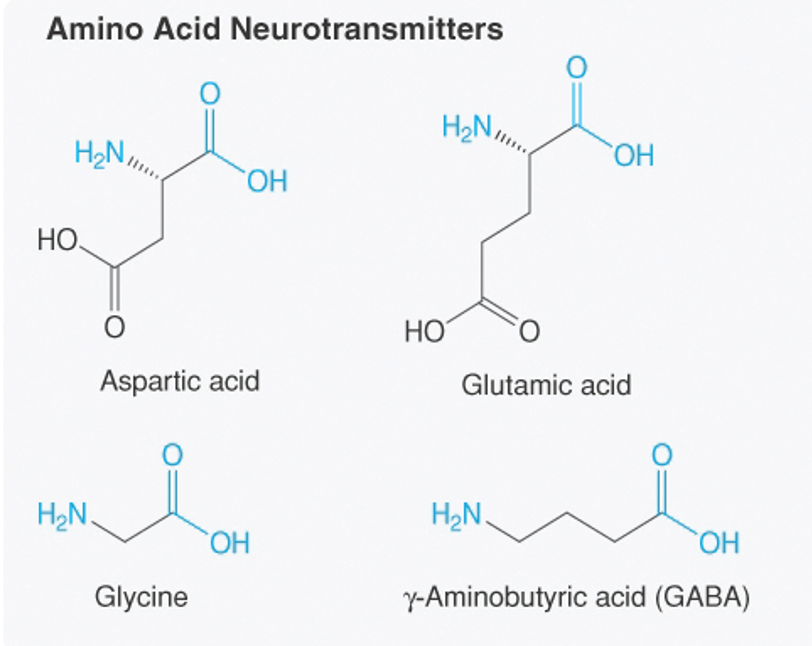
What are the neutral AA, and what do they do?
GABA and glycine, they are primarily inhibitory
Tell us about the AA neurotransmitter glutamate
It is the primary excitatory NT. It has both ionotropic (ligand gated ion channels) and metabotropic (anything not ionotropic) receptors. Excessive excitation caused neuronal damage after strokes. Although there is currently few drugs for its receptors due to the AA being ubiquitous, there is currently pharmacological research being performed.
Tell us about the AA neurotransmitter GABA
This is the primary inhibitory NT. Barbituates and benzodiazapines bind its receptor by allosteric mechanisms allowing for Cl- to come in and slow the brain down
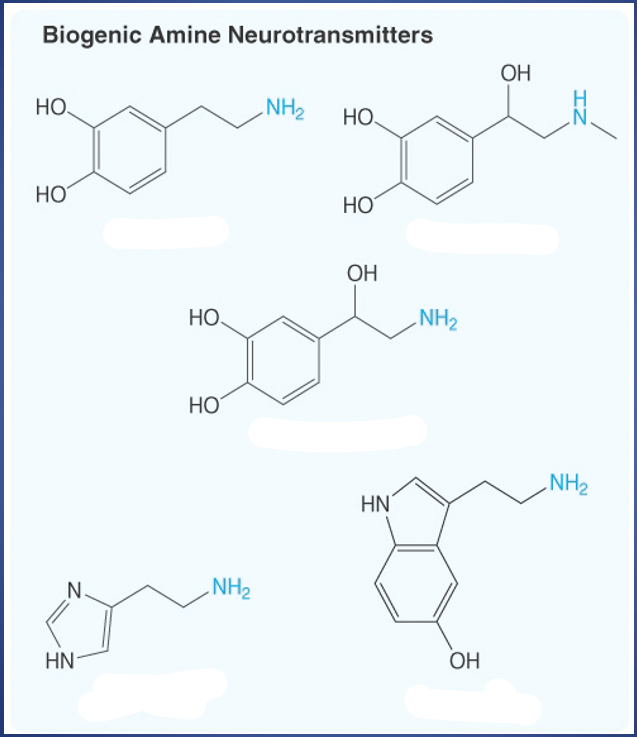
What are the biogenic amine neurotransmitters?
Dopamine, epinephrine, norepinephrine, histamine, and serotonin
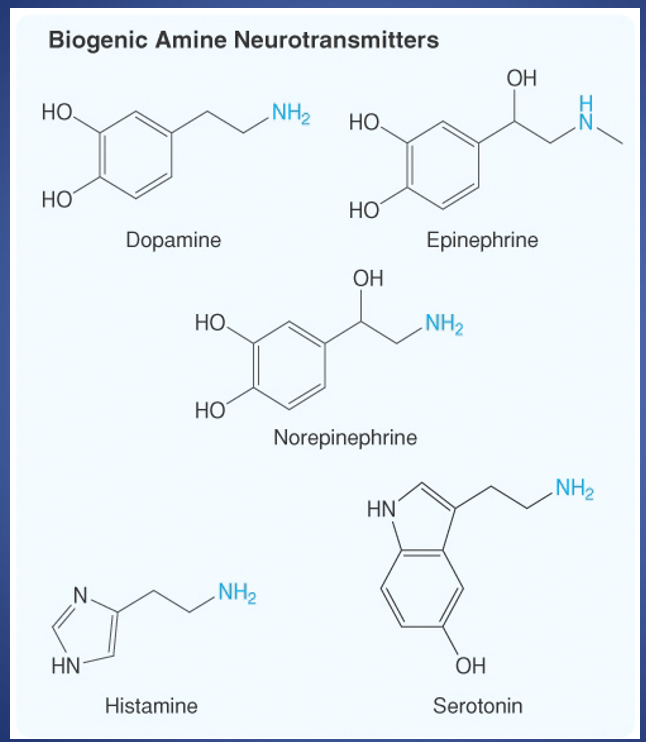
Tell us about biogenic amines
They modulate complex CNS function such as alertness and consciousness + memory and pleasure. In the PNS, norepinephrine is released to effect sympathetic response. In the adrenal medulla which is a type of neuroendocrine tissue, epinephrine is released in response to stress. All of these molecules are synthesized from AA, and there are three categories based on the precursor AA.
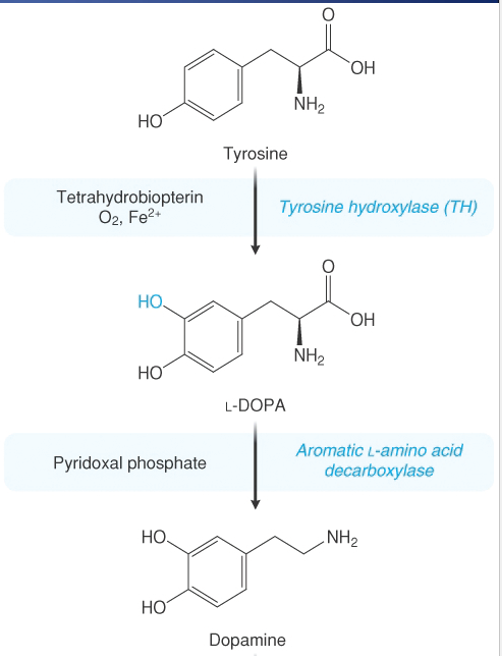
Tell us about the biogenic class of catecholamines
They are derived from tyrosine, oxidized to form L-DOPA.
Dopamine itself cannot cross the blood brain barrier. This can cause issues when we need to treat certain ailments like Parkinson’s. How do we manage to get this molecule into the brain via drugs?
We start with a tyrosine, we then oxidize it using the enzyme tyrosine hydroxylase (TH) to create L-DOPA. This can cross the blood brain barrier, and then interact with pyridoxal phosphate and the enzyme aromatic L-amino acid decarboxylase to change it into dopamine.