Nutrition
 Call Kai
 Learn
Learn Practice Test
 Spaced Repetition
 Match
Match Flashcards
 Knowt Play
1/77

Earn XP
Description and Tags
eduqas biology alevel
Name | Mastery | Learn | Test | Matching | Spaced | Call with Kai |
|---|
No analytics yet
Send a link to your students to track their progress
78 Terms
What is nutrition
the process by which organisms obtain energy to maintain life functions and obtain matter to ceate and maintain structure
autotrophic meaning
use simple inorganic molecules to synthesis complex organic compounds
phototropic
energy for food synthesis comes from sunlight
chemoautotrophic
energy for food synthesis comes from special chemical processes
heteotrophic
organisms obtain food synthesized by other organisms
parasitic
feeding on living animals and plants
Saprotrophs
-feedings on dead and decaying organic material
-secrete enzymes which break down food into simple molecules that can be diffused > extracellular digestion
fungi
-mycelium secretes enzymes onto the food
-enzymes hydrolyse large organic molecules into their monomers
-soluble molecules can then be absorbed through diffusion
holozoic
eating other organisms
-take food into bodies and break it down by digestion
-for multicellular > digestive system
-digested material used by cells
Amoeba
-live on solid surfaces near water and feed on prokaryotes and protoctists. It is motile and phagocytic
how do amoeba eat
1- amoeba sences food 2- pseudopodia surrounds food 3- food is enclosed in a food vacuole 4-enzymes from lysosomes are secreted into food vacuole 5- food is digested and soluble materials are absorbed and assimilated 6-undigested waste is expelled» intracellular digestion
How do hydra eat
multicellular simple organism, live in water and have gut cavity with single opening. food goes in and out through same opening
ingestion
nutrients taken into body
digestion
organic molecules borken down
absorption
soluble products enter the blood
egestion
discharge or explusion of undigested material
assimilation
food used in respiration
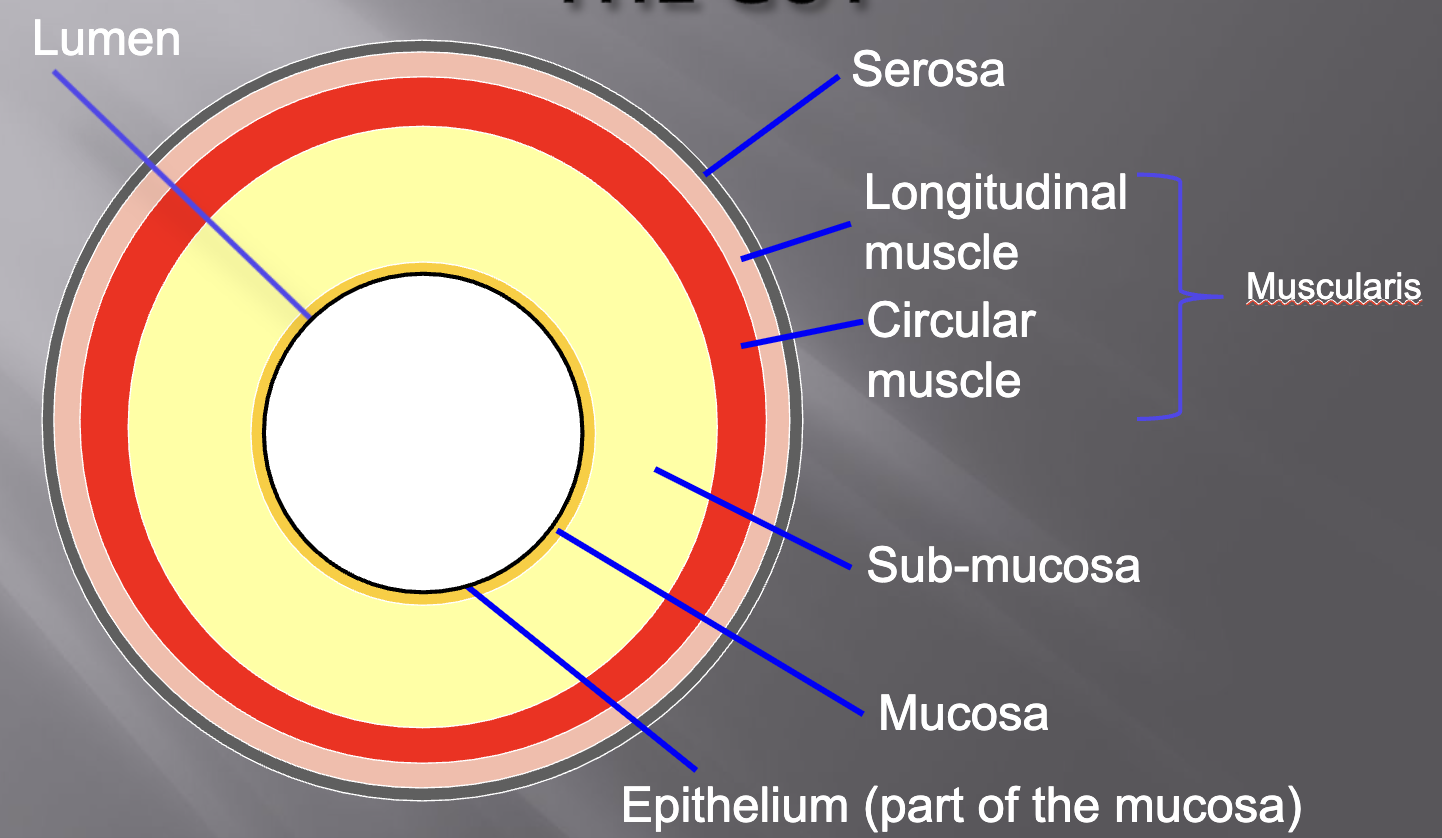
layers of the gut
a hollow muscular tube made of four layers (serosa, muscle layers, sub-mucose, mucosa). The layers remain the same throughout the gut but they are specialised in different regions depending on the function
serosa
tough outer-most protective layer
muscle layers
these act together to bring about peristalsis
sub-mucosa
a layer of connective tissue, nerves, blood vessel, muscles, lymph vessels and glands
mucosa
inner-most layer that produces protective and lubricating mucus from special glands. Some areas are specialised for producing digestive enzymes or for abroption of food. May have villie to increase surface area
gut diagram
mechanical digestion in mouth-buccal cavity
food is chewed using teeth and tongue adn then formed into a bolus ready for swallowing
salivary glands
produce saliva which contains amylase, mucus and mineral ions to keep the pH
chemical digestion- amylase breaks down startch into maltose
stomach
food enters through thr cardiac sphincter. The circular and longitudianl muscles contract rhythmically to mix the food
glands in the stomach mucosa secrete gastric juices
gastric juice HCL
maintain low pH, kill bacterial, hydrolyses proteins and activated pepsin
gastric juice pepsin
pesinogen is secreted then, activiated by HCL into pepsin and secreted by parietal cells. its an endopeptidase that breaks up proteins into polypeptide
what does gastric juice mucus do
lubricates and protects the stomach wall from acid and enzymes
Zymogenic/ chief cells
secrete pepsinogen
oxyntic cells
secrete HCL which denatures proteins and softens connective tissue
goblet/ neck cells
secrete mucus which forms barrier between stomach lining and gastric juice
Duodenum- intestinal juice
the first 30cm of the small intestine. Secretes:
intestinal juice> glands in mucosa produce mucus and alkali (secreted from Brunner’s Glands) to neutralise stomach acid
Duodenum- pancreatic juice
Pancreatic juice> secreted from exocrine pancreas via pancreatic duct- contains endopeptidase, amylase, lipase
Duodenum- bile
Bile> produced by the liver and stored in the gall bladder which emulsifies fats.
What is before the liver, what happens in the Liver?
The hepatic portal vein carries the product of digestion to the liver where glycogen is produced and decimation takes place
Pancreas
seceretes hormones, enzymes, enzymes persecutors abd sodium hydrogen carbonate as part of pancreatic juice
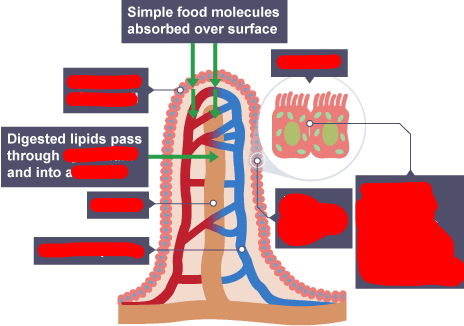
label illeum
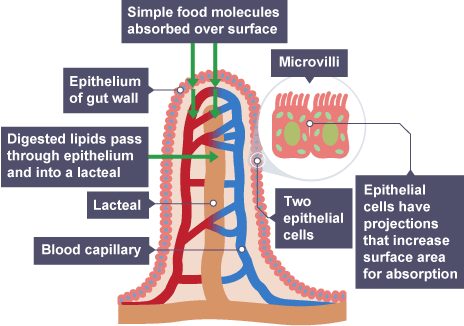
illeum adaptations (7)
-digestive tissues- bound to microvilli membranes
-large surface area- where enzymes come into contact and digest food
-muscle fibres- present in each villus allowing mixture of gut contents which increase contact with food
-many mitochondria-in columnar epithelial cells provide energy for active transport
-many capilleries- for transport to maintain concentration gradients for diffusion
-lacteal for removal of lipids
-thin epithilias layer- reduces diffusion distance
What are the sections of large intestine
caecum, appendix, colon, rectum
What happens in the large intestine?
water is absorbed with minerals, vitamins fom microorganisms and vitK
fibre allows for peristalsis.
undigested food is compacted into faeces and edpelled from body (defaecation)
What happens to maltose
hydrolysed by carbohydrase enzymes. Salivary amylase and pancreatic amylase in duodenum digest starch and glycogen to maltose. Maltose is further hydrolysed by maltase in small intestine
how is sucrose absorbed
sucrase enzymes are found embedded on the brush border of the small intestine . Secreted by the tips of the villi and break down sucrise. work best in ph 7-8
Exocrine cells
Goblet cells secrete mucus, tubular gastic glands secrete gastric juice and intestinal galds (brunners glands in crypts in Leiberkuhn) which secrete iintestinal juice with antibacterial enzymes
Mucus
lubricates oesophagus and protects stomach from acid. Brunner’s gland in submucosa of duodenum secrete alkaline mucus to protects against chime. Helps reduce inflammation in small intestine by decreasing bacterial interactions with epithelial cells.
Enzymes for digestion
animals with a varied diet need several enzymes for digestion. Most food substrates require more then one enzyme to be complete digestion. They are produced in various parts of the gut
Carbohydrates
hydrolysed by carbohydrase enzymes
process of digesting starch and glycogen
digested by salivary amylase and pancreatic amylase into maltose. This is then hydrolyzed by maltase into alpha glucose in the small intestine
where are sucrose enzymes found and secreted
found on brush border of small intestine and secreted by tips of villi
Endopeptidase
hydrolyse peptide bonds within protein chains to form shorter polypeptides
exopeptidase
hydrolyse the terminal peptide bonds to form amino acids
How are proteins digested in the stomache
The presence of food causing a change in the pH of the stomache stimulates the release of the hormone GASTRIN, which stimulates the production of gastric juices by the gastric glands.
Pepsin (an endopepsinase) is secreted as inactive pepsinogen which is activated by gastric juices (HCL) secerted by PARIETAL CELLS in gastric glands
Why are protease enzymes secreted in an inactive form? At what pH do they work
so they dont digest proteins from the alimentary canal. Pepsin works at pH 2
Protein digestion in duodenum- trypsin
Trypsin is an endopeptidase secreted by the pancrease as inactive trypsinogen. This is activate by enterokinase/ enteropepsinase from intestinal glands in duodenum after ingested food from stomache passes in
Bile
thick yellow/brown or olive green fluid that contains: bile salts, mucus, pigments and cholesterol. It emulsifies fats, increasing their surface area to lipase to work on and neutralize stomach acid.
Bile salts
emulsify fats to form oil droplets called micelles which have a large surface area
what does Pancreatic lipase do and where does it work
what is ezyme that digests triglycerides to fatty acids and glycerol in duodenum whcih are lipid soluble and diffuse across the membrane into epithilial cells of the villi in illeum
How is glucose absorbed into blood
sodium/potassium pump. Cotransport/ secondary active transport then facillitated iffusion into blood. Diffusion would be to slow and may result in glucose moving into the gut form blood
How are Amino acids absorbed
proteins are digesteted to peptides and amino acids by pancreatic proteases and bush border enzymes.
Amino acids are absorbed by active transport into epithelial cells of villus and peptides go through intracellular digestion
How are glucose and amino acids transported and to where?
from capillaries via the heptic portal vein to the liver
How are triglycerides transported
from lacteals via the lymphatic system to the blood
How are fats absorbed
fatty acids and glycerol diffuse into the epithelial cells where they are reassembled into the triglycerides which are packages in lipoproteins called chylomicrons and pass into the lacteal of the villus
how are water and water soluble vitamins absorbed?
diffusion
What are teeth used for?
mechanical digestion to increase surface area for enzyme action and make it easier to swallow
Human teeth
-8 CHISEL shaped incisors at front for biting and cutting
-4 pointed canines with same function
-20 large flat premolars and molars at the back and side of chewing
carnivore teeth
-sharp incisors to grip and tare flesh from bone
-enlarged, curved, pointed canines for tearing flesh and for catching and killing prey
-premolars and molars for crushing and cutting
-jaw moves up and down, powerful jaw muscles- catching and killing
-specialised cheek teeth called carnassials which slide past eachother for slicing
Herbivore teeth
jaws move vertically in circular motion
-grooved teeth for grinding (tough cellulose)
-incisors on lower jaw only and cuts against a horny pad on upper jaw
-canine teeth indistinguishable from incisors
-gap called diatema with tongue to move freshly cut grass to grinding area
-cheek teeth interlock
-grinding surfaces wear down exposing enamel ridges to help grind
Ruminants stomache
have four chambers- three derived from oesophagus and one is the “true” stomach
rumen, reticulum, amasum and abomasum
The rumen.
mutualistic bacteria live here and allow for a complete breakdown of cellulose into glucose as it mixes with cud (grass and saliva). They must be kept seperate so
food can be kept long enough for bacteria to digest cellulose
bacteria is isolated from own digestive juices for to be kept optimum pH with no extremes and enzymes dont denature
Glucose is fermented into organic acids that are absorbed into blood for energy. Waste as CO2 and methane
reticulum
cud passes into here before being regurgitated into mouth and chewed again
amasum
cud passes into here where water is reabsorbed
abomassum
functions like a normal stomach. protoctists ingest protein made by bacteria and are digested to porive amino acids. this is their main from of protein
mutulism (symbiosis)
a close association between members of two different species- both benefit
endoparasite
IN the host
ectoparasite
ON the host
Tapeworm
-pig becomes infected if it feeds from drainage channels contaminated by human feaces. Humans are infected if they eat the raw pig that is infected
Adaptations of tapeworm
-suckers and hooks on scolex to attach and remain attached to gut (peristalsis)
-thin and long for large SA:V for nutrient absorption
-body covering protecting from hosts immune system responses
thick cuticle and production of inhibitory substances on the surface of the segments ot prevent digestion by the hosts enzymes
-produce large number of eggs that pass out with hosrs faeces to increase chance of infecting secondaary host
-dont move and dont have a sensory system, unecessary organs are degenarated
-simple excretory and nervous system
-resistent shell on eggs (40,000!) enable them to survive outside of hosts body. embryos remain dormant as cysts until consumed
Headlice
-found on scalp of humans and fed by piercing the skin and sucking blood
-mouth parts for biting through epidermis
-claws to hold ontp hair
lay eggs which are glued to base of hairs
-transfer bnetween hosts by direct contect