MiMS stuff I got wrong
 Call Kai
 Learn
Learn Practice Test
 Spaced Repetition
 Match
Match Flashcards
 Knowt Play
1/177

Earn XP
Description and Tags
Very niche content honestly don't know how helpful this will be but I'll try anything to pass.
Name | Mastery | Learn | Test | Matching | Spaced | Call with Kai |
|---|
No analytics yet
Send a link to your students to track their progress
178 Terms
Around what bond does protein backbone folding occur?
Bond at the alpha carbon
Sequences rich in what amino acid do SH3 domains bind to?
Proline
What causes phenylketonuria?
An inability to degrade phenylalanine
How does the Ras protein become oncogenic?
Through point mutations
What is the main caspase that cleaves Bid?
Caspase 8
What amino acid is most positively charged at pH 7?
Arginine
What amino acid has a side chain attached to sugars in N-linked oligosaccharides?
Asparagine
What amino acid has an aromatic and hydrophobic side chain?
Phenylalanine
What is an allosteric activator of pyruvate carboxylase?
Acetyl-CoA
What is an allosteric activator of glycogen phosphorylase?
5’AMP
What organelle imports proteins from the cytosol in the fully-folded state?
Mitochondria
What drug inhibits the degradation of cAMP?
Caffeine (inhibits phosphodiesterases)
What is an example of a human disease caused by replicative transposition?
Duchenne Muscular Dystrophy
What is the peak wavelength of UV light for absorbance by DNA?
260nm
What is the mass of DNA in the nucleus of a human cell?
6pg
What is a method of hyperpolarising C-13 nuclei to increase their MRI signal?
Dynamic Nuclear Polarisation (DNP)
What is the function of Asp proteases?
Catalyse the cleavage of peptide bonds using highly conserved aspartate residues.
When does the sos response initiate and what does it do?
Initiates when there is severe DNA damage through UV radiation.
Is recruited once other DNA repair mechanisms have failed to repair the DNA before the cell enters apoptosis
What are the 2 main enzymes in the sos repair mechanism?
DNA polymerase IV and DNA polymerase V
How does DNA pol IV and DNA pol V carry out the sos mechanism for DNA repair?
When DNA is heavily damaged, they randomly incorporate nucleotides into the strand - does NOT care about complementary base pairing.
This means that the DNA will be repaired, but have mismatches and mutations.
How is the sos repair mechanism initiated?
DNA is intensely damaged (lots of ssDNA about).
Protein Rec A binds to the ssDNA. Forms a complex.
Complex stimulates Lex A (inhibitor of the DNA pol IV and DNA pol V genes) to destroy itself.
DNA pol IV & V can now be transcribed.
Describe the steps in the Ras-MAPK signalling pathway.
Growth factor (mitogen) binds to the tyrosine kinase receptor.
Tyrosine kinase receptor dimerises and transphosphorylates its tyrosine residues.
The SH2 domain of Grb2 binds to the phosphorylated residue.
SH3 domain of Grb2 activates SOS
SOS activates Ras-GDP by converting to Ras-GTP.
Ras-GTP activates Raf
Raf phosphorylates and activates MEK
MEK activates MAPK
MAPK activates transcription factors
What are some of the transcription products of the Ras-MAPK pathway?
Cyclin D
MYC
Fos
Jun
Why is cyclin d important? Briefly explain the pathway.
Concentration of cyclin d peaks around the G1/S transition - allows the cell to enter S phase
Cyclin d forms a complex with CDK4/6
Activated complex phosphorylates Rb protein, inactivating it.
Transcription factor E2F unbinds from Rb and activates other genes involved in the S phase (including cyclin E)
How does the Rb protein prevent formation of cancer?
Acts as a tumour suppressor by preventing the transcription of proteins used to replicate DNA.
What protein inhibits cyclin d?
p27
What protein inhibits CDK4?
p16, which is transcribed from the gene INK4
What does an SH2 domain bind to and what proteins is it found in?
Binds to phosphorylated tyrosin residues on an activated tyrosine kinase receptor and is found in Grb2 & Src (along with many other oncoproteins)
What does the src protein do?
Thought to be especially active during embryogenesis (and therefore can act as an oncogene)
Has roles in angiogenesis and cell proliferation
*NB - observed in 50% of lung, breast, colon, liver and pancreas tumours.
What does an SH3 domain do and what proteins is it found in?
Regulates the interactions between proteins in signalling pathways (nothing special) and is found in the protein Grb2.
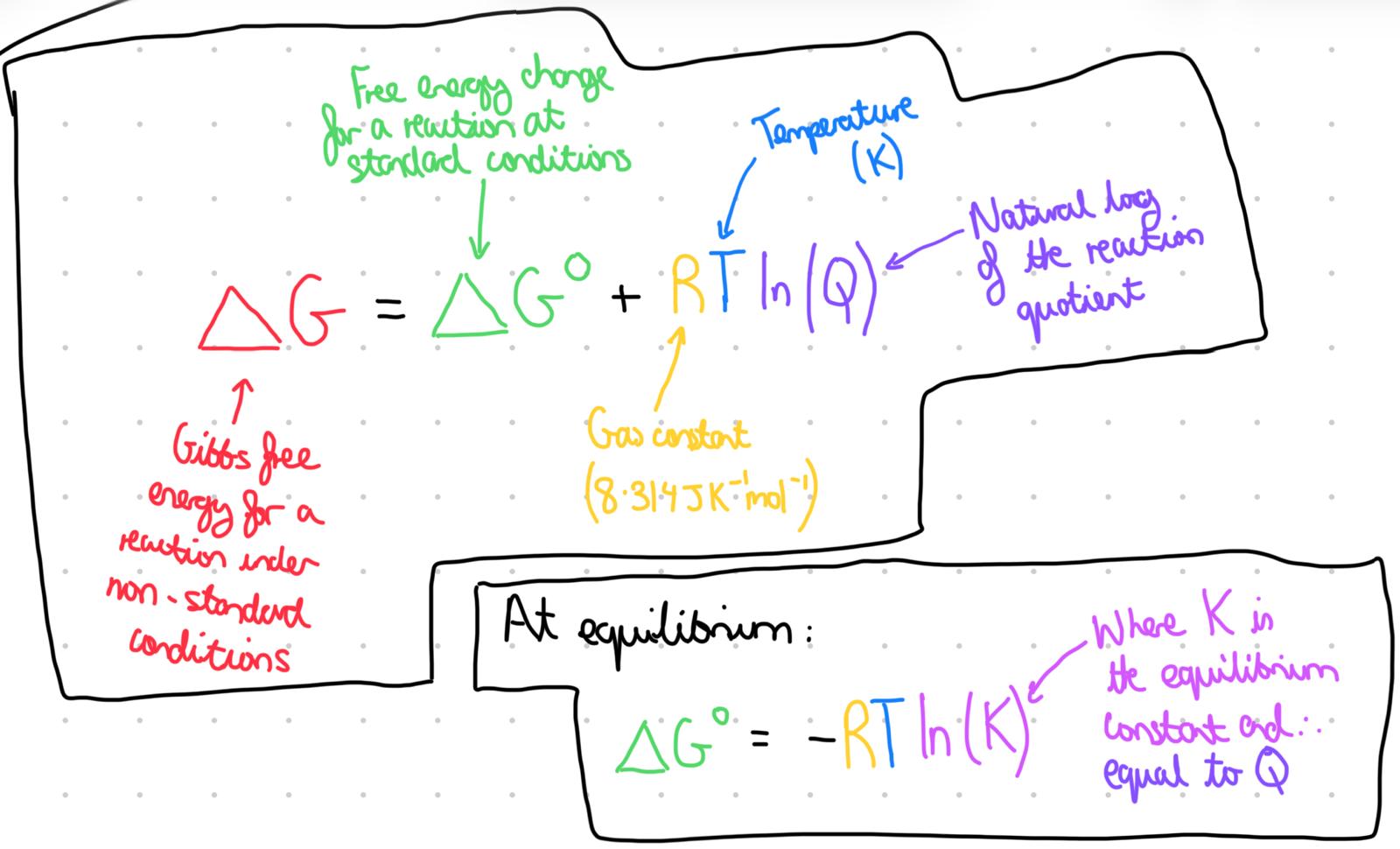
Draw the Gibbs free energy equation for a reaction and a reaction at equilibrium.
What is the zwitterion form of an amino acid?
NH2 group is protonated to NH3+
COOH group is deprotonated (?) to COO-
State amino acids are found in in solution
Describe the muscle part of the amino acid metabolism pathway for alanine (transamination).
Alanine and AKG bind to ALT enzyme with a PLP domain
(PLP domain and ALT bound via Schiff Base linkage)
PLP domain transfers the NH3+ from alanine —→ AKG
PLP domain transfers the =O from AKG —→ alanine
TRANSAMINATION IS COMPLETE
Alanine now = pyruvate
AKG now = glutamate
What are the two fates of pyruvate in skeletal muscle?
Pyruvate —→ lactic acid (enters the Cori cycle in the liver to form glucose - gluconeogenesis)
Pyruvate —→ acetyl-CoA (can enter the Krebs cycle, then the ETC to produce ATP)
What is the fate of the glutamate produced during amino acid metabolism in the skeletal muscle (OXIDATIVE DEAMINATION)?
Travels to the liver.
Glutamate dehydrogenase uses H2O and NADP to return glutamate —→ AKG and release NH3.
(NH3 enters the urea cycle in the mitochondria.)
AKG reacts with aspartate using an AST enzyme with the same Schiff based linkage to PLP domain
PLP domain swaps NH3+ from aspartate with =O from AKG
Asparate now = Oxaloacetate
AKG now = Glutamate
How does amino acid metabolism link to TCA cycle?
Alanine —→ pyruvate
Glutamate —→ AKG (the enzymes, and therefore the reactions, are reversible)
Aspartate —→ oxaloacetate
*NB - many amino acids can be converted to Krebs cycle intermediates.
What is the significance of amino acid metabolism feeding into the Krebs cycle?
Can be used to make ATP
Oxaloacetate —→ phosphoenolpyruvate (PEP) via enzyme PEPCK and then PEP —→ pyruvate —→ glucose (GLUCONEOGENESIS)
Why might there be elevated AST and ALT enzyme levels in the blood?
Liver damage/muscle damage released AST & ALT into the blood - maybe through heart attack?
*NB - amino acid metabolism does not only occur in skeletal muscle but cardiac muscle too.
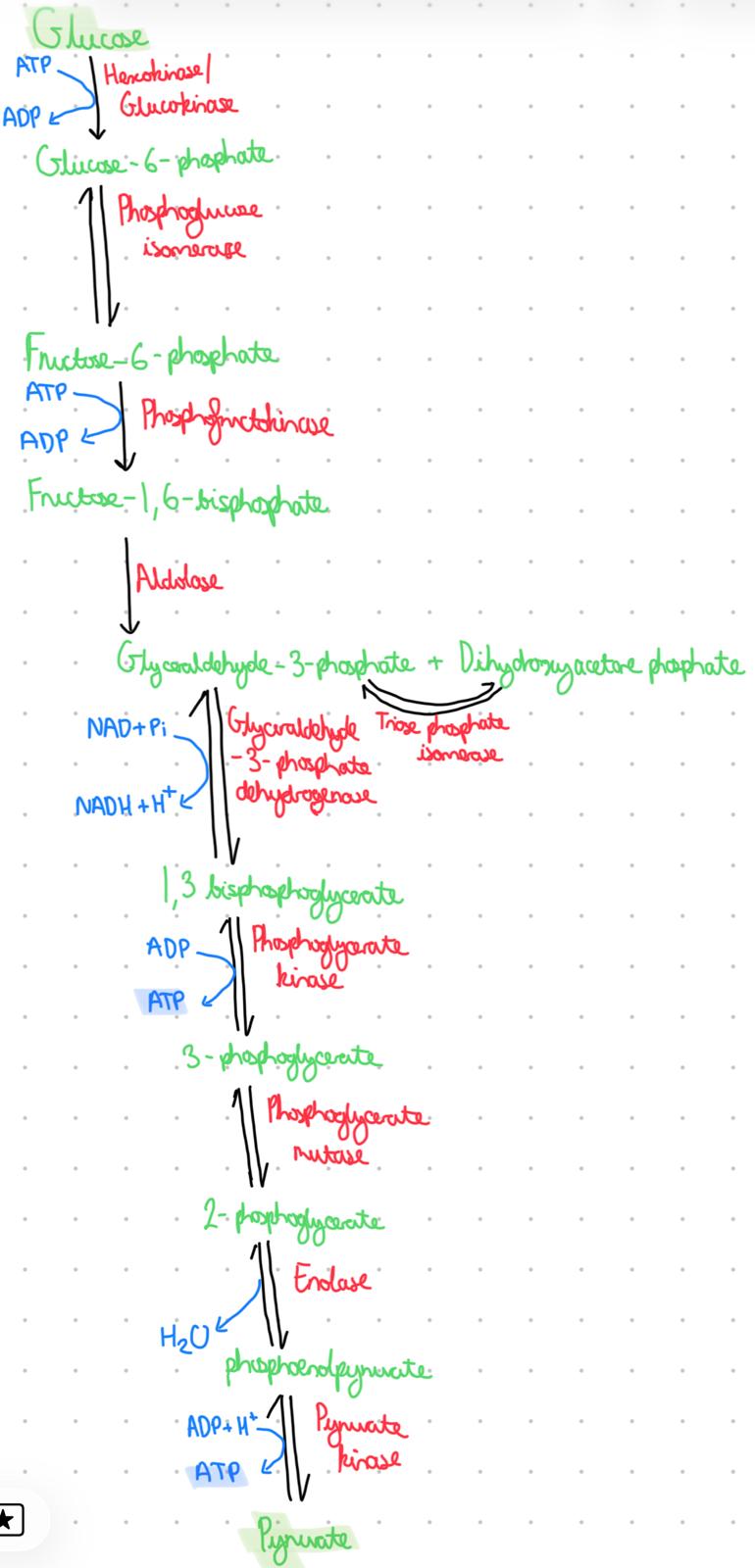
Draw the stages of glycolysis in the cytosol.
Describe the link reaction between glycolysis and TCA cycle.
Pyruvate is converted to acetyl-CoA via reaction with CoA and NAD (to form NADH).
Reaction is catalysed by pyruvate dehydrogenase.
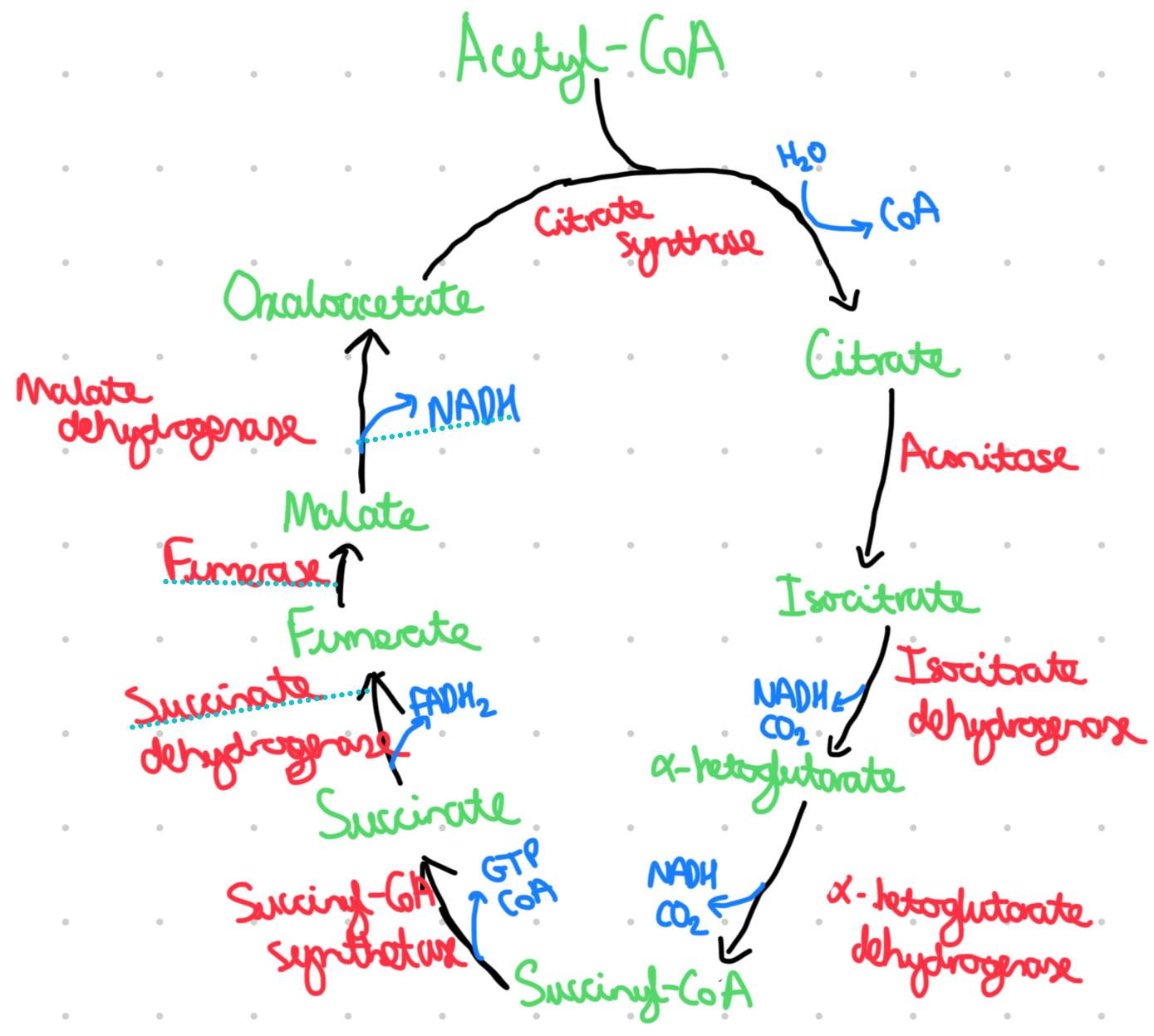
Draw the Krebs cycle in the mitochondria.
Why would fatty acid synthesis occur?
Body is in the fed state
There are high blood glucose levels (due to high levels of insulin)
High ATP levels in the cells
What is the effect of high cellular ATP levels on Isocitrate dehydrogenase (ICDH)?
ATP allosterically inhibits ISDH
Isocitrate cannot be converted to AKG
Isocitrate converted back to citrate
Citrate levels build up - exits out of the mitochondria and enters the cytosol
What occurs when citrate enters the cytosol from the mitochondria due to inhibition of ISDH by high ATP levels?
Citrate lyase cuts the citrate and reacts it with CoA-SH to form oxaloacetate and acetyl-CoA
What is the fate of the oxaloacetate that is produced from high citrate levels during fatty acid synthesis?
OAA —→ pyruvate —→ glucose (GLUCONEOGENESIS)
What is the next reaction that happens to the acetyl-CoA produced from the citrate lyase reaction and what is the catalyst?
Acetyl-CoA reacted with CO2 to form malonyl-CoA
Enzyme that catalyses this reaction is called Acetyl-CoA carboxylase (ACC) and it uses biotin as a coenzyme.
What are the allosteric regulators for ACC?
Stimulates - high levels of citrate
Inhibits - high levels of any long-chain fatty acid CoA
What are the hormonal regulators of ACC?
Stimulates - insulin
Inhibits - glucagon, cortisol, adrenaline, noradrenaline
What are the sources of NADPH to use as reducing agents in fatty acid synthesis?
Conversion of malate —→ pyruvate (ok I lied the excess OAA is converted to malate then to pyruvate but I didn’t want to remember another enzyme).
MAIN SOURCE: Pentose phosphate pathway (PPP)
What transport protein is inhibited by malonyl-CoA and why?
The carnitine shuttle (carnitine acyl transferase I & II)
Inhibited because it transports fatty acids into the mitochondria for beta oxidation and therefore ATP synthesis, but we already have too much ATP.
What are the 2 components of the fatty acid synthase enzyme?
Cysteine residue
Acyl carrier protein (ACP)
Once all our required molecules have been formed (malonyl-CoA, acetyl-CoA, NADPH & FAS), what is the first stage of fatty acid synthesis?
The acetyl group from acetyl-CoA joins to ACP on FAS.
*NB - this means that there is no CoA on the acetyl group when it is bound to ACP. Also the acetyl group is now called the acyl group.
What is the second stage of fatty acid synthesis?
The acyl group is transferred from the ACP to the cysteine residue
*NB - this is to allow the malonyl-CoA to bind to the ACP.
What is stage 3 of fatty acid synthesis?
Malonyl group from malonyl-CoA binds to the ACP.
*NB - Same as when the acyl group bound, there is no CoA when it is bound to the ACP.
Now there is an acyl group bound to the cysteine residue and a malonyl group bound to the ACP.
What is the fourth stage of fatty acid synthesis?
The acyl is transferred back to ACP, where it reacts with the malonyl. The product of the reaction is decarboxylated to form a 4C compound
Briefly, what occurs in the next 3 stages of fatty acid synthesis?
The 4C compound on the ACP is dehydrated and reduced twice with NADPH.
*NB - actual order is reduction, dehydration, reduction
At the end of this process, a fatty acid chain has formed.
How is the fatty acid chain extended?
4C fatty acid chain shuffled back to the cysteine residue, allowing a malonyl group to bind to the ACP. Then the 4C fatty acid is moved back to the ACP. Reaction occurs and a 6C compound is formed (remember 1C lost as CO2).
This process is repeated for:
a) how many rounds?
b) until what number of carbons in the fatty acid chain?
a) A total of 7 rounds, so 6 more rounds.
b) C16 - palmitate is formed.
What is the final step of fatty acid synthesis once palmitate has formed?
Palmitate is cleaved off the ACP by an enzyme to form palmitic acid.
What is the most common form of DNA in eukaryotic cells and does it form a right or left handed helix?
B DNA and it forms a right-handed helix
What is the function of nuclear receptors?
To bind to hormones (thyroid, steroid, vitamins) and regulate the transcription of genes.
*NB - basically become transcription factors.
What are some cancer therapies?
Surgery
Immunotherapy (anything that stimulates the immune system to attack cancer cells e.g. checkpoint inhibitors)
Chemotherapy (molecules that are toxic to cancer cells)
Radiation therapy (high energy radiation to damage tumour DNA)
Targeted therapy (targets tumour cells based on the specific gene mutation that they possess)
What are caspases?
Proteases that are involved in controlled cell death (apoptosis)
What are the 2 categories of caspase used for apoptosis?
Initiator caspases
Executioner caspases
What are the 2 apoptotic pathways activated by caspases?
Intrinsic and extrinsic
Describe the intrinsic apoptotic pathway, with a focus on the role of caspases.
Mitochondrial cytochrome c leaks out into the cytosol (shows that the cell is under stress)
Cytochrome c binds to an adaptor protein.
This complex recruits caspase 9 (the initiator caspase in this example).
This forms the apoptosome complex.
Executioner caspases are activated by the initiator caspases, cleaving cellular contents to induce apoptosis.
Describe the external apoptotic pathway, with a focus on caspases. Use Fas as the ligand example.
Fas binds to the FasR receptor on the surface of the cell (the death receptor in this example).
Death domain at the cytoplasmic end of the FasR receptor is activated.
Adaptor protein FADD activated.
FADD recruits pro-caspase 8 via the death domain.
FasR, FADD and pro-caspase 8 combine to form a DISC
DISC activates caspase 8 (initiator caspase)
Either there is now stimulation of the intrinsic apoptotic pathway OR the caspase 8 directly activates executioner caspases.
What is replicative transposition?
The transfer of a copy of a gene from one bacterial plasmid to another, so that both plasmids have a copy of the gene.
What is the KFERQ motif?
A polypeptide sequence attached to a protein to initiate degradation of the protein by lysozymes (called chaperone-mediated autophagy).
Describe some endogenous mutational processes.
Spontaneous deamination of 5-methylcytosine —→ tyrosine (most common)
Reactive oxygen species
Errors during repair processes/replication
Describe some exogenous mutational processes.
UV radiation
Tobacco smoke (induces A —→ C mutations, which are common in lung cancers).
What is balancing selection?
When a number of alleles are maintained in the gene pool.
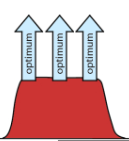
What is purifying selection?
A form of natural selection that removes harmful genetic mutations from a population, and therefore from a gene pool.
What is the thrifty phenotype hypothesis?
The hypothesis that type II diabetes can be linked to poor fetal/infant growth, as the poor nutrition in early life leads to permanent changes in the relationship between glucose and insulin.
How do you create a forward primer?
Take the first 20 bases (or however many specified in the question)
Convert to DNA if in RNA
How do you create a reverse primer?
Take the last 20 bases from the strand (or however many were specified)
Convert to DNA if not already
Convert to complementary strand
Flip the sequence so that it is running backwards.
How do you calculate vmax from an V0 - [S] curve?
Find the Km and follow this up to the y axis. Read the value off the y axis. This value is vmax/2. Multiply by 2 to find the vmax.
How do you find the vmax from a Lineweaver-Burke plot?
y intercept = 1/vmax.
How do you calculate the Km from a Lineweaver-Burke plot?
gradient = Km/vmax, therefore km = gradient * vmax.
*NB - x intercept = -1/km
What is plotted on the x and y axis for a Lineweaver-Burke plot?
y axis = 1/V0
x axis = 1/[S]
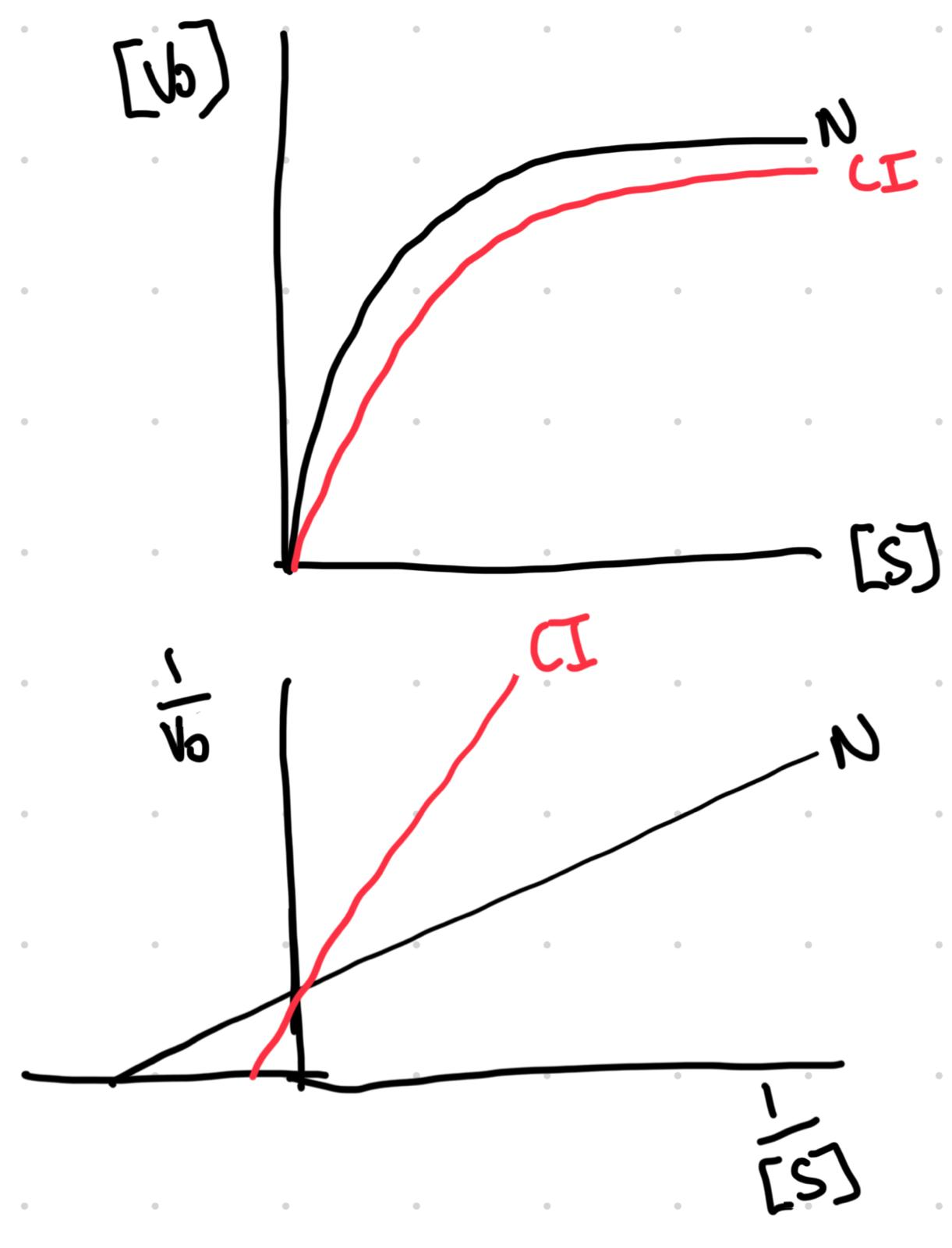
Draw the difference in the Michaelis-Menten and Lineweaver-Burke plot for a competitive inhibitor.
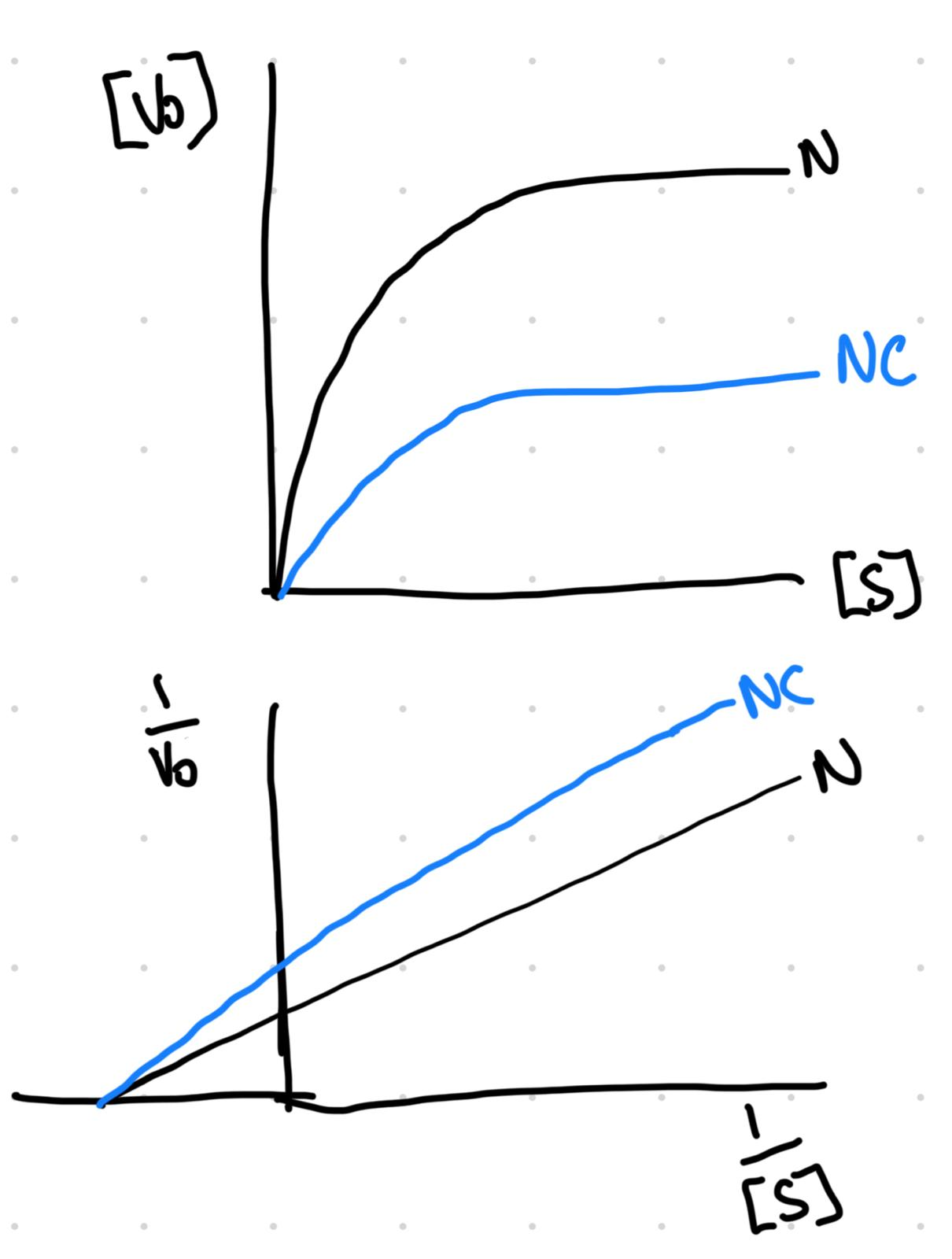
Draw the difference in the Michaelis-Menten and Lineweaver-Burke plot for a non-competitive inhibitor.
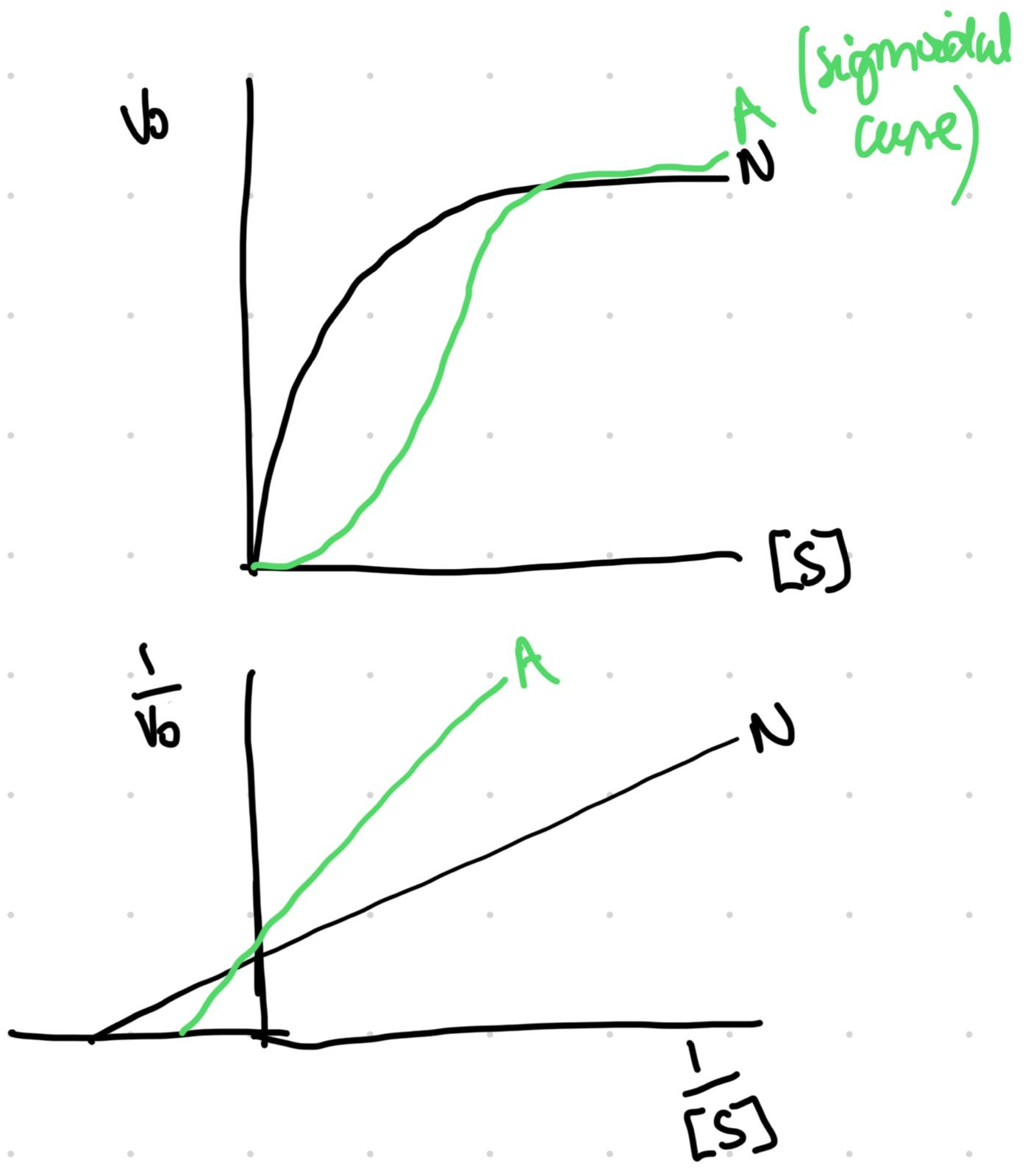
Draw the difference in the Michaelis-Menten and Lineweaver-Burke plot for an allosteric enzyme.
What is the only protein that contains hydroxyproline?
Collagen
What is the formula for the concentration change per second for a substance in a spectrophotometer?
Concentration change per second = (absorbance change per second/molar absorbance coefficient) x path length
What is a katal?
1 katal = the amount of catalyst that catalyses a reaction at 1mols-1
Genetic linkage
The tendency of DNA sequences close together on the chromosome to be inherited together.
Genetic noise
Random, chance-based variations in RNA and proteins produced by genetically identical cells.
Between what groups is the glycosidic bond formed in nucleic acids?
Hydroxyl group on carbon-1 of the ribose sugar and a nitrogen atom within the base.
What forms a greek key motif?
4 anti-parallel beta sheets
Does glucokinase or hexokinase have a higher Km for glucose?
Glucokinase
At how many chiral centres do galactose and glucose differ?
1
How many polypeptides & immunoglobulin domains do IgG antibodies consist of?
4 polypeptides
12 immunoglobulin domains
Is the net charge on lysine at pH 7 positive, negative or neutral?
Positive
What is the net charge on glycine at pH 7?
0
What is the relationship between pKa and pH?
Lower the pKa the lower the pH
What does the carbonic anhydrase reaction mechanism rely on?
A histidine-bound zinc atom
Through what process do replicative helicases unwind DNA?
steric exclusion
What amino acid residues are aromatic?
Tyr (tyrosine), Trp (tryptophan), Phe (phenylalanine)
What amino acid residues can be glycosylated?
Thr (threonine), Asn (asparagine), Ser (serine)