Ari 201 Ch 9 Islamic Art
 Call Kai
 Learn
Learn Practice Test
 Spaced Repetition
 Match
Match Flashcards
 Knowt Play
1/42

There's no tags or description
Looks like no tags are added yet.
Name | Mastery | Learn | Test | Matching | Spaced | Call with Kai |
|---|
No analytics yet
Send a link to your students to track their progress
43 Terms
Death of Prophet Muhammad
632
Islam reaches Spain and Central Asia
700s
Abbasid dynasty supplants Umayyad dynasty
750
Otto I crowned Holy Roman Emperor
962
Cairo founded as the capital of the Fatimids
969
Seljuk Turkish Invaders begin rule
Mid 1000s
First Crusade warriors capture Jerusalem
1099
Mongols sack and destroy Baghdad
1258
Western Mongol rulers converted to Islam
Late 1200s
Almohad capital of Seville falls to kings of Castile
Early 1300s
Most of Muslim al-Andalus fallen to Christian Reconquest
Mid 1300s
Ottomans claim Constantinople as their capital
1453
Prince Ismail founds Safavid Empire in Iran
1501
Akbar the Great rules Mughal India
1556 – 1605
Islam is based on
the teachings of the Prophet Muhammed (ca. 570-632)
Muhammed is said to have
received the word of Allah in a series of prophetic recitations (in Arabic the Qur’an) brought to him by the archangel Jibra’il (Gabriel).
Early Islamic art is derivative of
Graeco-Roman, Byzantine, Christian, and Sasanian art forms.
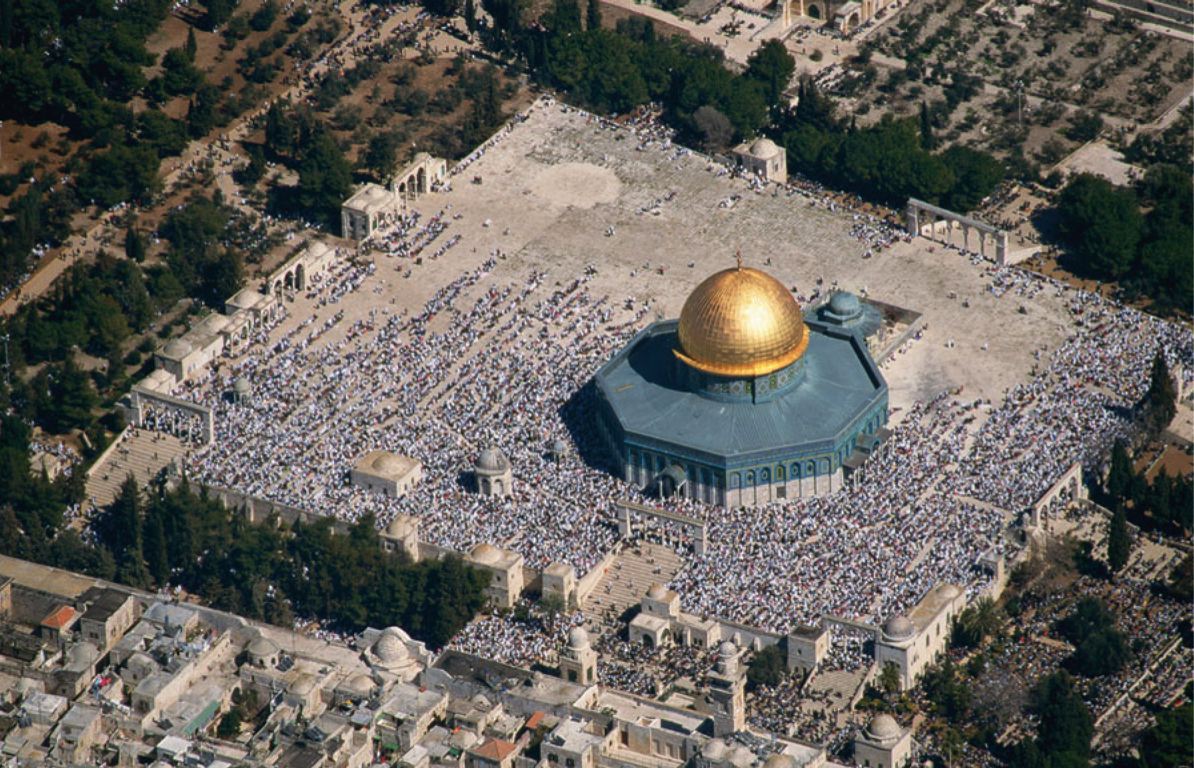
The earliest mosque
the dome of the rock, which dates to ca. 960 CE. It is their first building that used architecture to symbolise faith.
A hypostyle mosque
has a large qibla wall, which faces the direction of Mecca. A simple minbar, and an empty mihrab, in the Qibla
Qibla
The direction toward Mecca, which Muslims face during prayer. The qibla wall in a mosque identifies this direction.
Mecca
The holiest city of Saudi Arabia. The birthplace of the Prophet Mohammed
Minbar
pulpit
Mihrab
A niche, often highly decorated, usually found in the center of the qibla wall of a mosque, indicating the direction of prayer toward Mecca.
Minaret
A tower located outside the mosque to call the faithful to prayer by a muezzin.
Muezzin
man who calls Muslims to prayer from the minaret of a mosque.
Sahn
the open courtyard on the exterior of the mosque
Dynastic history
The Umayyad dynasty in Syria was replaced by the Abbasid dynasty in Mesopotamia
750
The last prince from the Umayyad dynasty created an
Independent state in Córdoba, Spain, which included a typical hypostyle mosque.
Abbasid mosques were designed
for large congregations
Iwans
courtyards that became an architectural feature of mosques from the 12th century onwards.
From the twelfth century onward, the four-iwan courtyard
was a standard feature of mosques and madrasas.
Under the Fatimid dynasty
Egypt underwent a period of artistic revival. e.g. the construction of city walls for Cairo, the construction of several palaces, and two congregational mosques as well as smaller mosques throughout the city.
Muqarnas
An architectural design, composed of small nichelike forms. It was developed during the Fatimid dynasty and can be seen at the al-Aqmar Mosque in Cairo. It eventually became an iconic form of Islamic decoration.
Under the Fatimids, Islamic artistic influences on twelfth-century Italian architecture
can be seen in the port cities of Palermo, Salerno, and Amalfi.
Mongol rulers, known as Il-Khans, had converted to Islam
End of the 13th century – The artistic legacy of this dynasty continued under the Timurids.
During later periods, three major artistic centres under large Islamic empires
the Ottomans, Safavids, Mughals.
Ottomans
built mosques and the Topkapi Palace
Safavids
rivals of the Ottomans, developed distinctive artistic styles in book illustration, carpet making, and architecture.
Mughals
In India, the Mughals built several major monuments, including the Taj Mahal
Kufic
One of the first general forms of Arabic script to be developed, distinguished by its angularity; distinctive variants occur in various parts of the Islamic worlds.
Muhammad Ibn Mahmud Al-Amuli
A Medieval Persian physician. He wrote Nafâ’is al-Funûn (The Beauty of Knowledge) which emphasizes the beauty and importance of writing.
Mosque
A building used as a center for community prayers in Islamic worship; it often serves other functions including religious education and public assembly.