nutrition final
 Call Kai
 Learn
Learn Practice Test
 Spaced Repetition
 Match
Match Flashcards
 Knowt Play
1/28

There's no tags or description
Looks like no tags are added yet.
Name | Mastery | Learn | Test | Matching | Spaced | Call with Kai |
|---|
No analytics yet
Send a link to your students to track their progress
29 Terms
how many calories are in carbs
4 cal/gram
how many calories are in protein
4 cal/gram
how many calories are in lipids
9 cal/gram
how many calories are in alcohol
7 cal/gram
hunger
there is more in the slideshow
satiety
the feeling of satisfaction and fullness after a meal that inhibits eating until next meal
appetite
psychological need to eat that occurs i respose to sight, smell, thought, taste of food
the total amount of energy used by the body is categorized by
normal body functions (basal metabolism), physical activity, thermic effect of food (TEF)
normal body functions (basal metabolism)
the energy expended to maintain an awake, resting body that’s not digesting
60-75% of total energy is used on basal metabolism
BMR
higher in men than in women
lower when caloric intake is lower than body’s need
BMR
rate of energy expendeture
physical activity
the energy we expend in physical activity includes both planned exercise and daily activities
NEAT
NEAT usually accounts for the majority of energy expended in activity, not physical activity
depends on size of person, strenuous level of activity, length of time
thermic effect of food (TEF)
energy used to digest food, absorb, metabolize, and store nutrients
TEF is estimated at abt 10% of total energy expenditure
fat is the one with least expenditure, protein has the most
what factors influence weight
genetics, age, lifestyle, eating patterns, activity levels, environment
adolescent growth (assessing body weight and growth)
growth charts track trends overtime
want to grow at a consistent rate, don’t want to jump percentiles
body weight
sum of weight of fat and lean body mass
lean body mass
mass of nonfat body parts
body mass index (BMI)
preferred weight for height standard
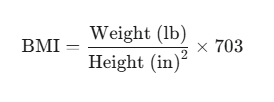
BMI calculation
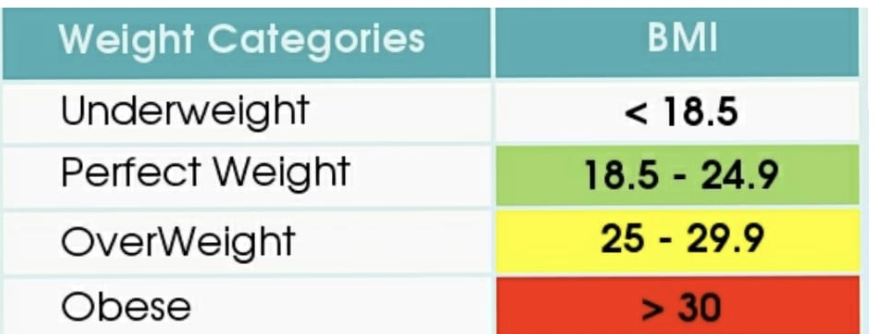
classifications of underweight/overweight/healthy/obese
morbid/extreme obesity = >40
body composition
the relative proportions of fat and lean tissue that make up body
has a larger impact on health than body weight
excess weight is only part of the story
there is more in the slideshow
recommended percent body fat: _____% of total weight for a young, healthy female
about 21-32
recommended percent body fat: _____% of total weight for a young, healthy male
8-19
with ___ body mass decreases, and _____ ______ increases
age, body fat
visceral fat is located
around organs in the abdominal areas
visceral fat ___ healthy risk
increases
visceral fat makes the body ____ shaped
apple
subcutaneous fat is located
under skin, thighs, lower body
subcutaneous fat _______ health risk
does not increase
subcutaneous fat makes the body ___ shaped
pear