Days 15 to 16 - Art and Architecture of the Middle Byzantine Period: From the Restoration of Religious Images to the Sack of Constantinople (867-1204) I-II
 Call Kai
 Learn
Learn Practice Test
 Spaced Repetition
 Match
Match Flashcards
 Knowt Play
1/10

There's no tags or description
Looks like no tags are added yet.
Name | Mastery | Learn | Test | Matching | Spaced | Call with Kai |
|---|
No analytics yet
Send a link to your students to track their progress
11 Terms
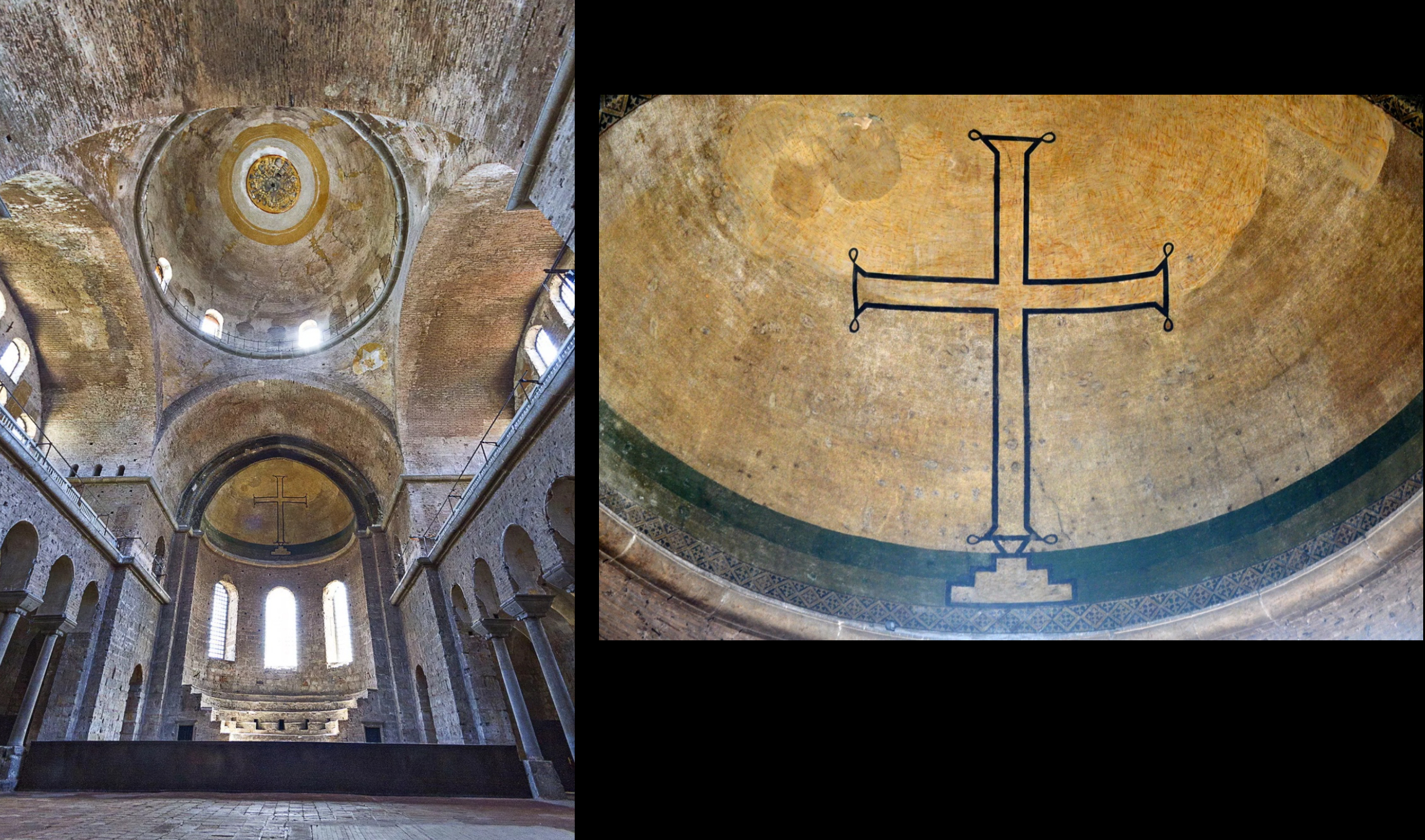
Hagia Irene
artist unknown, 532, brick masonry, stone, plaster, mosaics
rare surviving Iconoclast-period apse decoration
features a simple god cross, not figural imagery
demonstrates the state-sanctioned rejection of icons later on
provides key evidence of how church interiors looked during iconoclasm
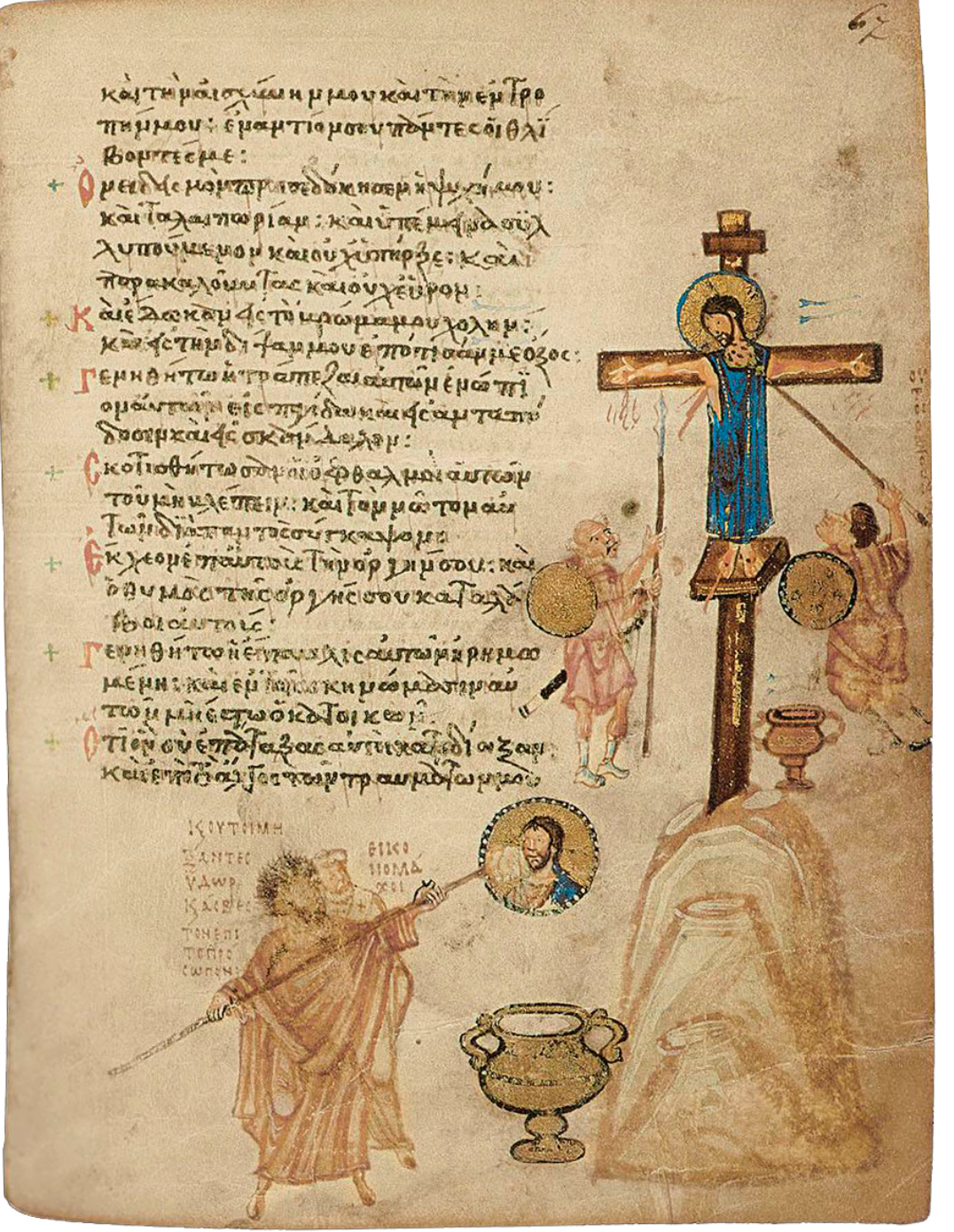
Crucifixion and Iconoclasts, from the Chludov Psalter
artist unknown, mid 9th century, tempura on vellum
created immediately after iconoclasm, with strong polemic tone
shows monks washing away an icon as a direct visual analogy to those who crucified Christ
one of the most important illustrated critiques of Iconoclasts
reflects theological and political conflicts over the legitimacy of images
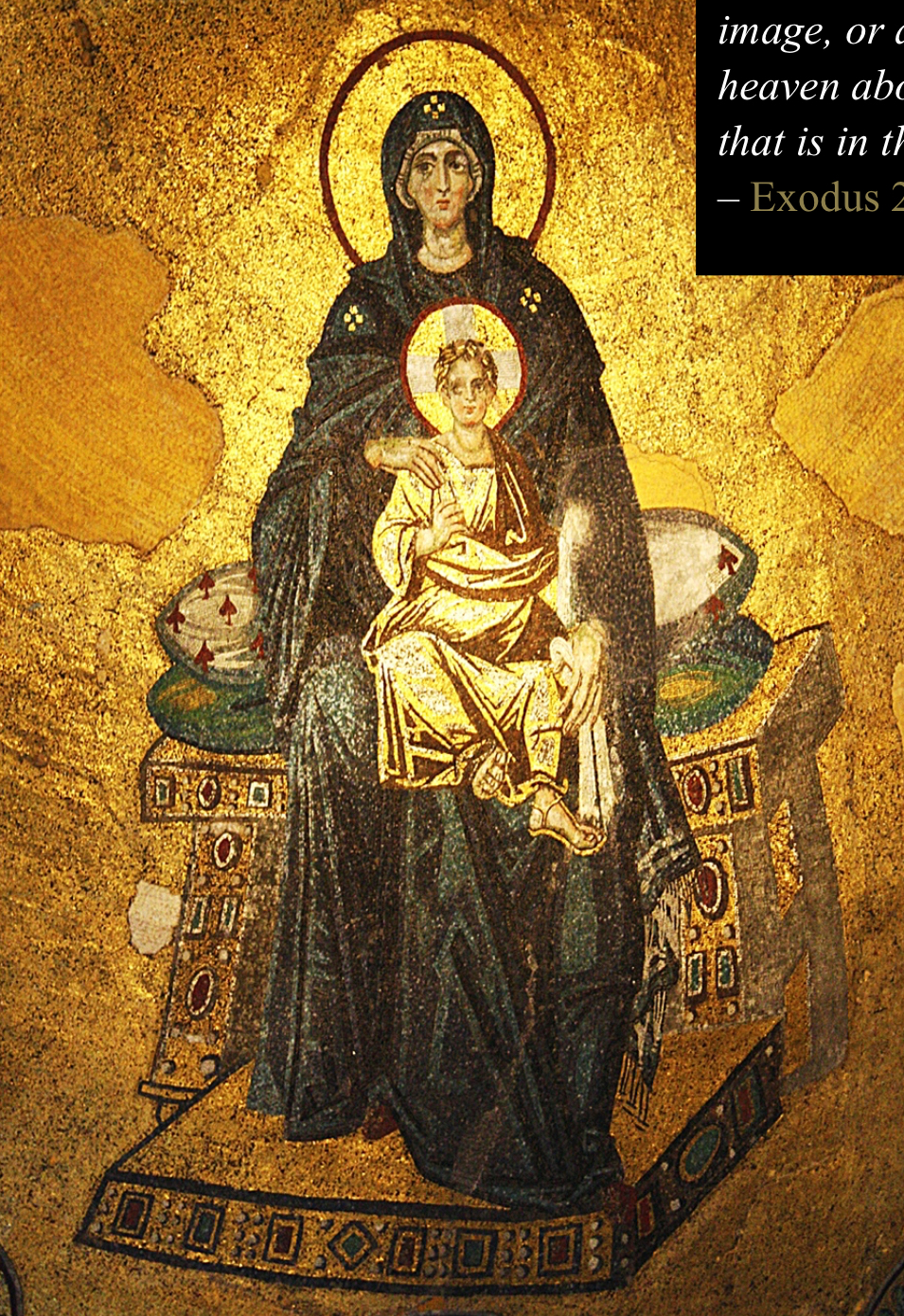
Virgin Mary and the Christ Child Enthroned (apse in the Hagia Sophia)
artist unknown, 867 CE, gold and colored glass
first major figural mosaic installed after the end of Iconoclasm
declares the restoration of image worship (Mary and Christ monumentalized)
explicit inscription celebrates the “triumph of Orthodoxy”
reinforces Hagia Sophia’s role as political-theological center of the empire
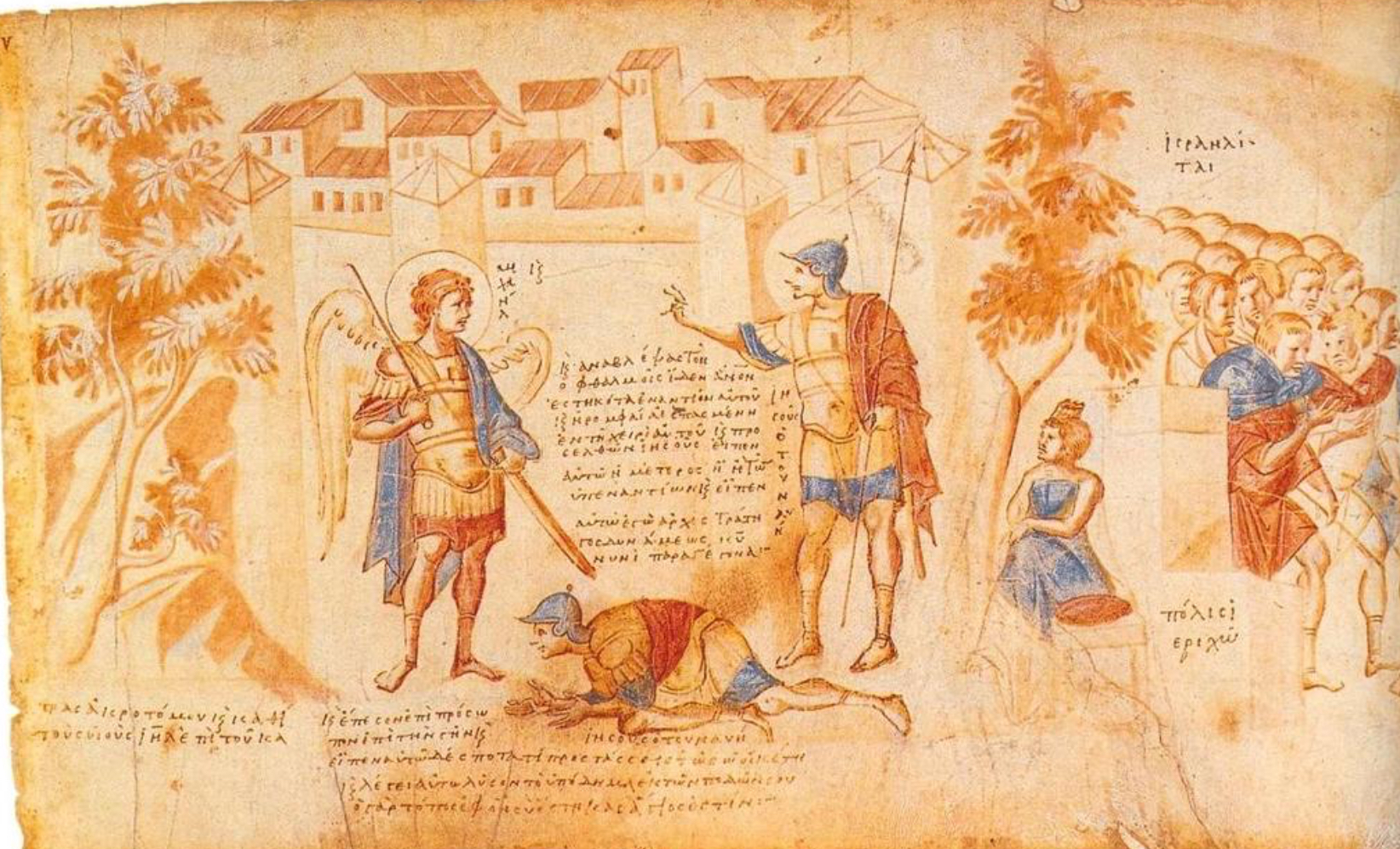
Joshua and the Angel
artist unknown, 10th century, ink on vellum
dramatic military scene from the Joshua Roll or related illustrated manuscripts
shows classical influence: continuous narrative, modeled bodies, drapery
exemplifies Macedonian Renaissance rival of Greco-Roman styles
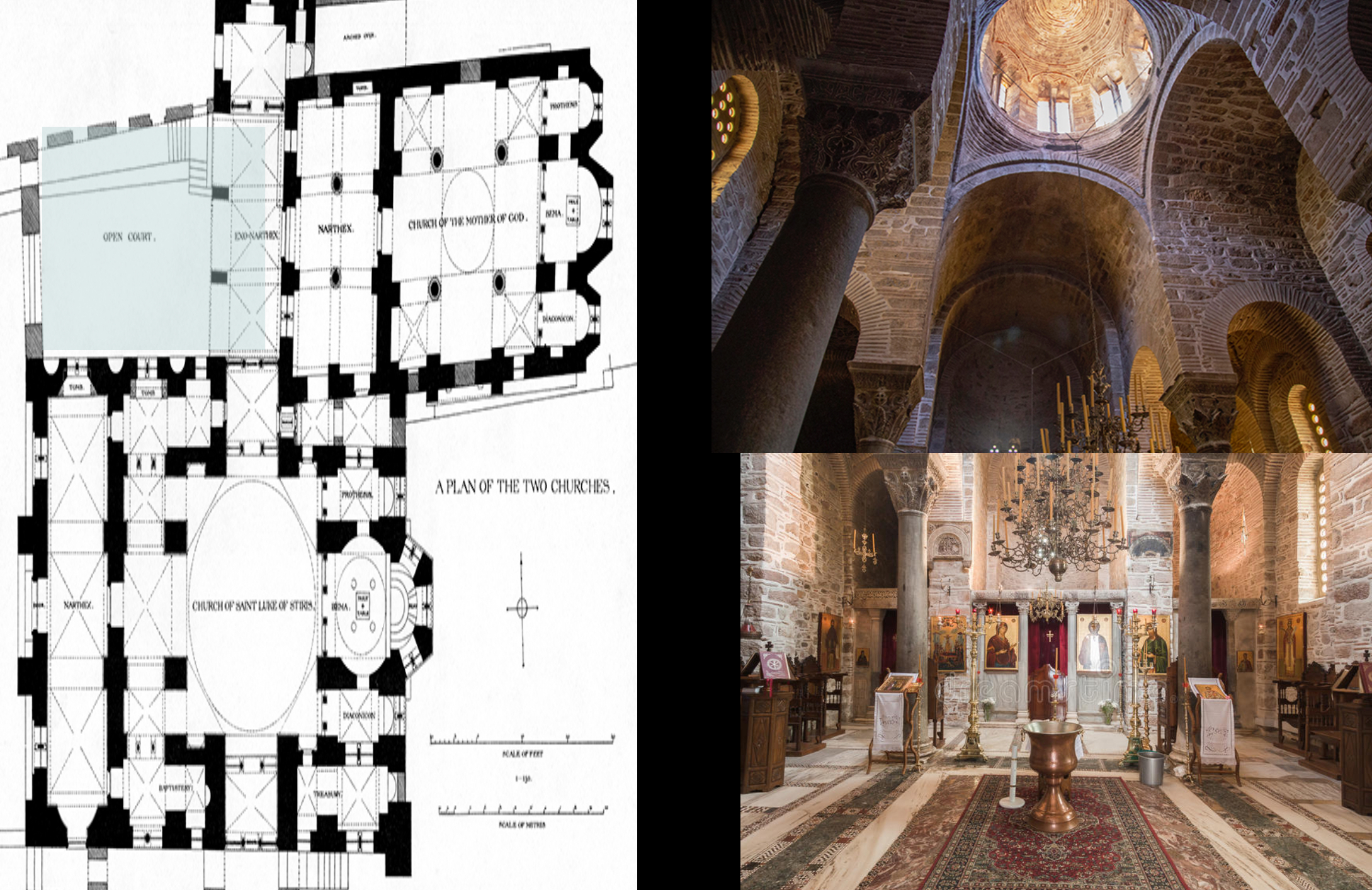
Monastery of Hosios Loukas
artist unknown, 10th century, stone, marble, mosaics, plaster
masterpiece of Middle Byzantine architecture
uses the cross-in-square church plan with elegant domes and squinches
lavish mosaics depict Christ Pantokrator, saints, and narrative scenes
demonstrates integration of architecture + mosaic + liturgy
key example of provincial Byzantine artistic flourishing
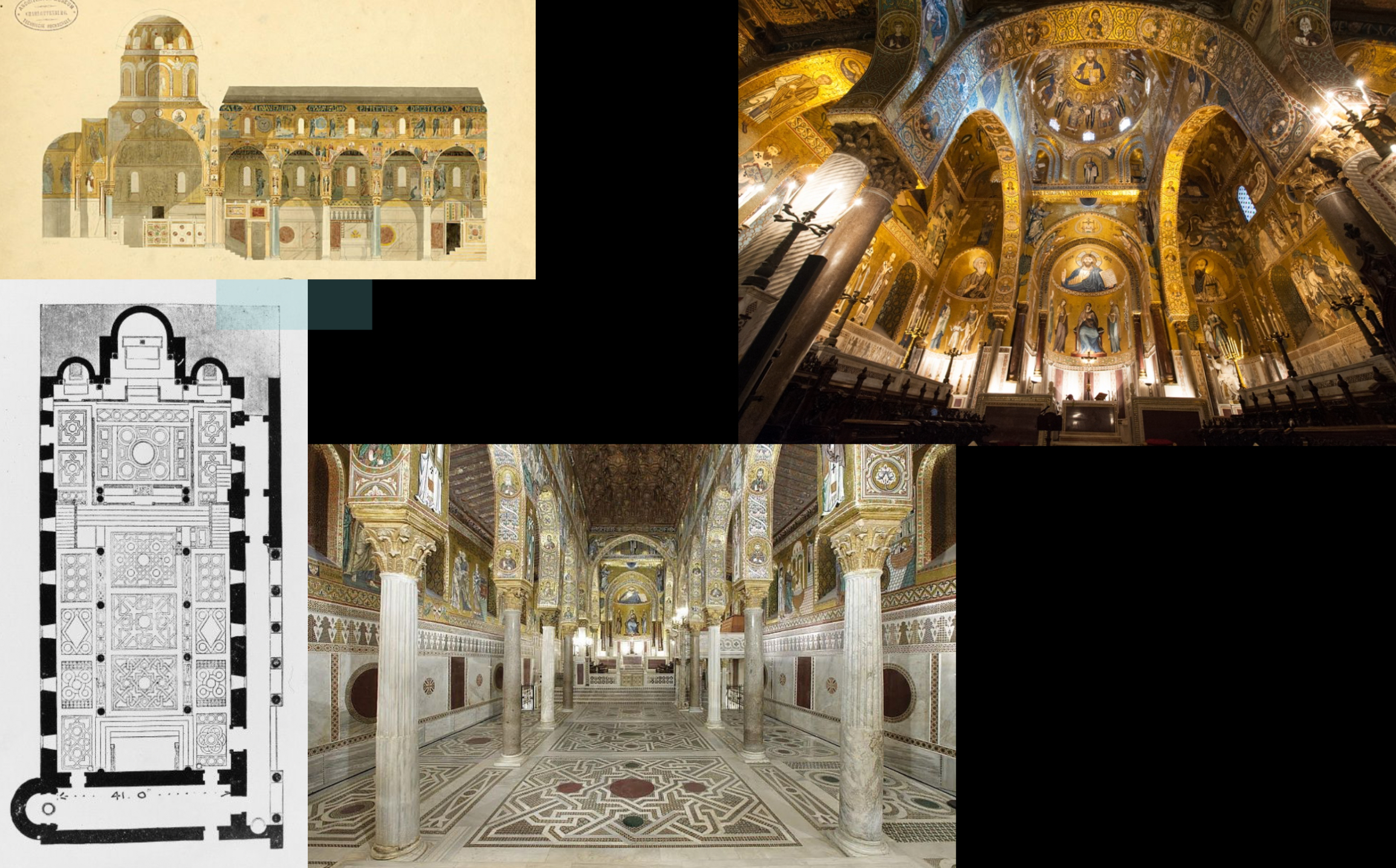
Cappella Palatina (Palatine Chapel)
artist unknown, 1140 CE, stone masonry, marble, wood
Sicilian multicultural masterpiece: Norman, Byzantine, and Islamic fusion
features Byzantine Christ Pantokrator dome mosaic + Arabic carved wooden ceiling
embodies court ideology of Roger II as universal ruler
exemplifies Mediterranean artistic cross-pollination
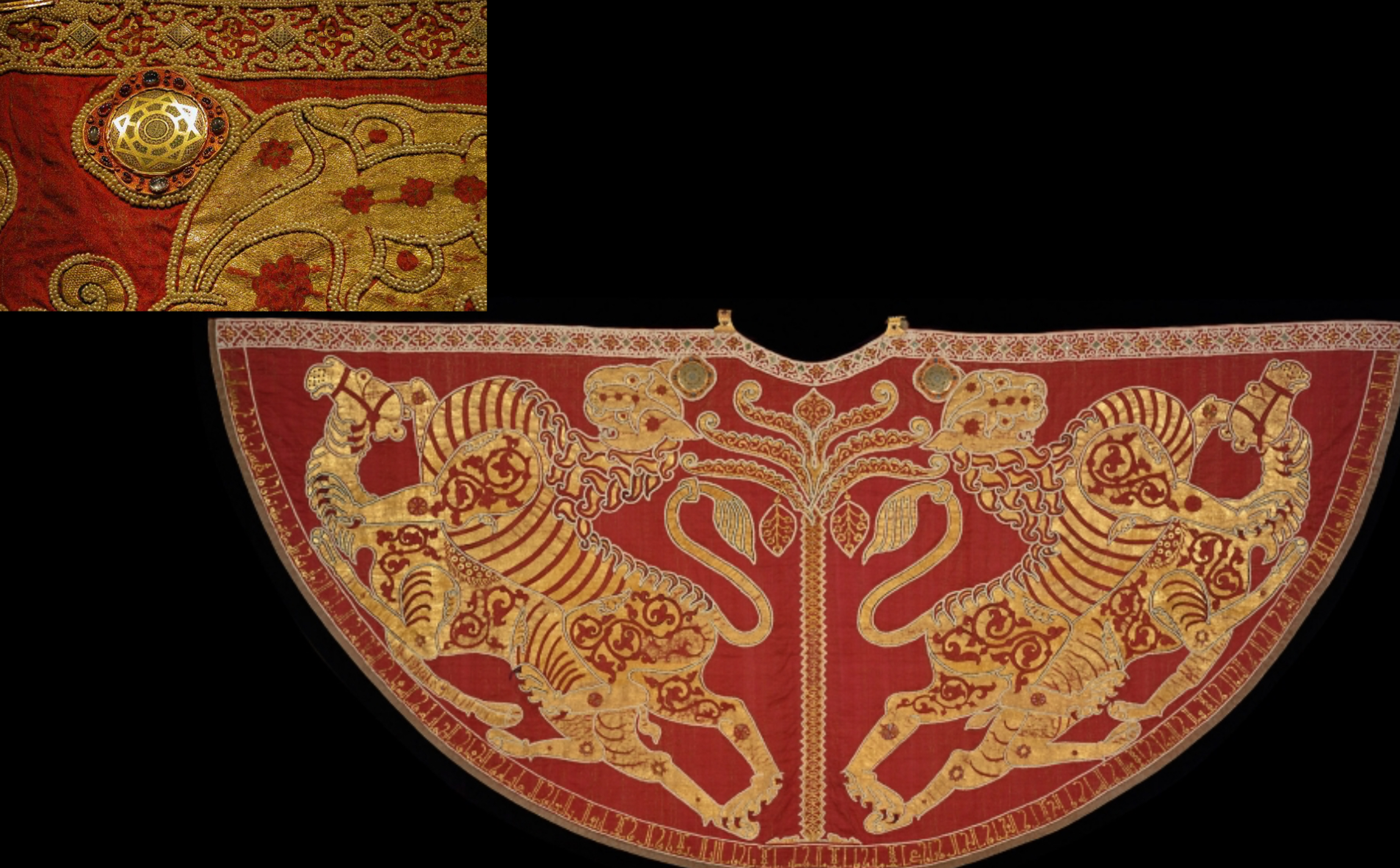
Mantle of Roger II Hauteville
artist unknown, 1133-1134 CE, red silk, gold embroidery, pearls
royal coronation mantle blending Islamic textile style with Christian kingship
inscription in Arabic praises Roger II as divinely sanctioned ruler
features heraldic lion attacking camels; symbol of sovereignty
shows Norman Sicily’s dependence of skilled Muslim artisans
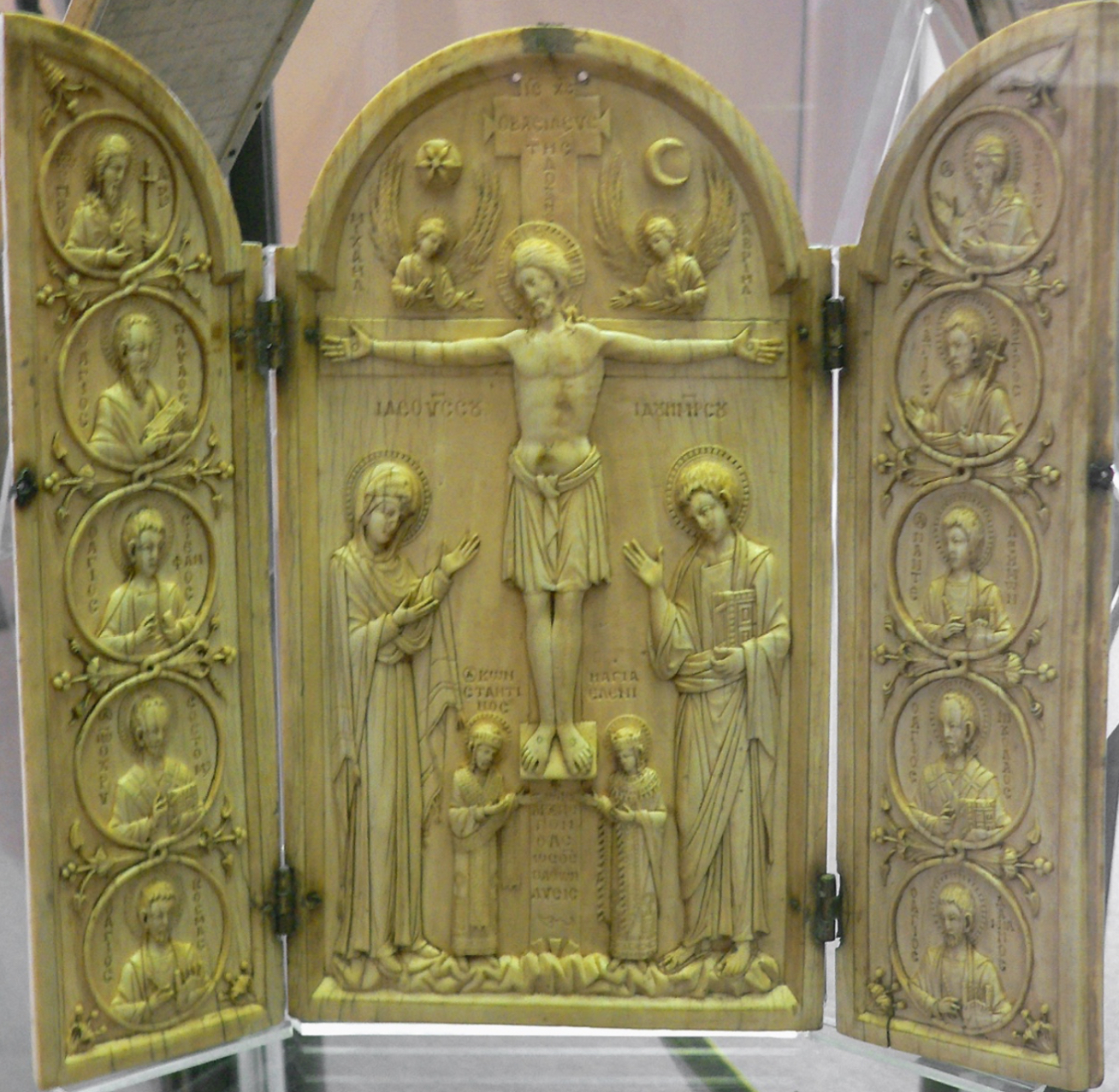
Triptych with Crucifixion and Saints
artist unknown, 10th century, carved ivory panels
portable devotional object for private prayer
classical drapery and calm expressions reflect Macedonian Renaissance classicism
side panels feature intercesor y saints flanking the central crucifixion
ivory carving shows elite patronage and Constantinopolitan luxury trade
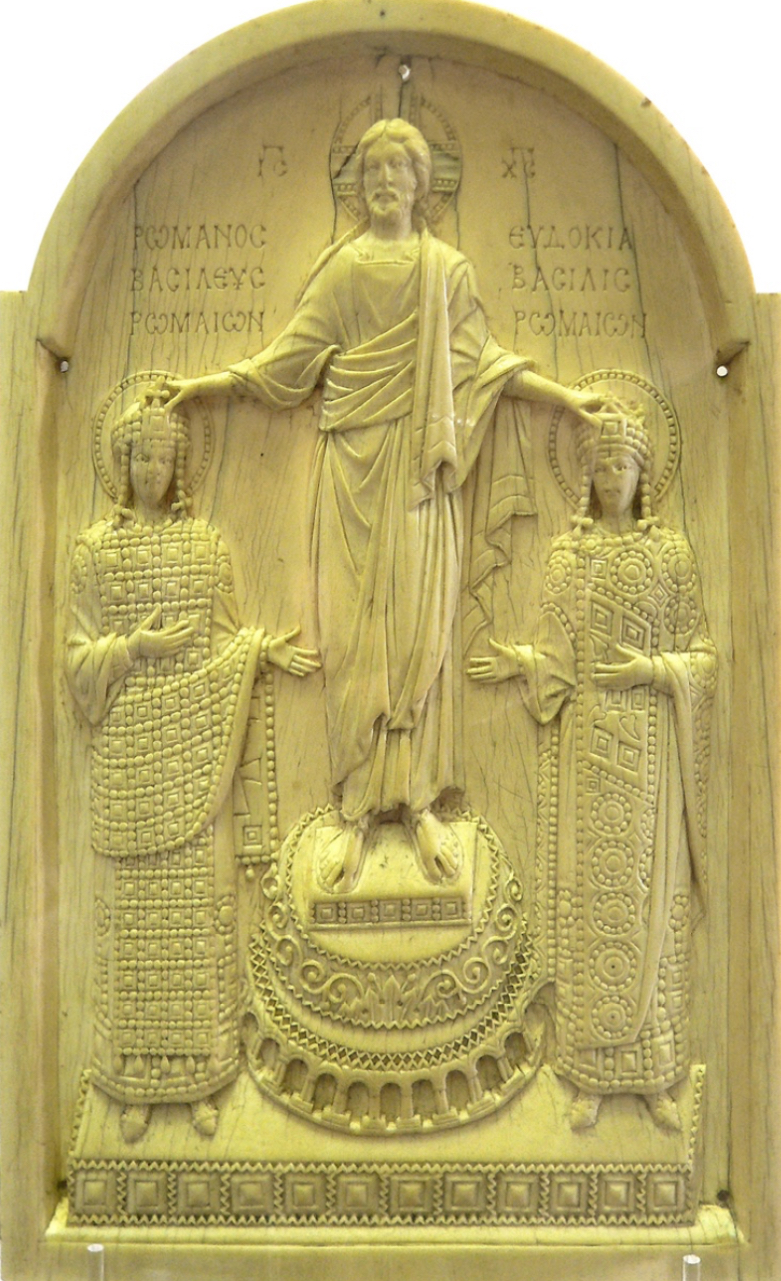
Christ Crowning Romanos and Eudokia (the Romanos Ivory)
artist unknown, 944-949, carved ivory panel
Christ places crowns directly onto imperial couple; political theology in visual form
emphasizes diving approval of imperial authority
smooth modeling and classicizing folds mark the Macedonian revivial
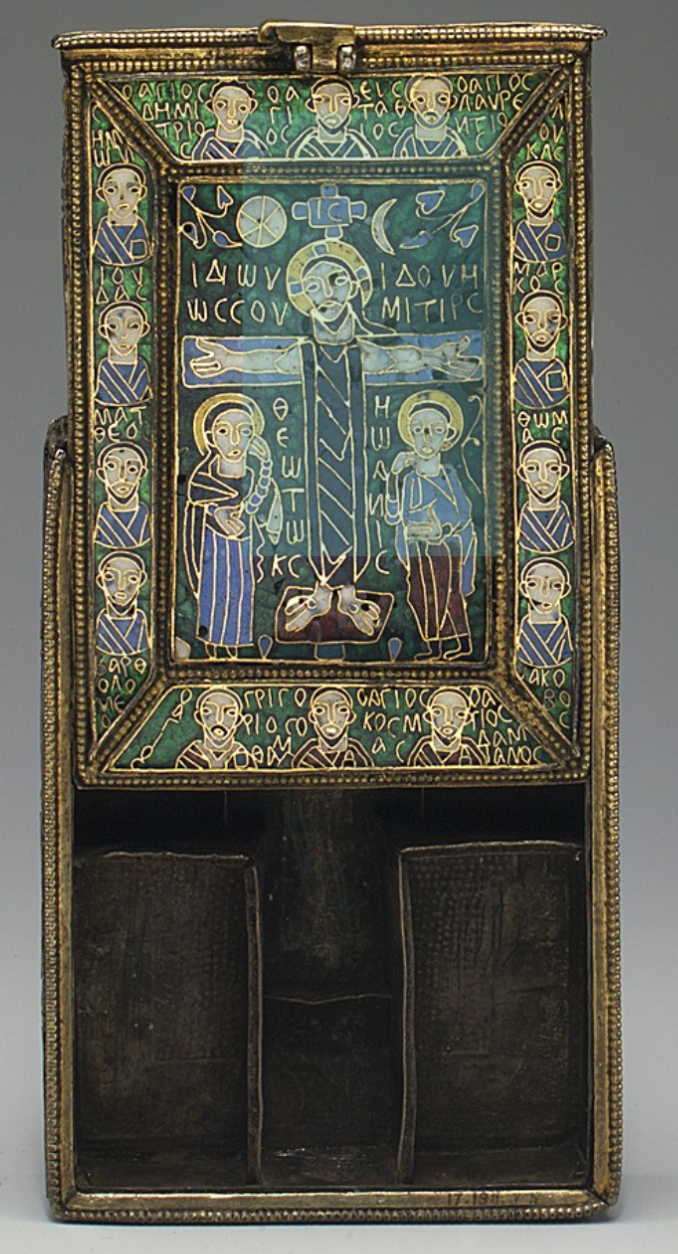
Fieschi Morgan Staurotheke
artist unknown, early 9th century, gilded silver, enamel, cloisonné, wood
reliquary for a fragment of the True Cross
enamel figures represent saints, angels, and Christ
an elite devotional object linking Byzantium with Western collectors
exemplifies prestige of Byzantine enamel techniques
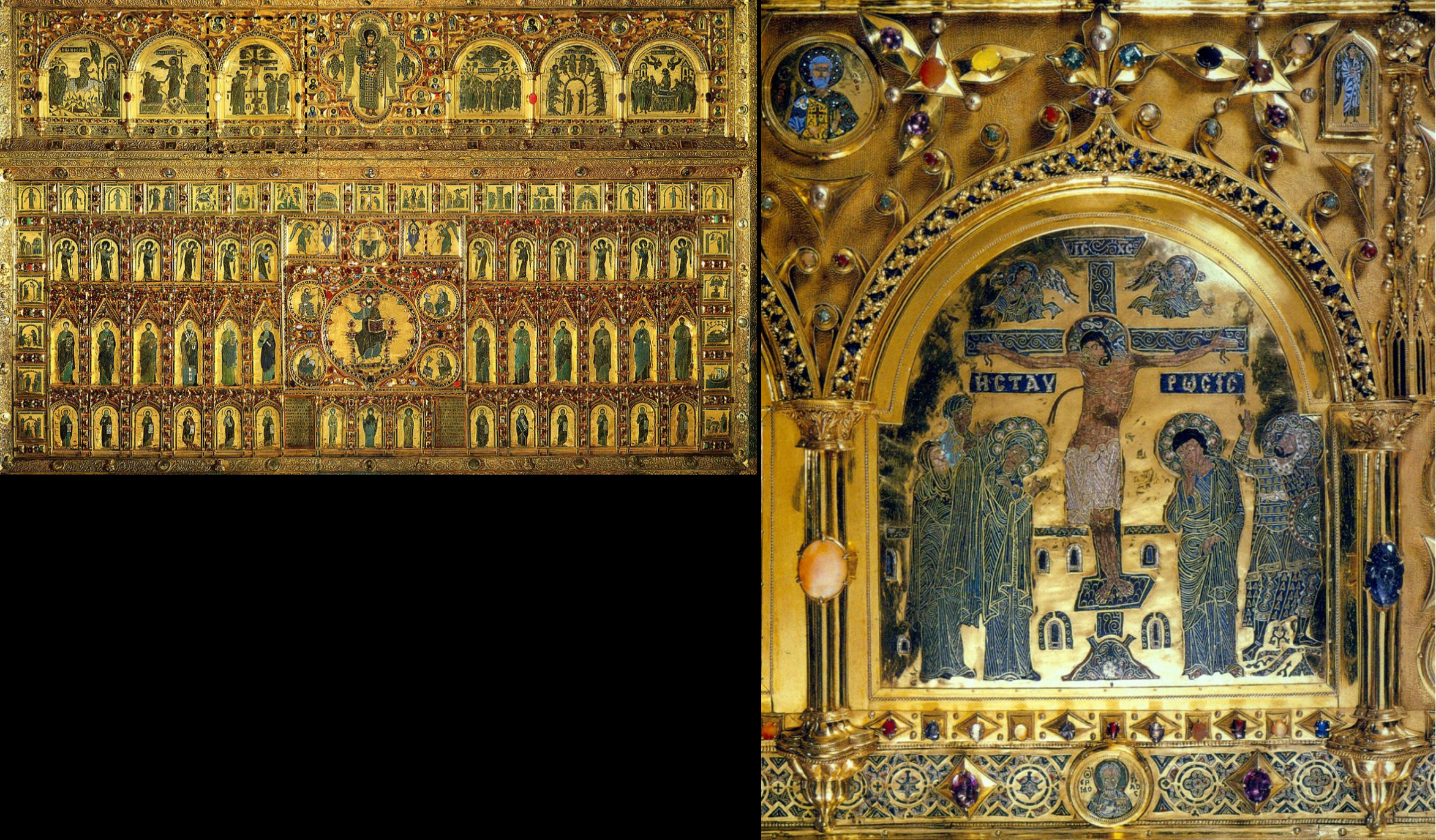
Crucifixion, from the Pala d’Oro
artist unknown, 1130 CE, gilt metal, precious stones, enamel
one of the greatest surviving Byzantine fold altar screens
shows the crucifixion in classically influenced, carefully modeled enamel work
Venice used by Byzantine artisans to legitimize its political-religious authority
embodies wealth, splendor, and theological precision of Byzantine luxury arts