The Cardiac Cycle
 Call Kai
 Learn
Learn Practice Test
 Spaced Repetition
 Match
Match Flashcards
 Knowt Play
1/20

There's no tags or description
Looks like no tags are added yet.
Name | Mastery | Learn | Test | Matching | Spaced | Call with Kai |
|---|
No analytics yet
Send a link to your students to track their progress
21 Terms
Systole
contraction
Diastole
Relaxation
Cardiac cycle
the period between the start of one heart beat and the contraction of the next
Phase 1 - Atrial Systole
Atria fills with blood while depolarization occurs at the SA node; pressure builds up and AV valves opens; blood flows into the ventricles and atria contract to push out any remaining blood
Phase 2 - Atrial Diastole
atria relax, pressure declines, and chambers increase in size
Phase 3 - Ventricular Systole
ventricles fill with blood; Depolarization from Purkinje fibers make ventricles contract and push AV valve close; isovolumetric contraction occurs until pressure in ventricles make the semilunar valves open; blood flows out of ventricles
The right ventricle ejects blood into the ________________________
pulmonary artery
The left ventricle ejects blood into the __________________________
aorta
At the base of the aorta is the coronary artery which supplies blood to the ___________________
myocardium
Phase 4 - Ventricular Diastole
ventricles relax, chamber size increases, Semilunar valve closes; isovolumetric relaxation occurs before the AV valves open before the next cardiac cycle
isovolumetric contraction
ventricular pressure must overcome pressure in the aorta before the semilunar valves open
isovolumetric relaxation
ventricular pressure must fall below that of the atria before the AV valves can open
What direction does pressure move in?
pressure always moves from and high concentration to a low concentration
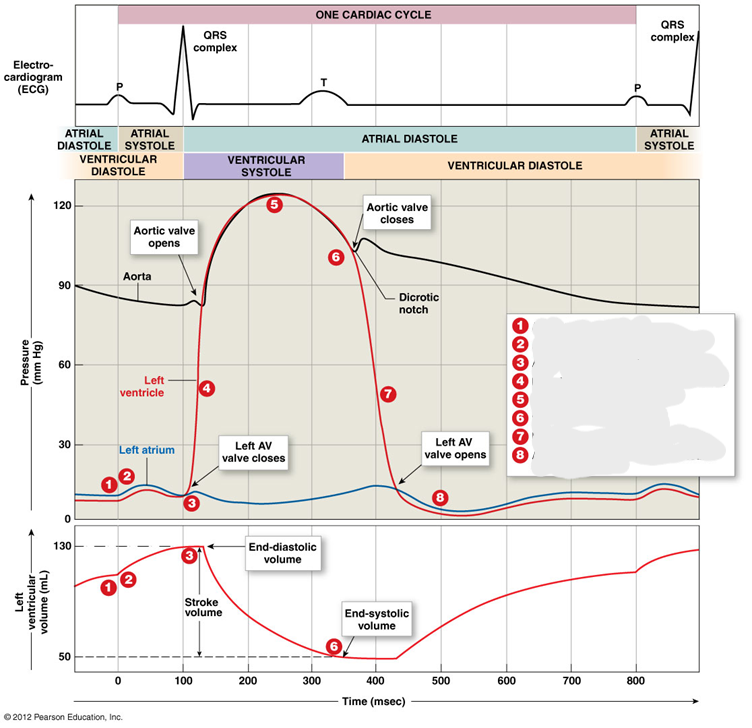
Step 1
atrial contraction begins
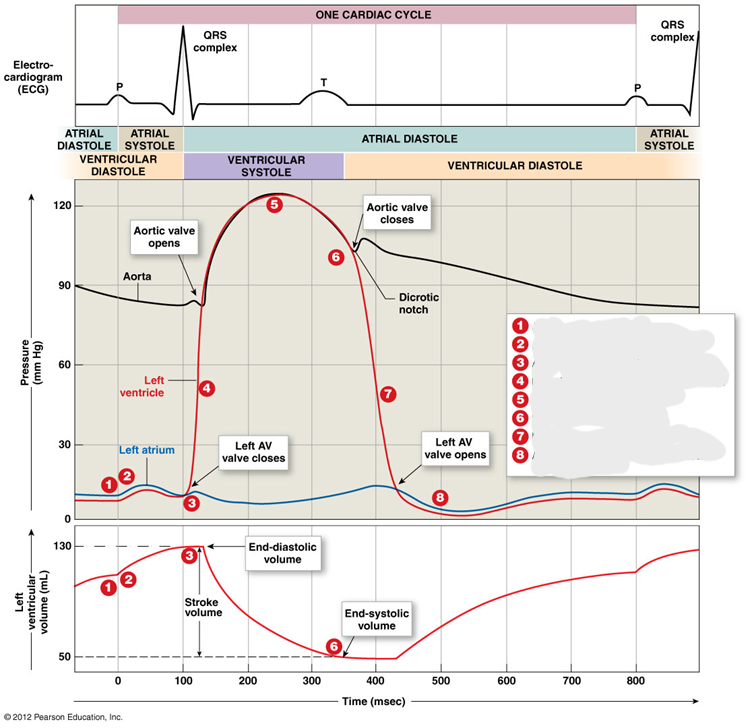
Step 2
Atria ejects blood into the ventricles
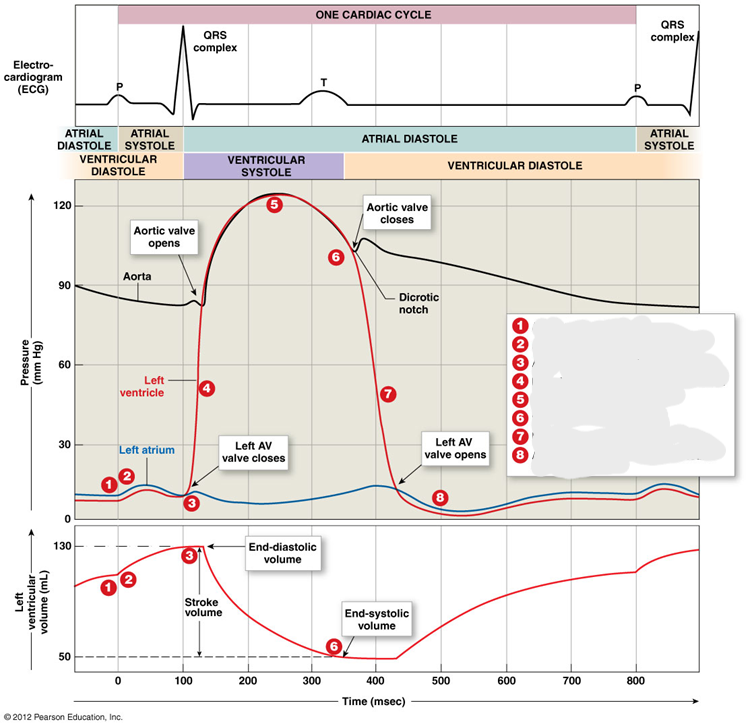
Step 3
Atrial Systole ends and AV valve closes
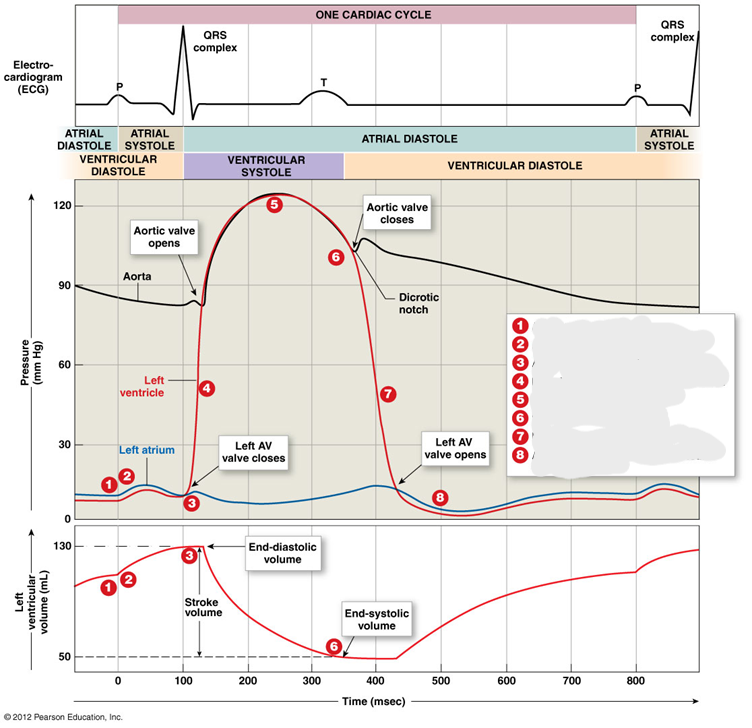
Step 4
Isovolumetric contraction occurs
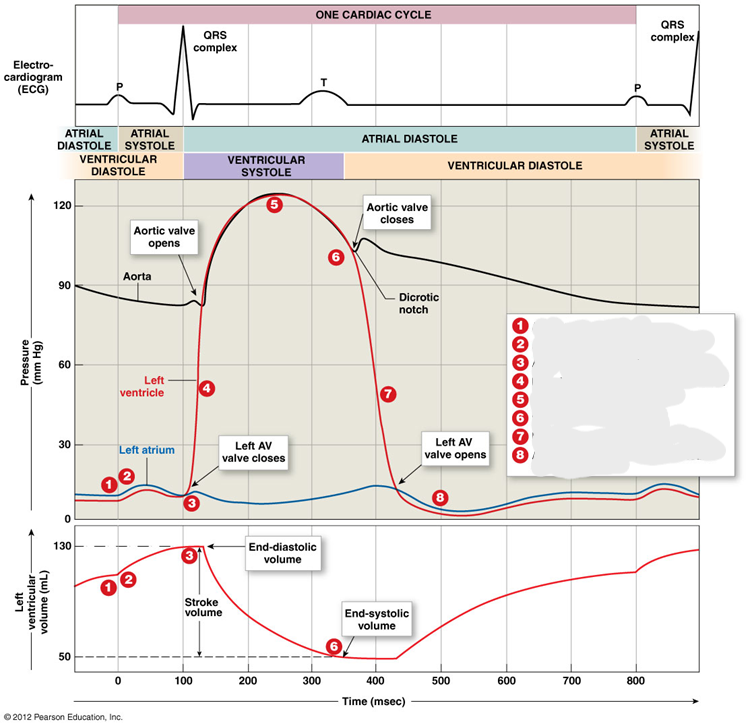
Step 5
ventricular ejection occurs
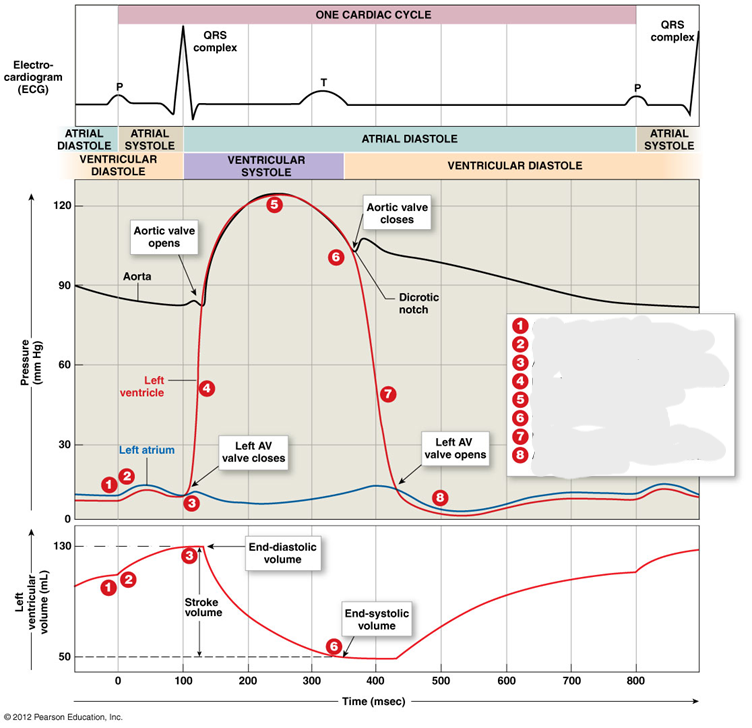
Step 6
semilunar valves close
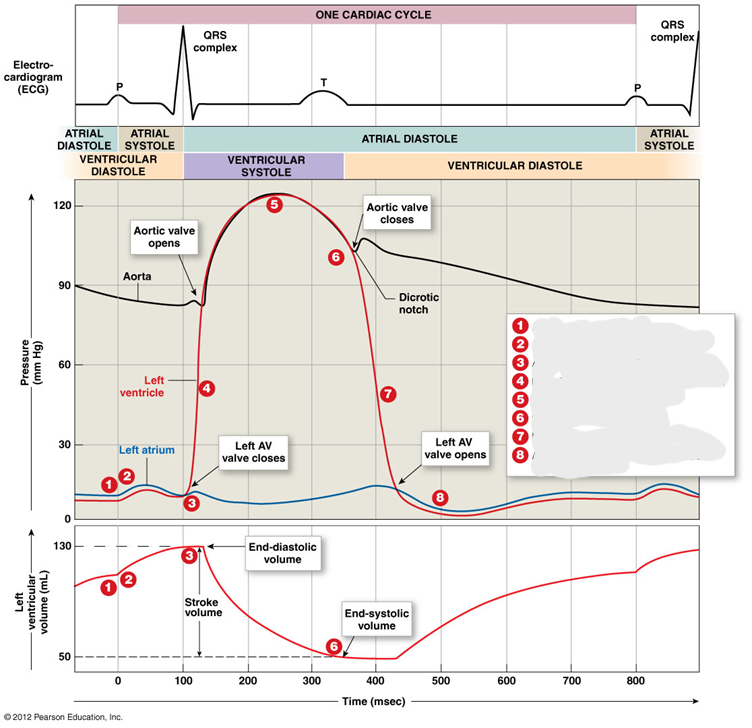
Step 7
isovolumetric contraction occurs
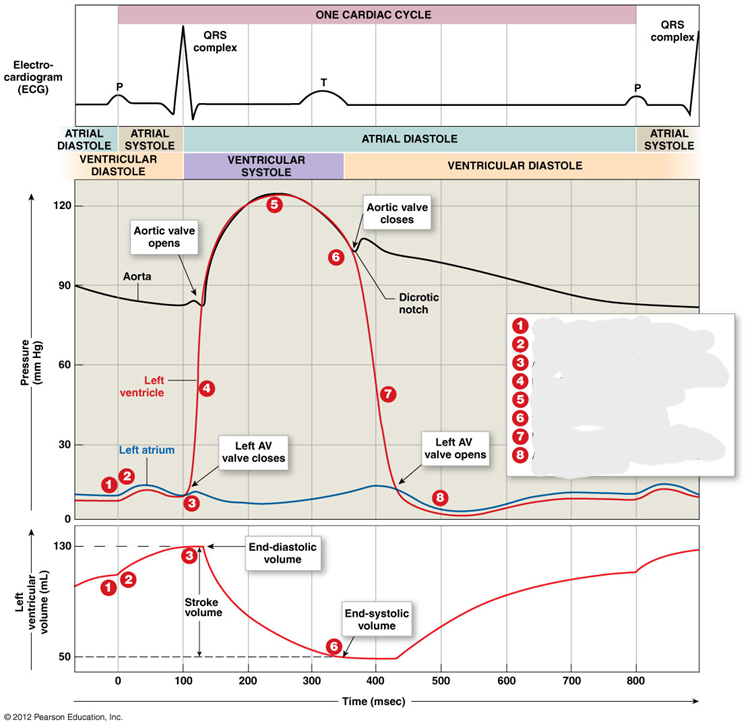
Step 8
AV valve opens; passive ventricular filling occurs