8. Embryology of the Reproductive Tract 2
 Call Kai
 Learn
Learn Practice Test
 Spaced Repetition
 Match
Match Flashcards
 Knowt Play
1/24

There's no tags or description
Looks like no tags are added yet.
Name | Mastery | Learn | Test | Matching | Spaced | Call with Kai |
|---|
No analytics yet
Send a link to your students to track their progress
25 Terms
divisions of the urogenital ridge
nephrogenic cord→ urinary system
genital ridge
gonads
ductal system
what is the paramesonephric duct also known as
mullerian duct
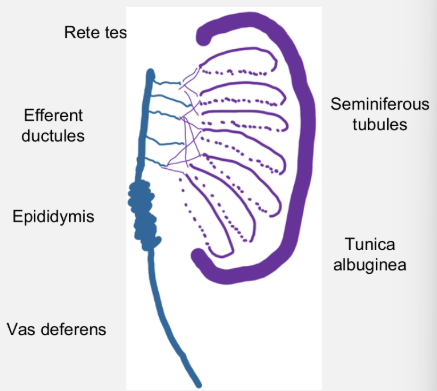
what structures are within the testes
tubules
seminiferous tubules
rete testis
leydig cells→ produce testosterone
sertoli cells→ produce anti-mullerian hormone
sperm
what germ layer are the structures within the testes derived from
sperm→ primordial germ cells
tubules, leydig cells, sertoli cells→ mesoderm derived
components of the male ductal system
efferent ductules
epididymis
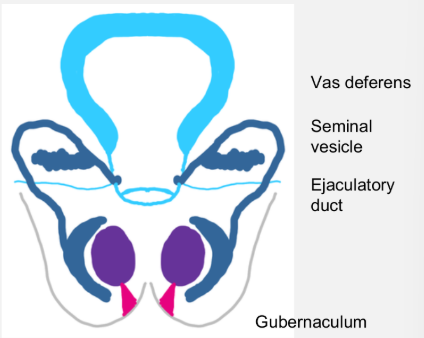
vas deferens
seminal vesicles
ejaculatory duct
affect of hormones on growth of ducts
testosterone stimulates mesonephric duct to grow
paramesonephric duct regresses due to AMH production
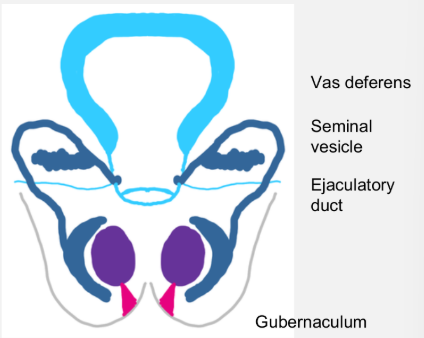
insertion of seminal vesicles and vas deferens
have common entry to prostatic urethra→ ejaculatory duct
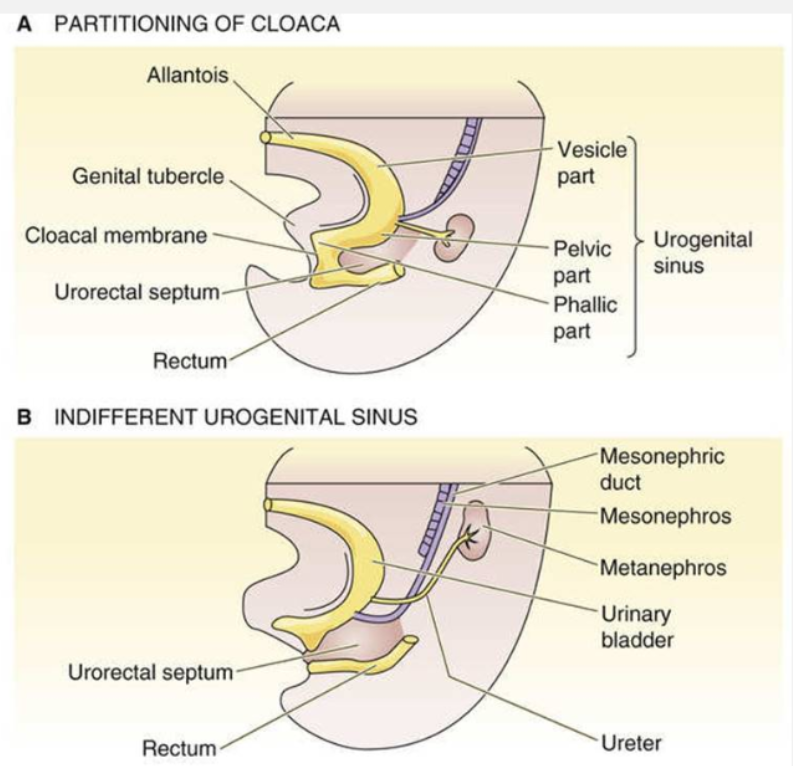
what do bladder and urethra form
urogenital sinus portion of the cloaca
ductal system→ month 9
testes in their final position within the scrotum
gubernaculum is significantly shorter
where are elements of the ovaries derived from
follicular cells→ mesoderm
oocytes→ primordial germ cells
growth of the ducts in females
no sertoli cells- AMH→ paramesonephric duct persists
without testosterone production, mesonephric ducts regress
what does the mullerian ducts give rise to
uterine tubes
uterus
upper 2/3 vagina
where are paramesonephric ducts in relation to the bladder
sat dorsally
means uterus forms posterior to bladder
gubernaculum aids descent of the ovaries to the pelvic region
what does the gubernaculum split into
ovarian ligament
round ligament of the uterus→ anchored in labia majora
when do ovaries reach their final position
month 9
causes of abnormalities of the uterus
failure of paramesonephric ducts to fuse
failure of uterine septum to degenerate
failure of one paramesonephric duct to elongate
persistent mullerian duct syndrome
affects genetic males
mutation in AMH gene→ no AMH production= paramesonephric ducts persist
both mesonephric and paramesonephric duct derivatives develop
normal male external genitalia but associated with cryptorchidism
formation of the lower portion of the vagina
urogenital sinus develops sinovaginal bulbs
fuse with paramesonephric ducts to form lower third of the vaginal canal
separation of the cloaca
separates to form urogenital sinus and rectum
around week 4→ both males and females have the same formation in the urogenital sinus
indifferent stage of external genitalia
mesoderm cells migrate to surround cloacal membrane→ form elevated cloacal folds
cloacal folds unite anteriorly to form genital tube→ future penis/ clitoris
cloacal folds divide into anal and urethral divisions
genital swellings appear next to urethral folds→ future scrotum/labia majora
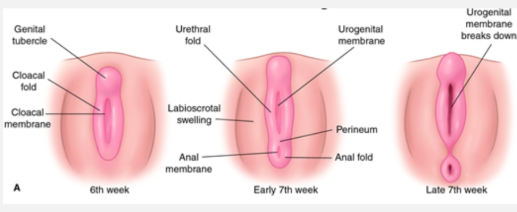
what is differentiation of external genitalia reliant on
presence of androgen
differentiation of external genitalia→ males
elongation of urogenital tubercle into phallus
labioscrotal folds move caudally→ become scrotum
month 9
urethral groove has fused to form penile urethra
labioscrotal swellings have united in midline to form scrotal septum
hypospadias
incomplete fusion of urethral folds→ urethra opens on ventral surface of penis/scrotum
difficulty urinating
can be repaired surgically using foreskin
epispadias
urethral opening on dorsal surface of penis
genital tubercle develops posteriorly in urogenital sinus
generally occurs with exstrophy of the bladder
differentiation into female genitalia
occurs under influence of oestrogen
genital tubercle elongates slightly to form clitoris
urethral folds do not fuse→ form labia majora
genital swellings form labia majora
urogenital groove remains open