Drivers ed signs
 Call Kai
 Learn
Learn Practice Test
 Spaced Repetition
 Match
Match Flashcards
 Knowt Play
1/65

There's no tags or description
Looks like no tags are added yet.
Name | Mastery | Learn | Test | Matching | Spaced | Call with Kai |
|---|
No analytics yet
Send a link to your students to track their progress
66 Terms
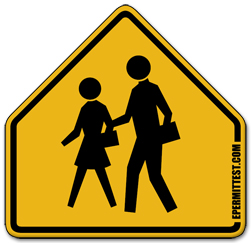
School Zone - Five-sided sign back on yellow is used only to warn of schools and school crossings. Slow down – school zones have a speed limit you must observe. Watch out for children crossing the street or playing. Be ready to stop. Obey signals from any crossing guards. New fluorescent yellow-green signs may also be used.
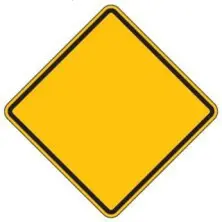
This diamond-shaped sign means WARNING. It may be yellow, yellow-green, or orange with black wording or symbols. This sign warns you about hazards or possible hazards on or near the roadway. Slow down and use caution when you see this type of sign.
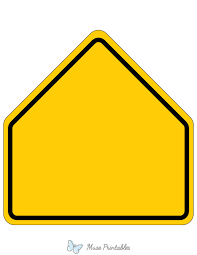
This five-sided sign is yellow or yellow-green with black symbols. It means either SCHOOL ZONE or SCHOOL CROSSING. If the sign shows two children walking, a school is nearby. If the sign shows two children walking with a downward pointing arrow, you are at a school crossing.
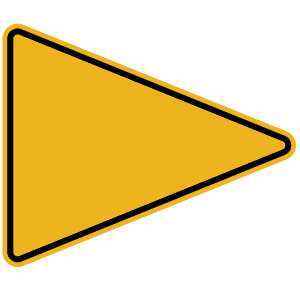
This three-sided sign is yellow with black letters and indicates a NO PASSING ZONE. The sign will appear on the left side of a two-lane, two-way roadway at the beginning of the area where “no passing” pavement markings are also used.
RED signs are regulatory signs and must be obeyed. They include STOP, YIELD, DO NOT ENTER, or WRONG WAY.

Some BLACK and WHITE signs are regulatory signs and must be obeyed. Others are used as route markers and are illustrated in the Guide Signs section on page 75.
YELLOW is used for warning signs. These signs tell you of road conditions and dangers ahead.

YELLOW-GREEN can also be used for warning signs. These signs alert you to pedestrian and bicycle crossings, playground areas, school bus stops, and school zones.
ORANGE is used for warning signs, usually found in construction or maintenance zones along streets and highways. These signs alert you to possible dangers ahead due to construction and maintenance projects.
GREEN is used for guide signs. These signs tell you where you are, which way to go, and the distance to upcoming destinations.
BLUE is also used for guide signs. These signs tell you about services along the roadway.
BROWN is used for parks and recreation signs.

PINK may be used for traffic incident signing. These signs alert you to possible dangers ahead due to unplanned traffic incidents, such as traffic crashes and natural disasters.
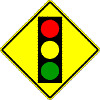
Signal ahead
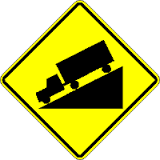
Downgrade This sign warns you of a dangerous hill. It may be very long or steep, have sharp curves. Slow your speed before starting down the hill.
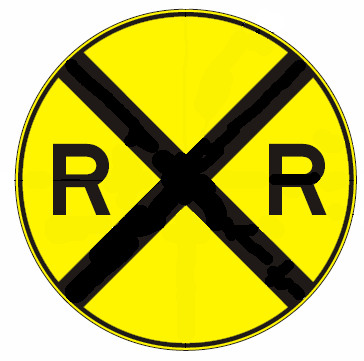
Rail Road crossing
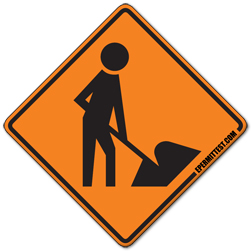
Workers Ahead - One of the work zone road signs. Workers may on or are very close to the roadway, so take special care when traveling through the area.
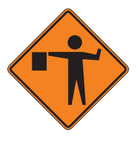
Flagger - The sign is also known as ROAD CONSTRUCTION AHEAD. This traffic signs warns you that a flagger is controlling traffic ahead. Flaggers use STOP and SLOW paddles or a red flag to signal traffic to stop or slow down. Pay special attentions to flaggers when approaching and traveling through a work zone.
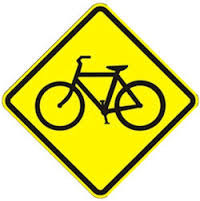
Bicycle Lane
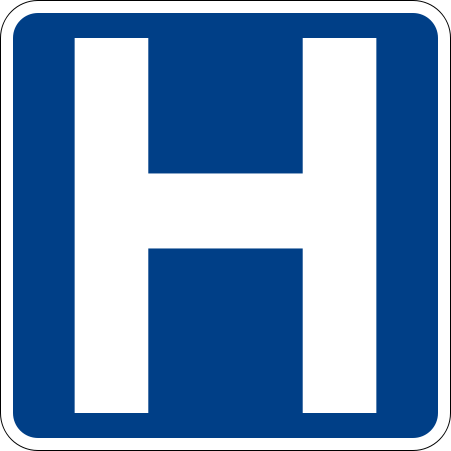
Hospital Sign
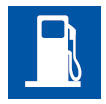
Diesel Fuel
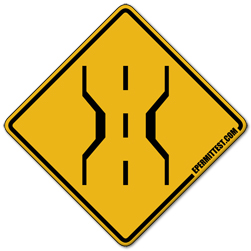
Narrow Bridge Ahead - Narrow bridge or overpass ahead. Room for two lanes of traffic but potentially dangerous. Slow down and watch out for oncoming vehicles.
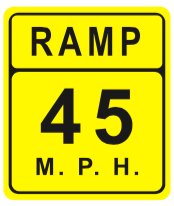
Advisory Ramp speed
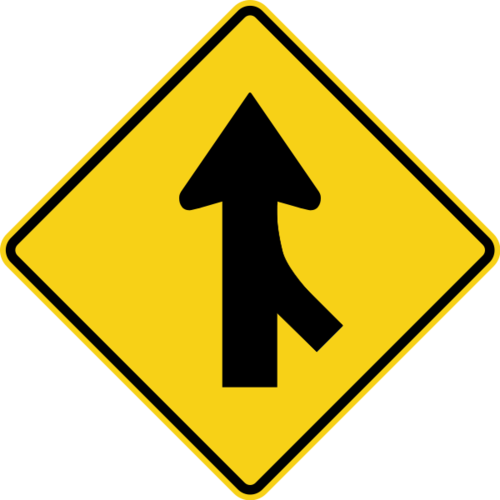
Merging Lanes - This sign tells you that two lanes of traffic going the same direction will soon merge into one lane. Be ready to either change lanes or allow other traffic to merge into your lane. Merge signs may appear on expressways just before expressway ramps. The driver on the expressway should slow down to let the driver on the ramp merge.
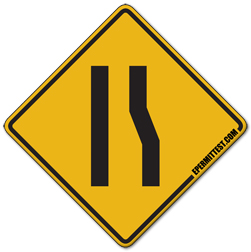
Lane Ends Ahead - Lane ends ahead. This sign is used on multi-lane highways to warn you of a reduction in the number of traffic lanes in the direction you are traveling. Be prepared to change lanes or to allow other vehicles to merge into your lane.
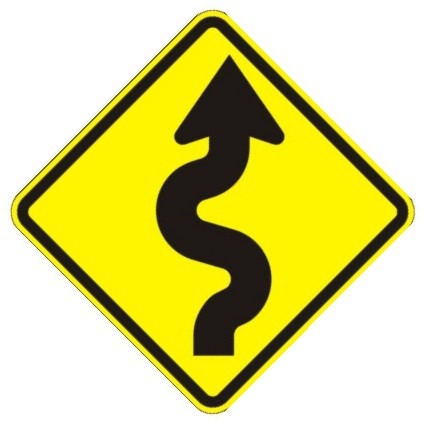
Winding Road
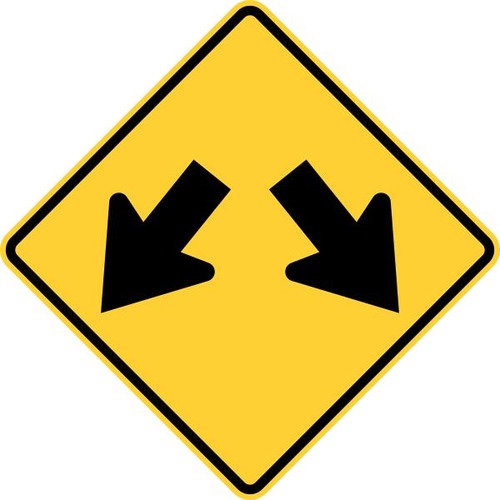
Island Ahead - Indicates traffic is permitted to pass on either side of a traffic island or an obstruction.
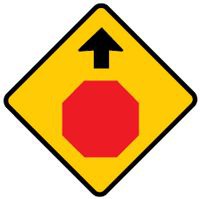
Stop Ahead
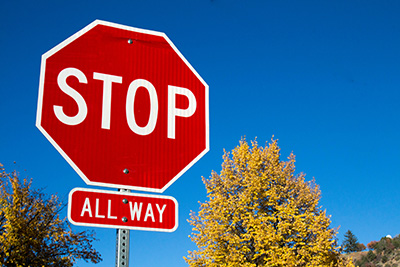
All-Way Stop This sign means there are STOP signs at each approach to an intersection. Traffic from all directions must stop. The first driver to stop is the first driver to go. Other drivers must wait their turn. You may also see 3-WAY, 5-WAY, or ALL-WAY signs underneath the stop sign.
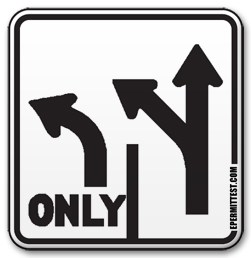
Lane Use Control Sign - ane use control signs are rectangular, black and white signs indicating that turning movements are required or the unusual turning movements are permitted from specific lanes at an intersection. You must move your vehicle only in the direction indicated for your traffic lane.
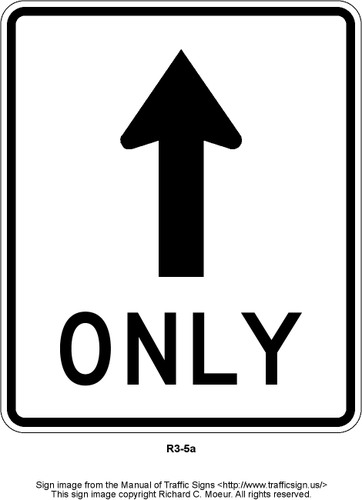
Straight ahead lane only
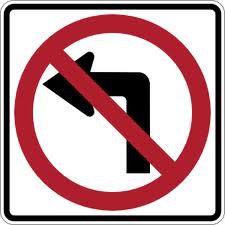
No Left Turn
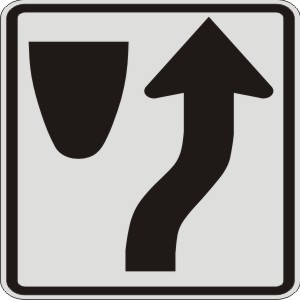
Keep Right
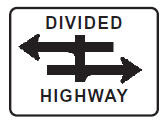
Divided Highway - Approaching a Divided Highway This sign is used on approaches to a divided highway. It informs you that a median separates both directions of traffic on the road you are going to turn onto or cross.
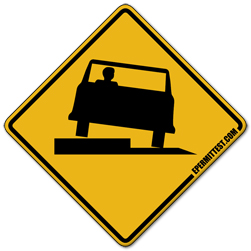
Shoulder Drop Off - used where the shoulder is more than three inches below the level of the road. If you stray off the roadway and one wheel drops off onto a low shoulder or a soft shoulder
Slow-Moving Vehicle - A vehicle displaying this sign is moving slowly. You must slow down and may pass only when safe and legal to do so.

Divided Highway begins - Divided highway begins. The highway ahead is split into two separate roadways by a median or divider and each roadway is one-way. Keep to the right.
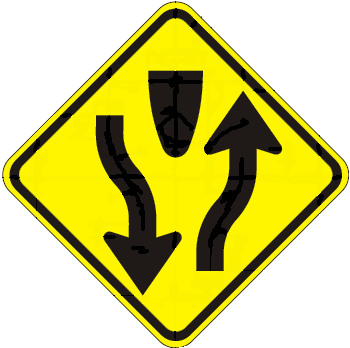
Divided Highway end - The divided highway on which you are traveling ends 350 to 500 feet ahead. You will then be on a roadway with two-way traffic. Keep to the right of approaching traffic.
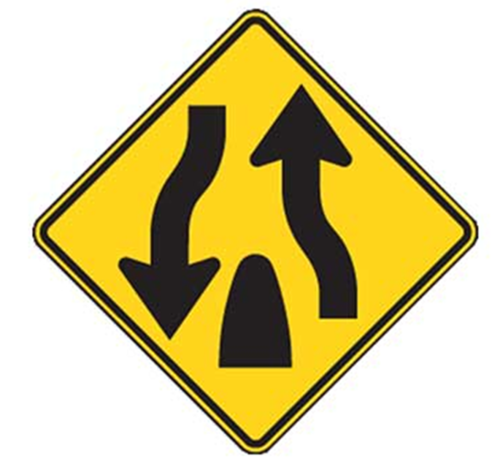
Two-Way Roadway - This sign informs you that you are leaving a divided roadway and approaching a two-way highway.
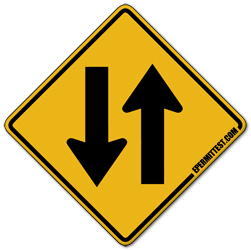
Center Turn Lane - The center lane is shared for left turns in both directions of travel. Traveling or passing in the center turn lane is forbidden.
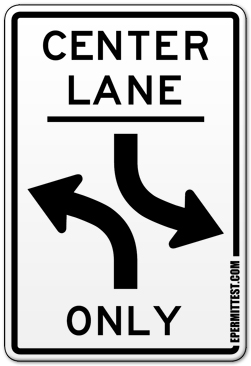
Weave Area - This sign is used to warn that you will be merging with another roadway as some traffic is exiting and crossing your path. In most cases, it is installed at highway interchanges that don't have dedicated merge and exit lanes, where traffic entering the highway may intersect with traffic exiting the highway. In most situations, traffic exiting the highway through a weave lane has the right of way over traffic entering the highway.
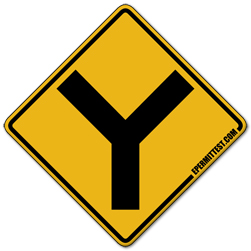
Y Intersection - One of the intersection traffic signs. There is a three-way intersection up ahead on the road, with all roads being of equal size and importance.
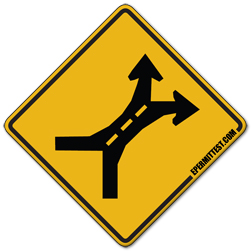
Added Lane - Added lane, merging not required, watch for other vehicles changing lanes.
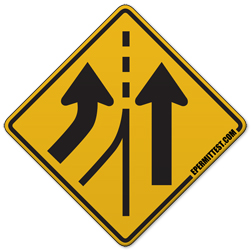
Road Entering Curve - The main road curves to the left with a side road entering from the right. Approach the intersection with extra caution. A driver preparing to enter the main road may not be able to see you approaching from around the curve and may pull out in front of you, leaving you little room to avoid a crash, if you are traveling too fast.
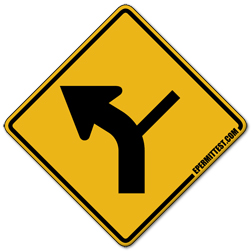
Cross Traffic - Slow down and watch for cross traffic. Look carefully in all directions for traffic.
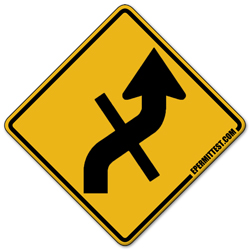
Low Clearance - When a bridge has an overhead clearance less than 14 feet, this sign is posted indicating the actual legal overhead clearance of a bridge or elevated structure.
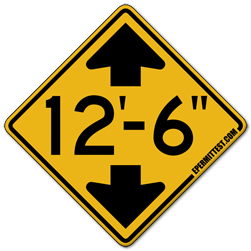
Roundabout - A roundabout is a circular intersection that usually does not include a traffic signal and flows in a counter-clockwise direction around a central island. Motorists must enter from the right - yielding to traffic already in the roundabout - and follow the circle to the right until the desired roadway is reached.
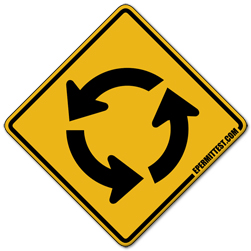
T Intersection - T intersection. One of the intersection traffic signs. The road you are traveling on ends straight ahead. Slow down and prepare to stop before turning. Most T-intersections will feature a YIELD sign or a STOP sign to remind you to give the right-of-way to cross traffic.
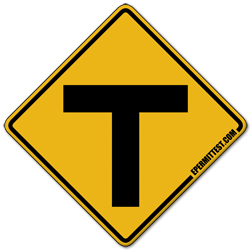
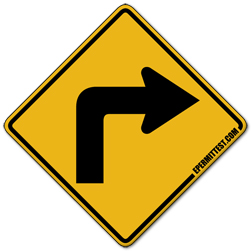
Sharp Right Turn - The road will make a sharp turn to the right. Slow your speed, keep to the right, and do not pass other vehicles.
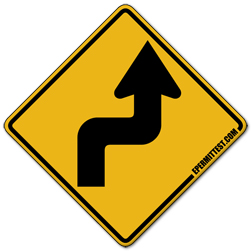
Sharp Turns (Left-Right) - There is a series of sharp turns up ahead on the road. The road will first turn to the left and then to the right. The sign is frequently accompanied by a placard that indicates recommended speed for these turns. Slow down to negotiate sharp turns safely.
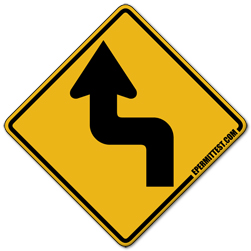
Sharp Turns (Right-Left) - There is a series of sharp turns up ahead on the road. The road will first turn to the right and then to the left. The sign is frequently accompanied by a placard that indicates recommended speed for these turns. Slow down to negotiate sharp turns safely.
Set of Curves (Left-Right) - There is a series of curves up ahead on the road. The road will first curve to the left and then to the right. The sign is frequently accompanied by a placard that indicates recommended speed for the curve. Slow down to negotiate these curves safely.
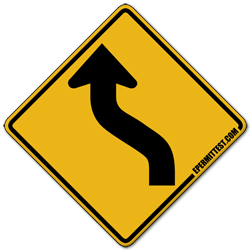
Set of Curves (Right-Left) - There is a series of curves up ahead on the road. The road will first curve to the right and then to the left. The sign is frequently accompanied by a placard that indicates recommended speed for the curve. Slow down to negotiate these curves safely.
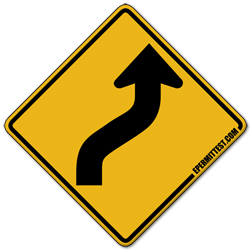
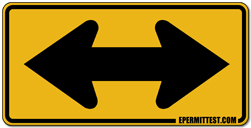
Two Direction Arrow - This sign is placed at the intersection. Yield the right-of-way or stop before turning right or left. You cannot travel straight through the intersection and must turn either right or left.
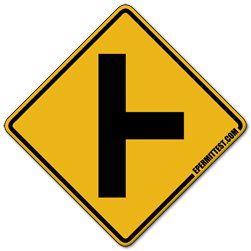
Side Road - Side road enters highway from right. One of the warning intersection traffic signs that can help you navigate an approaching intersection.
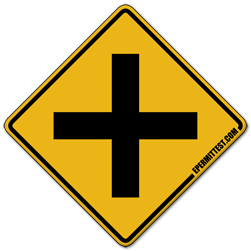
Cross Road - Another road crosses the highway ahead. The driver who stops first proceeds first. Tie goes to the right. If two or more drivers arrive at the same time, the driver to the right has the right-of-way. Turning left yields.
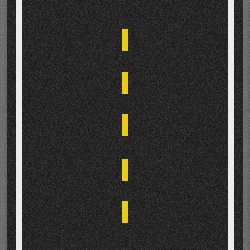
Single Broken Yellow Line - A single, broken yellow centerline shows the center of a two-way, two-lane road. Passing is permitted on either side, if safe conditions exist. When passing, you must use the lane belonging to oncoming traffic.
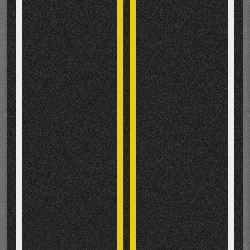
Double Solid Yellow Line - A double, solid yellow centerline shows the center of a two-way road. Even if it is not marked with a NO PASSING sign, passing by traffic traveling in either direction is not allowed on roads marked in this manner.
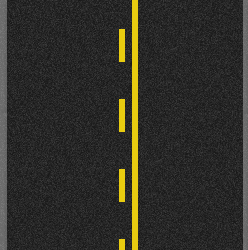
Solid Yellow and Broken Yellow Centerline - The combination of a solid yellow and a broken yellow centerline also shows the center of a two-way roadway. You may pass if the broken line is on your side of the road and safe conditions exist, but you may not pass when a solid yellow line is on your side of the road.
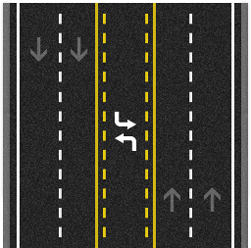
Center Turning Lane - Three-lane highways. The solid yellow centerline means you cannot use the center lane for passing. The broken yellow centerlines show that vehicles traveling in either direction may use the center lane only to make left turns. A two-way left turning lane is a dedicated turn lane, make sure to use it as such.
True or False - A merge sign means drivers should be prepared to change lanes or allow other traffic to come into their lane.
True
True or False - When approaching a stop sign that is not marked by a crosswalk, drivers should stop their vehicles before entering the intersection.
True
True or False - An orange sign means drivers should be alert, adjust their speed, and be prepared to stop if necessary.
True
True or False - A driver approaching a vehicle with a slow-moving vehicle sign should slow down and only pass when safe and legal to do so.
True
True or False - When approaching a railroad crossing sign, a driver should slow down, look, and stop if necessary
True
True or False - A diamond-shaped sign warns drivers of possible hazards.
True