ANAT 200 - Respiratory System
 Call Kai
 Learn
Learn Practice Test
 Spaced Repetition
 Match
Match Flashcards
 Knowt Play
1/26

There's no tags or description
Looks like no tags are added yet.
Name | Mastery | Learn | Test | Matching | Spaced | Call with Kai |
|---|
No analytics yet
Send a link to your students to track their progress
27 Terms
What is the primary function of the respiratory system?
Exchange of gas between the atmosphere and the blood, including uptake of O2 and release of CO2.
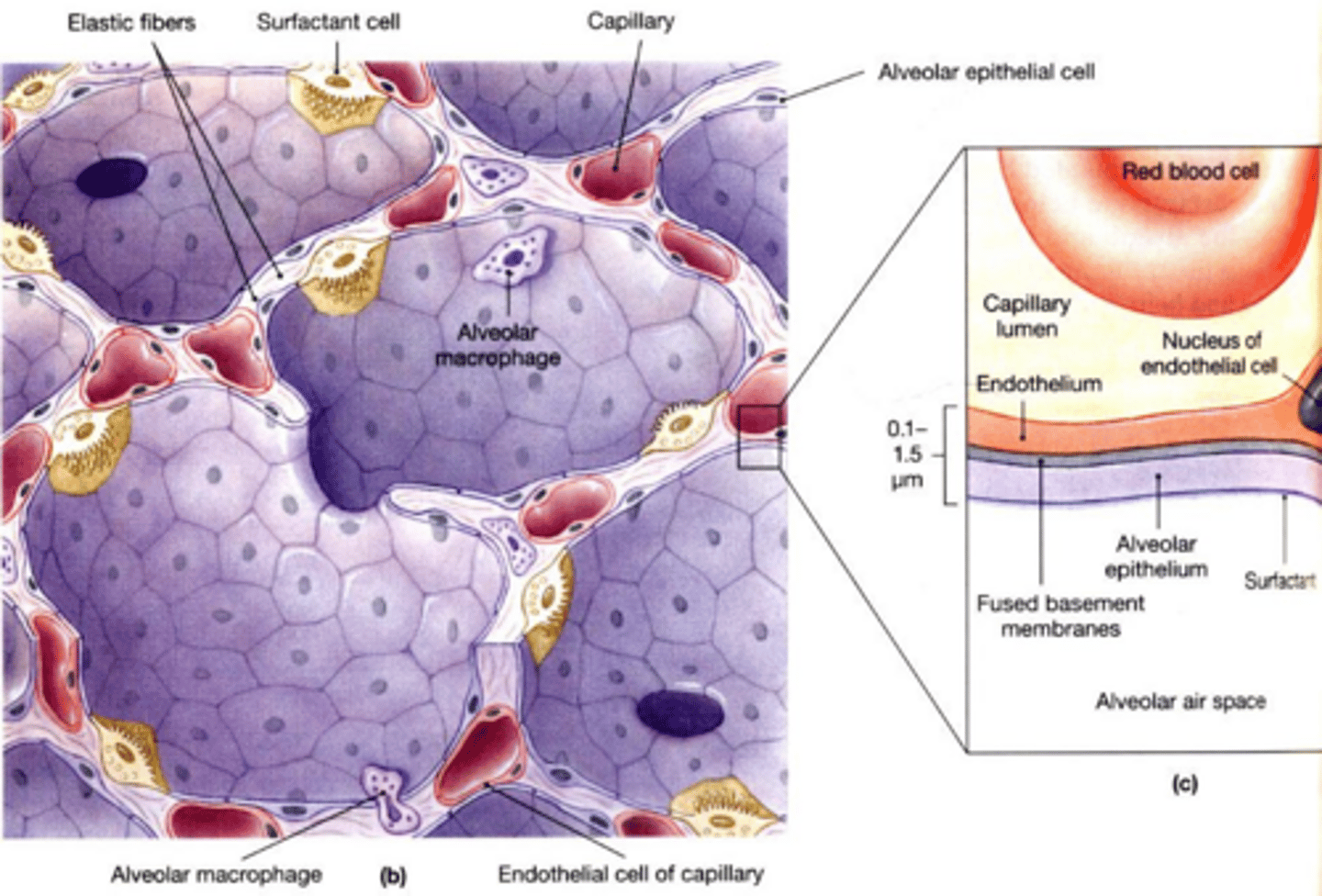
What is the approximate surface area of the respiratory area?
~70 sq. m (750 sq. ft)
What are the secondary functions of the respiratory system?
Filtration, temperature regulation, humidification of inspired air, olfaction (sense of smell), and production of sound.
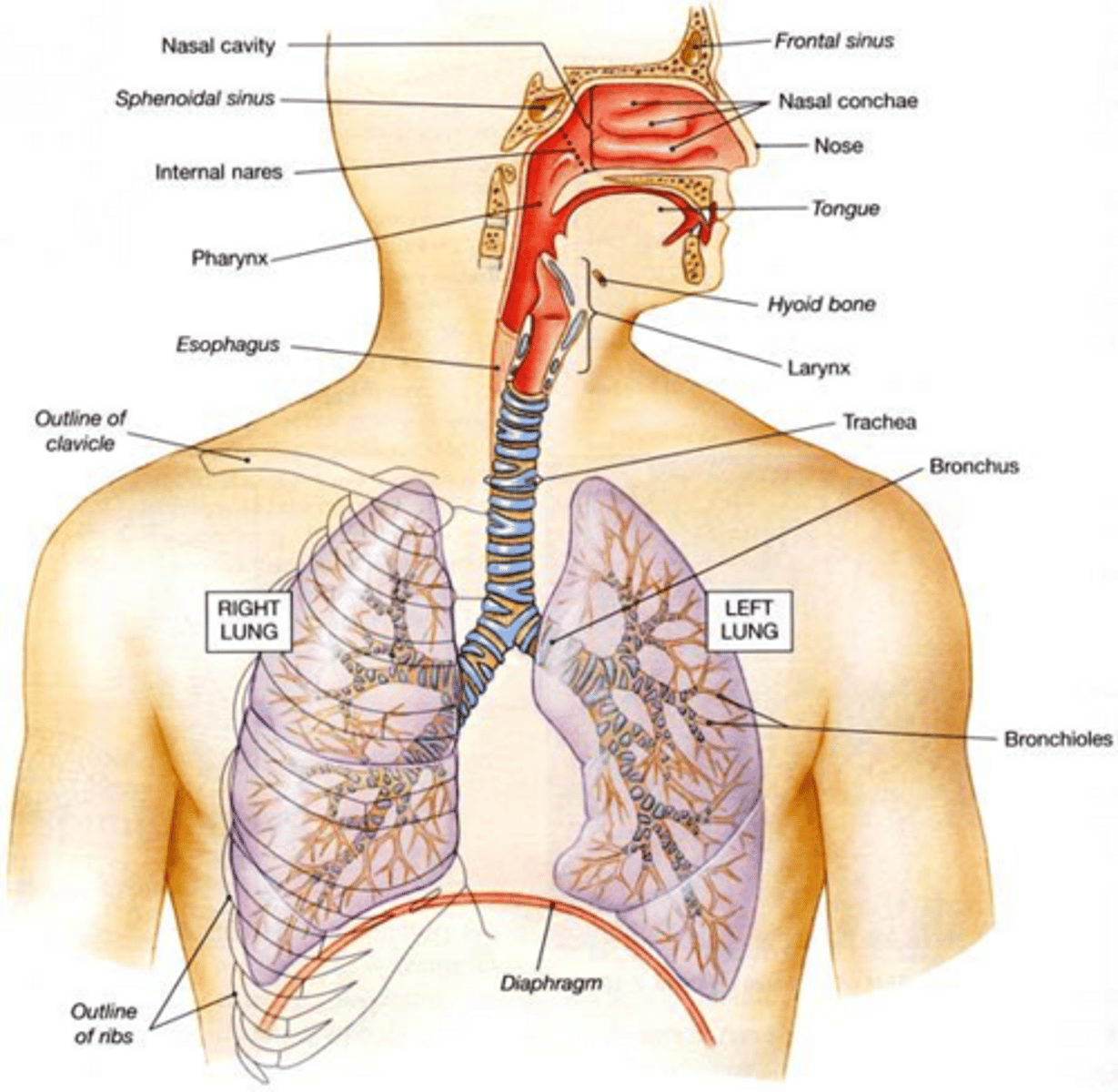
What are the major components of the respiratory system?
Nasal cavity, nose, pharynx, larynx, lungs, trachea, smaller airways, and diaphragm.
What are the two structural organizations of the respiratory system?
Upper and lower respiratory systems.
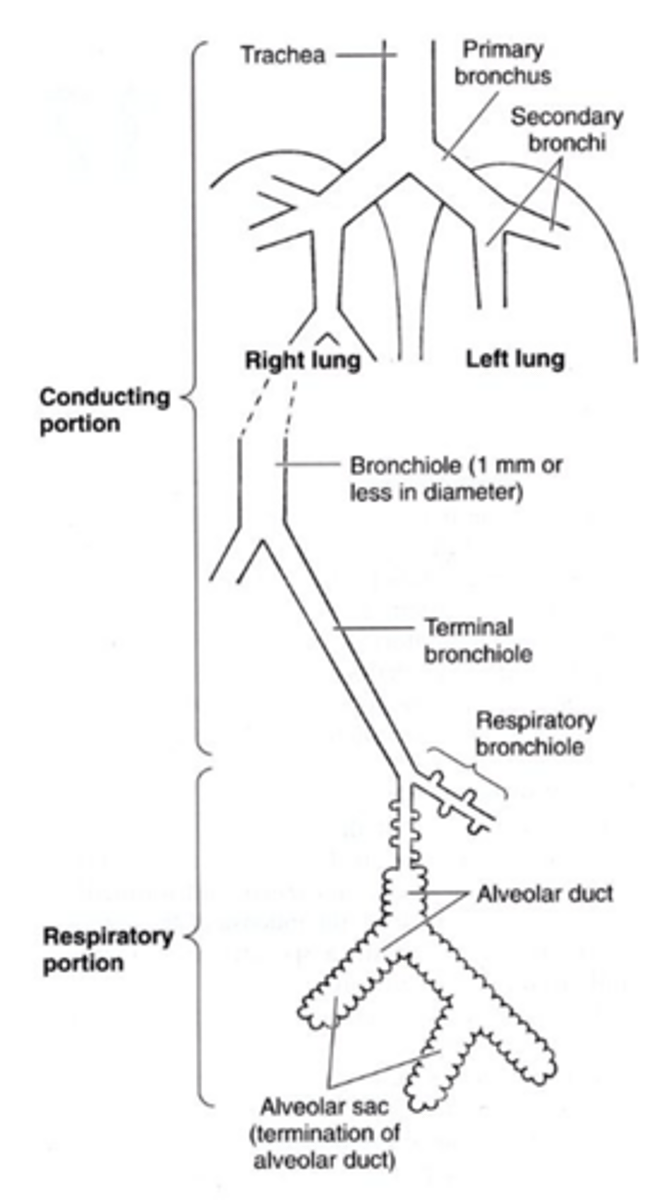
What distinguishes the conducting portion from the respiratory portion of the respiratory system?
The conducting portion only conducts air, while the respiratory portion conducts air and facilitates gas exchange.
What is the hilum of the lung?
The site where blood vessels, lymphatics, nerves, and airways enter and leave the lungs.
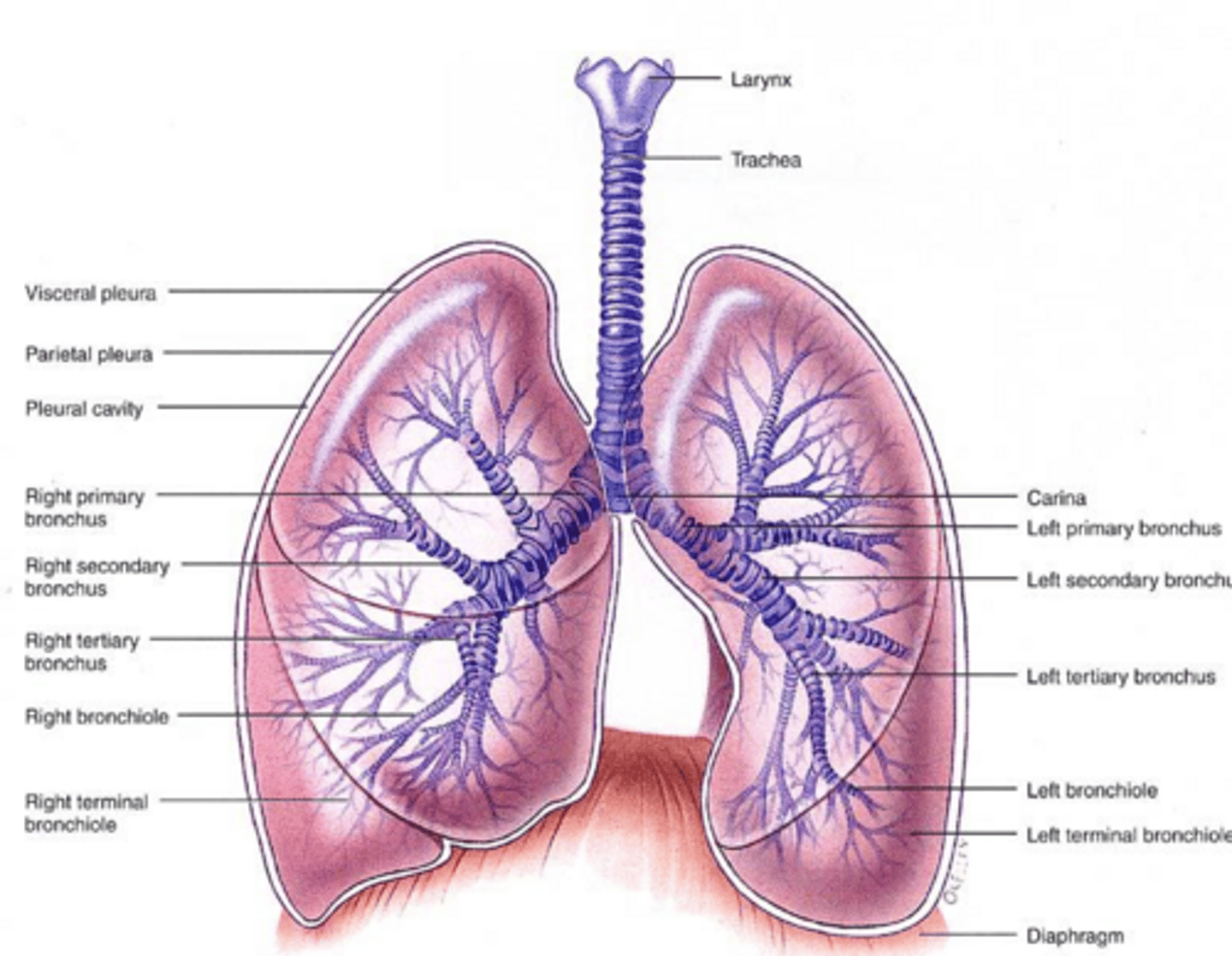
What are the major airways in the respiratory system?
Trachea, primary bronchi, secondary bronchi, tertiary bronchi, and terminal bronchioles.
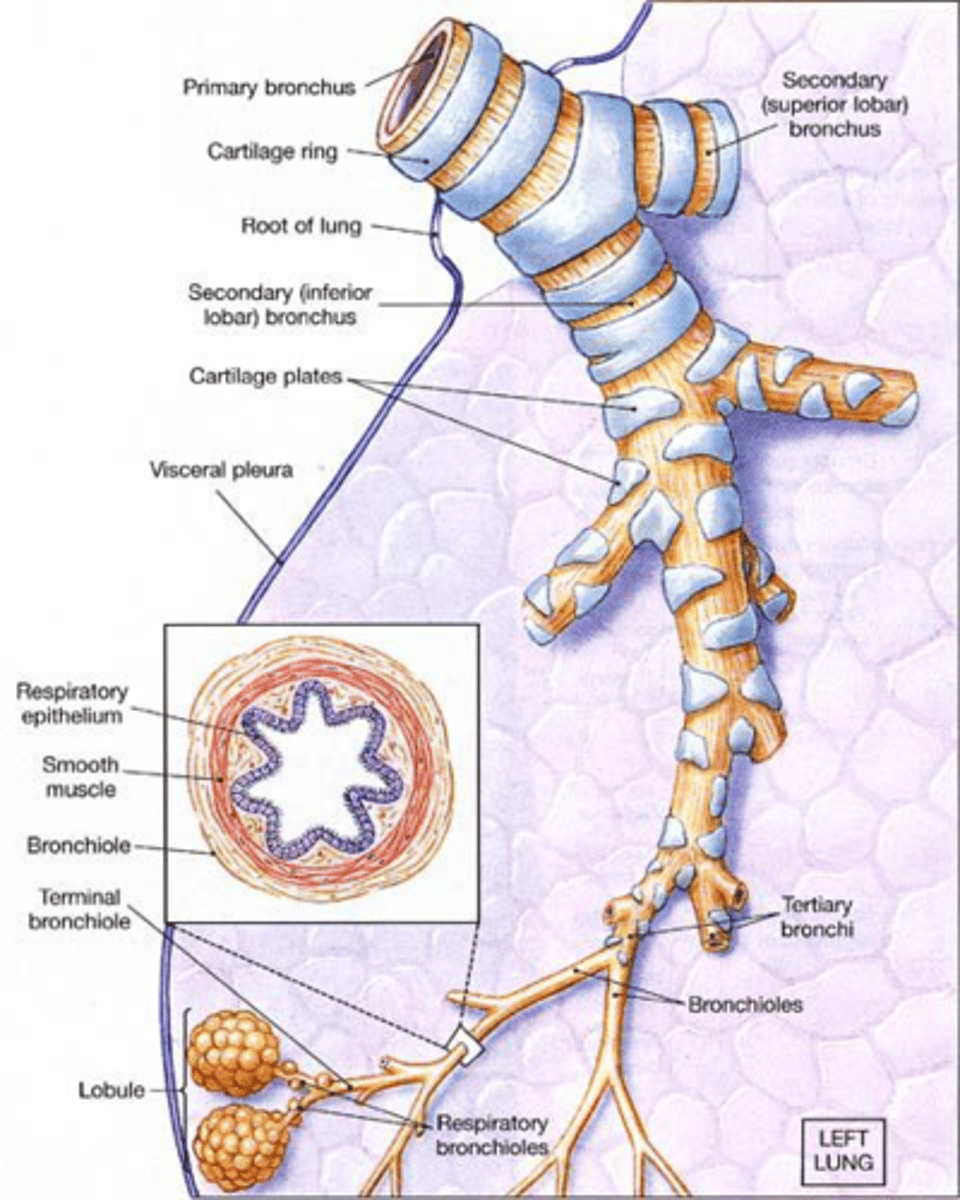
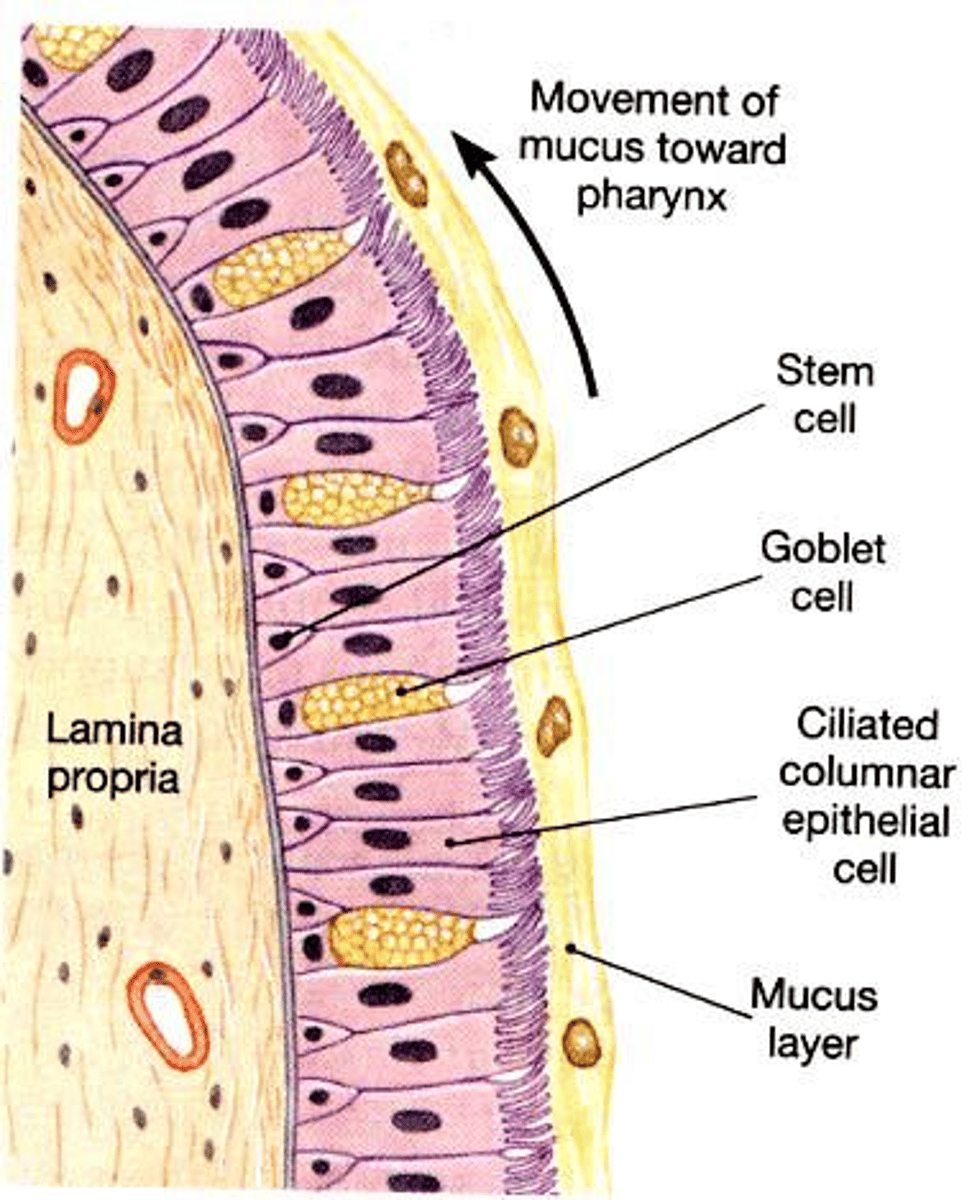
What type of epithelium is found in the respiratory system?
Pseudostratified epithelium in larger airways, transitioning to simple squamous in smaller tubes.
What is the role of Type II alveolar cells?
They secrete surfactant, which lowers surface tension of alveolar fluid and prevents alveolar walls from sticking together.
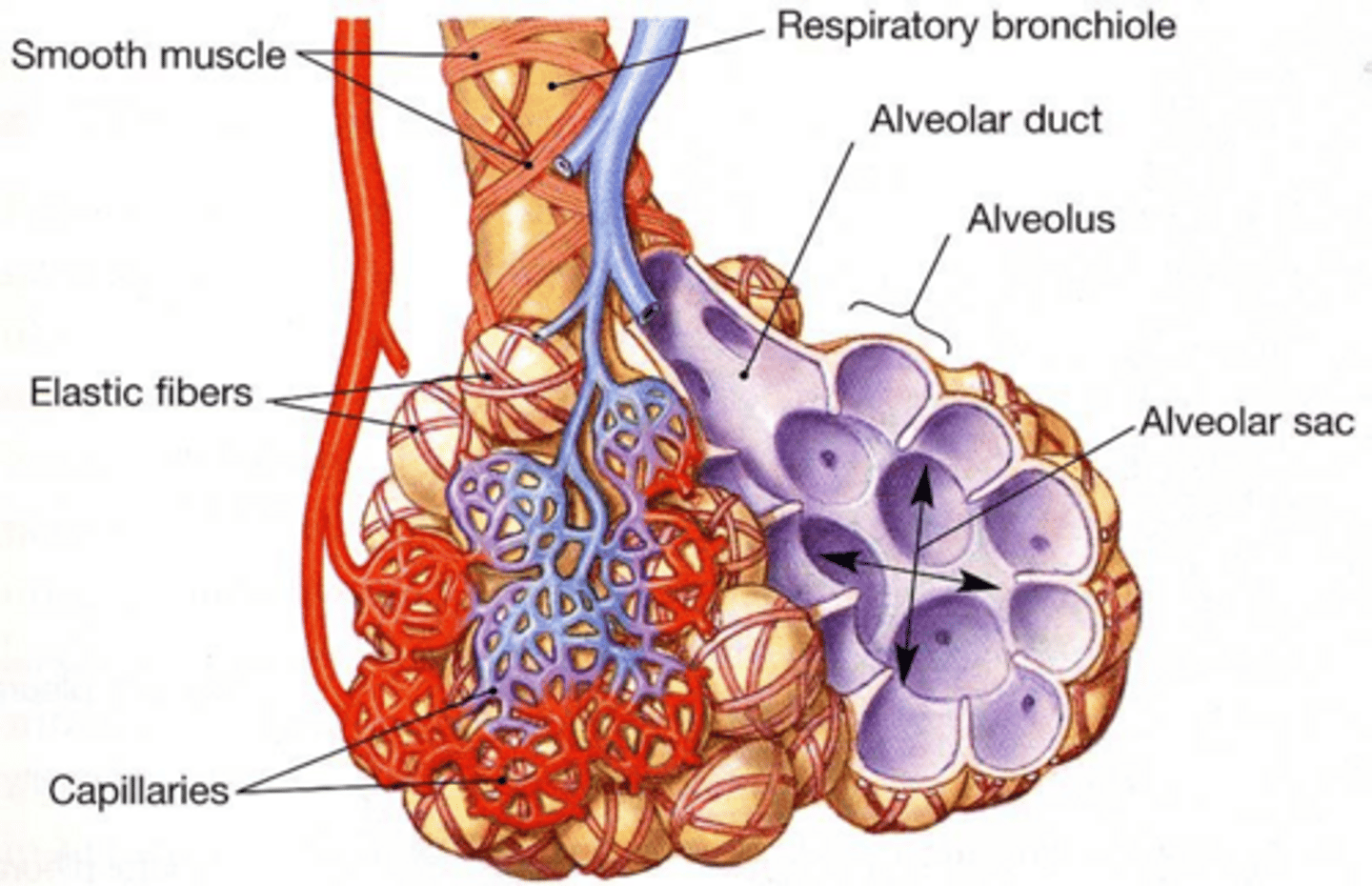
What is Respiratory Distress Syndrome?
A condition in premature infants due to inactive Type II alveolar cells, leading to a lack of surfactant and insufficient oxygenation.
What is the function of alveolar macrophages?
They ingest debris in alveoli and transport it out via ciliary action.
What are the muscles involved in inhalation?
Diaphragm, external intercostals, scalenes, sternocleidomastoid, and pectoralis minor.
What happens during an asthma attack?
Smooth muscle in bronchioles contracts, reducing airflow due to parasympathetic stimulation and mediators of allergic reactions.
What is emphysema?
A condition characterized by reduced ability to exhale air due to breakdown of alveolar walls, leading to larger air spaces and reduced gas exchange efficiency.
What is the role of elastic fibers in the airway wall?
They provide elastic recoil, which aids in expiration.
What is the difference between quiet and forced breathing?
Quiet breathing relies on elastic recoil, while forced breathing involves accessory muscles for inhalation and exhalation.
What is the pleural cavity?
The space between the visceral and parietal pleura.
What are the primary blood vessels associated with the lungs?
Pulmonary arteries (carry deoxygenated blood) and pulmonary veins (carry oxygenated blood).
What is the significance of the diaphragm in breathing?
Its contraction flattens the diaphragm, increasing the vertical diameter of the thoracic cavity during inhalation.
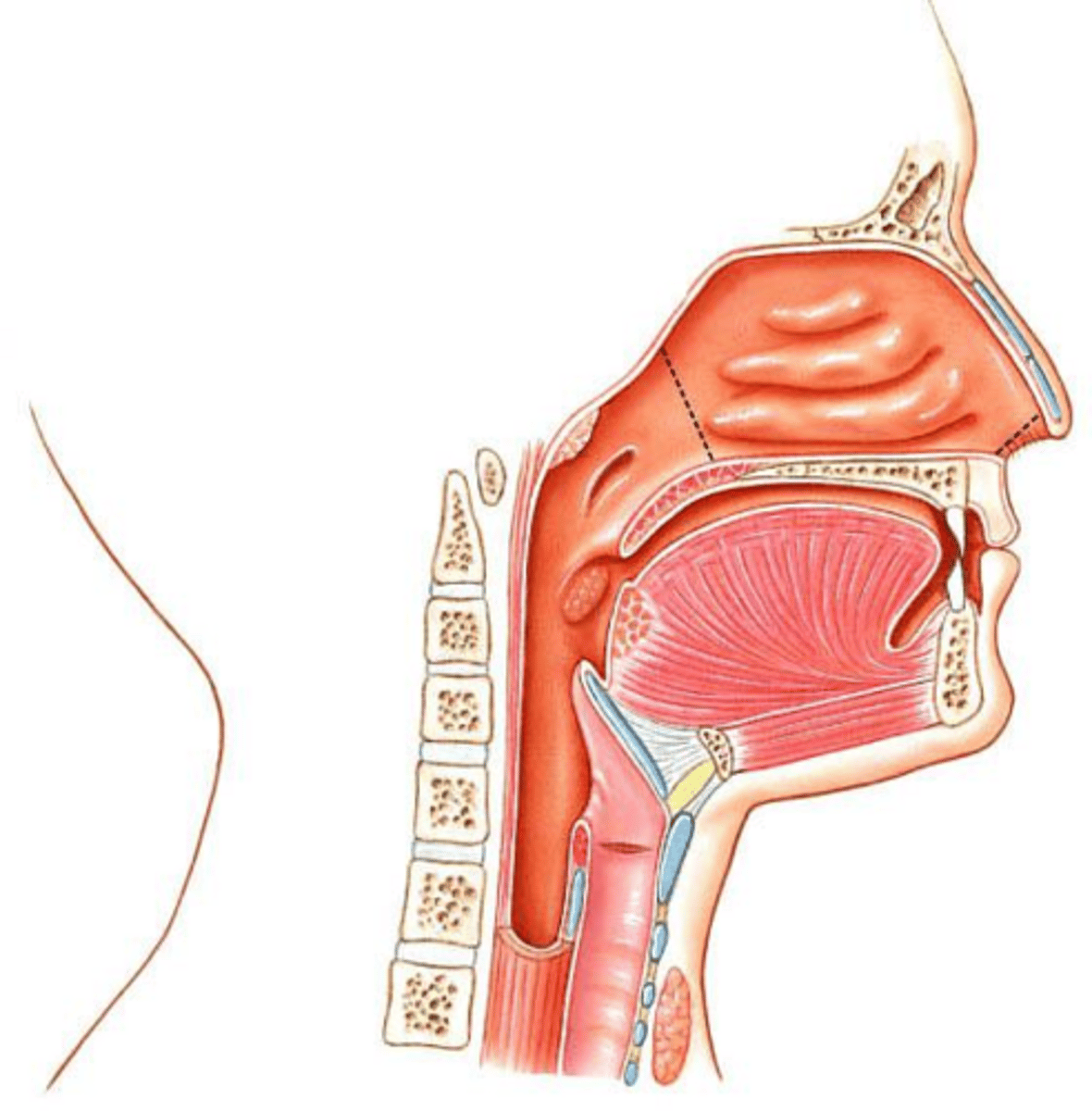
What is the function of the Eustachian tube in the respiratory system?
It helps equalize pressure in the middle ear.
What is the cardiac notch?
A concave space in the left lung that accommodates the heart.
What are terminal bronchioles?
The smallest airways that lead to the alveolar ducts and are involved in gas exchange.
What is the role of smooth muscle in the airways?
It controls the diameter of the airway, with constriction reducing airflow.
What is the primary function of the nasal cavity?
To filter, warm, and humidify the air before it enters the lungs.
What is the significance of the oblique fissure in the lungs?
It separates the lobes of the lungs, allowing for better organization and function.
What is the difference between the visceral and parietal pleura?
Visceral pleura covers the lungs, while parietal pleura covers the body wall.