Haemophilus, HACEK, etc.
 Call Kai
 Learn
Learn Practice Test
 Spaced Repetition
 Match
Match Flashcards
 Knowt Play
1/45

Earn XP
Description and Tags
Legionella, Bordetella, and other fastidious GN Bacilli
Name | Mastery | Learn | Test | Matching | Spaced | Call with Kai |
|---|
No analytics yet
Send a link to your students to track their progress
46 Terms
What does the acronym HACEK stand for?
Haemophilus
Aggregatibacter
Cardiobacterium
Eikenella
Kingella
What makes the HACEK group unique?
they are the only genera of gram negative fastidious bacilli that are associated with endocarditis
slow growing
enhanced with increased CO2 and humidity
Fastidious GN bacilli typically do NOT grow on what type of agar?
MacConkey
Key characteristics of Haemophilus:
oxidase and catalase POSITIVE
capnophilic
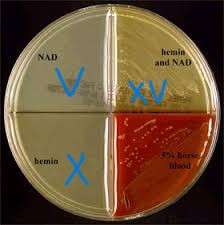
requires hemin (X) and NAD (V) for in vitro growth
"mousy" odor
GN coccobacilli
What 2 compounds are needed for Haemophilus to grow in vitro?
hemin (factor X) and NAD (factor V)
Haemophilus is normal microbiota of the __________________.
URT (the unencapsulated strains)
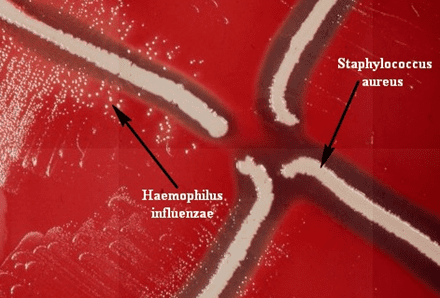
What species displays satellitism when plated with S. aureus on SBA?
Haemophilus
(grows around S. aureus because X factor is released due to lysis of red cells)
What methods are used for haemophilus identification?
ALA porphyrin test
detects the organism’s ability to produce heme
Quad plates
biochemical
fermentation, indole, urease
What is the ALA porphyrin test?
a test that detects if an organism can produce heme
disk method
a disk is moistened and inoculated with the organism
tube method
organism is grown in a medium containing ALA, then Kovac’s reagent is added
agar method
organism is streaked on a porphyrin test agar that contains ALA
result interpretation
positive: red fluorescence in tube method, indicates porphyrin synthesis and the ability to grow without heme
negative: no fluorescence, organism requires heme for growth
How is H. influenzae transmitted and what types of infections is is associated with?
direct contact with respiratory droplets from symptomatic or asymptomatic carriers
meningitis, epiglottitis, bacteremia, ear infections, pneumonia.
Characteristics of the encapsulated strains of H. influenzae
inhibits phagocytosis
more pathogenic
causes disease in infants, kids, and IC adults
H. influenzae has ___________ serotypes based on ___________antigen.
6; capsular (a, b, c, d, e, f)
lab characteristics of H. influenzae
requires X and V factors
nonhemolytic on HBA
ALA negative
What species should be suspected if there is growth of GN coccobacilli on chocolate agar with no growth on SBA or MAC?
Haemophilus
What group of Haemophilus is responsible for "pink eye" and Brazilian purpuric fever?
H. aegyptius
Key characteristics of H. ducreyi:
STD
"school of fish" in direct genital gram stain
chancroid (ulcer) on the genitals
not a part of normal flora
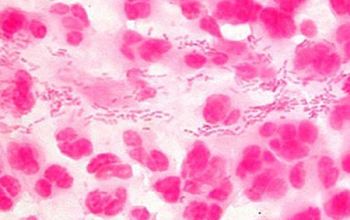
What Haemophilus species may be confused with Group A Streptococcus?
H. hemolyticus (because it is B hemolytic on HBA)
What does HACEK stand for?
Haemophilus
Aggregatibacter
Cardiobacterium
Eikenella
Kingella
What are key characteristics of the HACEK group?
colonize the oropharynx
capnophilic
rare causes of ENDOCARDITIS
slow growth
Aggregatibacter aphrophilus and Aggregatibacter paraphrophilus
adheres to the walls of broth cultures
normal oral flora but can cause endocarditis, abscesses, and skin infection
on SBA, colonies are rough, pinpoint, and grow best in increased CO2
Cardiobacterium key characteristics:
alpha-hemolytic
catalase negative
may pit agar surface
C. hominis and C. valarum
What causes clenched fist wounds?
Eikenella corrodens
Key characteristics of Eikenella corrodens:
"corroding bacterium" =pits surface of the agar
requires hemin for growth
bleach like odor
human bite wounds, meningitis, and endocarditis
E. corrodens infections
human bite wounds
meningitis
endocarditis
clenched fist infections
infections are often polymicrobic
Kingella genus
short coccobacilli
requires blood for growth, may pit the agar
catalase negative
normal URT flora
may cause endocarditis or invasive infections in young kids
What organisms are an endogenous cause of periodontitis, endocarditis, and bacteremia in immunosuppressed patients?
Capnocytophaga gingivalis, Capnocytophaga hominis, Capnocytophaga sputigena
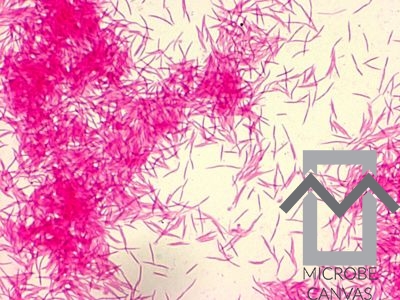
What genus demonstrates a fusiform shape on gram stain and a gliding motility on SBA?
Capnocytophaga
Legionella is found in and is transmitted by:
found in natural and artificial water sources
transmitted via inhalation of aerosolized water droplets, NOT person to person
Characteristics of Legionella:
aerobic
fastidious
narrow GNB
motile
gram stains poorly
Legionella pneumophilia causes what 2 disease states?
Legionnaire's disease
acute pneumonia, bacteremia, fever, headache, diarrhea, and dry cough
Pontiac fever
What type of media is used to isolate L. pneumophilia?
BCYE=buffered charcoal yeast extract
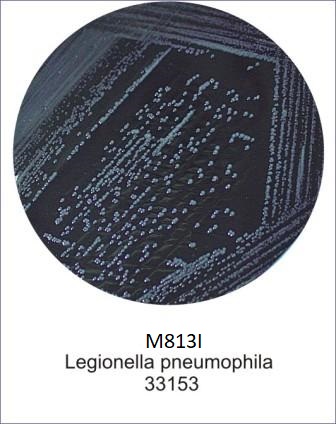
How is L. pneumophilia detected in the lab?
DFA (detects antigen in lung tissue or resp secretions)
Legionella antigen testing
PCR and MALDI-TOF MS
Bordetella characteristics:
aerobic
oxidative INTRACELLULAR GNB
binds to ciliated epi cells in the respiratory tract
Pertussis is transmitted by
person to person contact with respiratory droplets
Pertussis can last up to 12 weeks with what 3 stages?
Catarrhal
1-2 weeks, flu-like symptoms, highly contagious
Paroxysmal
1-6 weeks, lymphocytosis, coughing with a whoop
Convalescent
4-8 weeks, some coughing, secondary bacterial infections may occur
What is the isolation procedure for B. pertussis?
collect 2 nasopharyngeal swabs (Dacron swabs)
plate one on either Bordet Gengou or Regan-Lowe media
second swab used for DFA or PCR
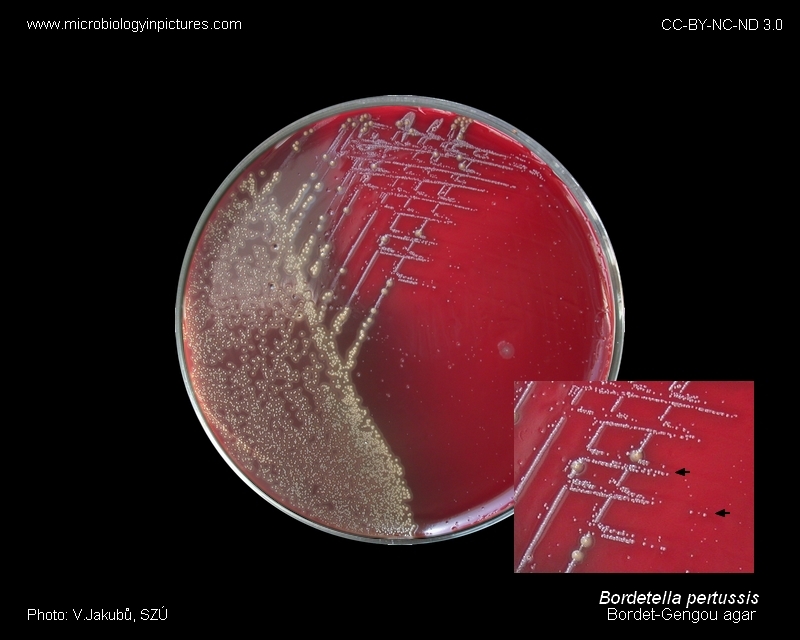
What organism produces shiny mercury like colonies in 7-10 days on BG media?
B. pertussis
Virulence factors of B. pertussis
fimbriae
filamentous hemagglutinin
pertussis toxin (induced lymphocytosis, inhibits chemotaxis and phagocytosis)
adenylate cyclase
tracheal cytotoxin
dermonecrotic toxin
endotoxin
What infection does Brucella cause? Who is most susceptible? What are the routes of infection?
causes Brucellosis (Undulant Fever)
dairy farmers, livestock handlers, and vets are most susceptible
routes of infection
ingestion of contaminated milk or cheese
inhalation of aerosolized particles
penetration of oral mucosa or direct inoculation
Characteristics of Brucella
small gram negative bacilli or coccobacilli
stains poorly with gram stain
strict aerobe
nonsaccharolytic
BSL 3 pathogen
isolation and ID of Brucella
isolated from blood, BM, or other tissue
grows on blood or chocolate agar or Brucella agar with serum
ID
serum agglutination test
What is the carrier of Pasteurella and what infections does it cause in humans?
carried by
cats, dogs, rodents, birds, and rabbits
human infection
Pasturellosis
wound infections following bites or scratches or respiratory infections following inhalation
meningitis, osteomyelitis, and joint infections
gram stain and lab ID of Pasturella
gram stain
small gram negative bacilli with bipolar staining
oxidase, catalase, and indole pos
ferments glucose, sucrose, and mannose
SBA isolation
mushroom smell, smooth, gray, nonhemolytic
Francisella tularensis
associated with rabbits
fastidious, small, nonmotile, pleomorphic GNB
Tularemia
animal bites and scratches or ingestion of animal products
Streptobacillus moniliformis
rat bite fever and Haverhill fever
Bartonella species (2)
B. henselae
cat scratch disease
B. quintana
Bacillary angiomatosis, peliosis, trench fever