Foundations of Clinical E-Stim
 Call Kai
 Learn
Learn Practice Test
 Spaced Repetition
 Match
Match Flashcards
 Knowt Play
1/37

There's no tags or description
Looks like no tags are added yet.
Name | Mastery | Learn | Test | Matching | Spaced | Call with Kai |
|---|
No analytics yet
Send a link to your students to track their progress
38 Terms
motor nerve
muscle
sensory nerve
spinal cord
big three for action potentials
amplitude
phase duration
rate of rise
amplitude requirement
must be high enough to reach thresholdp
phase duration requirement
must be long enough to deliver charge
rate of rise requirement
must be fast enough to prevent accommodation
support crew for ap (3)
frequency
duty cycle
waveform type
order of strength duration curve firing (5)
alpha beta sensory
motor
alpha o sharp pain
c dull pain
denervated
intensity measured as (4)
subsensory
sensory
motor
noxious
short vs long phase duration
short: <125 microsec
long: >125 microsec
intensity is used for
course adjustment
phase duration is used for
fine adjustment
treatment frequencies (3)
monophasic
biphasic
polyphasic
combo of amplitude and phase duration determins
if ap is generate
treatment ferquency
how often aps occur in 1 sec
clinical waveforms (3)
DC
AC
Pulsed
DC waveform used for (3)
denervated muscle
iontophoresis
wound healing
AC waveform used for (2)
true ac not really used
pulsed: paid relief
burst: muscle strengthening (russian)
pulsed waveform used for (4)
tens
nmes
fes
hvpc
duty cycle equation
pulse duration/(duration+interval)
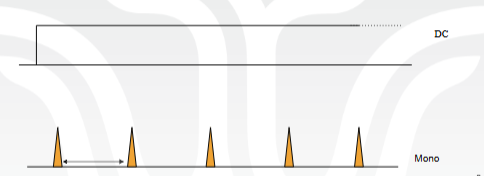
DC vs monophasic
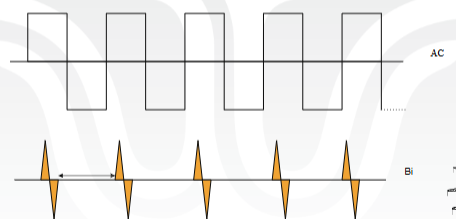
AC vs biphasic
polyphasic vs AC
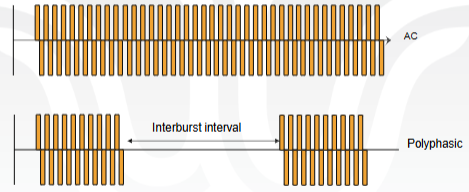
polyphasic pulsed currrent created by
carrier frequency c
carrier frequency
phase duration control
1000-5000 hz
carrier frequency / phase duration relationship
inverse
cannot adjust duration directly, can choose carrier frequency
channel factors
2 lead wires
each lead minimum 1 electrode
minimum 2 leads for 1 channel
electrode techniques
monopolar
bipolar
current density
how electrode size / placement impacts comfort, safety, and treatment precision
skin impedance
why resistance matters and how we can reduce it
total current
what determines the total electrical dose delivered over time
current density equation
current density = current / electrode size
high current density
small pads
high current
less comfort, more painful
increase risk of burns
increased focus
low current density
large pads
lower current
more comfort, less painful
lower risk of burns
less focused
skin impedances
tissue type
hydration levels
electrode condition
varies between sites and days
ways to minimize impedance
clean moist skin
minimal hair
warm skin
ensure good contact
total current equations
total current = amplitude x pulse duration x frequency
burn risk reduction strategies
good contact
lower skin impedance
correct size
good condition
total current considerations
unit in good working order