Coastal Processes Exam 2
 Call Kai
 Learn
Learn Practice Test
 Spaced Repetition
 Match
Match Flashcards
 Knowt Play
 Podcast
1/22

There's no tags or description
Looks like no tags are added yet.
Name | Mastery | Learn | Test | Matching | Spaced | Call with Kai |
|---|
No analytics yet
Send a link to your students to track their progress
23 Terms
Erosion of gravel sediment
Eroded at very high current speeds due to the high force holding grains to the seabed
Transport of gravel sediment
Transported at very high current speeds and it will be transported as bedload.
Deposition of gravel sediment
deposited at low to high speeds
Why are sand-based grains dominate on most beaches?
Sand is eroded at intermediate to high speeds, transported as suspended and bedload, then deposited at low to intermediate speeds.
How does grain size impact beach slope and wave processes? For example, explain how wave energy and sediment transport may differ on a pebble beach versus a sandy beach.
Coarse grains are most found on steeper slopes that have an asymmetric swash/backwash due to high permeability.
Sand has a symmetric swash/backwash on a shallow slope.
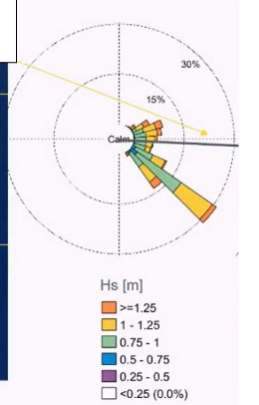
Estimate the sediment transport from this wave rose.
Due to the swell coming from the Southeast, the sediment is moving to the Northwest.
A significant storm creates a breach in the barrier island on the right forming an inlet. Describe how the new inlet will change the sediment transport process along the barrier island and what new features you would expect to form over time.
The inlet will allow for tidal transport, ebb/flood deltas may form.
The community later decides to stabilize the inlet with a jetty. Using the wave rose data above, explain how you would expect the sediment transport to change.
If the longshore drift is happening from the east, sediment is going to accumulate on the east side of the inlet and erode on the other side.
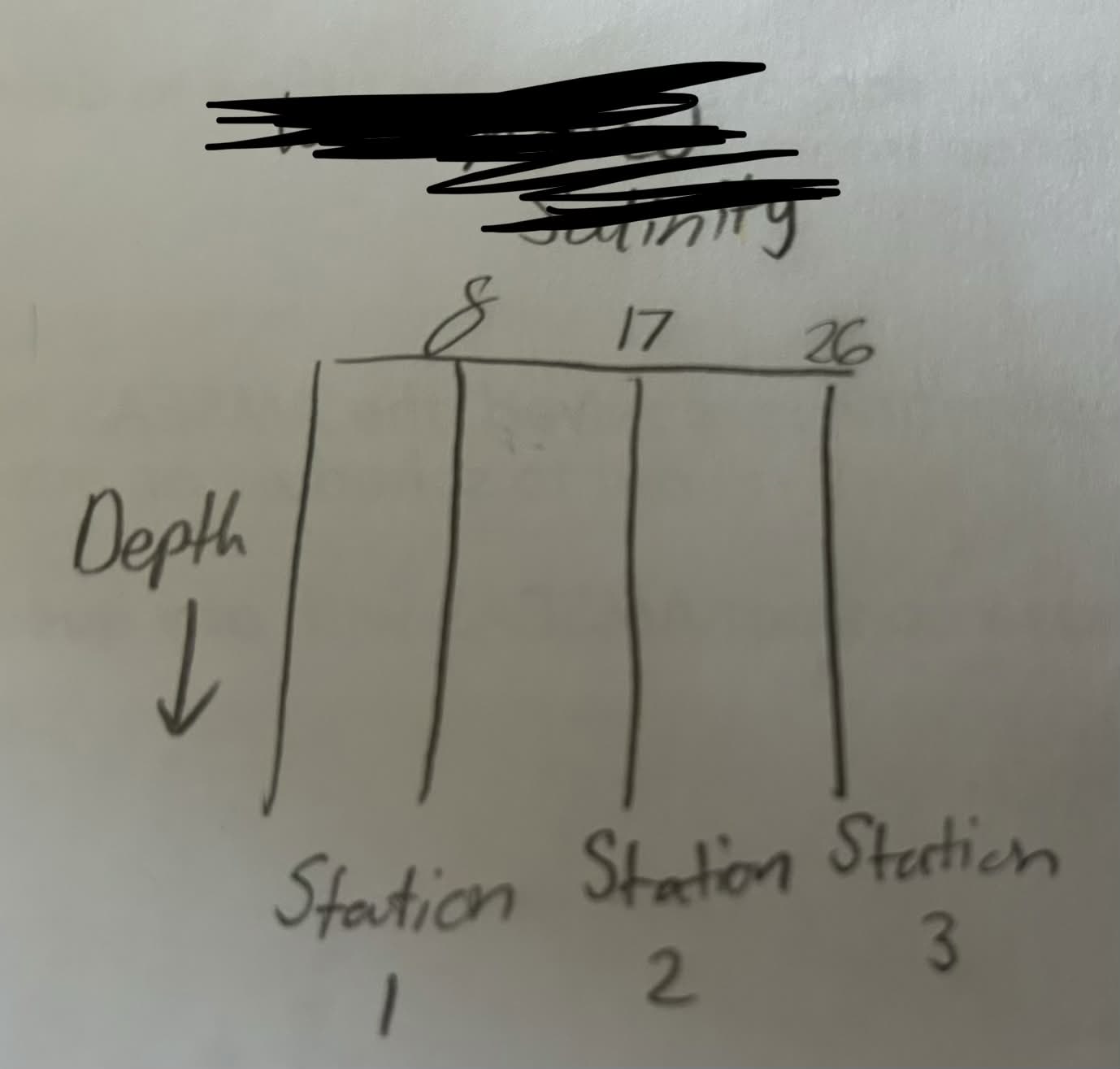
Sketch the vertical salinity profile for a stratified estuary at stations 1,2 and 3.
one straight line, two sharp curves
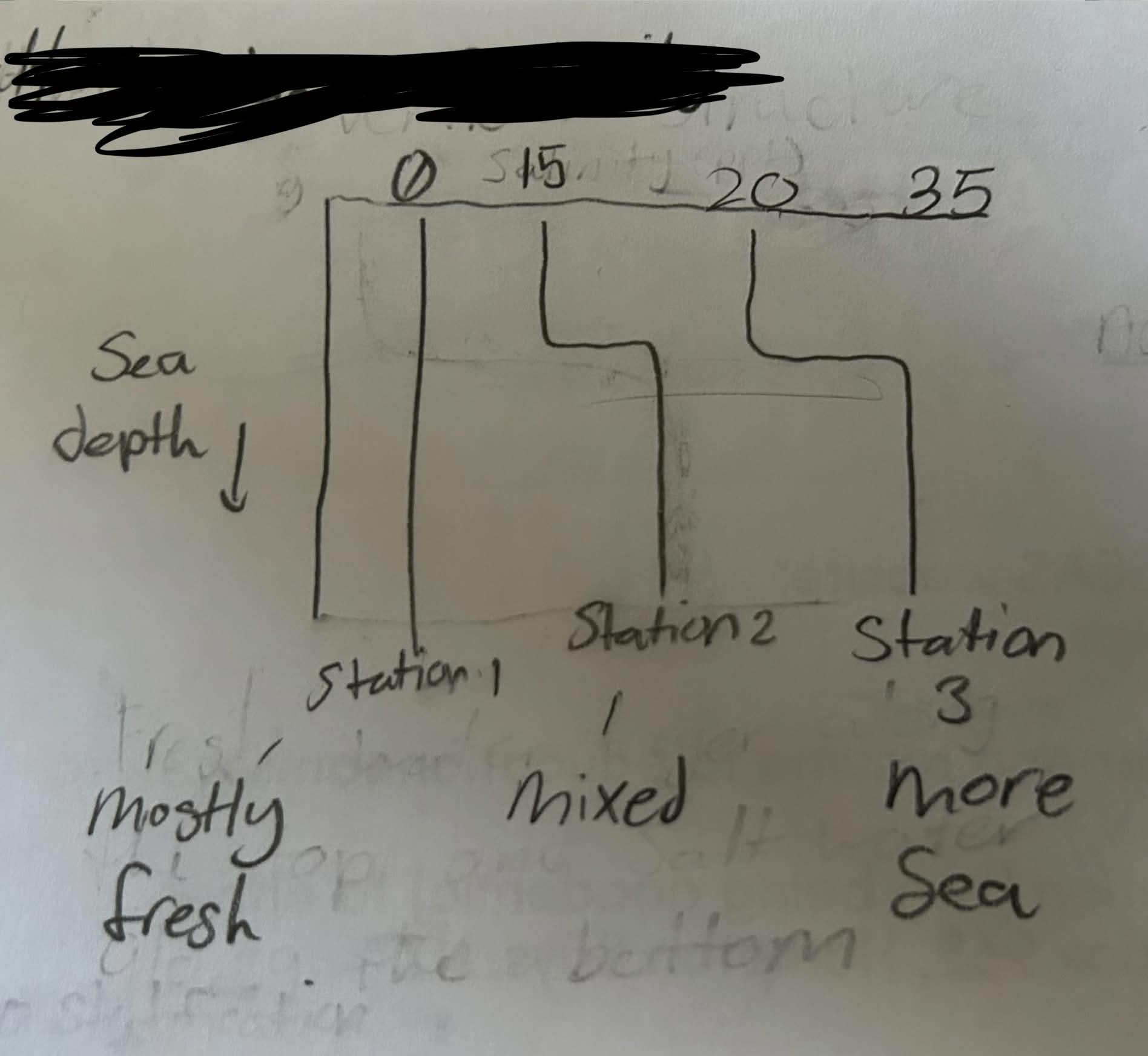
Sketch the vertical salinity profile for a partially-mixed estuary at stations 1,2 and 3.
straight line, two S curves
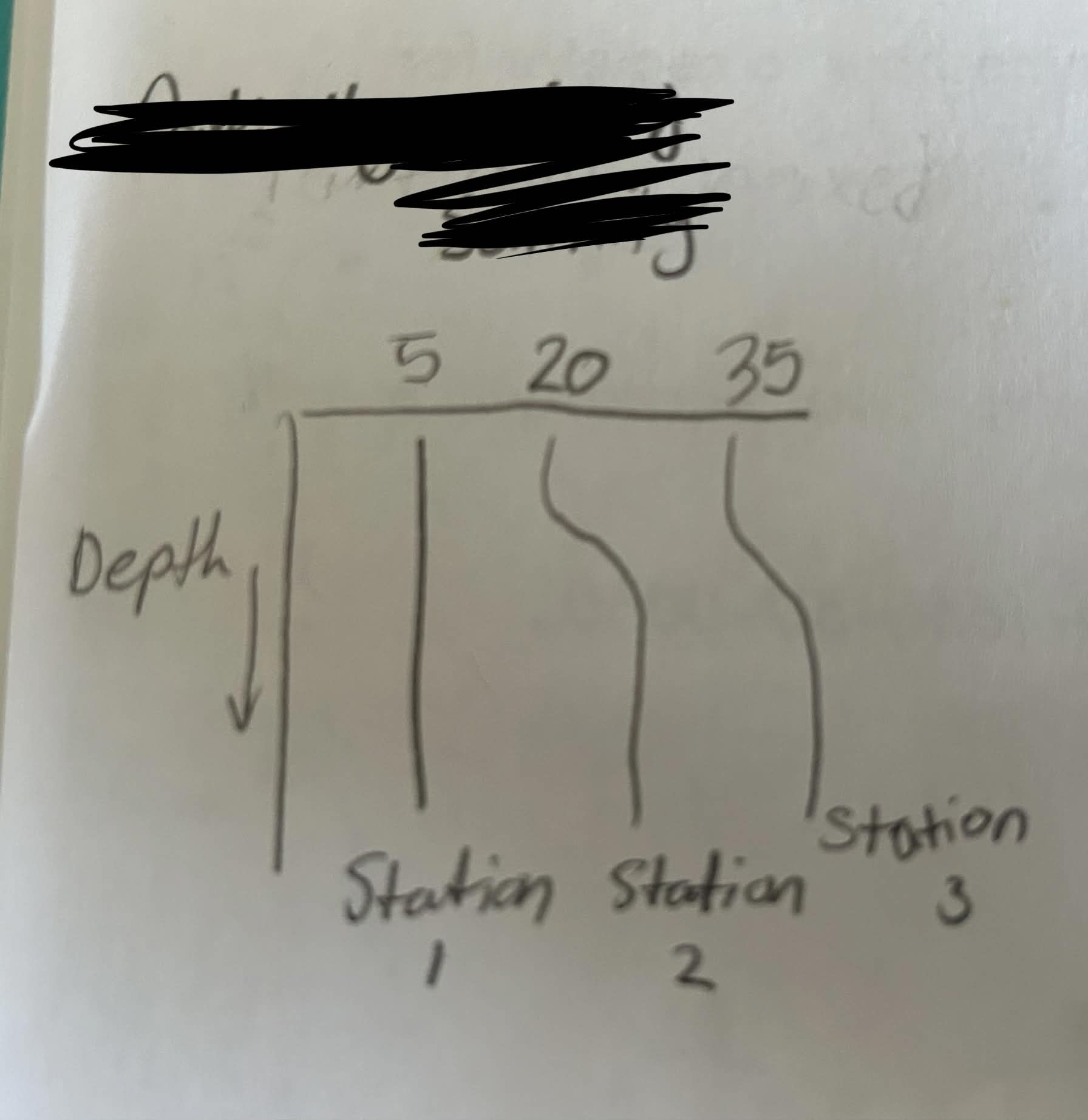
Sketch the vertical salinity profile for a well-mixed estuary at stations 1,2 and 3.
three straight lines
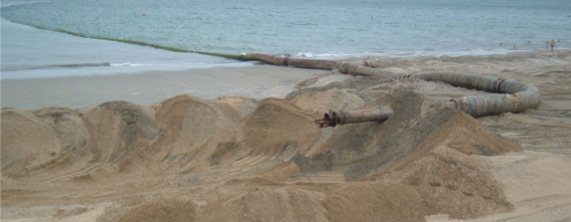
What are the cons of beach rebuilding/nourishment?
Dredge sand from offshore can put it back on the beach. This is not a long-term solution. It’s dealing with rivers of sediment that is constantly moving.
How are restoration efforts monitored?
Look at the water quality! Looking to see if there’s an effect on the parameters and how much stormwater is impacting this area.
Erosion on sand sediment
Eroded at intermediate to high speeds
Transport of Sand
transported as suspended loads at high current speeds, bedload at intermediate speeds.
Deposition of sand
Deposited at low current speeds
Erosion of clay and silt
Eroded at high current speeds due to being very cohesive
Transport of clay and silt
Transported at high to low speeds as suspended loads
Deposition of clay and silt
It will remain in suspended loads until the current velocity reaches zero
Zone VE
Flood waves heights 3ft or higher
Zone AE
Flood waves lower than 3ft
Zone AO
Flooding at shallower depths 1-3 ft
What other factors will impact flood severity?
overland, system surcharging, groundwater, and coastal flooding