Y1 Social
 Call Kai
 Learn
Learn Practice Test
 Spaced Repetition
 Match
Match Flashcards
 Knowt Play
1/188

There's no tags or description
Looks like no tags are added yet.
Name | Mastery | Learn | Test | Matching | Spaced | Call with Kai |
|---|
No analytics yet
Send a link to your students to track their progress
189 Terms
the illusion of the self
our concept of individual selves that our in control of our destinies underpins most of our existence (from how we live to the laws of land)
the brain constructs itself on a moment by moment basis
how we treat others is based on the assumption they have a sense of self similar to our own (this is a huge policy)
everything in our inner lives is more than an elaborate construct of the mind (from visual perception to memories) - the self is another part of this illusion
the illusion is so ingrained and useful, it’s impossible to shake off
the self is an illusion we love
serves us well
similar to free will (that is regarded as an illusion to many)
as the objective possibility of free will erodes, our subjective experience of it remains unchanged
free will
the ability of conscious agents to be free to make their own decisions, free of any social, moral or political constraints
self-awareness
starts at an early age
first smile at 2 months
process starts from the moment baby first learns to mimic their parent’s smile and to respond empathically to others (not with the formation of first memories)
in a state of awareness, we evaluate and compare our current behaviour to our internal standards and values - like seeing us from an outside observer
the timing of self
sensory information reaches us at difference speeds yet appears as one moment
nerve signals need time to be transmitted and processed by the brain
our experience of the world resembles a TV broadcast with a time lag (which makes last minute censorship possible)
this is the same when our brains sometimes construct a present moment that never actually happened
conscious perception is not ‘live’
the self existentially
the brain is constantly constructing the feeling of inhabiting a body
we have unique, first person perspectives of the world
the self is not confined within borders of the body, it’s possible to ‘adopt’ a foreign object as your own (eg. rubber hand illusion)
experiments have shown how easy it is to ‘move’ a human center of awareness from one body to another
the rubber hand illusion
the brain integrates various senses to create aspects of our bodily self
the brain processes touch, vision and proprioception
touches are applied in sync to both a rubber hand the participant can see, and the real hand which is hidden behind a screen
the conflicting information makes the brain resolve it by taking ownership of the rubber hand
findings of this illusion
proprioception
the internal sense of the relative location of our body parts
sense of self
string of pearls model:
our self is constant, has changing properties but remains unchanged
like the thread running through pearls, our self runs through every moment of our life, providing a core and unity
the absence of the ‘thread’ would be noticeable
rope model:
our self is like the sequence of overlapping, short fibers (like a rope), as it’s the continuity of overlapping mental events
contains no constant part we could identify with
sense of self seems to be limited to humans and the great apes
self-span
the time when the entity of ourself exists
earliest memory to death
Tibetan Buddhists
they still have a powerful sense of continuous identity that stretches from the past and into the future, despite their training and explicit claims that the ‘individual self’ is an illusion and cannot be separated from the surroundings
shows it’s not easy to defy the illusion of self, even if taught to do so
the believe the self ends at death, unlike other religions that preach the soul is eternal
this may account for their exaggerated fear of death
trichotomisation of the self
3 parts:
individual self - defined by personal traits
relational self - defined by relationships with others
collective self - defined by group membership
the potential for developing different kinds of ‘selves’ all in the same person
our idea of who we are changes across time and is influenced by culture, context and others (society)
development of self
linked to language and communication with others
no self at birth, but developed over time through interaction
culture and social situations very influential
self-recognition forms around 2 years old, and slowly builds up to full self-concept
morality is viewed as central to self-concept, stronger than cognitive processes (eg. old friend you haven’t seen for years is now racist (moral transformation - don’t see him as same person), where as if his memory has worsened, we see him as same self
quality of the self
a desire to attribute good qualities to the self
social desirability effect - we want to be admired, noticed and seen to be good (more socially acceptable)
the spotlight effect
we tend to overestimate how much people are paying attention to us
Gilovich et al - students wore embarrassing t-shirts, only 22% of peers noticed, but they thought over 50% would
the illusion of transparency
the belief that our concealed emotions ‘leak out’ and can be seen by others eg. anxiety, fear, anger, attraction
Savitsky and Gilovich - student presentations
3 conditions - control, reassured, informed (of the illusion)
informed condition did much better (higher speech quality and more relaxed appearance)
what affects spotlights and illusions
social environment (can affect self-awareness eg. only female in group of men)
self-concern (eg. agonising over clothes, but people notice this less than we think)
social relationships and roles (eg. how we know the person we’re talking to/their status compared to us)
functions of the self
self-knowledge - the way we understand who we are
self-control - the way we execute decisions
impression management - how we present ourself to others
self-esteem - maintaining positive views of ourself
self-knowledge
we know ourselves through introspection (looking inwards to examine inside information that we have about our feelings and motives) - our feelings can be hidden from conscious awareness though
observing our own behaviour
know ourselves by comparing us to others
2 factor theory of emotion
we infer what our emotions are in the same way we infer what kind of person we are
must experience physiological arousal then seek appropriate explanation for it
we use information in the situation to help us know the why
self-concept
the individuals belief about themselves, their attributes and who/what the self is
helps us organise our thinking
guides our social behaviour
the self has several departments (a multi-dimensional system)
the roles we play
the comparisons we make
social identities we form
cultures we are surrounded by
successes and failures
how other people judge us
self-schemas
the ingredients in self-concept
constructs that help us to store, retrieve and organise info about ourselves
strongly affect how we perceieve, evaluate and remember other people and ourself
contain knowledge about the self
from past generalisations
stored as cognitive generalisations
saliency is very important
information congruent with our self-schema is processed quicker and accepted
incongruent information is likely to be rejected
possible selves
a self you would like to be in the future
positive - belief you can make it
negative - no faith in ability
Markus and Nurius
self-reference effect
the tendency to process information related to oneself efficiently and quickly
the self affects memory (information relevant to self gets stored faster and is remembered well)
we instantly compare others behaviour/performance to ourselves
we tend to see ourselves as key players in tasks we had little role in
we overestimate how much others notice our behaviour etc
in deep conversations we immediately shift our attention at the mere mention of our name
self-discrepancy theory - Higgins
the actual self (attributes we possess)
the ought self (attributes we should possess)
the ideal self (attributes we would ideally possess)
discrepancy gets in the way between our actual and ought/ideal self
leads to disappointment, sadness, dissatisfaction and fear
social comparison theory - Festinger
people learn their own abilities/attitudes by comparing themselves to others
we socially compare when there is no objective standard to measure against and when they’re uncertain in an area
upward/downward social comparison - comparing yourself to people who are better/worse than you in a particular ability
we compare with anyone who is around at the time
initial comparison is quick and automatic
then consider the appropriateness of the comparison and how informative it is
cultural influences on self
western cultures - independent view of self
identity is personal and defined by individual traits and goals
personal achievement and fulfillment is important
individualism
non-western cultures - interdependent view of self
identity is social and defined by connections with others
interdependence between people are valued, independence and uniqueness frowned upon
groups goals, social responsibility and the common good is important
collectivism - social identity traits
gender difference in culture and self
women higher in relational interdependence (close relationships) than men
men have more collective interdependence (group membership) than women
when asked to recall a positive/negative event, most women say their engagement day/death of a relative
men say the day their sports team won a trophy/promotion
self-esteem
overall positive/negative self-evaluation and sense of self-worth
self-esteem bottom up appraoch
Crocker and Wolfe
person with sense of self-esteem dependent on doing well in school and looking attractive will feel high self-esteem when made to feel clever/beautiful
self-esteem top down approach
Brown and Dutton
people who value themselves in a general way (with high self-esteem) are more likely to value their looks, abilities and skills
self-efficacy
the internal belief in one’s capabilities to organise and execute the sources of action required to manage prospective situations
locus of control
a person’s belief about who/what is responsible for what happens
external - outside forces control life (luck, fate)
internal - person themself controls their life (hard work)
learned helplessness
the hopelessness and resignation learned when a human/animal perceives no control over repeated bad events
protect from this through self-determination and self-control
students engaging in daily self-control behaviours became more capable of self-control in other settings too
need for affiliation (NAFF)
need for intimacy is very important for wellbeing (verbal and physical)
need for affiliation = have innate need to compare = life in solitude would be impossible
need to belong is powerful, fundamental and pervasive motivation
importance of relating to others
attachments important for survival (in ancestors for hunting etc)
imprisoned/exiled people more at risk for depression - they report time goes by more slowly
death/the possibility of it strengthens the need to belong
children growing up with neglect are more likely to face depression, anxiety and aggression problems
belonging appears to have multiple strong effects on emotional patterns and cognitive processes
lack of attachments is linked to ill effects on health and wellbeing
ostracism
being ignored, excluded, made an outcast
people feel stressed, depressed, high rates of aggression, antisocial behaviour, disobedience, poor intellectual performance, self-destructive acts
attraction
across cultures - slim build considered beautiful in 5 cultures, medium build in 5 cultures and plump build in 18 cultures (1995)
across time - large body type used to be sign of good health, wealth and status (what we find attractive is always changing)
evolutionary perspective of physical attraction
attraction seen as a ‘male selection’ strategy
beauty = youth, health, fertility
Buss found men attracted to young attractive females and women attracted to older, established men to maximise reproductive success
this overemphasis of reproductive motivates ignores other motives/traits such as kindness, humour, approachability
social perspective of physical attraction
‘what is beautiful is good’ stereotype (halo effect)
eg. attractive women getting more lenient sentences, positively evaluating poor work if it came from an attractive person, unattractive institutionalised mental patients received more severe diagnoses and remained incarcerated longer than the attractive ones
stereotype evident in kids too - children rated attractive kids as more likely to be their friend
origins of the attractiveness stereotype
the ‘just world’ hypothesis
attractive people are better people
the ‘just world’ hypothesis
people get what they deserve
enables us to view our environment as safe and predictable
helps us get desired outcomes and avoid undesired ones
our bias towards attractive people is due to a complimentary bias towards ‘winners’ (because they are attractive, they must have better dispositions and deserve better fate)
being confronted with someone else’s misfortune reminds us that it could happen to us too - to deal with this threat we conclude the victim deserved what they got
attractive people are better people
people react more positively towards attractive people thus: reinforcing positive behaviour, raising expectations/more pressure to perform and raising their self-esteem
they end up adopting positive characteristics through favourable societal treatment
meta-analysis of attractiveness stereotype studies showed:
judgements on intelligence and adjustment not affected
honesty and concern for others not affected
attractive people seen as more vein and not concerned about others
attractive people are …
less likely to accept praise
harder to start/maintain relationships (jealousy issues, too many options)
rejected by same-sex friends
Dermel and Thiel showed participants pictures of people with varying attractiveness:
asked them to judge how materialistic, vein, snobbish, committed to their marriages and sympathetic to others’ misfortunes
attractive people received unfavourable judgements on all dimensions
theory driven approaches of psychological attraction
classical and operant conditioning of liking
attraction as misattribution of arousal
characteristics of other (praise, and agreement is everything)
similarity
complementarity
psychological attraction - classical and operant conditioning of liking
we like people who are associated with good things < - > obtain a reward by interaction
psychological attraction - attraction as misattribution of arousal
males on shakey/risky bridge condition rated a female as more attractive
physiological arousal cues may be subtle (eg. sunny/rainy day), but can have an effect on arousal and consequently feelings of attraction
psychological attraction - characteristics of others (praise)
we like those who like us and praise us
complicated concept as people need both positive and negative feedback
those with positive/negative self-concepts, prefer positive/negative feedback respectively (negative = truthful)
there is a higher level of commitment for couples who really know each other, including their flaws
psychological attraction - characteristics of others (agreement is everything)
agreement produces attraction
attraction produces agreement
psychological attraction - similarity
similarity attracts as it’s an ‘easy’ option
can quickly get along
eg. atheist and atheist, same race
more recently, relationships mix of characteristics
psychological attraction - complementarity
opposites attract
one person’s strengths complements the others weaknesses
eg. extrovert and introvert
phenomenon-driven approaches of psychological attraction
proximity
scarcity/uniqueness
secret relationships
psychological attraction - proximity
mere exposure effect (familiarity breeds liking/loving)
familiarity breeds predictability = greater comfort (uncertainty brings anxiety, a feeling best avoided)
greater proximity often reflects shared interest eg. meeting at the gym
psychological attraction - scarcity/uniqueness
playing hard to get, 2 theories explain this:
cognitive dissonance theory - Festinger
personal equity theory - Seta and Seta
both say that when one is to expend a great deal of effort towards achieving a goal, the goal increases in value, perhaps in part to justify the effort
psychological attraction - secret relationships
keeping relationships secret can increase arousal which can be misattributed
an attempt to suppress thoughts relating to the secret relationship (to keep it secret) can:
create a massive rebound where the suppressed though comes back with force
suppressing a thought can lead to excessive preoccupation, leading to more attraction
courtship rituals
in females, courtship found to be more important than physical attraction for gaining male interest
in males, the less ritualised and more original his approach is, the more likely a women is to accept it
phases of a relationship
- Inclusion: an invitation to relate
- Response: agreeing to relate
- Care: concern for other’s welfare
- Trust: support and care for each other
- Affection: warmth and attachment, desire
- Playfulness: delight in each other
- Genitality: decision to engage in sex
brain in love
people in love have much lower activity in their frontal cortex - an area crucial to reason and judgement
evolutionary reason - ‘beer goggles’ theory
suspension of reason makes coupling and hence procreation far more likely
social explanation - could be effective for same reason
observe success and failure in mating and act accordingly
brain in love is similar to the brain on substances (similar brain areas light up during euphoria of coke)
body in love
emotional excitement raises the body’s cortisol levels causing racing heart and sweaty palms
oxytocin deepens feelings of attachment
vasopressin linked to trust, empathy and sexual monogamy
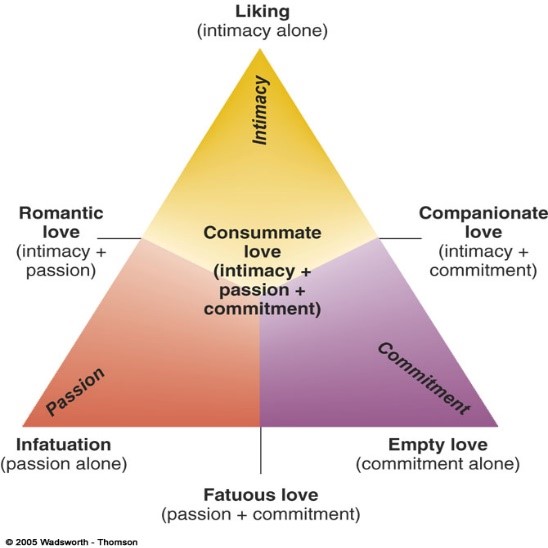
love taxonomies - Sternberg’s triangular theory
3 components: passion, intimacy, commitment
various kinds of love are reflected in different combinations of the 3 components
absence of all components = non-love
intimacy alone = friendship
passion alone = infatuation
commitment alone = empty love
passion builds then fades, intimacy and commitment continue to build
fluid nature of love
love styles not seen as stable traits
context dependent ideologies influenced by cultural and societal changes
these influence our ideas and expectations of love and relationships
marital dissatisfaction may be a consequence on unrealistic expectations of continued passionate love in relationships
we seek compatibility, intimacy and soulmates, not just passionate love
as life expectancy increases, so does a need for compassionate love
passionate love in initial stages
overtime strong emotions evolve
more stable, companionate love in later stages
measuring love
majority of studies are self-reported, snapshots of behaviour
they combine lay perceptions of love experiences with psychometric testing
most focus on the start/end of relationships
need longitudinal studies to fully understand role of love
what influences relationship satisfaction
internal dispositions - attachment styles
interpersonal processes - cost-benefit exchange models
positive processes
secure attachment type in relationships
easy to relate to other
likes closeness
feels secure in relationship
does not fear abandonment
comfortable with depending on partner, and vice versa
relationship consists of happiness, satisfaction, trust and emotional support
avoidant/insecure attachment type in relationships
very uncomfortable being with others
belief that love in transitory
belief that partner will leave at some point
worries about becoming dependent on partner, doesn’t want to
relationship consists of emotional highs and lows, lacks of closeness and fear of intimacy
anxious-ambivalent attachment type in relationships
desires closeness but believes partners doesn’t want to be close
fears abandonment
doubts partners feelings
is overly dependent on partner, wants to merge completely
relationship consists of emotional shifts, obsessive sexual attraction and jealousy
cost-benefit exchange models - social exchange theory
sampling - people consider potential costs and rewards of new relationship and compares it with other ones available
bargaining - as it develops, partner gives and receives rewards which tests whether a deeper relationship is worthwhile
commitment - as predictability increases in relationship, each partner knows how to elicit rewards from the other and costs are lowered
institutionalisation - norms are developed which establishes the patterns of rewards and costs for each partner
predicts satisfaction across cultures, but does not explain why people remain in relationships when they perceive inequity
cost-benefit exchange models - equity theory
outcomes of being in a relationship should be proportionate to the input (eg. love, emotional support, household chores, finances)
equitable outcomes are not necessarily equal outcomes - equity is a perception
inequitable relationships lead to feelings of discomfort
partner contributing more feels annoyed
partner contributing less feels guilty
inequity loop leads to distress = perceiving more inequity
predicts satisfaction across cultures, but does not explain why people remain in relationships when they perceive inequity
positive processes - role/important of intimacy
exchange models cannot explain compassionate love
people in happy, long-term relationships actually makes efforts not to calculate exchange benefits
self-disclosure - more disclosure of intimate aspects leads to more trust, companionate love and relationship satisfaction
overlapping selves - the more your self-concept overlaps with partners, the greater the relationship satisfaction, commitment and investment in the relationship
adopting ‘approach relationship goals’ - focused on the pursuit of positive experiences (intimacy, fun, quality time) they increase relationship satisfaction and positive emotions
perception that we are being understood - believing your partner knows your goals increases closeness, trust and relationship quality
ingredients in lasting love
ability to face and deal with conflict
supportive communication, realistic expectations and shared interests
commitment
appreciation of each other’s qualities
self-acceptance
companionship
sexual expression and variety
seeing partner as best friend
maintaining frequent positive interactions
relationship growth
individual and couple growth
overcome obstacles
view problems as challenges
negotiate and renegotiate wants and needs
accept each other as unique
conflict
early theorists viewed conflict as destructive and a negative force - supported by accounts of abusive relationships
conflict engagement seen as signs of weakness/problems in a relationship
Gottman stressed that conflict is a very important component in a relationship as it can promote intimacy and closeness, adds balance to the opposing needs of partners and can contribute to happiness
conflict seen as critical events that can strengthen/weaken a relationship
constructive - force of change and growth leads to greater satisfaction and dyadic unity
destructive - painful, harmful and damaging to partners, leads to termination of relationship
just looking at conflict engagement is not a predictor of relationship satisfaction
constructive conflict management and effective resolution can determine whether it will help the relationship grow
arguing could be good if it is done fairly and skillfully as it can increase intimacy
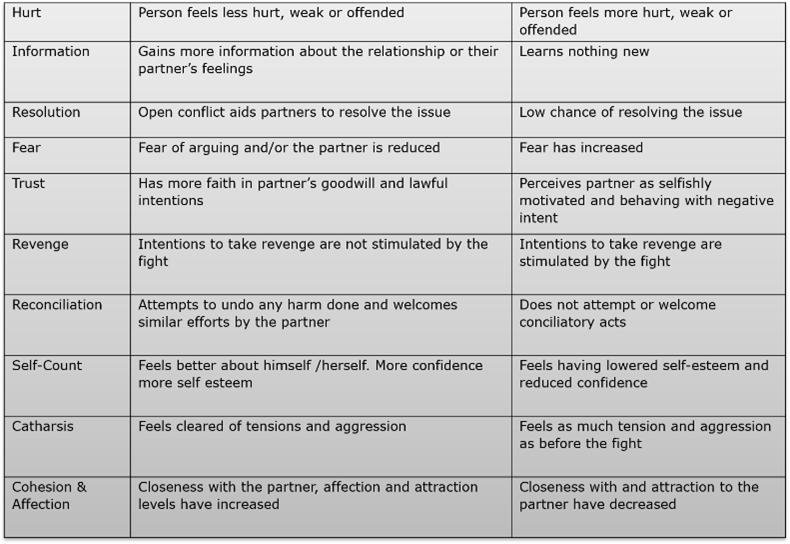
a fair fight can have a lot of positive effects on the relationship - Brehm et al compiled a list of these effects
couples who mutually withdraw from conflict situations have a higher chance of later reporting to be unhappy/dissatisfied with their relationship
gain-loss hypothesis
total lack of negativity can lead to boredom and the diminishment/devaluing of positive events
4 main sources of conflict - Peterson
criticism
can be misperceived thus triggering conflict
includes verbal/non-verbal acts that are perceived as demeaning/unfavourable
rebuffs
one partner does not conform to their partner’s demands and reacts in an undesirable/unexpected way
illegitimate demands
unreasonable, extreme requests beyond relationship duties eg. asking to do all chores while they relax
cumulative annoyances
little acts may initially go unnoticed until they become repetitive and irritating
groups are based on:
common experience
common characteristics/interests/values/beliefs
implicit social structure (eg. within families or friendship groups)
the social cure
social groups have a positive impact on individuals
process of social identification makes them meaningful and psychologically valuable
group identification - the subjective sense of belonging to one’s group
connected to wellbeing, even after controlling for social integration
meaningful group memberships have been shown to impact positively across all domains
the social curse
group membership and experiences have the potential of hindering group members, not helping
this phenomena has been identified into a multitude of contexts
family support is a double-edged sword
supporting each other through tough times can lead to collective suffering
benefits of collective support likely to outweigh this burden however
group behaviour - social loafing
performance in groups can provide excuses
unnecessary effort to do something - others can do it mindset
groups can inspire to perform over and above usual efforts, but for some the temptation to loaf is too much
eg. group projects - you are as strong as your weakest member
review of 150 studies showed the tendency to loaf is stronger in men than women, because relational interdependence is higher in women
presence of others -> individual efforts cannot be evaluated -> no evaluation apprehension -> relaxation -> impaired performance on simple tasks/enhanced performance on complex tasks
why does social loafing occur
individuals making incorrect attributions about how labour is divided and wrongly adjusting their efforts accordingly
goals being set lower than they should be, leading to members making less effort
individuals’ unique contributions to the task are unidentifiable/not monitored, leading them to either become lost or deliberately hide in the crowd
social facilitation - audience effects
tendency to perform better on simple tasks, and worse on complex tasks, when in the presence of others and personally being evaluated
cockroach experiment:
completed simple maze faster when other roaches watched
completed complex maze slower when others watched
excel in behaviour - feed from it:
shown in simple tasks
physiological arousal
can block out distractions
choke in behaviour - feel the pressure
shown in complex tasks
physiological arousal
restricts range of attention
presence of others -> individual efforts evaluated -> alertness evaluation apprehension -> arousal -> enhanced performance on simple tasks/impaired performance on complex tasks
group decision making
access to more information and multiple perspective - does this guarantee a good decision?
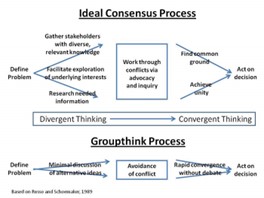
groupthink process is faulty decision making, ideal consensus process is better
symptoms of groupthink: (terrorist groups etc)
an illusion of invulnerability
rationalisation of warnings
unquestioned belief in the inherent morality of the group
stereotyped view of enemy leaders
pressure on group members who challenge the consensus
self-censorship of misgivings
illusion of unanimity
emergence of self-appointed mindguards (protecting their leader)
counteracting groupthink
the leader should assign the role of critical evaluator to each member
the leader should avoid stating preferences and expectations at the outset
each member of the group should routinely discuss the groups’ deliberations with a trusted associate and report back to the group on their reactions
1+ experts should be invited to each meeting on a staggered basis – the outside experts should be encouraged to challenge the members’ views
at least one articulate and knowledgeable member should be given the role of devil’s advocate (to question assumptions and plans)
he leader should make sure that a sizeable block of time is set aside to survey warning signals from rivals
group constructs alternative scenarios of rivals’ intentions
group polarisation
tendency for groups to make decisions that are more extreme than the initial inclinations of its member (money usually involved)
conformity/deindividuation - discussion typically strengthens the average inclination of group members
the internet - social networking sites -> online identities (conspiracy theorists, terrorist groups) -> without face-face discussion= loss of inhibitions -> can increase polarisation
deindividuation
members of a group feel they have lost their personal identities and merged into the group/crowd and become anonymous
loss of responsibility
causes of deindividuation
psychological factors
weakening of inhibitions against harmful and undesirable actions
increase of adherence to group norms
increased responsiveness to external cues
situational factors
camouflage offers anonymity (or physical anonymity eg. masks)
less aggressive shocks when dressed in a nurses outfit
highlights importance of situational cues
women disguised in uniform similar to KKK gave shocks double the duration, compared to those visible
effects of uniforms (Zimbardo)
group size
the larger the group the more anonymity
trick or treaters given the opportunity to steal candy
when in groups and sure of their anonymity, the stealing went up threefold
conformity - the evil thesis
people ignore the morality of their actions
ordinary people transformed into oppressors
people follow rules ‘blindly’
people conform to rules handed down by authorities
do individuals blindly conform/obey commands
eg. milgram’s and zimbardo’s experiment
influenced academic research for decades with numerous attempts to replicate
became an ‘everyone knows’ fact
a problem as it perpetuates the myth that people inevitably succumb to the demands of authority, however immoral the consequences
tells us resistance is futile
eg. WW2 nazis put on trial for their crimes
their defence was they were simply ‘following orders’
they relied upon this in order to minimise their culpability and escape the death penalty
orders were vague in germany, so if you were a true ‘believer’ in what the nazi’s stood for, you could use creativity to achieve the goals
the ‘final solution’ was not a top down detailed plan - the general idea was handed down and Eichmann used his ‘creativity’ to implement it
Zimbardo’s Stanford prison experiment
did not give the guards direct orders, but gave them a general idea of how he wanted them to behave
Milgram’s obedience experiment
participants tried to avoid the situation - they laughed, talked and tried to argue their way out, but experiment did not allow any space for choice
participants torn between moral objections and the ‘experiment outcomes’
were told ‘the experiment requires you to continue’
when told ‘you have no other choice, you must go on’, they then refused
study not about people who blindly obey, but about convincing people to believe in the importance of the experiment
people conform and obey by belief, not nature. these people act:
knowingly, not blindly
actively, not passively
out of choice, not by necessity
creatively, not automatically
modern day applications of conformity/obedience
people seen as engaged followers, not blind conformists
eg. people get convinced cults hold the answer to life - they believe the cause and actively follow (children of God - David Berg)
eg. ‘so called isis’ followers get convinced ISIS is working for the greater good - they follow knowingly
social beliefs
eg. why did this happen, who was to blame, could this be avoided, is it because we are killing the planet
come from our intuition, social and cultural influences, expectations, attributions
our mood and schemas affect this process
we expect certain events/behaviours (self-fulfilling prophecy)
we perceive and recall events using our culturally influenced ‘lenses’
we explain events by attributing them to people/situations
self-fulfilling prophecy
when someone’s actions align with their expectations, so their predictions become true
eg. looking at horoscopes
nocebo - example of belief being powerful
the placebo effects evil twin - expecting something negative, so more likely to experience it
means ‘i shall harm’ - introduced in contraposition to placebo (‘i shall please’)
understudied because of ethical constraints (introduction of nocebo responses induce negative expectations of symptom worsening)
studied via brain imaging, when patients were expecting negative outcomes
examples:
patients told their sex drive will be affected after taking either beta blockers or hair loss pills reported experiencing more problems than the control group
patients experience a host of side effects when taking a placebo if they are informed beforehand that side effects exist
conspiracy theories
influence how we behave
eg. health behaviours - less likely to vaccinate
social norms - example of belief being powerful
students mistaken beliefs about how much their peers study could be harming their exam performance
parents mistaken beliefs about how much other parents endorse anti-vaccine conspiracy theories could influence their vaccination intentions