Bio - Systems
 Call Kai
 Learn
Learn Practice Test
 Spaced Repetition
 Match
Match Flashcards
 Knowt Play
1/114

There's no tags or description
Looks like no tags are added yet.
Name | Mastery | Learn | Test | Matching | Spaced | Call with Kai |
|---|
No analytics yet
Send a link to your students to track their progress
115 Terms
Mechanoreceptors
respond to mechanical energy (pressure, touch, stretch, etc.)
Chemoreceptors
solute concentration and different kind of molecules
Electromagnetic receptor
Electromagnetic energy (visible light, electricity, magnetism)
Thermoreceptors
Hot and cold. Found in skin and anterior hypothalamus
Pain receptors
Extreme pressure or temperature
Steps of sensory pathway
Sensory reception, transduction, transmission, perception
Systems involved in locomotion
Joints, bones, muscles, nerves
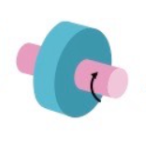
Pivot joint - forearms at elbows, head from side to side
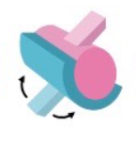
Hinge joint - restricts movement to single plane
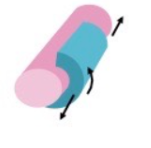
movement in two planes, circumduction
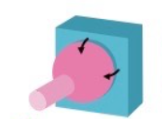
Ball and socket joint - shoulder, rotation
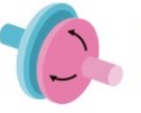
Condyloid joint - wrists, knuckles, prevents axial rotation
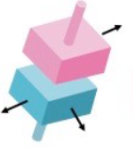
Plane joint - shock absorbance, limited gliding
Synovial joints
capsules that surround the articulating surfaces of two bones
Joint capsule
Seals the joint space and provides stability by restricting the range of possible movements
Cartilage
Lines the bone surface to facilitate smoother movement, as well as absorbing shock and distributing load
Synovial fluid
Provides oxygen and nutrition to the cartilage, as well as lubrication (reduces friction)
Humerus
Bone between bicep and tricep, anchors muscle
Radius
Upper bone in forearm, acts as a forearm lever for biceps
Ulna
Bone underneath in forearm, acts as a forearm lever for triceps
Bicep
bends the forearm
Tricep
Straightens the forearm
Skeletal muscle
Voluntary movement of bones, fibres run in parallel tracts and are multinucleated and heavily striated
Smooth muscle
Lining of internal organs, involuntary constriction of these regions, fibres are not striated, have a spindle shape and each fibre contains a single central nucleus
Cardiac muscle
rhythmic contraction of the heart, fibres are branching, intercalated, lightly striated and have a single nucleus per fibre
Myofibrils
alternating fibers of myosin and actin
Thin filaments
actin
Thick filaments
myosin
A single contractile unit of Myofibril
Sarcomere
Z line
Holds actin filaments
M line
Holds myosin filaments
Tropomyosin
wraps around actin filaments
Troponin complex
a group of three regulatory proteins (Troponin C, I, and T), have a calcium binding site
Antigen
Part/fragment of a pathogen that is recognized by immune cells as foreign, eliciting an immune response
Antigen presenting cell
Any cell that is presenting/exposing a fragment of the pathogen (Antigen) on its surface
Major Histocompatibility Complex (MHC)
Protein complexes that an antigen presenting cell (above) uses to present/expose a fragment of the invading pathogen (Antigen) to Immune cells, thereby evoking further action by immune cells
Leukocyte
White blood cell. They carry out immune functions by removing/killing pathogens
Lymphocytes
leukocytes of Adaptive immune system (B and T cells)
Neutrophils
Most abundant phagocyte. Found in blood. Short-lived cells
Macrophage
Most effective phagocytes. In spleen/lymph nodes in order to screen. Long lived.
Eosinophils
Low phagocytic ability. Surround multicellular pathogens and release destructive enzymes
Dendric cells
Alert adaptive immune system (Professional APC).
Natural killer cells
Recognise and kill cancerous and viral infected cells. Release cytotoxic molecules.
Cytokines
Chemicals released by immune cells to alert other immune cells of an infection and activate them. Some cytokines prevent viral replication and more
Antibody
(Immunoglobulin): A Y protein produced and secreted by the B Lymphocytes. Antibody is a protein that binds to other proteins
How do immune cells recognize the pathogens?
Immune cells have special receptors (mainly on their surface) that recognizes strange/foreign/nonself molecules on the surface of pathogens
Humoral immune response
B lymphocyte and antibody production
Cell-mediated immune response
T lymphocytes
Fight and kill pathogens
Kill pathogen infected cells
Help B lymphocytes to do their job too
Barrier defences
Skin, mucus, secretions, cilia, acidity in stomach, lysosomes in saliva
Hemocytes
Invertebrate immune cells
Mucociliary escalator
mucus and cillia
Foreign antigens
Unique lipopolysaccharide, double stranded RNA, CpG
Toll-Like Receptors (TLR)
Receptors often recognized as a feature of a pathogen
TLR3
Double stranded RNA
TLR5
FLagellin
TLR4
lipopolysaccharides
TLR9
CpG DNA
BCR - Receptors of B lymphocytes
ecognize and bind to an antigen without the help of an antigen presenting cell
What happens after a BCR recognizes and gets attached to an antigen?
That B cell is now activated and goes through multiple rounds of division
In the process refines its receptor for better binding to the same antigen
During the same process this expanding clone of B cell makes and remakes antibodies for the same antigen
Finally, majority of this B cell clone will differentiate/become so called Plasma cells.
Plasma cells
make and release the antibodies they were making to the pathogen.
Memory cells
already there and “remember” the pathogen and its antigen
Major Histocompatibility Complexes (MHC).
There are proteins in cells that bring the antigen to the surface and present it.
MHC of normal body cells
Class I MHC
MHC of immune cells
Class ll MHC
Class I MHC presenting antigen
T cell that binds to it through its T cell receptor releases chemicals that kill the presenting cell
Class ll MHC presenting antigen
T cell that binds to it through its T cell receptor gets activated and goes on to either differentiate into an effector T cell (to kill the pathogens or pathogen infected cells that it might encounter in the future) or help activate other Immune cells such as a B lymphocyte (B cell).
Helper T cell
Gets activated when an antigen presenting cell has presented the antigen to Helper T cells by their MHC-antigen complex. It activates both B Lymphocytes and Cytotoxic T cells by releasing cytokines
CD4
Accessory protein of Helper T cells. Can only enable T cell receptor to associate with MHC II class
Cytotoxic T cell
Gets activated when an antigen presenting cell has presented the antigen to the Helper T cell by their MHC-antigen complex. Its role is killing the infected host cells.
Chemicals released by cytotoxic T cells
(perforin and Granzymes). Perforins assemble on the membrane of the infected cells, creating a hole through which granzymes enter and destroy the infected cell.
Structure of B cell receptor
Two identical heavy chains linked by several disulfide bridges
Structure of T cell receptor
One alpha chain and one beta chain linked by disulfide bridge
Viral neutralization
Antibodies produced against a spike protein of the virus’s, simply bind to that spike protein. These spike proteins on the virus are now ‘‘masked’’ and are longer at disposition of the virus to infect any other cell, since they are covered by antibodies! This simply neutralizes the virus and is a good short term protection against infection.
Opsonization
The presence of antibodies on their surface acts like a flag to other immune cells and enables other phagocytes to eat up the pathogen in question with ease. This process of marking a pathogen for phagocytosis is called Opsonization.
Complement system
Collection of proteins that are ever present in your bloodstream. Binding of an antibody to the antigen on the surface of a pathogen, activates the complement system by recruiting the complement proteins to the surface of the pathogen. Activated complement proteins assemble, making a membrane attack complex culminating in formation of a pore/hole on the membrane of a pathogen. A cell with an opening on its membrane that cannot be controlled by the cell itself is a dead cell.
Function of lymphatic system
screen the interstitial fluid
Glycogen
Polysaccharide, stored in the liver and muscles. Can be hydrolyzed and turned to glucose
Negative feedback loop of stomach
Stomach is very acidic
The sudden presence of acidity in the duodenum provokes some endocrine cells (S cells) to secrete Secretin
Secretin reaches Pancreas through blood and makes it release Bicarbonate into intestines, raising the pH to normal levels
Positive feedback loop of breastfeeding
Suckling of a mother’s nipple produces a stimulus
The stimulus travels through sensory neurons to hypothalamus, which releases Oxytocin in the posterior pituitary.
From posterior pituitary, Oxytocin enters blood and provokes mammary glands to make milk.
Hypothalamus
Hormones released from the posterior pituitary and hormones that regulate the anterior pituitary
Pituitary gland
Oxytocin, Antidiuretic hormone (ADH), GH, Prolactin, Follicle-Stimulating hormone, LH, Thyroid-stimulating hormone, Adrenocorticotropic hormone
Oxytocin
Stimulates contraction of uterus and mammary glands
Antidiuretic hormone
Promotes retention of H2O by kidneys
Prolactin
Stimulates milk production and secretion
LH
stimulates ovaries and testes
Thyroid gland
T3, T4, Calcitonin
T3 and T4
Maintains metabolic processes
Calcitonin
Lowers blood calcium levels
Parathyroid glands
Parathyroid hormone
Parathyroid hormone
Raises blood calcium levels
Pancreas
Insulin and Glucagon
Adrenal medulla
Epinephrine, norephrine
Adrenal cortex
Glucocorticoids, mineralcorticoids
Ephinephrine and norepinephrine
Raises blood glucose levels, increases metabolic activities, constricts certain blood vessels
Glucocorticoids
Raise blood glucose levels
Mineralocorticoids
Promotes reabsorption of Na and excretion of K in kidneys
Normal blood glucose levels
90mg/100ml
Beta cells
make insulin
alpha cells
make glucagon
Islets of Langerhans
Cluster of cells in pancreas