kine4505 topic 9: Basal ganglia
 Call Kai
 Learn
Learn Practice Test
 Spaced Repetition
 Match
Match Flashcards
 Knowt Play
1/40

There's no tags or description
Looks like no tags are added yet.
Name | Mastery | Learn | Test | Matching | Spaced | Call with Kai | Chat |
|---|
No analytics yet
Send a link to your students to track their progress
41 Terms
what is basal ganglia for
influence movement by modulating activity in upper motor neurons
what makes up the basal ganglia
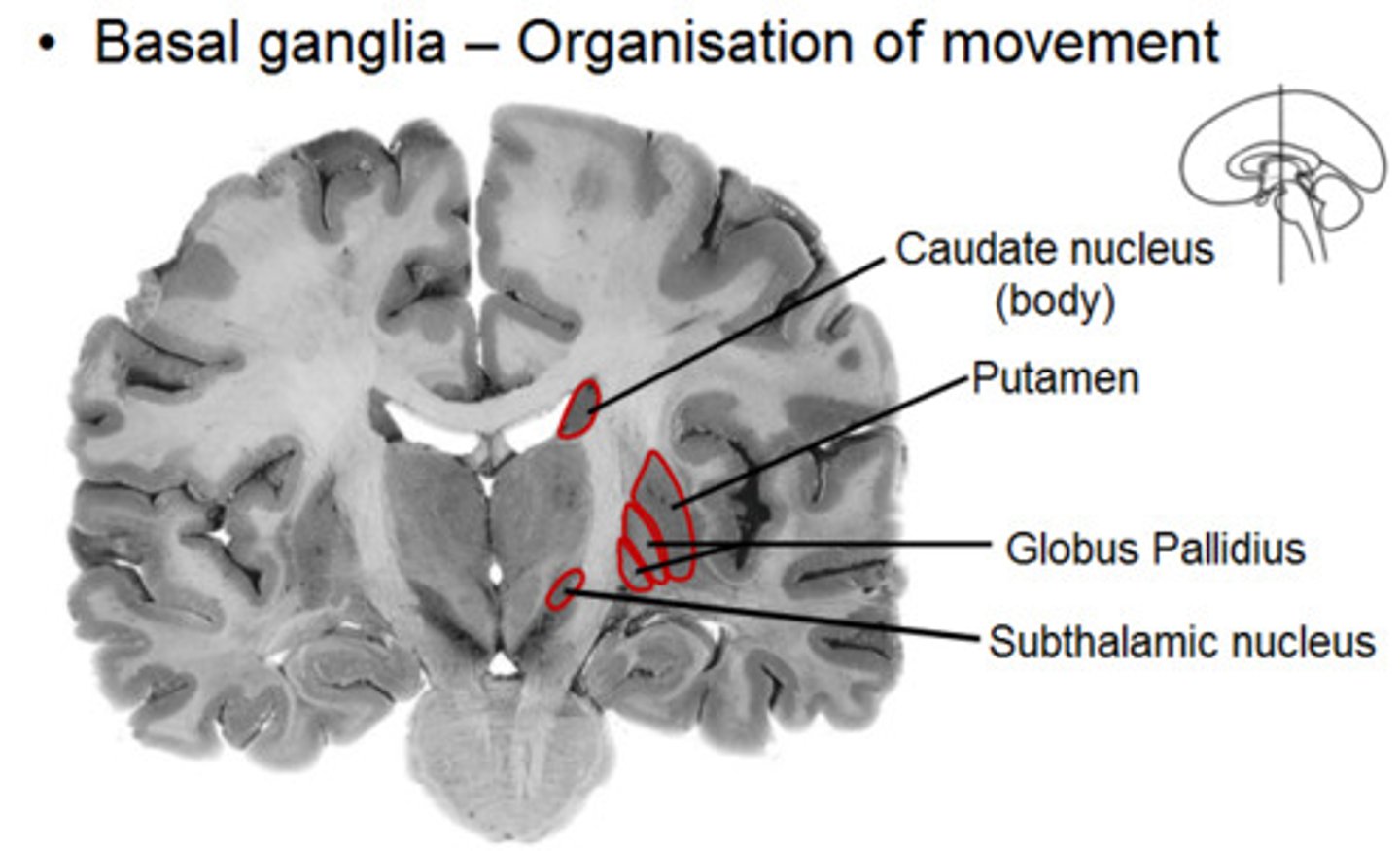
striatum, globus pallidus, substantia nigra, subthalamic nucleus
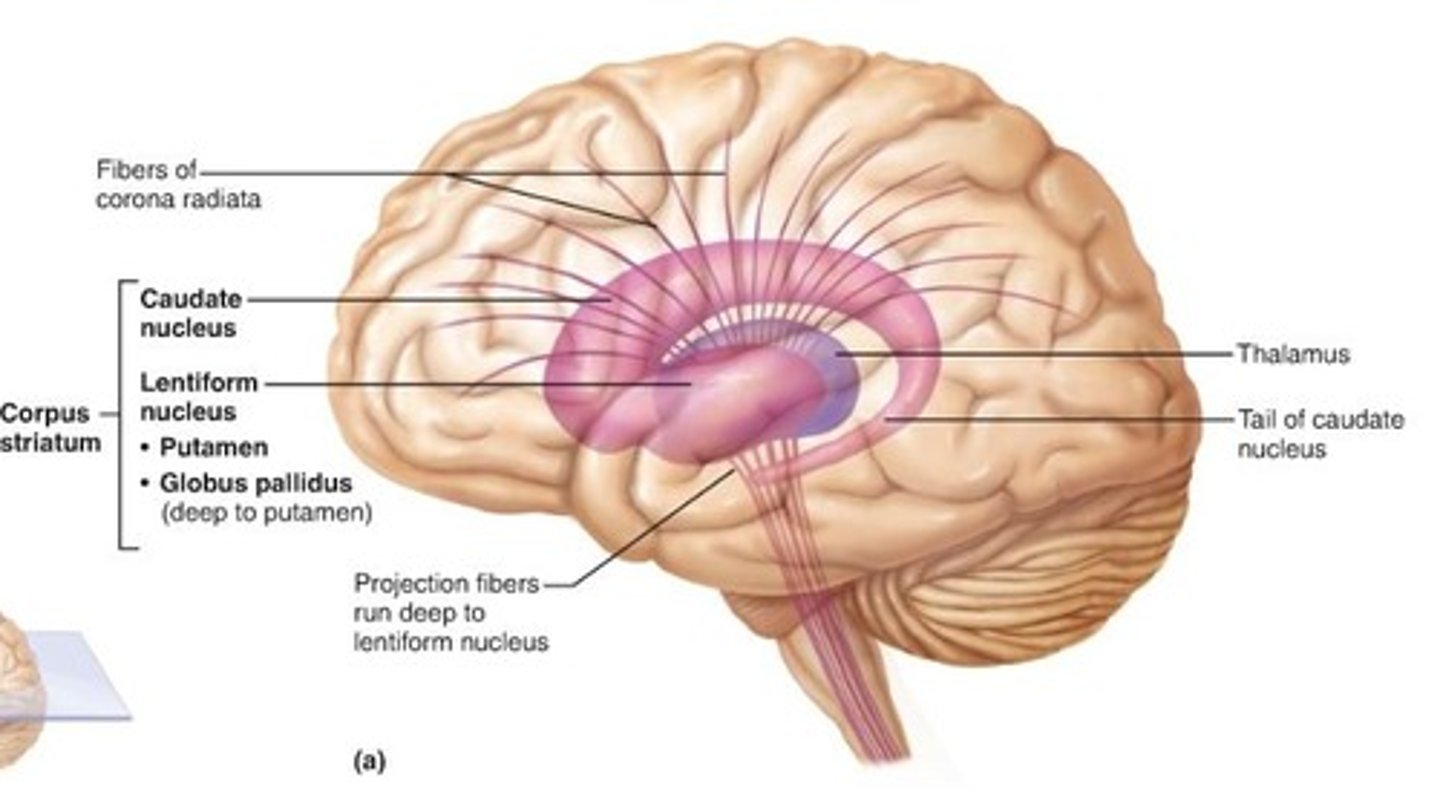
does the basal ganglia have direct or indirect influence
indirect, it has no connection to the spinal cord
what makes up the striatum
caudate and putamen
what are the inputs to basal ganglia
cerebral cortex to striatum
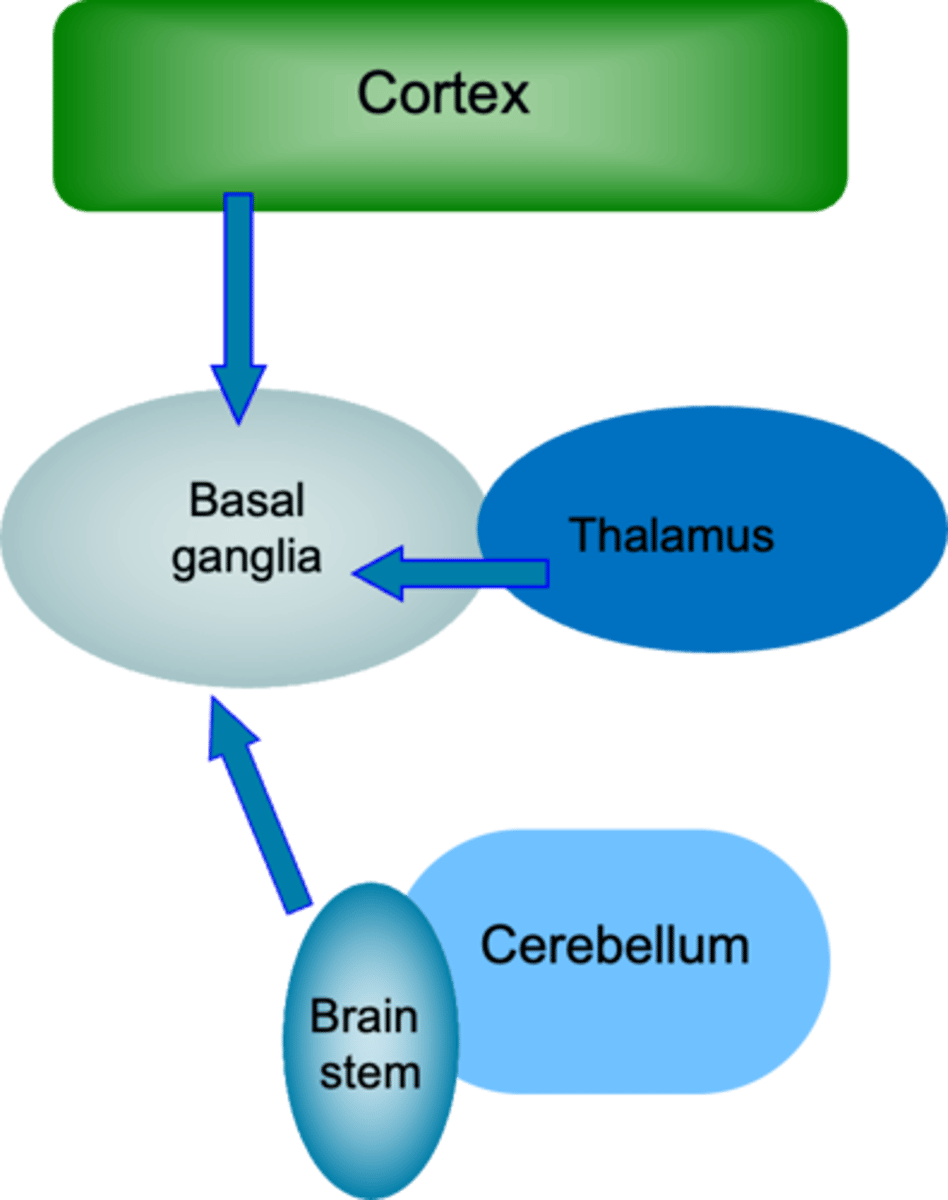
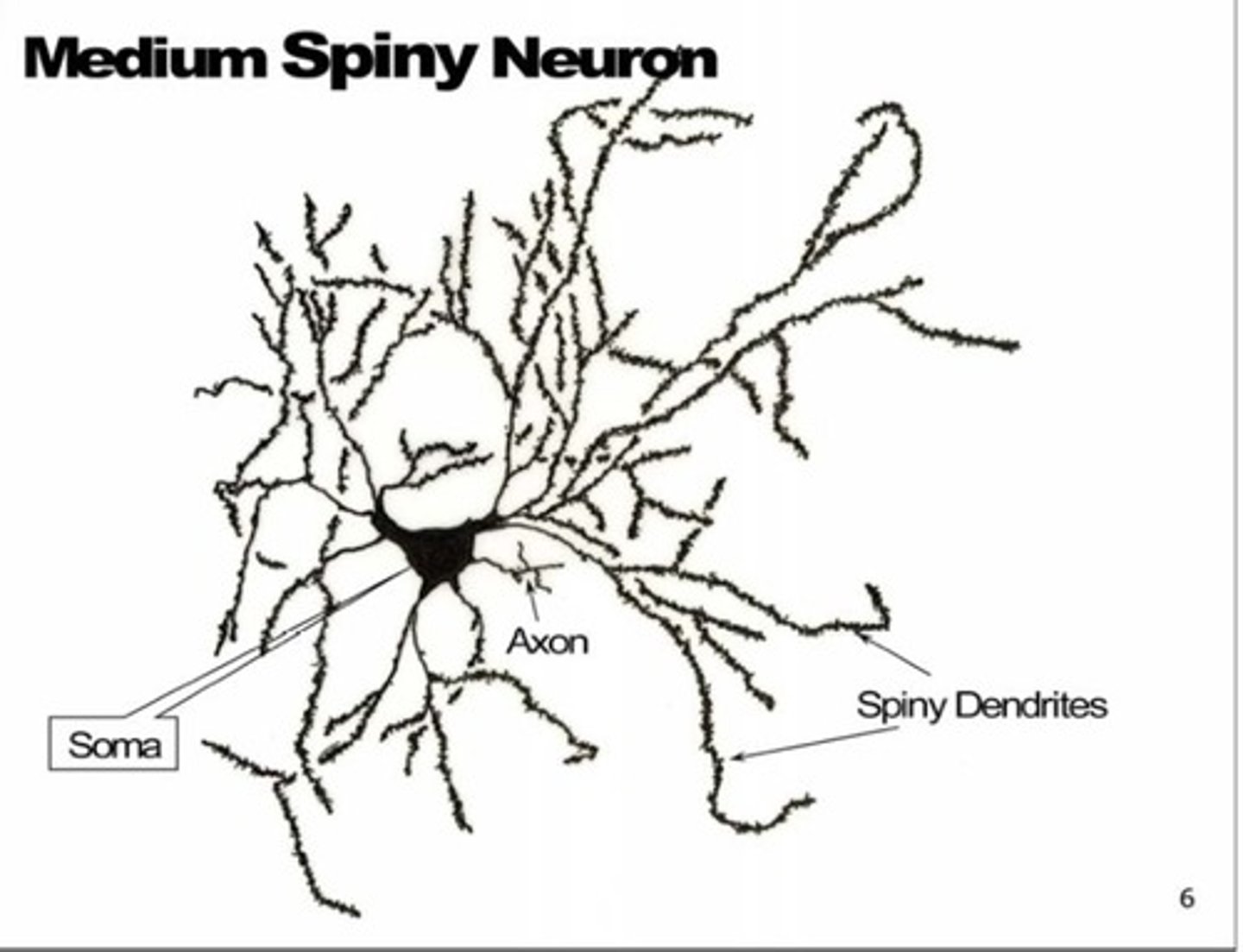
cortical signals arrive to what on striatum to integrate signals
medium spiny neurons
where does caudate receive input from
multimodal association cortices + eye movement areas
where does putamen get input from
from primary and secondary somatosensory areas
what are projections from cortex to input area called
corticostriatal pathway
what is the main basal ganglia output
globus pallidal internal via thalamus (for motor areas) and substantia nigra pars reticulata via superior colliculi (for eye movement)
what are the 3 loops between cortex and basal ganglia
1. motor - voluntary movements (our focus)
2. limbic - emotional behaviour
3. executive - cognitive processes
what is the motor circuit for
the initiatioon of voluntary movements
describe tonic inhibitory outflow from the BG
when BG inhibits motor areas during rest, preventing unwanted movements
what must be done to tonic outflow from BG to start movement
inhibition must be removed first
what is the direct vs indirect pathway for BG
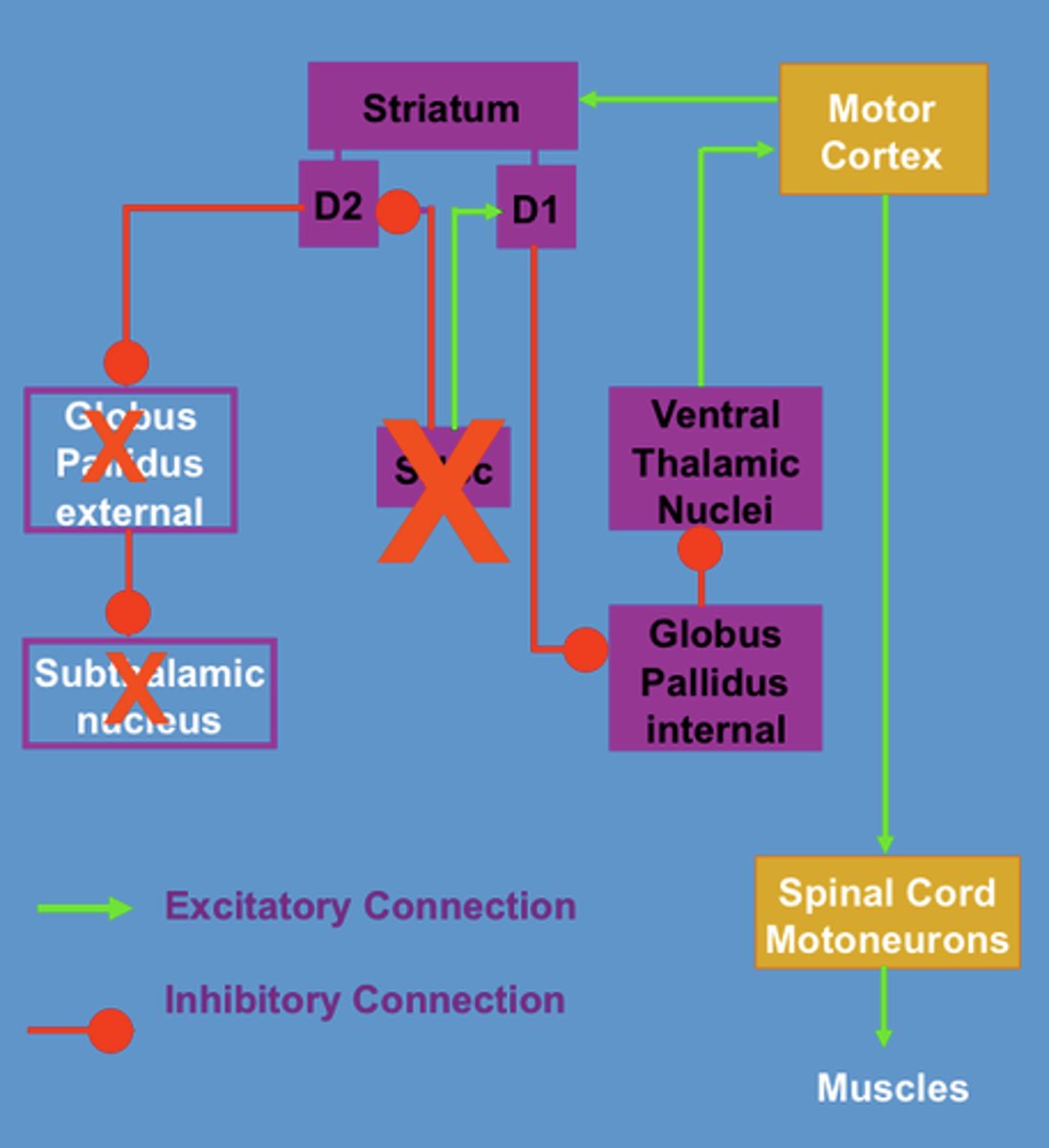
direct pathway - stops the inhibition to allow movement (projects to GP(int) and SN pars reticulata)
indirect pathway - inhibits further (projects to GP (ext))
which pathway disinhibits the thalamus in BG
direct pathway
describe direct pathway in BG
Cortex release glutamate --> Excitatory to striatum --> release GABA --> globus pallidus inhibited --> won't release gaba to thalamus --> thalamus is excited --> we get more movement
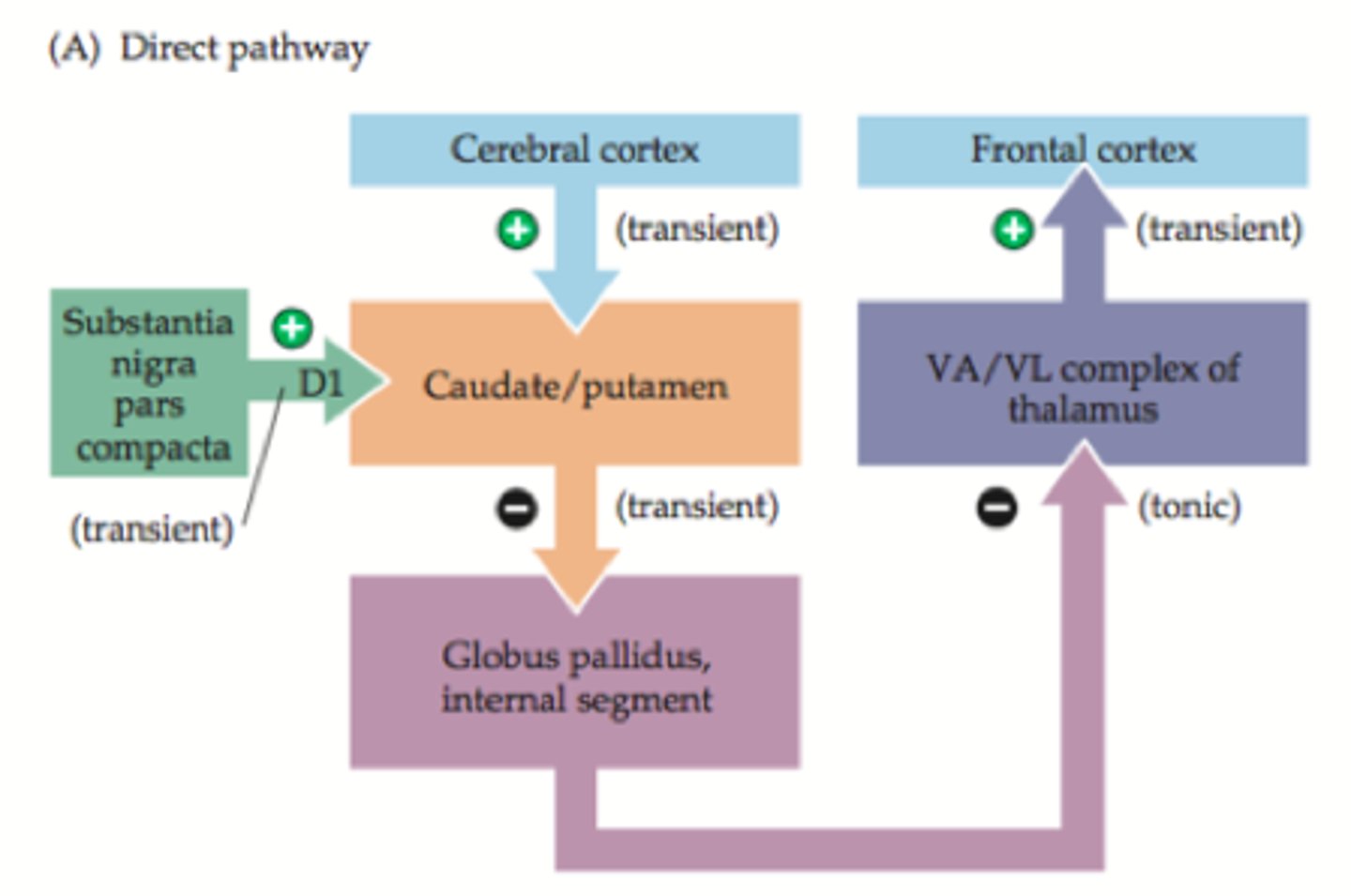
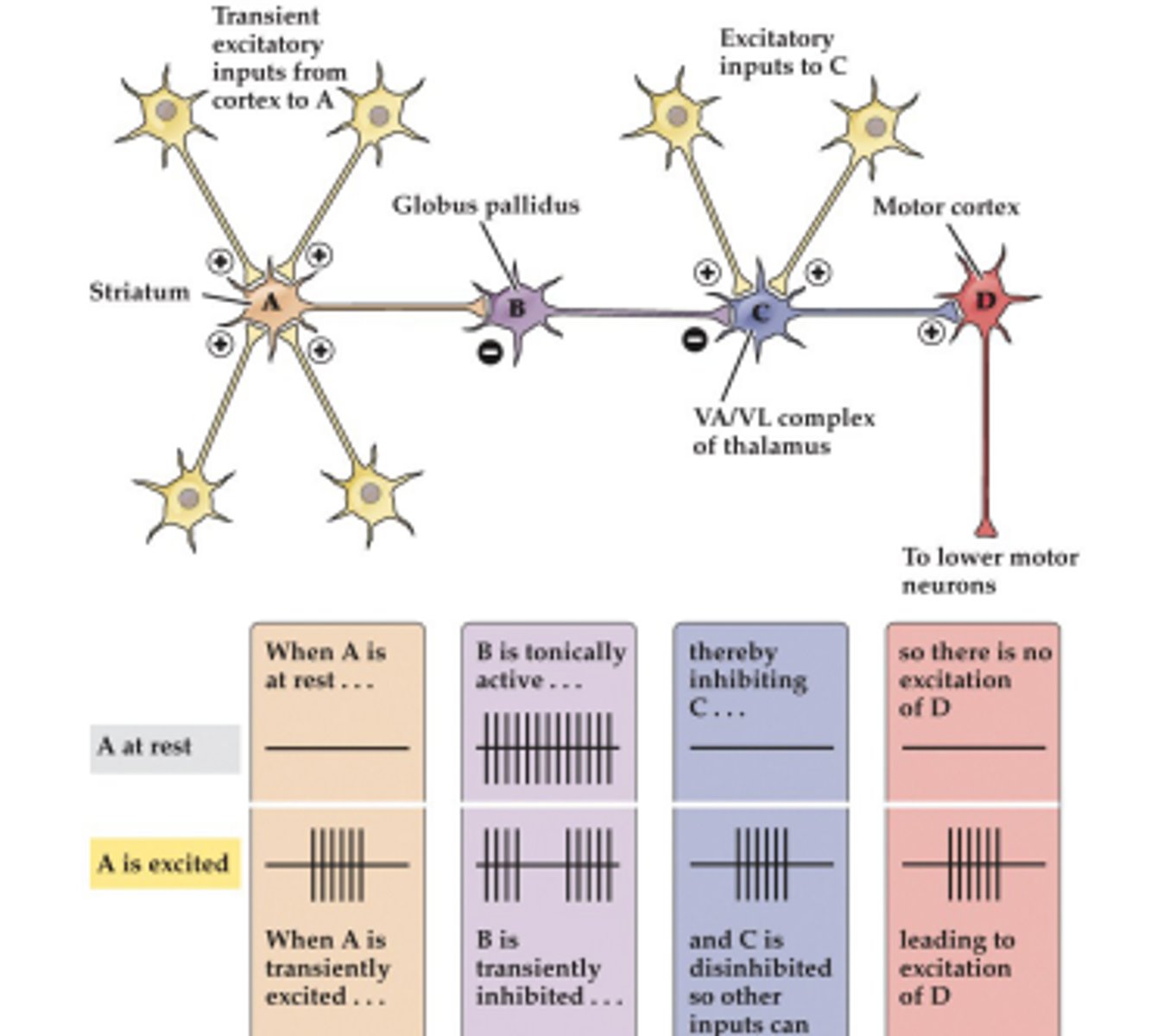
describe disinhibitory circuit of direct pathway
if the striatum cell receives excitatory input and threshold is reached, it sends inhibition to GPi to disinhibit the thalamus
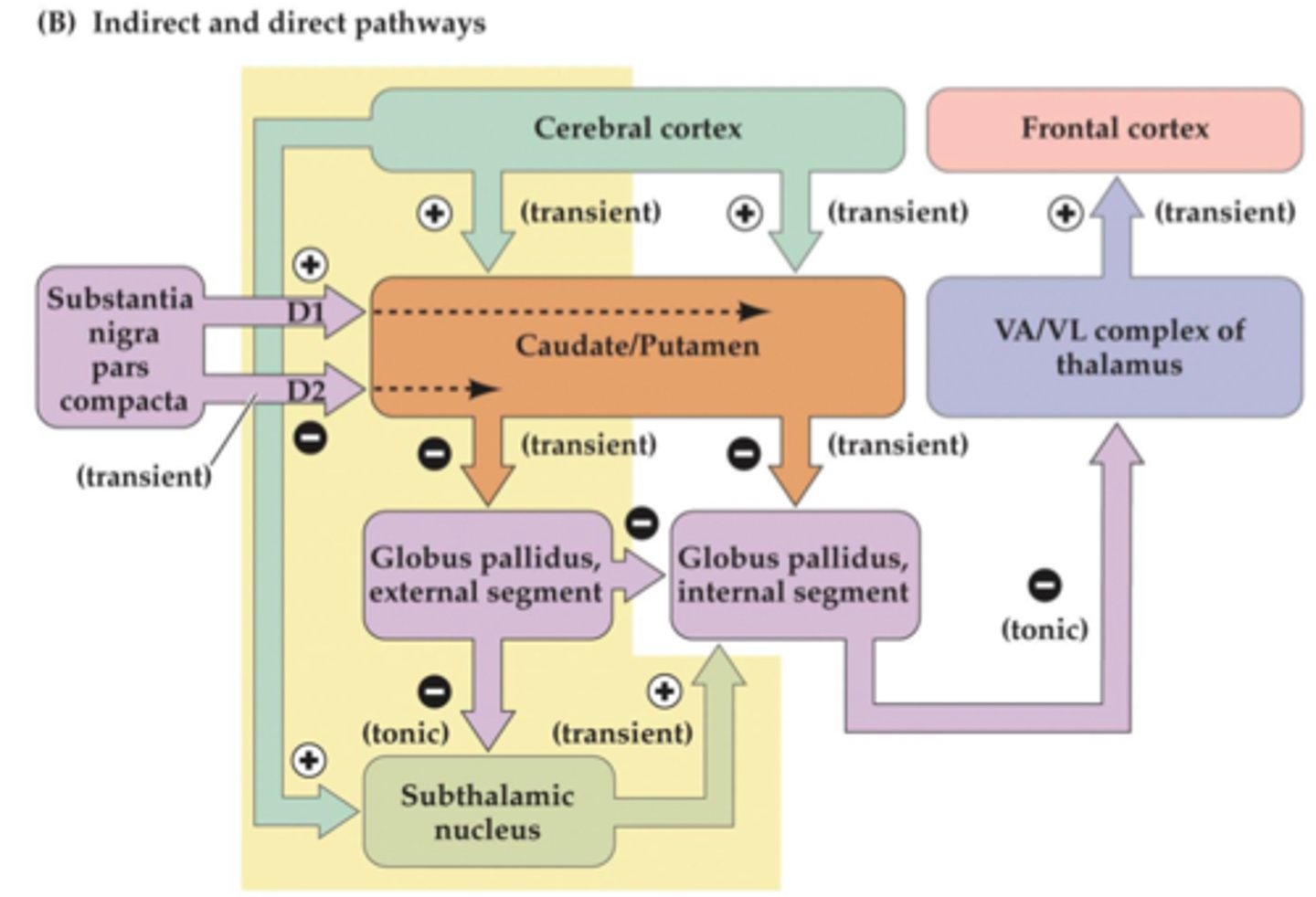
describe the indirect pathway in BG
Cortex releases glutamate --> SnC releases dopamine --> dopamine is inhibitory --> striatum sends inhibitory gaba to globus pallidus external segment --> gaba is not released --> subthalmic nucleus is not inhibited --> releases nuclei --> excite substantia nigra --> release GABA -->inhibits thalamus --> WE DONT MOVE
describe the hyperdirect pathway
cortex > stimulates STN
> stimulates GPI
> increases inhibitory output from BG
- acts as a very forceful brake, followed by an action
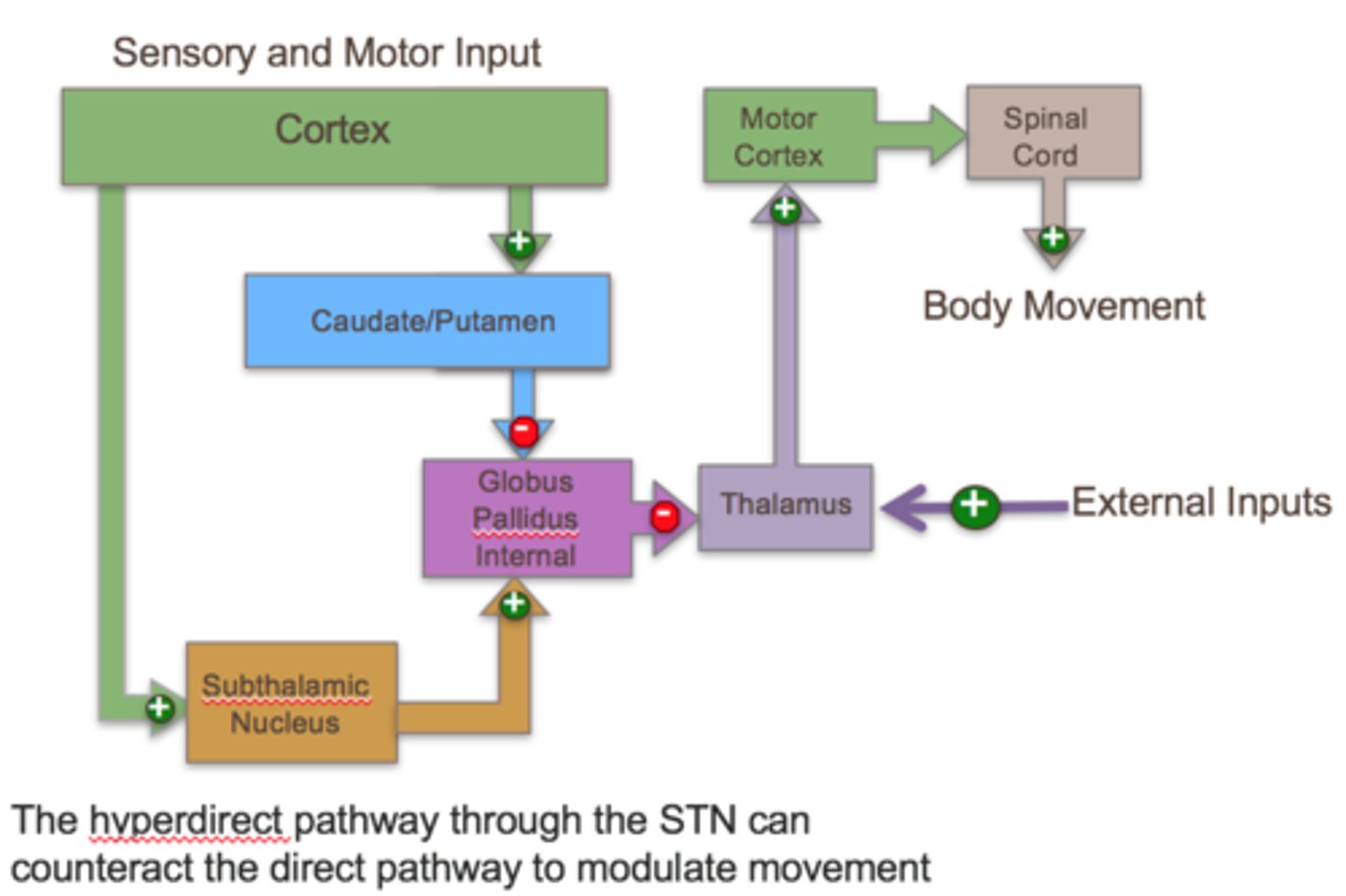
what does dopaminergic input from SN(pc) do?
decreases inhibitory output from BG, inhibiting the indirect and exciting the direct pathway
descrie the receptor subtypes for dopaminergic input
D1: excitatory, part of direct pathway (adds to GPi input)
D2: inhibitory, part of indirect pathway (adds to GPe)
what is hypokinesia vs hyperkinesia
hypo: decrease in the amount and speed of movements (neg sign)
hyper: unwanted movements (pos sign)
what is a positive vs negative sign
positive: action that shouldnt happen and is
negative: action that should happen and isnt
describe parkinsons disease
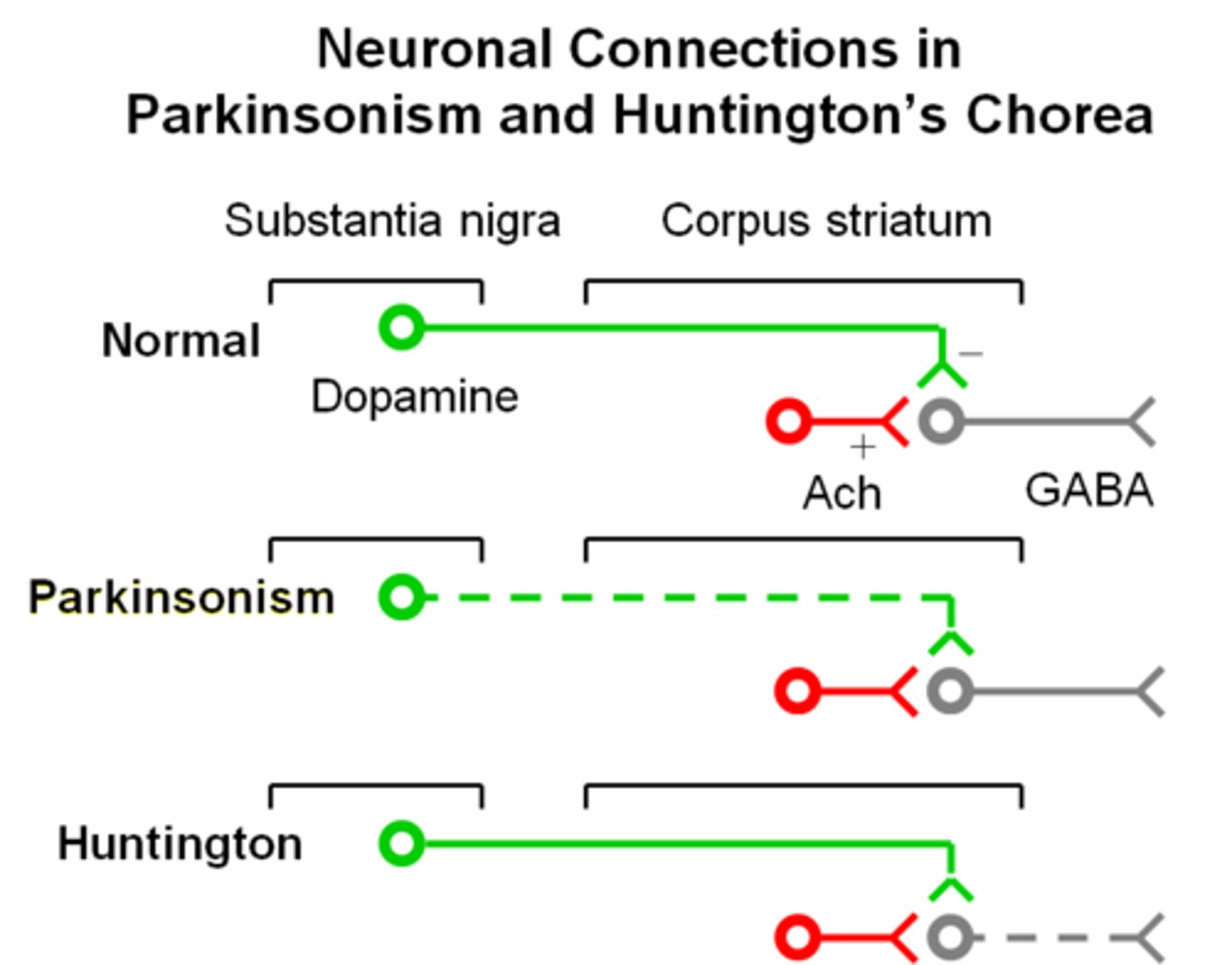
cell death in SN causing loss of dopamine which leads to overactivity in indirect pathway
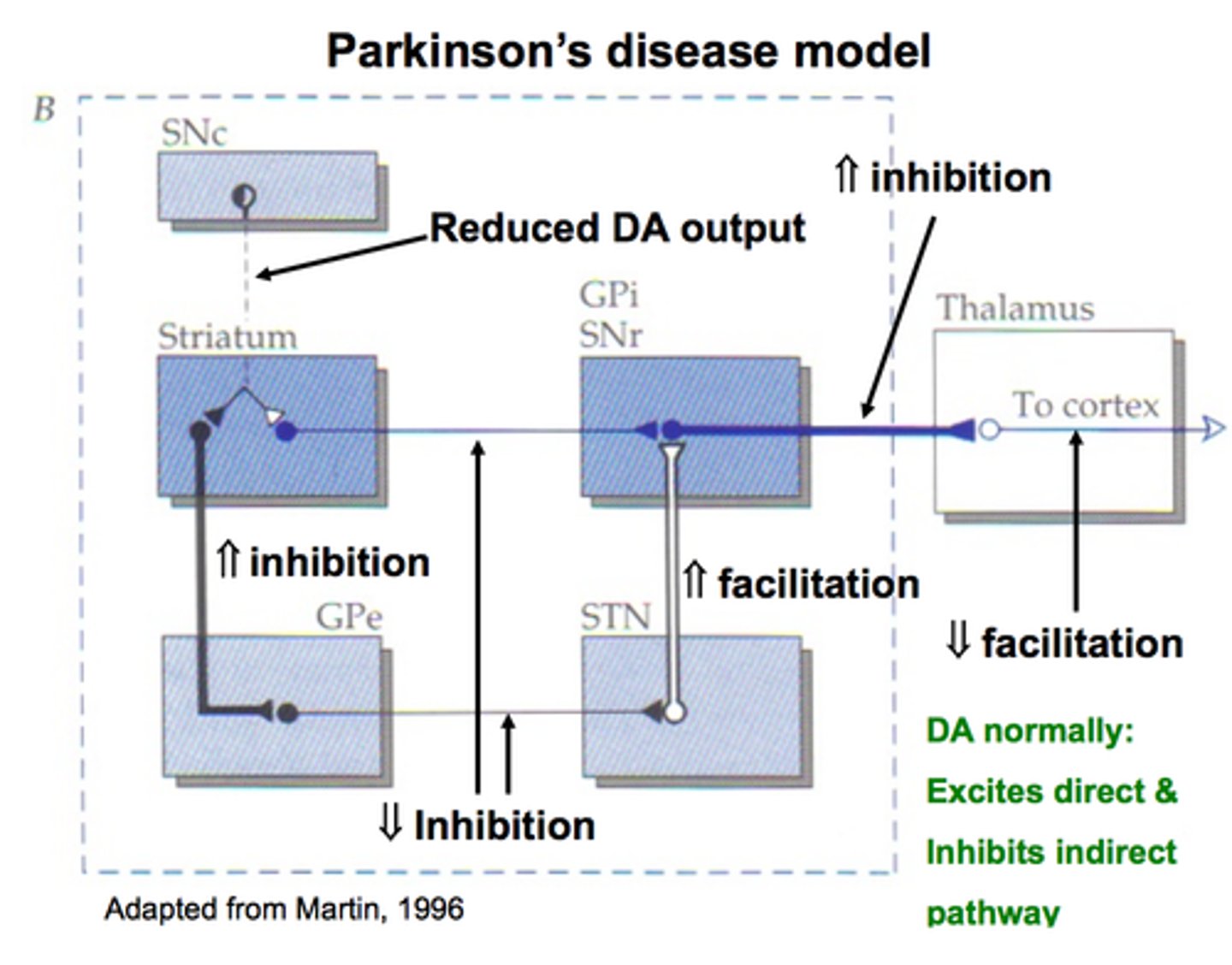
is parkinsons hypokinetic or hyperkinetic
hypokinetic
how does parkinsons change circuitry
inhibition to GPe is increased, leading to more tonic inhibition, decreasing excitation on motor cortex
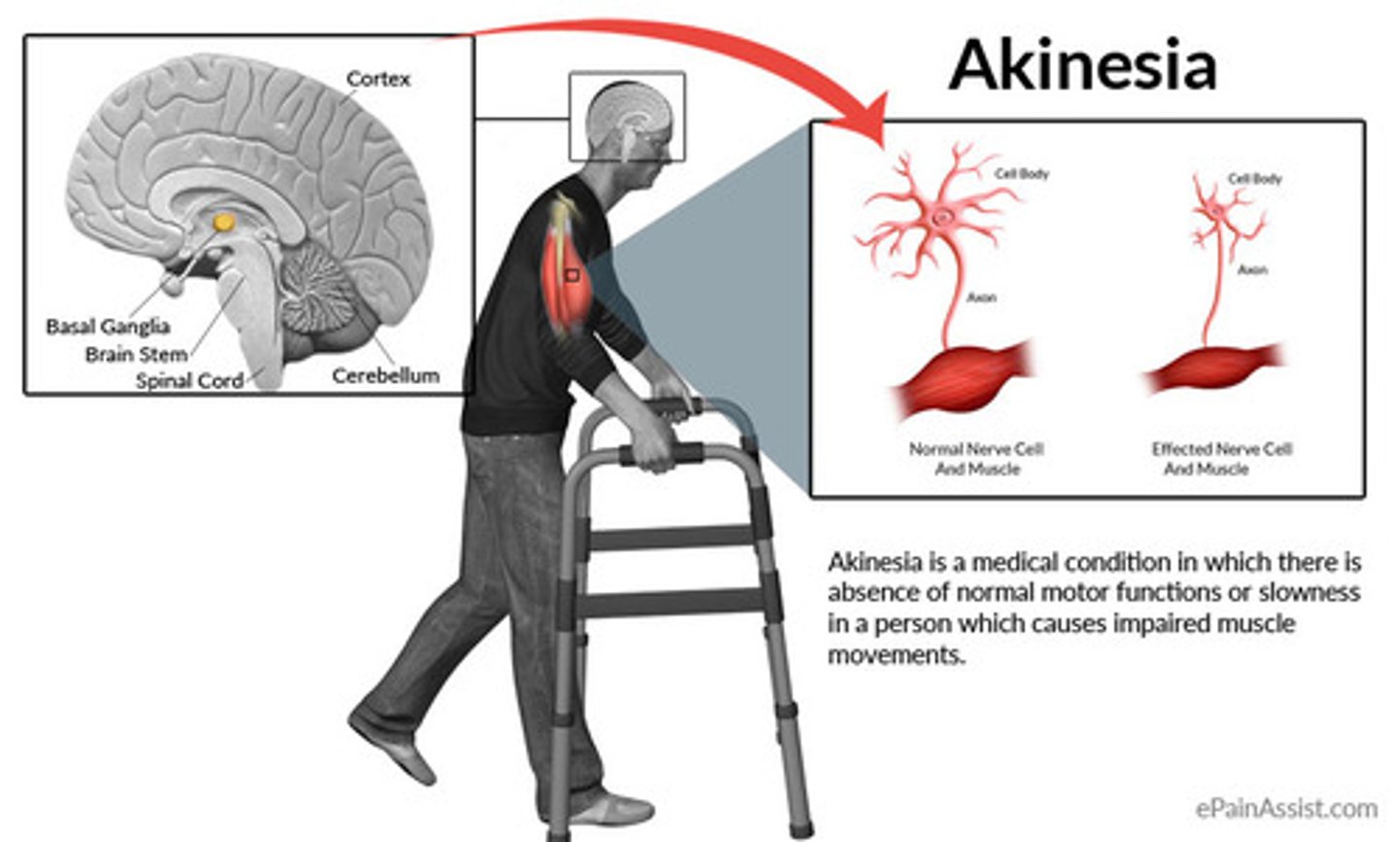
what is akinesia
difficulty initiating movement voluntarily
what is bradykinesia
movements are very slow
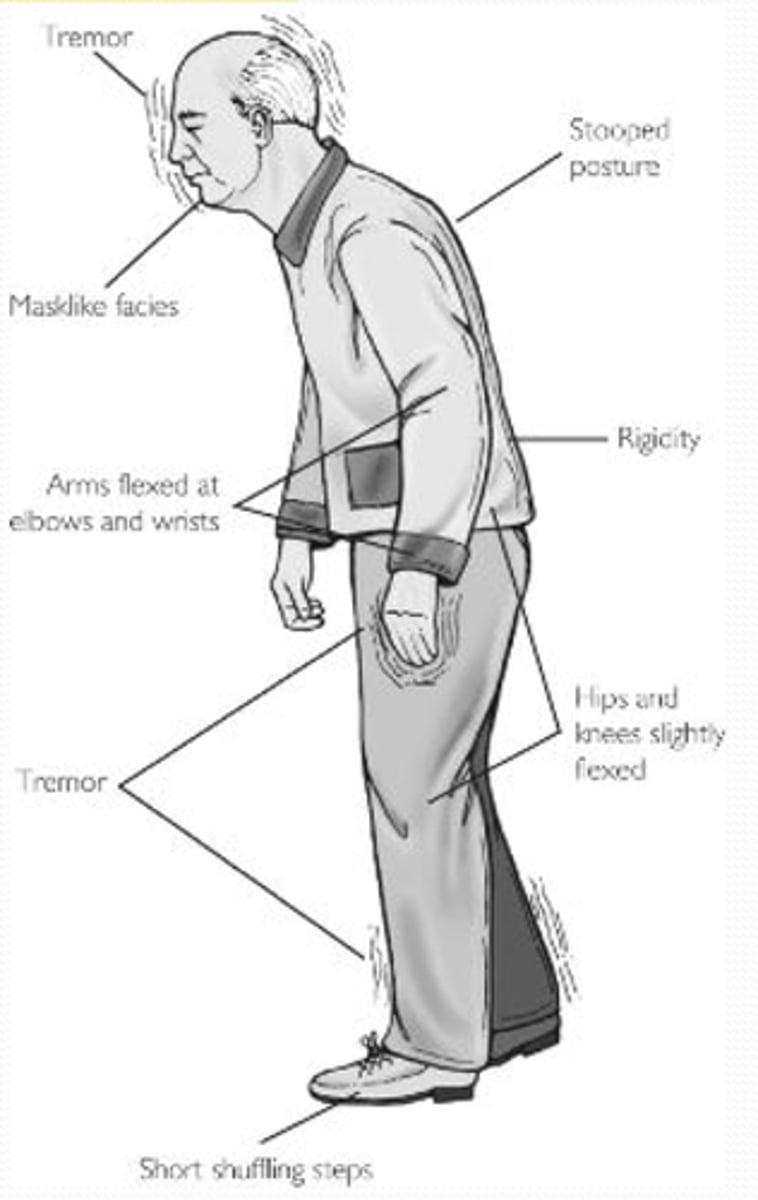
what signs does loss of dopamine producing cells in SNc lead to
akinesia, bradykinesia, and a resting tremor in distal limbs
what does loss of ACh producing cells in pedunculopontine nucleus lead to
rigidity- inability to inhibit reticulospinal + vestibulospinal tracts
what are parkinsons treatments
pallidotomy, STN lesion, L-DOPA, and deep brain stimulation
what is pallidotomy
lesion in globus pallidus, so theres less neurons inhibiting thalamus (lets movement occur)
what does STN lesion do
reduces indirect pathway
what does L-DOPA do
acts as dopamine precursor to replace the missing dopamine (since dopamine itself can't cross the BBB)
why does L-DOPA treatment not work longterm?
dopaminergic cells are continually being killed off, so while the balance is maintained for a bit, it's not efficient.
why are lesions used in parkinsons treatment?
to correct balance of the lost dopamine
describe deep brain stimulation treatment
electrodes in the brain which delivers impulses without lesions, so its adjustable and reversible and has good responses
describe huntingtons disease
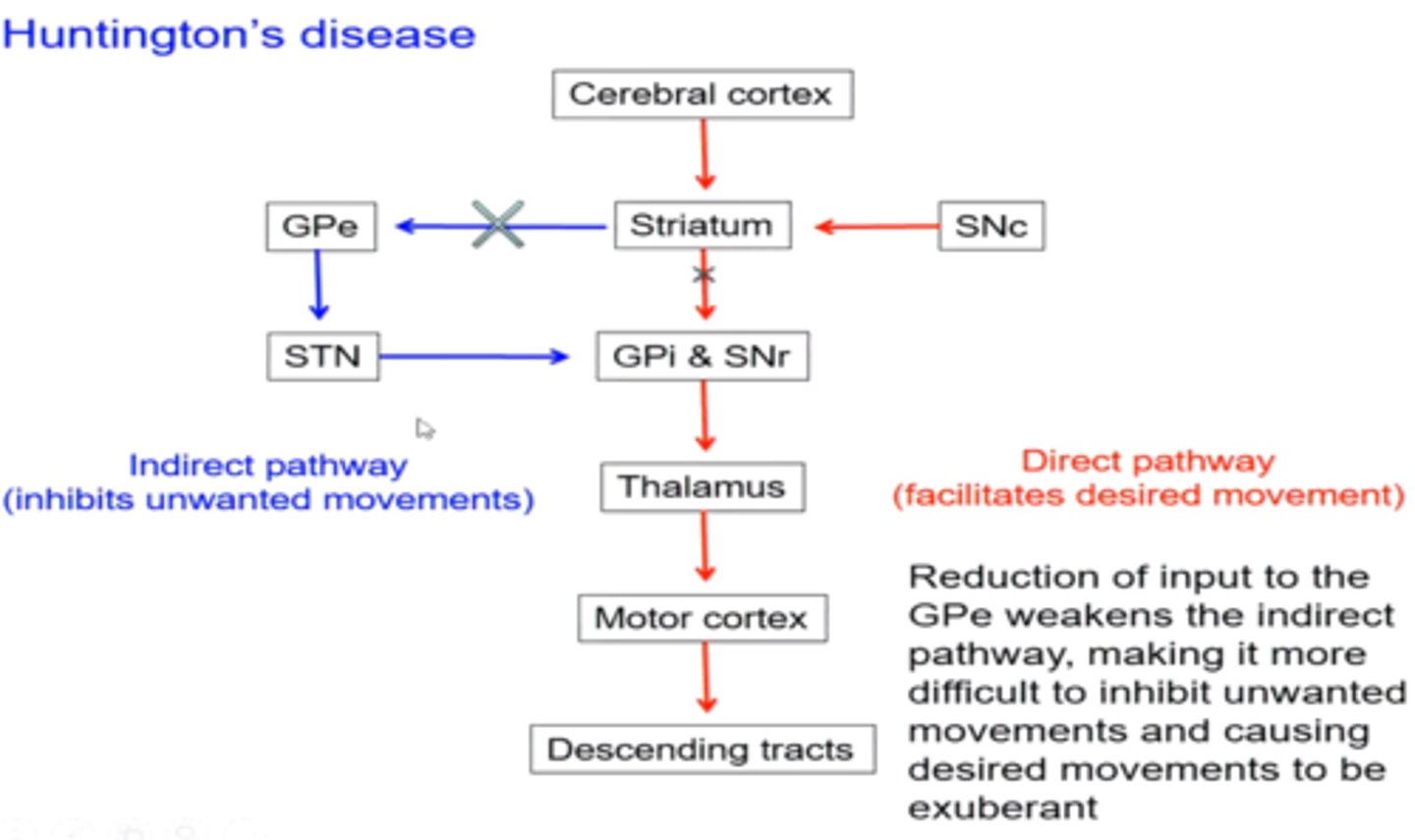
loss of striatal (mainly caudate) neurons of the indirect pathway, letting unwanted movements occur
is huntingtons hypokinetic or hyperkinetic
hyperkinetic
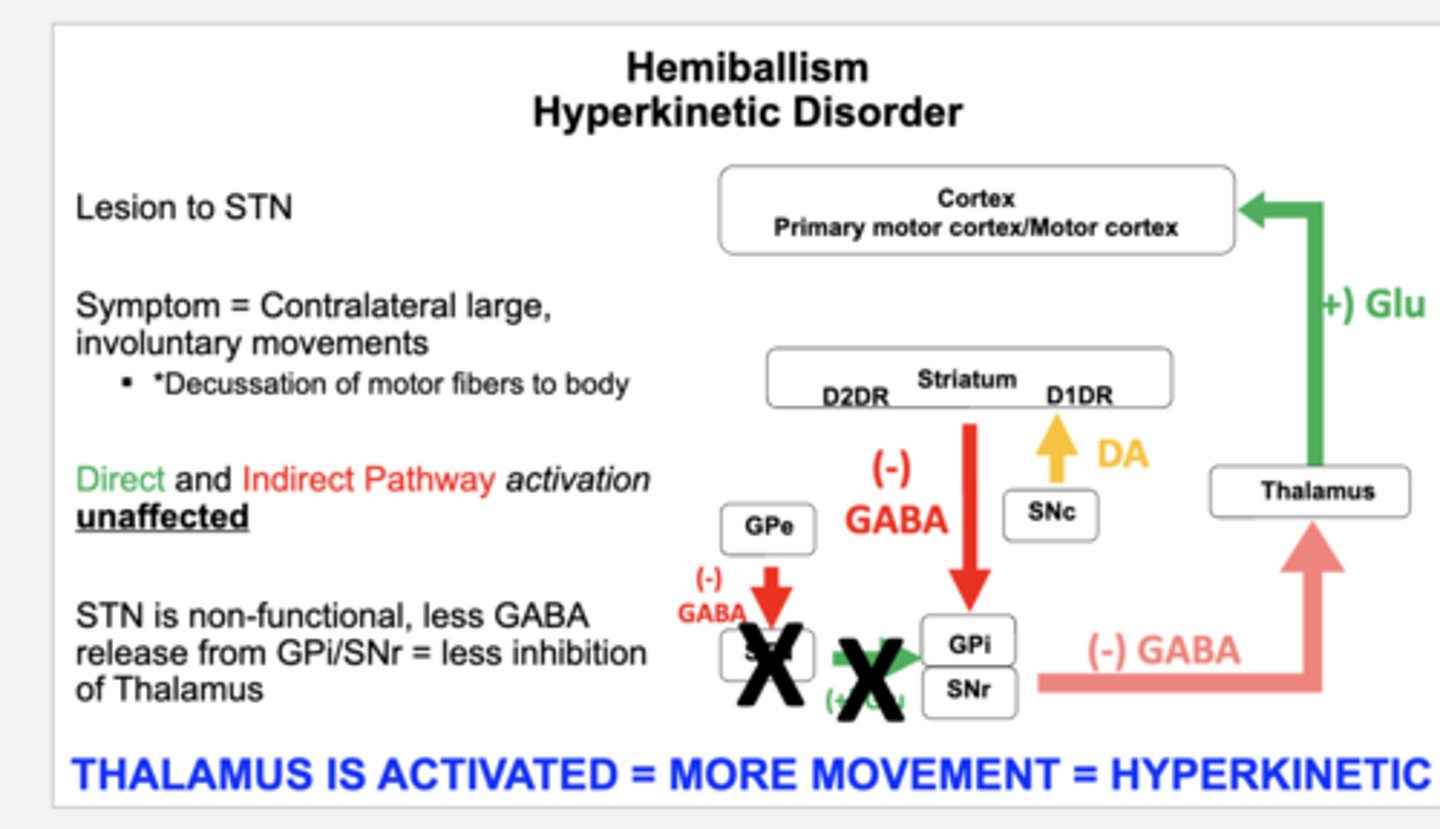
what is hemiballism
uncontrolled involuntary flinging of limbs on the side contralateral to STN lesion (less output of GPi, cant inhibit unwanted movements)