Biomechanics Lecture 6 (Linear Kinematics)
 Call Kai
 Learn
Learn Practice Test
 Spaced Repetition
 Match
Match Flashcards
 Knowt Play
1/68

There's no tags or description
Looks like no tags are added yet.
Name | Mastery | Learn | Test | Matching | Spaced | Call with Kai |
|---|
No analytics yet
Send a link to your students to track their progress
69 Terms
Newton's 1st law
Law of Inertia
Law of inertia
A body in motion will stay in motion, a body at rest will stay at rest unless acted upon by and external force, rest is a constant state.
What is inertia
the ability to resist a change in motion, has no unit.
mass is a property of...
intertia
Newton's second law
law of acceleration
Law of acceleration
Force = Mass x acceleration, also a=F/m
acceleration is directly proportional to _____ and inversely proportional to ____
force, mass
In the law of acceleration, if mass is cut in half,
acceleration doubles, and vice versa. Heavier objects (more mass) require more acceleration to move with the same velocity than lighter objects (less mass)
Newton's third law
Law of reaction
What is the law of reaction
for every action, there is an equal and opposite reaction, when one body exerts a force on a second, the second body exerts an equal reaction force in magnitude and opposite in direction
law of reaction equation
sum of a unit is constant
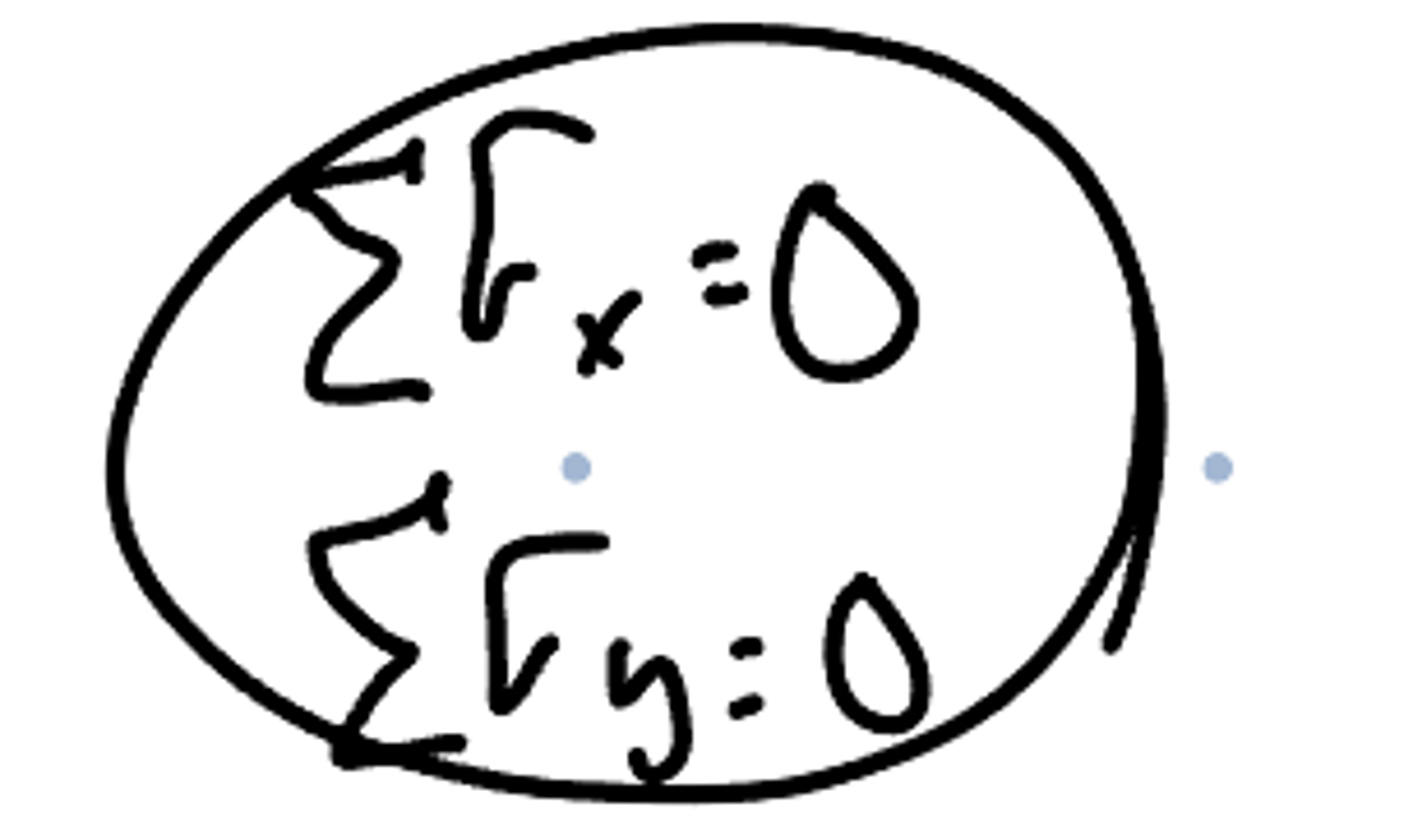
what is weight
product of mass and the acceleration caused by the attractive force between it and the earth : 9.81
Newtons 3rd law of motion introduces
friction
What is friction
a force that acts parallel to surfaces in contact and opposite to the direction of motion
What is a resultant force?
The overall force on a point or object
friction is dependent on
reaction force and coefficient of friction
starting friction
greater than moving friction, the effort to start an objects motion is greater than starting friction. You must break the barrier of friction
magnitude of Kinetic friction remains
constant, it is the friction that occurs between an object and a surface when it is in motion
The coefficient of friction serves as an
index
different surfaces have different
coefficients of friction
Friction equation
Ff = μFn (R)
Fn or R
normal perpendicular reaction force, inversely proportional to the force you are applying

what is frictional force? (F sub f)
A force that resists motion between two surfaces that are pressed together
Momentum is the quantity of
MOTION that the body possesses
Momentum is
mass, and the quantity that that mass has, is velocity
Linear momentum equation
M = mass x velocity
If you are able to possess more motion by running at someone who is standing still who has more mass...
you have more momentum than they do and can therefore knock them down
Momentum equation (with entanglement/elasticity)
mass1 (initial) + mass2 (initial) = (mass 1 +mass 2)Velocity (final [given or explicitly stated])
![<p>mass1 (initial) + mass2 (initial) = (mass 1 +mass 2)Velocity (final [given or explicitly stated])</p>](https://knowt-user-attachments.s3.amazonaws.com/91633b5b-83f5-44ed-89dc-181740296b20.jpg)
momentum equation for perfectly plastic objects

Newton's first law may be restated as the
principle of conservation of momentum
Principle of convervation of momentum
in the absence of external forces, the total momentum of a given system remains constant (M1=M2)
Coefficient of Restitution
number that serves as an index of elasticity for colliding bodies
equation for coefficient of restitution
-e = relative velocity after impact/relative velocity before impact
-e = v1-v2/u1-u2
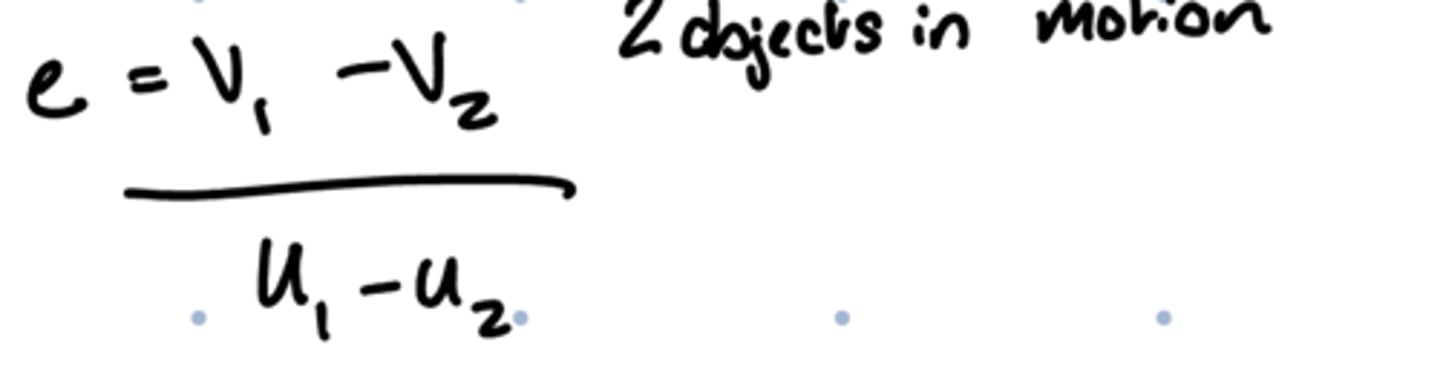
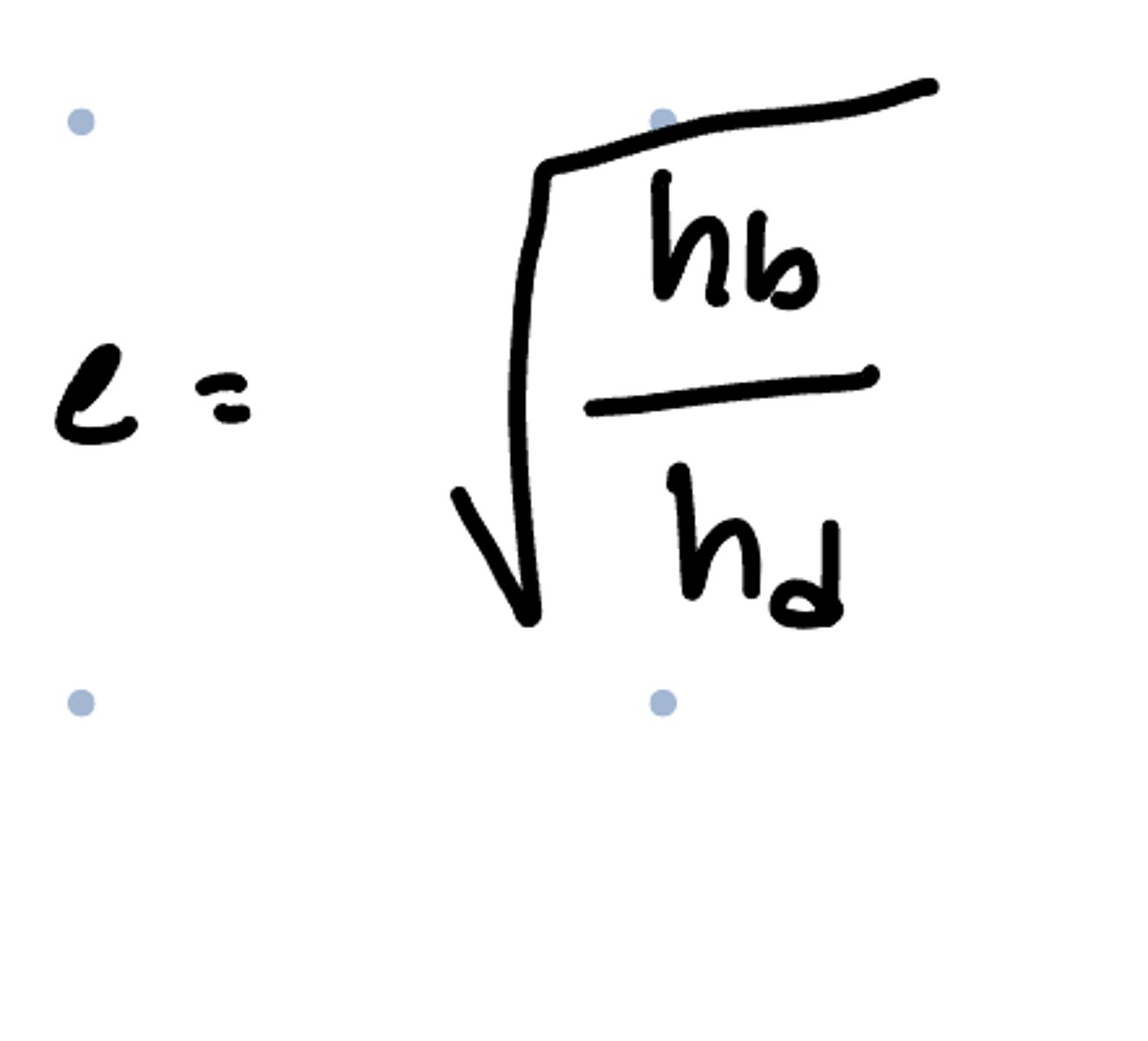
Equation for coefficient of restitution with a moving body and a stationary one (with no velocity)
Impulse
change in momentum, or Ft (force x time)
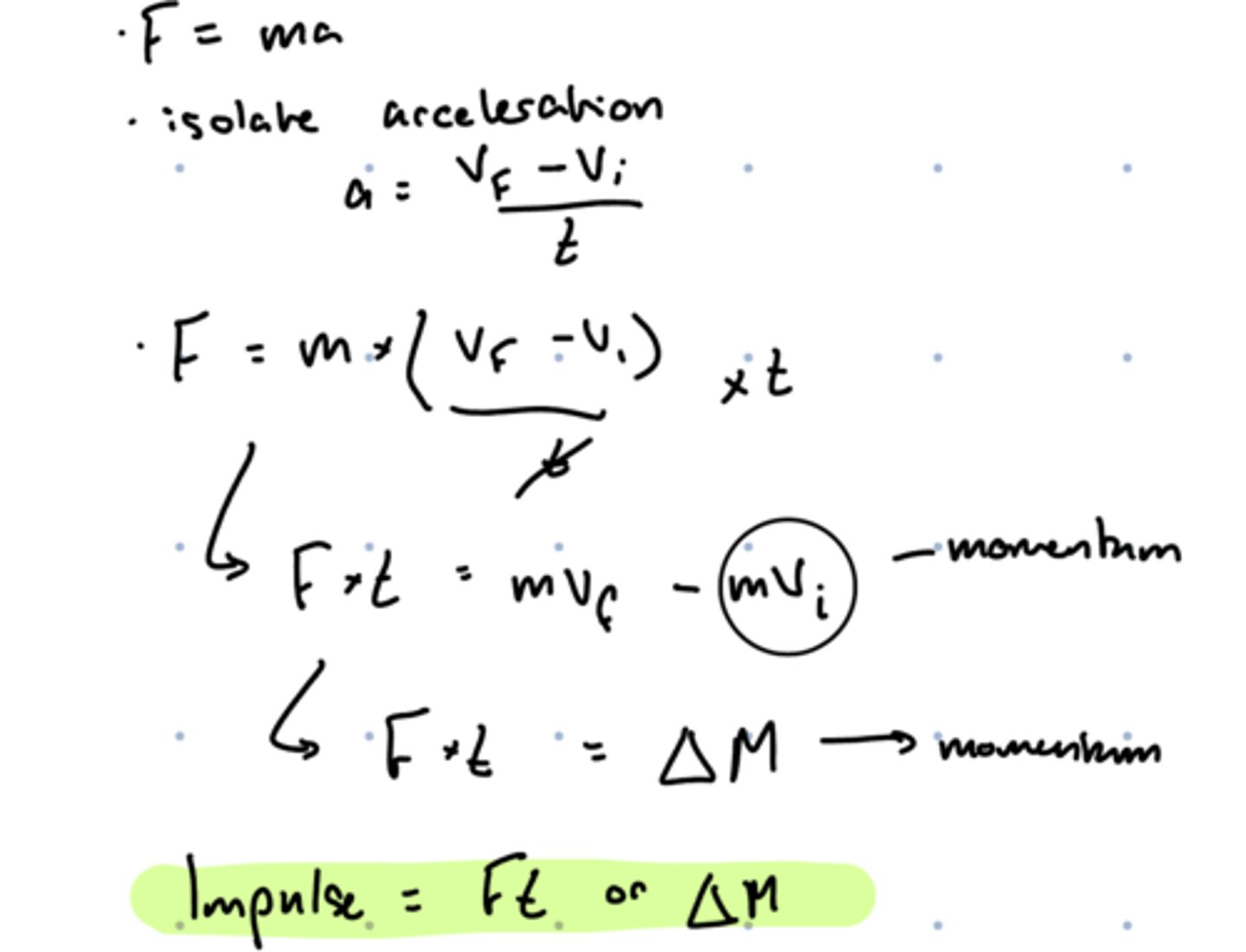
Equation for force
Force = mass x acceleration
elasticity
an objects ability to return to its original size and shape when outside forces are removed
factors that affect coefficient of resitution
1) velocities
2) Temperature
3) Material
4) Spin
Work
force x displacement (force over a distance) (Measured in JOULES)
Power
amount of speed in that amount of time, amount of work per unit of time
Power equation
P=W/t (measured in WATTS) or P=Fxdisplacement/time
What is mechanical energy?
the capacity to do work, units of energy are Joules, thera are three forms of energy: kinetic, potential, thermal
What is kinetic energy
the energy an object has due to its motion (by virtue of motion)
Kinetic energy equation
KE=1/2mv^2 (THE [MV] PART CAN ALSO BE SUBSTITUTED FOR MOMENTUM) Also if theres no velocity then theres no motion and KE is zero
![<p>KE=1/2mv^2 (THE [MV] PART CAN ALSO BE SUBSTITUTED FOR MOMENTUM) Also if theres no velocity then theres no motion and KE is zero</p>](https://knowt-user-attachments.s3.amazonaws.com/af0d58cb-1678-45f3-aee7-ec74c5071779.png)
What is potential energy?
Energy by virtue of a body's position or configuration, (energy that is stored) by virtue of the object's height
Potential energy equation
PE = m x 9.81 x h (mg is weight)
What is the law of conservation of mechanical energy
when gravity is only acting external force, a body's mechanical energy remains constant
Law of conservation of mechanical energy equation
KE + PE = C (TE is negligible here)
What is the principle of work and energy
the work of a force is equal to the change in energy it produces in the object acted upon (W= change in KE +change in PE)
What is torque?
the rotary effect of a force about an axis of rotation, measured as the product of force and a force's moment arm
What is torque, more simply explained?
effect of force and perpendicular distance (where sine and cosine come in)
What is a moment arm
distance between a force's line of action and an axis of rotation
torque is the angular equivalent of
Force
in equilibrium, you cannot necessarily change the weight of a person, but the...
moment arm can change
When you're working with levers, what kind of equilibrium are you working with
static
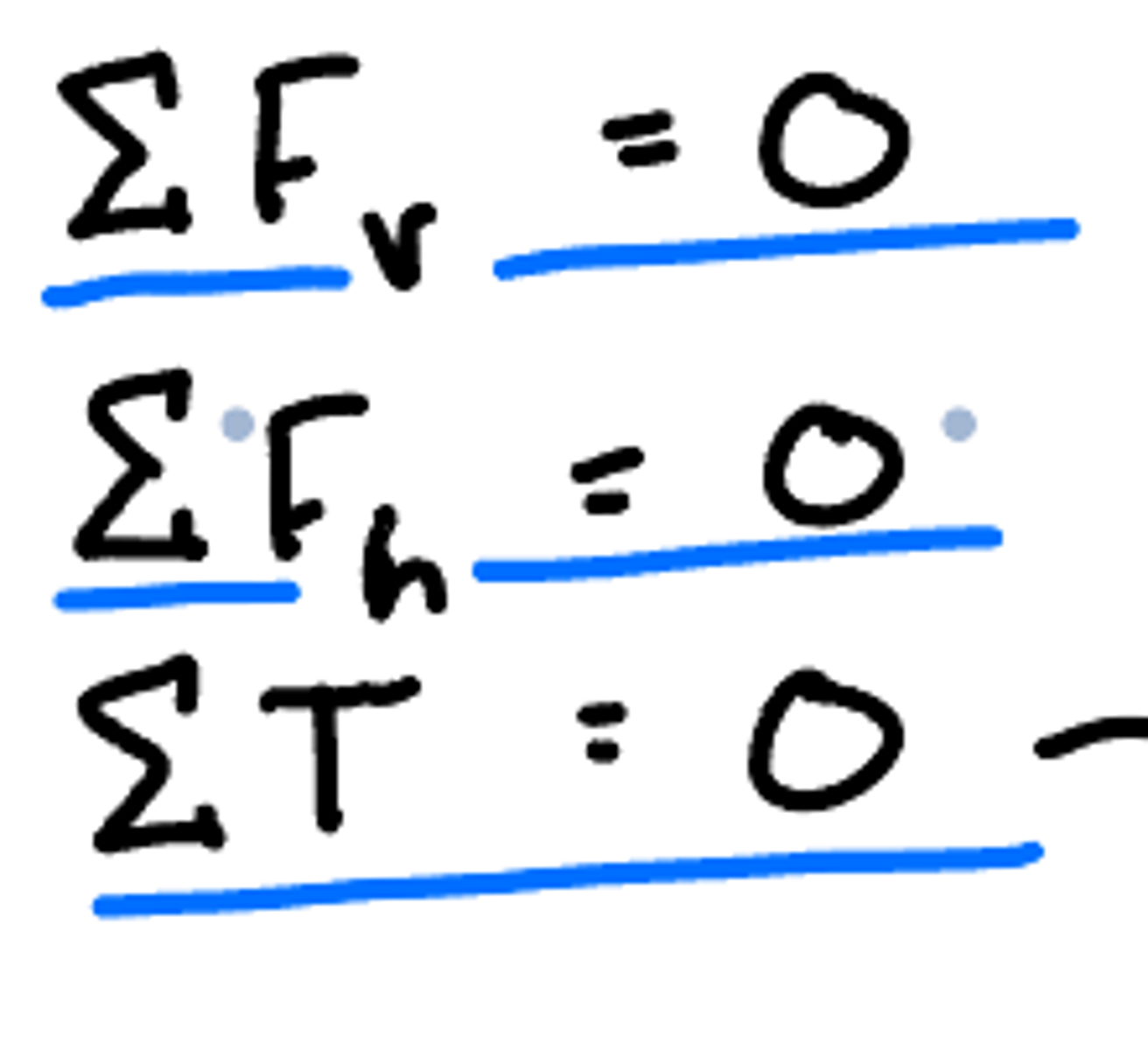
conditions of static equilibrium
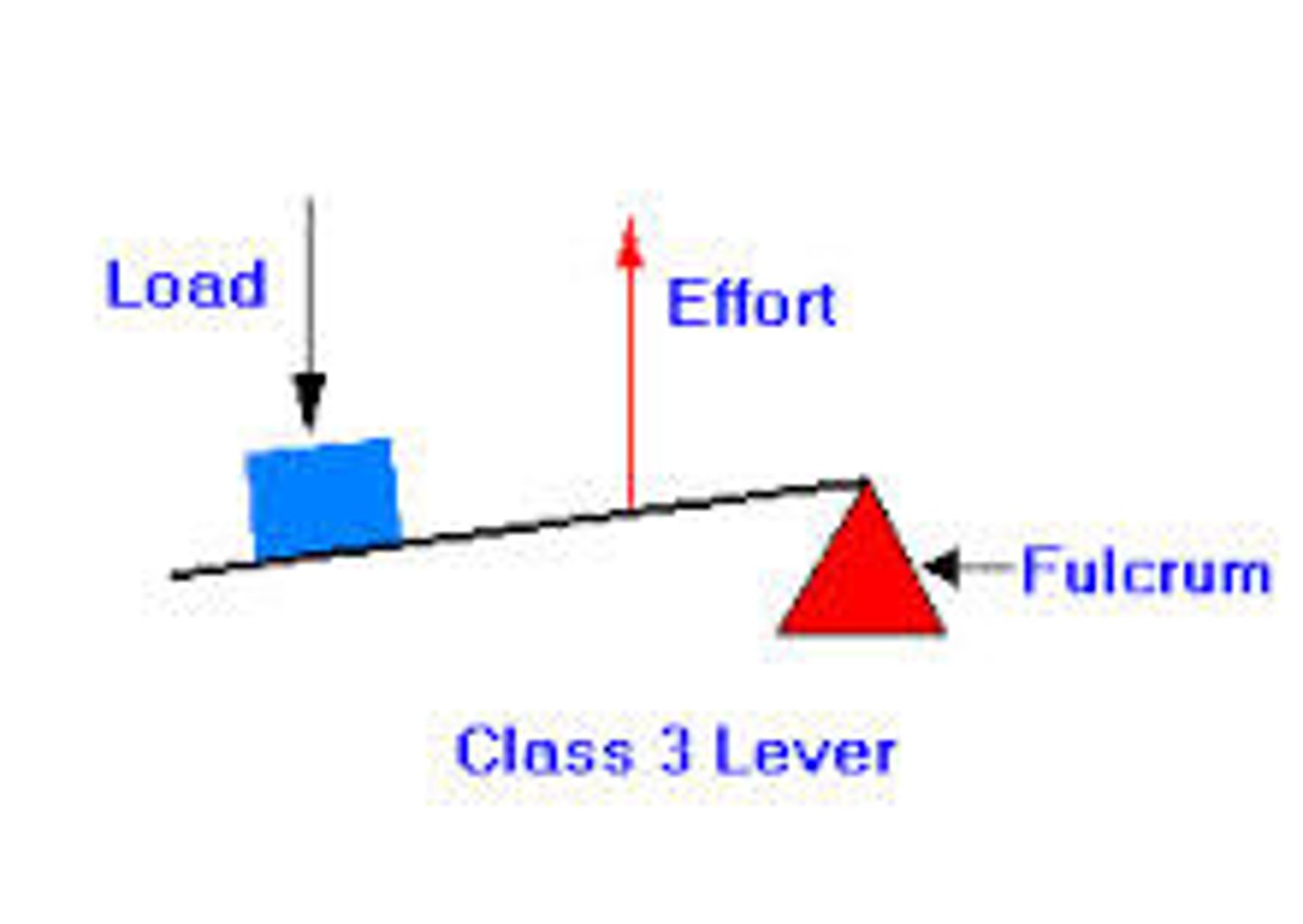
Third class lever
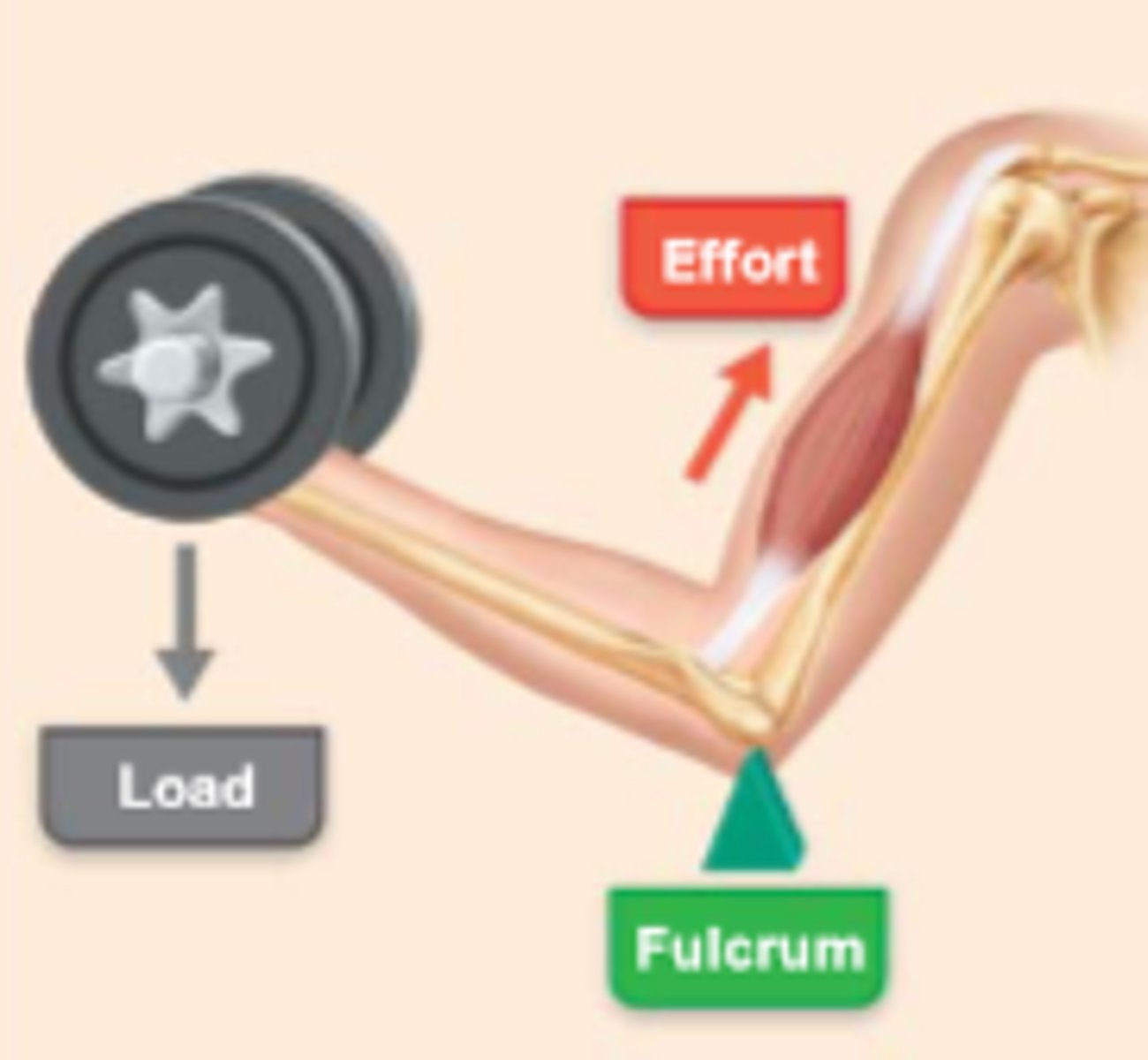
the input force is between the fulcrum and the load
third class body lever
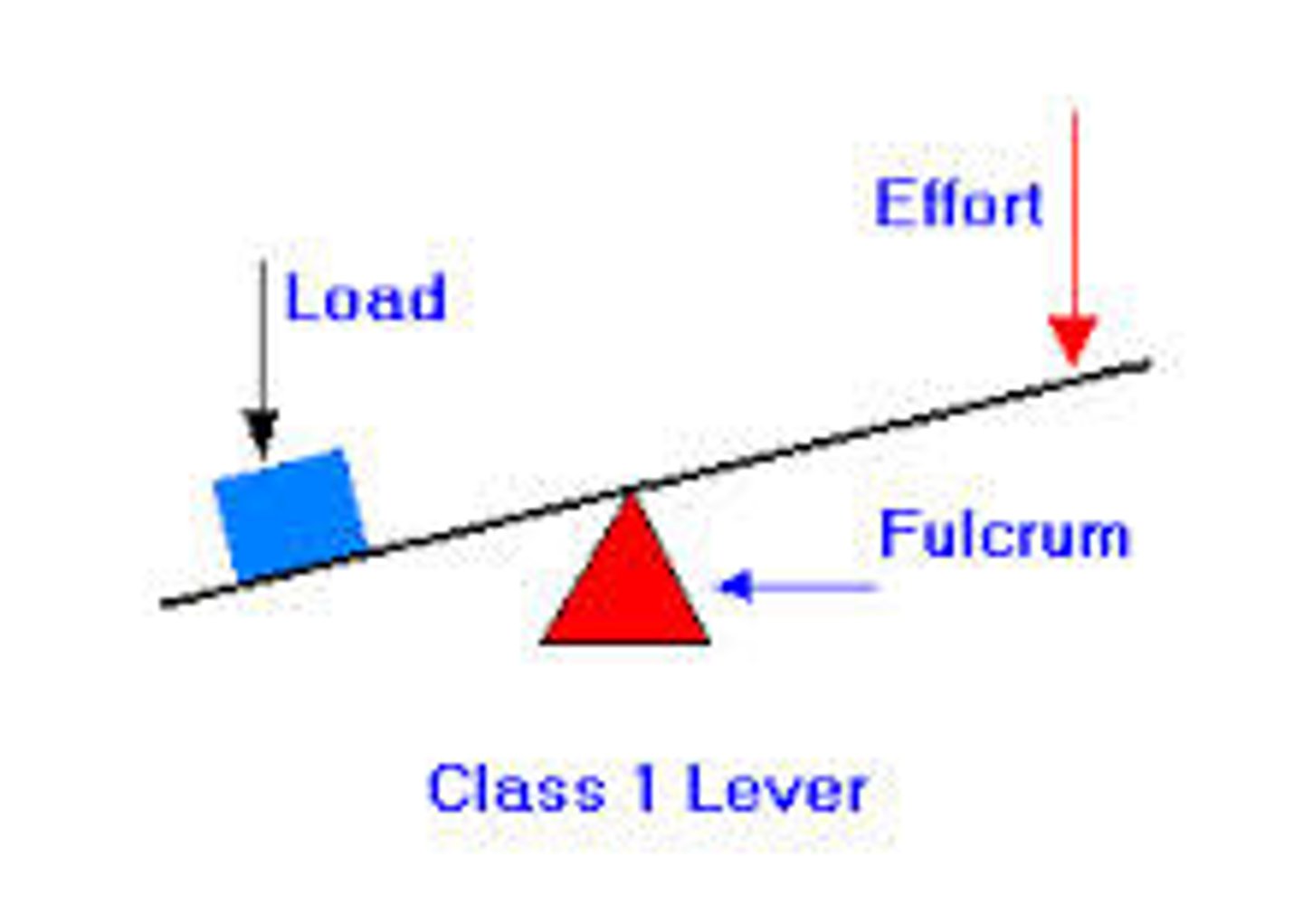
First class lever
The fulcrum is positioned between the effort and resistance
first class body lever
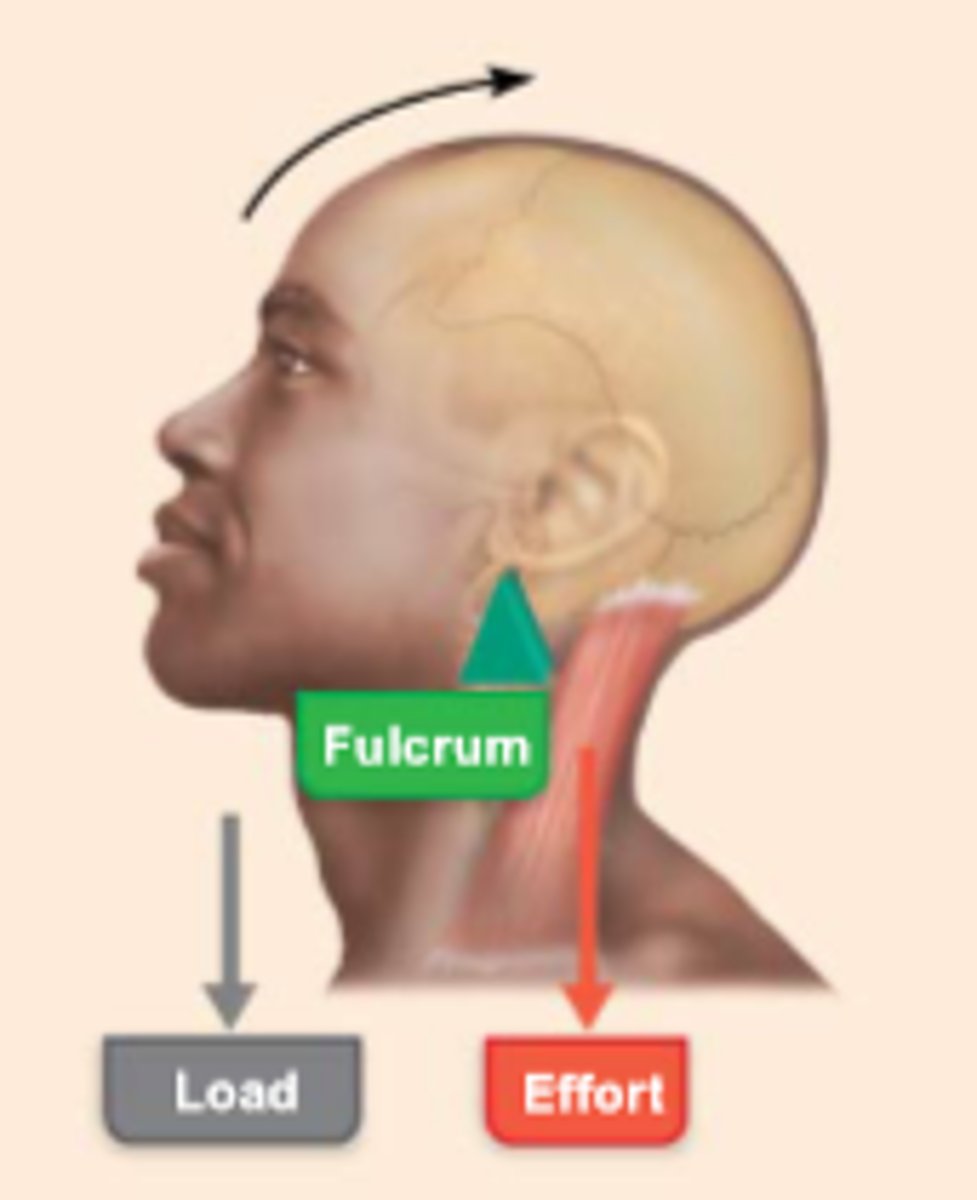
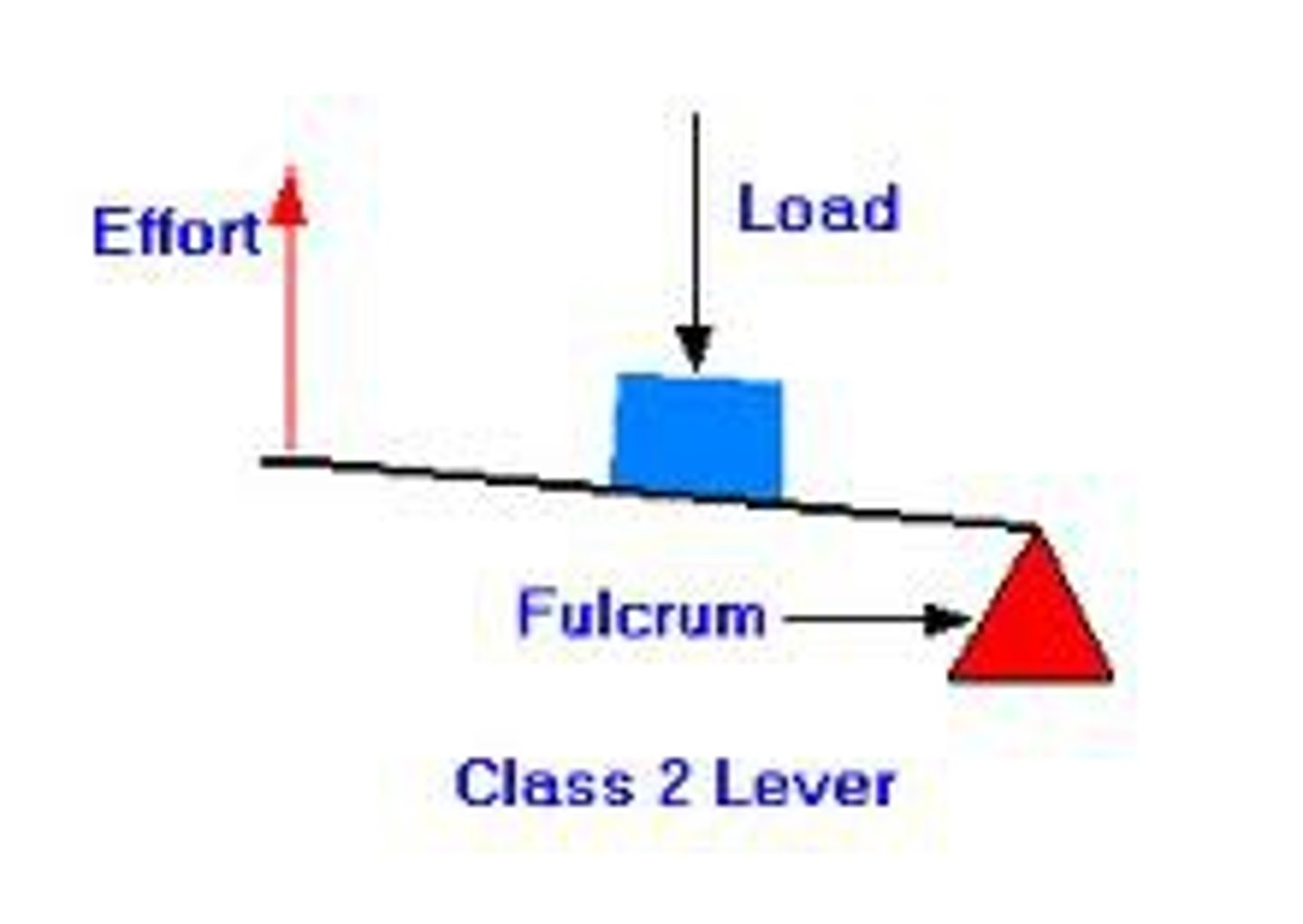
Second class lever
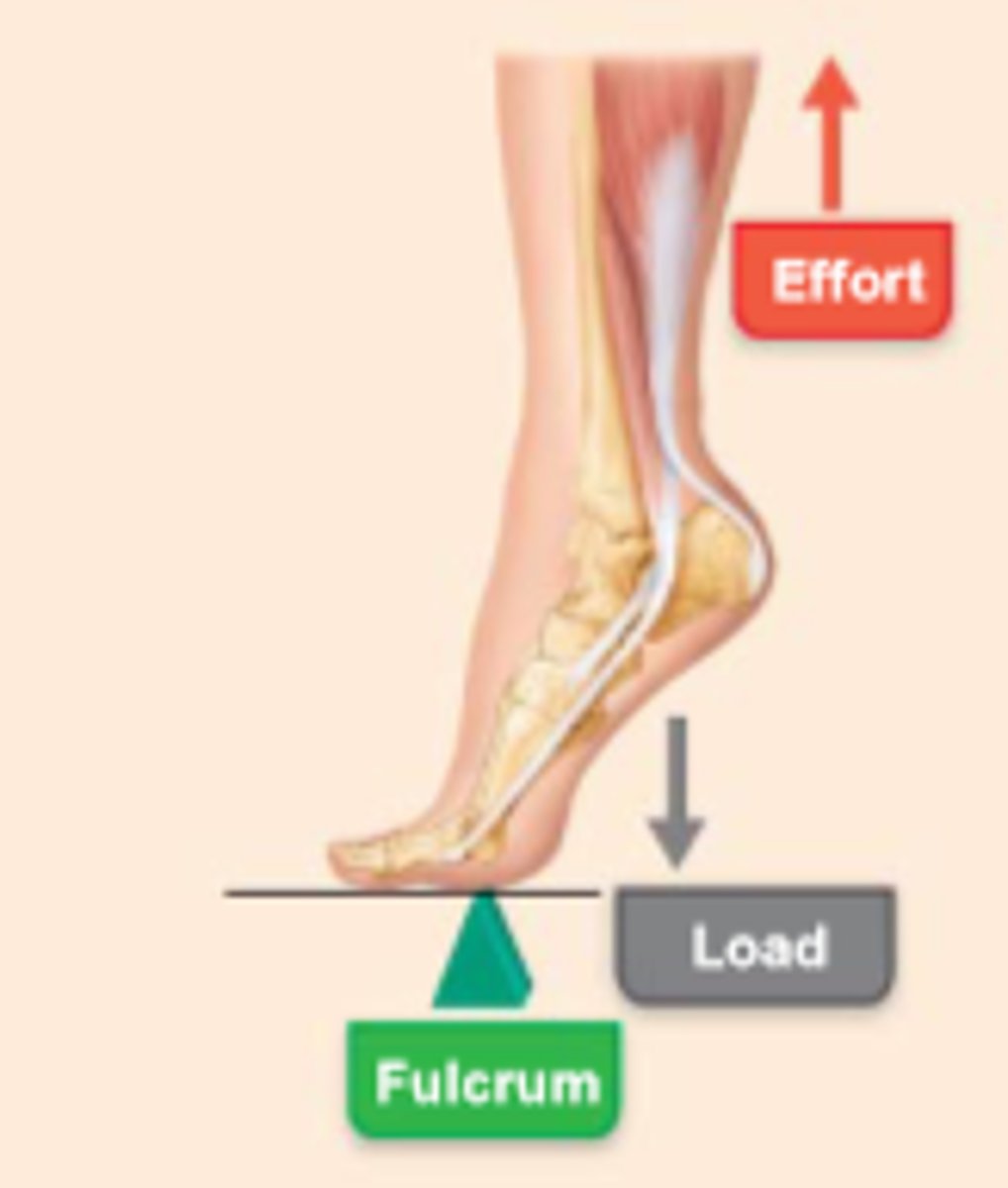
the load is between the fulcrum and the effort (calf muscle)
second class body lever
What is mechanical advantage?
ratio of moment arm of the force to the moment arm of the resistance for a given lever
torque equilibrium equation
F(a) x distance (a) = F (b) x distance (b)
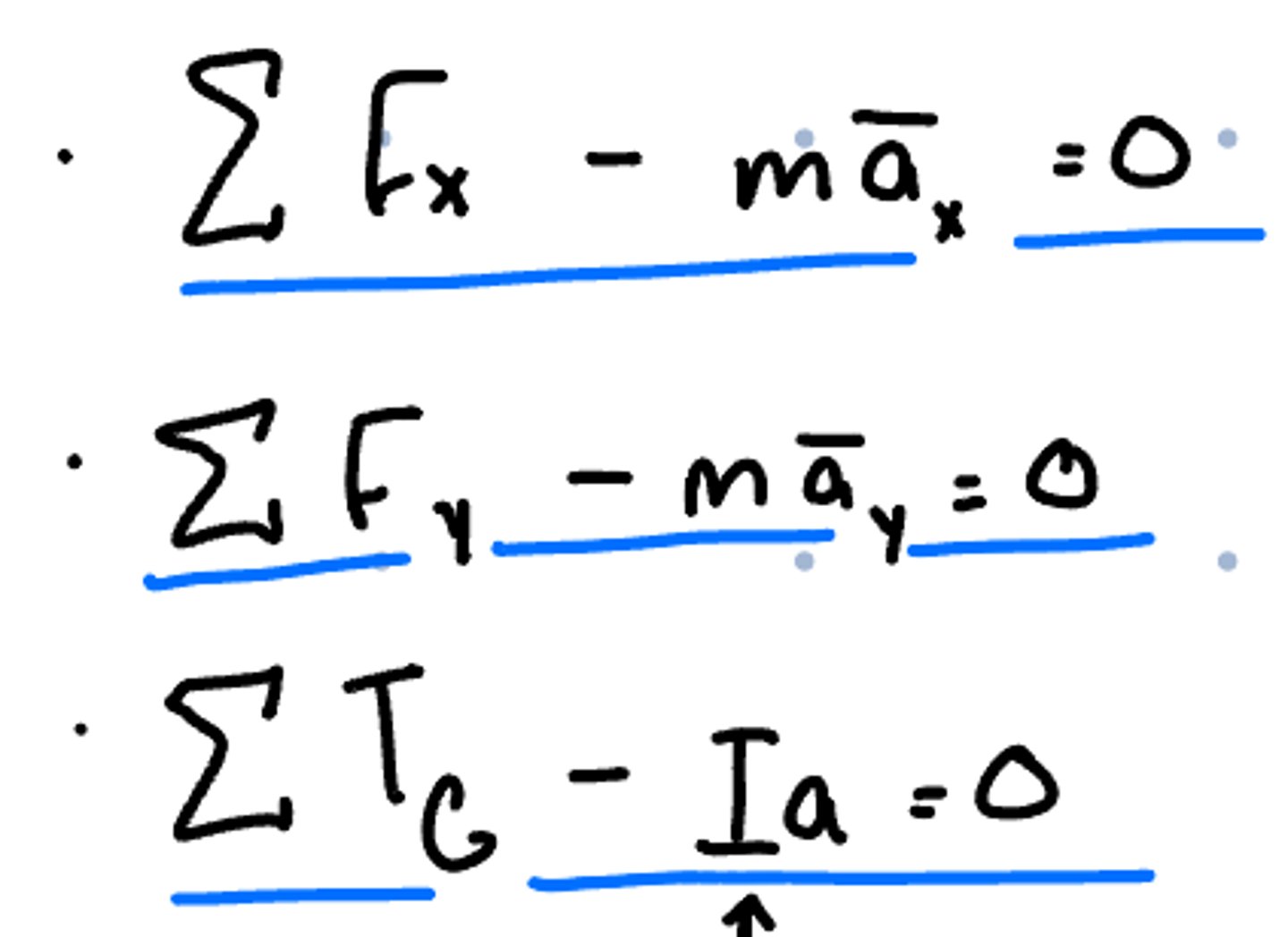
equations of dynamic equilibrium
concept indicating a balance between applied forces and inertial forces for a body in motion
center of gravity
point around which a body's weight is equally balanced in all directions, also center of mass
stability (mass, friction, CG, base of support)
resistance to DISRUPTION of equilibrium
balance (foot position)
ability to CONTROL equilibrium
What increases a body's stability?
increasing body mass, increasing friction between the body and the surfaces of contact