A&P II: Lab Practical 2
 Call Kai
 Learn
Learn Practice Test
 Spaced Repetition
 Match
Match Flashcards
 Knowt Play
1/113

There's no tags or description
Looks like no tags are added yet.
Name | Mastery | Learn | Test | Matching | Spaced | Call with Kai |
|---|
No analytics yet
Send a link to your students to track their progress
114 Terms
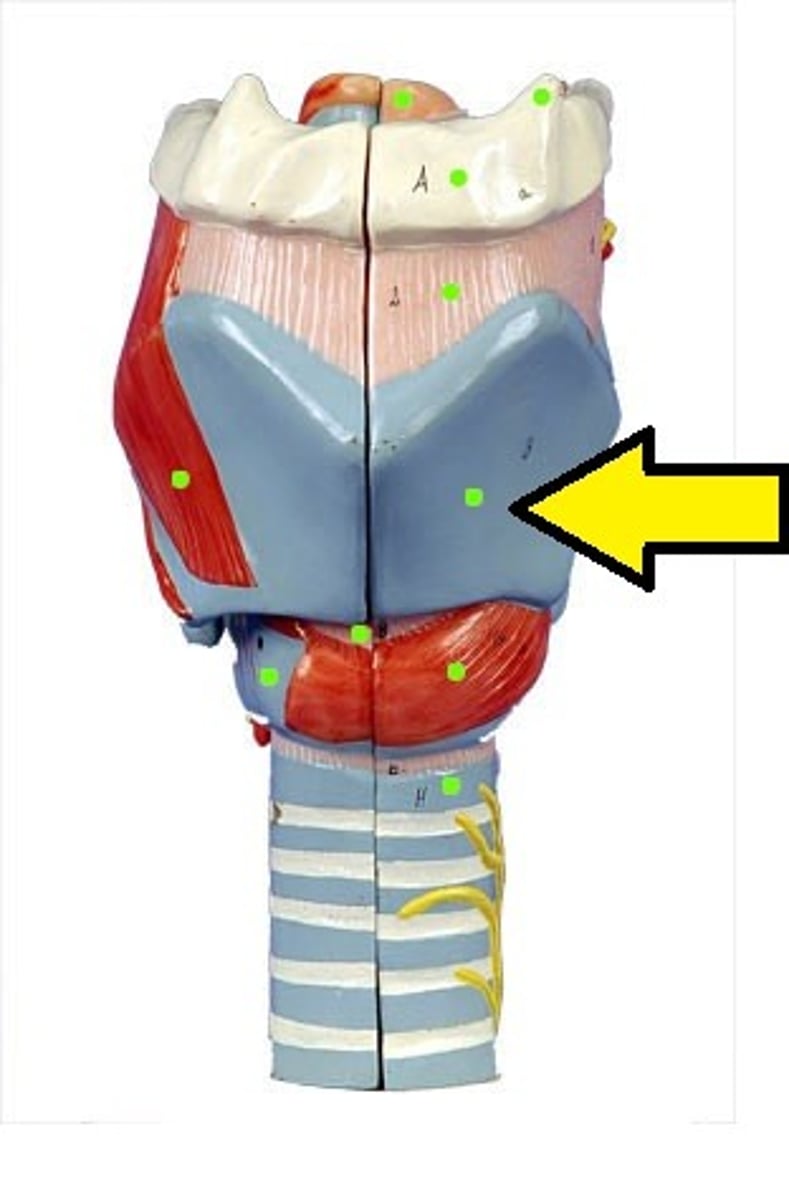
Thyroid cartilage
anterior part of the larynx
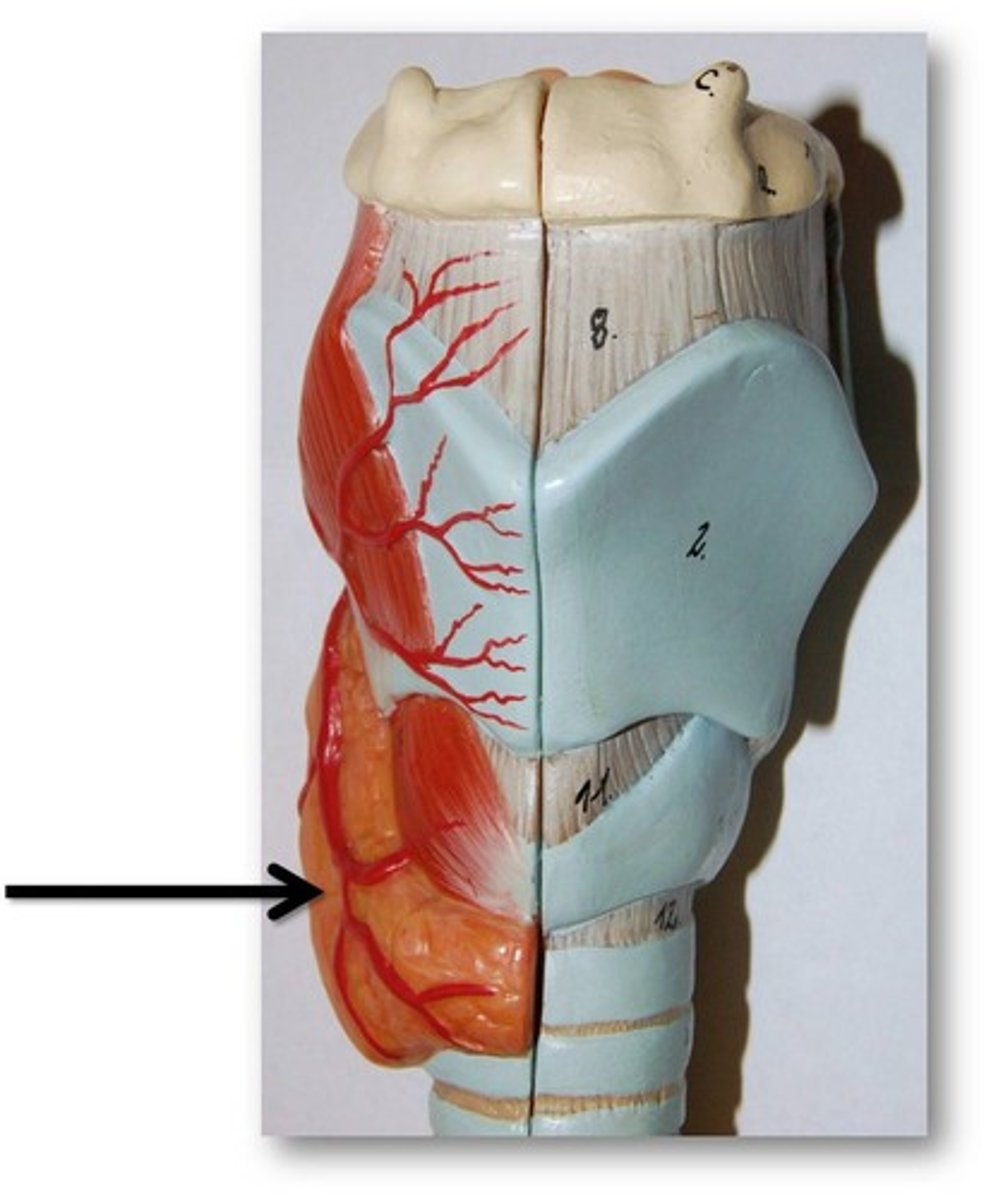
Thyroid gland
produces hormones that regulate metabolism, body heat, and bone growth
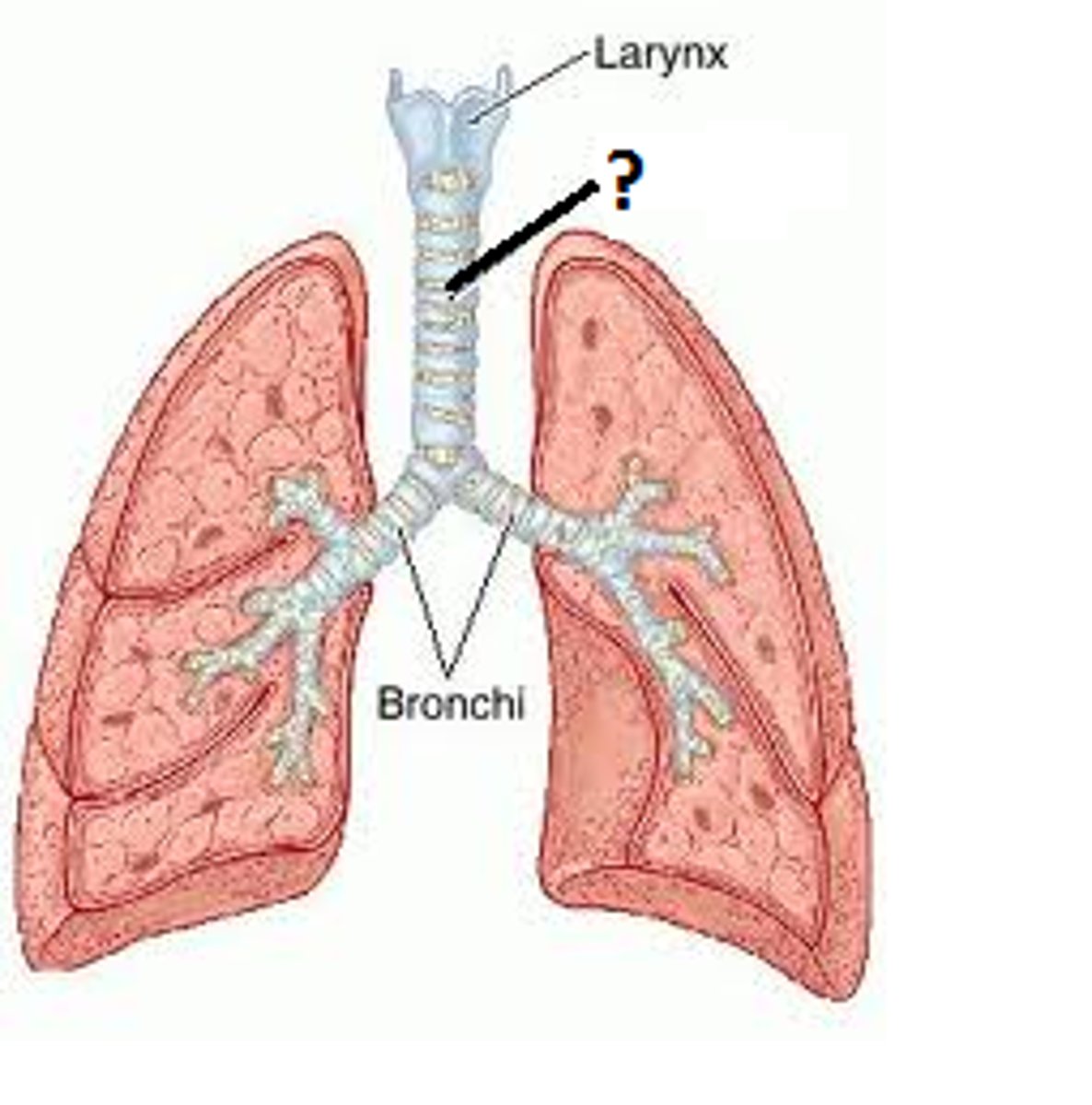
Trachea
a large membranous tube reinforced by rings of cartilage, extending from the larynx to the bronchial tubes and conveying air to and from the lungs; the windpipe.
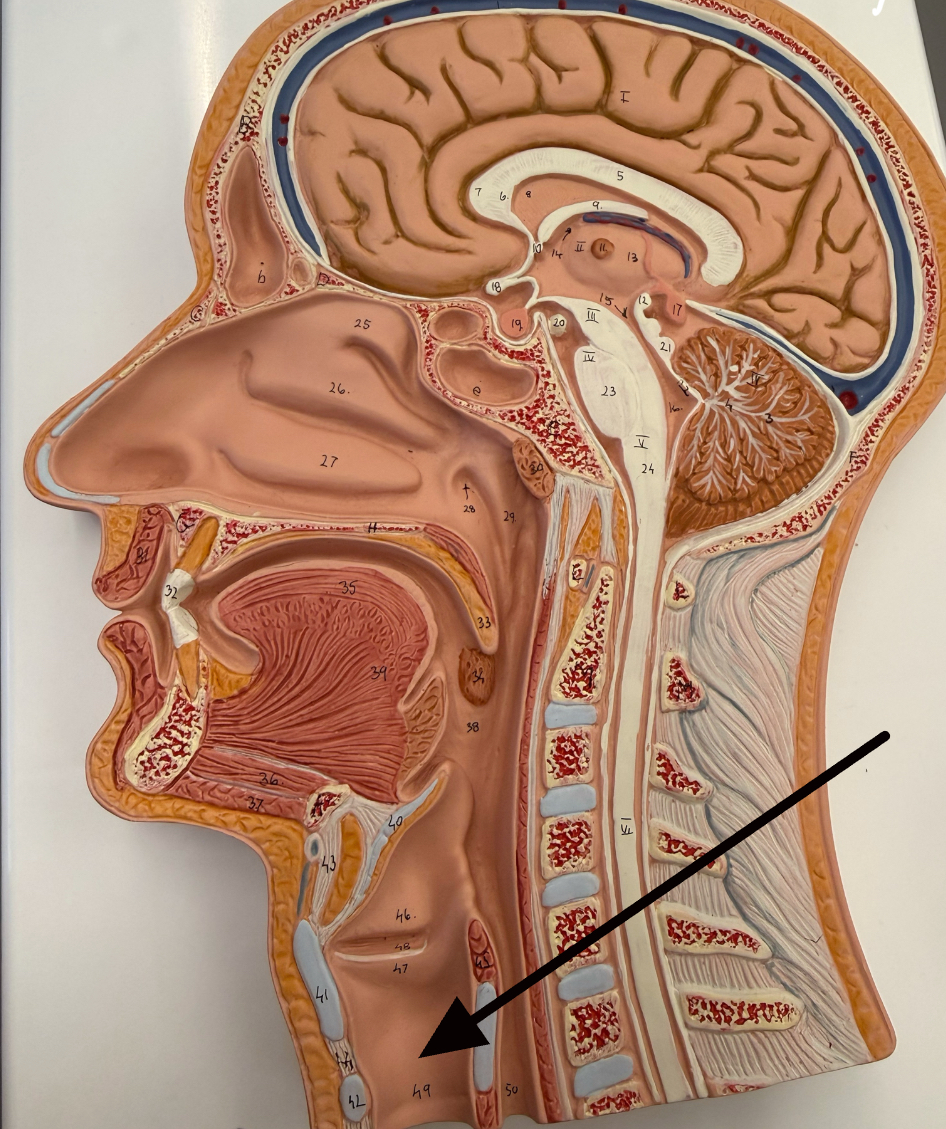
Trachea
a large membranous tube reinforced by rings of cartilage, extending from the larynx to the bronchial tubes and conveying air to and from the lungs; the windpipe.
Primary bronchi
the two passageways that branch off the trachea and lead to the right and left lungs
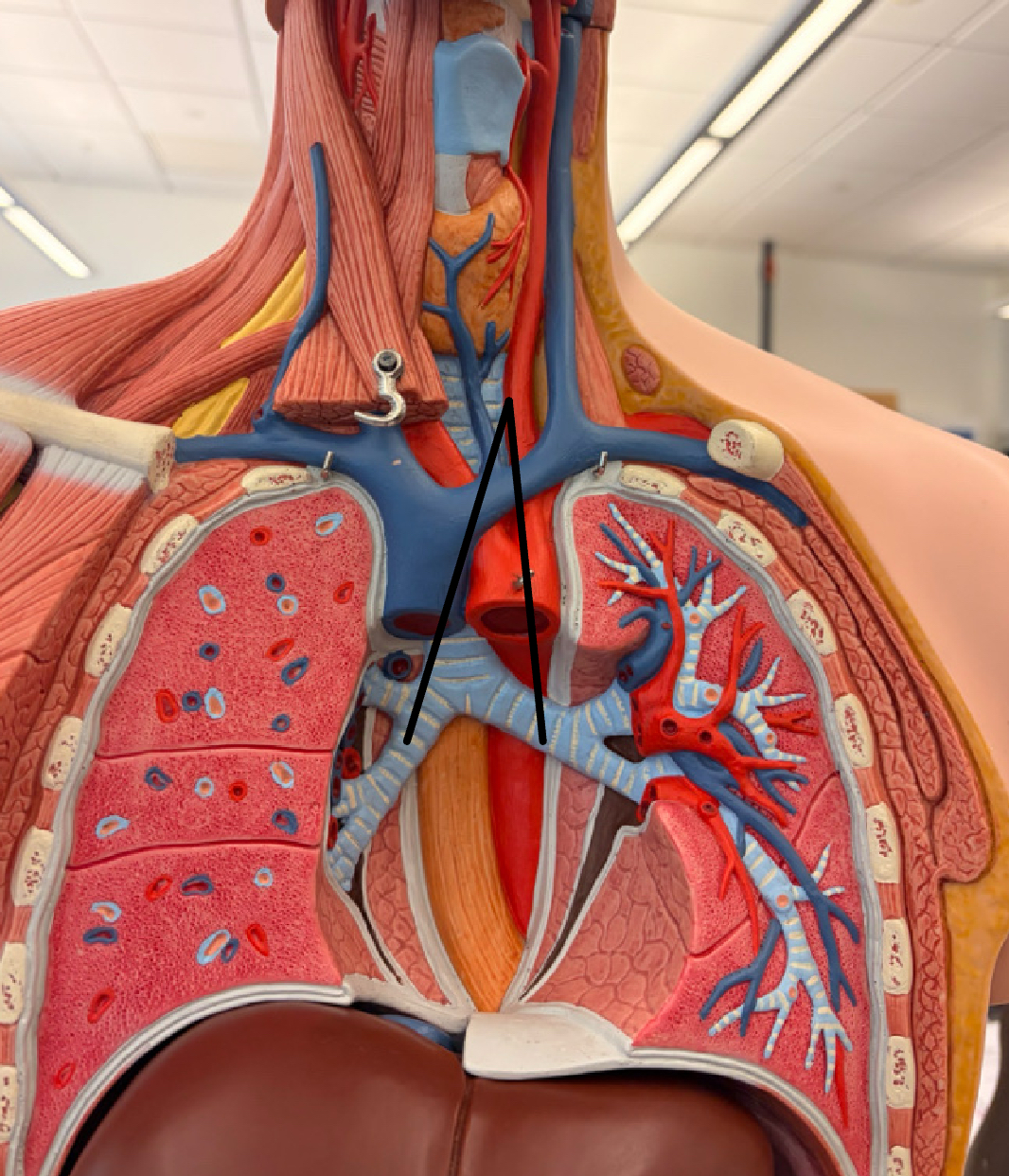
Esophagus
A muscular tube that connects the mouth to the stomach.
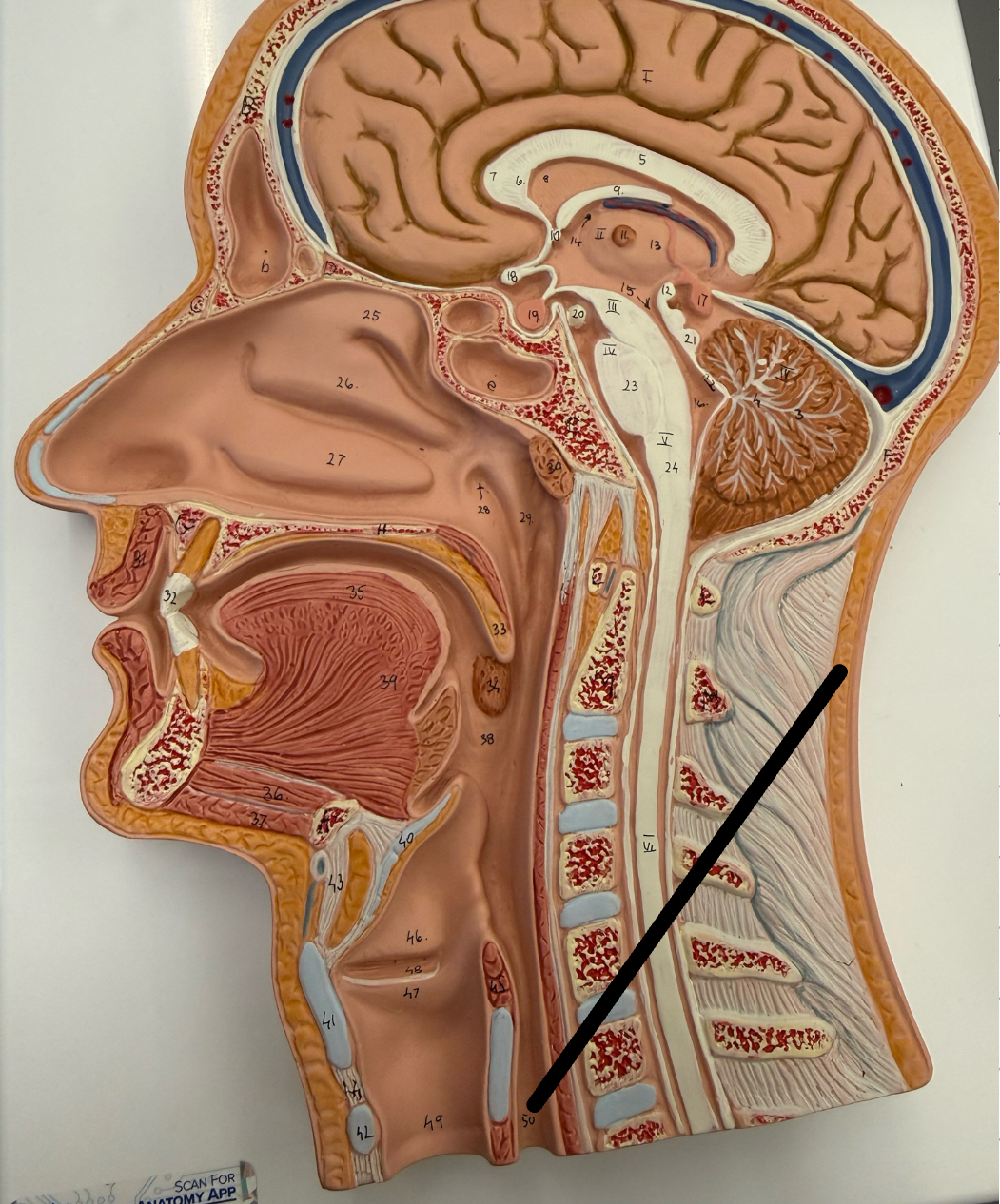
Esophagus
A muscular tube that connects the mouth to the stomach.
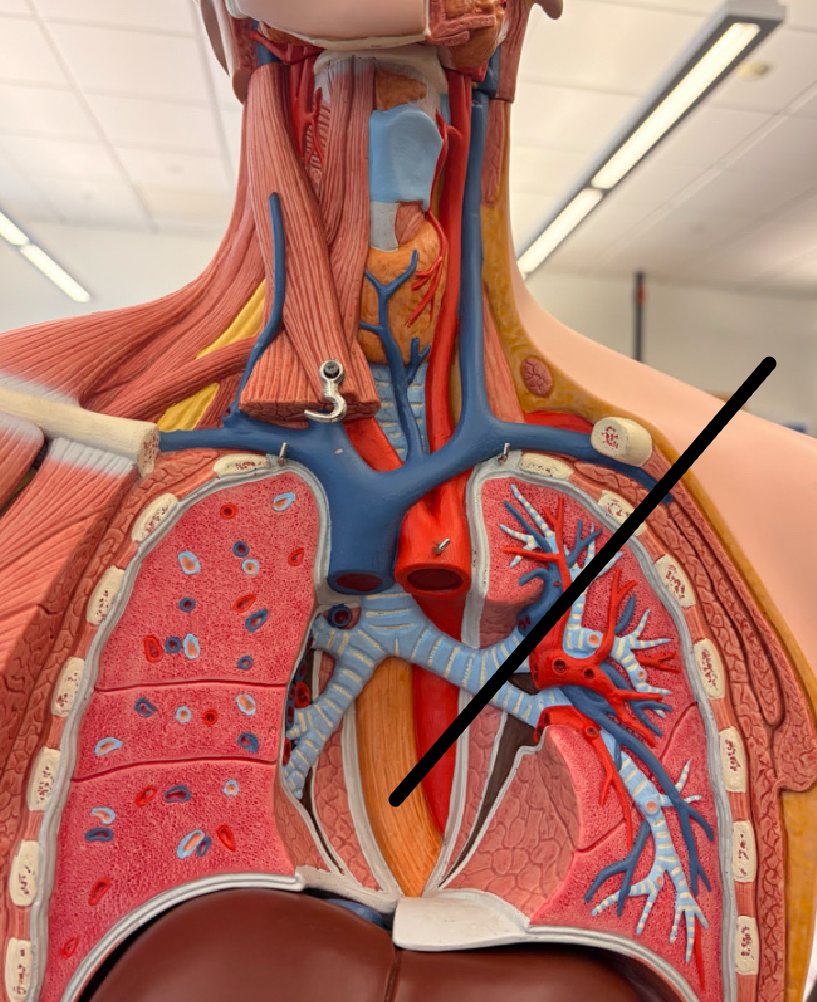
Lungs
two spongy organs, located in the thoracic cavity enclosed by the diaphragm and rib cage, responsible for respiration
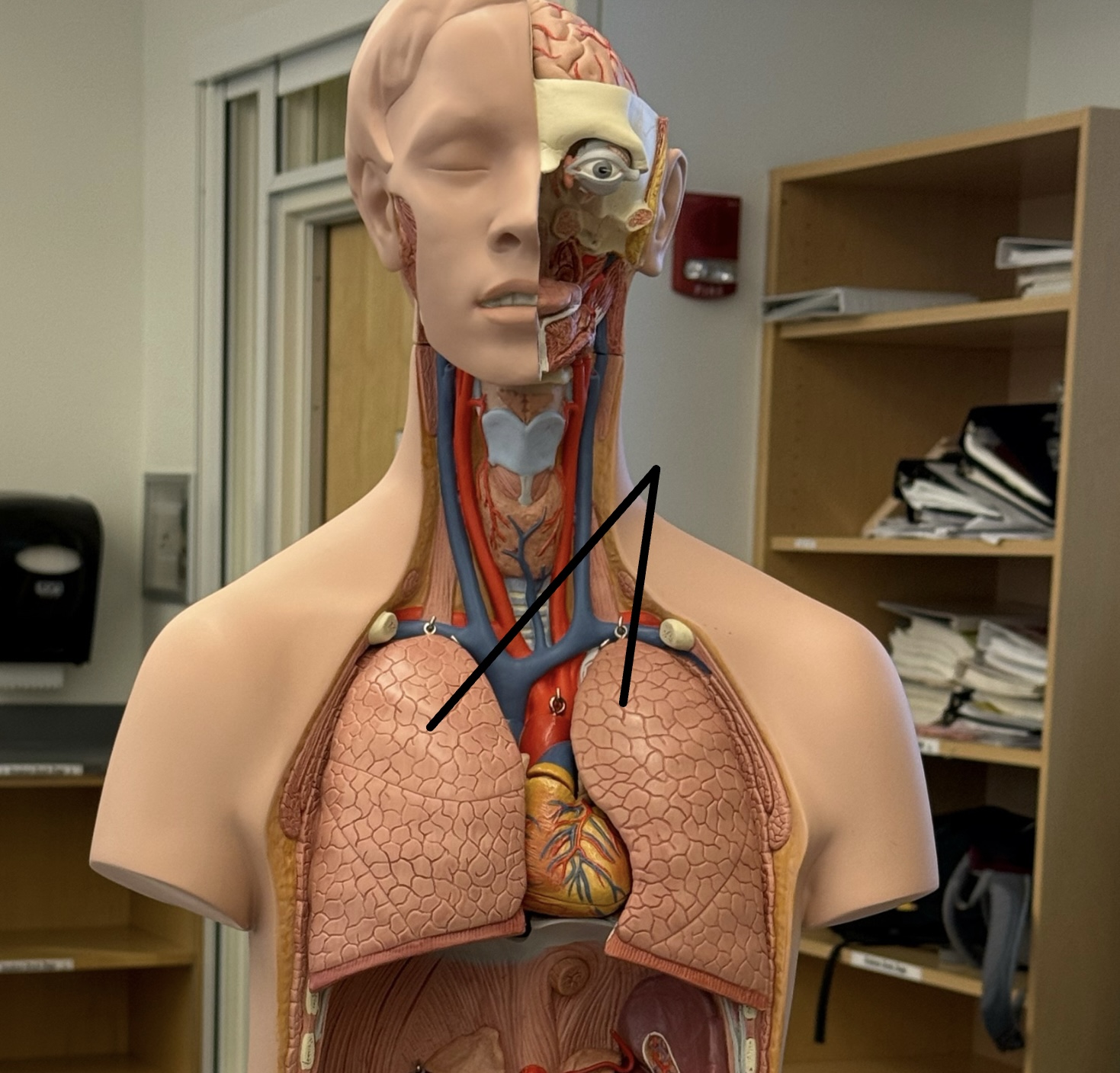
Diaphragm
Large, flat muscle at the bottom of the chest cavity that helps with breathing
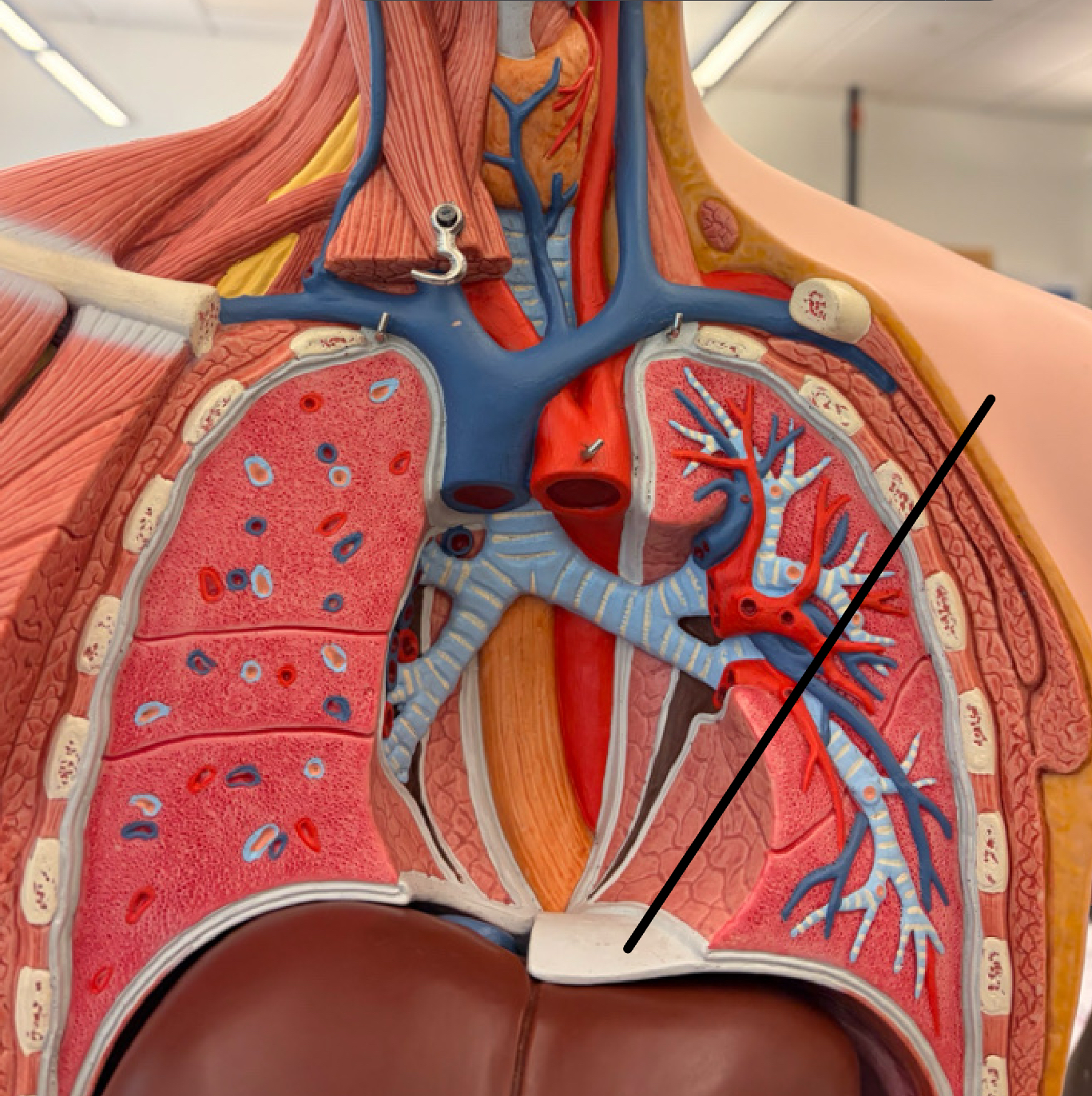
Heart
A hollow, muscular organ that pumps blood throughout the body.
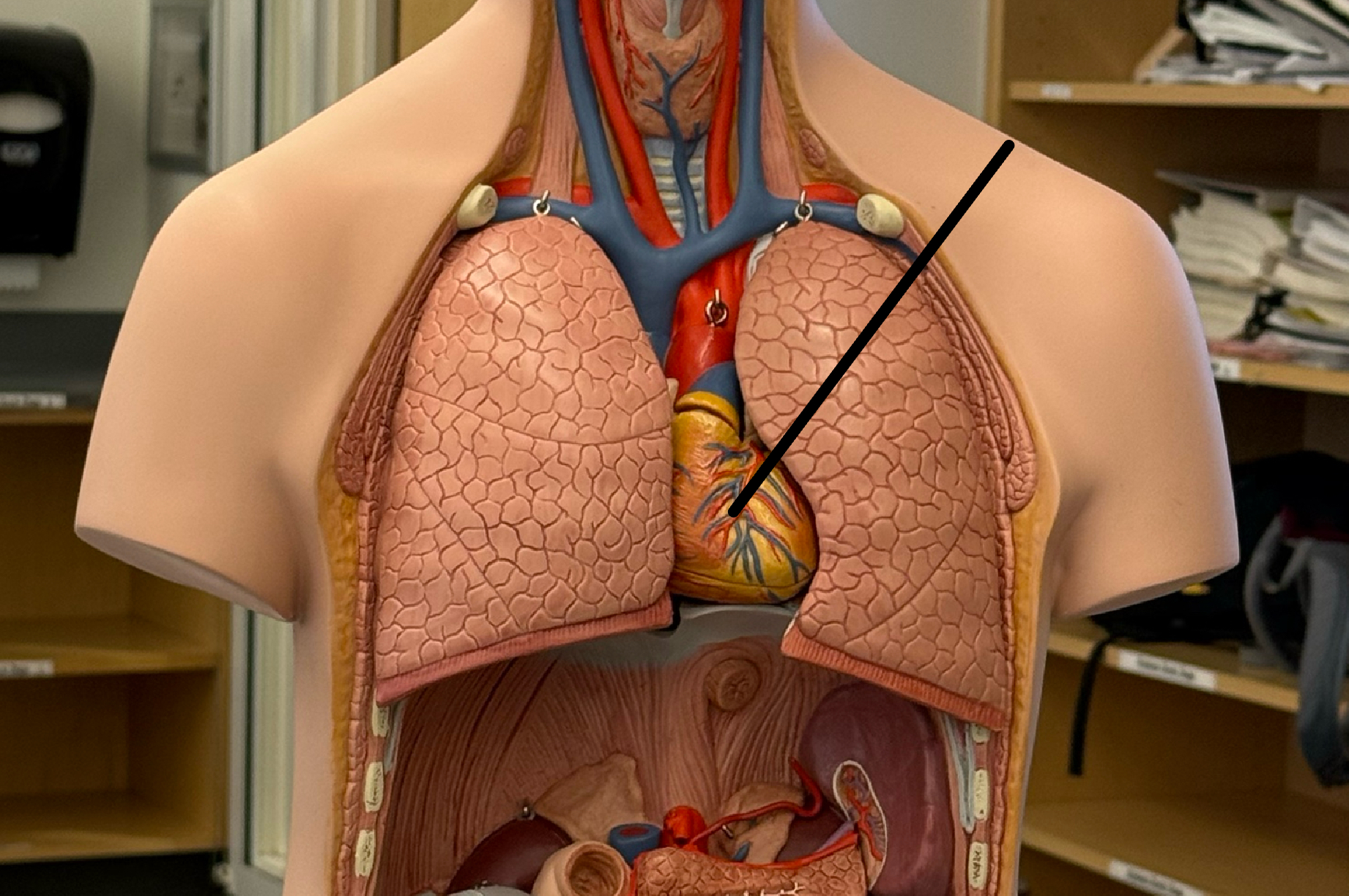
Superior and inferior venae cavae
The veins that bring in blood from the upper and lower parts of the body to the heart
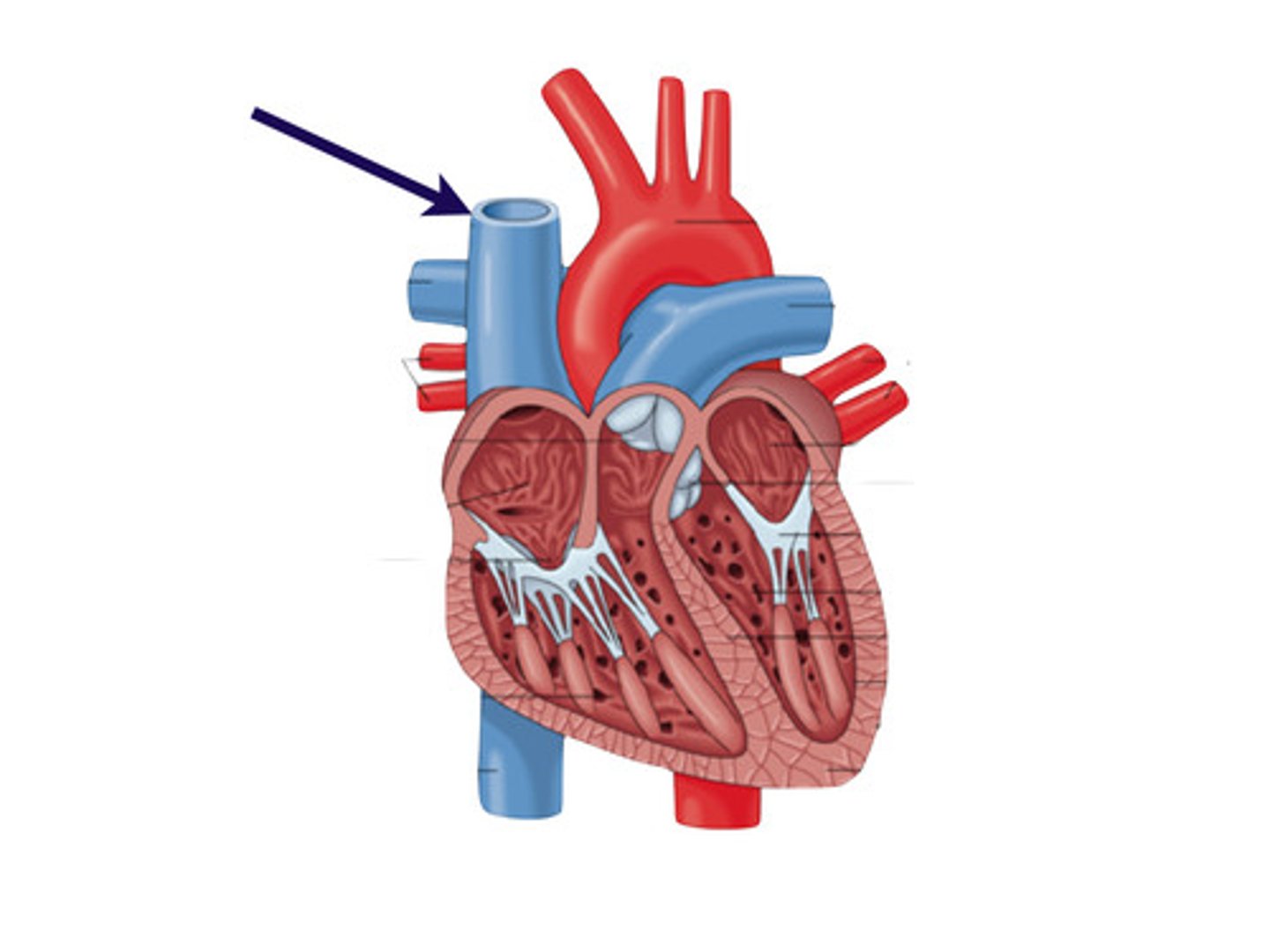
Aorta
The large arterial trunk that carries blood from the heart to be distributed by branch arteries through the body.
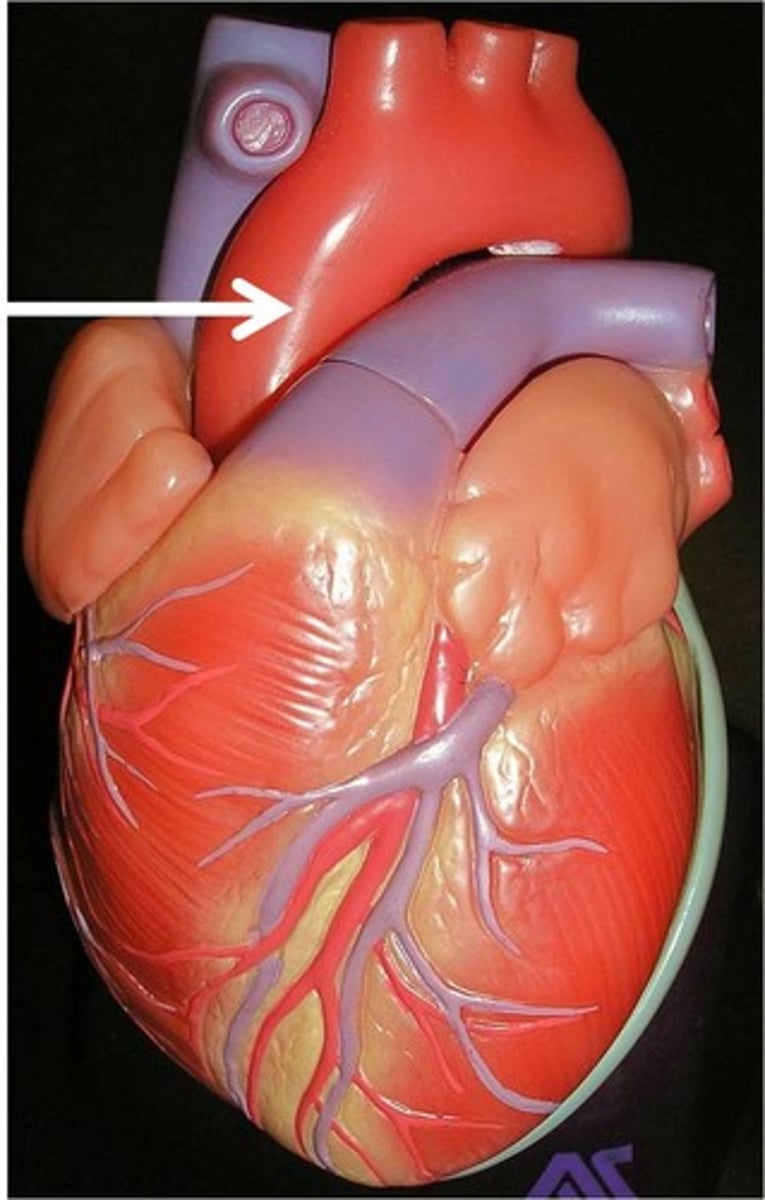
Liver
Produces bile
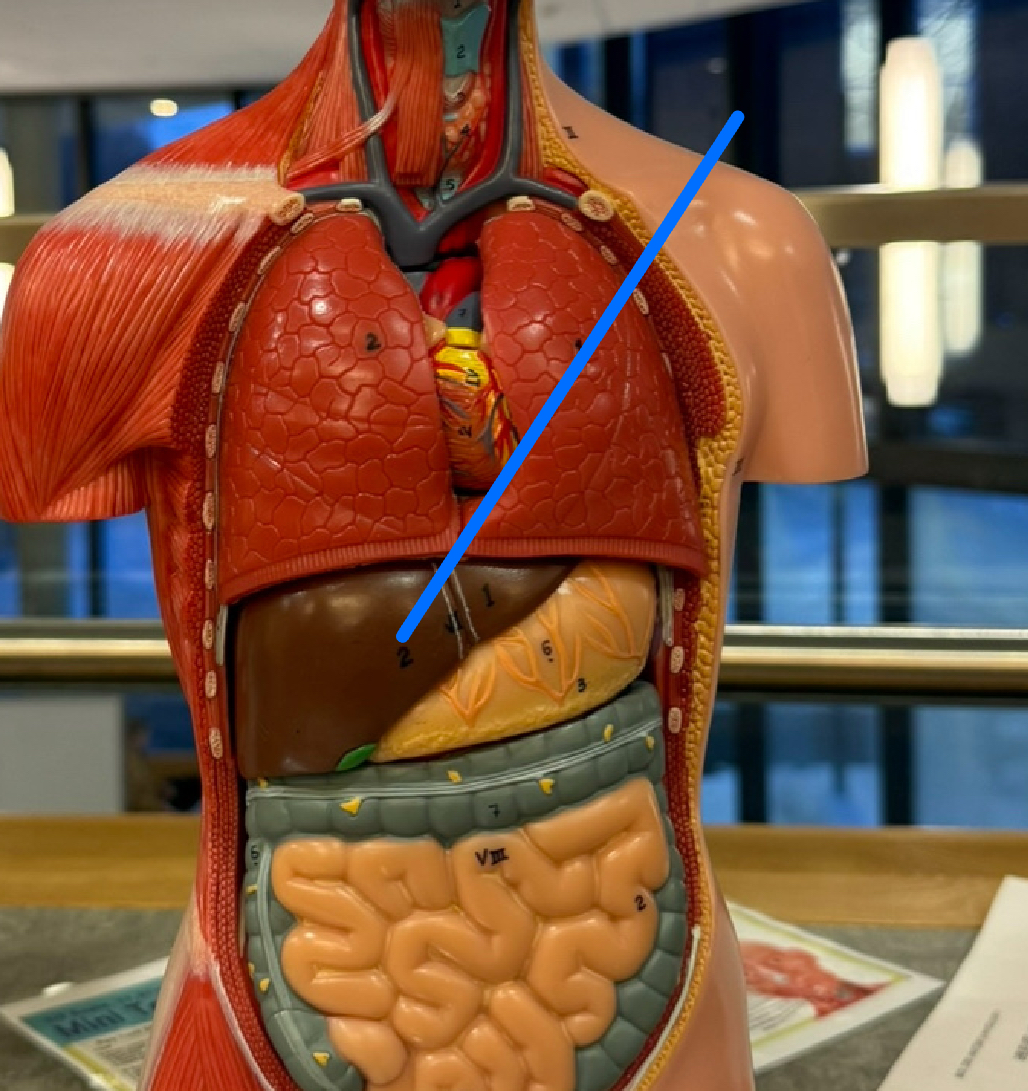
Gallbladder
A muscular sac attached to the liver that secretes bile and stores it until needed for digestion
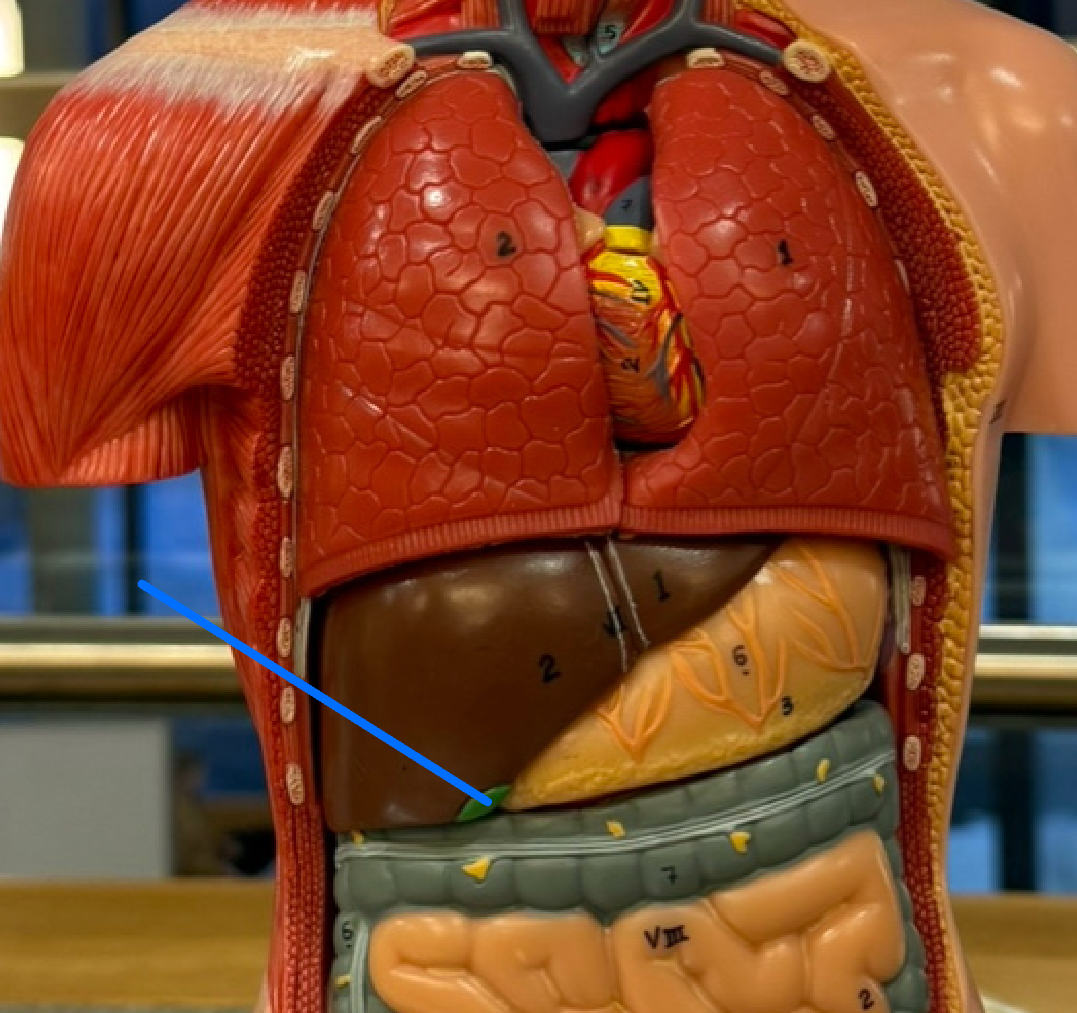
Pancreas
Regulates the level of sugar in the blood (insulin) (glucagon)
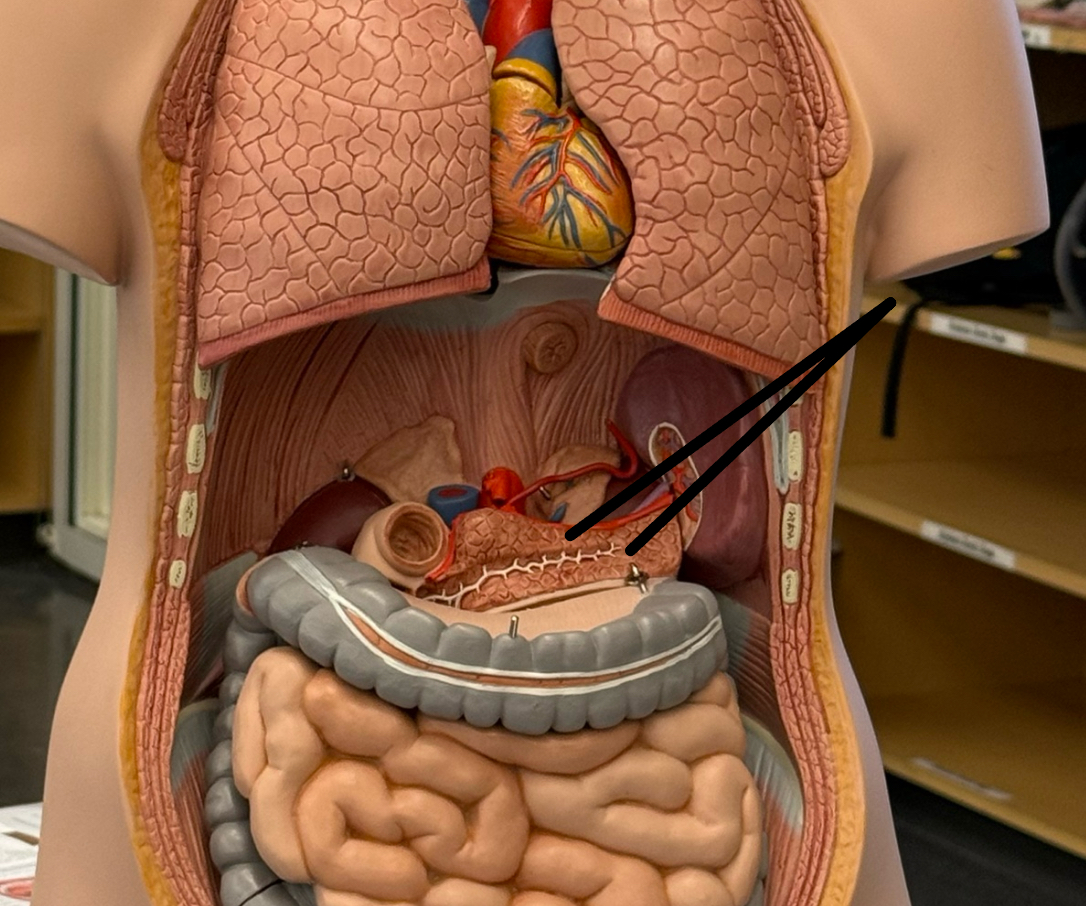
Spleen
Organ near the stomach that produces, stores, and eliminates old blood cells
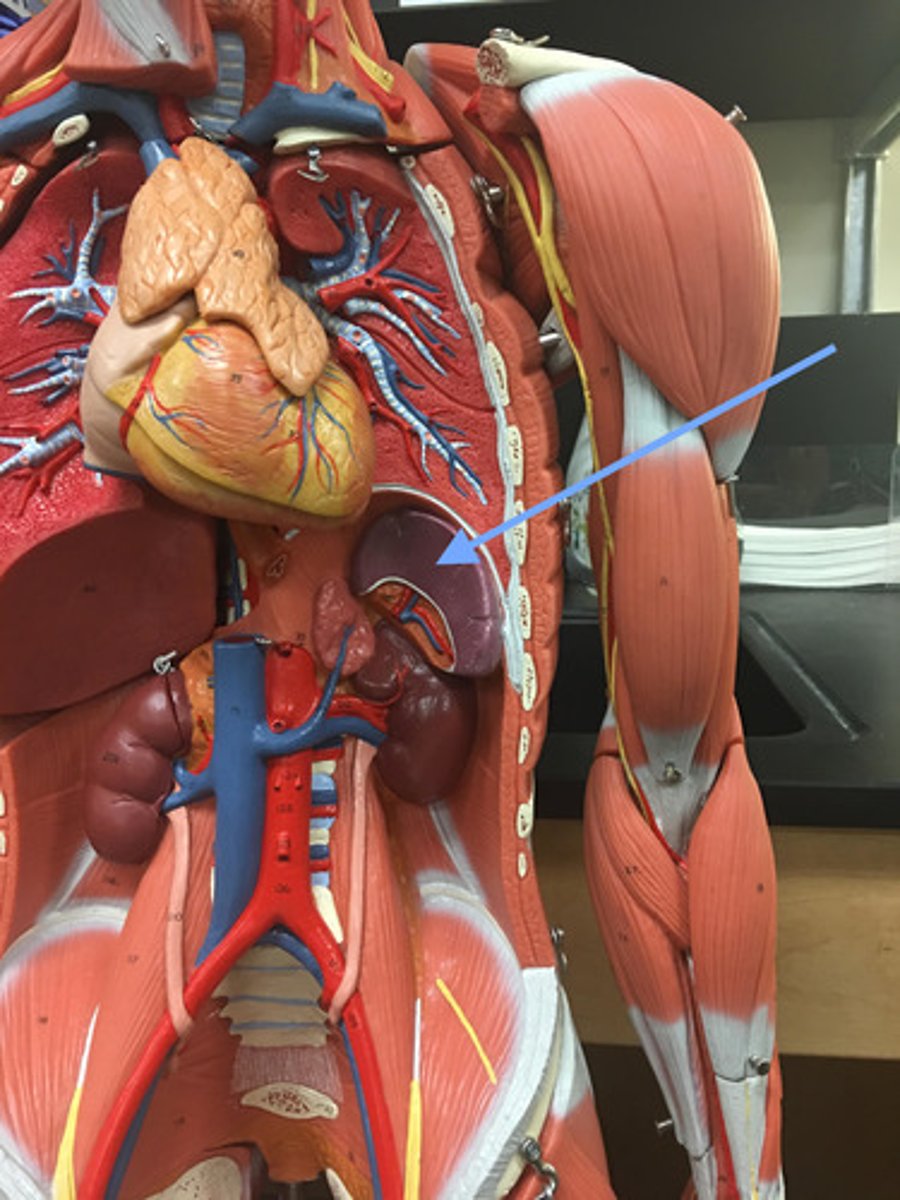
Stomach
Large muscular sac that continues the mechanical and chemical digestion of food
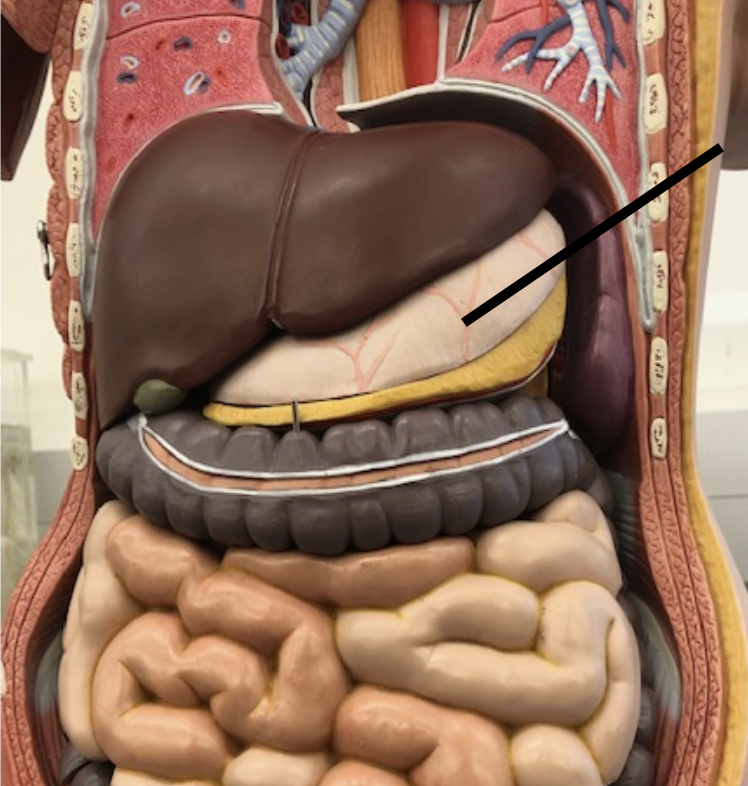
Small intestine
Digestive organ where most chemical digestion and absorption of food takes place
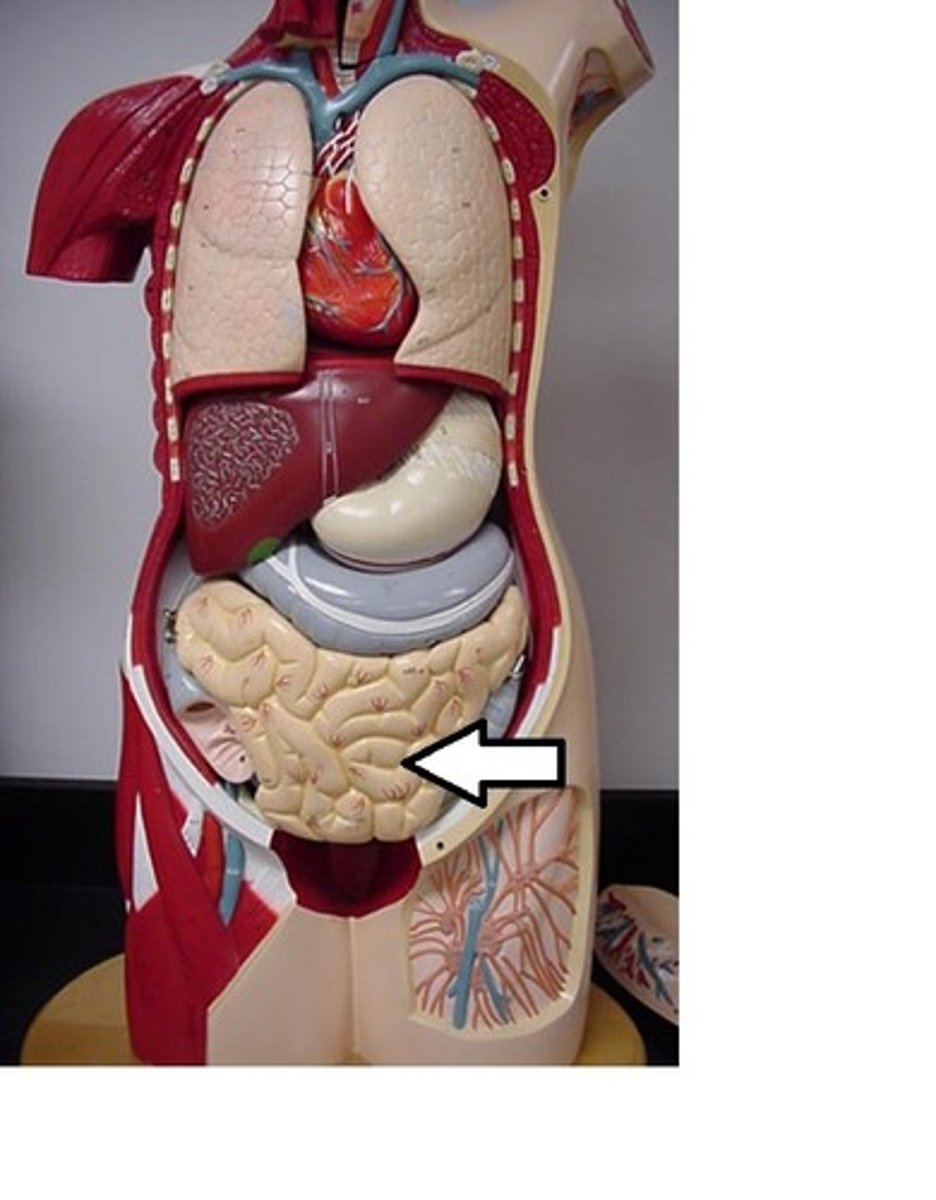
Large intestine
The last section of the digestive system, where water is absorbed from food and the remaining material is eliminated from the body
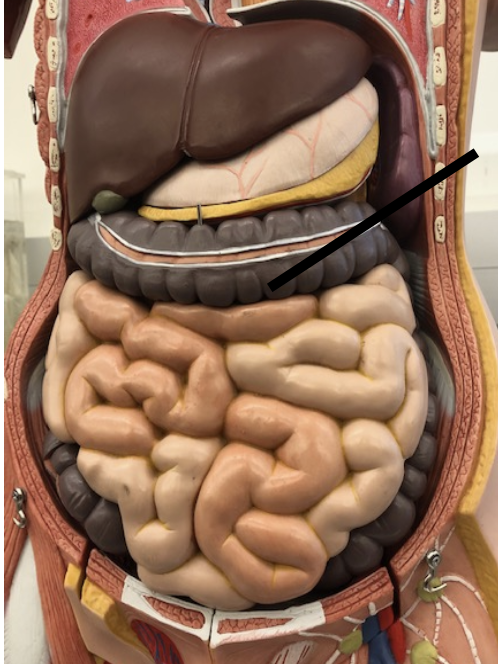
Adrenal glands
A pair of endocrine glands just above the kidneys. they secrete the hormones epinephrine (adrenaline) and norepinephrine (noradrenaline), which help to arouse the body in times of stress.
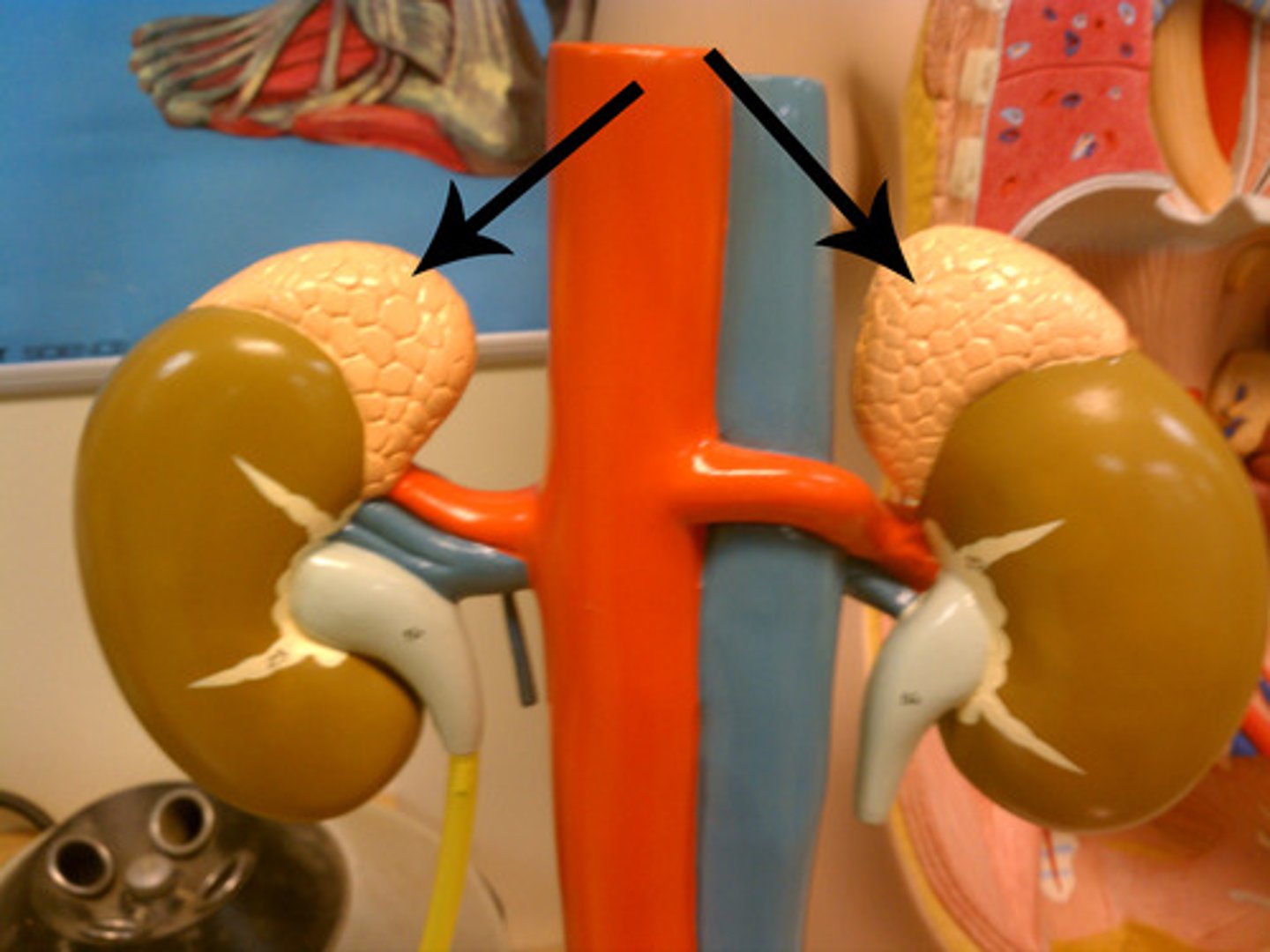
Kidneys
Organs that filter blood and produce urine.
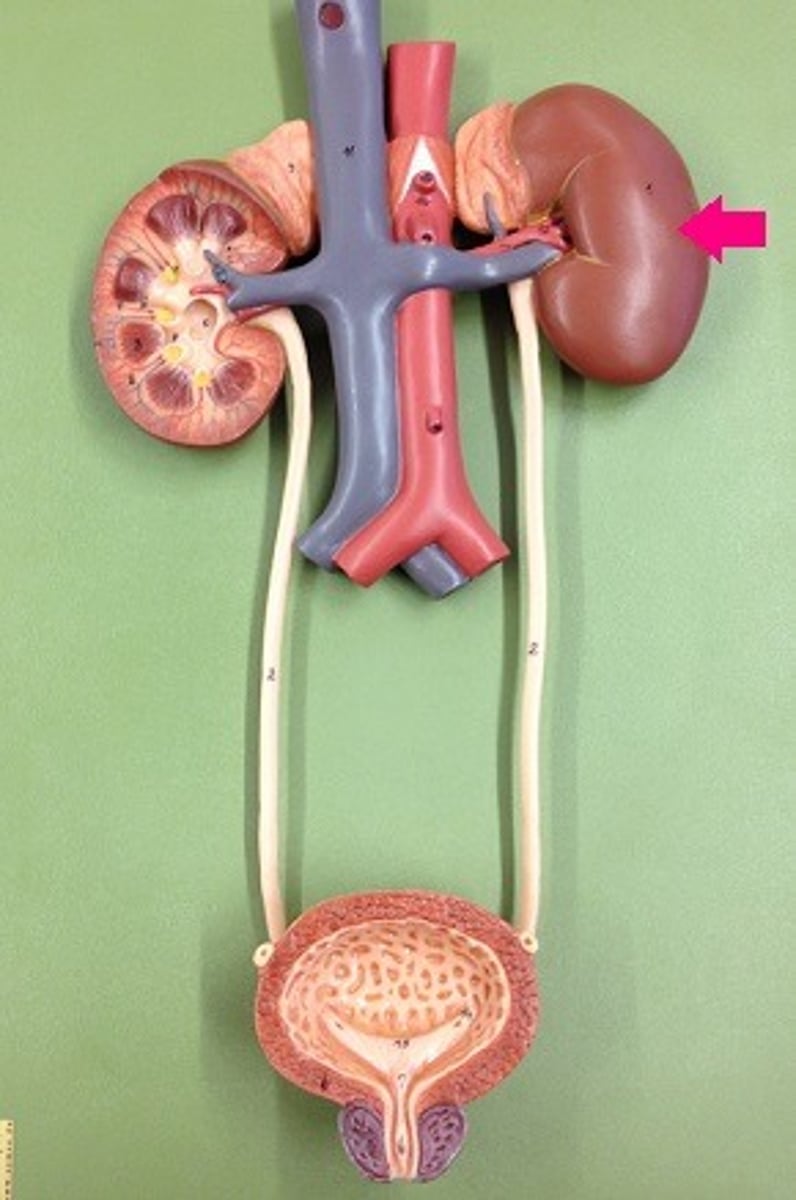
Ureters
The tubes that carry urine from the kidneys to the bladder.
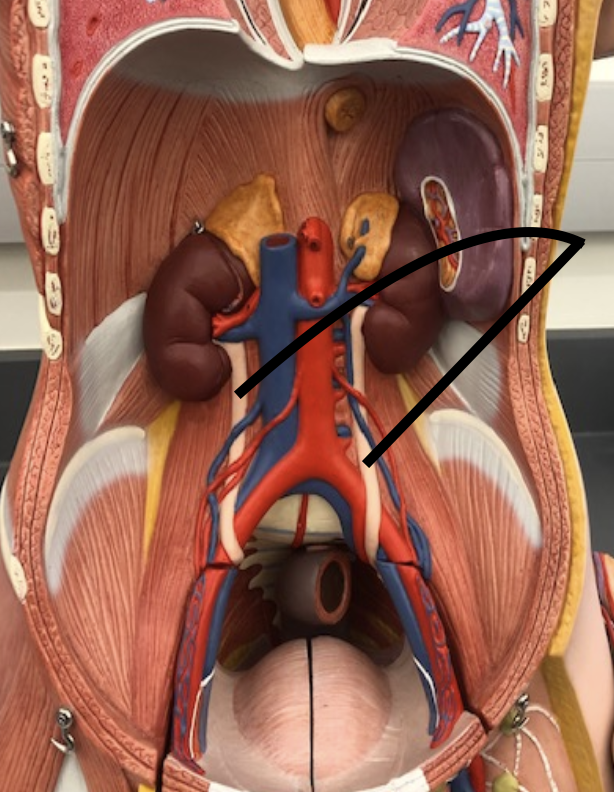
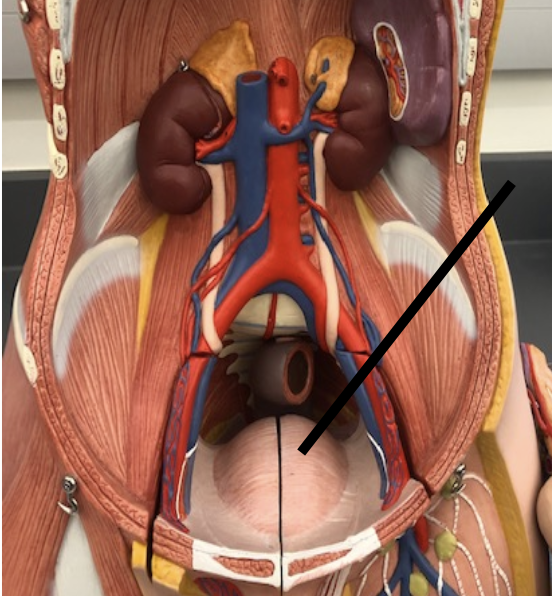
Urinary bladder
Saclike organ in which urine is stored before being excreted
Human anatomy
the study of the structure of the human body
Human physiology
the study of the functions of the human body
Organ
2 or more different types of tissues working together toward a common function
Tissue
2 or more different types of cells working together toward a common function
Organ system
2 or more different types of organs working together toward a common function
Superior (cranial)
Toward the head end or upper part of a structure or the body; above
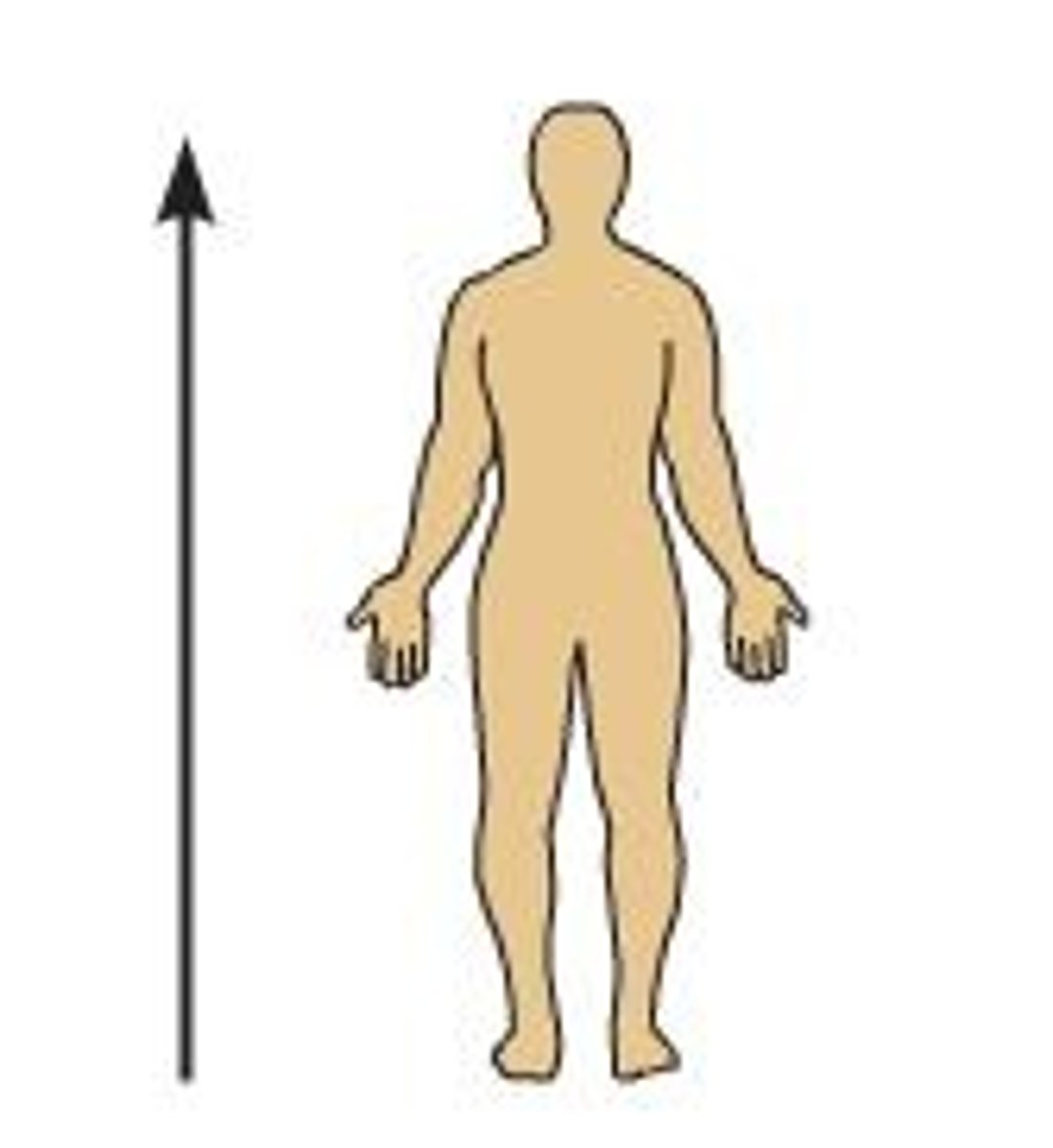
Inferior (caudal)
Away from the head end or toward the lower part of a structure or the body; below
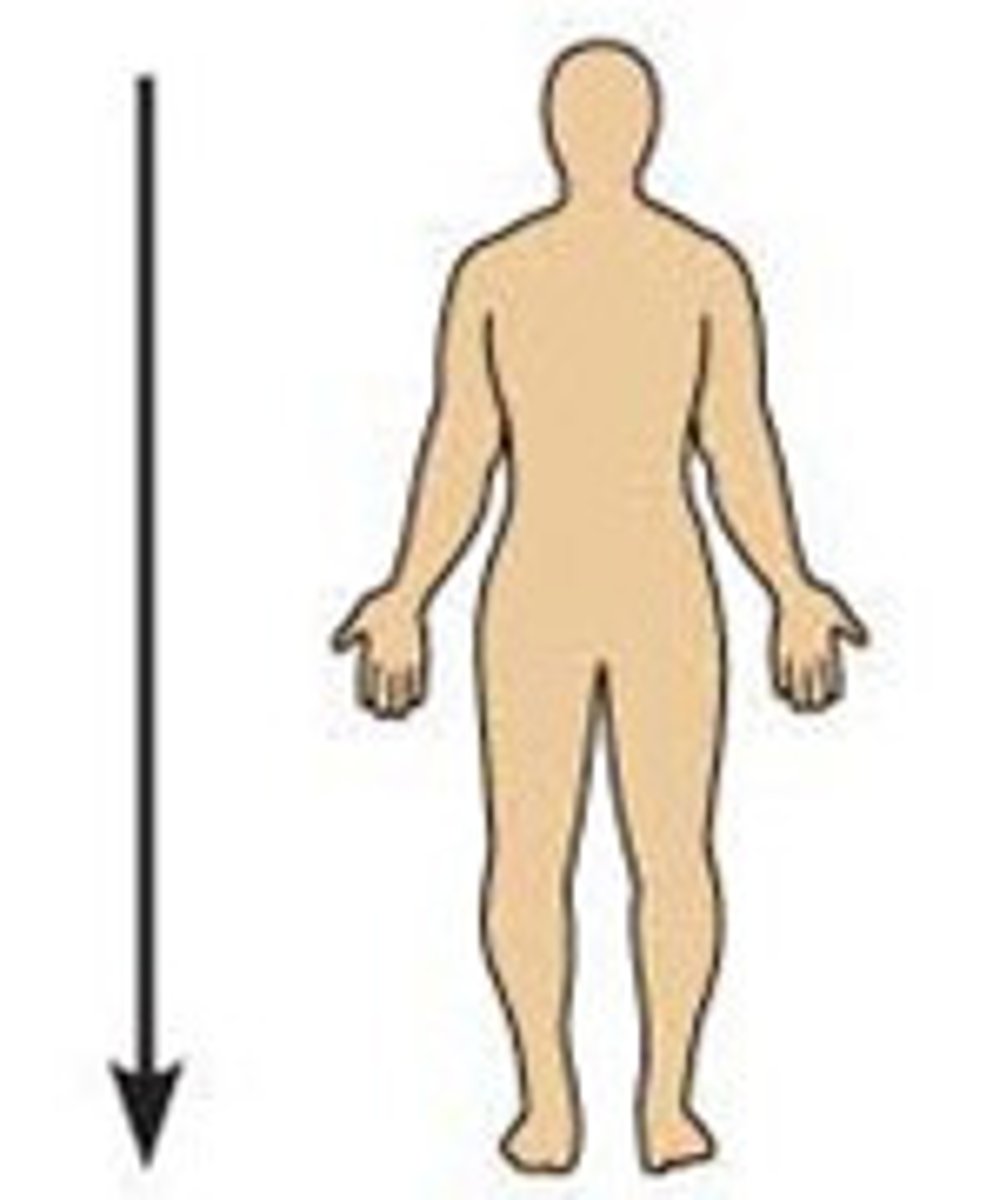
Anterior (ventral)
Toward or at the front of the body; in front of
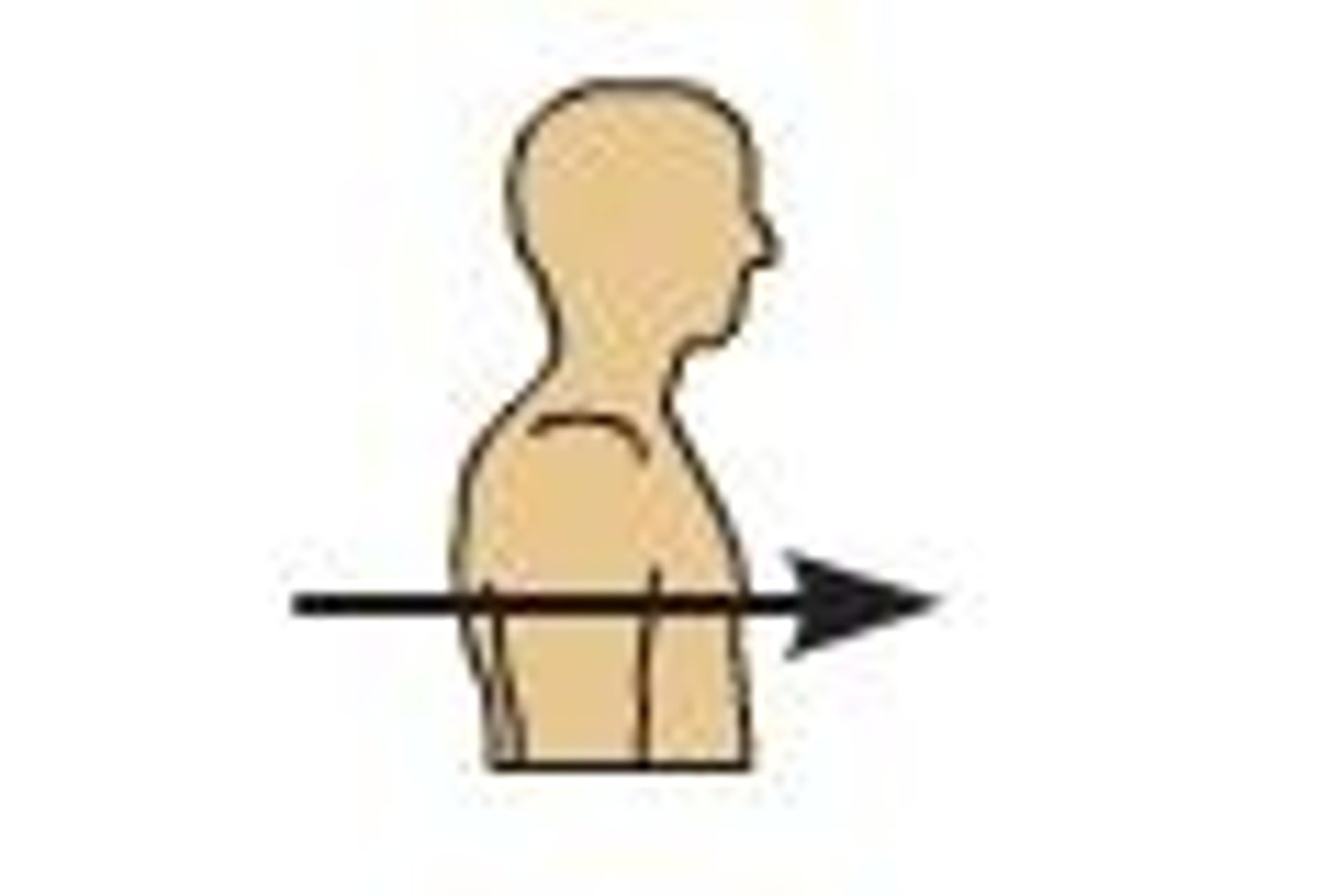
Posterior (dorsal)
Toward or at the back of the body; behind
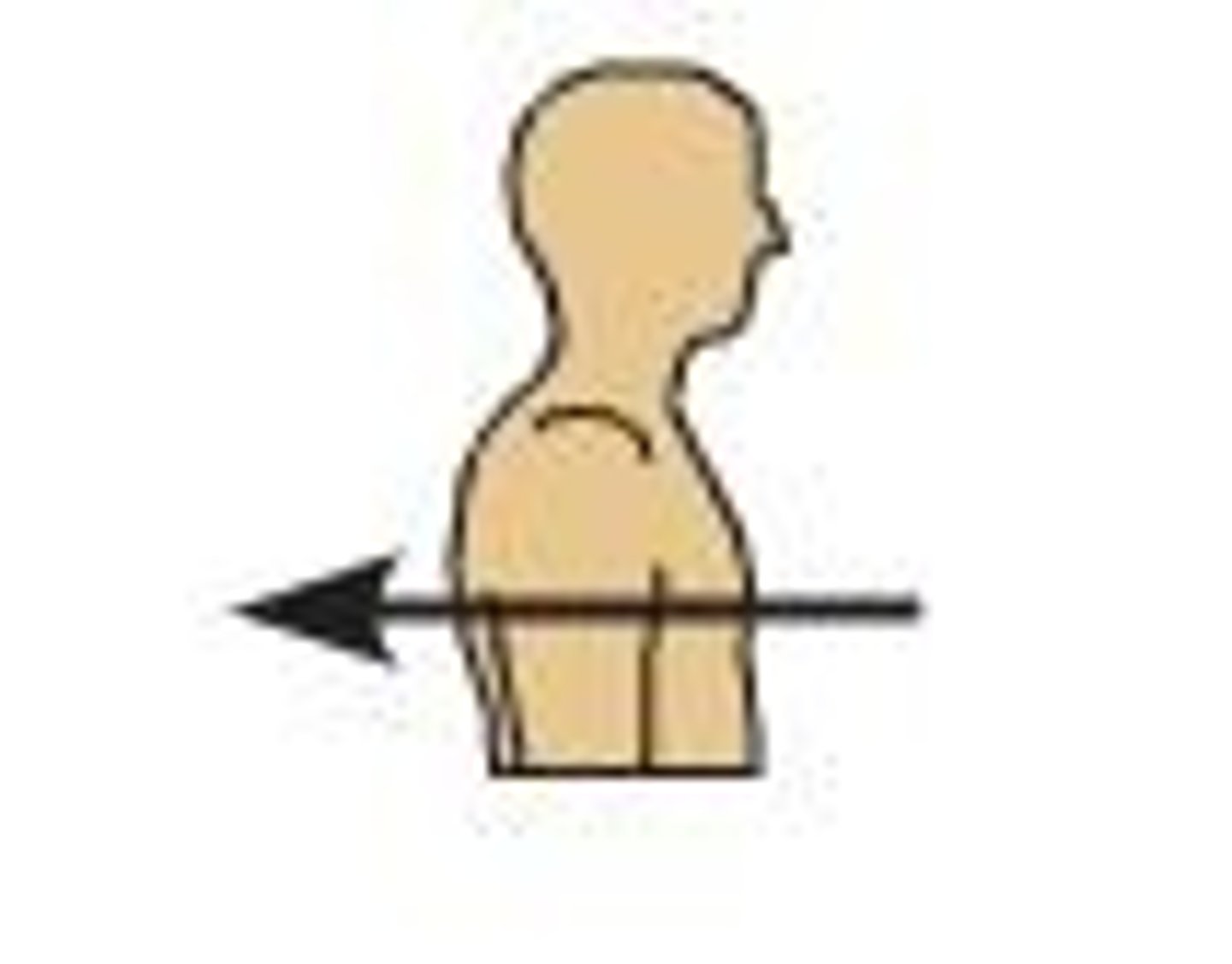
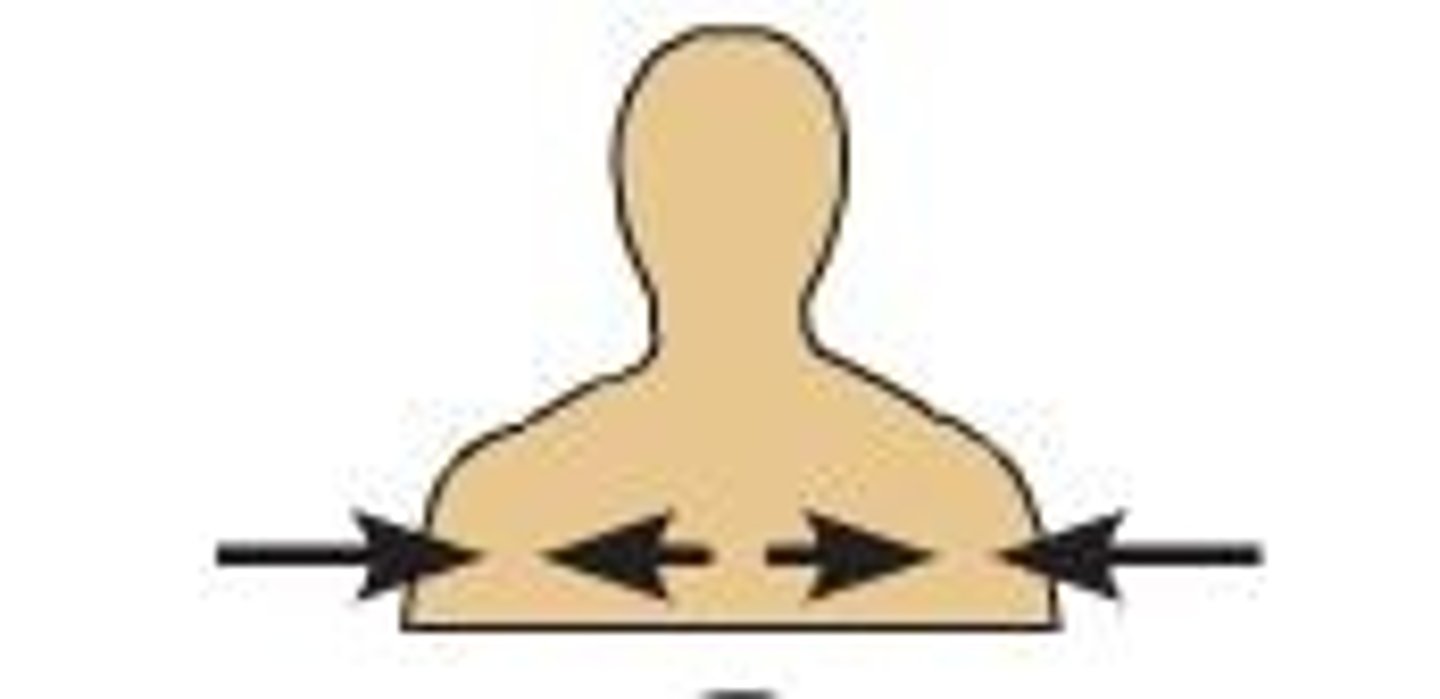
Medial
Towards or at the midline of the body; on the inner side of
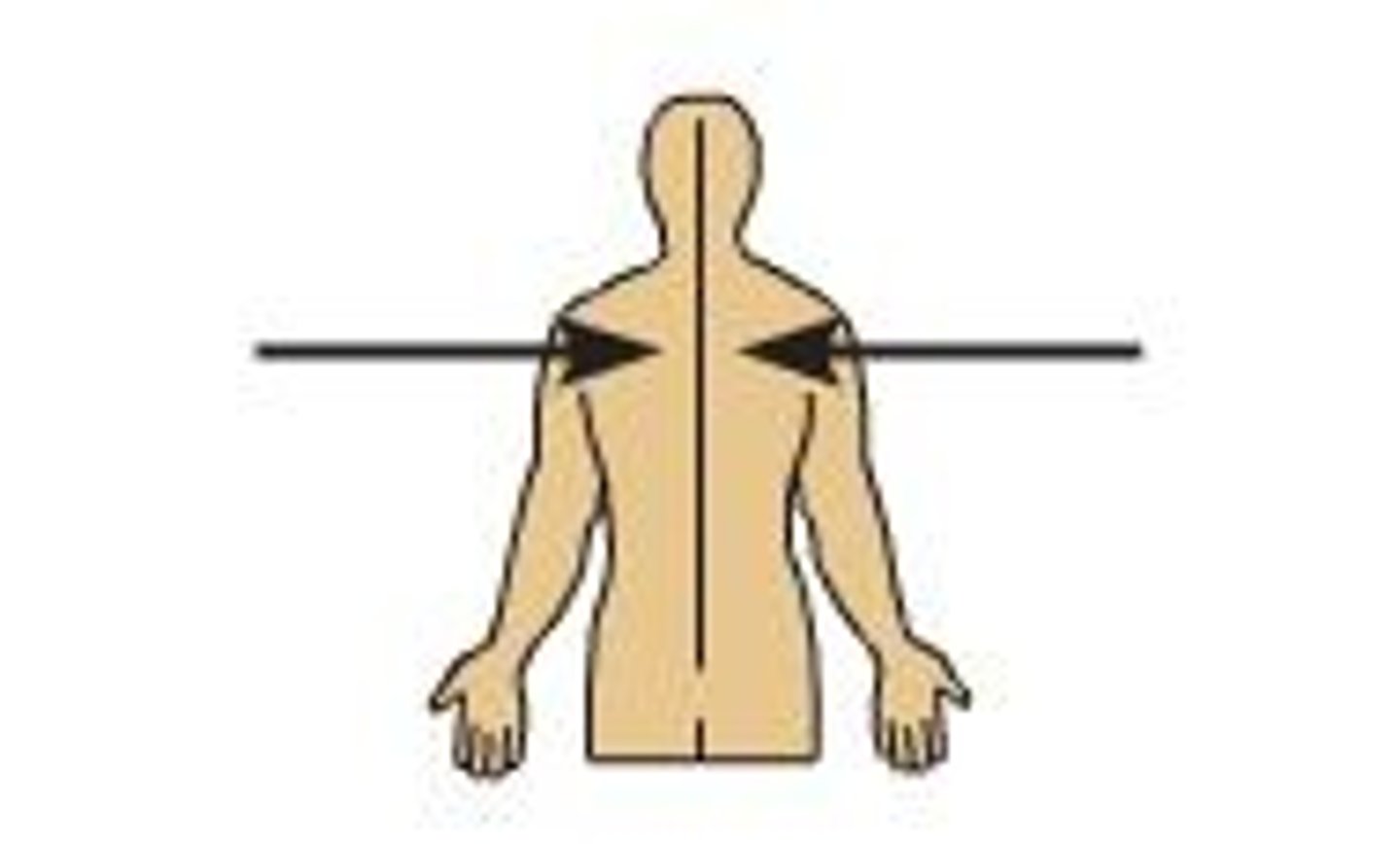
Lateral
Away from the midline of the body; on the outer side of
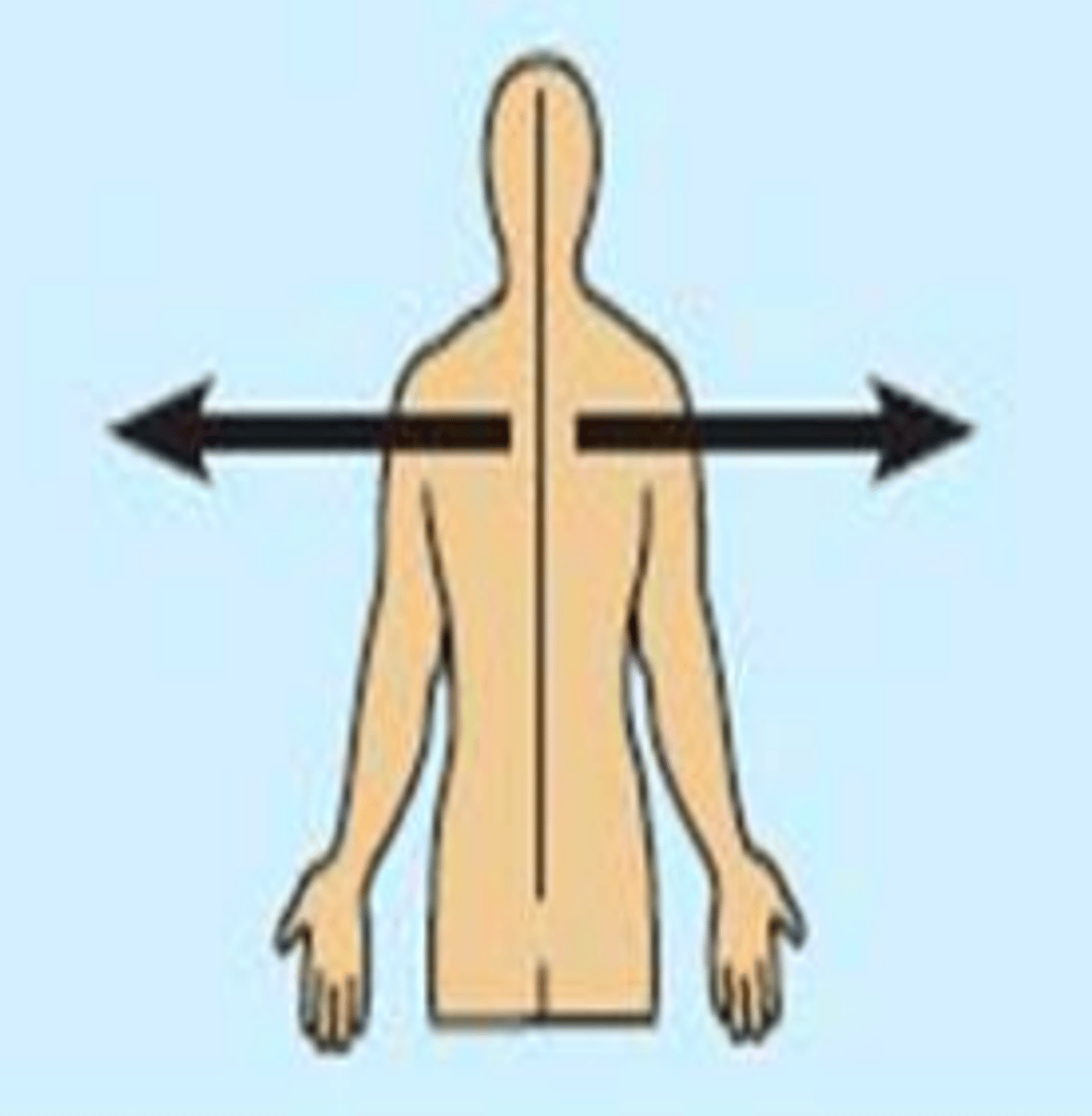
Intermediate
Between a more medial and a more lateral structure
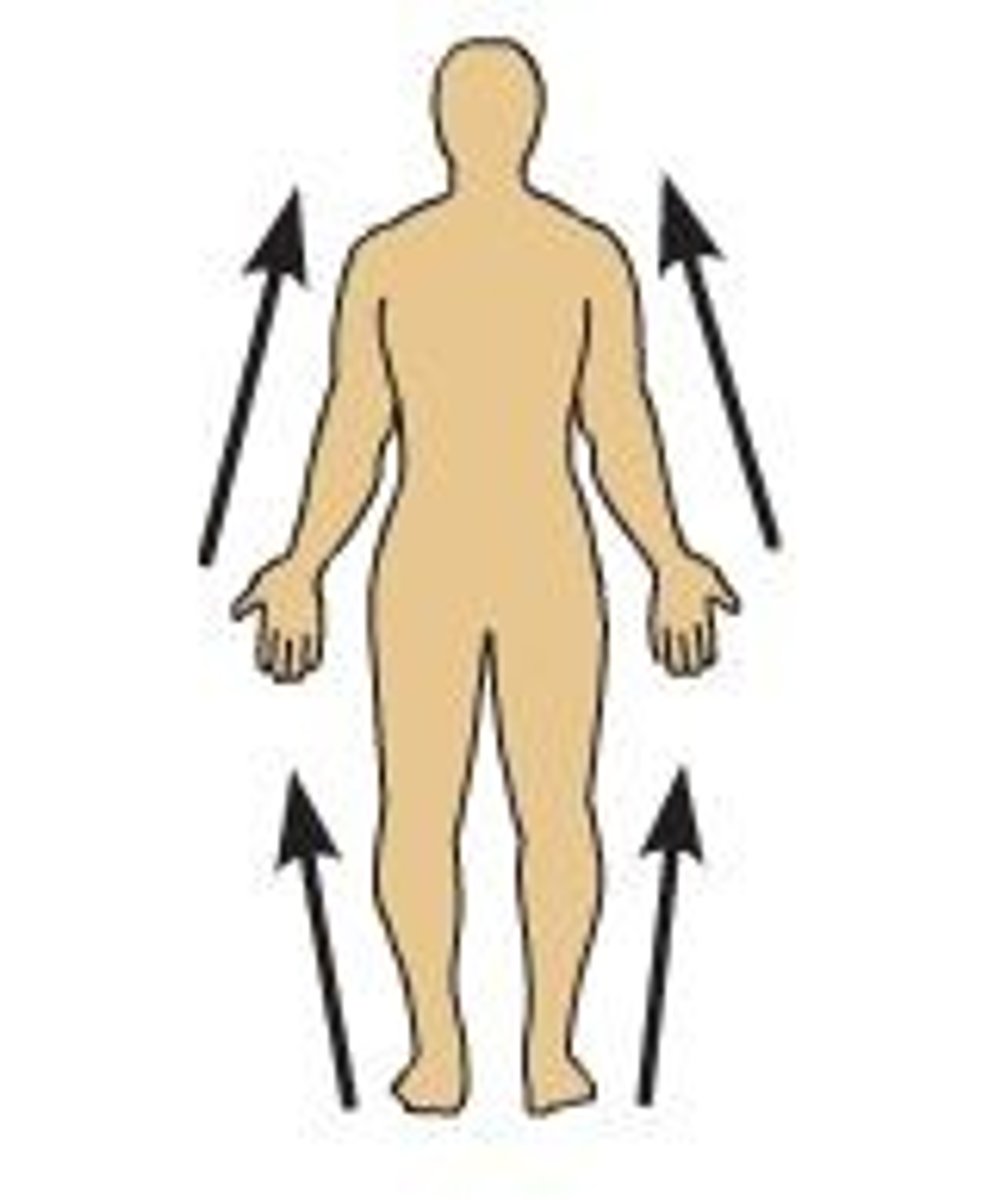
Proximal
Closer to the origin of the body part or the point of attachment of a limb to the body trunk
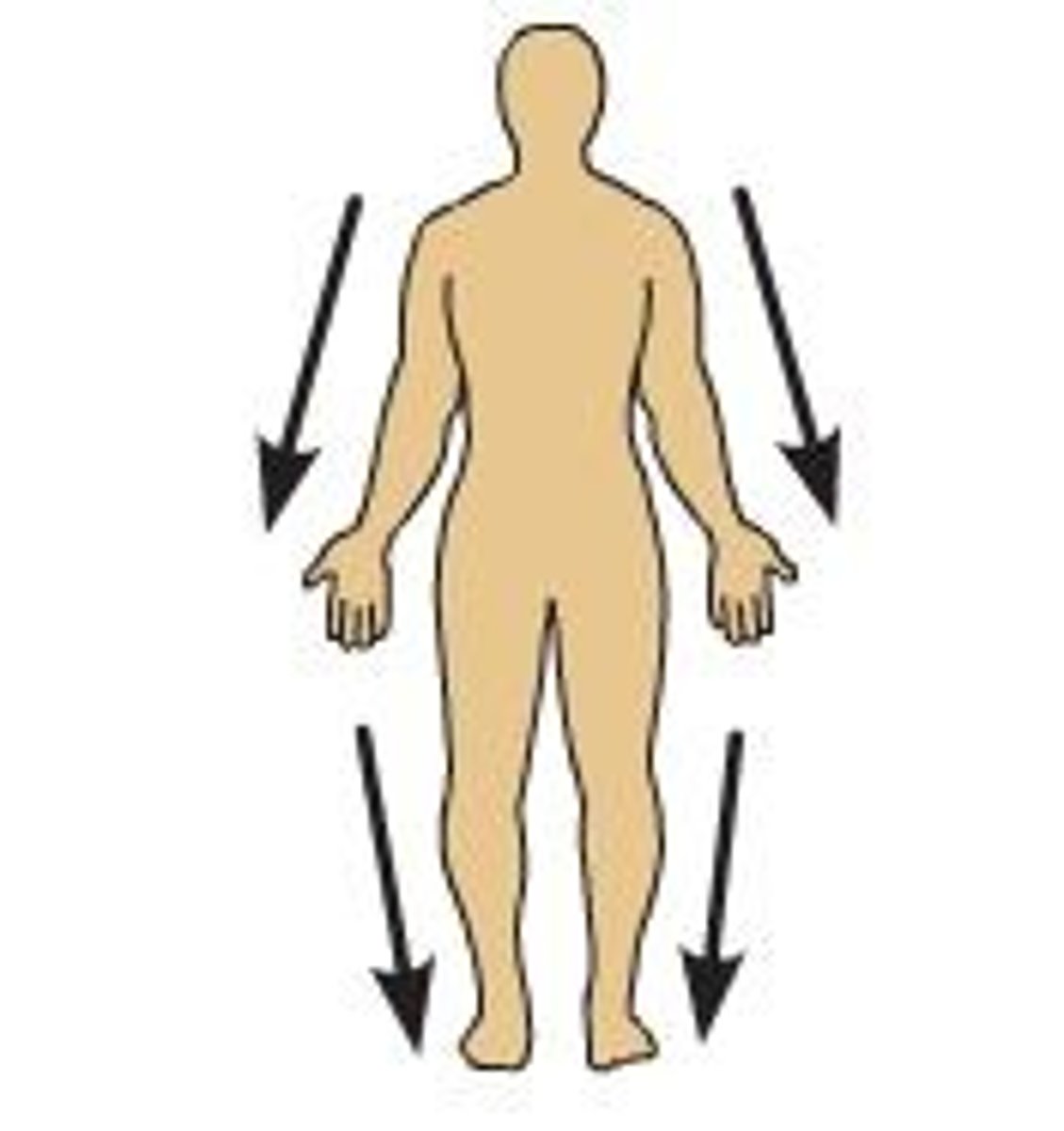
Distal
Farther from the origin of a body part or the point of attachment of a limb to the body trunk
Superficial (external)
Toward or at the body surface
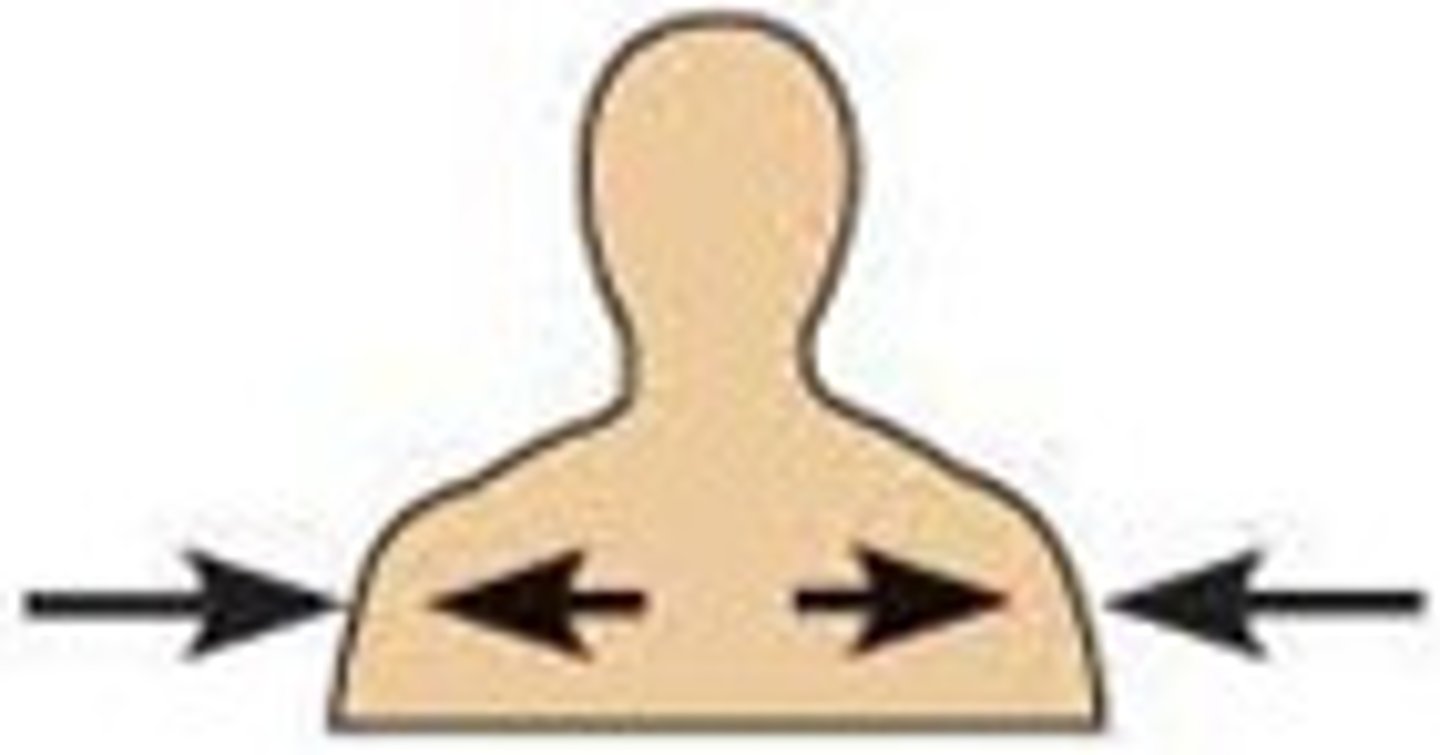
Deep (internal)
Away from the body surface

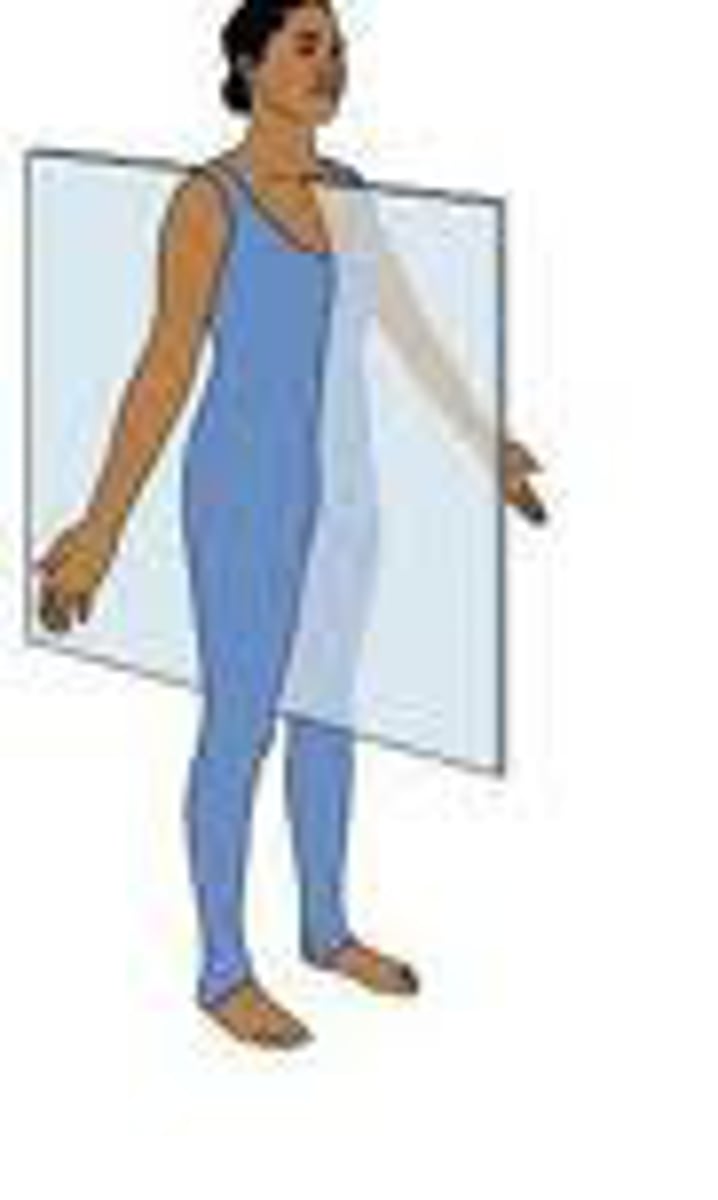
Sagittal (median) plane
Vertical plane that lies exactly in the midline, splits the body into halves
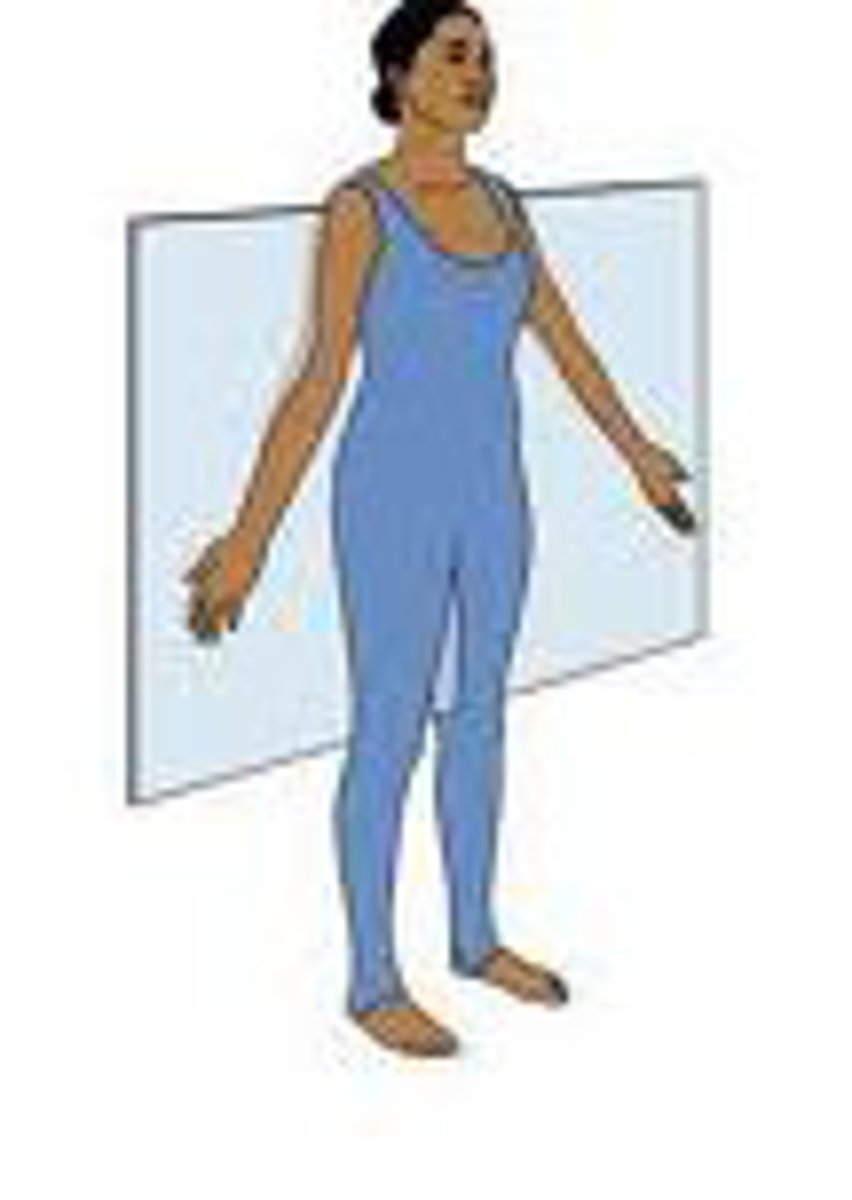
Frontal (coronal) plane
Vertical plane dividing the body or structure into anterior and posterior portions
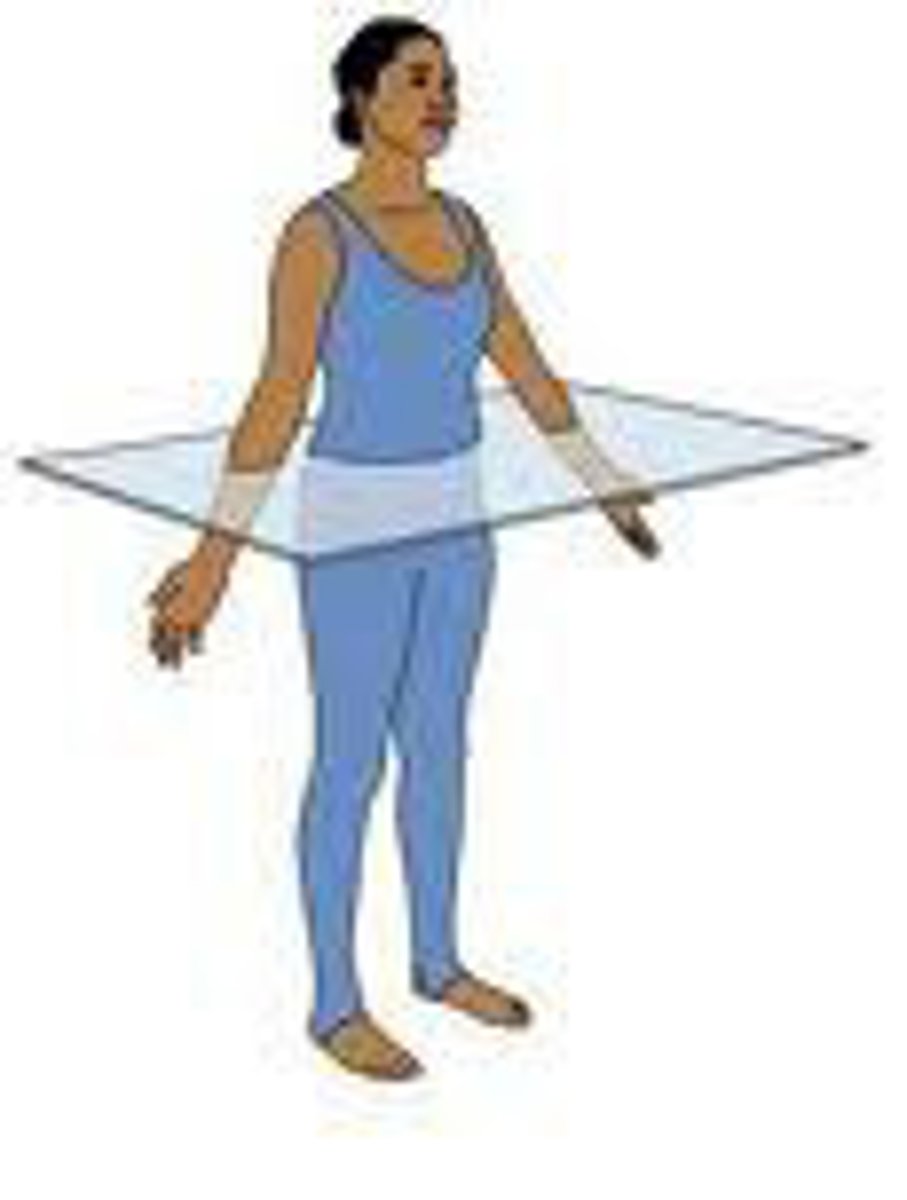
Transverse (horizontal) plane
Horizontal plane dividing the body into upper and lower portions
Cranial cavity
Contains the brain (in the skull)
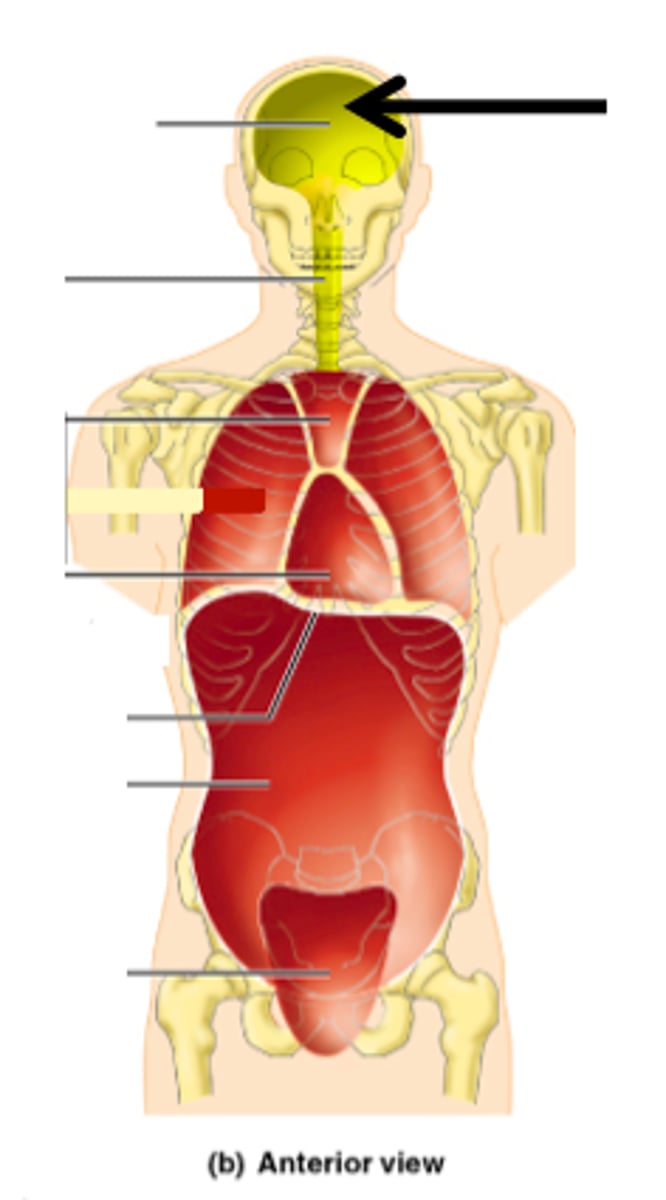
Ventral body cavity
Thoracic cavity and abdominopelvic cavities
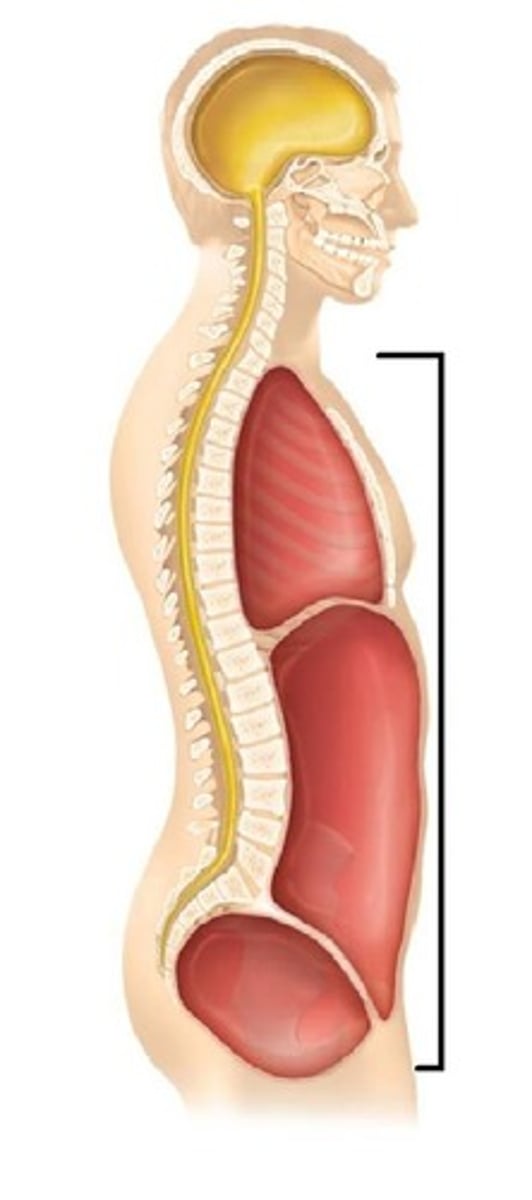
Vertebral cavity
Contains the spinal cord
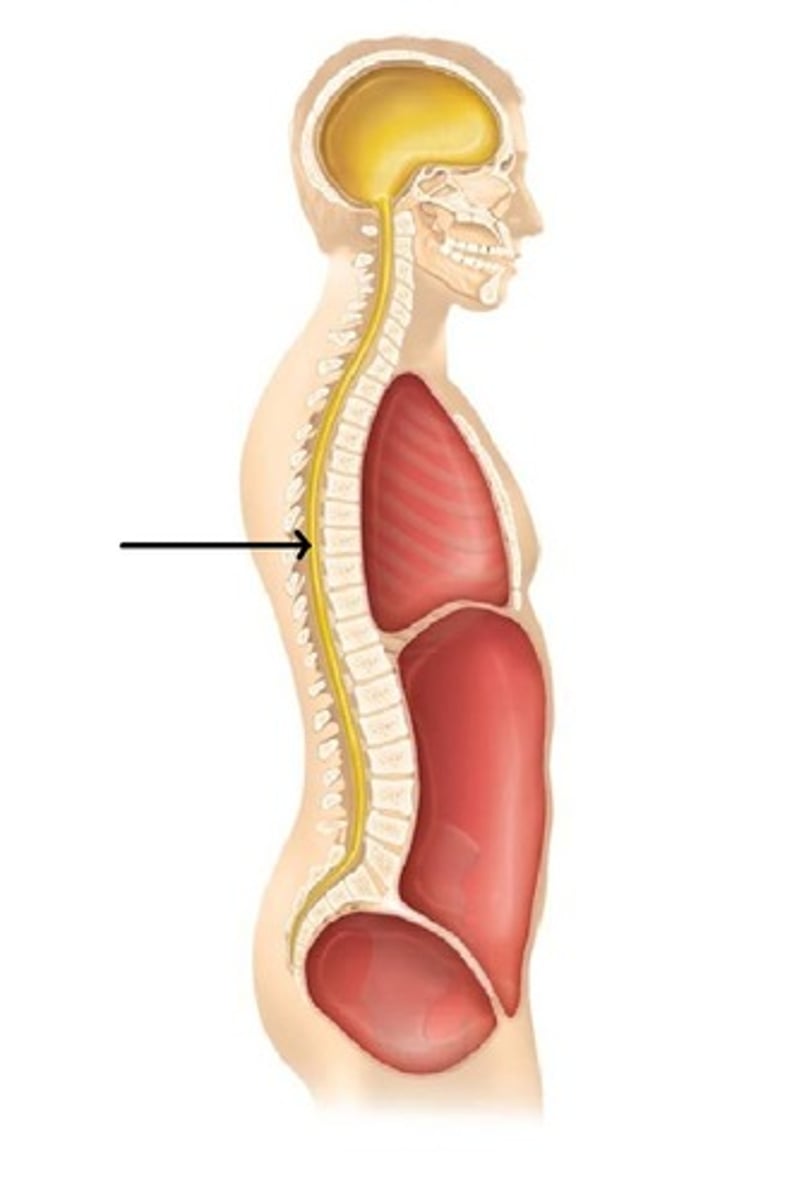
Thoracic cavity
Contains heart and lungs
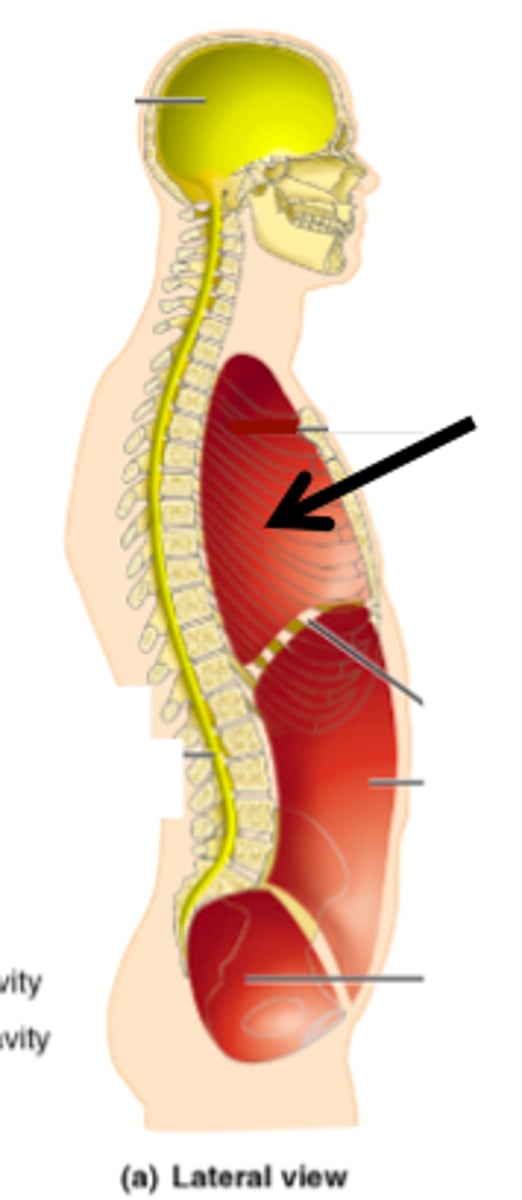
Pleural cavity
Contains the lungs
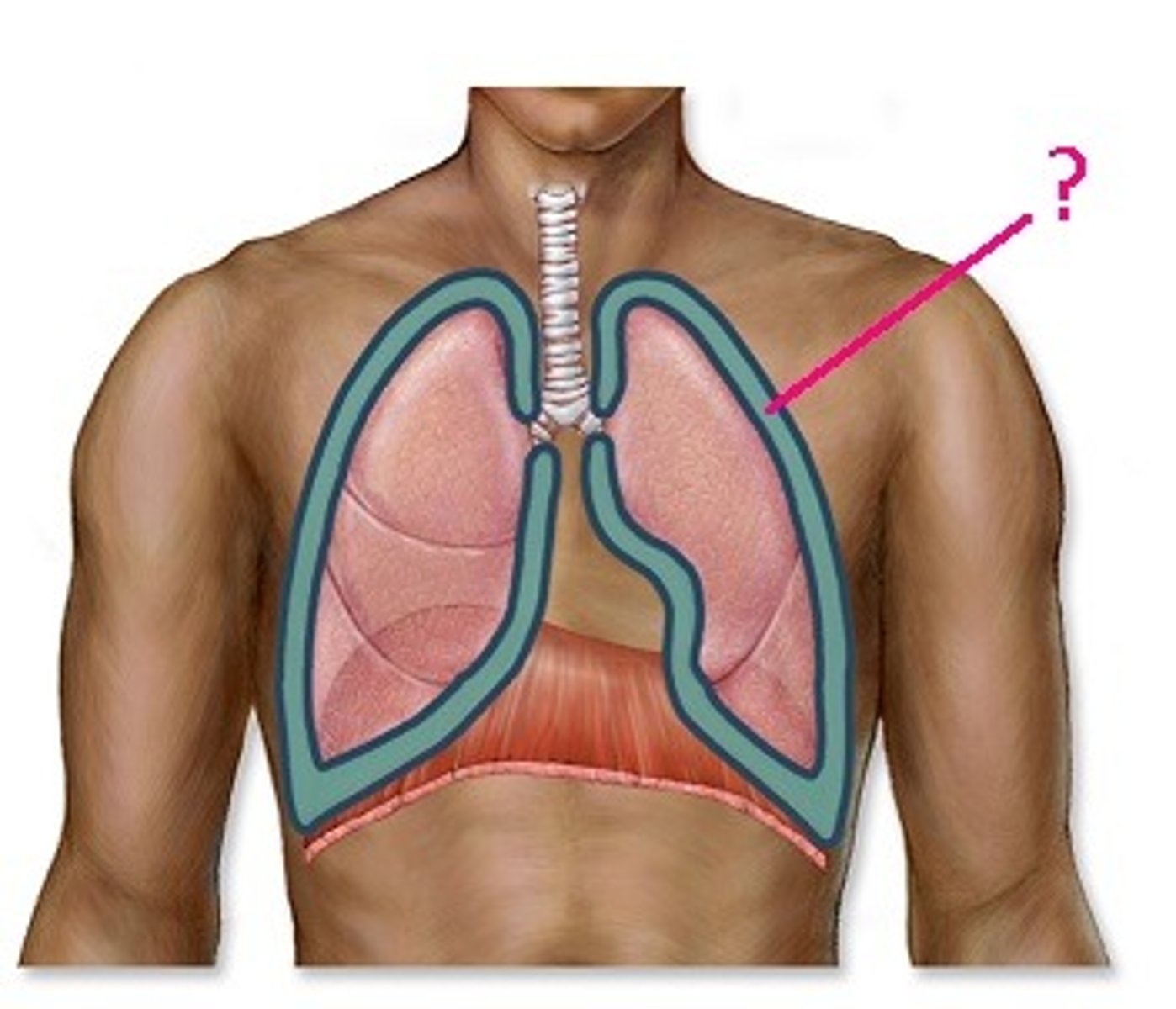
Mediastinum
Space between the lungs
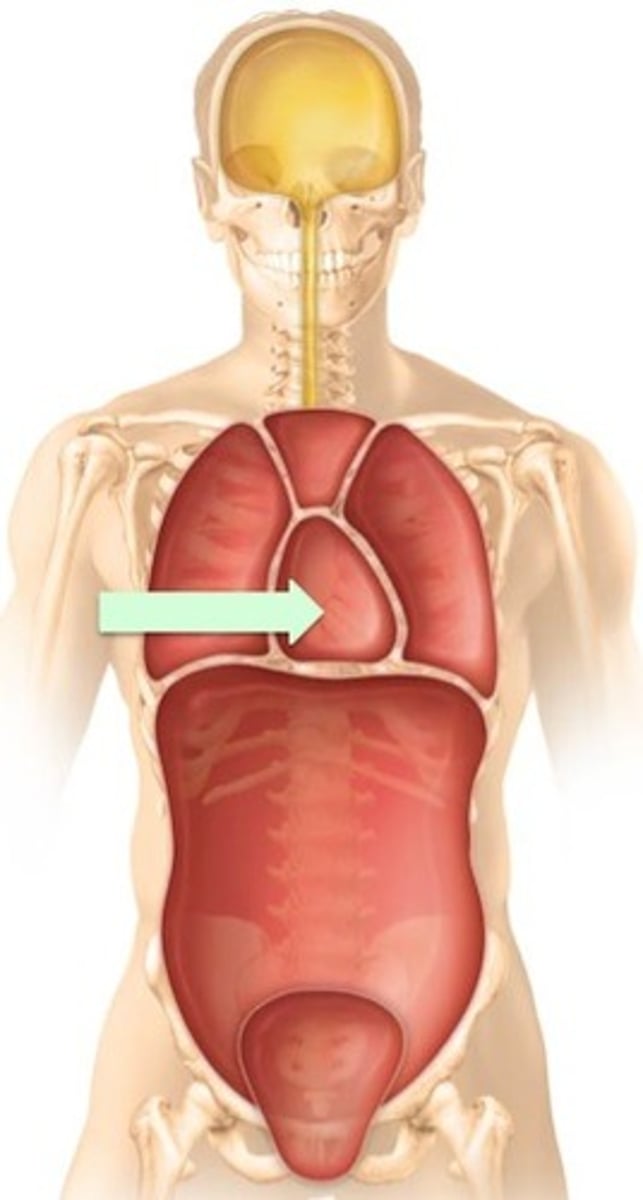
Pericardial cavity
Contains the heart
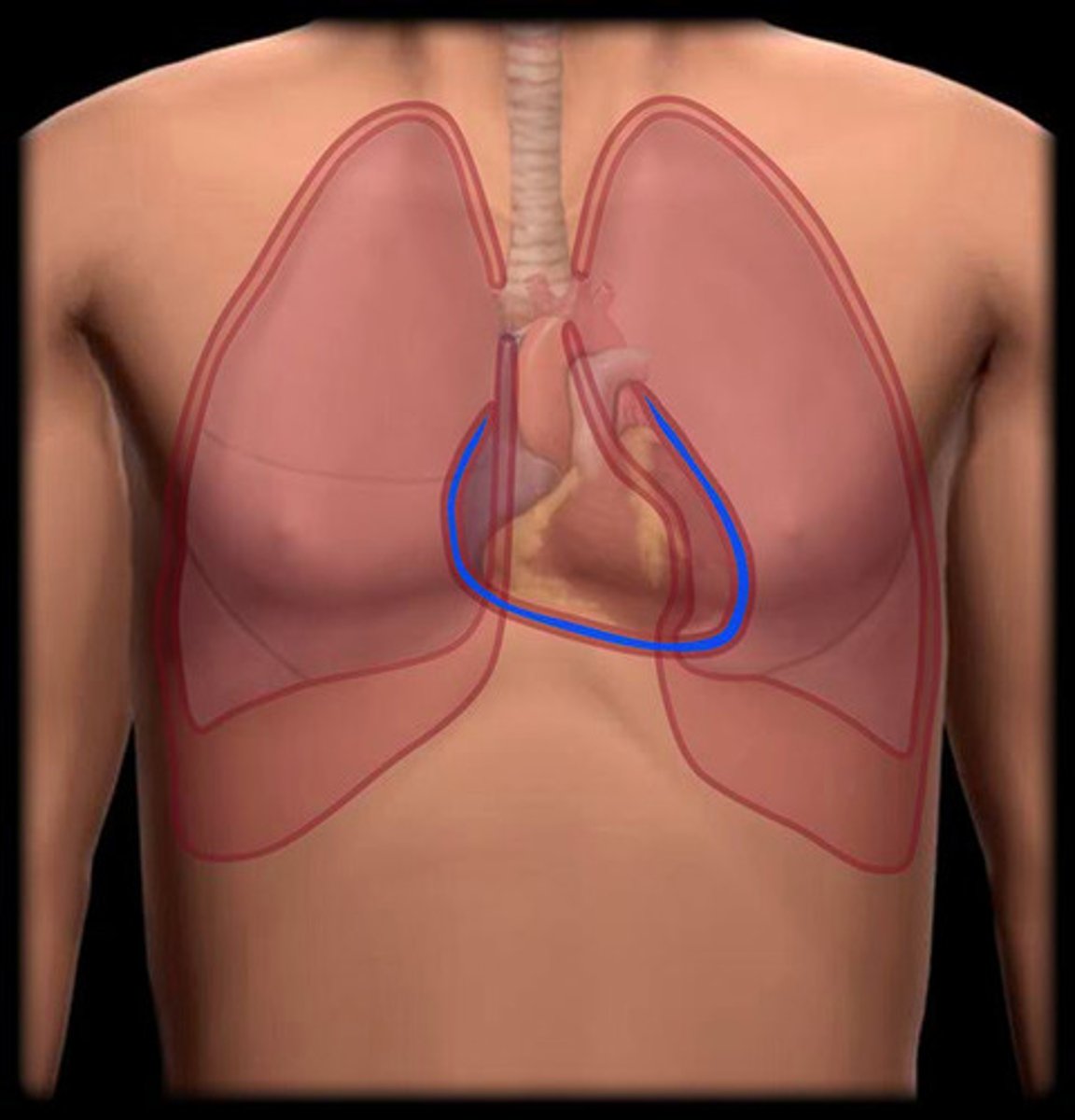
Dorsal body cavity
Contains the cranial cavity and spinal column
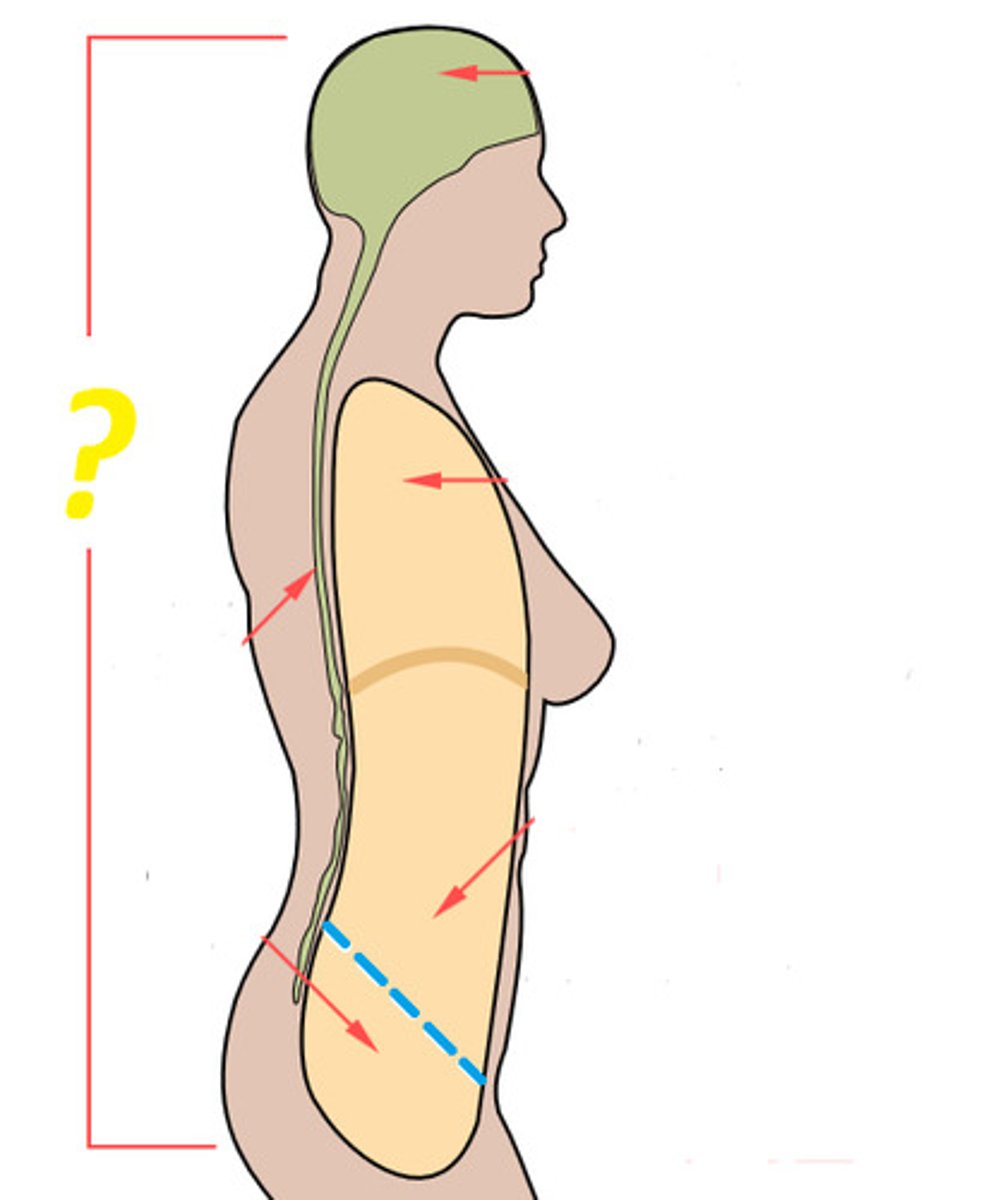
Pelvic cavity
Contains urinary bladder, reproductive organs, and rectum
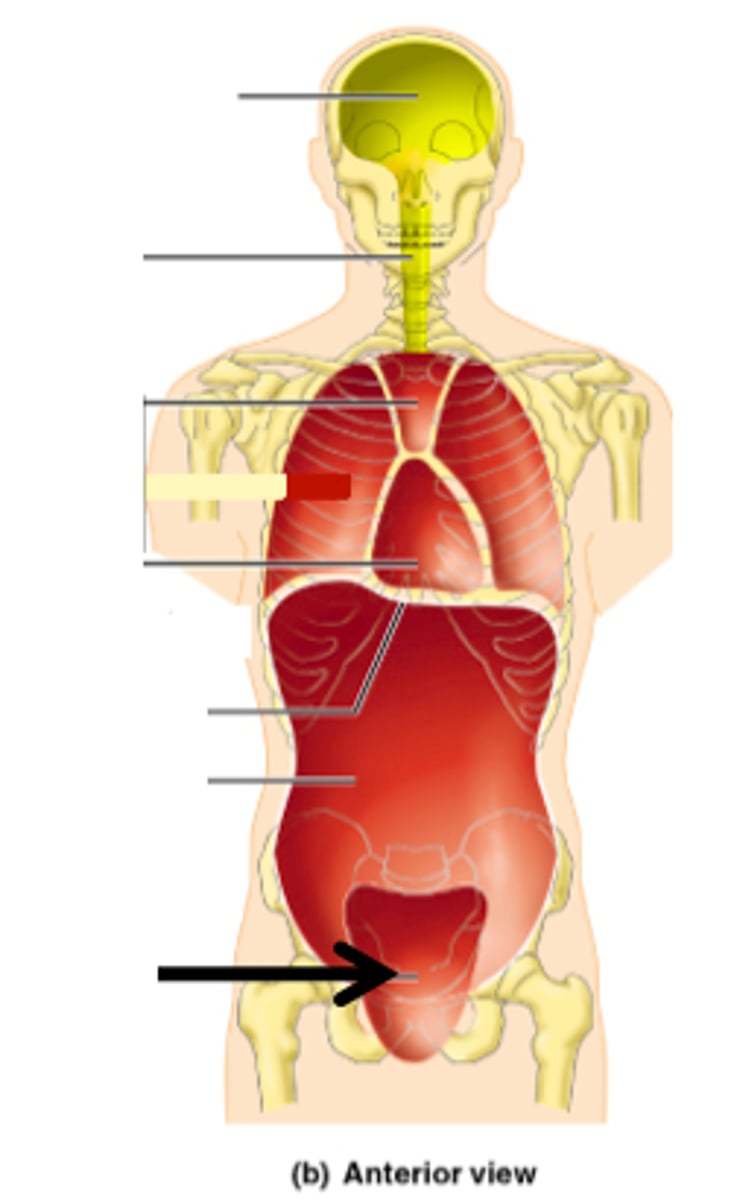
Abdominopelvic cavity
Contains both the abdominal and pelvic cavities
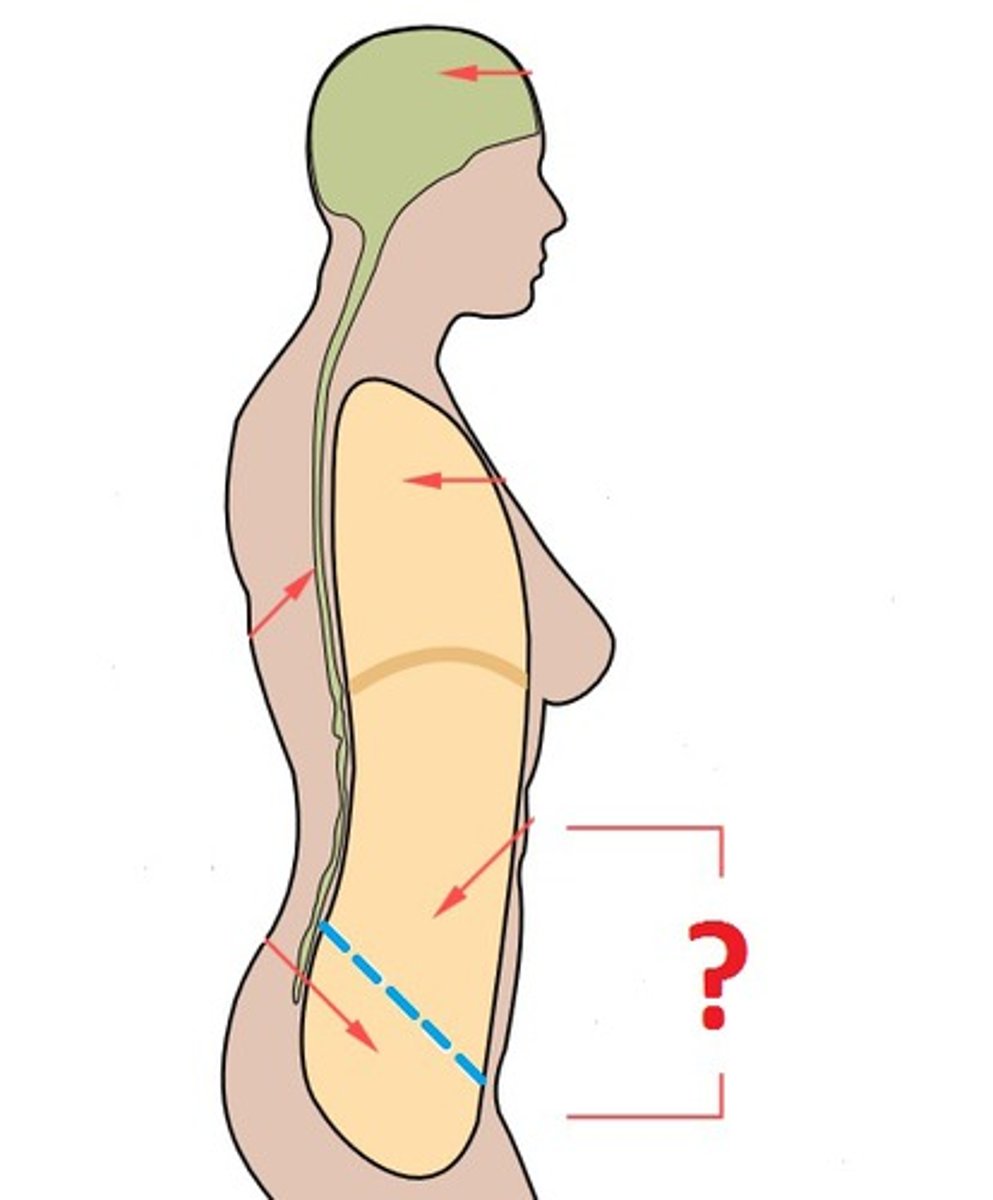
Anatomical position
To stand erect with arms at the sides and palms of the hands turned forward
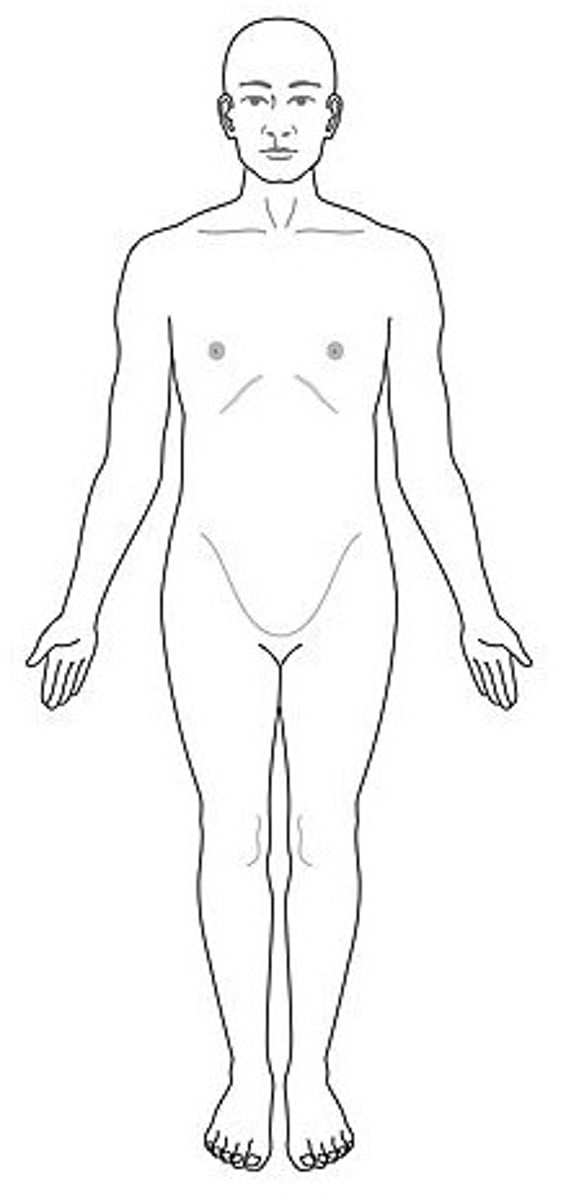
Lipase
enzyme that breaks down/digests lipids (fats)
Amylase
enzyme that breaks down/digests carbohydrates (polysaccharides) ex: starch
Triglycerides ---(lipase & bile salts)--> monoglycerides + fatty acids
What is the basic chemical reaction for the digestion of lipids?
Digestion of lipids
Triglycerides ---(lipase & bile salts)--> monoglycerides + fatty acids
Starch (polysaccharide) ---(amylase)--> maltose (disaccharide)
What is the basic chemical reaction for the digestion of starch?
Digestion of starch
Starch (polysaccharide) ---(amylase)--> maltose (disaccharide)
Assay
to test, analyze
Fatty acid assay (litmus test)
A test we can use to assess whether or not lipase is functional and has/hasn't digested triglycerides into fatty acids
Will
Fatty acid assay (litmus test):
If lipase is functional, fatty acids (will/won't) be produced
pH of solution (pH)
Fatty acid assay (litmus test):
If lipase is functional, fatty acids will be produced, leading to a change in what?
Present, red, acidic
Fatty acid assay (litmus test):
If lipase is functional, fatty acids are (present/absent) --> solution is (red/blue) --> pH becomes (basic/acidic)
Absent, blue, basic
Fatty acid assay (litmus test):
If lipase is nonfunctional, fatty acids are (present/absent) --> solution is (red/blue) --> pH becomes (basic/acidic)
Red
Fatty acid assay (litmus test):
If lipase is functional, the solution will turn (red/blue)
Blue
Fatty acid assay (litmus test):
If lipase is nonfunctional, the solution will turn (red/blue)
pH indicator
A chemical that can be added to a solution to determine pH by changing colors depending on acidity/basicity
Litmus
Fatty acid assay (litmus test):
What is the pH indicator?
Blue
Red
Fatty acid assay (litmus test):
Litmus is ___ at neutral/alkaline pH
Litmus is ___ at acidic pH
Lipase produces fatty acids, which lowers pH and causes a pH change
Explain why we could use a pH indicator to measure the amount of lipase activity
Starch assay (iodine test)
A test we can use to assess whether or not amylase is functional and has/hasn't digested starch into simpler sugars
Simple sugar/maltose assay (Benedict's test)
A test we can use to assess whether or not starch digestion has occurred by detecting if starch has been broken down into maltose (simple sugars)
Will
Simple sugar/maltose assay (Benedict's test):
If starch digestion occurs, simple sugars (maltose) (will/won't) be produced
Blue, orange
Simple sugar/maltose assay (Benedict's test):
If simple sugars (maltose) are present, Benedict's solution changes color from ___ to ___
Orange
Simple sugar/maltose assay (Benedict's test):
If simple sugars (maltose) are present, Benedict's solution is (orange/blue)
Blue
Simple sugar/maltose assay (Benedict's test):
If simple sugars (maltose) are absent, Benedict's solution is (orange/blue)
Blue
Simple sugar/maltose assay (Benedict's test):
If starch is NOT digested, Benedict's solution will be (orange/blue)
Orange
Simple sugar/maltose assay (Benedict's test):
If starch is digested, Benedict's solution will be (orange/blue)
Boil the solution
Simple sugar/maltose assay (Benedict's test):
What must be done for Benedict's test to work?
Orange
Simple sugar/maltose assay (Benedict's test):
Benedict's solution + simple sugars =
Blue
Simple sugar/maltose assay (Benedict's test):
Benedict's solution w/o simple sugars =
Orange, functional
Simple sugar/maltose assay (Benedict's test):
If simple sugars (maltose) is present, the solution is (orange/blue), and that means the amylase was (functional/nonfunctional)
Blue, nonfunctional
Simple sugar/maltose assay (Benedict's test):
If simple sugars (maltose) is absent, the solution is (orange/blue), and that means the amylase was (functional/nonfunctional)
Brown, blue/black
Starch assay (iodine test):
If starch is present, iodine solution changes from ___ to ___
Blue-back
Starch assay (iodine test):
If starch is present, the iodine solution is (brown/blue-black)
Brown
Starch assay (iodine test):
If starch is absent, the iodine solution is (brown/blue-black)
Won't
Starch assay (iodine test):
If amylase is functional, starch (will/won't) be present
Will
Starch assay (iodine test):
If amylase is nonfunctional, starch (will/won't) be present
Iodine solution
Starch assay (iodine test):
What is the pH indicator used in the starch assay?
Brown, functional
Starch assay (iodine test):
If starch is absent, the iodine solution is (brown/blue-black), and that means the amylase was (functional/nonfunctional)
Blue-black, nonfunctional
Starch assay (iodine test):
If starch is present, the iodine solution is (brown/blue-black), and that means the amylase was (functional/nonfunctional)
No
Brown
No
Blue
Starch experiment:
Tube 1 (amylase + water, 37°C) — negative control
Starch in product: (yes/no)
Iodine test: (brown/blue-black)
Maltose in product: (yes/no)
Benedict's test: (orange/blue)
Yes
Blue-black
No
Blue
Starch experiment:
Tube 2 (starch + water, 37°C) — negative control
Starch in product: (yes/no)
Iodine test: (brown/blue-black)
Maltose in product: (yes/no)
Benedict's test: (orange/blue)
No
Brown
Yes
Orange
Starch experiment:
Tube 3 (maltose + water, 37°C) — negative control
Starch in product: (yes/no)
Iodine test: (brown/blue-black)
Maltose in product: (yes/no)
Benedict's test: (orange/blue)
No
Brown
Yes
Orange
Starch experiment:
Tube 4 (amylase + starch, 37°C) — positive control
Starch in product: (yes/no)
Iodine test: (brown/blue-black)
Maltose in product: (yes/no)
Benedict's test: (orange/blue)
Yes
Blue-black
No
Blue
Starch experiment:
Tube 5 (boiled amylase + starch, 37°C) — unknown
Starch in product: (yes/no)
Iodine test: (brown/blue-black)
Maltose in product: (yes/no)
Benedict's test: (orange/blue)
Yes
Blue-black
No
Blue
Starch experiment:
Tube 6 (amylase + starch, 0°C ice) — unknown
Starch in product: (yes/no)
Iodine test: (brown/blue-black)
Maltose in product: (yes/no)
Benedict's test: (orange/blue)
Bile salts
Emulsify fats; breaking large fat globules into smaller droplets to increase surface area
Break triglycerides down, increasing surface area for lipase to act
Describe what bile salts do to triglycerides and explain why that has an impact on lipase activity