Ancient Greek History: Geometric Period to the Rise of the Polis
 Call Kai
 Learn
Learn Practice Test
 Spaced Repetition
 Match
Match Flashcards
 Knowt Play
1/149

Earn XP
Description and Tags
Flashcards covering key terms and concepts from the Protogeometric period through the development of the Spartan and Athenian states, including major archaeological artifacts and legal reforms.
Name | Mastery | Learn | Test | Matching | Spaced | Call with Kai |
|---|
No analytics yet
Send a link to your students to track their progress
150 Terms
Autchthonous
People believed to have originated from the land itself.
Protogeometric Period
Early Greek recovery period after the Bronze Age collapse; known for simple pottery designs.
Geometric Period
Period marked by geometric art, population growth, and stronger city-states.
Ivory Pyxis from Athens
Luxury ivory box from Mycenaean Athens dating to ca. 1400 BCE, demonstrating elite wealth and Near Eastern artistic influence.
Tomb of Rich Athenian Lady
Elite female burial from ca. 850 BCE proving social hierarchy and inequality in Athens.
Dipylon Amphora
Huge funerary vase from ca. 750 BCE used as a grave marker; a major funerary monument showing burial rituals and aristocratic status.
Prothesis
A funeral scene where mourners gather around the dead body, commonly depicted in Greek mourning customs.
Cremation
The practice of burning the body during funerary customs.
Inhumation
The practice of burying the body intact.
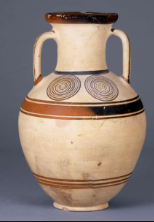
Attic Protogeometric Amphora
Pottery from ca. 975–950 BCE showing Greek artistic recovery with simple geometric decoration.
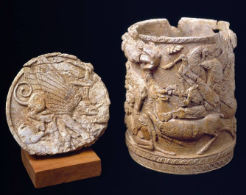
Ivory Pyxis from Athens
Date: ca. 1400 BCE
Period: Mycenaean Greece
Importance: Demonstrates elite wealth and Near Eastern artistic influence.
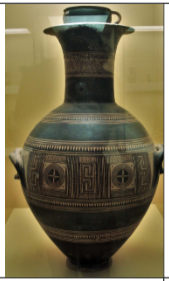
Attic Early Geometric Amphora
Date: ca. 850 BCE
Period: Geometric Period
Importance: Example of increasing complexity in Greek pottery and burial customs.
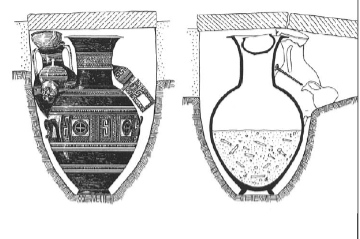
Tomb of Rich Athenian Lady Contents
Date: ca. 850 BCE
Period: Geometric Period
Importance: Shows social inequality and elite female burials.
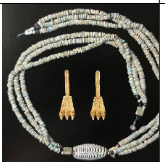
Gold Earrings/Faience Necklace
Date: ca. 850 BCE
Importance: Evidence of trade, wealth, and status.
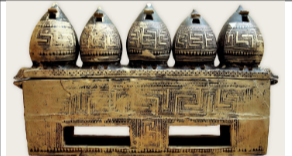
Clay Chest/Granary Model
Item dating to ca. 850 BCE that symbolizes wealth, storage, and agriculture.
Dorian Migration/Invasion
Traditional migration of Dorian Greeks following the Mycenaean collapse.
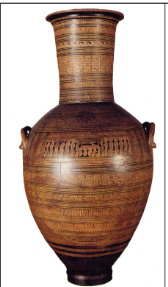
Dipylon Amphora
Date: ca. 750 BCE
Period: Late Geometric
Importance: Major funerary monument showing burial rituals and aristocratic status.
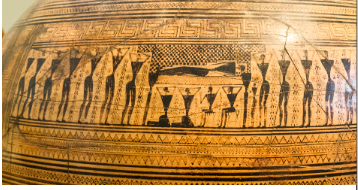
Prothesis Scene Detail
Date: ca. 750 BCE
Importance: Shows Greek mourning customs and funerary practices
Dorian Migration/Invasion
Traditional migration of Dorian Greeks after Mycenaean collapse.
Doric Dialect
The Greek dialect associated with Sparta and the Dorians.
Ionic Dialect
The Greek dialect associated with Ionia and Homeric poetry.
Apoikia
A Greek overseas colony.
Emporion
A trading post or commercial settlement.
Al Mina
A Greek trading settlement located in Syria.
Pithecusae
An early Greek colony in Italy tied to trade and metalworking.
Mētropolis
The mother city of a colony.
Oikistēs
The founder or leader of a colony.
Klēros
The land allotment given to colonists.
Phaeacians
Seafaring people in Homeric epic who help Odysseus.
Alcinous
King of the Phaeacians.
Mousai
The Muses; goddesses of inspiration.
Hesiod
Greek poet who wrote Theogony and Works and Days.
Theogony
A poem by Hesiod about the origins of the gods.
Works and Days
A poem by Hesiod about farming, justice, and labor.
Perses
Hesiod’s brother.
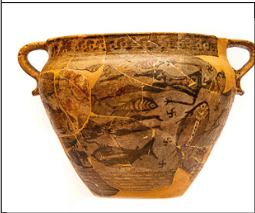
Shipwreck Scene on Krater from Pithecusae
Date: ca. 725–700 BCE
Importance: Shows dangers of sea travel and Greek colonization.
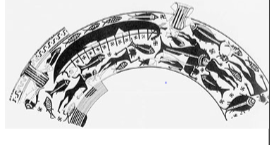
Drawing of Shipwreck Scene
Date: ca. 725–700 BCE
Importance: Helps interpret colonization/trade imagery.
Law Code from Dreros
One of the earliest written Greek law codes, dating to ca. 650 BCE.
Temple of Apollo Delphinios
The temple where the Dreros law code was displayed publicly.
Agora
The public gathering or marketplace area of a polis.
Wanax
The term for a Mycenaean king.
Basileus
A Greek leader, chief, or king.
Oikos
The household or family unit.
Dēmos
The people or citizens.
Boulē
A council that advised the government.
Agamemnon
Leader of Greeks in the Iliad
Odysseus
Hero known for intelligence/cunning
Thersites
A common soldier who criticized elites in the Iliad.
Synoecism/Synoikismos
The process of combining villages into one polis.
Polis
The Greek city-state.
Polītēs
A citizen of a polis.
Oligarchy
Rule by a small elite group.

Law Code from Dreros
Date: ca. 650 BCE
Importance: Early example of written Greek law and political organization

Drawing of Law Code
Date: ca. 650 BCE
Importance: Helps interpret inscription.
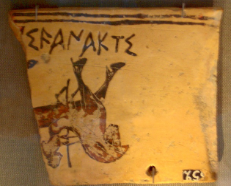
Votive Clay Pinax
Date: ca. 600 BCE
Importance: Shows religious dedications and daily Greek life.
Theseus
The mythical founder and unifier of Athens.
Archons
The top magistrates in the Athenian government.
Archon Basileus
The archon responsible for religious matters.
Polemarch
The military archon.
Eponymous Archon
The chief archon who gave his name to the year.
Council of Areopagus
The aristocratic governing council of Athens.
Ekklēsia
The Athenian citizen assembly.
Eupatrids
The Athenian aristocrats.
Cylon
An individual who attempted to become tyrant of Athens.
Draco
A lawgiver known for his harsh laws; established a homicide law distinguishing accidental vs intentional murder.
Solon
Athenian reformer and lawgiver who introduced the Seisachtheia.
Seisachtheia
Debt relief reforms by Solon that ended debt slavery.
Pentakosiomedimnoi
The highest wealth class in Solon’s system.
Hippeis
The cavalry class in Solon's social hierarchy.
Zeugetai
The middle-class citizens in Solon's social hierarchy.
Thētes
The lowest social class in Athens.
Axōnes/Kurbeis
Wooden displays used for the public showing of Solon's laws.
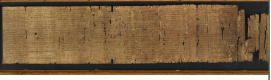
Constitution of the Athenians Papyrus
Date: ca. 330 BCE copy found in 1881 CE
Importance: Key source for Athenian political history.
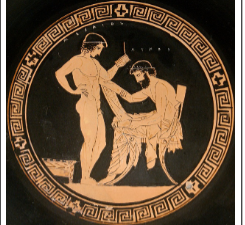
Greek Teacher with Papyrus Scroll
Date: ca. 440 BCE
Importance: Shows literacy and education.

Papyrus Plants
Importance: Material used to make writing scrolls.
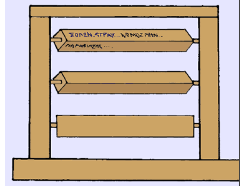
Reconstruction of Axōnes
Importance: Public display of Solon’s laws.
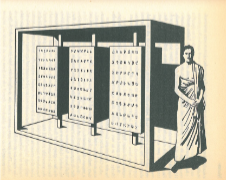
Reconstruction of Kurbeis
Importance: Another display method for laws.
Lycurgus
The legendary lawgiver of Sparta.
Helots
The enslaved population controlled by the Spartan state.
Perioikioi
Free non-citizens living in the regions around Sparta.
Spartiates
Full Spartan citizens.
Great Rhetra
The traditional constitution of Sparta.
Gerousia
The Spartan council of elders.
Agōgē
The Spartan military education system.
Sussition/Syssition
A common military dining group in Sparta.
Pederasty
Educational/social relationship between older and younger male.
Erastēs
The older male partner in a pederastic relationship.
Erōmenos
The younger partner in a pederastic relationship.
Ephors
Five powerful Spartan officials.
Krypteia
A secret police-like institution in Sparta used to control the helots.
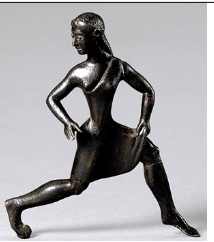
Bronze Female Runner
Date: ca. 525–500 BCE
Importance: Reflects Spartan focus on physical fitness, even for women.
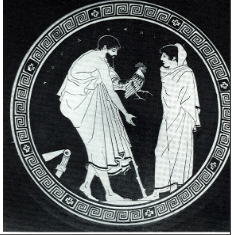
Athenian Pederasty Scene
Date: ca. 470 BCE
Importance: Shows social/educational relationships in Greek society.
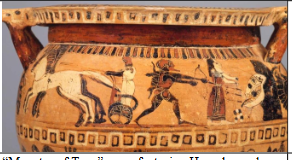
“Monster of Troy” Vase
Date: ca. 550 BCE
Importance: Mythological imagery tied to heroism and warfare.
Tyrannos
A tyrant; a ruler who holds power outside of the traditional system.
Cypselids
Tyrant family of Corinth.
Cypselus
The founder of the Cypselid tyranny in Corinth.
Periander
Famous tyrant of Corinth.
Pisistratus
A tyrant of Athens.
Phya
The woman dressed as Athena to support Pisistratus's return.
“Owls” coins
Athenian silver coins symbolizing power and trade; also known as Owl Coins.