pubh 515 topics 1-3 Questions and answers
 Call Kai
 Learn
Learn Practice Test
 Spaced Repetition
 Match
Match Flashcards
1/89

There's no tags or description
Looks like no tags are added yet.
Name | Mastery | Learn | Test | Matching | Spaced | Call with Kai |
|---|
No analytics yet
Send a link to your students to track their progress
90 Terms
One Health
The idea that the health of people is connected to the health of animals & our shared environment
Environmental Health
National Center for Environmental Health (1998): Environmental health is the discipline that focuses on the interrelationships
between people and their environment, promotes human health and well-being, and fosters a safe and healthful environment
WHO (2004): Environmental health comprises those aspects of human health, including quality
of life, that are determined by physical, chemical, biological, social, and psychosocial factors in the environment. It also refers to the theory and practice of assessing, correcting, controlling, and preventing those factors in the environment that can potentially affect adversely the health of present and future
generations
Environmentalism
Advocacy of the preservation, restoration, or improvement of the natural environment
Environmental Health vs. Environmentalism
Environmental health encompasses the relationship between the environment and human health. Environmentalism focuses solely on the environment
What are the three most important environmental requirements to promote healthy people/community?
Clean air, safe & sufficient water, and adequate & safe food
What are the three principal determinants of health worldwide?
Pollution, population, and poverty
Population
- overpopulation in developing nations
- human population exceeding the carrying capacity of the planet
- world population of >10 billion during the 21st century is related to urban crowding
Pollution
- combustion of fossil fuels (petroleum, coal)
- dispersal of greenhouse gases into atmosphere (global climate change; change in distribution of insect vectors)
Poverty
- linked to population growth
- one of the well-recognized determinants of adverse health outcomes
What are the causes of population growth?
Increases in fertility, reductions in mortality, and migration (regional issue)
What are the two basic patterns of population growth?
S-curve and J-curve
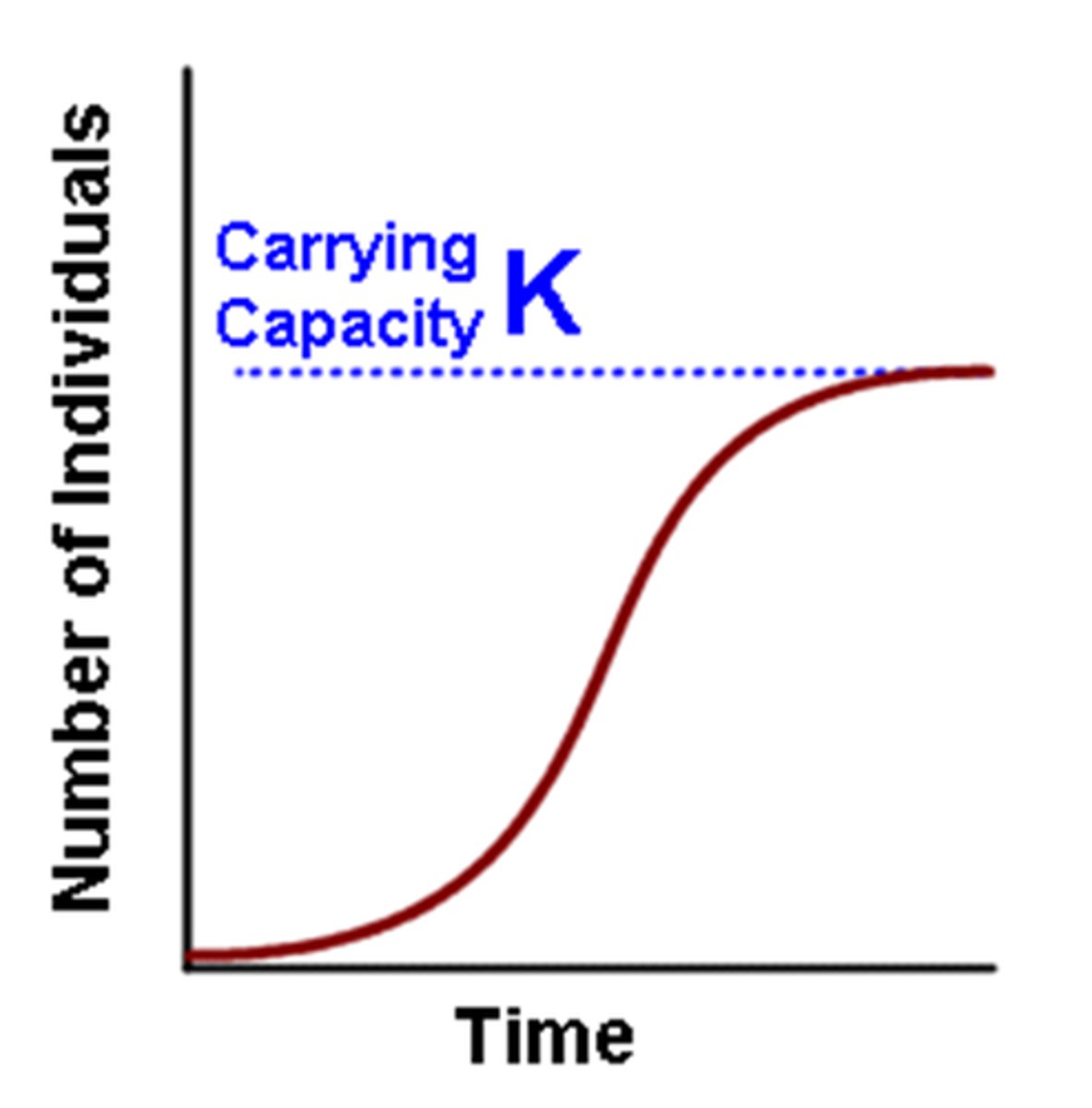
S-curve
- sigmoid curve
- the population increases slowly in the beginning, then increases very rapidly before slowing and gradually leveling off as the upper limits of growth are reached
J-curve
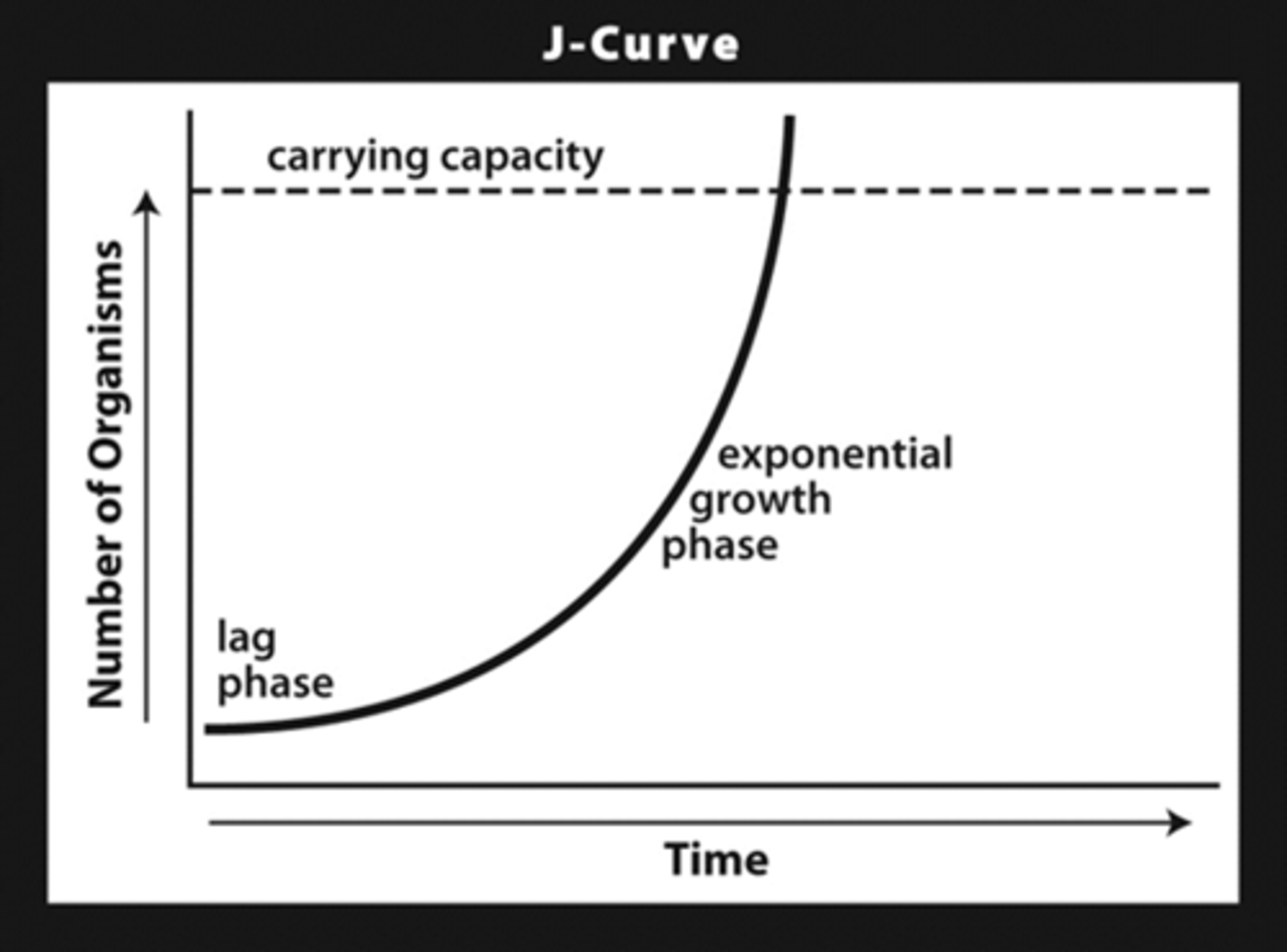
- population growth following the j-curve increases exponentially up to or even beyond the carrying capacity of the environment
- this pattern is frequently seen in populations such as lemmings, algal blooms, and certain insects
What is wrong with the J-curve?
- it will crash
- populations exceeding the carrying capacity (K) will experience a population crash
- an abrupt decline from high to low population density when resources are exhausted
The Lesson of Easter Island
- On Easter Sunday, 1722, Dutch sailors named a remote South Pacific island Easter Island
- One of the most remote spots on the planet
- Inhibited by Polynesians
- The sailors found large stone statues on the island
- There was evidence of a sophisticated civilization
- The past culture and civilization had vanished
Is the human population a J-curve or S-curve?
J-curve
Do humans have a carrying capacity?
- Difficult to determine a carrying capacity for people
- Human ingenuity -> unique ability to increase carrying capacity (technology, agriculture, trade, fossil fuels, and medicine)
- Some say there is no human carrying capacity
How many people can the Earth support?
- Depends on the living standard we are willing to accept
- Many more people could be supported if we didn't eat meat, travel, heat homes, use paper, etc.
- For everyone to enjoy a 21st-century American way of life, we would need many more Earths
- The human population will be limited by: water, energy, forest products, resources, photosynthetic capacity, land, and other essential elements
- Best estimates for our carrying capacity: 7-10 billion, but we will have far more people than this
What factors influence the size of the human population?
Crude Birth Rates (CBR), Crude Death Rates (CDR), and Crude Growth Rate
Crude Birth Rates (CBR)
The number of babies born per 1,000 people per year
Crude Death Rates (CDR)
- The annual number of deaths per 1,000 population
- Rates do not reflect wide variations in age distribution within populations
Crude Growth Rate
Net number added per 1,000 individuals per year; also equal to the crude birth rate minus crude death rate
Population change
(births + immigration)/(deaths + emigration)
Total Fertility Rate (TFR)
- the average number of live births each woman has over her lifetime
- if TFR = 2.0: the population is stable
- if TFR > 2.0: the population grows
- if TFR < 2.0: the population shrinks
Replacement-level Fertility
- fertility rate that replaces the population of parents
Demographic Transition
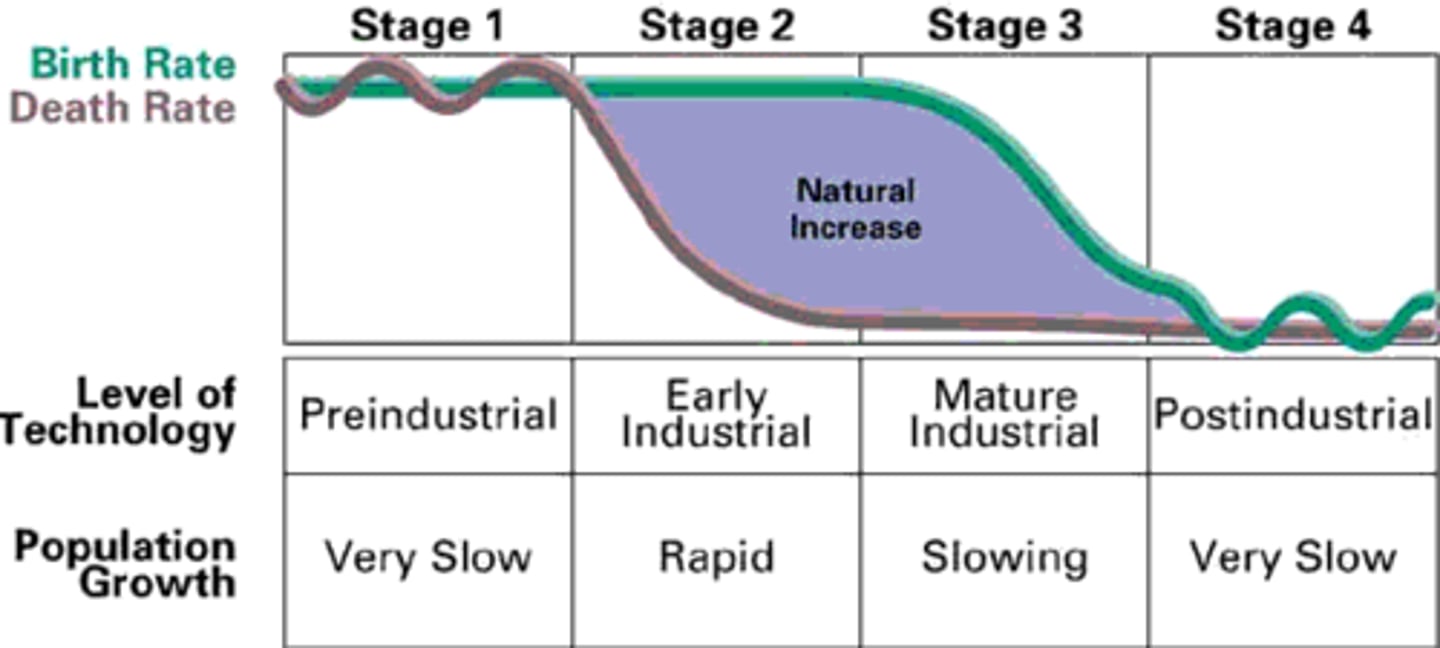
- a shift in birth and death rates from the primitive to the modern condition in industrialized societies
- Industrialization results in lower death rates, better health care, and declining fertility rates
- Pre-industrialized societies have stable populations (high birth rates and infant and childhood mortality rates)
- Industrialized societies have stable populations (low birth rates and infant and childhood mortality rates)
Phases of the Demographic Transition
Phase 1: primitive stability (pre-industrial)
- high CBR is offset by high CDR
Phase 2: epidemiologic transition (transitional)
- declining CDR
- high CBR results in rapid population growth
Phase 3: fertility rates declining (industrial)
- population growth is still significant
Phase 4: modern stability is reached (post-industrial)
- CDR and CBR are both low
What is the epidemiologic transition?
The pattern of change in morbidity and mortality factors
- before shift: causes of death primarily related to infectious and communicable diseases
- after shift: causes of death associated with chronic, degenerative diseases
What is the fertility transition?
Crude birth rates declined in developed nations (from 40-50/1,000 to 9-12/1,000)
- this transition did not happen at the same time as the epidemiologic transition
- it was delayed until decades after the epidemiologic transition
- when CBR and CDR are out of phase, rapid population change occurs
What is poison?
Any agent capable of producing a deleterious response in a biological system, seriously injuring function or producing death
Sarin Gas
- an extremely toxic nerve agent
- used in an attack on the Tokyo subway in 1995
- about 5,500 injured & 13 fatalities
Agent Orange
- an herbicide used in the Vietnam War
- has trace levels of 2, 3, 7, 8-tetrachlorobenziodioxin (TCDD), or simple dioxin
- dioxin is a human carcinogen and teratogen
Botulinum Toxin
- neurotoxic proteins anaerobically produced by the bacterium clostridium botulinum
- lethal dose is approximately 0.0002 mg/kg body weight
- likely the most acutely toxic substance known
- clostridium spores are ubiquitously found in soil
- used in very small both as a cosmetic treatment (botox) and to treat painful muscle spasms (dysport)
Paracelsus
- 1493-1541
- born as Philippus Aureolus Theophrastus Bombastus von Hohenheim
- father of toxicology
- all things are poison and nothing is without poison, only the dose permits something not to be poisonous
- developed the concept of dose-response, the basis of modern toxicology
Dose-Response Curve
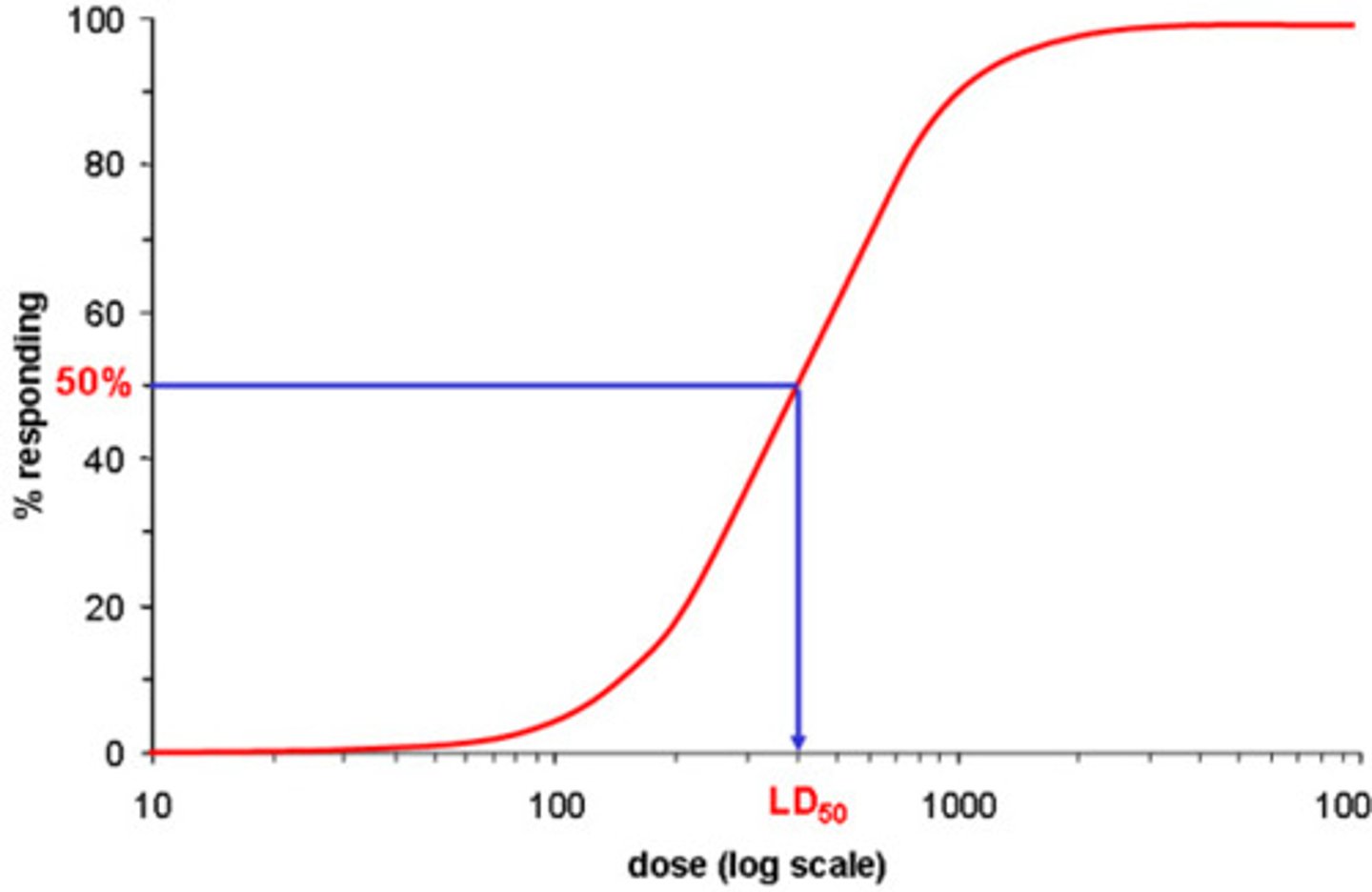
- a dose-response curve illustrates the relationship between the concentration of a compound and the degree of response it produces
- may describe the response of an individual or a population response
- a population response is measured by the percentage of the exposed population that shows the defined effect, e.g., high blood pressure, skin irritation, blindness, death/mortality, etc.
Dose-Response Curve and LD50
- if the response of interest is death, such a curve may be estimated an LD50 value
- LD50 is the dosage (mg/kg body weight) causing death in 50% of exposed subjects
Toxins
- generally refers to toxic subtsances which are produced naturally
Toxicants
- used for toxic substances that are produced by or are a by-product of anthropogenic (human-made) activities
Xenobiotics
- foreign chemicals (both natural and anthropogenic) that are not normally found in the body
Organic Chemicals
- chemicals that always contain carbon
Inorganic Chemicals
- chemicals that usually do not contain carbon
Naturally Occurring Chemicals
- produced by nature without any human intervention
Synthetic Chemicals
- made by humans
- may or may not be found in nature
What factors affect the concentration and toxicity of a chemical?
- route of entry into the body
- received dose of the chemical
- duration of exposure
- interactions that transpire among multiple chemicals
- individual sensitivity
Most frequent sites of exposure to environmental chemicals
respiratory system
- inhalation
gastrointestinal tract
- ingestion (e.g., consumption of contaminated food or drink)
skin
- contact with the surface of the skin (topical mode)
Acute Exposure
- typically, a single exposure < 24 hours
Subacute Exposure
- exposure for 1 month or less
Subchronic Exposure
- exposure for 1 to 3 months
Chronic Exposure
- exposure for more than 3 months
Effects of Chemical Mixtures
- additive
- synergism
- potentiation
- antagonism
Additive
- combination of two chemicals produces an effect similar or slightly better than their individual effects
Synergism
- combined effect of chemicals is greater than the sum of their individual effects
Potentiation
- one chemical that is not toxic causes another chemical to become more toxic
Antagonism
- two chemicals administered together interfere with each other's actions or one interferes woth the action of the other
What impacts individual responses to exposures?
- genetics
- age
- sex
- health status
- size (body mass)
Intraspecies Response
- intraspecies difference: within the same species
- there is a difference in how each individual responds to toxic agents, e.g., there is intraspecies difference in how all of us responds differently to alcohol
Intraspecies Difference Example: Alcohol Metabolism
- Asian Flush
acetaldehyde
- alcohol is biotransformed to acetaldehyde in the liver
- acetaldehyde: probable carcinogen, much more toxic than ethanol, alcohol dehydrogenase (ALDH) converts acetaldehyde to acetate (a non-toxic compound)
- individuals with the flushed condition have high efficiency ADH and low efficiency ALDH
Interspecies Differences
- among different species, there is a difference in how each species responds to toxicants/toxins
- examples include: herbicides, insecticides, rodenticides
Hazard
- the possibility that an agent can cause harm
Exposure
- contact with an agent
Risk
- the probability of harm following exposure to an agent
- hazard x exposure = risk
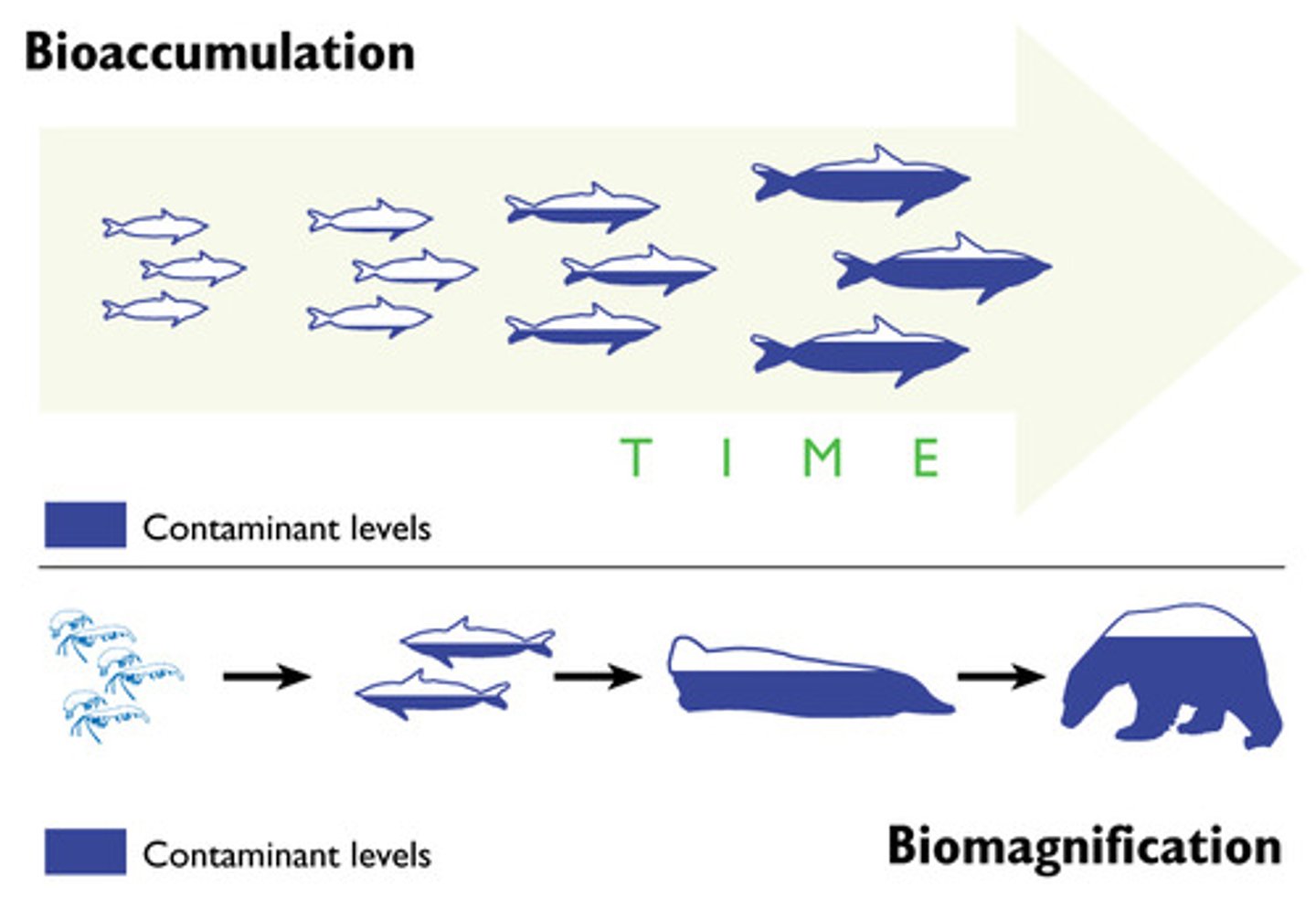
Bioaccumulation
- the process by which toxins or toxicants build up in individual organisms over time
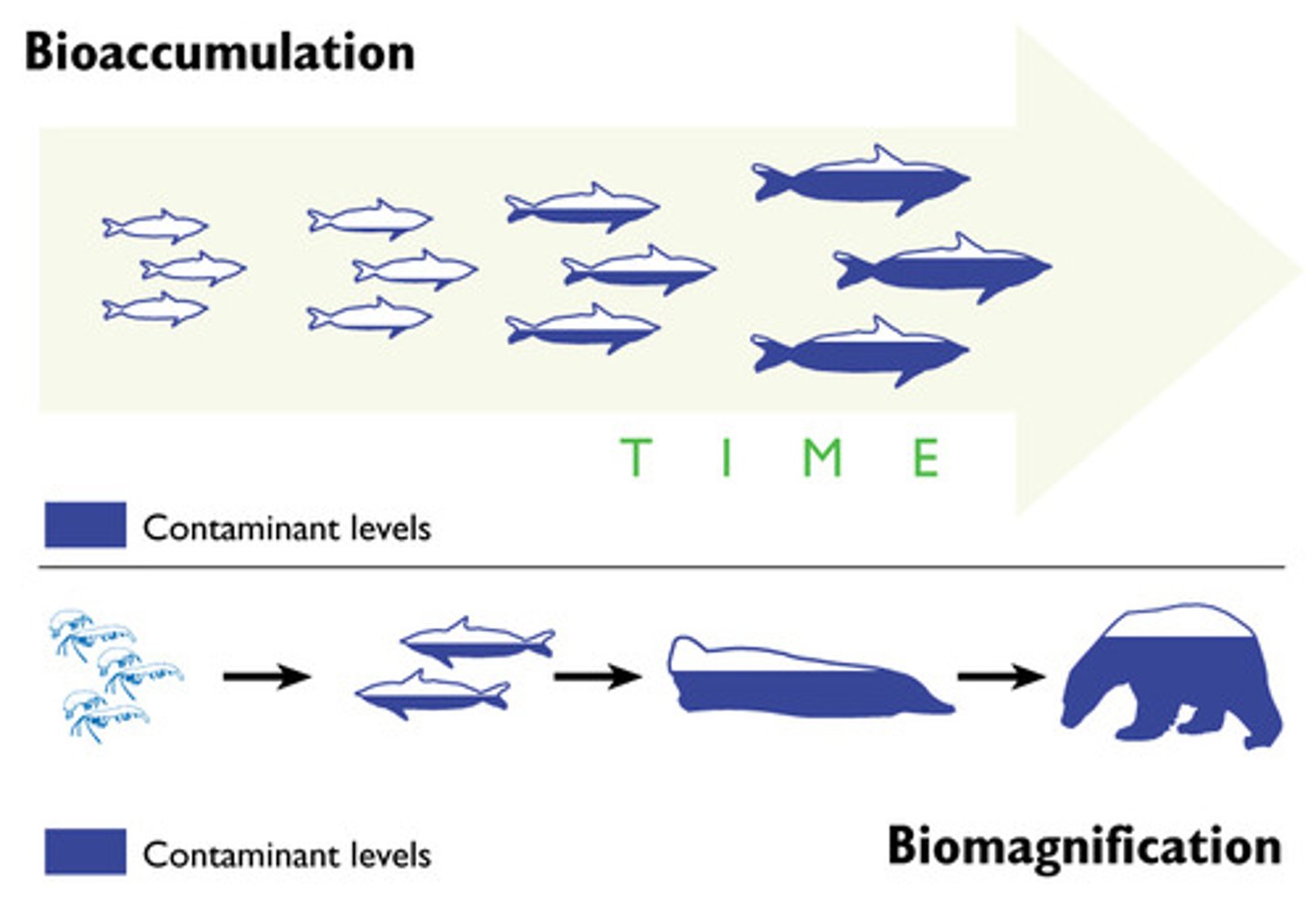
Biomagnification
- the process by which toxins are passed from one trophic level to the next (and thereby increase in concentration) within a food web
Substance Priority List: Agency for Toxic Substances and Disease Registry (ATSDR)
- substance prioritized by: frequency, toxicity, and potential human exposure
Essential Metals with Potential for Toxicity
- cobalt
- copper
- iron
- manganese
- molybdenum
- selenium
- zinc
Major Toxic Metals with Multiple Effects
- arsenic*
- beryllium*
- cadmium*
- chromium*
- lead
- mercury
- nickel*
* known or probable carcinogens
Heavy Metal Exposure among Children vs. Adults
children
- smaller body weight
- consume more food in proportion to their body weight
- receive higher doses of heavy metals that may be present in food
- heavy metals present serious hazards for children (impairment of physical and mental development: damage to internal organs and nervous system, memory impairment, difficulty learning, range of behavioral problems such as hyperactivity syndrome and overt aggressiveness)
- cancer
- mortality
What is Arsenic?
- semi-metal element naturally found in rocks and soil, water, air, and in plants and animals
- usually found as part of a chemical compound:
- inorganic: industry, building products and contaminated water, carcinogen
- organic: less toxic, found in fish and shellfish
- uses: preservative (taxidermy & wood)
- exposure routes: ingestion (meat, poultry, fish, water), inhalation (copper smelting, mining, coal burning), minor-dermal (ex. handling wood products containing arsenic)
Potential Health Effects of Arsenic Exposure
- skin, bladder, kidney, and liver cancer when ingested
- lung cancer when inhaled
- peripheral vascular disease
- cerebrovascular disease
- cardiovascular disease (e.g., hypertensive heart disease)
- diabetes (long-term exposure)
- adverse pregnancy outcomes (spontaneous abortions, stillbirths, preterm births)
Bangladesh & Tube Wells
- in Bangladesh, microbial contamination of surface water (main source of drinking water) caused many diarrheal diseases
- solution: tube wells to tap into clean groundwater (started in 1970s)
- UNICEF with Public Health installed millions of tube wells
Diarrheal diseases to Arsenic Posioning
- using the shallow aquifer substituted one public health risk for another, arsenic (diarrhea for cancer)
- arsenic testing was not required
- millions of people drank from these wells
Arsenic Regulations
- WHO and EPA limit for arsenic is 10 ppb, Bangladesh limit is 50 ppb
- 35% of tested wells were above 50 ppb
- ~61% of the population live in regions with contaminated wells
- ~ 20 million people poisoned by arsenic
Mechanism of Action
- produce oxidants and oxidative DNA damage
- alters DNA methylation status and genomic instability
- impairs DNA damage repair, apoptosis, and enhanced cell proliferation
Arsenicosis
- chronic arsenic poisoning
- effects include changes in skin color, formation of hard patches on the skin, skin cancer, lung cancer, cancer of the kidney and blader, and can lead to gangrene (local death of soft tissues due to loss of blood supply)
Chromium Speciation
- chromium can be in many different forms ranging from Cr0 to Cr6+ (VI)
- most commonly found as Cr(VI) and Cr3+ (III) in the environment
- Cr(III) is essential but Cr(VI) is very toxic
- trivalent chromium = Cr(III): less soluble, less mobile, less toxic
- hexavalent chromium = Cr(VI): highly soluble, highly mobile, very toxic (known carcinogen)
Chromium Exposures
- wood preservatives (CCA)
- refractory bricks
- tanning processes
- manufacturing dyes and pigments
- all contaminate groundwater
Common Jobs with Potential Cr(VI) Exposure
- chrome plating or electroplating
- welding or cutting on stainless steel or grinding on objects painted with chromate paint
- painting: auto body repair, aircraft spray painting
Major Health Effecs of Cr(VI)
respiratory exposure
- lung cancer, nasal septum ulcers or perforations, bronchitis or asthma
dermal contact
- skin ulcers
ingestions
- digestive problems, damage to organs such as the kidney and liver
Mad Hatter's Disease
- alice's adventure in wonderland character the mad hatter was inspired by the phrase "as mad as a hatter"
- hatters were exposed to residual mercury vapor during felt processing
- rabbit or hare skins were treated with a dilute solution of mercuric nitrate
- resulted in confused speech and distorted vision
Neurobehavioral Effects of Mercury
- blindness and deafness
- cerebral palsy and seizures
- abnormal reflexes and muscle tone
- delays in motor development
- visual and auditory deficits
- delayed motor development
The Mercury Cycle - Bioaccumulation + Biomagnification
- cool plants release mercury into the environment
- anaerobic bacteria convert inorganic mercury to methylmercury (methylation)
- methylmercury enters food chain
- fish concentrate methylmercury in their fat
- worst are shark, swordfish, king mackerel, and tilefish
Thimerosal
- an organomercury compound (approximately 49% mercury by weight) used as an antiseptic and antifungal agent
-thimerosal prevents serious adverse effects from pathogenic contamination
- staphylococcus of 1928 killed 12 of 21 children inocculated with a diphtheria vaccine
- DTaP (diphtheria, tetanus, acellular pertussis, vaccination goven to all infants
- a 2008 study found that the half-life of blood mercury after vaccination averages 3.7 days for newborns and infants, much shorter than the 44 days for methylmercury
Toxicity of Lead: "Wrist Drop"
- wrist drop, AKA radial nerve palsy, is a condition where a person can not extend their wrist and it hangs flaccidly
- wrist drop is associated with lead poisoning because of the effect of lead on the radial nerve
Lead Health Effects
with normal cell function and various physiological process:
- peripheral and central nervous systems
- blood cell production
- metabolism of vitamin D and calcium
- kidneys
- reproductive system
probable human carcinogen (classified by US EPA)
Lead Exposure
- lead paint
- lead contaminated toys and jewelry
- lead in candy
- artificial turf
- lead crystals
- tap water from soldered pipes
1982, Warren County, North Carolina
- a hazardous landfill to dispose of polychlorinated biphenyls (PCBs) was to be constructed in a small, low-income, predominantly African-American community
- many frustrated residents protested for 6 weeks about the dangers of PCB contamination in their community and gained national attention
- more than 500 people were arrested
- eventually, PCB waste was disposed of in Warren County, NC
Polychlorinated Biphenyls (PCBs)
- PCBs are a group of chemicals that contain 209 individual compounds with varying harmful effects
- before 1974, PCBs were used in capacitors, transformers, plastcizers, surface coatings, inks, adhesives, pesticide extenders, and carbonless duplicating paper
- PCBs present in the environment tend to bioaccumulate and biomagnify in our food affecting human health
- EPA has classified PCBs as a group B2, probable human carcinogen
- several studies have reported an increase in liver cancer among persons occupationally exposed to some PCB formulations
Environmental Justice
defined by the EPA as:
- the fair treatment and meaningful involvement of all people
regardless of race, color, national origin, or income with respect to the development, implementation, and enforcement of
environmental laws, regulations, and policies. Fair treatment
means that no group of people, including racial, ethnic, or
socioeconomic group should bear a disproportionate share of the negative environmental consequences resulting from industrial, municipal, and commercial operations or the execution of federal, state, local, and tribal programs and policies.
Persistent Organic Pollutants (POPs)
- toxic chemicals that adversely affect human health and the environment around the world
- can be transported by wind and water
- most affect people and wildlife far from where they are used and released
- example POPs: PCBs and DDT
DDT
- widespread use of DDT began during the early 1940s and peaked during the 1960s
- formerly used worldwide to control insects and harmful mosquitoes that carry malaria
- was credited at one time with saving millions of people from death due to malaria
- due to concerns about the possible adverse effects upon the health of humans and wildlife, application of DDT was prohibited in 1972 in the US
- most developed nations banned the use of DDT; however, some countries continue to use DDT
- DDT is concentrated as it moved up the food chain (bioaccumulation and biomagnification)
- scientists discovered that DDT was concentrated in the bald eagle
- DDT affected the eagle's ability to reproduce
- scientists found that the eagle eggs had thin egg shells and broke easily
- nests contained broken, rotten eggs
- the number of young produced per breeding pair was reduced