Exam 4: PEDS-2
 Call Kai
 Learn
Learn Practice Test
 Spaced Repetition
 Match
Match Flashcards
 Knowt Play
1/581

There's no tags or description
Looks like no tags are added yet.
Name | Mastery | Learn | Test | Matching | Spaced | Call with Kai |
|---|
No analytics yet
Send a link to your students to track their progress
582 Terms
What are innocent murmurs?
- result from turbulent blood flow
- not caused by structural heart disease
- no hemodynamic significance
What are the innocent murmurs?
- pulmonary flow murmur
- stills (vibratory) murmur
- venous hum
- patent ductus arteriosus
What is the cause of a pulmonary flow murmur?
turbulent flow through a normal pulmonary valve
When is a pulmonary flow murmur MC?
8 and 14 years of age
What is the location of a pulmonary flow murmur?
mid to upper left sternal border
What is the sound a pulmonary flow murmur makes?
- mid frequency
- crescendo-decrescendo
- systolic
What are the characteristics of a pulmonary flow murmur?
louder when the patient is supine compared to upright
What is the cause of a stills (vibratory) murmur?
possibly turbulent flow in the left ventricle outflow track region
When is a (vibratory) murmur MC?
- 3-6 years of age
- uncommon less than 2 years
What is the location of a (vibratory) murmur?
lower left sternal border
What does a (vibratory) murmur sound like?
musical or vibratory with mid systolic accentuation
What are the characteristics of a (vibratory) murmur?
- louder supine
- may disappear with valsalva
- softer during inspiration
What is the cause of a venous hum?
turbulent flow of systemic venous return in the jugular veins and superior vena cava
When is a venous hum MC?
3-6 years of age
What is the location of a venous hum?
infra and supraclavicular, base of neck
What does a venous hum sound like?
- high frequency
- best heard with diaphragm of stethoscope, during systole and diastole
What are the characteristics of venous hum?
- more prominent on right then left
- can be accentuated or eliminated with head position
- disappear supine or with digital compression of jugular vein
- only heard sitting or standing
What is the cause of patent ductus arteriosus?
turbulent flow as blood is shunted left to right from the aorta to the pulmonary artery
What is the epidemiology of patent ductus arteriosus?
can be innocent in newborns, but abnormal if persists
Where is patent ductus arteriosus located?
???
What does patent ductus arteriosus sound like?
continuous machinery like, louder during systole
What are the noncyanotic congenital heart disorders?
- Atrial septal defect
- Ventricular septal defect
- Patient ductus arteriosus
- Coarctation of the Aorta
- Aortic Stenosis
What re the cyanotic congenital heart disorders?
- Tetralogy of Fallot
- Transposition of the Great Arteries
What are the general symptoms of congenital heart disorders?
- murmur
- fatigue
- wheezing
- pulmonary hypertension
- signs of acute or chronic cyanosis
What is the definition of noncyanotic murmurs, and what is needed to correct them?
- involves movement of the blood from the left to the right - less severe and may present during childhood or even adulthood
- surgery is often needed
What is the definition of cyanotic murmurs, and what is needed to correct them?
- involves movement of blood from the right to the left
- usually more severe and tends to present in infancy or early childhood
- surgery is always required
What is the best initial diagnostic test for congenital heart disorders?
echocardiogram
What is an atrial septal defect (ASD)?
congenital, noncyanotic heart defect where the wall between the left and right atria is incompletely closed
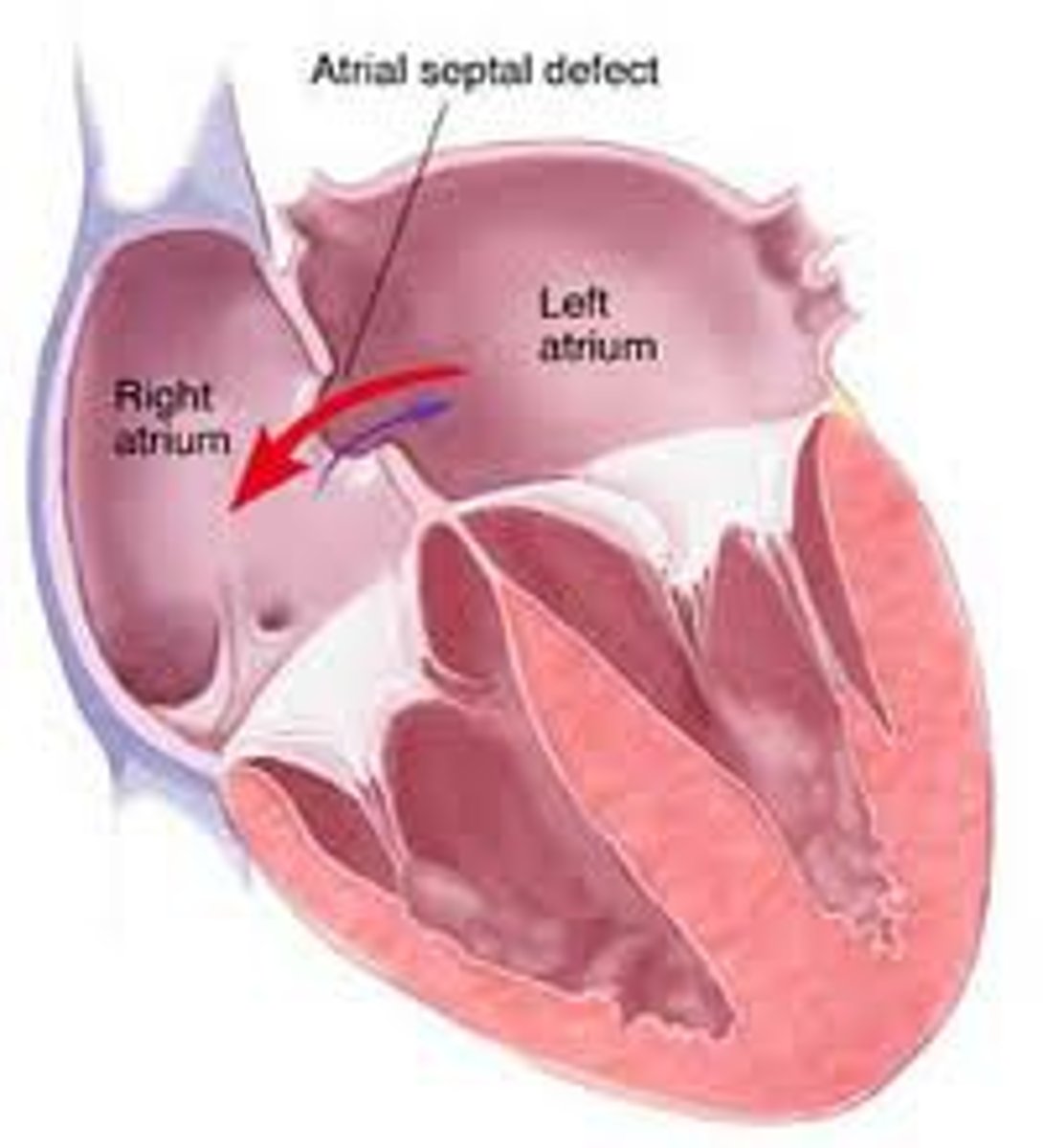
What does the child have a history of with ASD?
- frequent colds/productive cough
- possible known history of a murmur
What are the sxs of an ASD?
systolic murmur heard best around the mid and upper left sternal border with a fixed S2 split
What clinical findings associated with ASD that she REALLY wants us to know?
- fixed S2 split
- incomplete or complete bundle branch block on ECG
What is the best initial diagnostic test for ASD, why?
- Echocardiogram
- to rule out presence of subclinical atrial stenosis
What is the treatment for ASD?
- not necessarily needed, and it based on the presence of symptoms
- closure may be performed percutaneously or via open surgery
What are the three classifications of an ASD?
- Ostium Primum
- Ostium secundum
- Sinus venousus
What is ostium primum, what might it cause, and what disorder is it commonly associated with?
- a defect in lower portion of atrial septum
- a cleft in the anterior mitral valve leaflet may cause mitral regurgitation
- common lesion seen in Down syndrome
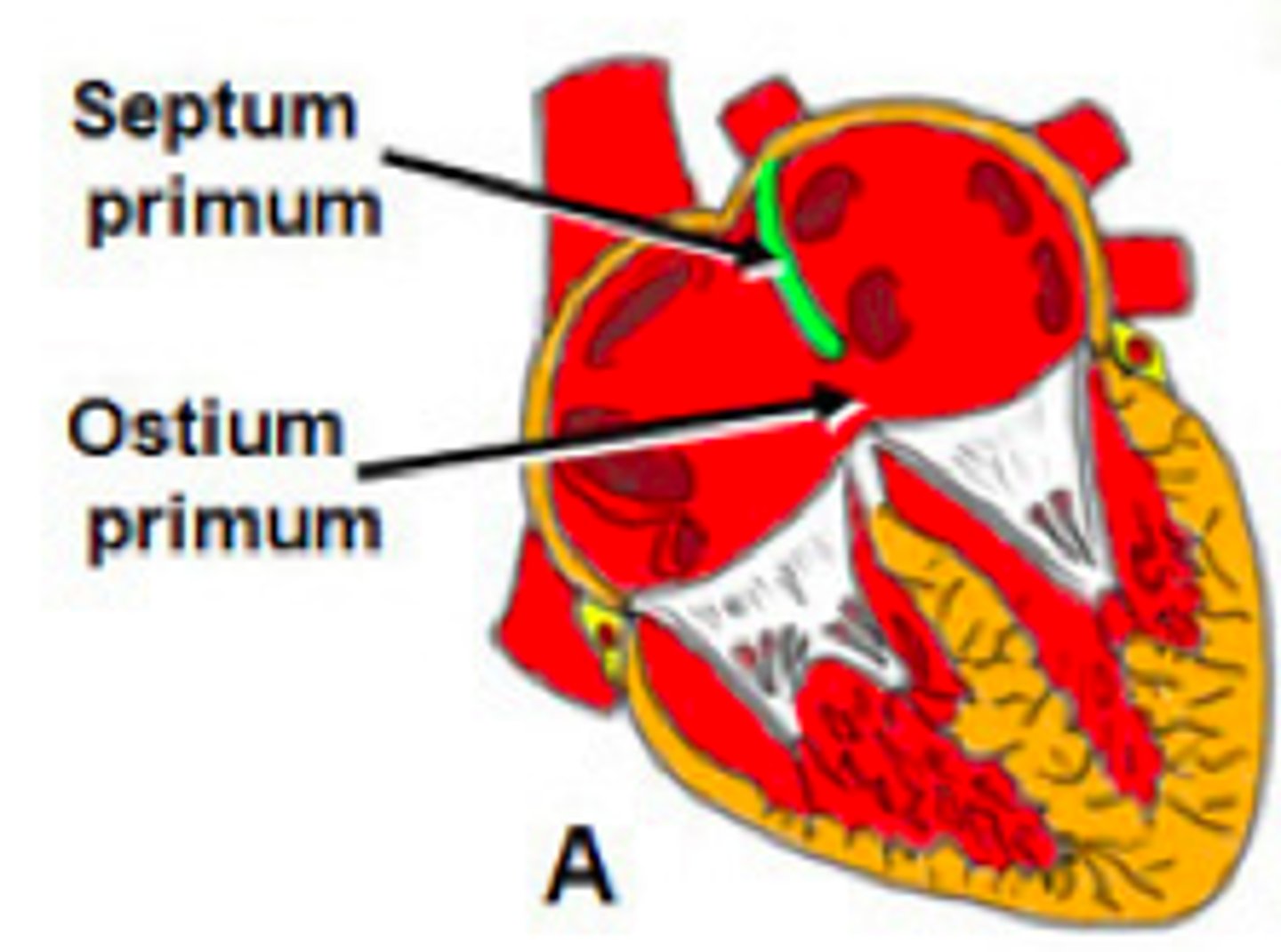
What is ostium secundum?
- a defect in the middle portion of the atrial septal defect
- most common type of ASD
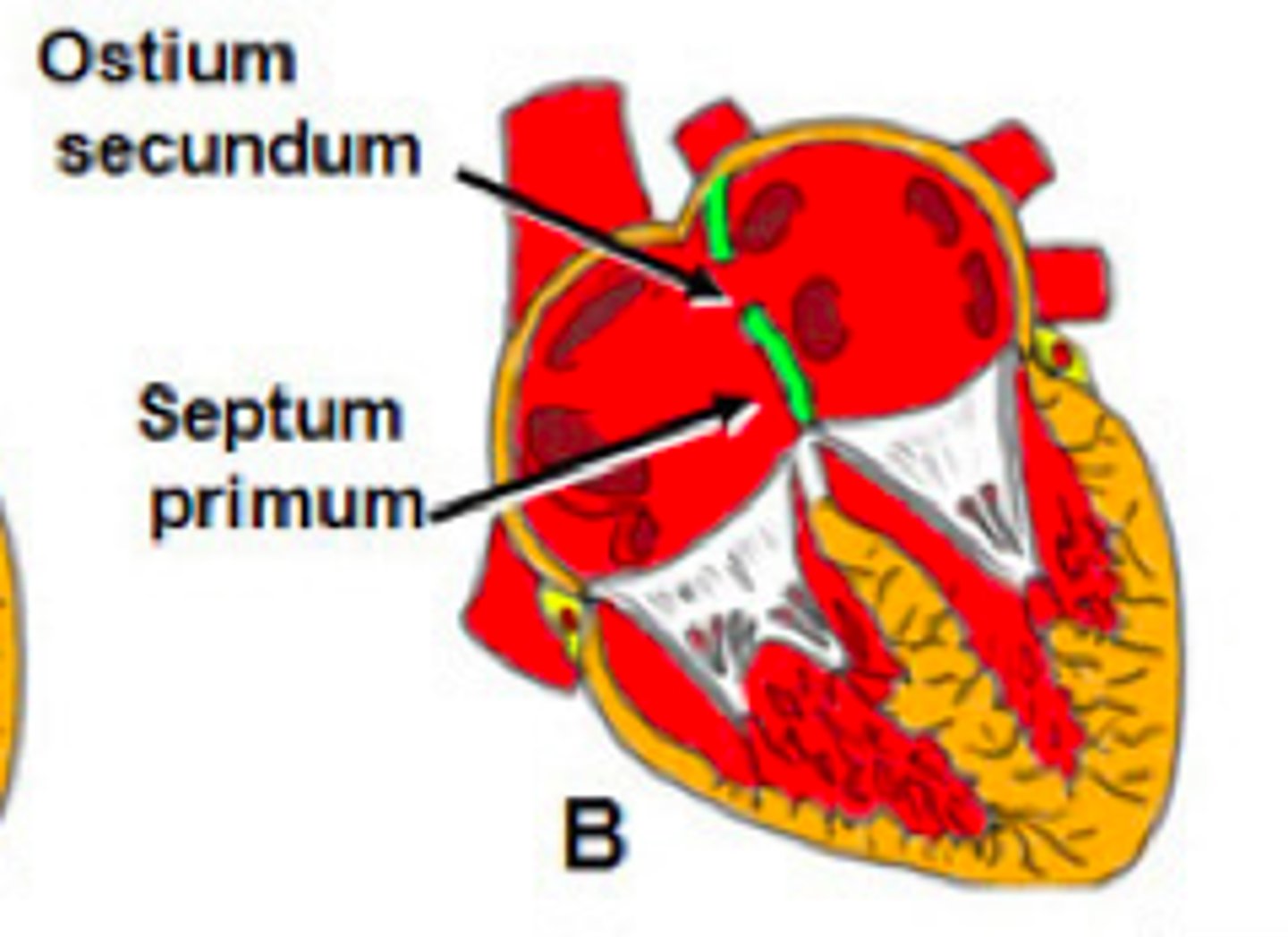
What is sinus venousus?
a defect in the high septum near RA and SVC
When do you refer someone with an atrial septal defect to cardiology?
- all patients should be evaluated by a cardiologist
- If the RA and RV sizes remain normal, serial echocardiography should be performed every 3-5 years
- patients younger than 55 years with cryptogenic stroke when no other source is identified except for a PFO with right-to-left shunting should be considered for PFO closure or medical therapy
- patients with cyanosis and a PFO
What is the most common congenital heart defect?
ventricular septal defect
What is a ventricular septal defect?
a congenital, noncyanotic heart defect where the wall between the left and right ventricle is incompletely closed
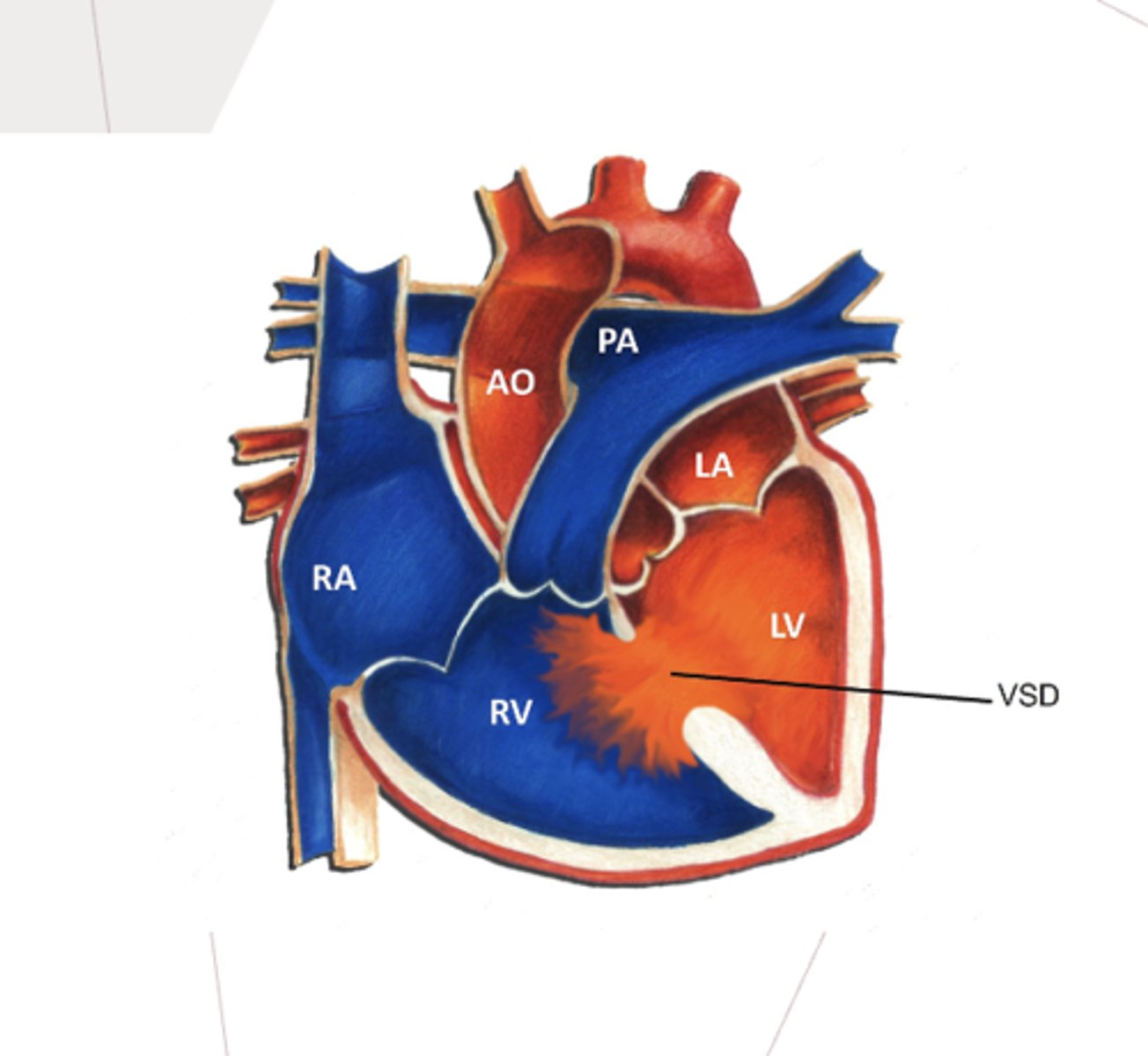
Which septal defect is more severe, ASD or VSD?
ventricular septal defect
How does a ventricular septal defect typically present?
infants with failure to thrive, sweaty, and difficulty feeding
What are the sxs of a VSD?
- systolic murmur heard best around left upper sternal border
- tachypnea
- sweating
What is the best initial test for VSD?
echocardiogram
What is seen on a CXR for a VSD (if a CXR has already been done)?
increased pulmonary marking
What is the treatment for VSD?
surgical closure
What happens to the murmur intensity as the size of the VSD decreases?
increases
What are the characteristics of a small VSD?
- little to no shunt across the VSD, may close spontaneously
- thrill at LLB
- grade 4 holosystolic murmur
What are the characteristics of a moderate VSD?
- may mimic CHF
- holosytolic murmur is usually present and intensity is size dependent
What are the characteristics of a large VSD?
- typically cause CHF signs and symptoms
- systolic murmur is shorter and low-pitch
- mitral filling rumble at the apex
What becomes elevated in moderate and large VSD?
peripheral vascular resistance
What happens if PVR becomes elevated in moderate and large VSD?
- pulmonary HTN
- this is irreversible, even after surgical correction
What is patent ductus arteriosus?
- a congenital, non cyanotic heart defect in which the ductus arteriosus fails to close completely
- oxygenated blood is redirected from the descending aorta to the pulmonary artery
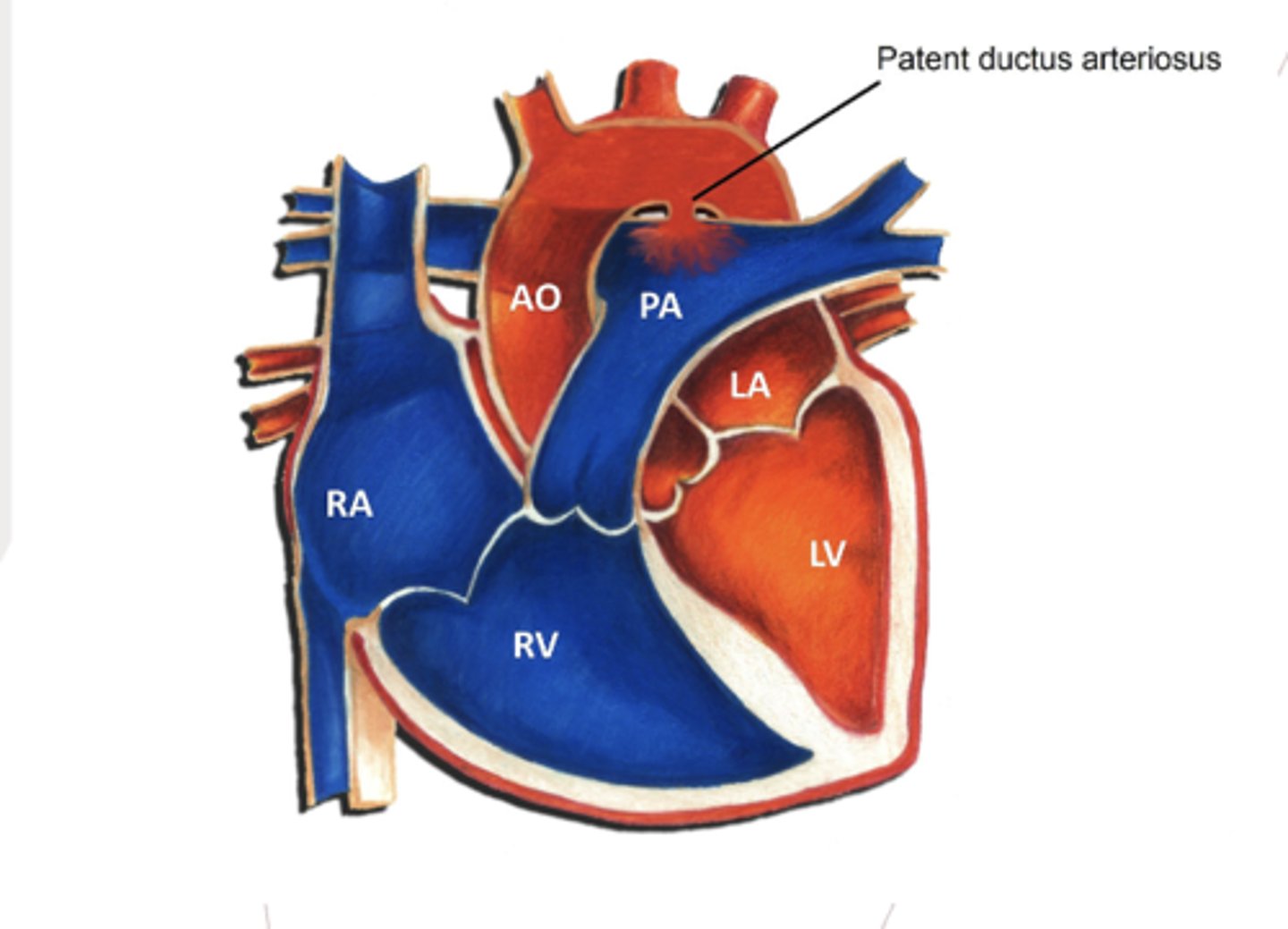
When does patent ductus arteriosus typically present?
in the first few days of life
What are the sxs of patent ductus arteriosus?
- classic, constant "machinery-like" murmur heard during systole and diastolic.
- S2 is hard to hear
What is the best initial test for patent ductus arteriosus?
echocardiogram
What is the treatment for patent ductus arteriosus if the child does not show any signs of congestive HF?
Indomethacin
What is the treatment for patent ductus arteriosus if the child does show signs of congestive HF, and failed to close PDA with indomethacin?
surgical closure
What is coarctation of the aorta?
a congenital, non cyanotic heart defect with narrowing of the aortic arch, just below the origin of the left subclavian artery and typically at, or just proximal to the ductus arteriosus
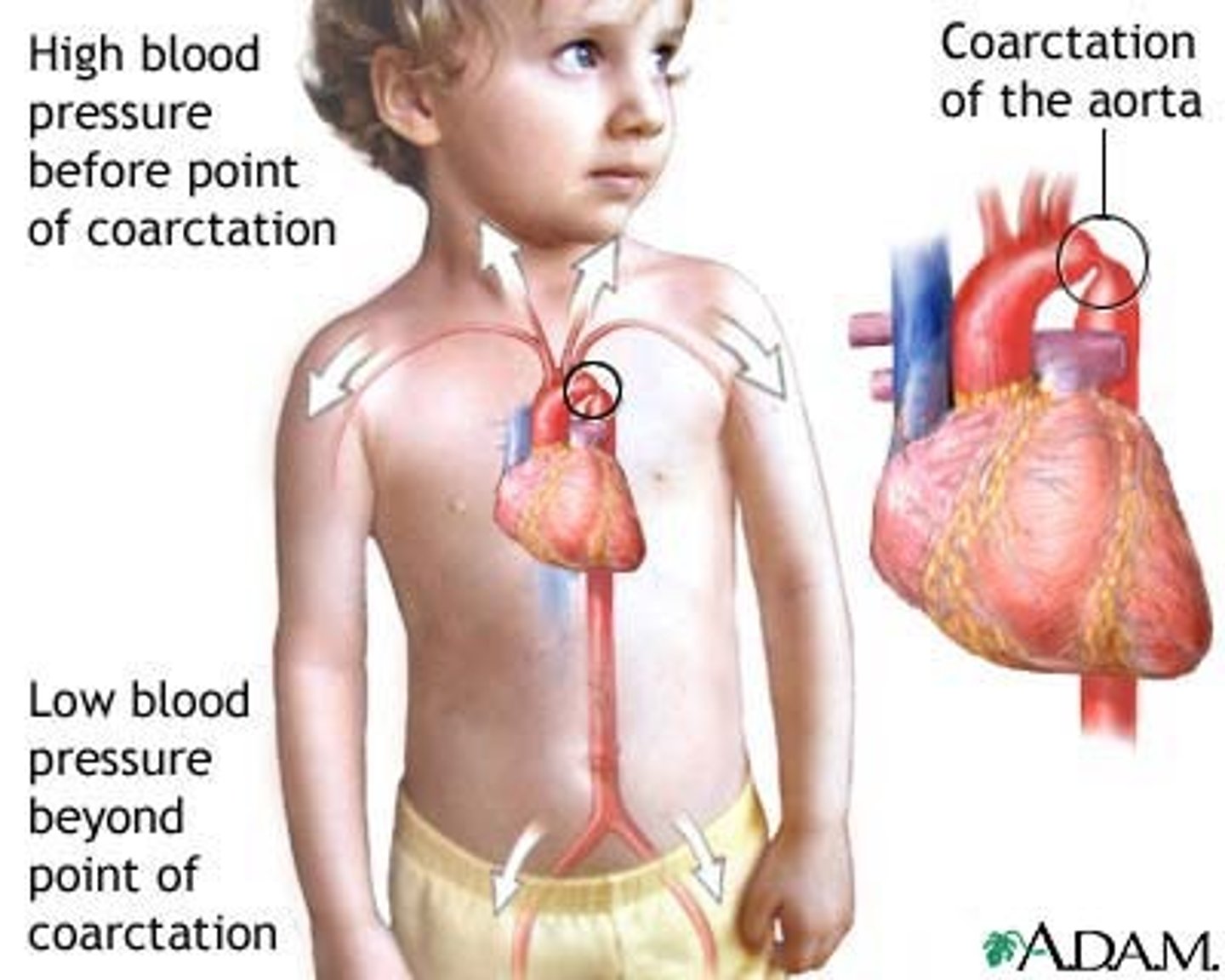
Coarctation of the aorta has a male predominance, but if it is in a female what does it have a high association with?
Turner syndrome (45, XO)
What do infants have a history of with coarctation of the aorta?
- 40 %: neonates: acute LV dysfunction, cardiogenic shock, and lactic acidosis
- 60%: have no symptoms in infancy, and will present with systemic hypertension, claudication, or failure to thrive
What are the sxs of coarctation of the aorta?
- absent or decreased femoral pulses
- a blood pressure gradient between the arms and legs
- bruit of turbulence at the left upper back near the scapula
- blowing systolic murmur in the back or left axilla
What is the initial test for coarctation of the aorta?
Echocardiogram
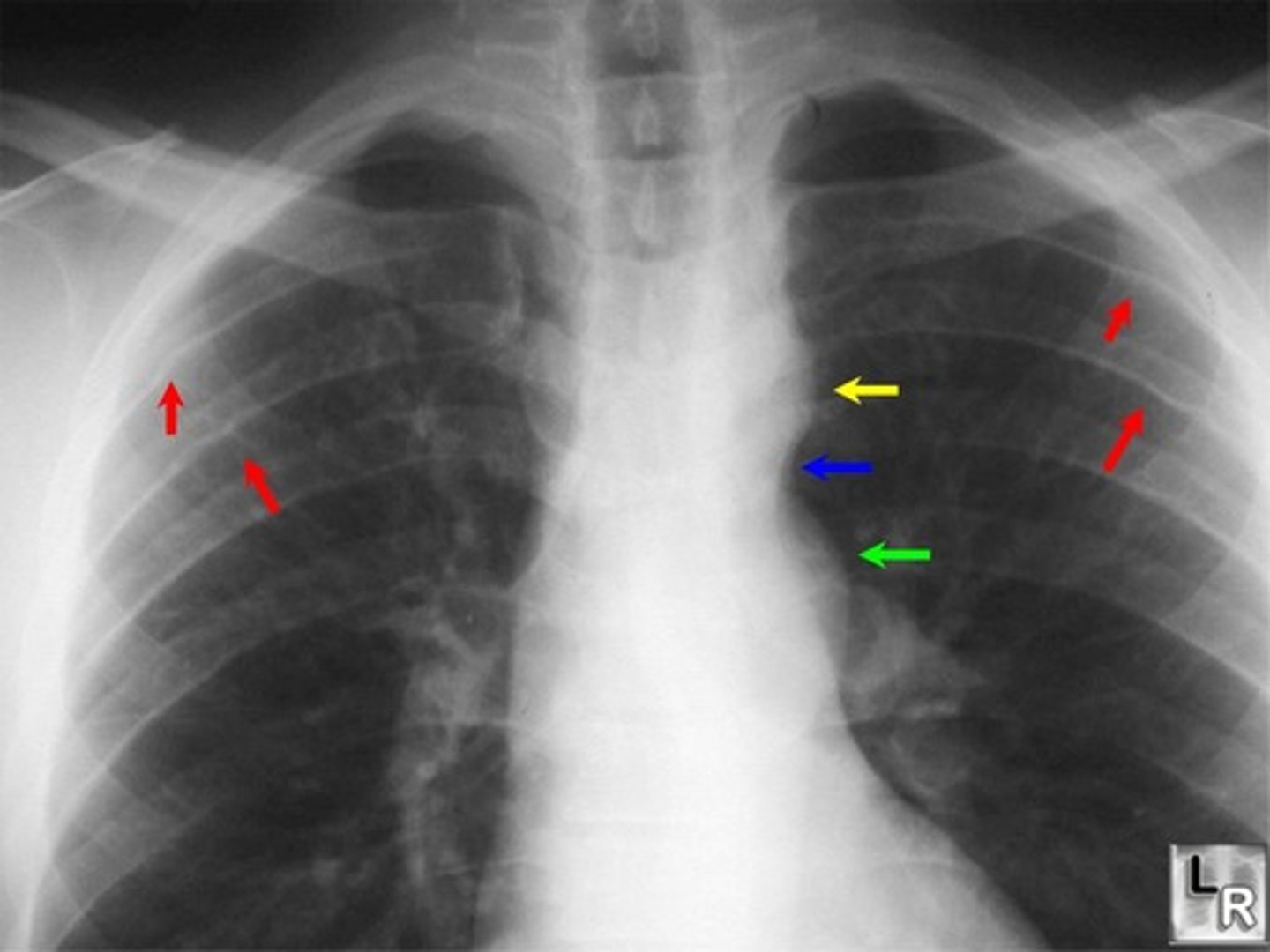
What is seen on CXR for coarctation of the aorta?
- cardiac enlargement
- pulmonary venous congestion
- figure 3 sign
- inferior notching of the ribs
What is the treatment for coarctation of the aorta?
- stabilize with IV prostaglandin E and inotropic medications
- after stabilization --> corrective surgery
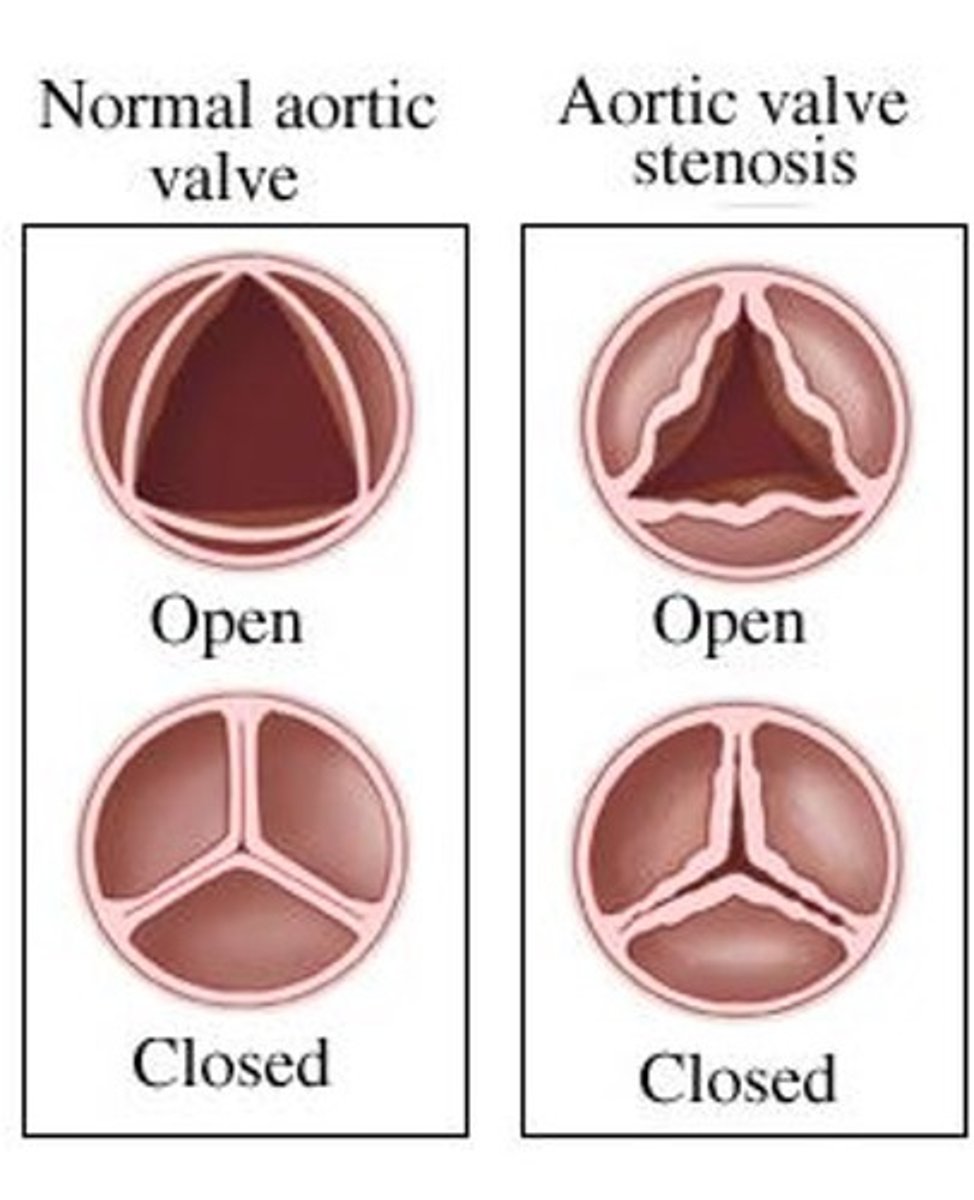
What is aortic stenosis and what does it result in?
- congenital, noncyanotic heart defect with narrowing of the aortic valve
- results in reduced LV output
What is the history of aortic stenosis look like?
- neonate with CHF within first 12 to 24 hours of life
- older children are asymptomatic
What are the sxs of aortic stenosis?
- harsh systolic ejection murmur appreciated best at right sternal border with radiation to the neck
- thrill in suprasternal notch and carotid arteries
- systolic click at the apex
What is the best initial test for aortic stenosis?
echocardiogram
What is seen on CXR for aortic stenosis?
dilatation of the ascending aorta
What is the treatment for aortic stenosis?
PGE1 with critical aortic stenosis until surgical repair can be done
What is the initial management/gold standard for aortic stenosis?
balloon valvuloplasty
What are the 4 components of tetralogy of fallot?
1. VSD
2. Overriding aorta
3. Right ventricular hypertrophy
4. Pulmonary stenosis
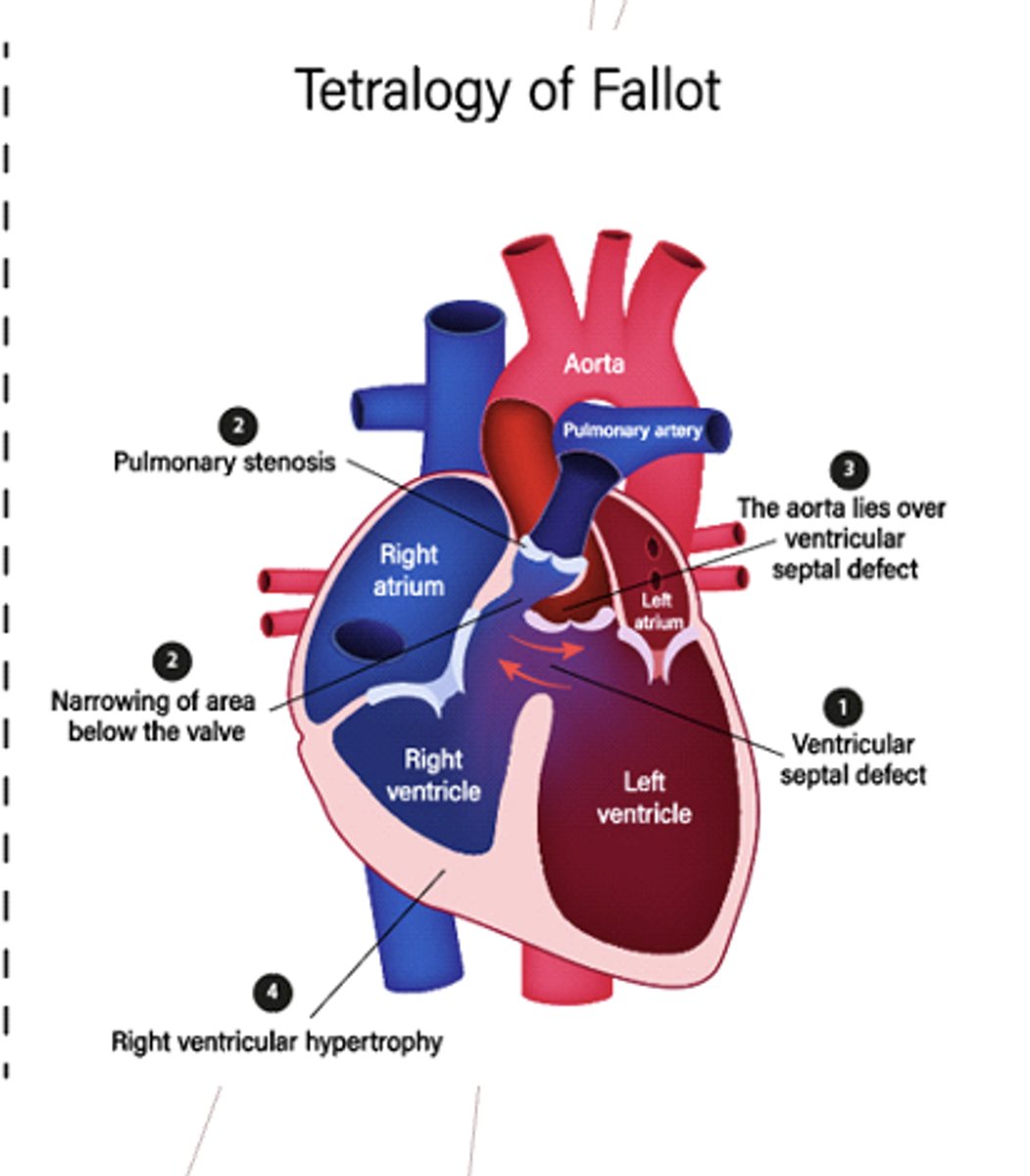
What is an overriding aorta?
aorta overrides into RV instead of LV
What is tetralogy of fallot?
- a congenital, cyanotic heart defect involving a VSD and an overriding aorta
- results in pulmonary stenosis and right ventricular hypertrophy.
- most common cause of central cyanosis
How does a child often present with tetralogy of fallot?
- 3-6 years old
- "tet" spells when the patient becomes cyanotic and dizzy
- symptoms are relived by squatting
What are the sxs of tetralogy of fallot?
- signs of chronic cyanosis (clubbing of fingers)
- low height percentile
- failure to thrive
- systolic murmur best heard at the left third interspace
What is the best inital test for tetralogy of fallot?
echocardiogram
What is seen on ECG with tetralogy of fallot?
possible RVH
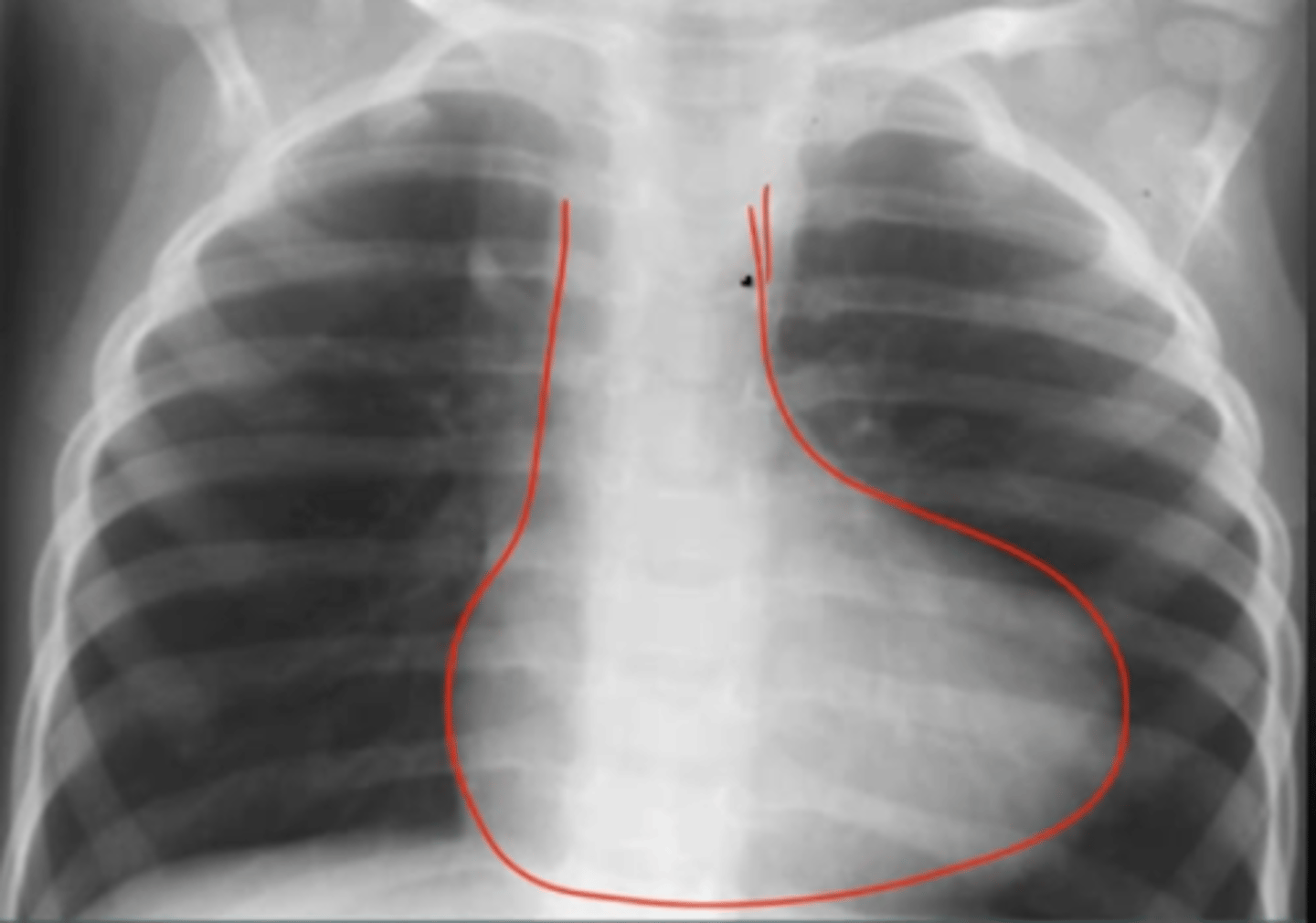
What is seen on a CXR with tetralogy of fallot?
"boot shape"
What is the treatment for tetralogy of fallot?
initially place in knee to chest then get prompt surgical repair
What is transposition of the great arteries?
a congenital, cyanotic heart defect where the aorta communicates with the right ventricle, and the pulmonary artery communicates with the left ventricle
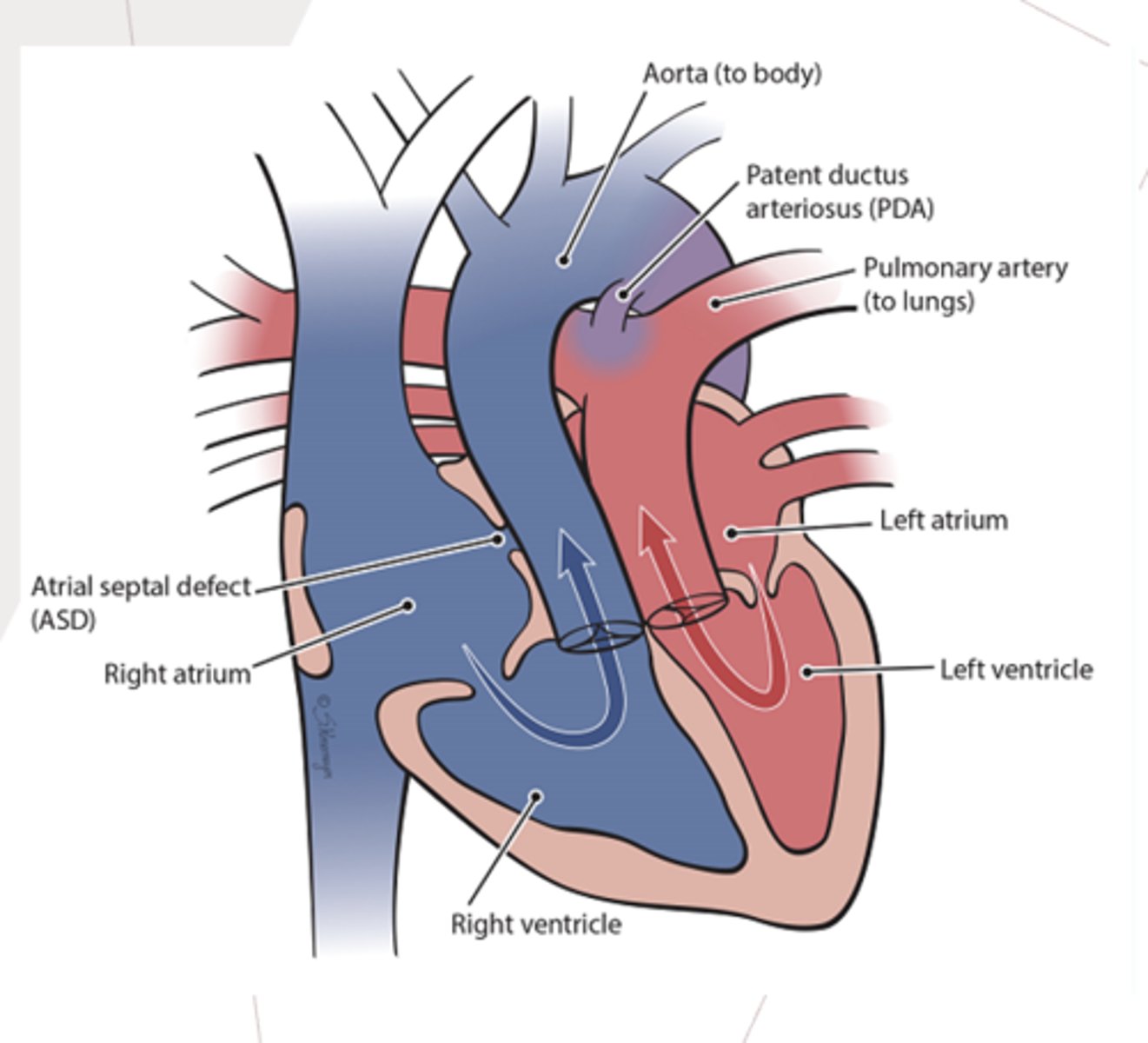
What does a child present as with transposition of the great arteries?
- presents within the first 48 hours of life
- very sick very cyanotic
What are the sxs of transposition of the great arteries?
- progressively worsening acute cyanosis
- pale, progressive pulmonary edema
- tachypnea
- tachycardia
- loud S2 (single S2)
What is the best initial test for transposition of the great arteries?
echocardiogram
What is the treatment for transposition of the great arteries?
the best initial management is prostaglandin E1 and then corrective surgery ASAP
What is hypoplastic left heart syndrome?
Underdevelopment of the left side of the heart, resulting in a hypoplastic left ventricle and aortic atresia
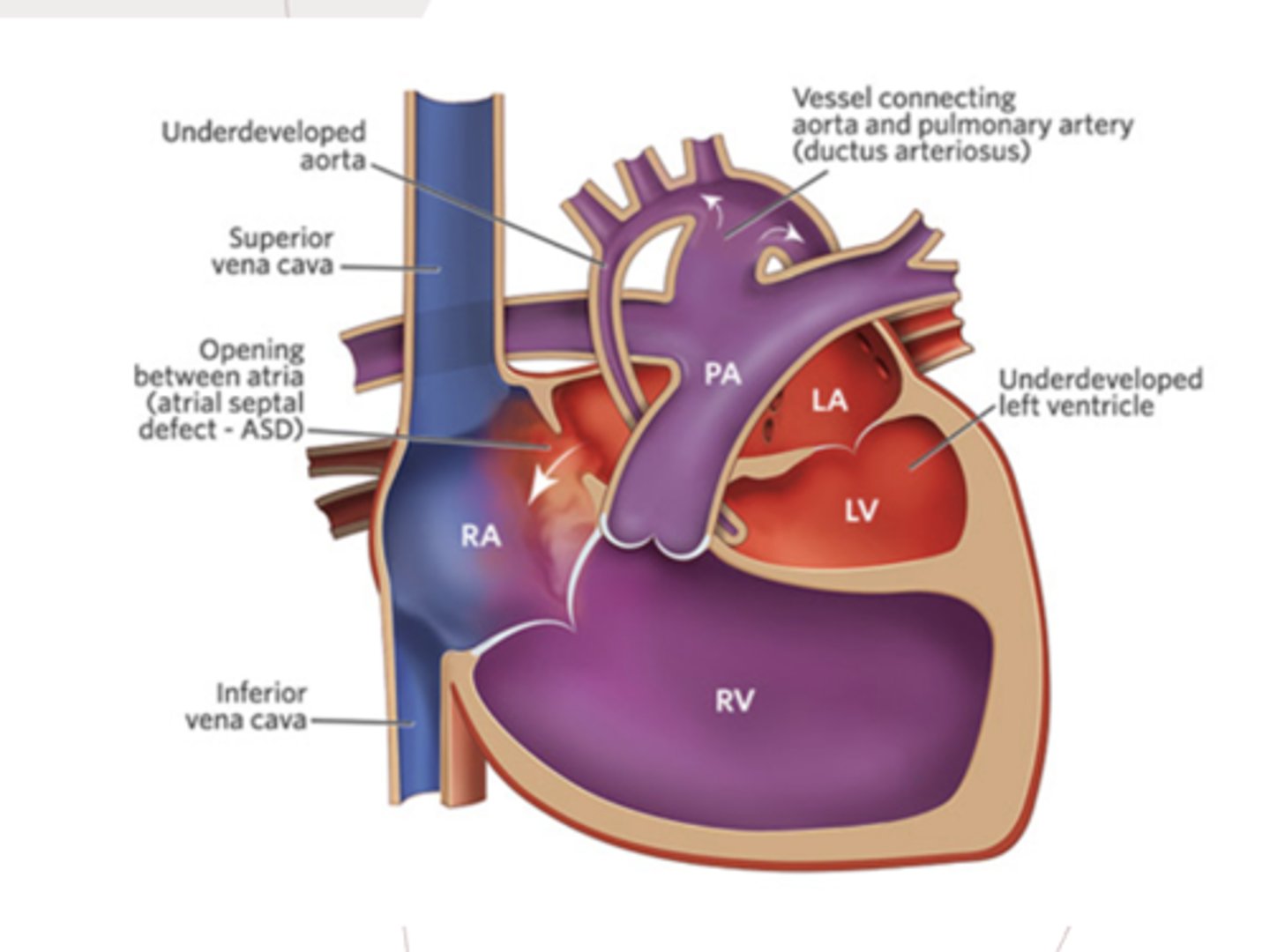
What is hypoplastic left heart syndrome caused by?
obstruction of either inflow to or outflow from the LV
What is the history of a child with hypoplastic left heart syndrome?
- neonate initially stable (has PDA) but rapidly decline once ductus closes
- death is common in 1st week of life
What are the sxs of hypoplastic left heart syndrome?
- pulses may be normal to absent
- single S2 of increasing intensity
- gallop at apex
- skin may be gray or pale
What is the initial diagnostic for hypoplastic left heart syndrome?
echocardiogram
What is seen on ECG for hypoplastic left heart syndrome?
right axis deviation
What does a CXR show for hypoplastic left heart syndrome?
cardiac enlargement with severe pulmonary venous congestion
What is the treatment for hypoplastic left heart syndrome?
- initiate PGE1 and avoid supplemental O2
- Surgery in a three-stage approach
- heart transplant
What is the 3-step surgery for hypoplastic left heart syndrome?
- Norwood procedure
- Glenn procedure
- Fontan procedure
What is the Norwood procedure?
- the pulmonary trunk is used to reconstruct the hypoplastic aorta, and the right ventricle subsequently becomes the functional left ventricle
- pulmonary arteries are left connected but separated from the heart
- : The procedure includes amalgamation of the aorta and pulmonary artery with placement of an aortopulmonary shunt (shown here) or right ventricle to pulmonary artery conduit.
What is the Glen procedure?
the superior vena cava is connected to the right pulmonary artery, restoring partial venous return to the lungs
What is the Fontan procedure?
the inferior vena cava is anastomosed to the pulmonary arteries, resulting in complete venous diversion from the systemic circulation to the lungs
When is a heart transplant indicated for hypoplastic left heart syndrome?
- if organ is available
after the previous palliative surgeries have provided maximal but insufficient benefit
What is Kawasaki disease?
an acute febrile vasculitis of childhood of unknown origin involving multiple organs