20. Types and indications of hearing aids. Cochlear implantation
 Call Kai
 Learn
Learn Practice Test
 Spaced Repetition
 Match
Match Flashcards
 Knowt Play
1/17

There's no tags or description
Looks like no tags are added yet.
Name | Mastery | Learn | Test | Matching | Spaced | Call with Kai |
|---|
No analytics yet
Send a link to your students to track their progress
18 Terms
What are the principles of hearing aids
amplify sound
conductive HL- better treated with surgery
significant HL- better treated with cochlear implantation
What are the indications
Hypoacusis → partial or total inability to hear
When there is no satisfactory medical/surgical treatment
When patient prefers it over surgical treatment
When speech audiometry of < 80% corrected responses at 65 dB SPL
What are the components of hearing aids
microphone
amplifier
speaker
energy source
signal processing can be analog or digital
What factors do the choice of hearing aids depend on
severity of hearing impairment
cause of hearing impairment
anatomical variability of auditory canal
physical and mental skills of patient
financial status
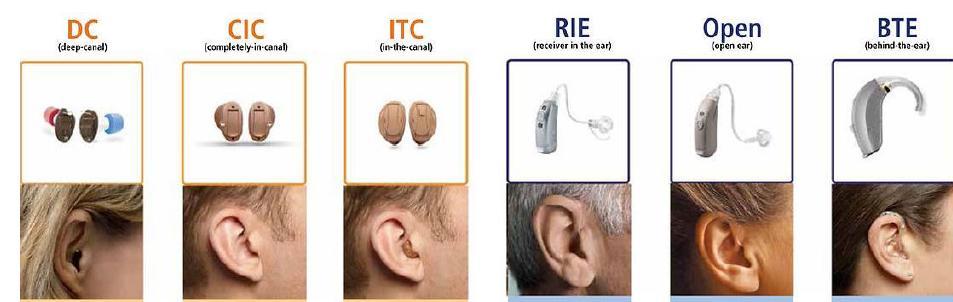
What are the types of hearing aids
behind the ear- BTE
In the ear- ITE
in the canal- ITC
completely in canal- CIC
Bone anchored hearing aids- BAHA
Contralateral routing of signals- CROS
body worn
open fit
Describe BTE hearing aids
mild to severe hearing loss
widespread use
becoming less used due to newer ITE
only type that can be used for small children
describe ITE hearing aids
mild to severe hearing loss
placed in concha
describe ITC hearing aids
from mild to severe HL
placed deeper within ear canal
sound localisation is better
noise created by wind is smaller
cosmetically better
can cause accumulation of ear wax
not suitable in ear discharge
Describe CIC hearing aids
placed deeply in ear canal
only available for mid- moderate hearing loss- amplification limited
most cosmetic- completely unseen
no wind noise
small battery requires removal with special tools
describe BAHA hearing aids
attached to the skull
surgically implanted hearing aids based on bone conduction
used in CHL and mixed hearing loss who cannot wear conventional hearing aids
has titanium implant, abutament and sound processor
sound processor transmits vibrations through external abutment to titanium implant then directly to cochlea
Describe CROS hearing aids
for unilateral hearing loss
mostly replaced by wireless systems- eg BAHA
takes sound from ear with poorer hearing and transmits it to ear with better hearing
Describe body worn hearing aid
completely outdated, bad sound localisation, wind noise
microphone and amplifier within a box worn around neck or in pocjet
amplified sound through cord into speaker within auditory canal
describe open fit hearing aid
placed in case behin d the ear and connected via tube and a soft tip to ear canal
smaller than standard BTW- almost invisible
advantageous in higher frequency hearing loss with normal low frequency hearing
high frequency sounds are amplified or enhanced better
What are cochlear implants
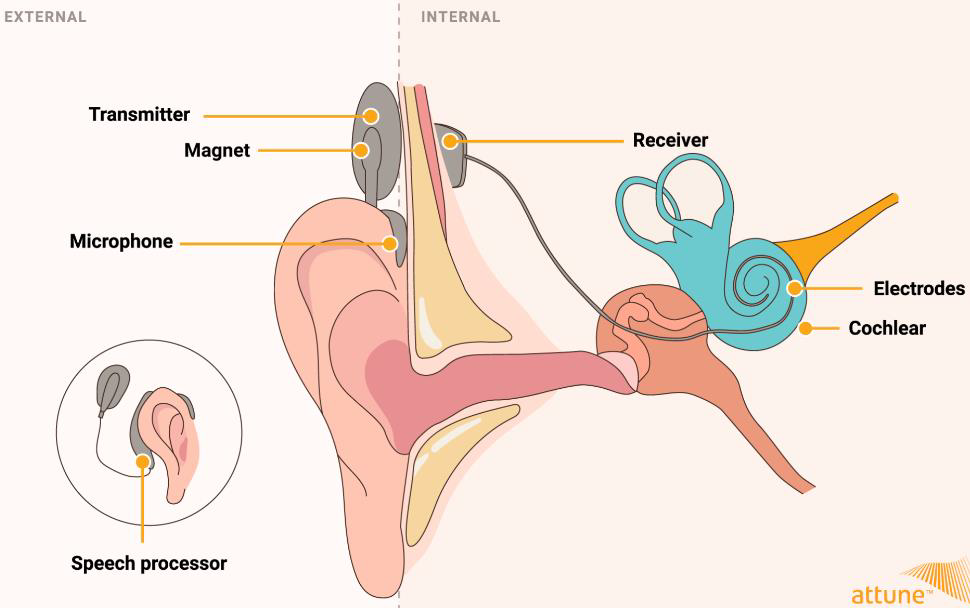
subcutaneously implanted device that transforms sound waves into electrical impulses that directly stimulate the vestibulocochlear nerve with intracochlear electrodes
in children- best results are obtained when implantation is before 1 year due to early brain plasticity
requires functional auditory nerve
What are the indications for cochlear implants
hearing loss that cannot be treated with hearing aids
patients with complete or almost complete deafness due to absence of cochlear function → usually SNHL caused by no or few hair cells
how does a cochlear implant work
microphone worn in ear receives sound and transmits it to speech processor worn on skull → transforms acoustic signal to electrical
transmitting coil behind ear transmits the electrical impulses as radio frequencies through the skin to implanted cochlear receiver that stimulates auditory nerve
What are implantable hearing aids
Bone anchored hearing aid
middle ear implants
Describe middle ear implants
implanted to one of the small bones in middl ear
used in patients with CHL, SNHL, mixed hearing loss
amplifier implanted under skin→ sound waves into electrical impulses
converted into mechanical vibrations in transducer
vibrations are transmitted directly to ossicles or cranial bone