Peers dev psych
 Call Kai
 Learn
Learn Practice Test
 Spaced Repetition
 Match
Match Flashcards
 Knowt Play
1/21

There's no tags or description
Looks like no tags are added yet.
Name | Mastery | Learn | Test | Matching | Spaced | Call with Kai |
|---|
No analytics yet
Send a link to your students to track their progress
22 Terms
play
activities that children engage in for inherent enjoyment
Benefits
Learning and practicing empathy
Fostering cognitive and language development
Enhancing motor development and skills
Promoting emotion regulation and increasing positive emotions
Individual Differences: The Development of Social Play
Parten’s classification of children’s social play remains an important frame for understanding the development of play across early childhood
Non-social types of play
Unoccupied play
Onlooker play
Solitary play
Social types of play
Parallel play
Associative play
Cooperative play
Non-social play
Unoccupied play (0-3 months) —> Solitary play 3+ months
seemingly random body movements, erratic kicks, and sensory observation of surroundings. Though it may not look like traditional play, it is how infants learn about their bodies and the world
Non-social play continued
Onlooker Play (2.5 - 3.5 years)
where a child watches others play but does not join in
social play
Parallel Play (18 months - 2 years)
individuals engage in separate activities alongside one another without direct interaction
Associative Play (~3-4 years)
where children play together, share toys, and converse, but lack organized rules or assigned roles
Cooperative play 3-4 years+
Children actively collaborate toward a shared goal or participate in an organized activity with defined roles and rules
Friendships
Peers
People of approximately the same age and status
Friends
Peers with whom individuals have intimate, reciprocated, and positive relationships
Children's Choice of Friends
Determinants of friendship
▪ Sociable, similarity of interest and behavior and age
▪ Similar level of cognitive maturity, academic motivations, and school activities
▪ Similar levels of distress and negative emotions
▪ Proximity (important for young children; less for older)
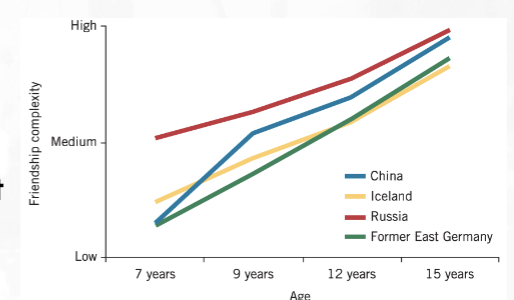
Change in Complexity of Friendship Descriptions Across Childhood
From age 9 on, across four different countries, the complexity of children’s friendship descriptions increased at the same rate, and all were nearly equal in their high ratings of complexity by age 15
How are friendships expressed?
▪ 12–18 months: touching, smiling, engaging in positive interactions
▪ 24 months: Imitating, cooperative problem solving, trading roles during play
▪ By 3–4 years: Make and maintain friends, find a “best friend”, same-gender play preferences
▪ By 5 years: Communicate, cooperate, and work together more effectively, fight and negotiate
▪ By 6–8 years: Define friendship based on actual peer activities
▪ By 9 years: Take care of friends’ physical and material needs, general assistance and help
▪ Adolescence: Important source of intimacy and self-disclosure, honest feedback, less stable
The Role of Technology in Friendships
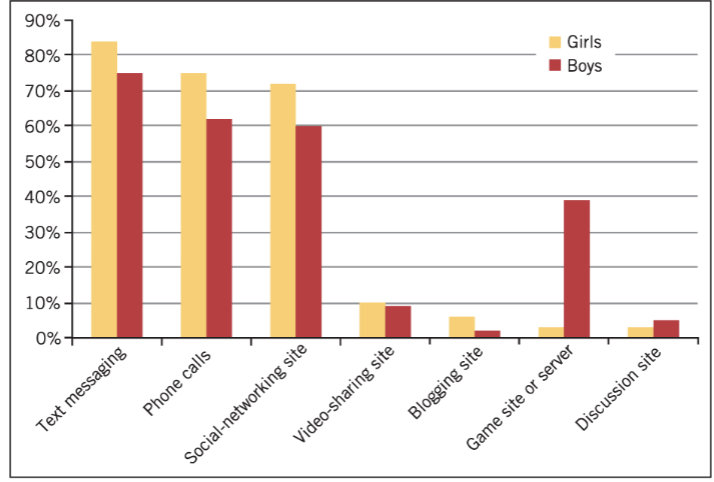
Online social media, instant messaging, and texting important in peer interactions
Creation and maintenance of electronic communication facilitates
Greater anonymity
Less emphasis on physical appearance
More control over interactions
Finding similar peers
24/7 access, and it’s fun
Perspectives on use of technology
Rich-get-richer hypothesis: Internet beneficial to those who already are proficient using Internet skills
Social-compensation hypothesis: online communications benefits over face-to-face communication for lonely and socially anxious youths. (This is complicated)
In contrast: high levels of Internet use primarily for entertainment or for communication with strangers can harm the quality of friendships and predicts increases in anxiety and depression
Effects of Friendships on Psychological Functioning and Behavior
Support and validation
Provide support and validation when a child feels lonely, during difficult periods of transition that involve peers
Serve as a buffer against stress or unpleasant experiences when children feel victimized
Help develop social skills and positive relationships with other people
Social and cognitive skill development
Help develop social skills and positive relationships with other people, cooperation, negotiation skills
Understanding of emotional states, enhances self-esteem, less psychopathology
Understanding peer norms, as through gossip
Promotes cognitive skills and creative task performance
Leads to positive social outcomes in later years, including adulthood
The possible costs of friendships
Aggression and disruptiveness
Alcohol and substance abuse
Bullying and victimization
Gender differences in the functions of friendships
Girls desire closeness and dependency
Worry about abandonment, loneliness
Get more upset than boys do when a friend betrays
More likely than are boys to co-ruminate
Girls and boys are less likely to differ
In amount of conflict they experience in their best friendships
In terms of recreational opportunities provided
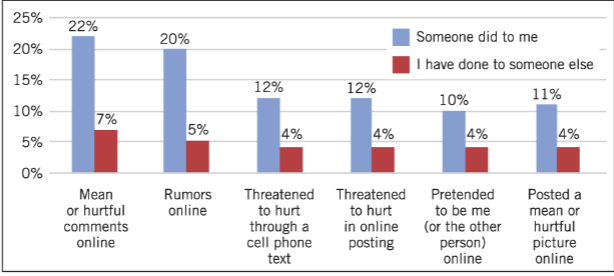
Bullying Prevalence
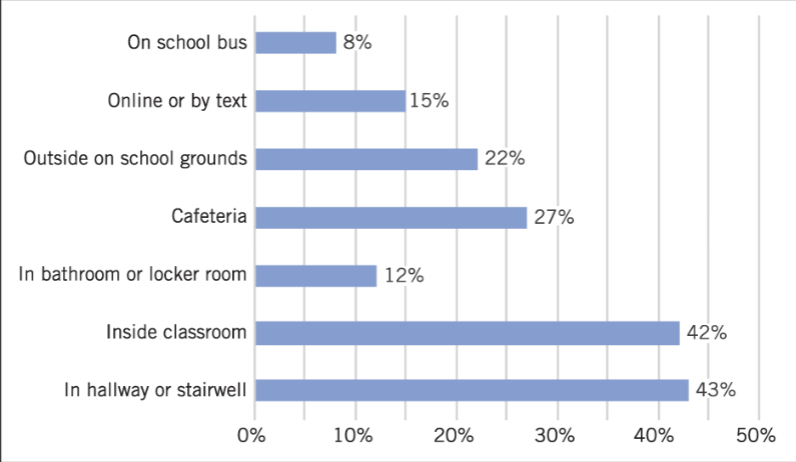
A Closer Look: Cyberbullying
Cyberbullying is the repeated and intentional harassment or mistreatment of someone through digital devices such as cell phones, computers, and tablets
Who is bullied?
15% of high school students; girls twice as likely as boys
Likely high in social anxiety, psychological distress, depression symptoms
Rates highest in 9th grade
Gay, lesbian, and bisexual students twice as likely as heterosexual students
Who bullies?
12% teens; risk factors include belief that aggression is an acceptable problem solving tool; classroom environment that accepts bullying
Measurement of Peer Status
Sociometric status measures peer acceptance.
A measurement that reflects the degree to which children are liked or disliked by their peers as a group
Classifies children into one of five groups
Popular
Rejected
Neglected
Average
Controversial
Characteristics Associated with Sociometric Status
Popular children
▪ Rated accepted and impactful by peers; high status in group
▪ Perceived as socially skilled; cooperative, friendly, sociable, helpful, sensitive to others
▪ Generally possess more emotional and behavioral strengths
Not necessarily most likable in peer group, but
▪ Athletic ability, prestige, physical attractiveness, wealth
▪ Above average in aggression
Rejected children
▪ Children or adolescents liked by few peers and disliked by many peers
▪ Difficulty finding constructive solutions to difficult social situations
▪ Anxious, depressed, lower rated in behavioral competence by teachers
▪ Perhaps have a less developed theory of mind
▪ Rejected children can be Overly aggressive and Withdrawn
Aggressive-rejected children
▪ Especially prone to physical aggression, disruptive behavior, delinquency, and negative behavior (hostility, threatening others)
▪ Socially withdrawn, wary, and often timid
▪ Complex bidirectional relations (adjustment, social competencies, and peer acceptance)
Withdrawn-rejected children
▪ Socially withdrawn, wary, timid, and socially anxious
▪ Timid, and socially anxious, victimized by peers, and many feel isolated, lonely, and depressed
Characteristics Associated with Sociometric Status (part 4)
Neglected children
▪ Withdrawn with peers but are relatively socially competent
▪ Less sociable and less disruptive than average children; avoid aggression
▪ Rated by teachers as being as socially competent as popular children
Controversial children
▪ Liked by quite a few peers, and disliked by quite a few others
▪ Characteristics of both popular and unpopular children
▪ Tend to be cooperative, sociable, good at sports, and humorous; group leaders
Cross-Cultural Similarities and Differences in Factors Related to Peer Status
In several countries
▪ Socially rejected children are aggressive and disruptive.
▪ Popular children are prosocial and have leadership skills.
▪ Withdrawn children are rejected by peers.
Shy Chinese children are different from shy Western children.
▪ Western cultures encourage independence and self-assertion.
▪ Rural areas have a similar impact
The Role of Parents in Children’s Peer Relationships
Parents influence peer relationships.
▪ Directly through monitoring and coaching
▪ Indirectly through their interactions with their children
▪ Early parent–child interactions linked to children’s peer interactions at an older age
A Closer Look: Parents’ Strategies for Shaping Peer Relationships
The roles of parents
Monitoring
Young children: orchestrating and monitoring their children’s interactions with peers
Elementary school children: allow engagement in social and extracurricular activities
Adolescence: knowing where and with whom child is with
Coaching
Teaching children group-oriented strategies for gaining entry into a group of peers; making suggestions about what to say when entering the group; emotional coaching
Quality on Ongoing Parent–Child Interactions and Peer Relationships
Warm, harmonious family style is linked to socially skilled children who are likeable and cooperative.
Harsh parenting (authoritarian) is linked to unpopular children and being victimized.
Positive relationships with parents can buffer children against negative effects of peer relationships
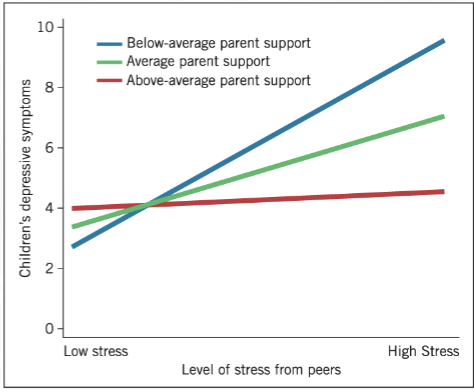
Peer Stress, Parent Support, and Children’s Depressive Symptoms
When children have high peer stress and low parent support, they experience high levels of depressive symptoms.
In contrast, if they have supportive parents, children have the same level of depressive symptoms regardless of the amount of stress from their peers
Summary
Children’s play becomes more interactive as they age
Children express and understand friendships in more complex ways as they age
You can measure sociometric status as a way to understand friendships and social status within friendship groups
Parents, and attachments play a role in setting up expectations around friendships, and in shaping peer relationships for youth