FINAL REVIEW: CELLS STRUCTURES AND FUNCTIONS
 Call Kai
 Learn
Learn Practice Test
 Spaced Repetition
 Match
Match Flashcards
 Knowt Play
1/16

There's no tags or description
Looks like no tags are added yet.
Name | Mastery | Learn | Test | Matching | Spaced | Call with Kai |
|---|
No analytics yet
Send a link to your students to track their progress
17 Terms
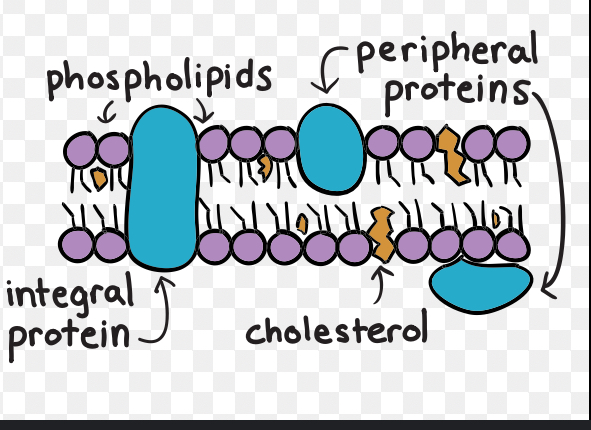
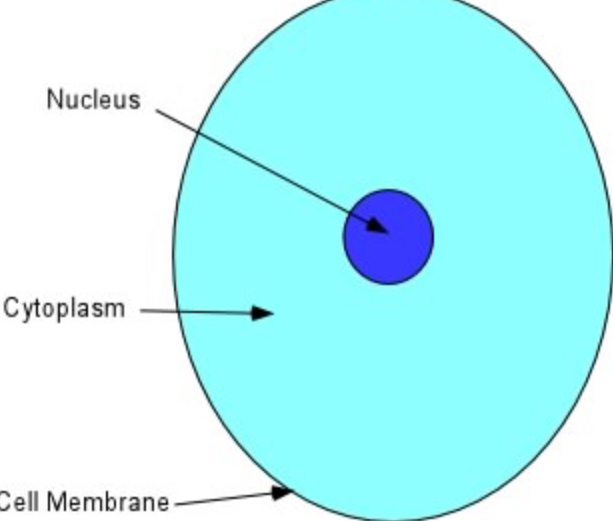
Cell Membrane
Structure: Lipid bilayer with embedded proteins Function: Regulates what enters and leaves the cell |
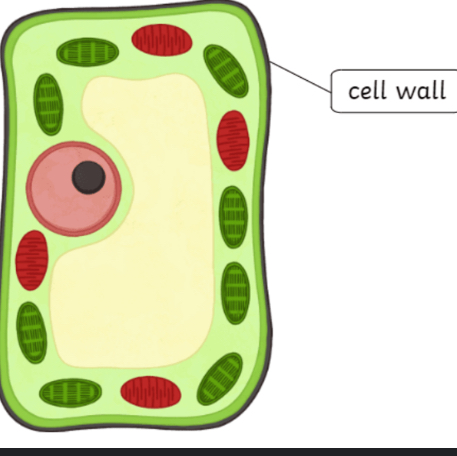
Cell Wall
Structure: Rigid rectangular structure around the cell; made of cellulose Function: Maintains cell shape and protects the cell |
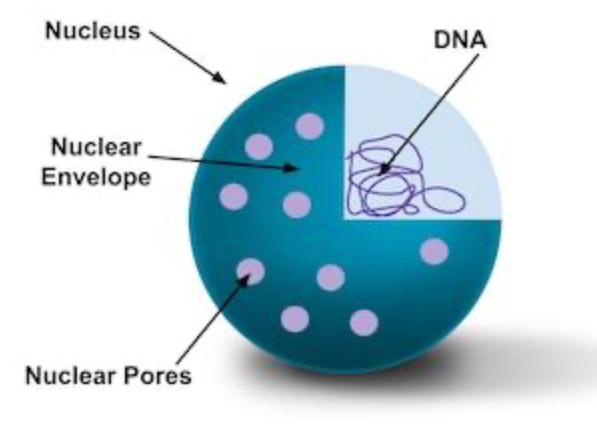
Nucleus
Structure:
Sphere-like surrounded by membrane
Function:
Holds DNA
Cytoplasm
Structure:
Fluid
Function:
Suspends internal parts of the cell; contains buffers
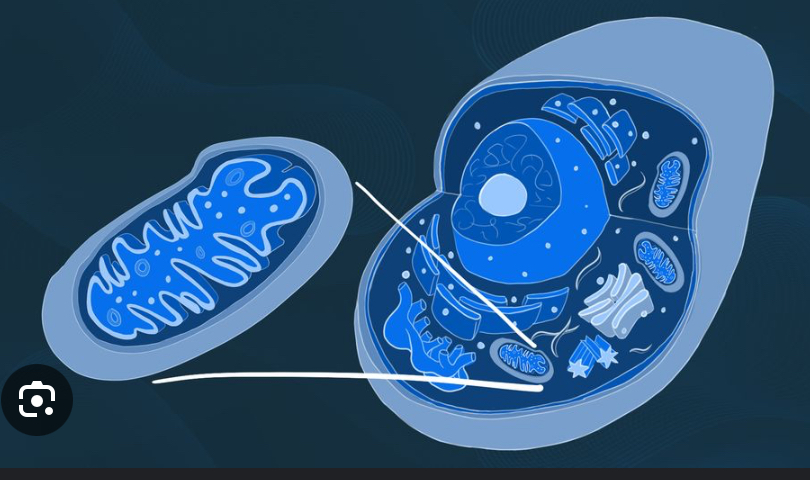
Mitochondria
Structure:
Two membrane layers with folded inner layer (cristae); “kidney bean” shaped
Function:
Converts food energy to chemical energy
(cellular respiration)
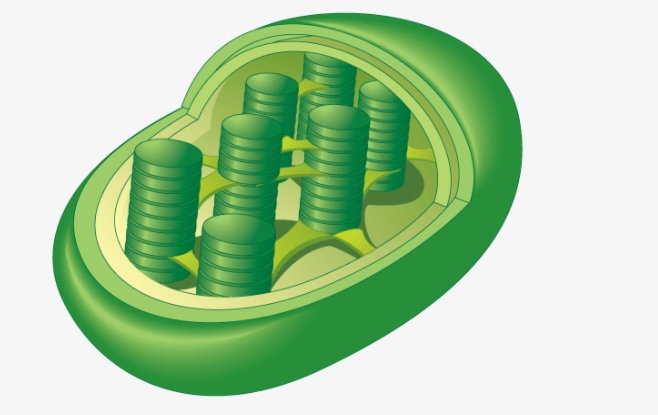
Chloroplasts
Structure:
Two membrane layers; oval shape with stacks of connected thylakoids
Function:
Converts light energy to chemical energy (photosynthesis)
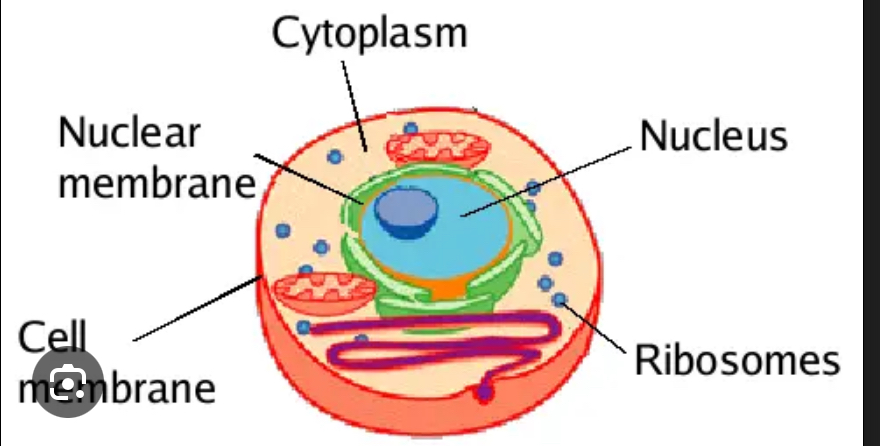
Ribosome
Structure:
Small spheres
Function:
Makes proteins
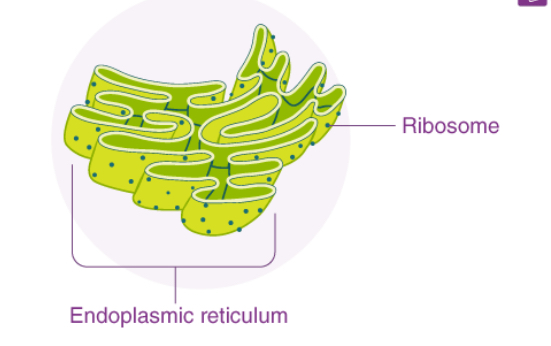
Rough Endoplasmic Reticulum (RER)
Structure:
Interconnected network of tube-shaped membrane; dotted with ribosomes
Function:
Modifies and packages proteins
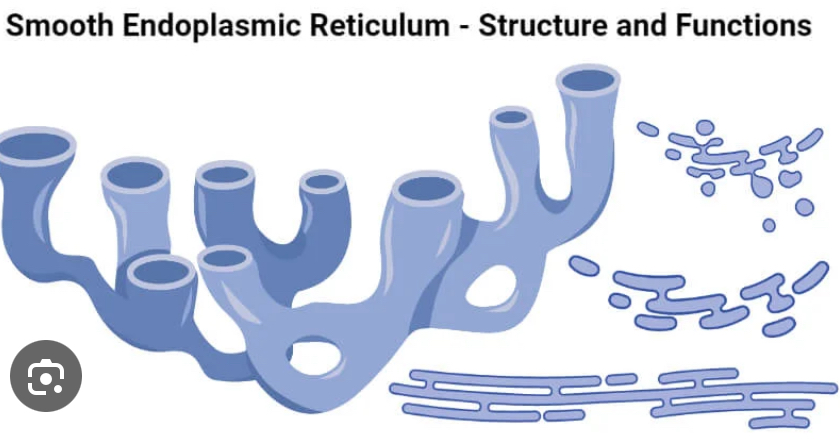
Smooth Endoplasmic Reticulum (SER)
Structure:
Interconnected network of tube-shaped membrane
Function:
Detoxifies the cell; synthesizes lipids
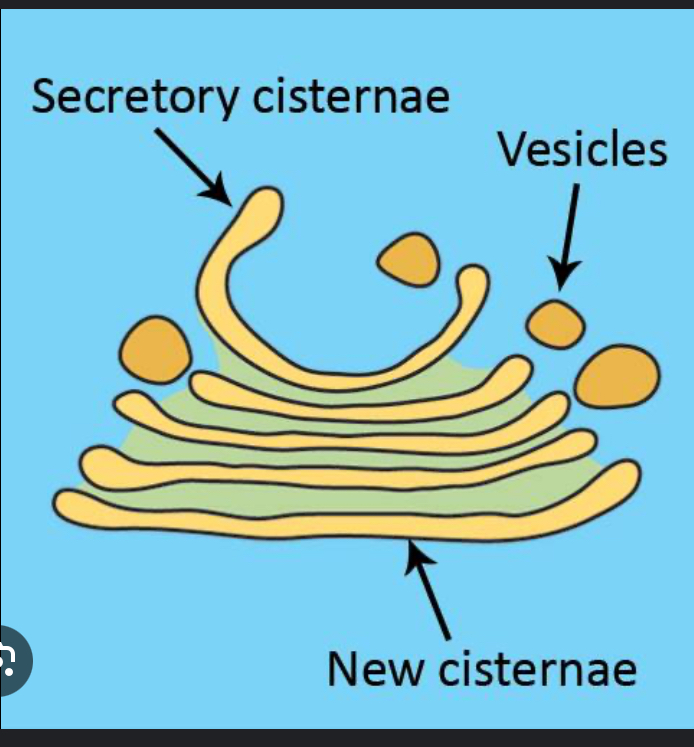
Golgi Apparatus |
Structure:
Flattened membranous sacs with vesicles budding off of one side
Function:
Further modifies, sorts and ships molecules (such as proteins and lipids) within the cell
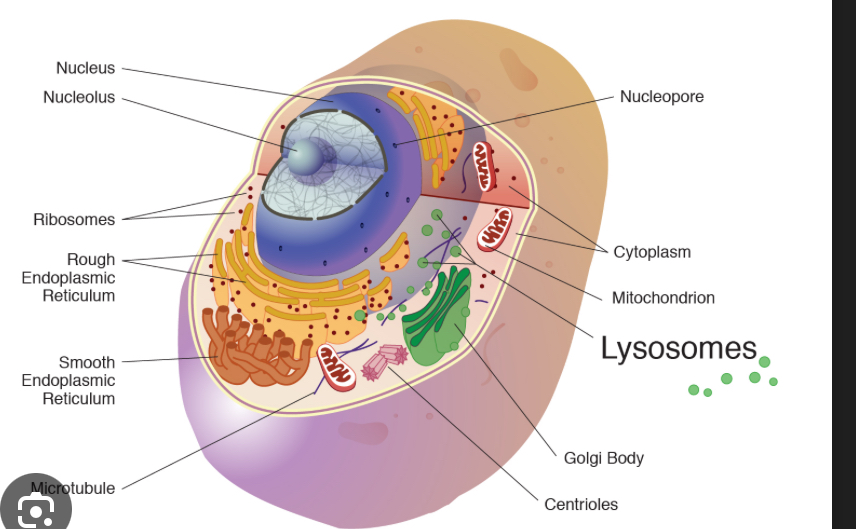
Lysosome
Structure:
Small spheres
Function:
Contains digestive enzymes to break down materials within the cell
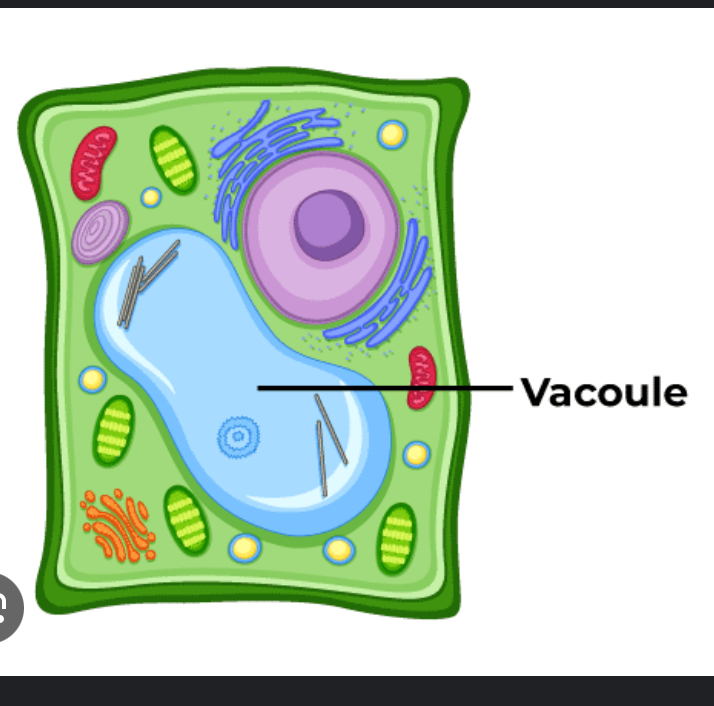
Vacuoles
Function:
Small spheres
(or large, central structure in plant cells)
Structure:
Storage
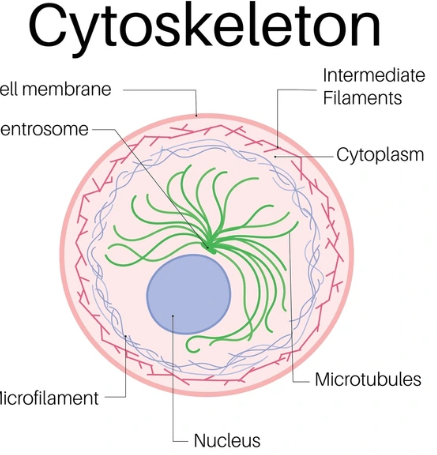
Cytoskeleton
Structure:
Microscopic support beams/rods
Function:
Multiple functions depending on type, including:
maintaining shape of cell; responsible for movement
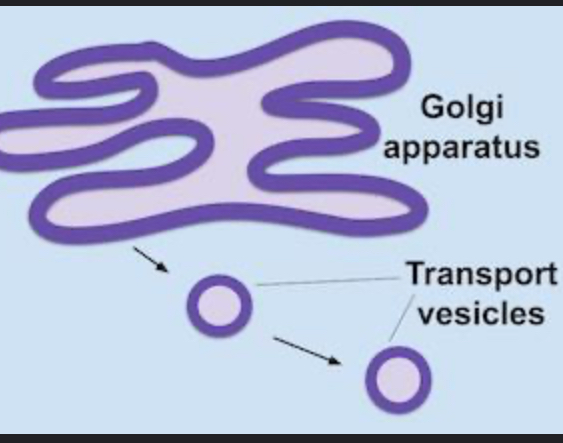
Vesicle
Structure:
Small spheres of membrane from RER, SER or Golgi
Function:
Transport molecules (such as proteins and lipids) around or out of the cell.
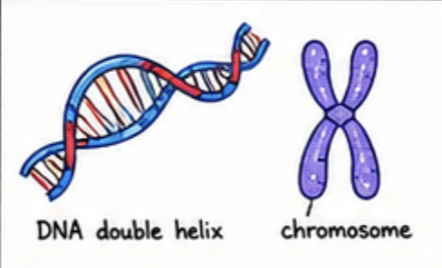
DNA/chromosomes
Structure: DNA is a double helix (twisted ladder) wrapped around proteins to form chromosomes in the nucleus.
Function: Stores genetic information and provides the instructions for making proteins and controlling cell activities.
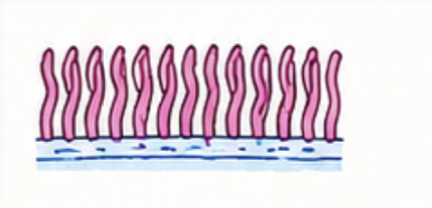
Cilia
Structure: Short, tiny hair-like projections that cover the surface of some cells.
Function: Move the cell or sweep substances (like mucus or dust) across the cell's surface.
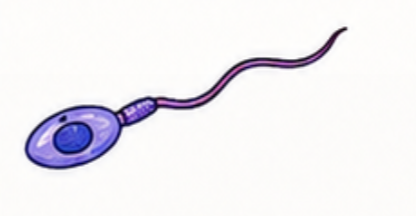
Flagella
Structure: Long, whip-like tail(s) attached to a cell, usually one or a few.
Function: Propel the cell through liquids, helping it move from one place to another.