Unit 5 - Quadrilaterals and Polygons
 Call Kai
 Learn
Learn Practice Test
 Spaced Repetition
 Match
Match Flashcards
 Knowt Play
1/16

There's no tags or description
Looks like no tags are added yet.
Name | Mastery | Learn | Test | Matching | Spaced | Call with Kai |
|---|
No analytics yet
Send a link to your students to track their progress
17 Terms
Parallelogram
Opposite sides are parallel
Opposite sides are congruent
Opposite angles are congruent
Consecutive angles are supplementary (angles that are next to each other)
Diagonals bisect eachother
Rectangle
All angles are right angles
Diagonals are congruent
Rhombus
All sides are congruent
Diagonals bisect the angles
Diagonals form perpendicular bisectors
Diagonals divide rhombus into four congruent right angles
Square
ALL OF THE PROPERTIES FROM PARALLELOGRAM, RECTANGLE, AND RHOMBUS
Trapezoid/Isosceles trapezoid
Trapezoid
Bases are parallel
Isosceles trapezoid
Legs are congruent
Diagonals are congruent
Lower base angles are congruent
Upper base angles are congruent
Any lower base is supplementary to any upper base
If we find our distance between points is equal…
Segments are congruent
If we find our slopes are the same…
There are parallel segments
If we find our slopes are opposite reciprocals…
There are perpen6dicular segments
If we find our midpoints are the same
Segments bisect
Parallelogram area formula
A = b x h
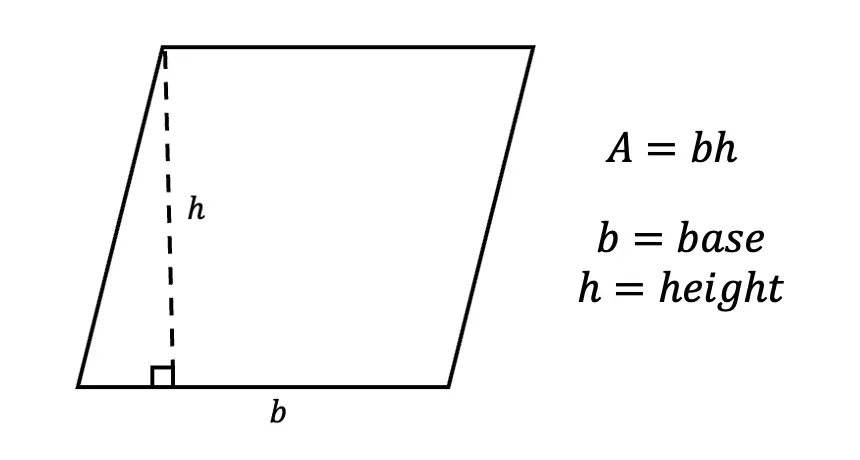
Rectangle area formula
A = b x h
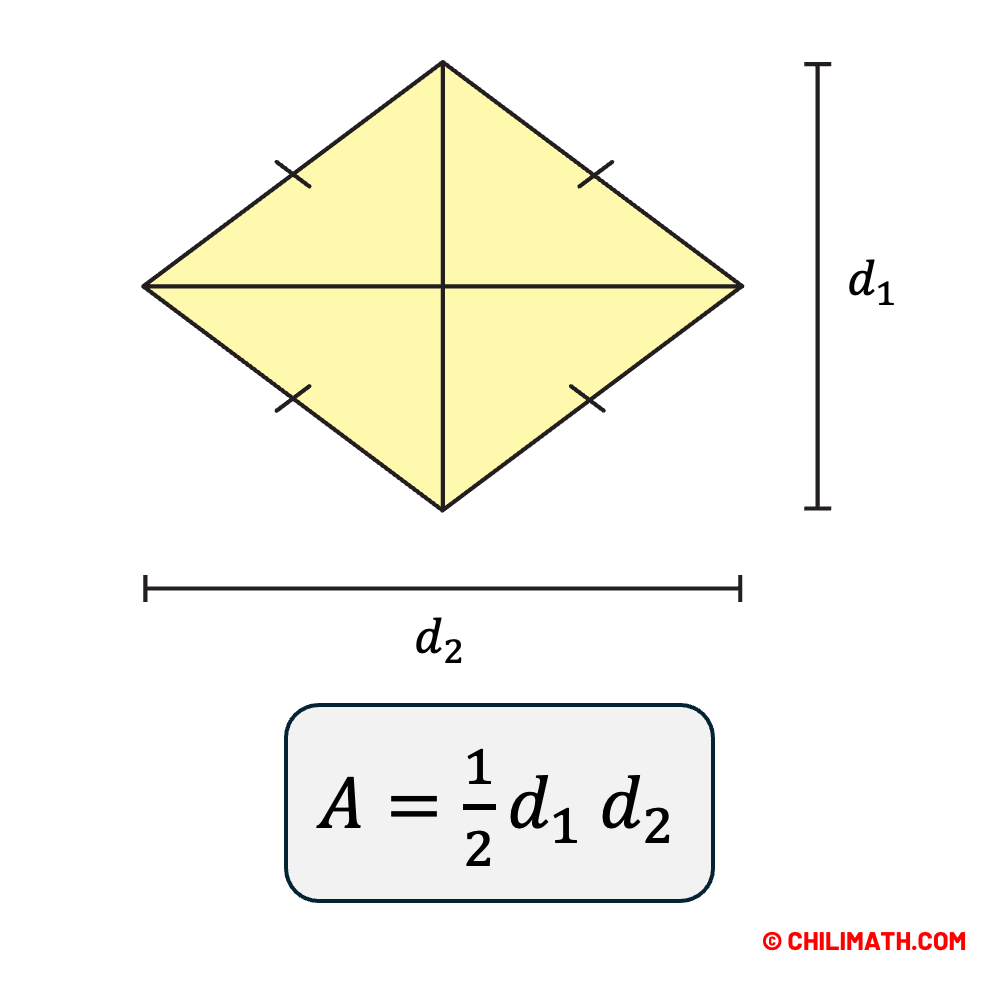
Rhombus area formula
A = ½ (d 1) (d 2)
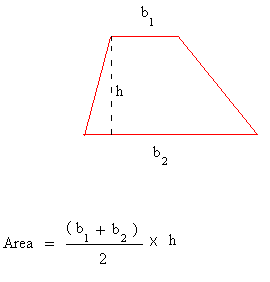
Trapezoid area formula
A = ½ (b 1 + b 2) h
Sum of the interior angles of a n sided polygon
(n - 2) x 180
n = number of sides
180 = sum of angles in a triangle
Sum of the exterior angles of an n sided polygon
360 degrees
Regular polygons
Equilateral - All sides are congruent to each other
Equiangular - All angles are congruent to each other
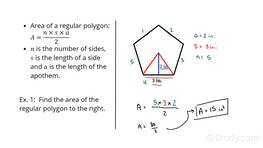
Regular polygon area formula (with n sides)
A = ½ (base side) (height of one triangle) (n)
n = number of sides
Equation makes area of one triangle, but double that if you are calculating half