DNA & Molecular Bio
 Call Kai
 Learn
Learn Practice Test
 Spaced Repetition
 Match
Match Flashcards
 Knowt Play
1/28

Earn XP
Description and Tags
Name | Mastery | Learn | Test | Matching | Spaced | Call with Kai |
|---|
No analytics yet
Send a link to your students to track their progress
29 Terms
nucleic acids
_____ ____ code for genetic material (DNA, RNA)
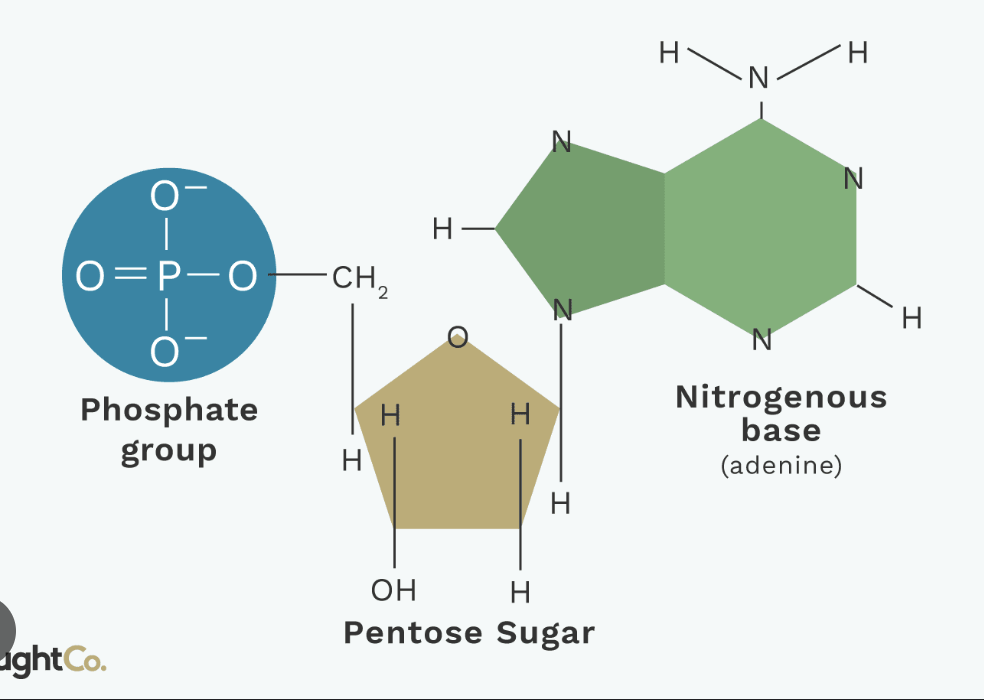
nucleotide
What is the monomer for nucleic acids?
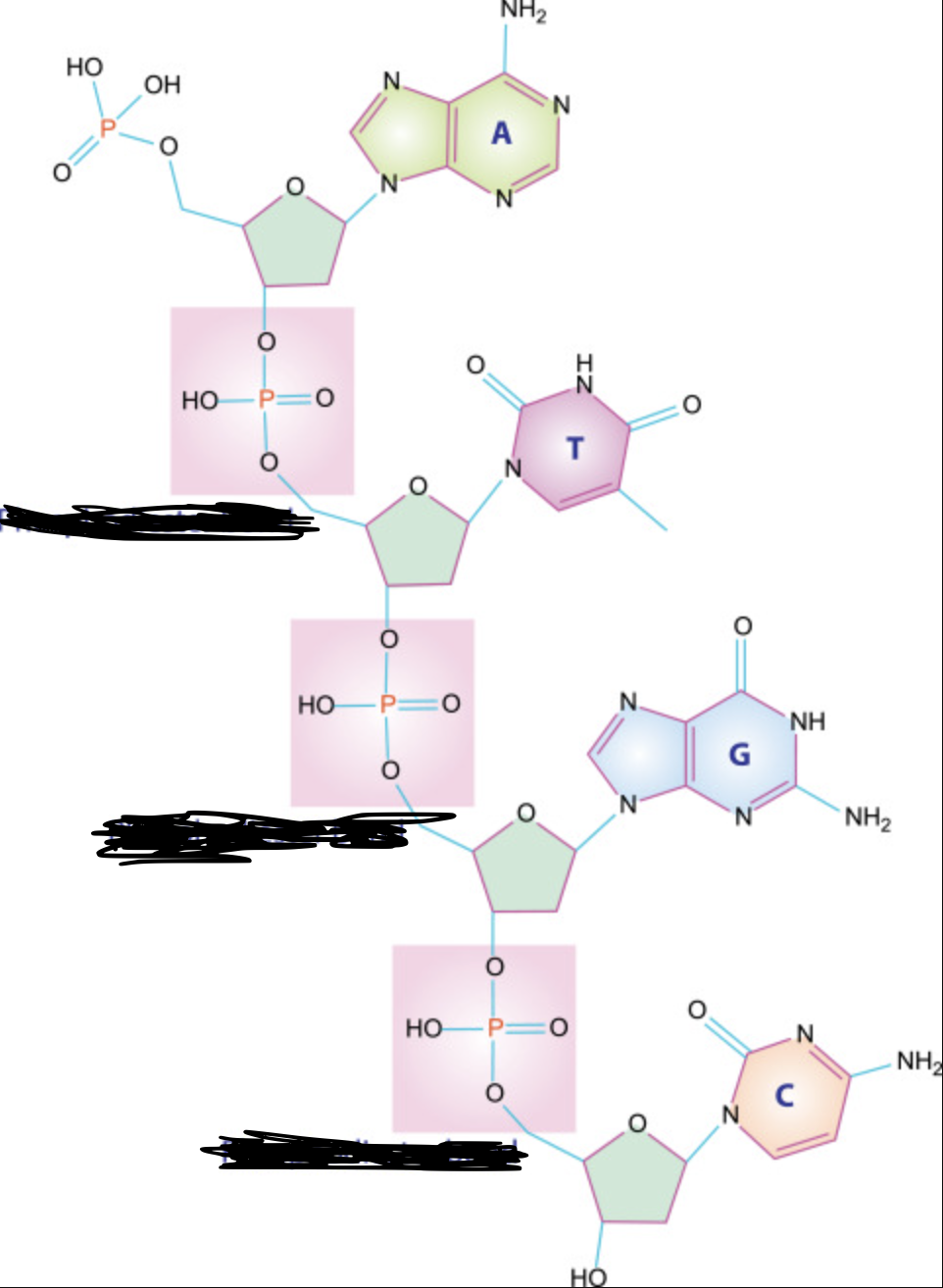
phosphodiester bond
What is the name of the bonds that form between nucleotides on a single chain between phosphate groups and sugars?
The __________ _____ forms between the phosphate group of one nucleotide and the 3' hydroxyl (–OH) group on the sugar of the previous nucleotide. Specifically, it connects the 5' carbon of one sugar (where the phosphate is attached) to the 3' carbon of the next sugar.
hydrogen bonds
What are the bonds that form between nucleotides across two different chains (between bases)?
In a double-stranded DNA molecule, the nitrogenous bases of each nucleotide on one strand form specific ______ ____ with complementary bases on the other strand, following base pairing rules:
In DNA, A=T via two ______ ____
C=G via three _____ ____
Adenine (A) = Thymine (T)
Cytosine (C) = Guanine (G)
What are the complementary base pairing rules between nucleotides?
5’ → 3’
3’ ← 5’
What is the antiparallel structure of DNA and RNA when base pairing?
DNA
Which genetic material is this based on the characteristics?
double-stranded
thymine (T)
deoxyribose
(mostly) found in the nucleus in eukaryotic cells
replicated during cell division
RNA
Which genetic material is this based on the characteristics?
single-stranded
uracil (U)
ribose
also found in the nucleus AND the cytoplasm
transcribed from DNA (DNA is used as a template), does not replicate on its own
transcription
_________ copies a gene’s DNA sequence into mRNA in the nucleus.
translation
_________ reads the mRNA’s genetic code and creates a protein.
mRNA genetic code
How is genetic information passed through transcription and translation?
Initiation
What is the first step of DNA replication?
DNA is split into two strands/unwinded by helicase
Elongation
What is the second step of DNA replication?
DNA polymerase attaches to each strand and adds nucleotides in the 5’→3’ direction
Termination
What is the third step of DNA replication?
Two replication total of 4 DNA strands (2 double helixes) result
enzymes
Helicase and polymerase are both _______.
semiconservative
DNA replication is ________, which means that half of the parent DNA molecule is conserved in each of the two daughter DNA molecules.
okazaki fragments
The short lengths of DNA that are produced by the discontinuous replication of the lagging strand.
the leading strand
Which strand continuously synthesizes DNA in the same direction?
the lagging strand
Which strand starts and stops continuously to “catch up” with the replication fork and produces Okazaki fragments while doing so?
DNA ligase
Which enzyme joins Okazaki fragments?
repair proteins
_____ ______ (including DNA polymerase and DNA ligase) can naturally repair mismatch errors in DNA
(Hint: They’re proteins!)
replication errrors and damage to DNA
What can cause mutations?
sex-linked genes
genes located on the sex chromosomes
linked genes
genes located on the same chromosome
If they are linked genes, then they will be inherited together. If the loci of the genes are close together, there will be a low chance of them crossing over.
Why do some genes not sort independently?
crossing over
the exchange of genetic material during meiosis
0%
If the genes are closer, then the recombination frequency is smaller, meaning that it is close to __. (Answer with a percentage).
50%
If the genes are farther, then the recombination frequency is larger, meaning that it is close to __. (Answer with a percentage).
different chromosomes
The recombination frequency is 50%. This means that the genes are on _______ ________.