L6- Epigenetics
 Call Kai
 Learn
Learn Practice Test
 Spaced Repetition
 Match
Match Flashcards
 Knowt Play
1/48

There's no tags or description
Looks like no tags are added yet.
Name | Mastery | Learn | Test | Matching | Spaced | Call with Kai |
|---|
No analytics yet
Send a link to your students to track their progress
49 Terms
what is epigenetics
Heritable changes in gene expression that are not a consequence of changes in DNA sequence
On top of, in addition to, genetics
why are epigenetics needed
The thing that tells you when to turn genes on and off- to make complex multicellular organism
why is it important that epigenetics are heritable
As well as pass on genomes, have the same epigenome as parent cell
Allows to maintain cell type and maintain tissue integrity
(Epigenetic genes dont get passed down the germ line)
how can epigenetics be modified
Can be modified, environmentally and pharmacologically
– Modulation of ageing?
what are the epigenetic marks
DNA methylation
Histone modifications- can be modified in different places
what is DNA methylation
Only commonly occurring covalent modification of DNA
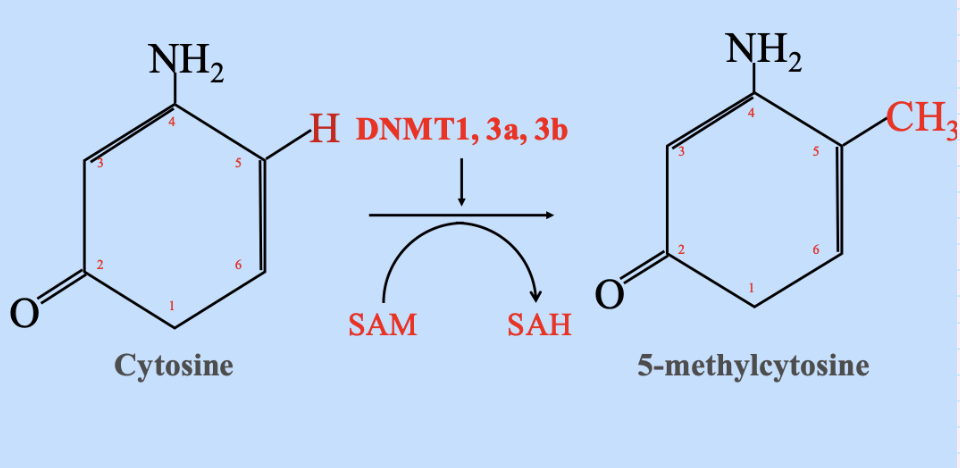
Only one change at one specific site - One hydrogen replaced by a methyl group at the 5 position
Only in cytosine at the 5 position into 5 methyl cytosine
what is needed for DNA methylation to occur
Only occurs when cytosine is followed by guanine (CpG dinucleotides- allows it to be inherited
SAM also needs to be present- S adenosylmethionine, the methyl donor
what enzymes catalyse methylation
Catalysed by DNA methyl transferases (DNMT) 1, 3a, 3b
DNMT 1- maintenance- responsible for the inheritance of methylation
DNMT 3a, 3b- de novo- add onto the DNA that didn’t previously have it
why is it necessary for a G to follow the C for methylation
when new strand added polymerase adds un methylated bases
DNMT follows polymerase and recognises the methylation on1st strand and adds methyl from SAM onto C of new strand
If not followed by G then wouldn’t be a c on opposite strand to methylate and couldn’t pass on methylation
why do CpG make up only 1% of the genome
methylation has high mutation rate so llost through evolution
what are some features of CpG sites
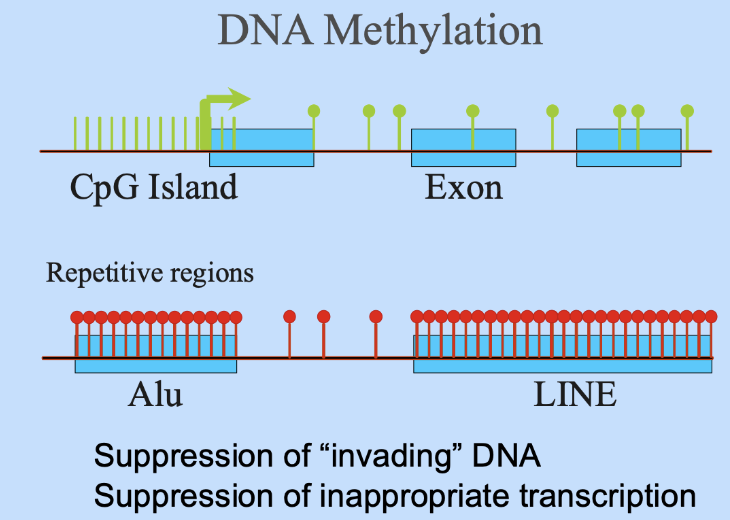
Most CpG sites in the genome are methylated.
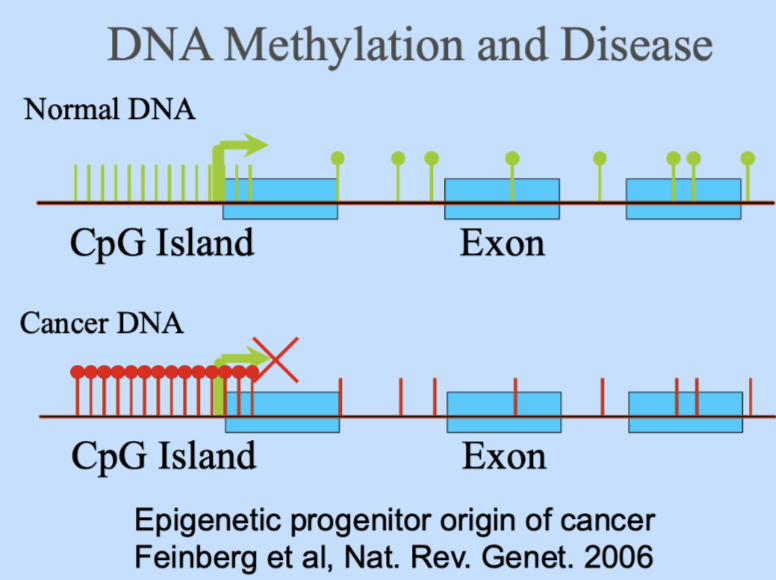
CpG islands are CpG-rich regions usually found at the 5′ end of genes, overlapping promoters, transcription start sites, and the first exon.
Promoter CpG islands are usually unmethylated (methylation-free), allowing gene transcription.
which area of DNA are usually the most heavily methylated
Repetitive regions like Alu and line often heavily methylation- maybe as a way of suppressing invading DNA
Historically restro transposable elements have invaded genome and cause acestral mutagenesis
Methylation causes them to be inactive
Why is a lot of DNA methylated
suppresses inappropriate transcription so the only region that activators can bind is promoter regions
are CpG islands usually methylated
no, they are methylation free (usually), unlike CpG sites
what is an exception of CpG islands being methylation free
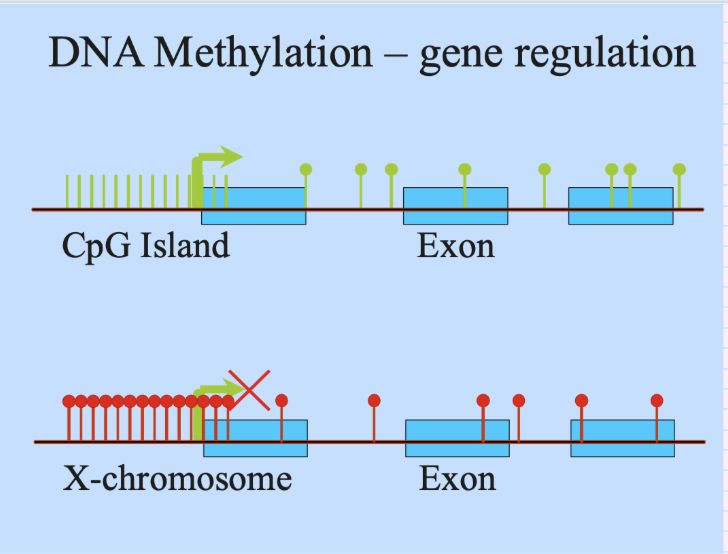
x chromosome inactivation
Randomly inactive one x chromosome- by methylation
Remove methylation, gene back on
describe methylation of CpG islands in imprinted genes
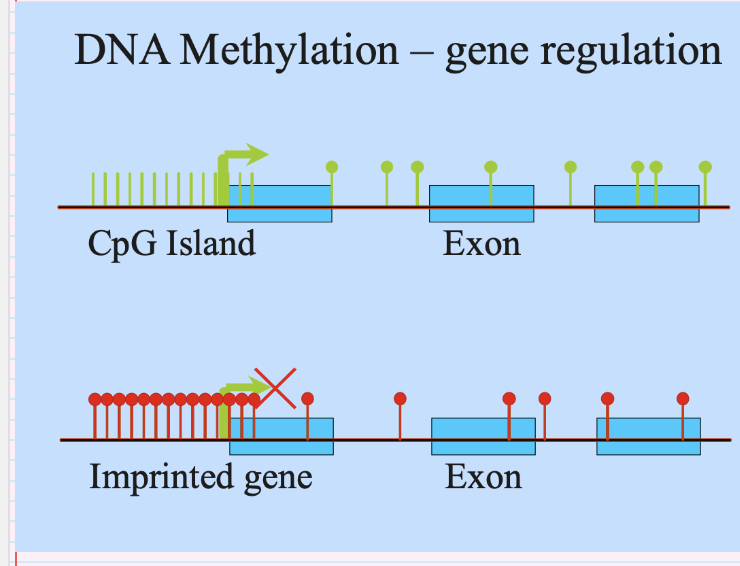
Imprinted gene: only one gene is expressed- either maternal or paternal
The inactivated gene is inactivated in large part by methylation
Remove methylation, gene back on
what are the 2 mechanisms of transcriptional repression by DNA methylation
2 mechanisms
block site from transcription factor (uncommon)
Cause DNA to be densely bound and inactivate the gene
Protein complex- methyl binding domain proteins bind to methylated DNA very strongly when densely methylated
Have other activity associated like histone deacetylation
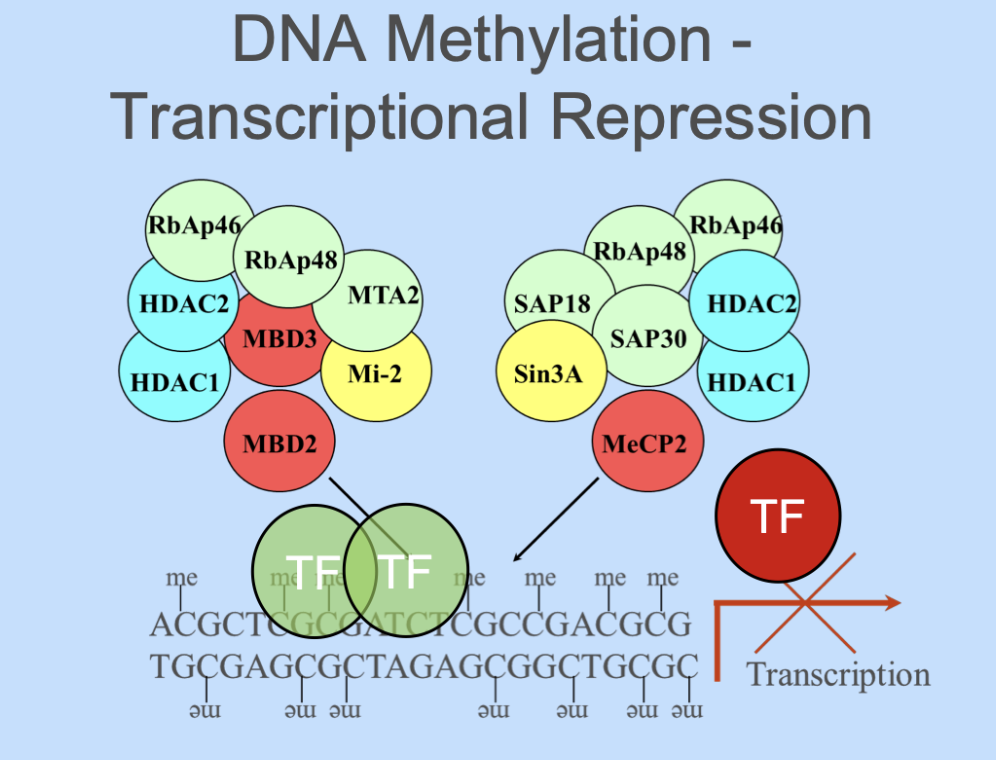
why is it uncommon for transcriptional repression to by DNA methylation blocking the site for transcription factors
Most TF bind regardless of methylation, as its quite a small change
And some genes don’t have CpG sites in promoter region so wouldn’t matter anyway
does methylation only occur at CpG
no
Can occur at CpA, CpT and CpC- Found at high levels in human ES (embryonic stem) cells- Lost during differentiation
Studies suggest high levels in brain (Guo et al
Binds to MBD proteins (methyl binding domain proteins)
Negative association with gene expression
Catalysed by DNMT3A/B, not recognised by DNMT1
is non CpG methylation epigentic
Non CpG methylation isn't really epigenetic as it is not passed down to daughter cells
describe hydroxy methylation
TET proteins (TET1, TET2, TET3) catalyse the conversion of 5-methylcytosine to 5-hydroxymethylcytosine (5hmC).
5hmC is an intermediate in active DNA demethylation.
TET enzymes can further convert 5hmC into:
5-formylcytosine
5-carboxylcytosine
These modified bases can then be removed by base excision repair (BER), leading to replacement with unmethylated cytosine.
5hmC is not efficiently copied by DNMT1 during DNA replication, contributing to loss of methylation.
Hydroxymethylation may also have signalling/regulatory roles in gene expression.
Mutations in TET proteins and loss of 5hmC are common in haematological malignancies and are also associated with neurological disorders, showing that 5hmC has important biological functions.
what are the different types of histone modifications
Much more complicated- happen in lots of places
Acetylation
Methylation
Phosphorylation
Ubiquitination
where do most histone modifications occur
Histone- globular proteins with long tails
Most modifications occurs on the tails
billions of combinations
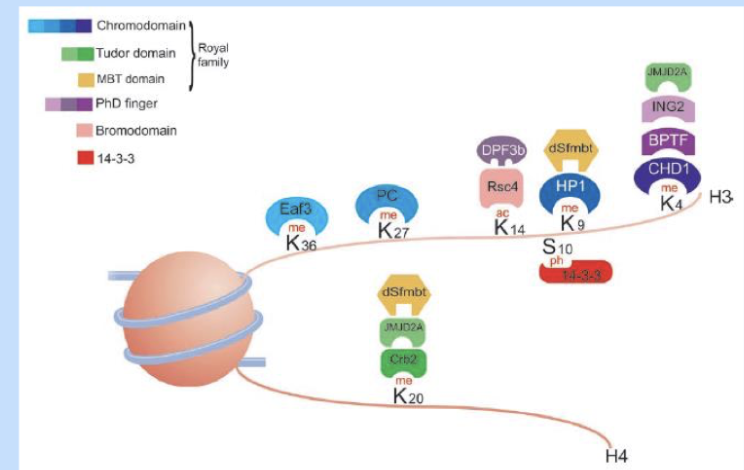
what are the 3 main effects of histone acetylation
activation
decompaction- so TF can bind
permissive
what are the 3 main effects of histone methylation on lysine 9 and 27 (H3)
inactivation
compaction
non-permissive
what are the different ways lysine residues can be methylated
Can be methylated in different ways Mono, di or tri
K9-H3 Me
K27-H3 Me
what are the 3 main effects of histone methylation on lysine 4 (H3)
activation
decompaction- so TF can bind
permissive
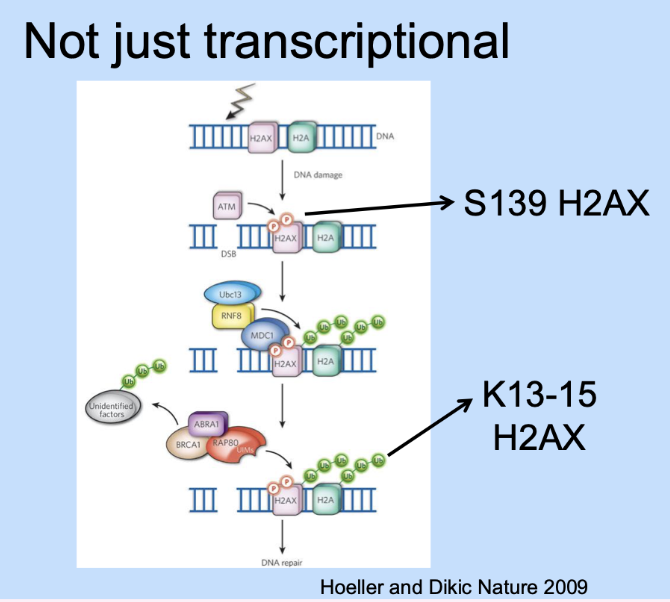
are histone modifications purely transcriptional
no
Can regulate many pathways
Can regulate any bit of DNA repair
do epigenetics change over age
yes
Twins- same genome
Have basically same epigenetics when young
Oler age- epigenome changes depending on environment they're exposed to
How accurately are DNA methylation patterns inherited, and what happens with age?
They are inherited between cell generations but not very efficiently (~99.9%).
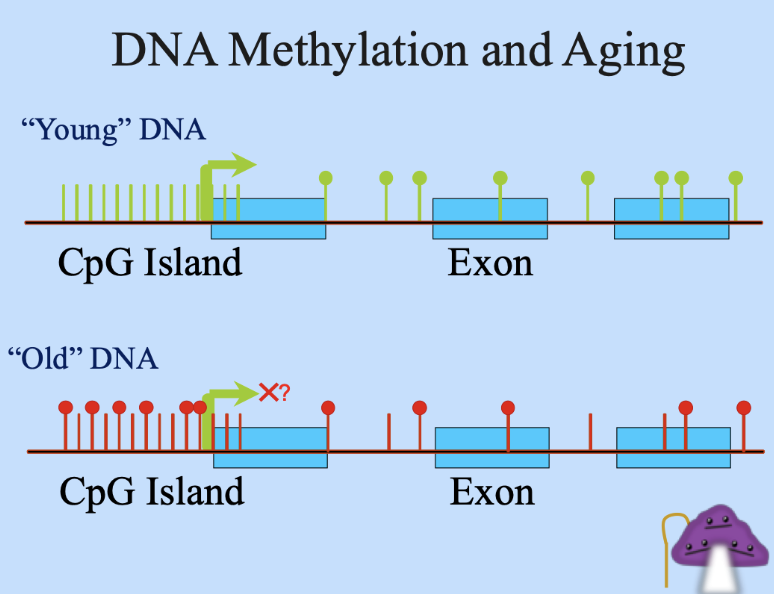
With age, CpG islands become hypermethylated (20–30%) while the genome becomes globally hypomethylated, increasing disease susceptibility.
Why are CpG sites hotspots for disease-causing mutations?
CpG sites have a very high mutation frequency, accounting for up to 20% of disease-causing mutations.
Why does DNA methylation become dysregulated over time and in cancer?
There is no repair system for DNA methylation, so changes accumulate unpredictably over a lifetime, leading to loss of regulation in cancer.
how does ageing impact the function of methylated DNA
Eventually impact function of that gene- turns it off
More likely to be unstable- apoptosis or development of cancer
what happens to methylated genes in disease
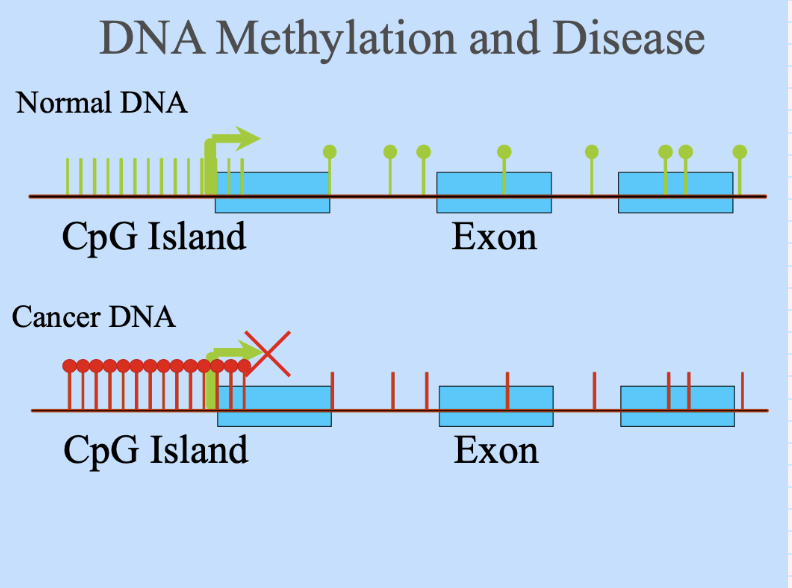
Many genes switched off by methylation
The genes that need to be switched off to develop cancer
how does the variation of methylation change with age in humans and mice
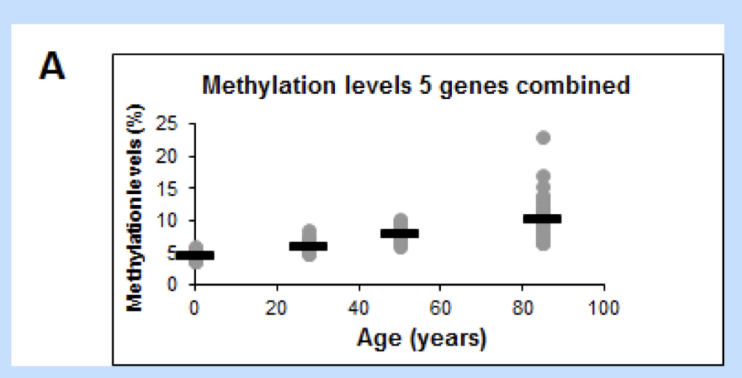
Amount of variation in methylation also increases as you get older, as well as general amount of methylation
Mice- small lives so have relatively same level of methylation
define fraility
a biologic syndrome of decreased reserve and resistance to stressors, resulting from cumulative declines across multiple physiologic systems, and causing vulnerability to adverse outcomes
how is fraility and methylation related
85 year olds with low CpG island methylation – 50% reduction in risk of frailty
85 year olds with high CpG island methylation – 50% increase in risk of frailty
How can DNA methylation be used to predict age?
Specific DNA methylation patterns at CpG sites can predict age, using models based on many CpGs (e.g. 353 sites) or very few (as few as 3 CpG sites).
Why is DNA methylation more informative than chronological age?
It reflects biological age, which better predicts susceptibility to age-related disease and suitability for treatment than chronological age.
what is the function of GRIMage
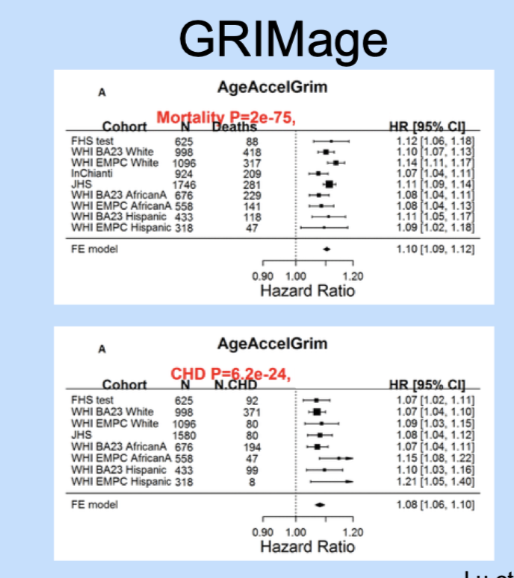
Predicts mortality and likelihood of getting age related diseases
what disease is most associate with high methylation
Cancer most associated
Cells get all these epigenetic changes so that when the right genetic changes occur, much more susceptible to getting cancer
How does maternal licking and grooming affect offspring stress later in life? what is the epigenetic mechansim
Increased licking and grooming is linked to reduced stress in adulthood.
Loss of methylation of the glucocorticoid receptor (GR) gene leads to increased GR expression in the hippocampus, persisting into adulthood.
What happens when offspring receive low licking and grooming?
They show reduced GR expression and are more susceptible to stress in adulthood.
What was the Dutch Hunger Winter and why is it important epigenetically? what methylation changes were seen after 1st trimester exposure
A 1944–45 famine where in-utero exposure (especially first trimester) led to long-term epigenetic changes.
Lower methylation of the IGF2 gene and differential methylation of multiple genes, linked to obesity, diabetes, and heart disease.
What epigenetic effects are seen in childhood cancer survivors?
Toxic treatments increase survival but lead to accelerated epigenetic ageing; treatment-associated methylation changes can predict later health outcomes.
which enzymes are responsible for adding/removing acetyl groups
adding- HAT / histone acetyltransferases
removing- HDAC / histone deacetylase
What is the effect of increased sir2 (SIRT1 homologue) activity in C. elegans?
sir2 is an HDAC family sirtuin; increased sir2 expression extends lifespan in C. elegans, showing that higher HDAC activity promotes longevity.
How does SIRT1/sir2 affect lifespan in Drosophila?
Increased sir2 activity extends lifespan, especially under caloric restriction; pharmacological activation (e.g. resveratrol) can mimic this without altering every cell.
What are the effects of SIRT1 overexpression in mice?
Mice overexpressing SIRT1 show improved physical performance even at young ages, greater fitness than wild type, and tend to reproduce later in life.