Antibiotic susceptibility testing

0.0(0)
Studied by 12 people
call kaiCall Kai
learnLearn
examPractice Test
spaced repetitionSpaced Repetition
heart puzzleMatch
flashcardsFlashcards
GameKnowt Play
Card Sorting

1/44

flashcard set

Earn XP

Description and Tags

Last updated 1:39 AM on 6/4/26
Name
Mastery
Learn
Test
Matching
Spaced
Call with Kai

No analytics yet

Send a link to your students to track their progress

45 Terms

1
New cards
chemical substance which has the capacity to inhibit the growth of bacteria
often derived from a fungi
Antibiotic
2
New cards
peptidoglycan, nucleic acids, folic acid pathway, protein synthesis
Targets for antibiotic
3
New cards
target Penicillin-binding proteins. PBP facilitate the cross-linking of peptidoglycan. Beta lactams bind to PGPs and results in failure to cross-link peptidoglycan
Beta lactams
4
New cards
because they have a thicker layer of peptidoglycan
Why are beta lactams most effective against gram pos bacteria
5
New cards
these have the mecA gene which encodes on altered PBP protein called PBP2a. Beta-lactams can't bind with this PBP
Methicillin Resistant Staph aureus (MRSA)
6
New cards
PCR or antigen testing
How do we detect a MRSA organism
7
New cards
forms hydrogen bonds with the amino acid chains that connect the sheets of peptidoglycan. Prevents the polymers to form cross-links. Useful for MRSA
Vancomycin
8
New cards
interfere with the folic acid pathway
Sulfonamides and Trimethoprim
9
New cards
sulfonamides interrupt in the beginning of the pathway, then trimethoprim interrupts later on. Synergistic
How do sulfonamides and trimethoprims work
10
New cards

sulfamethoxazole/trimethoprims

strep pyogenies is resistant to what drug

11
New cards
binds to DNA topoisomerase and gyrase. Inhibits the action of these enzymes resulting in decreased functionality in DNA replication
Quinolones
12
New cards
this drug blocks the activity of RNA polymerase, preventing chain elongation
Rifampin
13
New cards
This drug prevents the binding of tRNA to the smaller 30s ribosome A site. Causes mis-translation and the production of abnormal proteins (bactericidal)
Aminoglycosides
14
New cards
this drug binds to the 30s ribosomal subunit preventing the proper docking of tRNA. Causes premature release of the tRNA and termination of protein synthesis (Bacteriostatic)
Tetracyclines
15
New cards
bind to the 50s ribosome. Terminates translation by slipping into the cavity between arriving tRNA
Macrolides
16
New cards
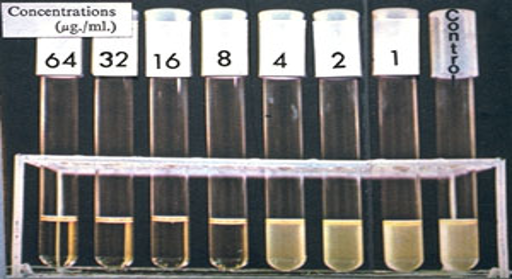
antibiotic is serially diluted, inoculated, incubated, observed for growth, minimal inhibitory concentration (MIC) is the tube with the least amount of antimicrobial showing no growth of the organism
MIC=8 for picture
In Vitro susceptibility testing-tube dilution tests
In the picture what is the MIC
In Vitro susceptibility testing-tube dilution tests
In the picture what is the MIC
17
New cards
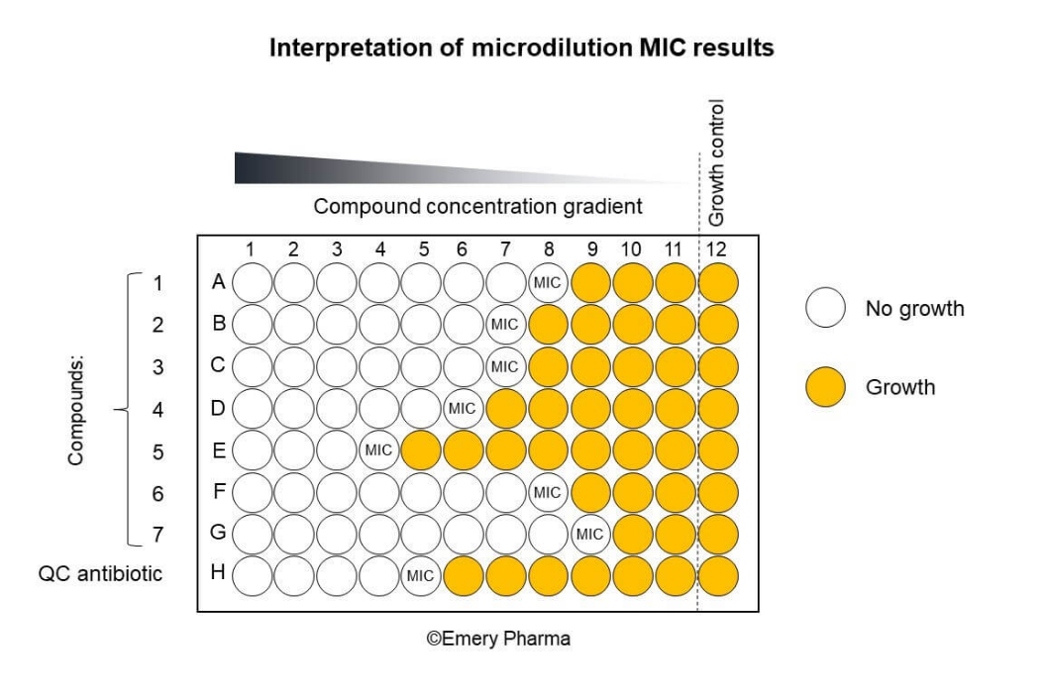
diluted, lyophilized drugs placed in 96 well trays, dilution of organism added, susceptible intermediate or resistant determined by which dilution is showing inhibition
Broth microdilution tests
18
New cards
MIC-minimum inhibitory concentration
bacteriostatic test
19
New cards
MBC-minimum bactericidal concentration
bactericidal test
20
New cards
Kirby-Bauer assay: standardized suspension of the organism is compared to a .5 McFarland standard. Spread over the surfact of a Mueller-Hinton agar plate, incubate, zones of inhibition are measured
Disc Agar diffusion method
21
New cards
innate characteristics that are transmitted vertically (mother cell to daughter cell)
intrinsic drug resistance
22
New cards
caused by changes in the usual genetic makeup of a microorganism, leading to altered physiology and structure (horizontal transfer)
Acquired drug resistance
23
New cards
SXT
Strep A is intrinsically resistance to this drug
24
New cards
organism makes beta lactamases-usually intrinsic, bind to beta lactam antibiotic and inactivates them
Intrinsic resistance to beta lactam antibiotics
25
New cards
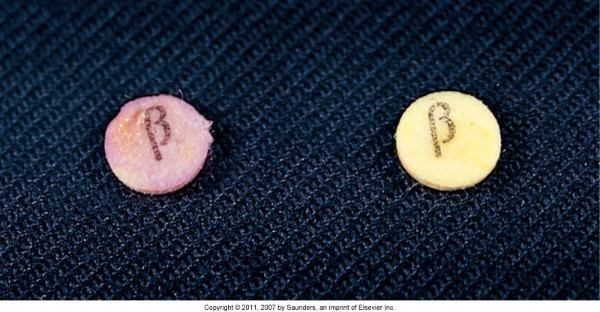
detects the enzyme that splits the beta lactam ring, if the disk turns pink the organism has beta lactamase enzyme
beta lactamase testing
26
New cards
Methicillin resistant staph aureus
MRSA
27
New cards
staph aureus acquired mecA gene that codes for an altered PBP results in reduced affinity for penicillin drugs
What is MRSA
28
New cards

Inhibit cell wall synthesis

beta lactams, glycopeptides

29
New cards

beta lactams

carbapenems, cephalosporins, monobactams, penicillins

30
New cards

depolarize cell membrane. inhibit ion transfer.

lipopepties

31
New cards

inhibit protein synthesis by binding to 30s ribosomal subunit

aminoglycosides, tetracyclines

32
New cards

inhibit protein synthesis by binding to 50s ribosomal subunit

chloramphenicol, lincosamides, macrolides, oxazolidinones, streptogramines

33
New cards

inhibit nucleic acid synthesis

quinolones/fluoroquinolones

34
New cards

inhibit metabolic pathways

sulfonamides, trimethoprim

35
New cards

what are bacteroides (anaerobes) intrinsically resistant to

aminoglycosides, many beta lactams, quinolones

36
New cards

all gram positives are intrinsically resistant to

aztreonam

37
New cards

enterococci are intrinsically resistant to

aminoglycosides, cephalosporins, lincasamides

38
New cards

listeria monocytogenes is intrinsically resistant to

cephalosporins

39
New cards

all gram negatives are intrinsically resistant to

glycopeptides, lipopeptides

40
New cards

e. coli is intrinsically resistant to

macrolides

41
New cards

klebsiella spp. are resistant to

ampicillin

42
New cards

serratia marcescens is resistant to

macrolides

43
New cards

pseudomonas aeruginosa is resistant to

sulfonamides, apmicillin, cephalosporins, chloramphenicol, tetracycline

44
New cards

stenotrophomans maltophilia is resistant to

aminoglycosides, beta lactams, carbapenems, quinolones

45
New cards

acinetobacter spp. are resistant to

ampicillin, glycopeptides