arha quiz 2
 Call Kai
 Learn
Learn Practice Test
 Spaced Repetition
 Match
Match Flashcards
 Knowt Play
1/26

There's no tags or description
Looks like no tags are added yet.
Name | Mastery | Learn | Test | Matching | Spaced | Call with Kai |
|---|
No analytics yet
Send a link to your students to track their progress
27 Terms
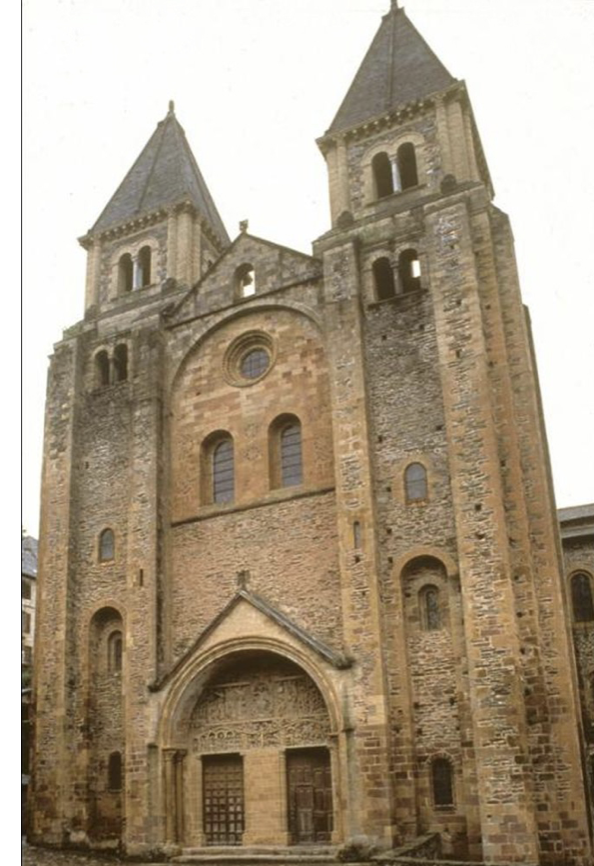
Church of Saint Foi Conques, 1050-1120
holds reliquary sculpture of saint foi
major site along pilgrimage routes as defined in calistine codex
reconstruction of earlier carolingian church; community founded by charlemagne
significance from connection to carolingian past
side aisles flanking nave on north and south, transept markign juncture between nave and choir
ambulatory extending from eastern choir; little chapels on east side
accomodating for multiple ceremonies to happen at once—good for pilgrimage
vetically accentuated
windows at east end around altar
no direct clerestory into the nave
octagonal tower added during 14th century to higlight the crossing; square set of four arches, octagonal tower (transition throuhg squinches); sort of like the architectural crown of the church
stone vaulted (rounded arches)
quarter circular arches above bays of gallery help resist lateral pressure
continuity of wall surface
stone canopy projecting out, sculptures contained within (tympanum sculpture)
centers on christ, shows moment of last judgement, text on tympanum further explains last judgement
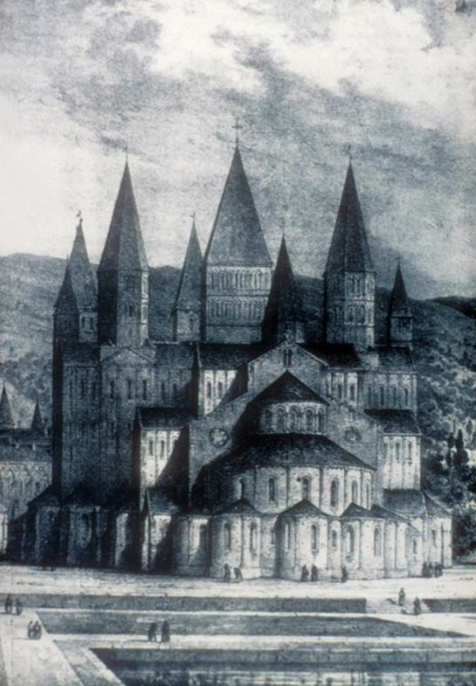
Cluny III, 1088-1130, at monastery of cluny, abbot gunzo of baume architect
largest monastic church ever built
mostly destroyed during french revolution
cluniac order (worship and chants throughout teh day)
scale justified as the church for the whole cluniac order
cluny II previously onsite
cluny III as a vast expansion, yet still encorporating what was retained from cluny II
very distinctive shape
large narthex
incredibly long nave
clerestory windows allowed light directly into nave
fresco at end of space showing christ gratnthign authority to saint peter
creating association with papcy
east end
choir
freestanding corinthian esque columns supporting the arcade of the choir
ambulatory
set of tombs which are for successive abbots of cluny
mostly corinthian order, some with musicians to commemorate cluniac chants
vaulted space
transverse arches making up entire nave
arches slighly pointed within to set up different stress pattern
increase in thickness of wall at nave elevation resists lateral pressure
approximating scale of roman vaulted imperail architecture like basilica of constantine (romanesque style)
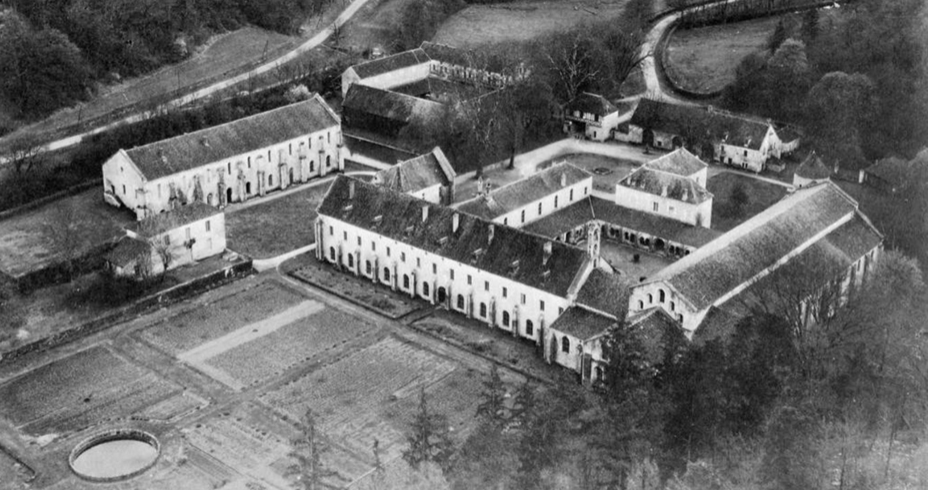
fontenay abbey and church, burgundy, 1139-47
dedicated to virgin mary
citercian order
not for pilgriamge
churhc free of tombs, burial happens oustide
gradations of enclosure at the abbey
core cloister as a closed/seculded space—prison yet heaven?
ratio of 2:1 employed throughout the building
transverse pointed arches
light comes entirely from east end of church
grisaille glass for windows
no decorative program at all throughout the church, glass is colorless, light creates all the meaning
stone makes up the architecture (floor, columns, piers, vaulting all the same)
vaulted space like at cluny III but representing a different monastic identiy
nave with side aisles and trancept, small choir
denial as a means of self representation institutionally
washing pavilion smallest vaulted medieval buildings—washing as a metaphor for rebirth
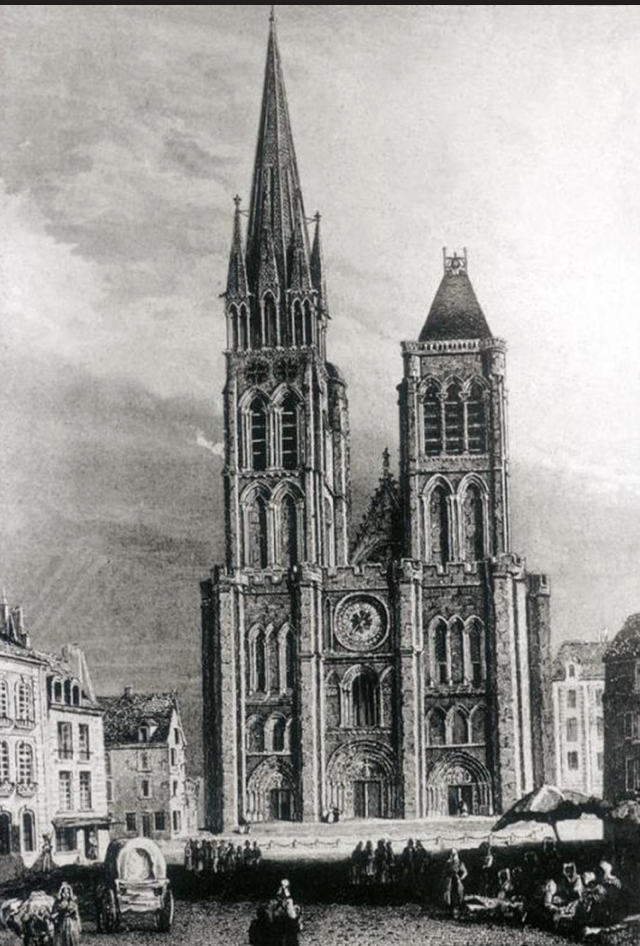
abbey of saint-denis, rebuilt by abbot suger in 1100s
denis was adopted patron saint of france during Louis VI’s leadership
holding st. denis’s tomb
monestary being brought to peak of power with abbot suger
building upon existing carolingian chapel from 700s
east end of plan
choir around high altar hwich is above the crypt where st denis is buried
chapel bay radiating around altar incredibly important to space
light entering from each bay
radiating hcapels not treated as individual units, instead, becoming fused with ambulatory as a continuosu space
formulated sort of as a second ambulatory
luminous envelope of stained glass, light being associated with knowledge and transcendence
rose window above central portal
westwork rebuilt under denis
division into three sections to represent the holy trinity
first major example of early gothic architecture
later french churches looking to st. denis as an example
sculptural carvings first example on church buildings
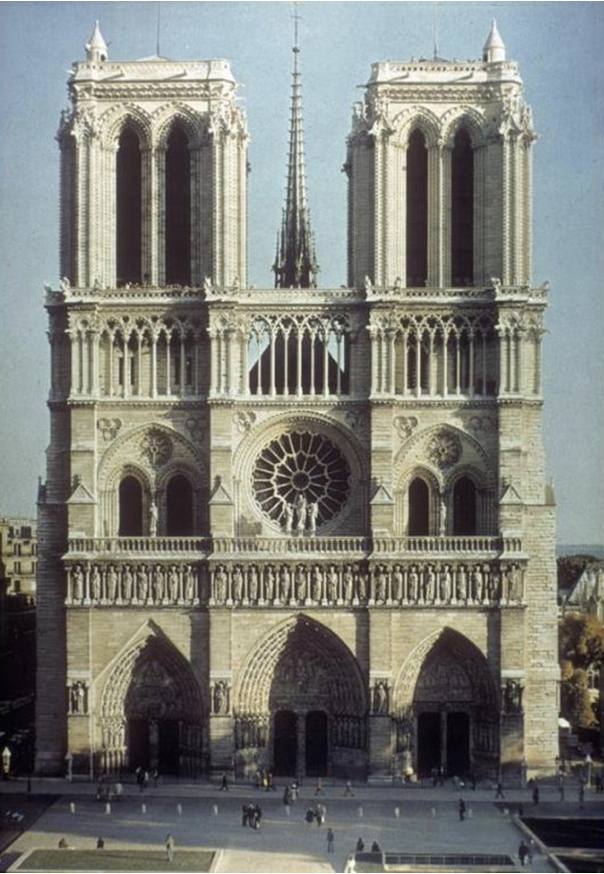
cathedral of notre dame in paris, current form from around 1163-1260, but has undergone so much rebuilding and also renovation (and rebuilding after fires most recently in 2019)
monument to virgin mary ????
serving as grand church for paris
rebuilding of saint denis challenging paris to some extent, notre dame rebuilt as response
choir terminates in apse-ambulatory layout
long choir
main vessel elevation at first divided into four stories
lower arcade, tribune gallery, oculi, clerestory windows under vault
tribune gallery roofed externally, steep pitched roof built against main vessel’s walls
oculi pierced to fill space where pitch meets wall
east end completed 1182
west front done later
distillation of two tower formula, creating three parts to represent holy trinity
three entrance portals
statue of virgin and child and rose window above galerie des rois
rose window almsot like a halo for this statue
modification later whihc removed the aisle roofs and lowered clerestory windows into the space
making up for the seemingly lackluster interiror
huge 6 part stone vaults
no alternating responds, creating more rhythmic and uniform language
vessel articulated throuhg responds coming from corinthian columsn which go all the way to the vault without interuption
walls relatively thin
used limestone en delit to create thinner mateiral (using vertical strata)
reinforced stone tehcniques also employed later (iron clamps and tie rods holding slender masonry structures together that otherwise couldnt)
linear process of building from east to west
west facade done independelty
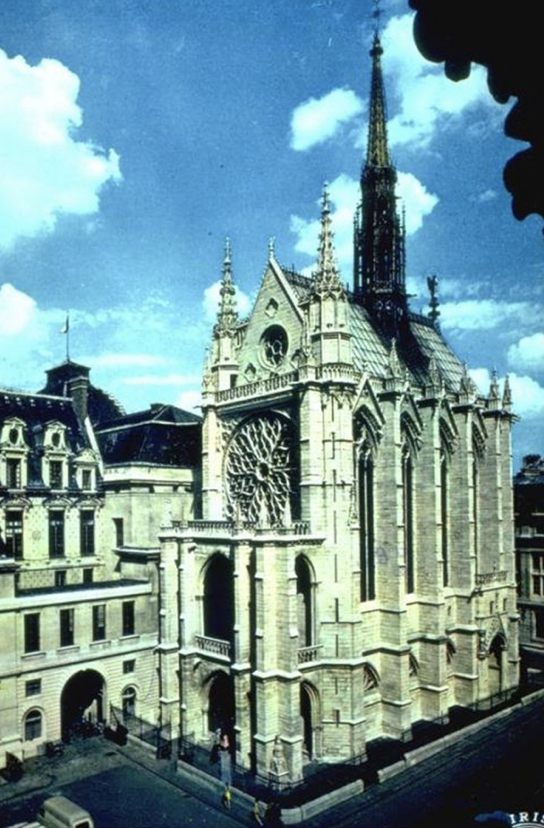
La Sainte Chapelle, palace chapel s. lous/lous IX, paris, 1241-8
holds relics of the passion/crucifixion, including fragment of cross and crown of thorns
palace chapel for the king, within the walls of the palais de la cite
still integrated into urban rituals in paris, processions would involve the church
lower part parish church, upper/main chapel for king and court
meant to resemble a jeweled encrusted reliquary box
old stained glass windows all around the space
passion depicted on apse window to reference the relics held within
iron used to create a system of reinforced stone, blcoks of stoned clamped together with iron hooks
symbol of french royal authority
acting sort of as a life size reliquary
linking between king and christ in its program
exteriror flying buttresses replaced multiple times
sculptural program
jamb figures
all reconstructed after being destroyed in french revolution
central door had stone post which had been removed, then re added during restoration. it has christ on it
south trancept restored in 19th century
spire rstored in 19th century, then again after fire in 2019
notre dame as a composite building, built over long period of time
point of reference for other works
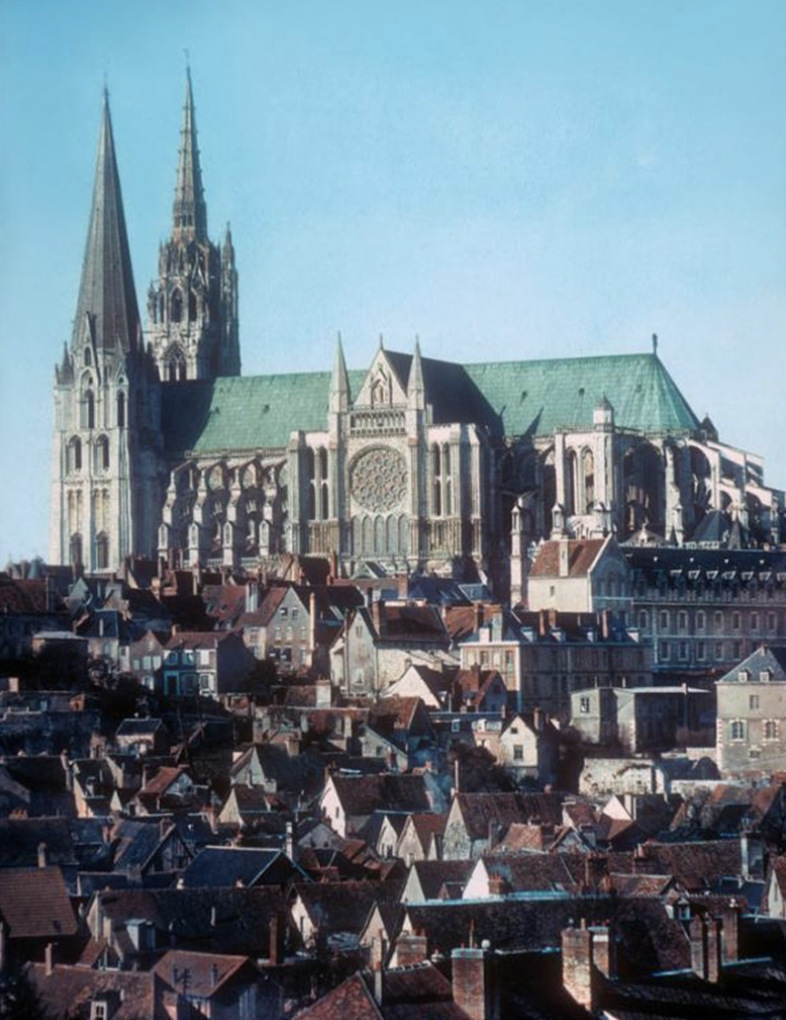
Chartres cathedral, reconstruction timeline confusing but starting around 1194
contains a relic of what was thought to be a tunic that mary wore at the annuciation
focus of pilgrimage, center of adoration of the virgin, large pan european significance
virgin mary as guardian of cathedral
wide audience, any donors
need to serve a large influx of pilgrims especially at four major marion festivals
civic monument, urban context
bishops led processions in and out of the city using cathedral as start/end point
fields to the east
not far from paris
ref notre dame in paris
5th building on site, immediatley following a romanesque cathedral from 1030 which mostly burned down
composite west front showing succession of architects (tower from 1100s vs 1600s on the same front)
orientation and spacing based on foundations from the romanesque cathedral which are reused
floor slopes upwards towards central nave
west front wiht three major doors
jamb figures as foundational and pillar-like figures to christianity. elevated from ground to show they are still above the visitor spiritaully
scnes of virgin and chirst above figures
north trancept
begun about 1220 because of reliquary with skull of saint anne
church as heavenly jerusalum throuhg treatment of light
east end represents virign carrying christ, recieves first light of day, west end recieves last light of day and shows the crucifixion/last judgement
limestone from about 5 miles away
piers not broken by a capital, extending all the way from floor throuhg to vault
4 part stone vault (heavier but less lateral thrust)
speaking to clergy and illiterate throuhg sculpture and stained glass
sculpture at doors prepatory for interpreting the architecture
gothic style conveying french monarchs claims to be the most or best christians
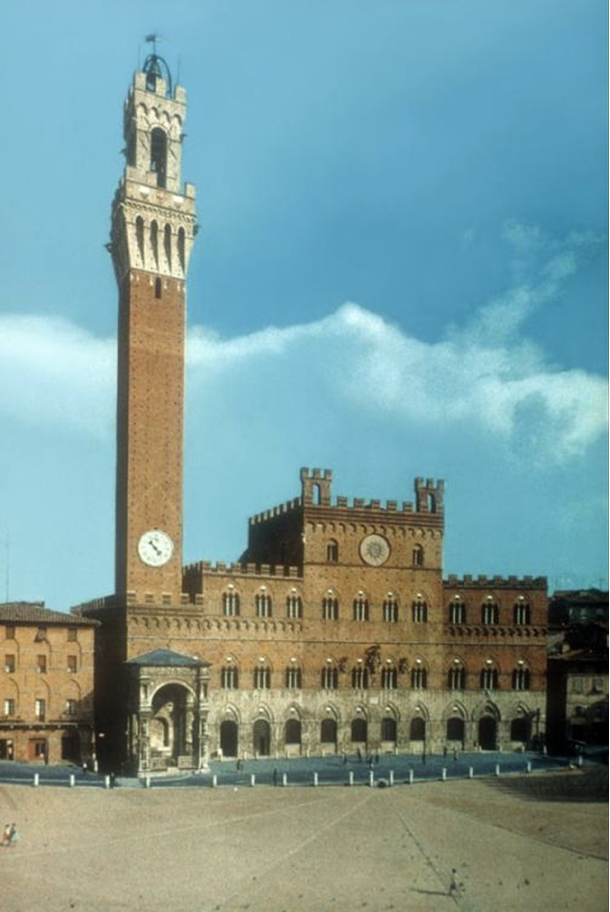
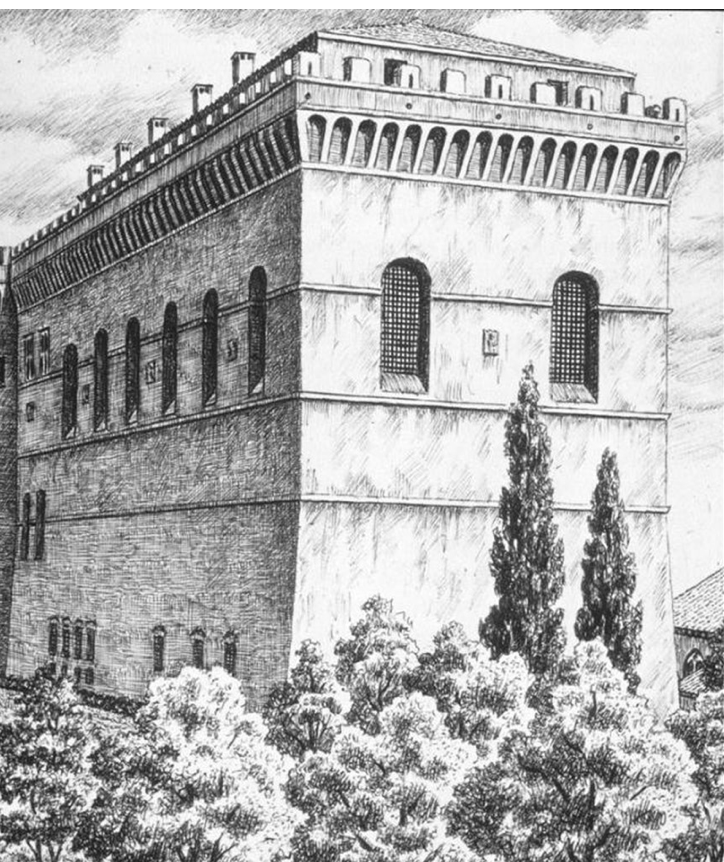
palazzo pubblico, with torre del mangia, 1297-1349, siena
town hall, thinking about architecture for a republic
nine governing council in siena
south facing piazza del campo, north facing a drop off in elevation
system of piers and arches below to accomodate for the slope and to have all major rooms on the same level
uniformity of facades in piazza del campo, reach of power of nine extended over built environment
proximity to via francigena (connects siena to rome)
volumetric massing to make it fortified
central volume is treasurary, one side houses chief fo police, other side houses quarters of the nine
torre del mangia
crowning bell represents control of time and space; communal bell rings out for the entire city to expereince together
advisory councils room with important frescos
castle-like, crown referencing a defensed building
architecture speaks to public and empowered visitors, all painitng a picture of what the government and resulting civic life is like
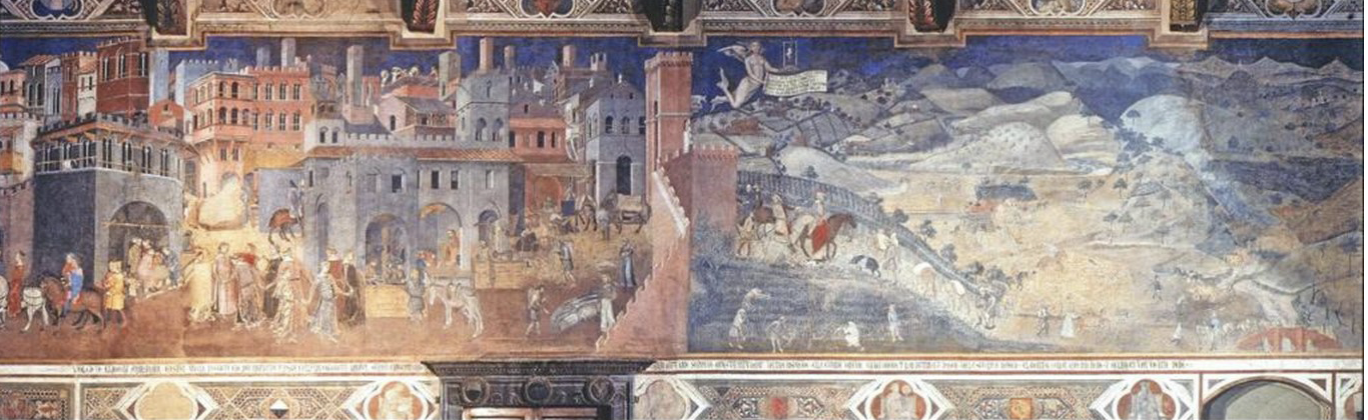
allegory of good government; effects of good government in the city and in the country, in sala dei nove (room of the nine), ambrogio lorenzetti, 1338
projecting the idea of waht a republic may be onto a visitor of the nine
demonstrating the nine’s good governance
allegory of good governemnt seems to reference the last judgement
lawful citizens at the right hand of the central figure, prisoners shown at the left hand of the central figure
showing safe streets, economic proosperity, trade happening in and out of city gates, siena as city on top of hill
guaranteed safety at least 30 miles out from commune of siena
upbuilding of city depicted
demonstrating ideal government order as if legitimizing and educating/reeducating on what this looks like to the public
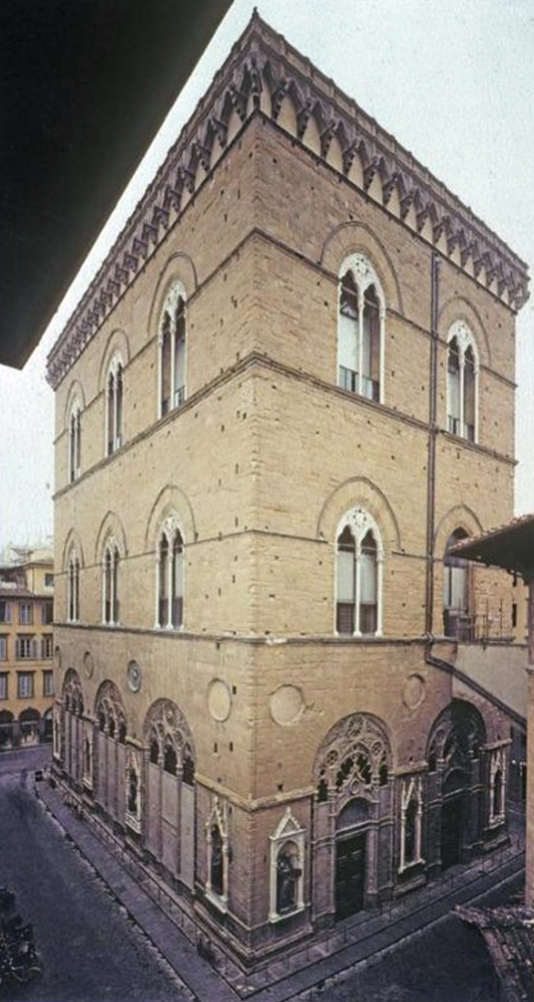
church of or san michele, florence, originally an open loggia, rebuilt 1337 ish
guild church to which each guild contributed an image of its patron saint to mark participation at the site
niches assigned to guilds from 1339
on main north/south street whihc links the cathedral to the palazzo vecchio
built around miracle-workign image of madonna and child
painting by bernardo daddi
surrounded by a marble tabernacle
upper stories added after city survived a plague
urban fabric of florence changing dramatically in this period
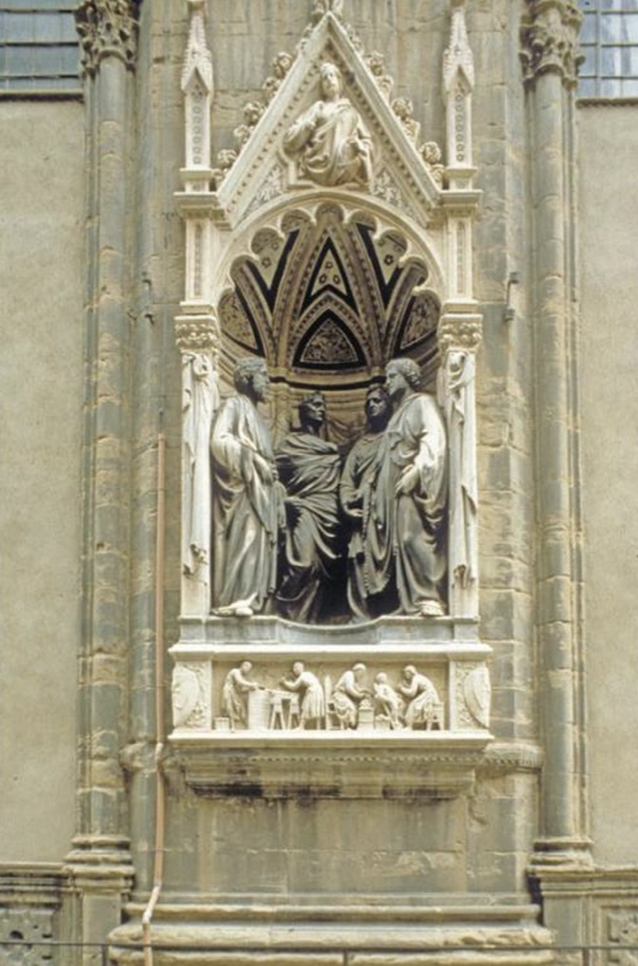
four crowned saints, 1409-1416, nanni di banco
depicting 4 christian artisans who refused to produce a pagan image of deity and thus were beheaded
figures present possible responses to adversity
marble figures
commissioned by stone cutter and wood carvers guilds
on or san michele church
figures in semicircular arragnement, new compositional type
creating spatial depth in sculptural site, architectural space defiend by four figures and seemingly continuous from observers space
panel below depicting the activities of the guilds (carving, building, etc)
nonverbal clarification of patrionage
heads based on etruscan models
christian tale becomes metaphor for responsible citizenship
celebrating a willingness to face death in response to questioning faith, thus validating responsibility to civic/religious duties
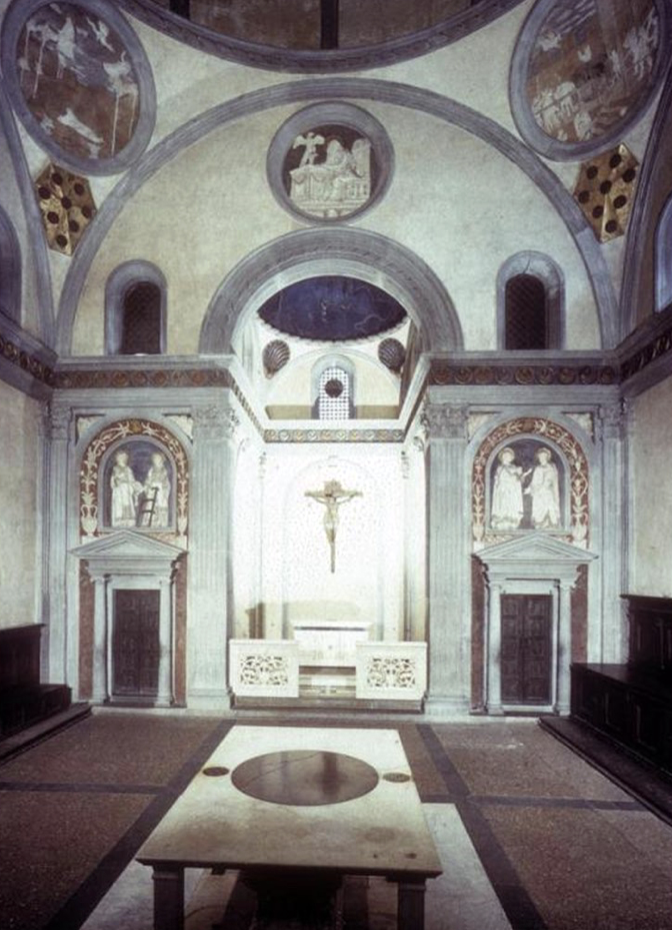
old sacristy, at church of san lorenzo in florence, 1421-28, architect filippo brunelleschi, donatello primary sculptor
patron giovanni di bicci de medici
creating a burial space for the medici family
bronze doors associated with ancient roman monumentality
grey limestone (pietra serena) used for pilasters
dome appears to float more freely because of thin margin of white stucco between arches of space and ring of dome
classicizing vocabulary
semispherical dome above walls, rounded arches, rondels in pendentives
clasiscal orders upholding arches on pilasters
temple front alluded to above the bronze doors
columsn and pediment above
tomb of christ in jerusalum
both have a lantern atop the oculus in dome’s crown, here the spiraling decoration is mimicked
thus, the spake evokes resurrection and thus prlongs the power and reslience of the medici family
images gospel writers on cross axes
st john the evangelist
figures dedicated to sons of giovanni above small doors
all working towards resurrection and longevity of medicis
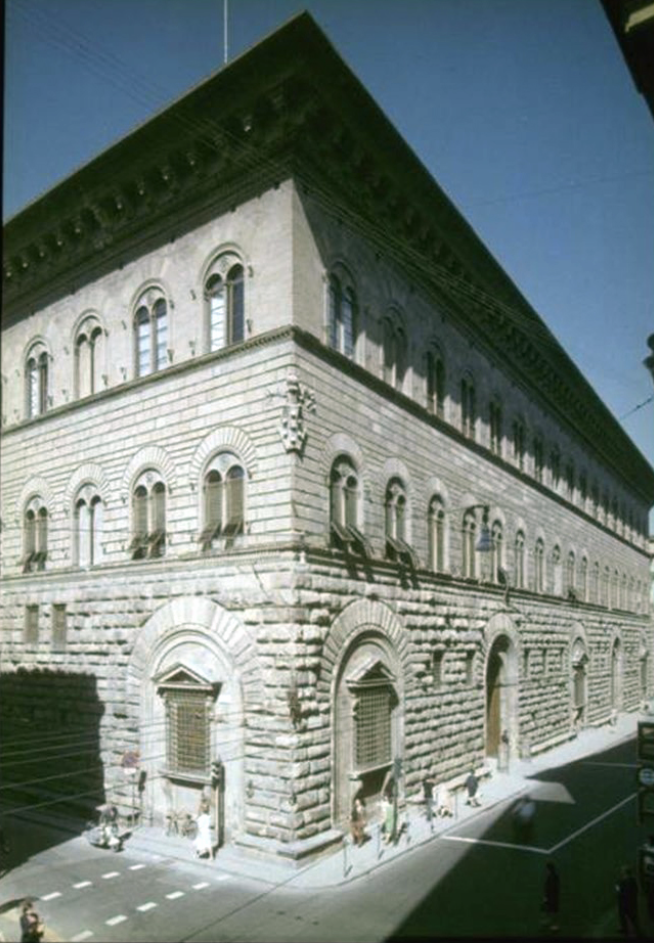
medici palace, florence, 1446-60, Michelozzo di Bartolomeo
comissioned by cosimo de medici after he was exiled and returns to florence
he is coming back to reestablish his power/medici power and architectural project becomes completely tied to that
on via larga
main street, close to cathedral and also leads to piazza della signoria
palazzo vecchio at south, medici palace at north
double lancet/bifolate windows
central courtyard within which has classicizing archtectural language
corinthian columns uphold orunded arches, rondels sit in entablature
privileged access to classical order s
specific stone treatment
rusticated at bottom to reference palazzo vecchio while at top its more smooth
contains palace chapel
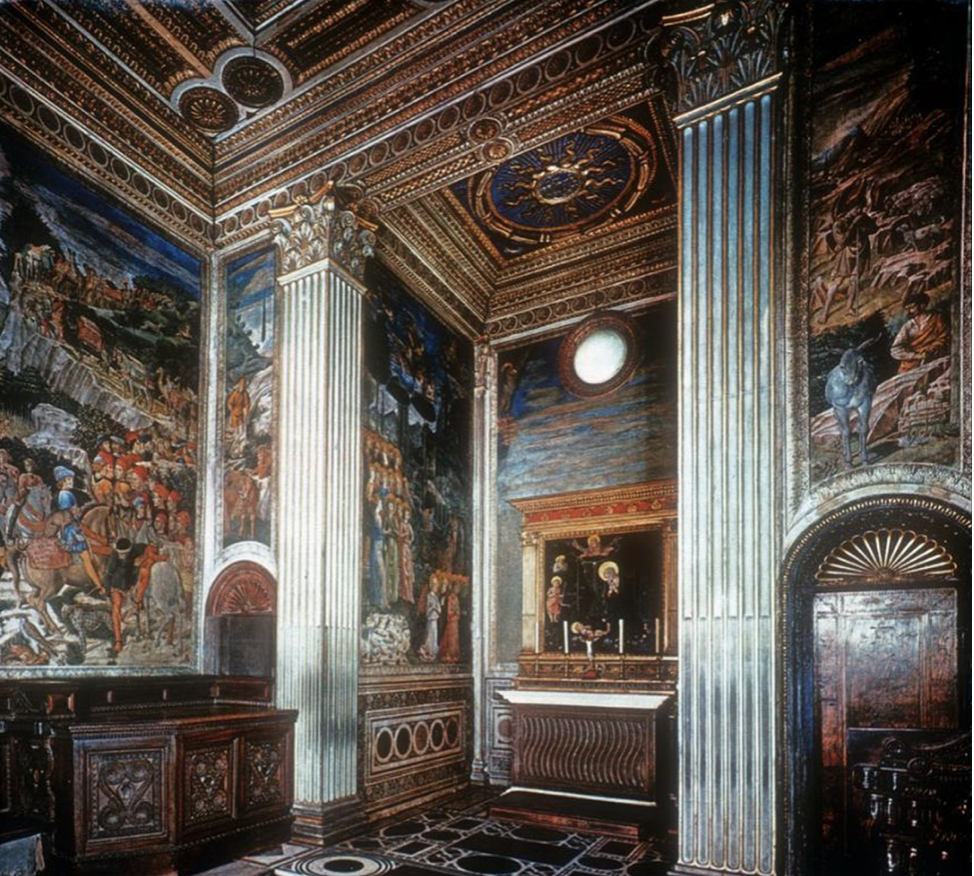
medici chapel, 1459, benozzo gozzoli
architecture of space comissioned by cosimo, frescos largely comissioned by piero de medici
contains a relic within
gold and ivory carved, relic of christ’s passion
familial worship room yet also used to host empowered visitors
only one of three chapels wihtin a palace in florence
altar at front of chapel, surrounding walls have frescoes describing the journey of the three magi
room descrbiing kingship in biblical terms
coffered gilded ceiling
marble floor
variant of classiciing language from private house
fresco of youngest king presenting medici identity
procession of magi recalling procesison that may take place on a street
recognizable portraits of two generations of medicis incorporated into the scene
connotations of empowerment or rulership, biblical themes used to define and associate with these ideas
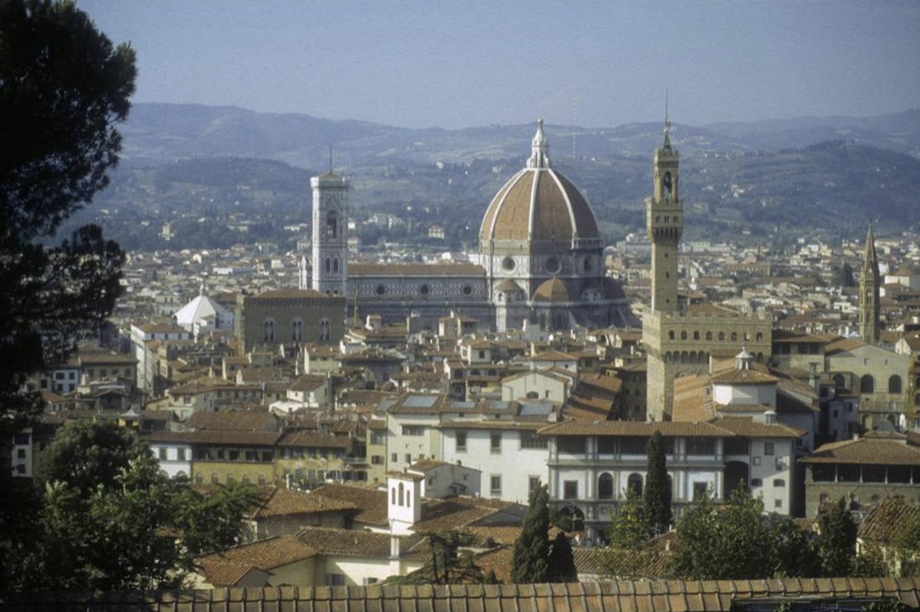
florence cathedral, 1294-96, dome and lantern from early/mid 1400s, Brunelleschi helps desicgn constructive system/dome
aspiration to capaciousness; desire to seem as if it could hold entire population of florence
predominant monument in city, visible in skyline
on outskirts of old roman city in florence
second cathedral for city
earlier example church of san lorenzo
crossing at core of building, octagonal in form
resonant with octagonal florentine bapisttry just to the west
chapel bays associated with different guilds, demonstrating association to politics of the moment
windows on each bay of the lantern above providing light for the entire volume of the dome
dome as major challenge for this building
137 feet in diameter
curvature of dome follows that of the baptistry
dome increidbly tall, peak at 380 feet
double shell dome, self supporting as it rises and once it is complete
process of building developed to unique parameters
eight octagonal facets to the dome linked together with chains
dome articulated with 8 stone ribs
lantern at top
visible from the ground
66+ feet tall, has to be very very light
crown of cathedral
modillion, classicizing form yet sort of looks likea flying buttress
iron tie rods across nave and aisles to resist span of spaces wihtout using flying buttresses
referencing baptistery and pantehon
last judgement by vasari on the ceilng
implication that teh monument represented florentine dominance of the entirety of tuscany
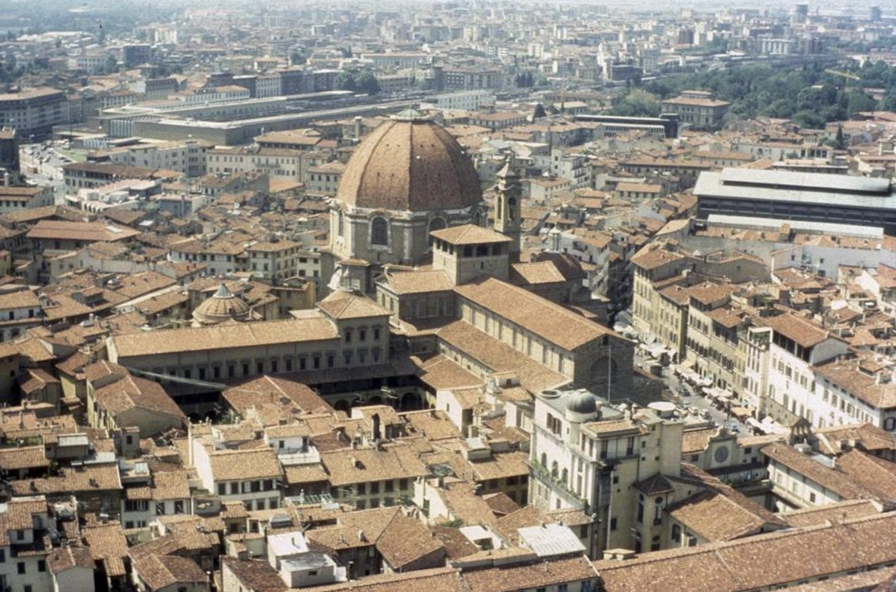
church of san lorenzo, florence’s first churhc founded 393 ce, rebuilt 10445-60 and again from 1418
cruciform core
chapels on the side and from the transepts dedicated by different families
consistent proportional logic in plan
square unit dimension, size of crossing, which repeats in each bay
1:2:4 width:height:length
bay of nave
void to solid 5:1
column height 2: arch raidus 1
entire building very logical
using grey patternless limestone like that on the exterior of the florentine baptistery
renaissance arch linked to tuscan classicism; different ways renaissance is tied to earlier tradition
relates to santa trinitia from 1410
classicized vocabulary
freestanding, monolithic corinthian columns
santa sabina as another model
early christian model, resonates with san lorenzo being florence’s first church
pazzi chapel, part of rebuilding of the cloister of santa croce, begun after 1442, brunelleschi (maybe michelozzo)
patron andrea pazzi and family
burial chapel for family
second wealthiest family in florence in this period
part of franciscan monastic site
ratio of dimensions clarifying architectural space
bench alla round where you can sit, no individual seats
collectiveity
meetingplace of the monastic community
pilasters above and around bench of grey limestone
rondels showing 12 apostles
corinthian pilasters upholding an entablature then semicircular arches beneath the dome
pilasters using same width as florentine baptistery ones
dome with windows and lantern lighting the space
relates to old sacristy
direct response, families know each other
lamb motif ?
12 part dome represents heavenly city of jerusalum
political and religious significance
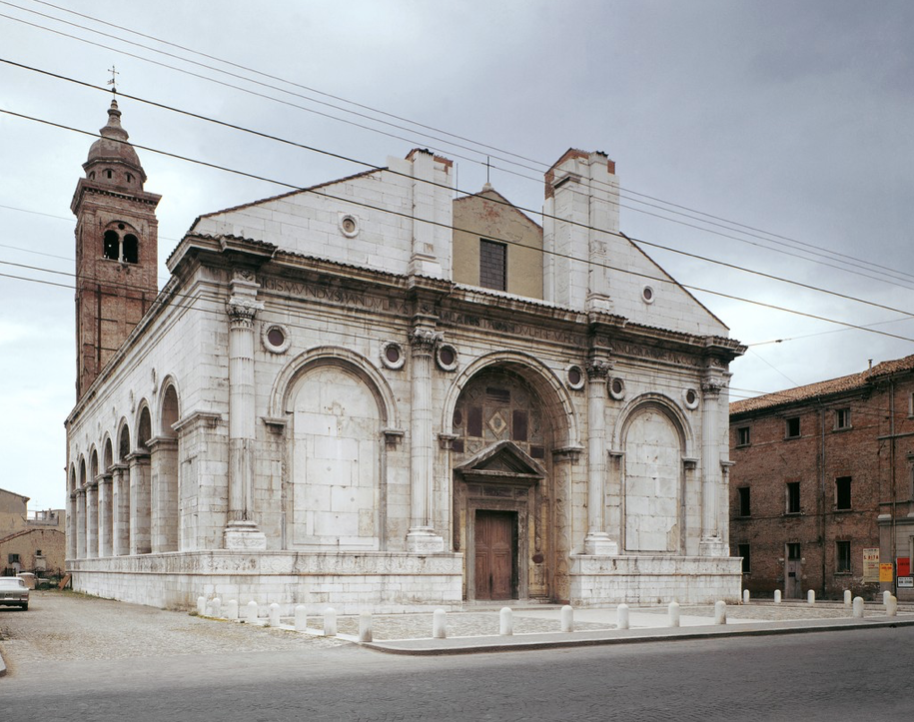
tempio malatestiano, rimini, 1446-61, alberti
incomplete rebuilding/encasement project for the church of san francesco
for sigismondo malatesta
important italian guy
nearby to an augustinian archway monument
central nave with chapel bays on each side
interiror dedicated to celebratino of malatesta lineage, many of whom are buried in the churhc
sigismondo malatesta and family are buried in caskets set in archewas on either side of the entrance
triumphal wreaths contain parts of prophyry columns from sant apollinare nuovo in ravenna from the 6th century
exteriror bays with limestone caskets
brick walls behind the limestone caskets
square limestone piers, thick semicircular round arches
classicizing and responding to the language of the nearby augustan arch
rondels and composite order —roman imperialst tendencies
vocabulary resonates with colosseum
arches on teh side
responding ot arch in ravenna as an area of conquest for malatesta
mausoleaum of theodoric
meant to have a dome and etc, but never finished
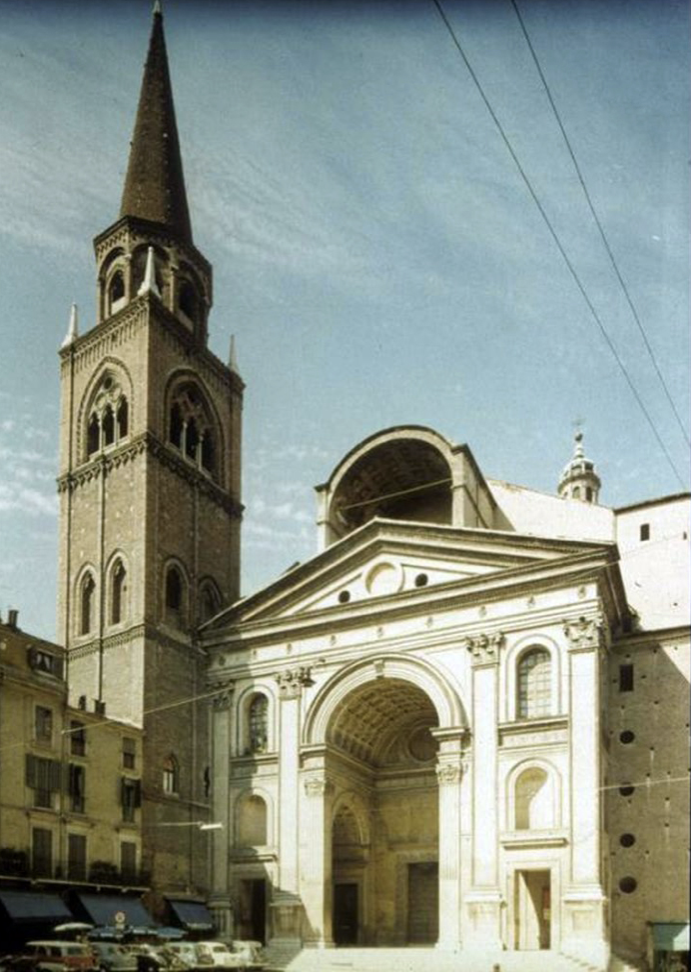
sant’ andrea, mantua, 1472-94, alberti
benedictine monastic church
holds relic of earth which had chirsts blood in it
only displayed annually on ascension day
walk up steps into portico
nave design accredited to alberti
wide space to allow for processions, no architectural obstructions to the altar so relics can be visible
circular oculi windows line the barrel vaulting of the nave
resonates with the pantheon with the oculi idea
rounded arch vocabulary along the nave
alternating open chapels (wider) and closed burial chapels, rhythm of wider to narrower
theme of triumphal arch
pilasters surrounding stacked arches on either side, larger central arch
resonates with three arched monuments
relic of blood represents triumph over death, theme of triumph important
basilica of constantine as major precedent
big rounded arched bays on the sides of the nave
dramatic lighting above the crossing
coffered ceiling
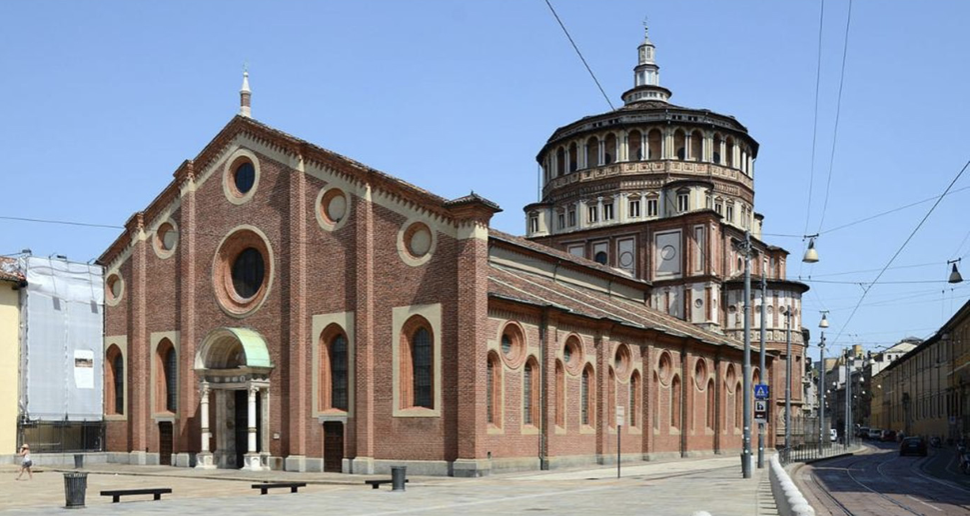
santa maria delle grazie, milan, nave begun 1460, east end rebuilt 1492-7, architect giovanni amadeo (likely advised by bramante) and others
houses a miracle working stateu of madonna
east end of church made into a sforza mausoleum to commemorate generations of sforzas in teh city
on main road leading into milan
nave and central aisle built first, crossing and chancel in entirely different vocabulary built later
large central dome at reconstructed east end
nave
cross rib vaulted bays in the nave
small windows
move up three steps before entering east end
east end
large scale rounded arch vocabulary
incredibly classiczied
powerfully lit compared to darker nave
brick as finish/surface material
mroe flexibility for circular windows
distinct from florentine architecture
materially monochrome
dominican monastic church, values austerity
domed motif in side walls
precedent in certosa pavia
resonates with old sacristy
synthesis of ideas from medici and florentine renaissance, as well as existing buildings in milan—milanese variant of renaissance which is distinct
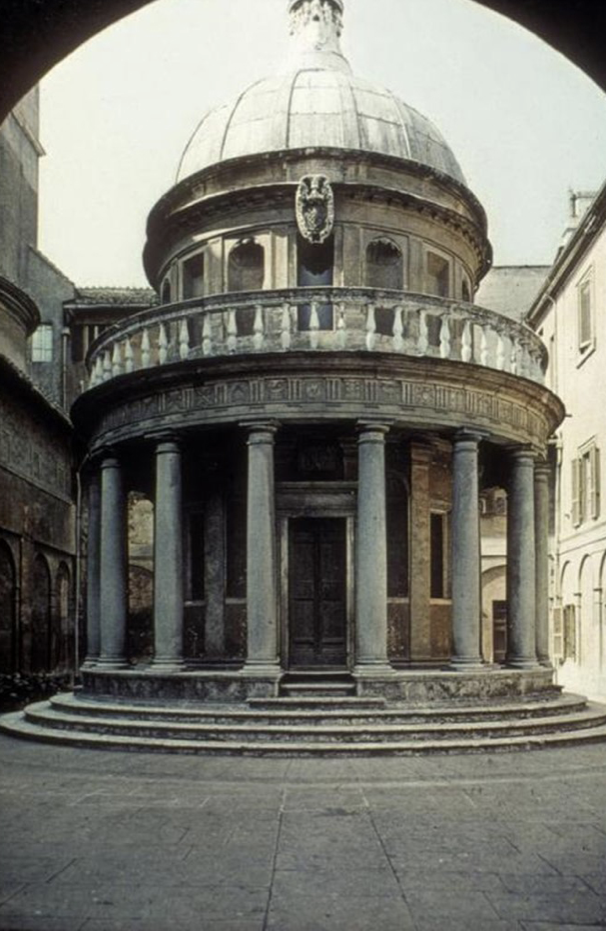
tempietto, in cloister of church of san pietro in monotorio, bramante, 1505-06
martyrial shrine to saint peter
spanish patrionage
gold coins around the base of the site
built once JUlius II returns to city after a plague strikes
inside cloister of san pietro in monotorio
bramante’s original design incorporated a circular cloister like setting around the monument which was proportionately larger than the tempietto itself
circular cloister refernce to the rotunda in the holy sepulchre in jerusalum, linking martyrial sites
at back of tempietto, you can look into a cryppt where it is said peter’s cross was placed into earth before he died
dome atop round monument
granite columns
entablature
variant of doric entablature: pattern of tryglyphs alternating with metopes
emblems of papcy in meotpes
demonstrates fusion of ancient with christian
classicizing
circle of doric columns around the building
referencing granite monolithic columnar sources like santa costanza
pope julius II responsible for recentering renaissance to rome
pax romana christiana
identifying himself with julius cesar
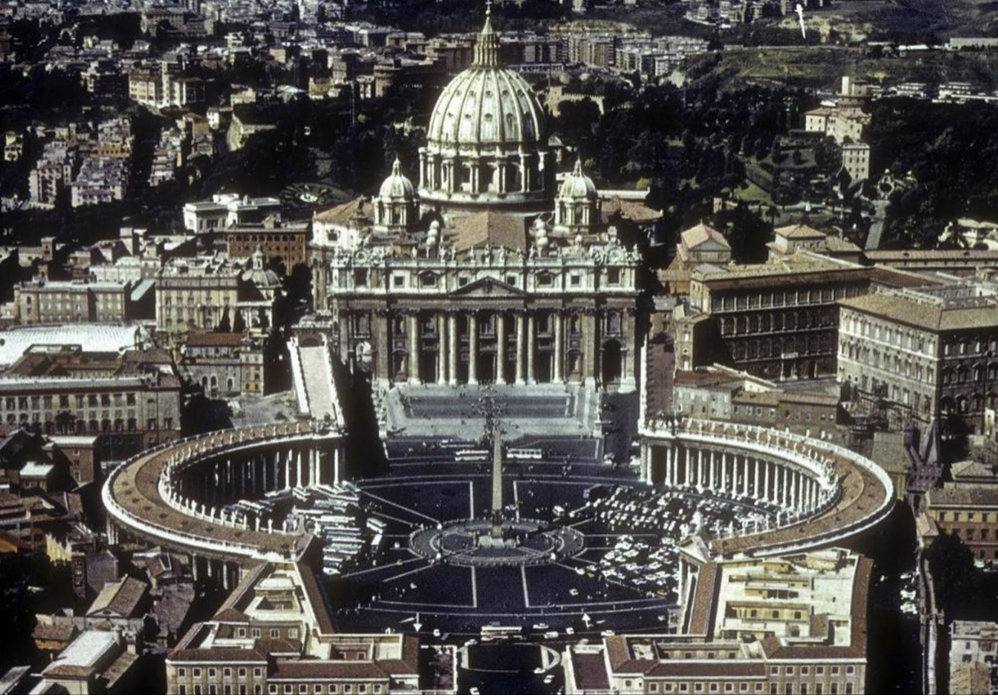
rebuilding of saint peters, begun 1506 and continued under 20 popes and 14 architecuts, including bramante, raphale, antionio da sangallo, and michelangelo
tomb of peter, international center of pilgrimage
bramantes plan
greek cross
dome over tomb of saint peters
arms match central span of basilica of constantine
dome same dim as pantheon
raphael
extends nave to cover entire ground of old saint peters
thinking about how to address catholicism being questioned (protestant reformatino)
antonio da sagallo
uses cruciform shape
smaller circular domed shape over nave
langauge of dome repated at different scales
michelangelos plan from 1540s
emphasizing center on altar above st peters tomb
before he dies, south area is built, thus grammar for the church is ultimatlely established
emphasizing visibility of central dome
asserting isntitutional dominance as different way of counteracting protestant threat
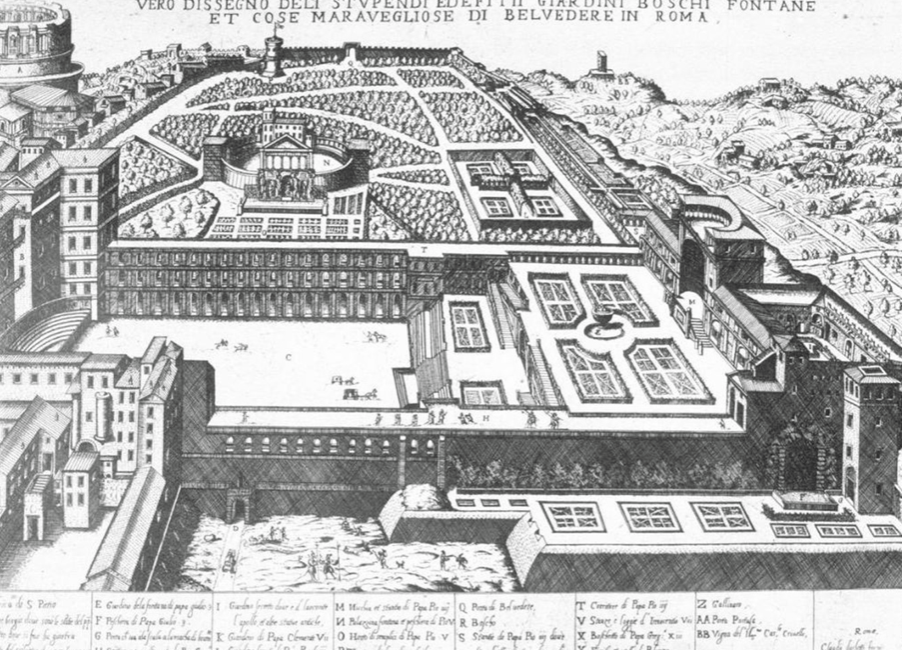
cortile del belvedere, vatican palace, rome, 1504-14
courtyard connecting vatican palace to villa del belvedere
julius II making papacy into monarchy; buildings functionality is a ceremonial space for that idea
place of entry into fortified vatican for empowered european rulers
central space originally used for jousting tournament
arch language references colosseum
space now subdivided bc of vatican library/museum but originally it was just one walled space
half is lower courtyard, other half is two levels of gardens
ascending classical orders like the colosseum
semispherical apse at northernmost elevated level
bronze pinecone in center
brick architecture
rusticated travertine stone around the entry
enormous entryway, PONT MAX above it—pope stating his identity in the same phrase whihc was used to announce the status of ancient roman emperors
referencing sources like walled gardens of ancient roman emperors
trying to legitimze Julius II
temple of fortuna primigenia
piazza d oro
pope julius II responsible for recentering renaissance to rome
pax romana christiana
identifying himself with julius cesar
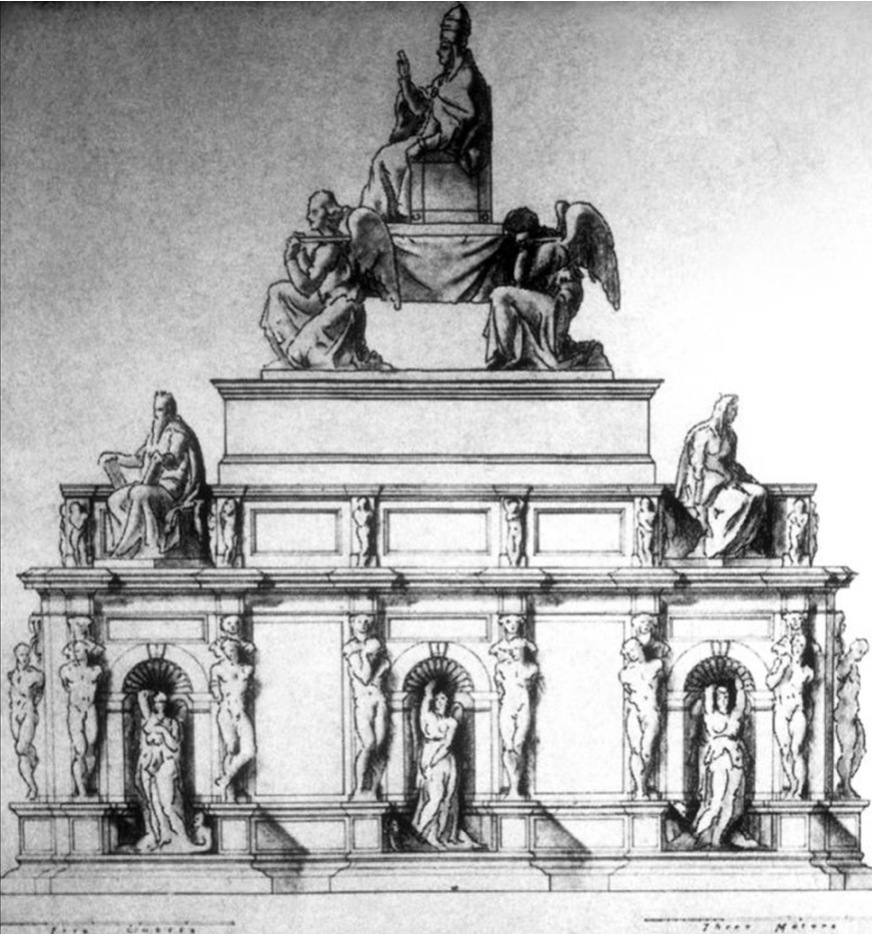
tomb of julius II, begun by Michelangelo 1505-06, continued periodically between 1515-45, never finished as projected, rather as a simpelr version in church of san pietro in vincoli
building monumental tomb for Julius II
project is periodically paused to divert funds towards reconstructing the churhc
tomb project paused again when julius dies, only resolved in 1542-45
simplified verison in south transpet of church of saint peter in chains
moses majorly important central figure
biblical antetype of what julius wante dto be
placed centrally on the tomb at eye level (proportion of suclpture wrong because it was supposed to be placed at a higher level)
funerary pyre coin showing a stepped arrangement which julius’s tomb similarily employs
no tomb precedent at this scale
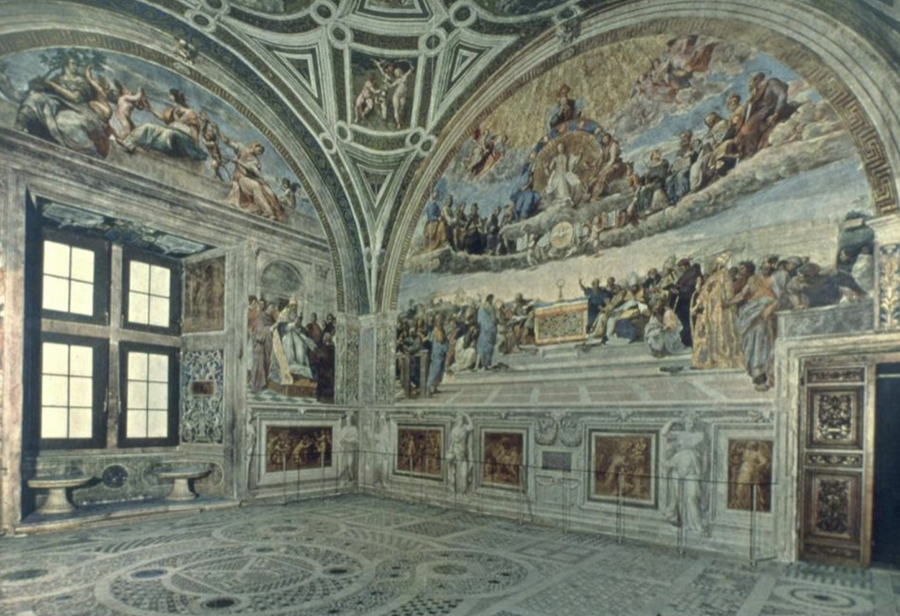
stanza della segnatura, raphael, 1508-11
focusing on divisions of knowledge
julius ii’s papallibrary
on level of vatican palace
looking at cortile del belvedere
fresco painting
religion/la disputa
is eucharist actually christ embodied
altar central imagery
pf and julius II intiials woven into the altar
philosophy/school of athens painting
pictorial space appears alomst nave like; series of vaulted spaces receeding
fusing past knowledge and reference to current figures. blending all significances into this one moment
socrates, bramante, michelangelo, diogenes, pythagoras, raphael, etc, all itnerwoven
spatial expanse is indeterminante, vantage point
seeing depth of different surfaces
picotrial space framed around yet appears on same level as visitor, as if space continues thoruhg the fresco
sistine chapel, michelangelo’s frescos from 1508-12
chapel built by sixtus iv (julius ii uncle)
reconstruction of earlier 14th century chapel
used while new st peters was being buitl for papal ceremonies
space where pope is elected by cardinals
connected to st peters
older painterly program
paintings associated w life of chirst and life of moses
portraits of first 32 popes; continuity
michelangelos painterly program
proceeds from east to west brings you backwards in biblical time
sibyls (greek female prophets) and male biblical prophets surrounding the scenes and becoming unified
belvedere torsos
right finger in the painting of adam representing wisdom
marble floor with mosaic that references early christian time
creates central pathway which woudl be the procession of the pope
exact proportions of the temple of solomon
wisdom
rondels on ceiling referencing earlier sources like arch of constantine
dedicated to assumption of virgin mary (central panel is creation of eve