L3: Implicit Parameters affecting spoilage
 Call Kai
 Learn
Learn Practice Test
 Spaced Repetition
 Match
Match Flashcards
 Knowt Play
1/19

There's no tags or description
Looks like no tags are added yet.
Name | Mastery | Learn | Test | Matching | Spaced | Call with Kai |
|---|
No analytics yet
Send a link to your students to track their progress
20 Terms
What are implicit parameters affecting food spoilage?
Implicit parameters affecting food spoilage refer to the inherent, biological interactions of the microorganisms present within the food environment.
Unlike intrinsic (chemical properties of food) or extrinsic (storage environment) factors, implicit factors deal with how microorganisms behave in relation to one another and their specific surroundings.
What is meant by synergistic effects in relation to implicit parameters affecting food spoilage?
Production/availability of essential nutrients due to growth of m/o’s allowing for the development of other m/o.
e.g. Metabolic products of one m/o can be absorbed by others:
Yeast → B vitamins → used by LAB
=> changes in pH, aw, nutrient type
Substrate degradation to generate energy for other organisms:
Starch/ cellulose breakdown by moulds into simple sugars e.g. glucose can be used by yeasts
This phenomenon illustrates how microorganisms (m/o) can enhance or inhibit each other's growth and activity, thereby influencing food spoilage conditions.
What is a famous symbiotic association b/w two organisms that is seen in the production of a food product?
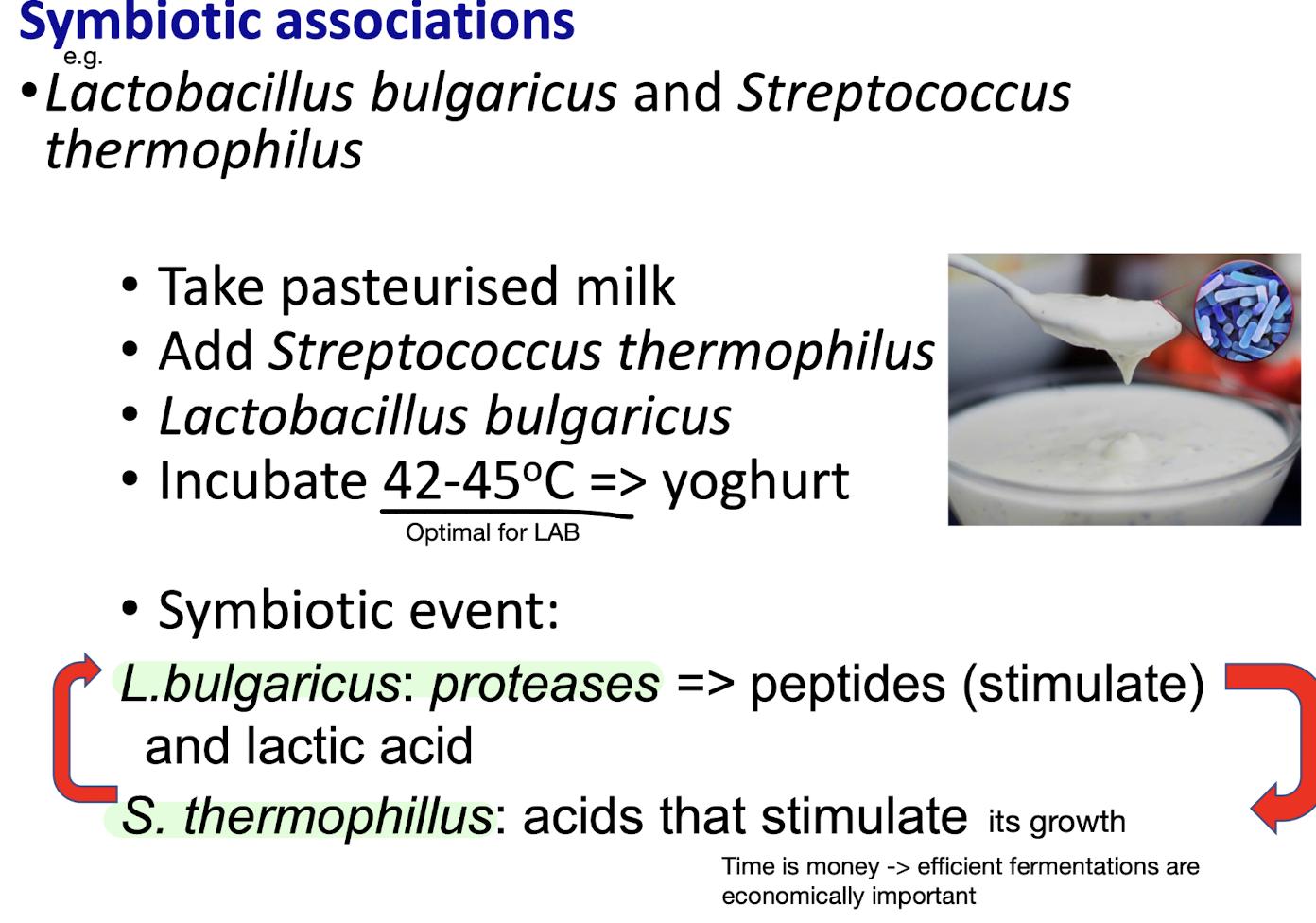
Key acidic molecules such as pyruvic acid, formic acid and CO2 are released into milk by S. thermophilus, which promotes the growth of L. bulgaricus, allowing it to produce peptides by protease action, as well as amino acids and lactic acid, which promote the further growth of S. thermophilus, demonstrating the symbiotic relationship between the organisms.
How is the microbial interaction in milk kefir an example of a symbiotic association?
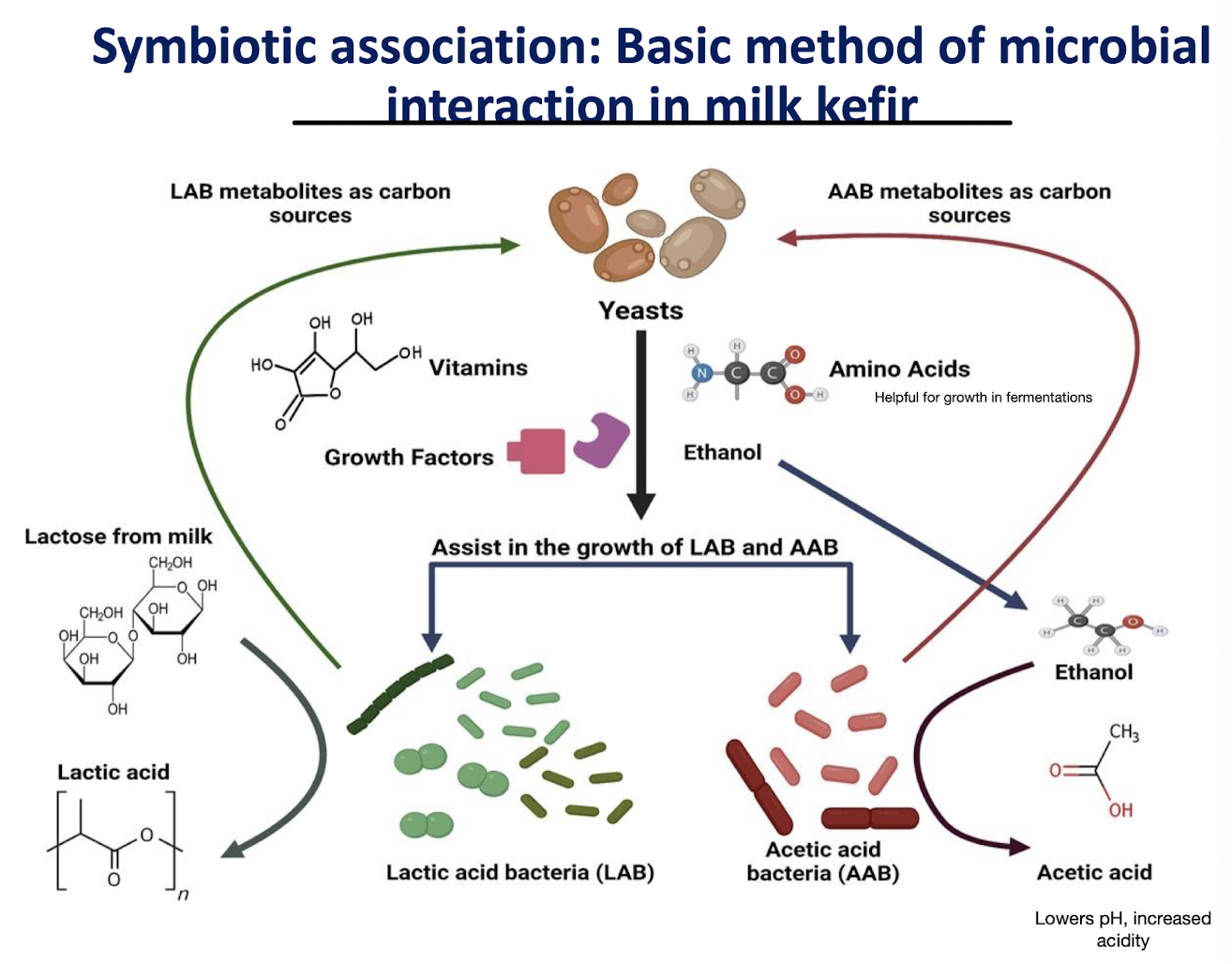
Microbial interactions in milk kefir illustrate a symbiotic association where various bacteria i.e. LAB and Acetic Acid bacteria (AAB) and yeasts cohabit, facilitating the fermentation process.
The diverse microbial community enhances the breakdown of lactose and production of acids and alcohols, promoting a dynamic growth environment beneficial for all organisms involved.
E.g. Vitamins, amino acids, ethanol and growth factors produced by yeast assist in LAB and AAB growth allowing them to produce further metabolites e.g. lactic acid, acetic acid which act as carbon sources for the yeasts
What is the difference between a positive / negative succession event?
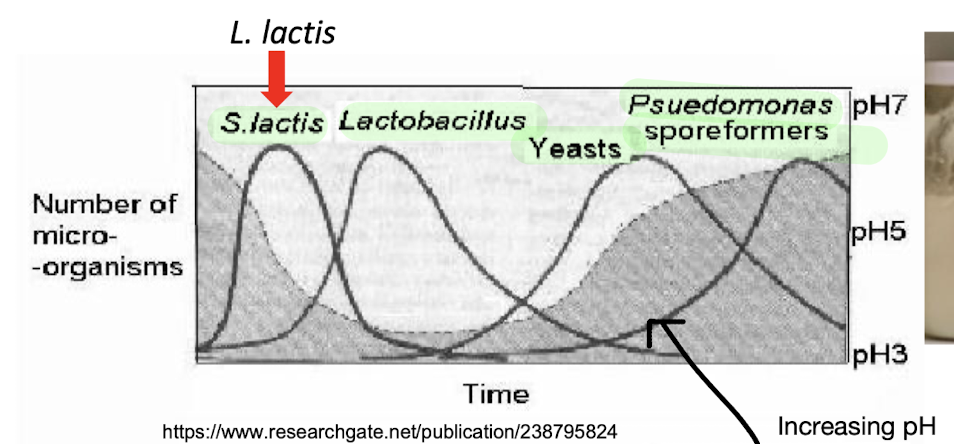
Positive succession leads to an increase in microbial diversity and nutrient availability, while negative succession results in a decline in diversity and nutrient depletion, often creating conditions unfavourable for certain microorganisms → allowing for spoilage organsims to thrive.
How is the spoilage of milk an example of a negative succession event?
Involves the decline of beneficial microbial populations such as Streptococcus lactis (involved in the primary acidification of milk) and Lactobacilli (which reduced pH) due to nutrient depletion, leading to the proliferation of spoilage organisms.
A change in the pH profile i.e. due to metabolisation of organic acids → pH increase, allows for non-acid tolerant m/o to grow → heavy mould growth
Secondary contaminants continue decomposition of milk leading to proteolysis by Pseudomonas and growth of sporeformers at higher pH.
This shift creates an environment that is unsuitable for the desirable microbes, ultimately resulting in milk spoilage.
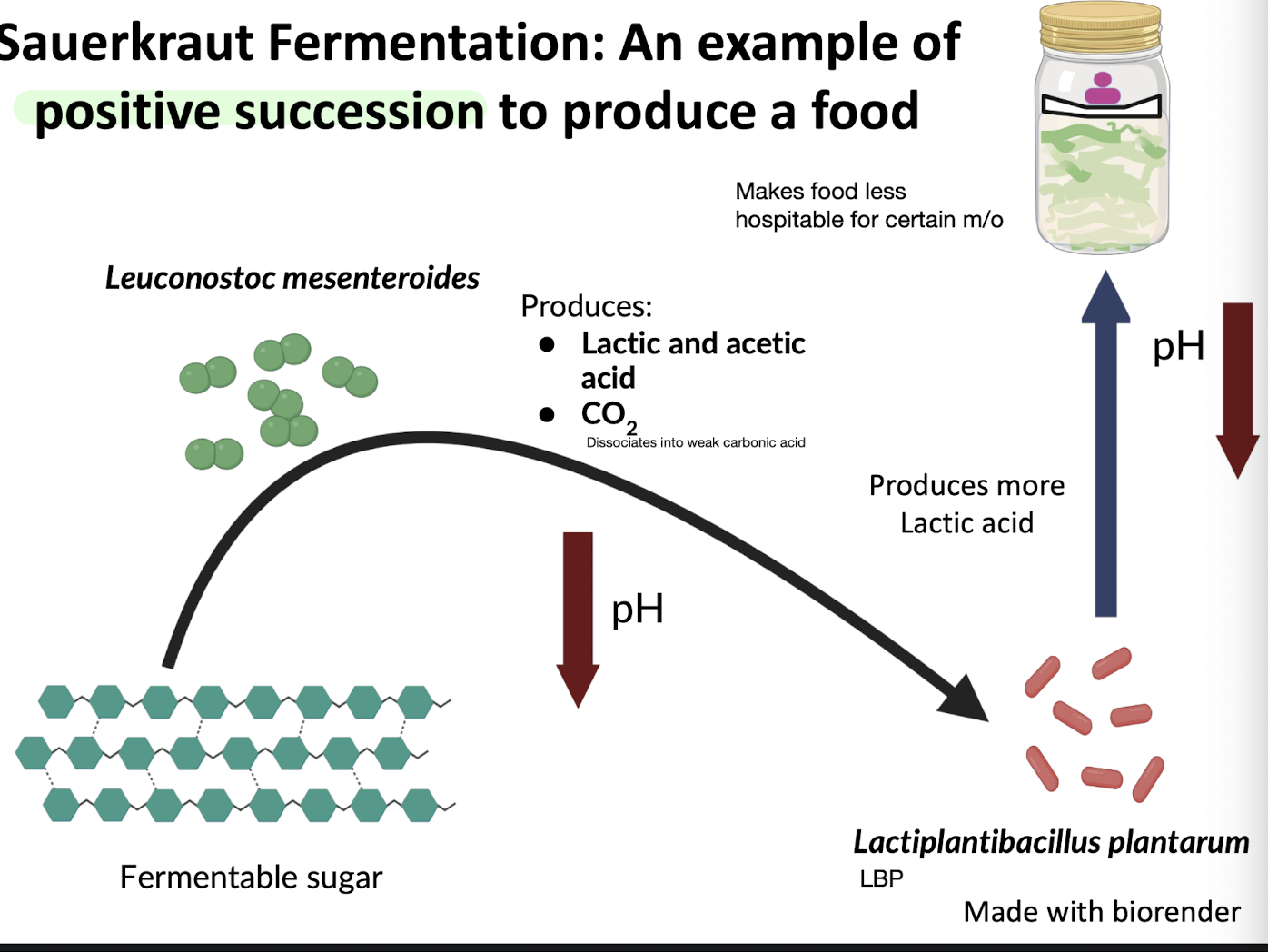
How is the fermentation of sauerkraut an example of a positive succession event in food production?
Fermentation of sauerkraut exemplifies a positive succession event as it involves a progressive increase in microbial diversity from the initial fermenter Leuconostoc mesenteroides to other beneficial LAB e.g. Lactiplantibacillus plantarum (LBP)
This process enhances flavour, preserves the cabbage, and increases the availability of nutrients through the production of acids e.g. lactate + acetate, CO2 and vitamins.
As acidity increases (pH falls below 4.8), L. mesenteroides is inhibited, allowing more acid-tolerant species like LBP to dominate the later stages of fermentation → producing more lactic acid
Organic acids reduce pH and allow for the growth of acid-tolerant bacteria and inhibit spoilage organisms, creating a favorable environment for both fermentation and nutrient preservation.
What is the relationship between competition for nutrients and depletion of nutrients in regards to food microbiology?
Competition for nutrients among microorganisms can lead to nutrient depletion, particularly when beneficial species are outcompeted by spoilage organisms i.e. those that have high metabolic activity
Decreased oxygen/ increased CO2 produced from metabolism (i.e. vacuum packed meat @ 4ºC) selects for facultative + obligate anaerobes
E.g. Staphylococci are sensitive to nutrient depletion – Poor competitors → Must consider producing heat-stable enterotoxin
This depletion results in a decline of desirable microbial populations, fostering conditions that promote spoilage.
What are the 3 main principles of food preservation?
Prevent m/o contamination
▪ Keep m/o’s out i.e. via basic hygiene practices in factories / handlers, proper storage
▪ Remove m/o’s i.e. via filtration, centrifugation to pellet microbes in a liquid, end filtrate should have little to no m/o load
▪ Reduce m/o growth
▪ Destroy m/o
Prevent self-destruction of food
▪ Inactivate food enzymes
▪ Stop chemical reactions
Stop damage due to animals, insects etc.
Why do we want to keep m/o in the lag phase of their growth stage to preserve foods, what is a method of doing this?
Keeping microorganisms in the lag phase minimizes their growth and metabolic activity, thereby reducing spoilage and extending shelf life.
This can be achieved through refrigeration or freezing, which slows down biochemical processes and inhibits growth, prevents production of harmful metabolites / toxins in exponential / death phase
3 main preservation techniques
Slowing down/ inhibiting m/o growth
▪ Reduction in temperature, Aw, pH
▪ Removal of oxygen + MAP
▪ Addition of preservatives
Direct inactivation
▪ Heating
▪ Irradiation
Restriction of m/o entrance
▪ Packaging, Asepsis
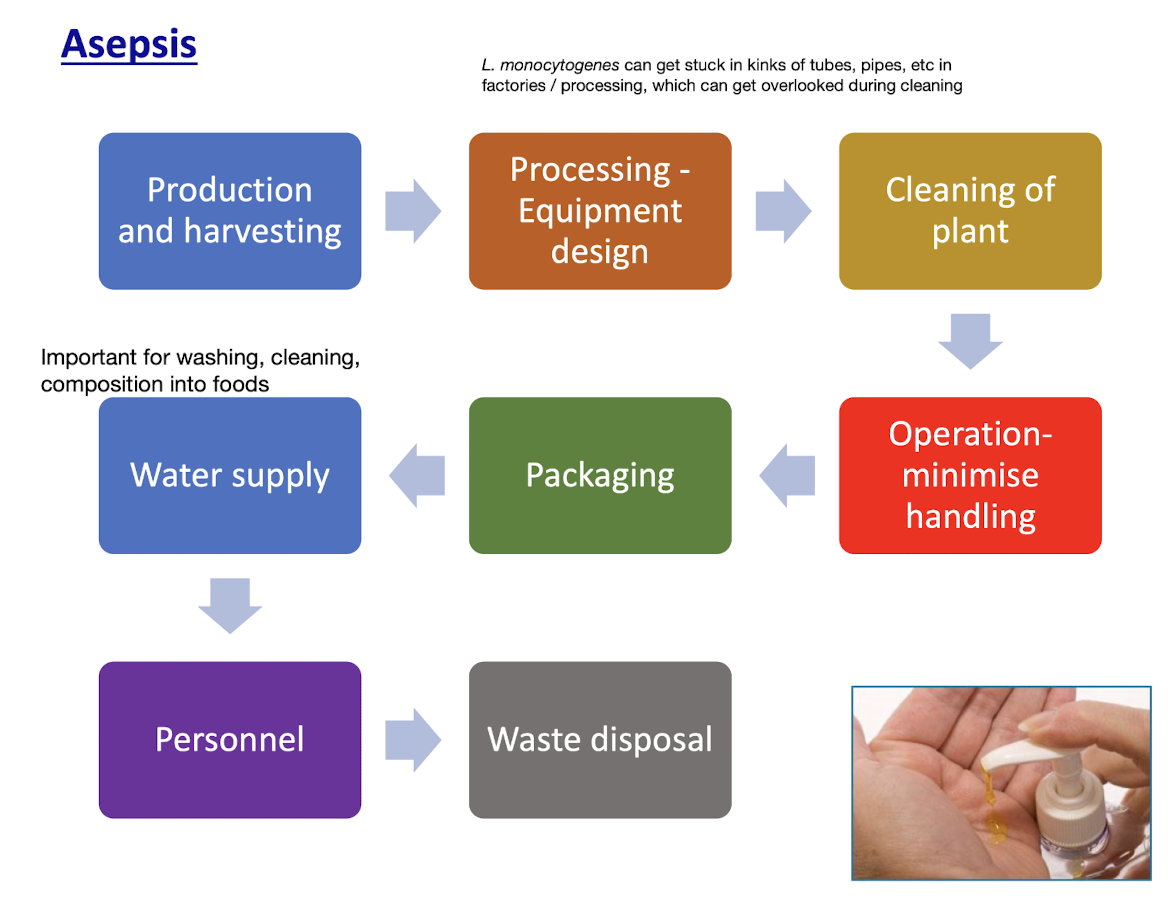
What is asepsis?
Asepsis is the absence of pathogenic microorganisms in a particular environment, achieved through sterile techniques, which prevents contamination of food products during processing and handling.
Done via:
Careful production and harvesting
Having easy to sterilise processing / factory equipment
Clean water supply, sterile packaging, minimal handling in operations
Ensuring cleanliness and sanitation of food handling areas and by personnel, proper waste disposal
It aims to maintain a hygienic environment that minimises the risk of foodborne illness.
What spoilage organisms are inhibited by the use of chilling/ refrigeration?
Refigeration at a temp b/w 0-13ºC can limit spoilage to:
- Psychrotrophs
- Psychrophiles
opt Temp ≤ 15ºC
Max ≤ 20ºC
Min ≤ 0ºC
Refrigeration advantages for food preservation:
▪ Extend shelf-life by pathogen control
▪ Extend lag phase/Slow growth
▪ Inhibit DNA/RNA/protein synthesis
▪ Change cell membrane structure
▪ Change uptake of solutes → what can/can’t pass through the membrane
▪ Change/slow down enzymatic reactions → metabolic / synthesis rxns
What is needed for correct chilling?
▪ Raw material to already have a low microbial load
▪ Should be rapid- reduce drip loss-NOT too rapid as this can cause tough meat.
▪ NB: Maintain storage temperature around 0-5ºC for optimal preservation.
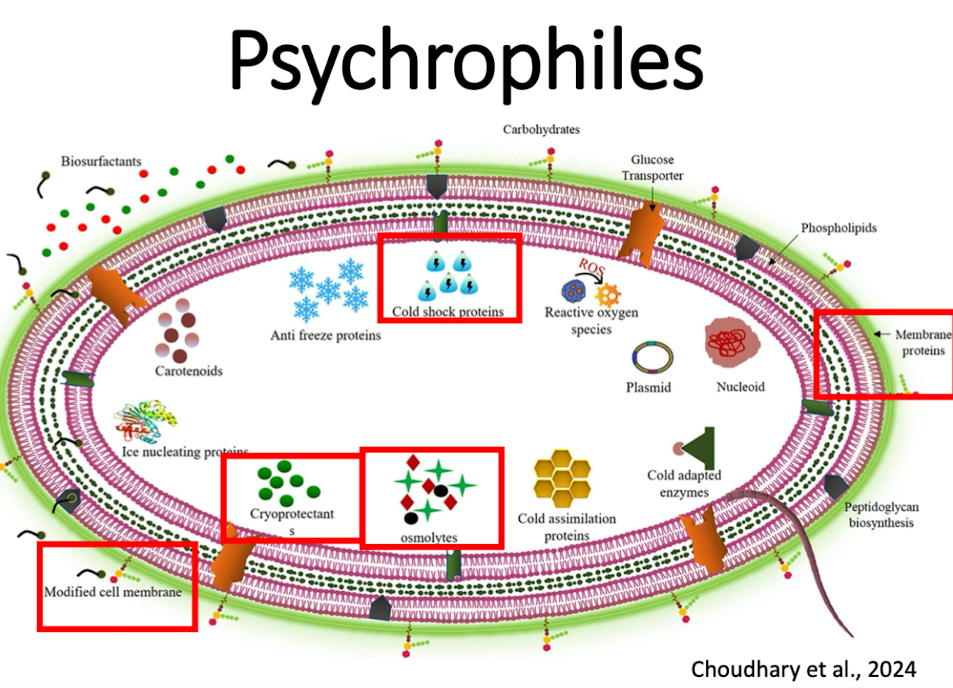
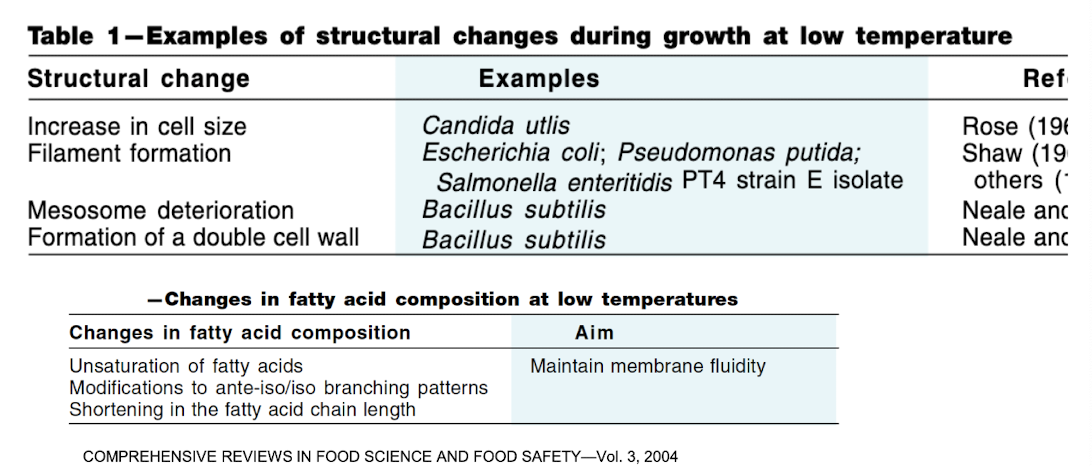
How can certain microbes adapt to low temperature during food preservation methods like freezing/ chilling?
▪ Morphological + physiological changes e.g. change in cell size (yeast)
▪ Alteration in metabolic pathway
▪ Change in lipid composition i.e. unsaturation of fatty acids / shortening of FA chain length to increase membrane fluidity
What are common pathogens and spoilage organisms that grow at low temperatures?
Pathogens: C. perfringens (12ºC), Yersinia enterocolitica (≤ 0ºC), C. botulinum (Type E, B + F) 3.3 - 5ºC,
≤ 0ºC L. monocytogenes
Spoilage m/o’s:
Pseudomonas, Alcaligenes (bacteria), Cladosporium, Thamnidium (moulds)
What are the effects of freezing on microbes?
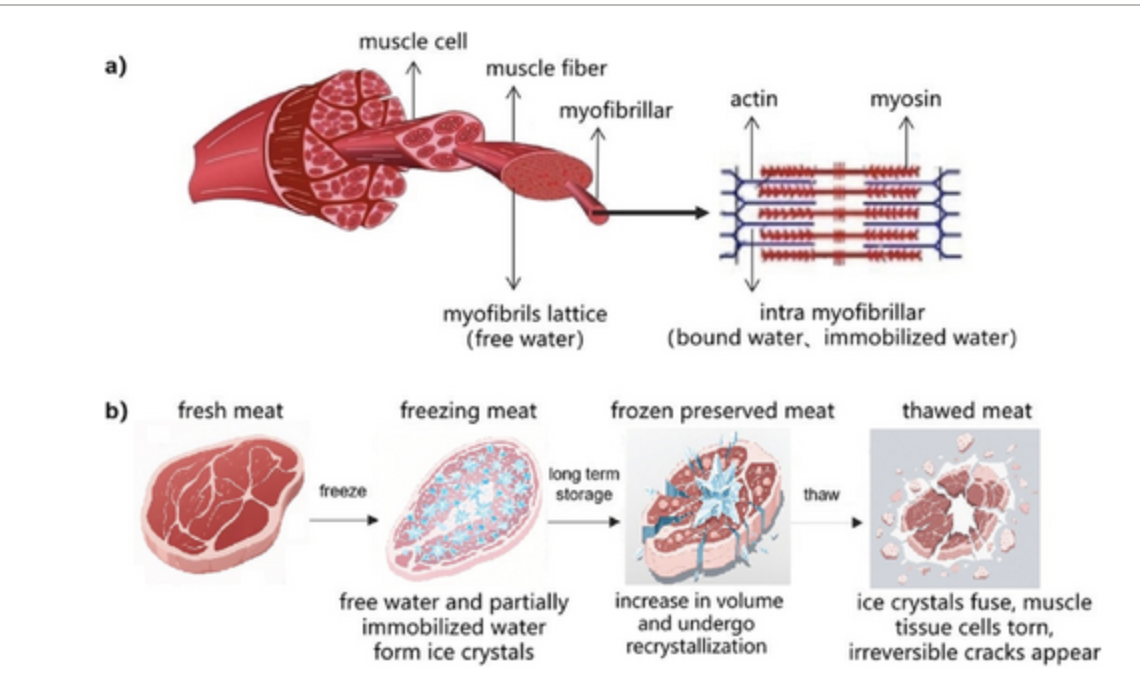
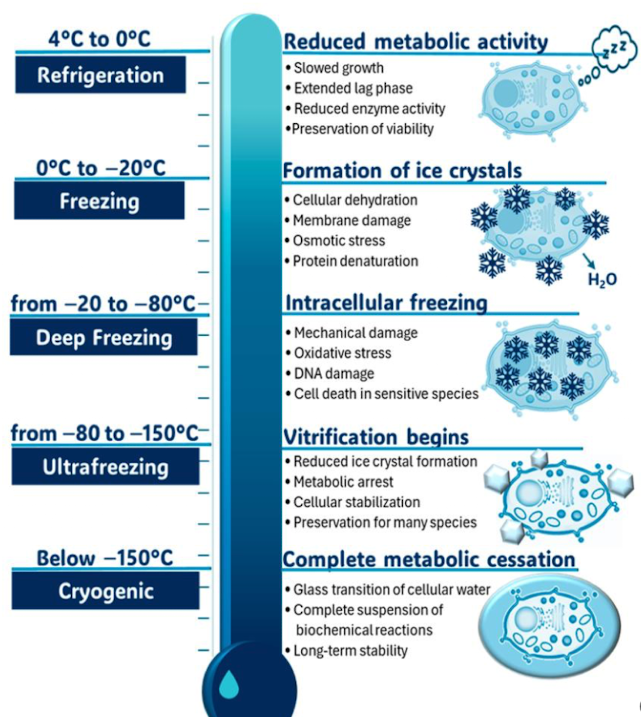
• Denaturation/ flocculation of proteins, leading to reduced metabolic activity due to reduced enzyme activity → low growth or complete metabolic arrest at temperatures > -80ºC
• Internal/Intracellular ice crystals cause physical damage to cellular structures
• Freeze-thaw cycle causes cell membranes/ walls damage
Leakage of intracellular materials – unbalance/disrupts homeostasis
Disrupts cellular transport functions
What are 4 main reasons for differing of responses of m/o’s to freezing?
Whether the m/o is spore forming or not; vegetative cells of yeasts,moulds & many GN species are susceptible to the effects of freezing while GM are moderately more resistant, with sporeformers such as bacilli, clostridia species, having the best resistance as they can remain dormant and then produce viable cells onces thawed.
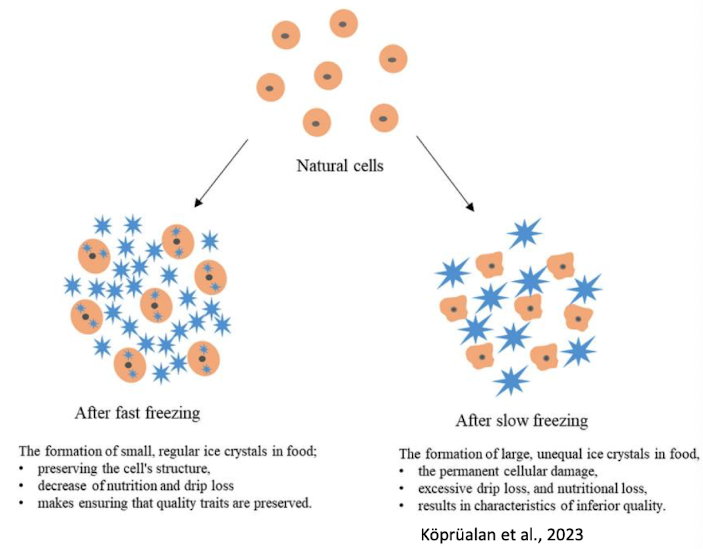
The rate of freezing can affect the m/o response; fast freezing is less destructive, while slow freezing allows larger ice crystals to form, which can damage cells more extensively, however reduces the quality of the food.
Freezing temperature: -4 to -10ºC is better than -15 to -30ºc, as Salmonellae survive best at -20ºC however have lower survival rates at -2ºC
The type of food and its composition; sugars,salts and proteins in the food can act as cryoprotectants
What are some issues with using freezing as a preservation technique to counteract m/o spoilage?
Non lethal injury (cryo injury) : some bacteria may only be injured → still can proliferate, cause spoilage after thawing
Survival after freezing: Formation of resistant spores or preformed toxins unchanged by freezing
Structural integrity of food can be altered and made more susceptible to m/o growth
Spoilage by m/o enzymes that remain active such as lipases
Irreversible dehydration of meat, poultry / fish proteins → oxidation of myoglobin in meat leading to an off-colour → reduces consumer acceptance